Andy Card LOL: Bush Can’t Pardon Himself for Torture (But Obama Has)

As part of the discussion in his book explaining how the CIA shifted from torture to killing, Mark Mazzetti tells the story of how the CIA balked at engaging in further torture after the Detainee Treatment Act.

After President Bush signed the bill into law, then-CIA Director Porter Goss wrote the White House saying the CIA would refuse to torture unless and until they got a guarantee they wouldn’t be prosecuted for doing it. In response, the Bush Administration sent Andy Card to the CIA to try to calm them down.

Card drove out to Langley intending to soothe the fears at CIA headquarters, but his visit was a disaster. Inside a packed conference room, Card thanked the assembled CIA officers for their service and their hard work but refused to make any firm declarations that agency officers wouldn’t be criminally liable for participating in the detention-and-interrogation program.

The room became restless. Prodded by his chief of staff, Patrick Murray, Porter Goss interrupted Card.

“Can you assure these people that the politicians will not walk away from the people who carried out this program?” Goss asked. Card didn’t answer the question directly. Instead, he tried to crack a joke.

“Let me put it this way,” he said. “Every morning I knock on the door of the Oval Office, walk in, and say, ‘Pardon me, Mr. President.’ And of course, the only person the president can’t pardon is himself.”

Card giggled after he said this, but his joke landed with a thud. The White House chief of staff, when asked whether President Bush would protect CIA officers from legal scrutiny, had suggested that the most they might be abel to rely on is a presidential pardon after the indictments and convictions were handed down. (127-128)

Goss effectively repeated a request the CIA had made, unsuccessfully, as early as July 13, 2002 (when, it should be said, Goss was ostensibly in charge of overseeing the program at the House Intelligence Committee, though there’s no reason to believe he knew about the earlier request): for an Administration guarantee that everyone involved in the torture program would be shielded from criminal consequences for kidnapping and torturing.

And in response, Card implied to these CIA officers and executives two things:

  • President Bush would pardon anyone convicted of crimes related to torture
  • Bush, himself, was ultimately exposed to prosecution for those crimes as well (all the more so, since he couldn’t pardon his own crimes)

Now, Card wouldn’t have even tried such a joke unless he knew his audience knew that the torture program was based on a Presidential Finding — what we know to be the September 17, 2001 Gloves Come Off Memorandum of Notification.

There’s fairly clear evidence that CIA’s officers did know about it.

George Tenet had made that clear on every single page of his January 2003 Guidelines on Interrogations, which at least some CIA interrogators had to sign.  Continue reading


John Bogdan: The Face of the Guantanamo Crackdown

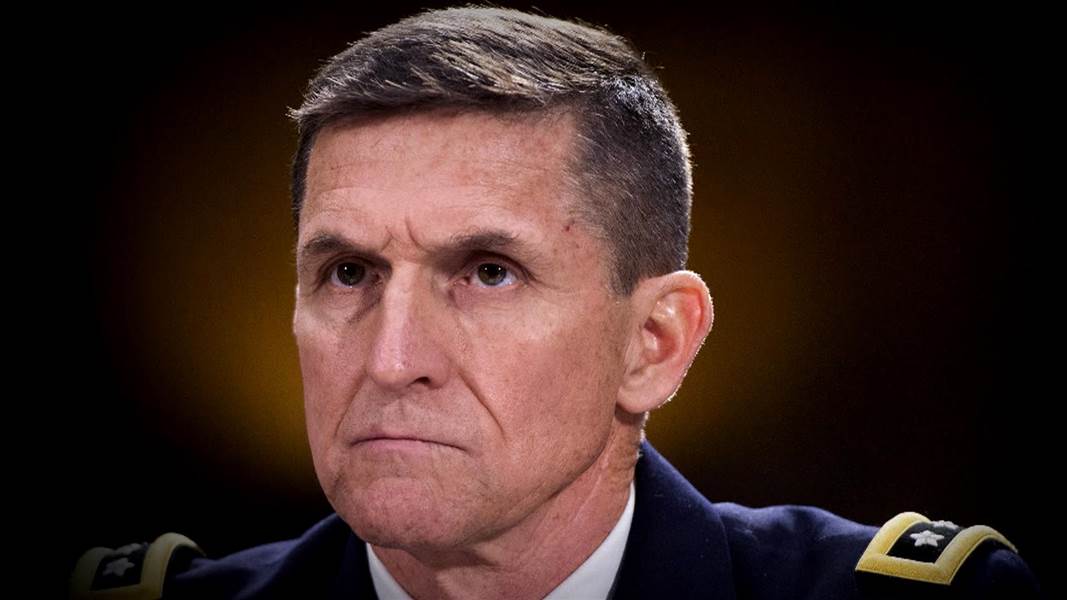
John Bogdan as his 95th Military Police Battalion assumed command of Forward Operating Base Rustimayah in Baghdad in November, 2001.

John Bogdan as his 95th Military Police Battalion assumed command of Forward Operating Base Rustimayah in Baghdad in November, 2007.

In yesterday’s pre-dawn hours, the guard force at Guantanamo entered the Camp 6 communal area and removed the prisoners to individual cells. Here is Carol Rosenberg’s description of the operation (emphasis added):

U.S. forces raided Guantánamo’s showcase prison camp early Saturday, at times battling with detainees, to systematically empty communal cellblocks in an effort to end a three-month-old protest that prisoners said was sparked by mistreatment of the Quran, the military said.

“Some detainees resisted with improvised weapons and, in response, four less-than-lethal rounds were fired,” according to a statement issued by the prison camps at the U.S. Navy base in Cuba. “There were no serious injuries to guards or detainees.”

The pre-dawn operation took place hours after delegates of the International Committee of the Red Cross left the remote island prison and during a blackout of news media access to the crisis in the prison camps.

The worst injury involved a rubber pellet piercing a captive’s “flank,” said Army Col. Gregory Julian at the U.S. Southern Command, which has oversight of the prison camps operation. The captives resisted the assault with broom and mop handles as well as plastic water bottles that had been wrapped and modified into clubs, he said.

Note how the military waited until after the ICRC had left Guantanamo (and after the ICRC’s president met with Barack Obama) to make this move while there were also no press present at the compound. I have noted previously how the military’s actions and statements during the hunger strike appear to have been an information operation and this move fits that description exactly.

When the military cancelled commercial flights to Guantanamo, I speculated on whether the new commander of Joint Task Force Guantanamo, John Smith, who took over in June of 2012, was responsible for the change in atmosphere there. It appears that the defense attorneys feel that more of the blame for deteriorating conditions should lie with John Bogdan, who is Commander of the Joint Detention Group (alternately described as the warden, he is in charge of the guards). See, for example, this parenthetical statement in an Andy Worthington post describing information he got from Shaker Aamer’s attorney: Continue reading


America’s Human Rights Abusers: John Yoo, David Addington, and Bout’s Prosecution Team

In retaliation for the Magnitsky sanctions — in which the US placed sanctions on those deemed to have had a role in retaliating against Sergei Magnitsky’s whistleblowing — Russia just issued a list of 18 Americans who will be prohibited from traveling to Russia.

The list released by the Foreign Ministry includes John Yoo, a former U.S. Justice Department official who wrote legal memos authorizing harsh interrogation techniques; David Addington, the chief of staff for former U.S. Vice President Dick Cheney; and two former commanders of the Guantánamo Bay detention center: retired Army Maj. Gen. Geoffrey Miller and Navy Rear Adm. Jeffrey Harbeson.

[snip]

Also on Russia’s list are 14 Americans whom Russia says violated the rights of Russians abroad. It does not give specifics of the alleged violations, but includes several current or former federal prosecutors in the case of Viktor Bout, the Russian arms merchant sentenced in 2012 to 25 years in prison for selling weapons to a U.S.-designated foreign terrorist group. One FBI agent and four U.S. Drug Enforcement Administration agents also are on the list.

In addition, there’s a closed list of Americans who are, according to Russia’s Deputy Foreign Minister Sergei Ryabkov, personally responsible for legalizing torture and indefinite detention. So maybe Dick Cheney is on that list.

I’m actually more interested Russia sanctioned Bout’s prosecutors than Yoo (it doesn’t take much creativity, after all, to call Yoo a human rights violator). After all, Bout only ever did the same kinds of things Erik Prince does for us, and our claim that we had jurisdiction over his sales stretched traditional jurisdiction beyond belief.

In any case, it sure seemed pretty easy for Russia to accuse us of violating human rights just like it does.


I Hate to Say I Told You So, John Brennan Covering Up Torture Report Edition

Man, have the Democrats on the Senate Intelligence Committee — particularly Dianne Feinstein and Jay Rockefeller — been pawned. One of their key issues during John Brennan’s confirmation was the declassification of the 6,000 page torture report.

Based on both Saxby Chambliss’ representation of comments Brennan made in their private meeting and on the delayed CIA response about the report, I predicted Brennan would be stating publicly what he stated privately (not having read most of the report yet) to Saxby.

During John Brennan’s confirmation process, he answered questions about the Senate Intelligence Committee report on torture with two faces. To Saxby Chambliss in private, he said he thought the report was a prosecutorial document, set up to come to pre-ordained conclusions. Publicly, to Democrats, he said he was shocked–shocked!–by what he had read in the Executive Summary of the report.

It was quite clear that Brennan was playing the lawmakers who would get to vote on his confirmation, but they didn’t delay his confirmation to resolve the report declassification.

When Brennan’s confirmation got delayed by demands to exercise oversight, the CIA delayed its response — originally due February 15 — on the contents of the report. Indefinitely.

All of this, of course, sets up Brennan to refuse to declassify the report because he believes (and, importantly, believed from the start, according to Saxby Chambliss) that the people who have now rushed his confirmation through were acting in an unfairly prosecutorial mode when they spent 5 years documenting what CIA did in its torture program.

Here’s what Brennan said to Jan Schakowsky yesterday when she asked about the report.

SCHAKOWSKY: Let me ask you also, Mr. Brennan, as you know, the Senate Intelligence Committee report on former CIA detention and interrogation practices is under review with the — within the administration and the agency. Comments were originally due back to the committee on February 15, though the reply has now been delayed indefinitely.

On March 7 in the New York Times, former CIA Senior Analyst, Emile Nakhleh said that if any person can take this on, it would be you, Director Brennan. It’s you and that, quote, “the institution would benefit from the eventual — eventual declassification and release of the study.”

What is the current status of the review of the report and can you please just, if you could, discuss the importance as a leader of the — the leader of the CIA of its release?

BRENNAN: Well, clearly, it’s — it’s an important report that was issued by the — the Senate Select Committee on Intelligence. I have as — as recently as earlier this [week] spoken with both the chairman and the vice chairman of the — the committee telling them that I am in the process of the reviewing of the — the document and will be getting back to them shortly. This is a 6,000 page document that has, you know, millions of pages behind it in terms of what was reviewed.

And so it’s my obligation as the Director of CIA to make sure that my response back to them is going to be thorough and as accurate as possible and will convey my views about what that report portrays about CIA’s past practices, what we have learned from that experience running the program as well as from that report and also to identify things that I might think that the — the committee may have — the committee’s report might not accurately represent. [my emphasis]

Schakowsky asked about the import of releasing the report, and Brennan instead responded by talking about using the report as a lessons learned document and also objecting to some of the things found in it.

But it sure looks like, unless someone starts pulling teeth, CIA will be “learning from this experience as well as from the report” in private, because Brennan pointedly didn’t respond to Schakowsky’s question about releasing the document publicly.


John Brennan Says All the Bad Reports about CIA Are Inaccurate

Kudos to Jan Schakowsky, who used today’s hearing on global threats to ask John Brennan some of the questions he so rarely gets asked.

She started by asking him generally about drones and his previous public comments about them. He responded by noting that he was a White House figure then, now he’s CIA Director (implying, I guess, that he shouldn’t be held to his previous comments).

She then asked specifically about Jonathan Landay’s reporting on the drone strikes — which, as you’ll recall, is reported directly from intelligence reports on drone strikes. Brennan responded, ”A lot of things in press are reported inaccurately, in my opinion.” (Mind you, Landay’s reports did give Brennan an excuse for having lied so blatantly about civilian casualties in the past, so I guess his reporting is inaccurate, even though it helps Brennan!)

Schakowsky then asked about the difference between targeted and signature strikes. Brennan pointed back to the earlier dog and pony show on drones, which pretended signature strikes didn’t exist.

Schakowsky then asked for an update on the torture report. Brennan revealed he had spoken with Dianne Feinstein and Saxby Chambliss earlier this week. He told them he was in the process of reviewing the report (keep in mind, the original response to SSCI was due February 15, almost two months ago) and was doing a “thorough” review of some things he believed the committee did not report accurately.

If you’re John Brennan, if internal reports on drones make the CIA look bad, and if internal reports on torture make the CIA look bad, they are by definition inaccurate.


CIA’s Drone Lies and Congressional Oversight

Remember when House Intelligence Chair Mike Rogers said that public reports of civilian drone casualties are wildly wrong?

“I think that you would be shocked and stunned how wrong those public reports are about civilian casualties,” Rogers said on the House floor.

“Those reports are wrong. They are not just wrong, they are wildly wrong. And I do believe that people use those reports for their own political purposes outside of the country to try to put pressure on the United States,” Rogers said.

Remember when Senate Intelligence Chair Dianne Feinstein said that civilian casualties have been in the single digits (and then went on to admit that she didn’t know about the “military aged male” standard)?

I’ve also been attempting to speak publicly about the very low number of civilian casualties that result from such strikes. I’ve been limited in my ability to do so. But for the past several years, this committee has done significant oversight of the government’s conduct of targeted strikes, and the figures we have obtained from the executive branch, which we have done our utmost to verify, confirm that the number of civilian casualties that have resulted from such strikes each year has typically been in the single digits.

These statements from members of the Gang of Four who have gotten the most unfettered sharing of intelligence on the drone strikes are why Jonathan Landay’s reports on what CIA’s own reporting shows are so important.

As I noted, Landay’s confirmation that CIA self-reported only one civillian casualty in the 12 months before September 2011 make it clear that CIA did not count any of the 40-something dead killed on May 17, 2011 at Datta Khel as civilian casualties.

At least 265 of up to 482 people who the U.S. intelligence reports estimated the CIA killed during a 12-month period ending in September 2011 were not senior al Qaida leaders but instead were “assessed” as Afghan, Pakistani and unknown extremists. Drones killed only six top al Qaida leaders in those months, according to news media accounts.

Forty-three of 95 drone strikes reviewed for that period hit groups other than al Qaida, including the Haqqani network, several Pakistani Taliban factions and the unidentified individuals described only as “foreign fighters” and “other militants.”

During the same period, the reports estimated there was a single civilian casualty, an individual killed in an April 22, 2011, strike in North Waziristan, the main sanctuary for militant groups in Pakistan’s tribal areas.

CIA reported no civilian casualties at Datta Khel even in spite of Mark Mazzetti’s report that “many American officials believed that the strike was botched, and that dozens of people died who shouldn’t have.”

Nor did the CIA count any of the (by my count) 51-176 civilian casualties reported by The Bureau on Independent Journalism for that period (2010; 2011; note, I counted September 1 to September 1).

In short, these reports prove that the CIA — and the intelligence community generally, given that these are described as US intelligence reports — are doing precisely what they did with the torture program: “repeatedly provid[ing] inaccurate information” to Congress.

Nevertheless, even as DiFi, at least, was seeing volumes and volumes of evidence that CIA had lied to Congress about torture in the very recent past, Gang of Four member staffers apparently didn’t read the public reporting on drones closely enough to realize that that public reporting was more credible than CIA reporting.

As a result, in spite of all the boasts of close oversight, CIA’s lies have turned the Gang of Four into propagandists for a program that they’re less well-informed about than many outside observers.

The intelligence oversight committees have become a classic case of Garbage In, Garbage Out, not only defying the entire point of oversight, but serving instead as a legally protected source of propaganda.

As we discuss releasing the torture report, we should also be discussing the larger issue of how CIA has perverted the only oversight structure it has. Because it has clearly become a pattern.


Pulling Weeds for Think Tank Employees: My Response to Wittes’ Response

Ben Wittes, an employee of the Brookings think tank, had this to say about my post showing how disingenuous his buddy Jonathan Fredman’s defense of his statements at Gitmo in 2002 is.

Responding to her in detail is difficult, because her account is so weedy;

His entire piece is worth reading, because in key ways it reinforces my argument (though Wittes, the think tank employee, appears not to understand that). His refutation consists of:

  • 189 words effectively saying, “sure I wanted to debate interrogation [sic] history that is a decade old two days ago, but now that you’re presenting facts about my buddy I find it boring.”
  • 444 words admitting that Fredman did not specifically disavow the quote that Wittes claims he did, and shifting the emphasis slightly on what he says Fredman’s memo was disavowing.
  • 1238 words that at times seems to miss the entire headline of my post–which is that Fredman’s actions prove his memo is false–but ultimately seems to accept all the evidence that it is false, though he finds that uninteresting.

Wittes claims Fredman tried to refute his perception comment, not his dead detainee comment

Wittes deems it “bizarre” that I would expect a lawyer to deny a statement explicitly if he were really denying it, especially if he were going to spend 6 pages purportedly denying it. That, in spite of that fact that he admits that Carl Levin and other Senators at the hearing to which Fredman responded referenced a number of other things Fredman allegedly said at the meeting.

Yes, Levin and other senators also quoted a few other alleged Fredman comments from the minutes.

As I noted in my post, several of the things Fredman allegedly said at the Gitmo meeting — claiming the CIA decided which torture techniques to use for most techniques and discussing the use of extreme weather in torture — would have been far more legally troubling in light of Gul Rahman’s subsequent death, by freezing to death after CIA used unapproved water dousing on him, than the “if a detainee dies” comment.

And the “perception … detainee dies” wasn’t even the first quote from Fredman that Levin mentioned at the hearing (which Ben obscures with an ellipsis). First, he raised Fredman’s alleged support for exploiting phobias, including insects which — in 2008 we didn’t know but we now do — appears in the list of techniques approved by DOJ. He also raised Fredman’s description of how waterboarding worked before the “detainee dies” comment.

Claire McCaskill (and Hillary Clinton) focused on Fredman’s alleged comment about hiding detainees from ICRC. McCaskill  also raised Fredman’s alleged comment that videotaping interrogations would be ugly (the latter of which, considering someone in Fredman’s immediate vicinity altered the record of a Congressional briefing just as CIA decided to destroy their tapes, might have been particularly damning given the then ongoing John Durham investigation into that destruction). So in fact, the focus on Fredman at the hearing wasn’t at all exclusively on that detainee dies comment, nor was it the most legally dangerous one for him.

But Ben insists — and he may know this from talking to Fredman personally — that Fredman wrote the memo specifically in response to these comments from Levin, and therefore we shouldn’t expect him to specify that directly:

And Mr. Fredman presented the following disturbing perspective [on] our legal obligations under our anti-torture laws, saying, quote, “It is basically subject to perception. If the detainee dies, you’re doing it wrong.” “If the detainee dies, you’re doing it wrong.” How on earth did we get to the point where a senior U.S. Government lawyer would say that whether or not an interrogation technique is torture is, quote, “subject to perception,” and that, if, quote, “the detainee dies, you’re doing it wrong”?

Look, however, at how Wittes summarizes Fredman’s response:

In that memo, Fredman described the comments he provided at the Guantanamo meeting. And he described them in specific response to these alleged quotations. Far from saying that torture is “subject to perception,” as he described his remarks, he “emphasized that all interrogation practices and legal guidance must not be based on anyone’s subjective perception; rather, they must be based upon definitive and binding legal analysis from the Department of Justice.” And he then went on to flatly deny the statements attributed to him: “I did not say the obscene things that were falsely attributed to me at the Senate hearing. . . . The so-called minutes misstate the substance, content, and meaning of my remarks.” His denial could hardly be clearer. [my emphasis]

Note, first of all, that Wittes uses the plural, “quotations,” in this passage. That’s interesting, because at least some of the journalists Ben wants to shut up shut up shut up used the “if the detainee dies, you’re doing it wrong” quotation without the “subject to perception” bit. The two sentences appear together in the notes and I agree they can be treated as one, but the truly shocking quote — the one Ben wants everyone to stop using — is the “if the detainee dies” one, which is utterly consistent with everything Fredman says in his disingenuous memo, which says repeatedly that detainee deaths are bad things.

More interesting though is that Wittes lays out very clearly what he says Fredman was refuting: that he said torture is subject to perception. And his response to that — Ben’s evidence the memo should be accepted as refutation of that comment — is Fredman’s claim that all torture must be based on definitive and binding legal analysis from DOJ.

Wittes seems to accept that Fredman did not base torture on definitive and binding legal analysis from DOJ

Here’s where Ben’s professed difficulty with weeds seems to have utterly sunk his efforts to defend his buddy. Because if it can be proved that Fredman did not, in his actions, ensure that torture be limited by definitive and binding legal analysis from DOJ, then it is clear that his memo is false, a lie, issued to refute some very damning evidence made worse by subsequent events, but not in any way an honest reflection of what Fredman believed or how he acted.

For any think tank employees or others who have difficulty with weeds, here’s what the evidence I laid out showed:

  • The torturers started using sleep deprivation, with the approval of Fredman’s office, months before DOJ got involved.
  • When the torturers exceeded Fredman’s office’s original limits on sleep deprivation, his office just retroactively authorized what they had already done, apparently without any input from DOJ.
  • When Fredman translated DOJ’s guidance for the Abu Zubaydah torturers, he used not the definitive and binding legal analysis from DOJ, but instead a fax John Yoo had sent, one he purportedly wrote without the input or approval of Jay Bybee.
  • After a detainee died after being subjected to a torture technique that had not been approved by DOJ, CIA’s lawyers — including Fredman’s office — tried to snooker OLC into accepting that another document crafted with Yoo outside official channels constituted “definitive and binding legal analysis.” That effort failed.

There are at least four pieces of evidence in the public record that Fredman authorized torture in ways outside of DOJ’s definitive and binding legal analysis. Now, Ben doesn’t refute a single one of these points. Indeed, he actually uses the Yoo fax in his response (he doesn’t, however, mention the retroactive effort to snooker OLC, perhaps because his blogmate was involved in refusing to be snookered).

From which I take it that Ben accepts that Fredman’s office, and Fredman personally, repeatedly found ways around relying on the definitive and binding legal analysis DOJ developed. Continue reading


Military’s Information Operation Against Gitmo Hunger Strike Breaks Down

It has been clear from the start of the current hunger strike at Guantanamo that the military is carrying out its own information operation against a strike that it views as an information operation carried out by the prisoners. Back on March 17, Carol Rosenberg reported that commercial flights to Guantanamo will be terminated as of Friday of this week, and I asked whether the flights were terminated in order to quash coverage of the strike. Just a few days later, attorneys for Guantanamo prisoners made the same accusation to CNN:

“We are very concerned that the commercial flights have ended at a time when it’s critical to have more regular contact with our clients (not less!) in light of the hunger strikes and their potentially perilous health conditions,” Ranjana Natarajan, one of the lawyers representing Obaydullah, wrote to CNN.

Navy officials said lawyers and others who regularly take the commercial flights from Florida to the base may now take a once-a-week military flight from Andrews Air Force Base just outside of Washington.

But Anne Richardson, also with Hadsell Stormer Richardson & Renick, said the flights “are also capable of being canceled, at the last minute, without warning and at DOD’s discretion.”

David Remes, a Washington-based lawyer who represents 15 clients held at the detention facility, said authorities “are canceling these flights because they want to keep the public in the dark about the mayhem in the prison.”

“For the past several months, bad news has been streaming out of the camps,” Remes said. “The authorities are taking one hit after another for the way they’re running the camps, so they’re doing what comes naturally – choking off the flow of information.”

In that same March 17 report from Carol Rosenberg, we have this statement from Pentagon spokesman Todd Breasseale:

“That there is any concrete, mass hunger strike — that is an utter fabrication,” Breasseale said. “Some who claim to be hunger striking are in fact eating handfuls of trail mix, nuts, and other food. They are taking in plenty of calories.”

Reality is beginning to catch up with Breasseale and the military jailers at Guantanamo. As Rosenberg reported yesterday, the military now admits to 39 hunger strikers (making 23% of the 166 prisoners now held):

At Guantánamo, officials counted nearly a fourth of the captives, 39 of the 166 prisoners, as meeting the minimum U.S. military definition of a hunger striker for having lost enough body weight and skipped at least nine meals in a row. Eleven of the captives were being fed nutritional supplements by tubes snaked up their nose and into their stomach. Two were hospitalized for intravenous drips as well as the tube feedings.

But the military most likely still is lowballing the number of hunger strikers. The next three paragraphs from Rosenberg:

Lawyers for the detainees described a much more dire situation, with one of the best known cleared-for-release captives, Shaker Aamer, telling his attorney on Friday that about 130 of the 166 captives were taking part.

Aamer estimated he had lost 32 pounds, according to Stafford Smith, who quoted him as saying, “You can see the bones in my chest.”

“Shaker understands that one detainee is reportedly 85 pounds, another 107 pounds and a third 117 pounds,” said Clive Stafford Smith, who spoke via a monitored telephone line between the camps and Britain, where Stafford Smith is based.

That there is an ongoing battle over whose reports can be believed is quite clear from Jason Leopold’s thorough article posted yesterday, where we learn that the military is following the same script it used during the last major hunger strike by Guantanamo prisoners: Continue reading


The Moral Rectitude Torture Cover-Up Promotion Czar

Oh hi! Are you folks still here? Missed you!

First off, thanks to bmaz and Jim and Rayne for holding down the fort while Mr EW, McCaffrey the MilleniaLab, and I explored Kentucky. There are many wonderful aspects of the state: the sandstone arches, the ham, and I think we’re even finally beginning to get this Bourbon thing!

I’ll be catching up for a few days, probably commenting on things that broke while I’m away. Such as this news, that John Brennan is showing his leadership at CIA by having three former CIA people weigh in on whether he should retain the woman who destroyed the torture tapes as the head of the clandestine service (she’s the acting head now, Brennan is considering making her appointment permanent; Mark Mazzetti has more details on her career here).

To help navigate the sensitive decision on the clandestine service chief, Brennan has taken the unusual step of assembling a group of three former CIA officials to evaluate the candidates. Brennan announced the move in a previously undisclosed notice sent to CIA employees last week, officials said.

[snip]

“Given the importance of the position of the director of the National Clandestine Service, Director Brennan has asked a few highly respected former senior agency officers to review the candidates he’s considering for the job,” said Preston Golson, a CIA spokesman.

The group’s members were identified as former senior officials John McLaughlin, Stephen Kappes and Mary Margaret Graham.

Note that at least two of these three were deeply implicated in the torture program, with McLaughlin involved in decisions and briefing of the program itself (and also vouching for Brennan’s claimed opposition to torture back when it mattered, solely because he’s “honest”), and Kappes involved in covering up the Salt Pit killing of Gul Rahman, among other things. So they’re not exactly neutral on the contributions of people who cover up the CIA’s torture program. While the selection of these three is being spun as expertise (I suspect they were also selected because Dianne Feinstein respects them, though that’s a guess), it should be clear that they are not neutral on torture.

But I’m just as amused at how this process — Brennan’s fairly transparent attempt to outsource the morally repugnant decision to promote someone involved in torture and its cover-up — undermines all the carefully cultivated claims about Brennan’s role as the priest serving as a moral compass for others, at least on the drone program.

Among other descriptions offered of the guy in charge of drone assassinations, Harold Koh described him as a priest.

“If John Brennan is the last guy in the room with the president, I’m comfortable, because Brennan is a person of genuine moral rectitude,” Mr. Koh said. “It’s as though you had a priest with extremely strong moral values who was suddenly charged with leading a war.”

That same formulation–moral rectitude–shows up in Karen DeYoung’s profile of John Brennan today.

Some White House aides describe him as a nearly priest-like presence in their midst, with a moral depth leavened by a dry, Irish wit.

One CIA colleague, former general counsel John Rizzo, recalled his rectitude surfacing in unexpected ways. Brennan once questioned Rizzo’s use of the “BCC” function in the agency’s e-mail system to send a blind copy of a message to a third party without the primary recipient’s knowledge.

“He wasn’t joking,” Rizzo said. “He regarded that as underhanded.”

Back when Brennan’s boosters were promising he’d be a controlling figure at CIA, they suggested he’d make these decisions based on a priest-like moral compass.

Yet, just weeks into the job, he has instead asked those who benefitted from this woman’s cover-up to bless her promotion, thereby dodging the responsibility himself.

I warned that this moral rectitude thing was just a myth when Brennan was nominated. It sure didn’t take long to be proven right.


ICRC Visits Gitmo Early in Midst of Hunger Strike, New Controversy Over Drinking Water

On Tuesday, Carol Rosenberg reported that the hunger strike at Guantanamo prison camp has become serious enough that the International Committee of the Red Cross has arrived at Guantanamo a week earlier than had previously been planned:

Two delegates from the International Committee of the Red Cross, one of them a physician, are at Guantánamo this week in an accelerated trip moved up from next month to check out the ongoing hunger strike at the war on terror prison.

Red Cross spokesman Simon Schorno said Tuesday morning that the regularly schedule two-week mission was meant to start April 1.

“However, in an effort to better understand current tensions and the ongoing hunger strike, we have decided to start this visit one week earlier,” said Schorno.

Yesterday, the controversy at the prison expanded. Jason Leopold broke the news via Twitter that attorneys for some of the prisoners have filed an emergency court petition in response to claims that guards at the prison have cut off bottled drinking water and that the tap water prisoners have been told to drink is not potable. Leopold provided links to both the court petition and a declaration from a doctor for one of the prisoners. From the filing requesting an emergency motion:
pdf cut 1
As if that is not punishment enough, the document continues on the next page (apologies, the form of the document I can access doesn’t allow lifting text, so I have to use images):
pdf cut 2

The White House said Wednesday it was keeping an eye on the hunger strike at the Pentagon’s war on terror prison at Guantánamo and once again blamed Congress for its inability to close the detention center containing 166 captives.

“The White House and the president’s team is closely monitoring the hunger strikers at Guantánamo Bay,” Joshua Earnest, principal deputy press secretary, told reporters in response to a question.

Rosenberg went on to provide denials from a Guantanamo spokesman about the allegations in the court filing:

Separately, attorneys for a Yemeni captive made an emergency court filing on Tuesday night in Washington, D.C., alleging that guards at Guantánamo’s communal camp had denied two cellblocks bottled water since Sunday. The motion also claimed that the temperature in the prison were lowered to “extremely frigid” levels — claims the prison camps spokesman, Durand, denied.

Bottled water continues to be provided, Durand said, adding that tap water is potable at the prison called Camp 6 built of cement blocks at a site that once housed tent cities for Haitian and Cuba migrants. He added that, if Camp 6 captives feel cold, they can walk into the open-air recreation yards, where the temperatures this time of year reaches the high 80s.

“We are assisting the Department of Defense in preparing a response to these allegations via the Department of Justice,” Durand said, “but they are absolutely false.”

AP’s reporting on the situation carries a more extensive denial from Durand:

The U.S. government has not filed a response to the motion. Navy Capt. Robert Durand, a spokesman for the prison, said prisoners are provided with bottled water and that the tap water is safe to drink.

“It’s potable water. It’s the same water I make my coffee with and that they make lunch with,” Durand said. He also denied that there had been any change to the air conditioning settings inside the prison camps.

Complaints about water quality and access to bottled water during hunger strikes are not new at Guantanamo, as similar claims from prisoners surfaced in 2005. Durand had better hope that he is correct in his claims regarding water quality and water sources, since the ICRC has the expertise to test water quality and has a history of doing so at prisons, so there is an independent entity onsite now that can directly assess the accuracy of his claims. Will ICRC be given access to water samples?