Kerry Convenes Meeting to Line Up Global Victims to Die for US Mistakes
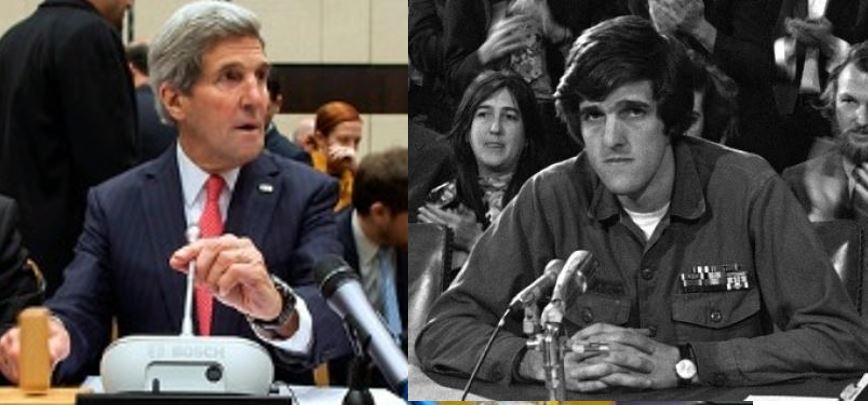
The John Kerry of 2014 wears the suit of a diplomat while advocating forever war. Does he ever look back on the John Kerry of 1971, who wore the uniform of a soldier to advocate for peace?
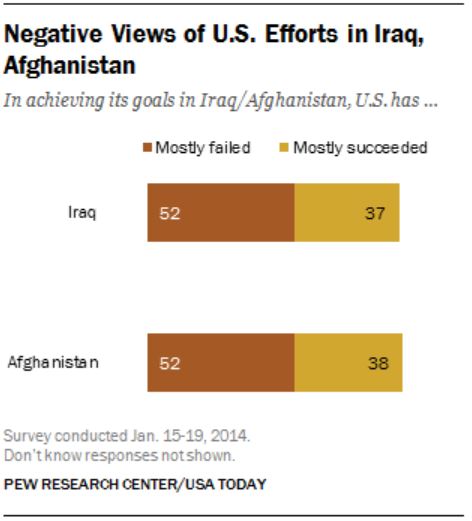
On April 23, 1971, John Kerry, speaking as a member of Vietnam Veterans Against the War, appeared before the Senate Foreign Relations Committee and famously posed the question “How do you ask a man to be the last man to die for a mistake?”. On December 2, 2014, Kerry, in his capacity as US Secretary of State, convened a meeting of Foreign Ministers of countries allied against ISIS. Sadly, the wisdom of 1971 John Kerry was completely lost on 2014 John Kerry, as the meeting in Brussels was aimed entirely at making war on ISIS without regard for the residents of the region who will bear the brunt of the new violence and who have faced severe hardships for years as a result of US meddling in the region. Kerry’s plan shows no regard for the hard evidence that exists showing that the approach being taken by the US has failed many times over since the failure in Vietnam which he so forcefully described.
Kerry’s description of the shortcomings of the approach in Vietnam resonates with the current failed approach by the US in Iraq, Afghanistan, Syria and beyond:
We found that not only was it a civil war, an effort by a people who had for years been seeking their liberation from any colonial influence whatsoever, but also we found that the Vietnamese whom we had enthusiastically molded after our own image were hard put to take up the fight against the threat we were supposedly saving them from.
We found most people didn’t even know the difference between communism and democracy. They only wanted to work in rice paddies without helicopters strafing them and bombs with napalm burning their villages and tearing their country apart. They wanted everything to do with the war, particularly with this foreign presence of the United States of America, to leave them alone in peace, and they practiced the art of survival by siding with whichever military force was present at a particular time, be it Viet Cong, North Vietnamese or American.
Kerry pointed out in 1971 that residents of an area under siege by invaders often choose to side with whatever force is there in order to survive. But in 2014, Kerry is pushing the US effort to “vet“, train and equip “moderate” fighters to take on ISIS while the US provides air support. How long will these fighters be on “our” side?
And, of course, a very distorted view of the effort gets presented at home, then as now:
We saw Vietnam ravaged equally by American bombs and search and destroy missions, as well as by Viet Cong terrorism – and yet we listened while this country tried to blame all of the havoc on the Viet Cong.
If we look just at Syria, it is clear that those outside the US see US meddling behind the “uprising” against al-Assad. From a 2012 Christian Science Monitor article:
In an empty coffee house in Antakya, local tradesman Ahmet Sari’s face crumples in anger as he speaks about Syria.
“What’s happening in Syria is all part of America’s great project to reshape the borders of the Middle East. America and its allies don’t care about bringing democracy to the Syrian people. Look at what happened to Iraq!” he fumes. “The imperialist countries are only after oil and mineral resources.”
/snip/
And many say that all of these problems can be traced back to the US, who they are convinced got involved with, and perhaps even fomented, the Syrian unrest to loosen up regional powers’ grip on oil, enlisting Turkey as a pawn in the process. It had little to do with support for democracy, they believe.
People in Turkey, who already were dealing with the influx of refugees two years ago, clearly saw a very similar situation in Syria as Kerry saw in Vietnam in 1971. And now, the problems in Turkey are much worse, as the needs of refugees have completely overwhelmed the capacity of relief organizations to help.
We know for a fact that funding and arming rebels almost never works, as the CIA found when reviewing its own efforts on that front. Rather than taking that clear piece of information and trying a new approach based on directly helping the people of the region rather than destabilizing it, the US chose instead to grasp at the last straw from the CIA study that said those few times arming rebels works it has been with “direct American support on the ground”. So rather than accept that their approach is a failure, the warmongers in Washington now think that US air support for the anti-ISIS efforts is a bare minimum and that “boots on the ground” will be needed for a “win”.
And when it comes to “training”, of course the US has failed miserably on that front every time it has tried. But we will just keep on doing it, because that’s all Washington can come up with.
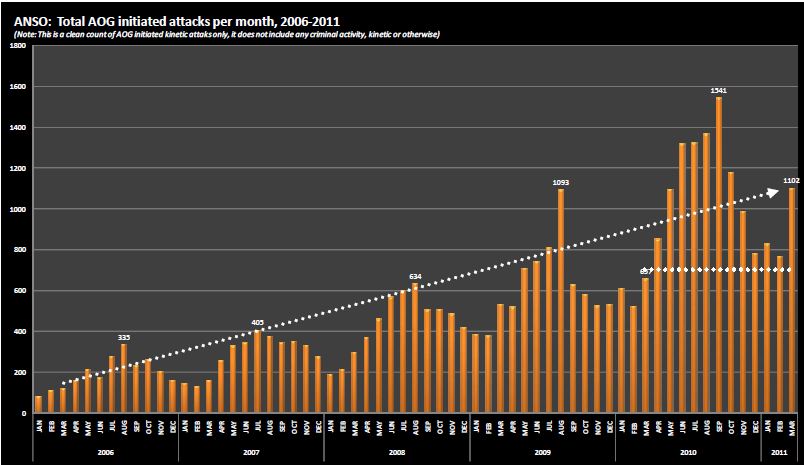
And even if we should “win”, holding onto ground gained is impossible, as Lt. Col. Daniel L. Davis has so devastatingly noted in his piercing of the myth of US superiority in its counterinsurgency program.
The contrast of 2014 John Kerry with 1971 John Kerry is brought into clear view with this part of Kerry’s opening statement to his war council yesterday: Read more →