Dunford Once Again Shows Complete Lack of Budget Awareness

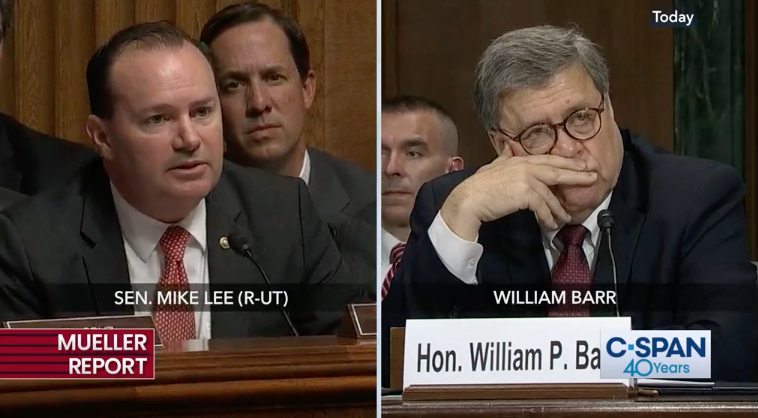
When we last heard from General Joseph (We Are Winning in Afghanistan, We Really Are!) Dunford, he was showing total incompetence in terms of budget awareness in front of the Senate Armed Services Committee. Defense Secretary Chuck Hagel had announced on March 28 that DoD was $7 billion over budget in Afghanistan. By the time Dunford was asked about the over-budget situation during the hearing on April 16, Mike Lee stated that the overage had grown to $10 billion. Despite being in charge of US and NATO troops in Afghanistan, Dunford professed complete ignorance of the over-budget situation. That is a stunning lack of situational awareness for someone who is supposed to be in charge. After bumbling on a bit, Dunford did promise to eventually get back to Lee on the budget issue.

It would appear that even if he has gone back and looked over his own money management failures, Dunford has looked no further than the DoD budget. The New York Times posted a story yesterday based on an interview with him, and Dunford made another statement that is mind-boggling in terms of its lack of awareness of budget realities for the region. Recall that back in February, NATO defense ministers proposed that instead of allowing Afghan National Security Forces to drop by about a third after the end of 2014, the full force size of “352,000″ (that’s in quotes because I think the SIGAR audit is going to finally destroy the 352,000 force size myth) should be maintained through at least 2018. My response to this suggestion was that it appeared to be a $22 billion bribe being offered to Afghan authorities in return for their agreeing to a Status of Forces Agreement that would grant criminal immunity to US forces remaining after the end of the official NATO mission at the end of 2014.

In the interview with the Times, Dunford continued his previous agreement with the concept of extending the time frame for the larger ANSF force size, but then made a suggestion that is stunningly stupid regarding how the extended force size should be funded:

He has concluded as well that plans to reduce the number of Afghan security forces — the army and police combined — to 228,000 after 2015 from the current target level of 352,000 are not realistic, given the threats in the country. “The consensus now both from the Afghans and certainly from us is that we ought to sustain that for some period time to come,” said General Dunford, referring to the 352,000 head count.

What is less clear is how such a force could be paid for. The international community, led by the United States, has agreed to pay roughly $4.1 billion in aid per year for the Afghan security forces after 2014, based on estimates of what a smaller Afghan security contingent would cost. If the Afghans want to keep a larger force, they will either have to field a cheaper army and police force or come up with more money themselves to pay for it. General Dunford suggested that the Afghans could economize, although he did not give examples of where they might find the savings.

That’s right. A totally dysfunctional, stunningly corrupt government should just somehow “economize” and find an additional $22 billion to fund a mythically large defense force.

Oh, and just like his own war effort in Afghanistan that has been mis-managed into a huge budget deficit, if Dunford only read the New York Times, he would be aware that the IMF has found Afghanistan’s government to be facing a serious budget shortfall:

The Afghan government is supposed to cover less than half its own bills this year, yet achieving even that modest goal is proving an unexpected challenge, Afghan and Western officials said.

A confidential assessment of Afghan finances by the International Monetary Fund said the potentially severe cash crunch was caused by widespread tax evasion abetted by government officials, the increasing theft of customs revenues by provincial governors and softening economic growth.

The I.M.F. assessment, which has not been publicly released but was described by American and European diplomats who were recently briefed on its findings, estimated that Afghan revenue in the first quarter of the year was roughly 20 percent to 30 percent short of an informal target the fund had set for the government.

Yeah, sure. With revenues already 20 to 30 percent short of projections, that’s a government that can just poke around a bit and find another $22 billion in the SOFA.


Senate Armed Services Committee Enters Fantasyland in Hearing on Afghanistan Withdrawal

Yesterday, while much of the world’s attention was focused on emerging details relating to the Boston Marathon bombings on Monday (along with a tiny bit of attention on the Constitution Center’s report on torture that Marcy was banned from improving), the Senate Armed Services Committee held a hearing on the withdrawal of troops from Afghanistan. This was the first hearing for new ISAF Commander General Joseph Dunford since he was confirmed.

I was only able to watch the first half of the hearing as it unfolded, but my overwhelming impression was that the committee felt it could put words into Dunford’s mouth. He mostly went along with that although at one point he finally did get fed up with John McCain speaking for him and pushed back a bit.

Completely missing in the hearing (at least in the part I was able to watch) was any perspective on the real controlling factor on whether the US leaves any troops in Afghanistan after the planned “end of combat operations” set for the end of 2014. The precedent of the Iraq full withdrawal once Iraq refused to grant criminal immunity to any US troops remaining there demonstrates that the Obama administration views criminal immunity as a controlling prerequisite for whether we will leave troops in Afghanistan. To that end, then, negotiation of a Status of Forces Agreement, or SOFA, is the most important step in determining whether we will keep troops in Afghanistan past 2014 and how many there will be.

Despite all the feel-good talk from the Defense Department and Capitol Hill, it seems very unlikely that Afghanistan will agree to grant immunity to US troops. However, an idea was floated by NATO back in February that I viewed as a very thinly veiled offer of an additional $22 billion dollars for Afghan officials to embezzle in return for a grant of immunity. The proposal was in the form of suggesting that NATO (primarily the US) would provide financial support for Afghanistan to maintain its Afghan National Security Force at 352,000 (a number that is more myth than reality) through the end of 2018 rather than reducing the force size by about a third once we leave.

Committee Chair Carl Levin opened the hearing by endorsing this purchase of a $22 billion SOFA. From his transcript of his opening statement:

It is in everyone’s interest to promptly set the conditions for any post-2014 partnership with Afghanistan.  NATO defense ministers have already begun consideration of the size and mission for a post-2014 force in Afghanistan.  One factor that will influence that decision is the size and capacity of the Afghan security forces.  In this regard, the recent decision by NATO defense ministers to support maintaining the Afghan security forces at the current 352,000 level through 2018, rather than reducing the support to a level of 230,000 as previously planned, sends an important signal of our continued commitment to a safe and secure Afghanistan, and may make it feasible for us to have a smaller U.S. and coalition presence after 2014.

Jim Inhofe’s opening statement was a magnificent exercise in ignorance and obfuscation. He chastised Obama for his “precipitous withdrawal” from Iraq and never acknowledged the lack of criminal immunity as the reason for the full and rapid withdrawal. Is there any doubt that if the US had left troops in Iraq without immunity that Inhofe would have been among the first to criticize Obama for leaving them there under those conditions once the first soldier was arrested?

The Tulsa World covered his statement: Continue reading


That Makes Over 21 Requests by 31 Members of Congress, Mr. President

Adding the letter that Barbara Lee, as well as a list of all Members of Congress who have, at one time or another, requested the targeted killing memos.

February 2011: Ron Wyden asks the Director of National Intelligence for the legal analysis behind the targeted killing program; the letter references “similar requests to other officials.” (1) 

April 2011: Ron Wyden calls Eric Holder to ask for legal analysis on targeted killing. (2)

May 2011: DOJ responds to Wyden’s request, yet doesn’t answer key questions.

May 18-20, 2011: DOJ (including Office of Legislative Affairs) discusses “draft legal analysis regarding the application of domestic and international law to the use of lethal force in a foreign country against U.S. citizens” (this may be the DOJ response to Ron Wyden).

October 5, 2011: Chuck Grassley sends Eric Holder a letter requesting the OLC memo by October 27, 2011. (3)

November 8, 2011: Pat Leahy complains about past Administration refusal to share targeted killing OLC memo. Administration drafts white paper, but does not share with Congress yet. (4) 

February 8, 2012: Ron Wyden follows up on his earlier requests for information on the targeted killing memo with Eric Holder. (5)

March 7, 2012: Tom Graves (R-GA) asks Robert Mueller whether Eric Holder’s criteria for the targeted killing of Americans applies in the US; Mueller replies he’d have to ask DOJ. Per his office today, DOJ has not yet provided Graves with an answer. (6) 

March 8, 2012: Pat Leahy renews his request for the OLC memo at DOJ appropriations hearing.(7)

June 7, 2012: After Jerry Nadler requests the memo, Eric Holder commits to providing the House Judiciary a briefing–but not the OLC memo–within a month. (8)

June 12, 2012: Pat Leahy renews his request for the OLC memo at DOJ oversight hearing. (9)

June 22, 2012: DOJ provides Intelligence and Judiciary Committees with white paper dated November 8, 2011.

June 27, 2012: In Questions for the Record following a June 7 hearing, Jerry Nadler notes that DOJ has sought dismissal of court challenges to targeted killing by claiming “the appropriate check on executive branch conduct here is the Congress and that information is being shared with Congress to make that check a meaningful one,” but “we have yet to get any response” to “several requests” for the OLC memo authorizing targeted killing. He also renews his request for the briefing Holder had promised. (10)

July 19, 2012: Both Pat Leahy and Chuck Grassley complain about past unanswered requests for OLC memo. (Grassley prepared an amendment as well, but withdrew it in favor of Cornyn’s.) Leahy (but not Grassley) votes to table John Cornyn amendment to require Administration to release the memo.

July 24, 2012: SSCI passes Intelligence Authorization that requires DOJ to make all post-9/11 OLC memos available to the Senate Intelligence Committee, albeit with two big loopholes.

December 4, 2012: Jerry Nadler, John Conyers, and Bobby Scott ask for finalized white paper, all opinions on broader drone program (or at least a briefing), including signature strikes, an update on the drone rule book, and public release of the white paper.

December 19, 2012: Ted Poe and Tredy Gowdy send Eric Holder a letter asking specific questions about targeted killing (not limited to the killing of an American), including “Where is the legal authority for the President (or US intelligence agencies acting under his direction) to target and kill a US citizen abroad?”

January 14, 2013: Wyden writes John Brennan letter in anticipation of his confirmation hearing, renewing his request for targeted killing memos. (11)

January 25, 2013: Rand Paul asks John Brennan if he’ll release past and future OLC memos on targeting Americans. (12)

February 4, 2013: 11 Senators ask for any and all memos authorizing the killing of American citizens, hinting at filibuster of national security nominees. (13)

February 6, 2013: John McCain asks Brennan a number of questions about targeted killing, including whether he would make sure the memos are provided to Congress. (14)

February 7, 2013Pat Leahy and Chuck Grassley ask that SJC be able to get the memos that SSCI had just gotten. (15)

February 7, 2013: In John Brennan’s confirmation hearing, Dianne Feinstein and Ron Wyden reveal there are still outstanding memos pertaining to killing Americans, and renew their demand for those memos. (16)

February 8, 2013: Poe and Gowdy follow up on their December 19 letter, adding several questions, particularly regarding what “informed, high level” officials make determinations on targeted killing criteria.

February 8, 2013: Bob Goodlatte, Trent Franks, and James Sensenbrenner join their Democratic colleagues to renew the December 4, 2012 request. (17)

February 12, 2013: Rand Paul sends second letter asking not just about white paper standards, but also about how National Security Act, Posse Commitatus, and Insurrection Acts would limit targeting Americans within the US.

February 13, 2013: In statement on targeted killings oversight, DiFi describes writing 3 previous letters to the Administration asking for targeted killing memos. (18, 19, 20)

February 20, 2013: Paul sends third letter, repeating his question about whether the President can have American killed inside the US.

February 27, 2013: At hearing on targeted killing of Americans, HJC Chair Bob Goodlatte — and several other members of the Committee — renews request for OLC memos. (21)

March 11, 2013: Barbara Lee and 7 other progressives ask Obama to release “in an unclassified form, the full legal basis of executive branch claims” about targeted killing, as well as the “architecture” of the drone program generally. (22)

All Members of Congress who have asked about Targeted Killing Memos and/or policies

  1. Ron Wyden
  2. Dianne Feinstein
  3. Saxby Chambliss
  4. Chuck Grassley
  5. Pat Leahy
  6. Tom Graves
  7. Jerry Nadler
  8. John Conyers
  9. Bobby Scott
  10. Ted Poe
  11. Trey Gowdy
  12. Rand Paul
  13. Mark Udall
  14. Dick Durbin
  15. Tom Udall
  16. Jeff Merkley
  17. Mike Lee
  18. Al Franken
  19. Mark Begich
  20. Susan Collins
  21. John McCain
  22. Bob Goodlatte
  23. Trent Franks
  24. James Sensenbrenner
  25. Barbara Lee
  26. Keith Ellison
  27. Raul Grijalva
  28. Donna Edwards
  29. Mike Honda
  30. Rush Holt
  31. James McGovern


Did Susan Collins Switch Parties? Cause She Wanted OLC Memos, Too

I hate to waste an entire post on this.

But the NYT’s report last night that President Obama was going to capitulate to the Benghazi truthers rather than turn over memos revealing who and where he has been killing people — as well as all the secondary reporting on it — has made this claim.

Rather than agreeing to some Democratic senators’ demands for full access to the classified legal memos on the targeted killing program, Obama administration officials are negotiating with Republicans to provide more information on the lethal attack last year on the American diplomatic compound in Benghazi, Libya, according to three Congressional staff members.

The strategy is intended to produce a bipartisan majority vote for Mr. Brennan in the Senate Intelligence Committee without giving its members seven additional legal opinions on targeted killing sought by senators and while protecting what the White House views as the confidentiality of the Justice Department’s legal advice to the president. It would allow Mr. Brennan’s nomination to go to the Senate floor even if one or two Democrats vote no to protest the refusal to share more legal memos. [my emphasis]

On February 4, Susan Collins was among the 11 Senators who signed a letter asking for “any and all legal opinions that lay out the executive branch’s official understanding of the President’s authority to deliberately kill American citizens.”

Perhaps Collins has been satisfied with the brief glimpse at the two memos it shared with the Committee back on February 7. Perhaps she — the Senator on the Intelligence Committee who asked the best questions about targeted killing efficacy — is not all that interested in the other memos the Administration is hiding, presumably along with uses of targeted killing she isn’t being briefed on. Perhaps she no longer supports the hinted hold-up for national security nominees.

But even on the Senate Intelligence Committee, the call for the targeted killing memos was a bipartisan affair (among those not on the committee, Mike Lee and Chuck Grassley also signed the letter, and Rand Paul sent his own demand for the memos). Heck, once upon a time, John Cornyn wanted to legislatively demand the memos.

Demanding that the President reveal what kind of targeted killing programs it supports is no hippie fetish. It is something that members of both parties have supported.


Will Senators Filibuster Chuck Hagel’s Nomination to Get the Targeted Killing Memo?

Eleven Senators just sent President Obama a letter asking nicely, for at least the 12th time, the targeted killing memo. They remind him of his promise of transparency and oversight.

In your speech at the National Archives in May 2009, you stated that “Whenever we cannot release certain information to the public for valid national security reasons, I will insist that there is oversight of my actions — by Congress or by the courts.” We applaud this principled commitment to the Constitutional system of checks and balances, and hope that you will help us obtain the documents that we need to conduct the oversight that you have called for. The executive branch’s cooperation on this matter will help avoid an unnecessary confrontation that could affect the Senate’s consideration of nominees for national security positions. 

And asks — yet again — for “any and all memos.”

Specifically, we ask that you direct the Justice Department to provide Congress, specifically the Judiciary and Intelligence Committees, with any and all legal opinions that lay out the executive branch’s official understanding of the President’s authority to deliberately kill American citizens.

But perhaps the most important part of this letter is that it refers not just to John Brennan’s nomination, but to “senior national security positions.”

As the Senate considers a number of nominees for senior national security positions, we ask that you ensure that Congress is provided with the secret legal opinions outlining your authority to authorize the killing of Americans in the course of counterterrorism operations.

There are just 11 Senators on this list:

  • Ron Wyden (D-Ore.)
  • Mike Lee (R-Utah)
  • Mark Udall (D-Colo.)
  • Chuck Grassley (R-Iowa)
  • Jeff Merkley (D-Ore.)
  • Susan Collins (R-Maine)
  • Dick Durbin (Ill.)
  • Patrick Leahy (D-Vt.)
  • Tom Udall (D-N.M.)
  • Mark Begich (D-Alaska)
  • Al Franken (D- Minn.)

And just three of these — Wyden, Mark Udall, and Collins — are on the Intelligence Committee. That’s not enough to block Brennan’s confirmation.

But it may be enough to block Hagel’s confirmation, given all the other Republicans who are opposing him.


Sheldon Whitehouse Confirms FISA Amendments Act Permits Unwarranted Access to US Person Content

In the Senate Judiciary Committee’s markup of the FISA Amendments Act, Mike Lee, Dick Durbin, and Chris Chris Coons just tried, unsuccessfully, to require the government to get a warrant before it searched US person communications collected via the targeting of non-US person under the FISA Amendments Act. It was, as Dianne Feinstein said, not dissimilar from an amendment Ron Wyden and Mark Udall had tried to pass when FAA was marked up before the Senate Intelligence Committee.

The debate revealed new confirmation that the government is wiretapping American citizens in the guise of foreign surveillance.

DiFi argued that the amendment would have impeded the government to pursue Nidal Hassan by delaying the time when they could have reviewed his communication (presumably with Anwar al-Awlaki). Of course, the amendment included an emergency provision that would have permitted such a search after the effect.

More telling, though, was Whitehouse’s response. He referred back to his time using warrants as a US Attorney, and said that requiring a warrant to access the US person communication would “kill this program,” and that to think warrants “fundamentally misapprehends the way in which this program operates.”

Now, I’d be more sympathetic to Whitehouse here if, back when this bill was originally argued, his amendments requiring FISC oversight of minimization after the fact had passed. They didn’t. To make things worse, though Leahy repeatedly talked about Inspector General reporting overdue on this program, Congress is not going to wait for these reports before they extend the program for another three years, at least. So Whitehouse’s assurances that we can trust minimization to protect US person privacy seems badly misplaced.

In any case, this represents an admission, as strong as any we’ve seen, that this program is entirely about collecting the US person communication of those who communicate with people (DiFi used the term “person of interest,” which I had not heard before) overseas.

Update: Updated to explain this came in a markup hearing. Thanks to Peterr for pointing out my oversight on that point.


Most Blunt Amendment Supporters Likely to Have Used Birth Control

I confess. I’m contemplating calling all the Senators who voted for the Blunt Amendment yesterday to ask for a statement detailing:

  • What the Senators’ history of reproductive choice has been, including details on what kinds of birth control they’ve used and who paid for it
  • Whether the Senators (or their spouses) have used erectile dysfunction drugs, and who paid for it

Mind you, I think such questions are inappropriate. But given that 48 Senators–including 3 Democrats and 4 women–voted yesterday to say that employers should have really intrusive control over their employees’ healthcare decisions (including, but in no way limited, to reproductive health), it seems fair to at least inquire whether these men and women have been relying on birth control to plan their families, whether their use of birth control violates their religion’s stated doctrine, and whether taxpayers paid for birth control during their child-bearing years.

As you can see from the list below, the vast majority of Senators who voted for the Blunt Amendment are likely to have relied on birth control or sterilization to limit their family size. Just three–Susan Collins, Kay Bailey Hutchison, and Lindsey Graham–have no biological children. And just three–Mike Crapo (5), Chuck Grassley (5), and Orrin Hatch (6)–have more than 4 biological children (McCain and Blunt have more with their adopted kids). Of those likely to have used birth control or sterilization, 22 worked for local, state, or federal government during a roughly calculated “child-bearing” period of their life, meaning taxpayers may have paid for their birth control (though of course their spouses’ employers may have provided health care, too). Of those likely to have used more than the rhythm method, 10 are Catholic.

So I’m going to contemplate this over the weekend. But for the moment, consider that the great majority of the Senators who voted to let employers restrict birth control access seem to have families that have been shaped by birth control.

Note the following details are a first draft–please let me know of any inaccuracies.

Continue reading


Senate Passes Defense Authorization

The final vote was 86-13. No votes were Lee, Paul, DeMint, Risch, Crapo, and Coburn (the last three not on civil liberties grounds), and Cardin, Wyden, Sanders, Durbin, Franken, Harkin, and Merkley.

I’m sure Obama will sign this in time for us all to be indefinitely detained this weekend.

Update: Senator Franken sent out a statement explaining his no vote. It ends, “Today is the anniversary of the ratification of the Bill of Rights, and this wasn’t the way to mark its birthday.”