
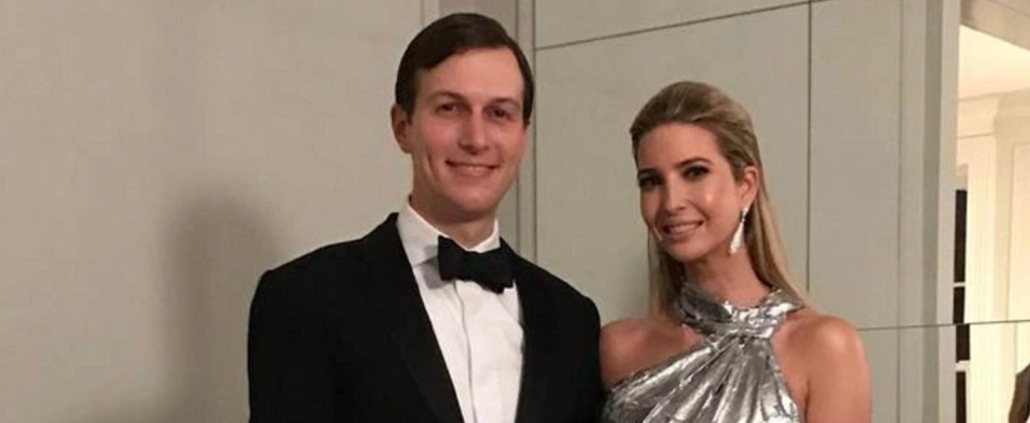
Donald Trump Will Piss Away the Western Order Investing in Jared Kushner’s Imagined Business Savvy
It is just over nine years to the day since Jared Kushner naively asked Russian Ambassador Sergei Kislyak to use Russian secure facilities to communicate in such a way that US spies wouldn’t find them.
Kushner went forward with the meeting that Kislyak had requested on November 16. It took place at Trump Tower on November 30, 2016.1139 At Kushner’s invitation, Flynn also attended; Bannon was invited but did not attend.1140 During the meeting, which lasted approximately 30 minutes, Kushner expressed a desire on the part of the incoming Administration to start afresh with U.S.-Russian relations.1141 Kushner also asked Kislyak to identify the best person (whether Kislyak or someone else) with whom to direct future discussions—someone who had contact with Putin and the ability to speak for him.1142
The three men also discussed U.S. policy toward Syria, and Kislyak floated the idea of having Russian generals brief the Transition Team on the topic using a secure communications line.1143 After Flynn explained that there was no secure line in the Transition Team offices, Kushner asked Kislyak if they could communicate using secure facilities at the Russian Embassy.1144 Kislyak quickly rejected that idea.1145
Shortly after Kushner indicated his enthusiasm for back-channel discussions that US spies couldn’t find, Sergei Kislyak threw Sergey Gorkov at him — someone who would dangle financial goodies that would require overturning sanctions to collect, someone functionally analogous to Kirill Dmitriev.
The accounts from Kushner and Gorkov differ as to whether the meeting was diplomatic or business in nature. Kushner told the Office that the meeting was diplomatic, with Gorkov expressing disappointment with U.S.-Russia relations under President Obama and hopes for improved relations with the incoming Administration.1157 According to Kushner, although Gorkov told Kushner a little bit about his bank and made some statements about the Russian economy, the two did not discuss Kushner’s companies or private business dealings of any kind.1158 (At the time of the meeting, Kushner Companies had a debt obligation coming due on the building it owned at 666 Fifth Avenue, and there had been public reporting both about efforts to secure lending on the property and possible conflicts of interest for Kushner arising out of his company’s borrowing from foreign lenders.1159)
In contrast, in a 2017 public statement, VEB suggested Gorkov met with Kushner in Kushner’s capacity as CEO of Kushner Companies for the purpose of discussing business, rather than as part of a diplomatic effort. In particular, VEB characterized Gorkov’s meeting with Kushner as part of a series of “roadshow meetings” with “representatives of major US banks and business circles,” which included “negotiations” and discussion of the “most promising business lines and sectors.”1160
It’s all there in the Mueller Report, plain as day: From the very start Jared Kushner planned to use his role in Trump’s White House for his own benefit. It was in the background of his dealings with Mohammed bin Salman, who has domesticated him since. It was the plan for Russia, too, until Mike Flynn’s shitty OpSec scuttled the plan.
Even in the first iteration of this fraud, Jared was hiding what he was doing from the Secretary of State — at that point Rex Tillerson.
And then Kirill Dmitriev picked right up where he left off eight years earlier, finding the weak venal levers for Trump and, ultimately, Jared. The plan didn’t succeed in February. It came closer but didn’t succeed in August. In November, once Dmitriev finally got Kushner on board, it seems to be succeeding.
It’s all worth revisiting again given this important (but nauseating) report from WSJ– one they themselves suggest is the follow-up to their report, Make Money Not War: Trump’s Real Plan for Peace in Ukraine.
The way the Russians succeeded in getting Trump to sell out Ukraine and the West (and I promise you, Trump has no fucking clue the ramifications of this and probably doesn’t give a fuck anyway) was by taking the $300 billion seized by Europe as punishment for their invasion of Ukraine — money Europeans were hoping to use to arm Ukraine — and instead used it to bribe Trump, effectively.
The Trump administration in recent weeks has handed its European counterparts a series of documents, each a single page, laying out its vision for the reconstruction of Ukraine and the return of Russia to the global economy.
The proposals have sparked an intense battle at the negotiating table between America and its traditional allies in Europe. The outcome stands to profoundly alter the economic map of the continent.
The U.S. blueprint has been spelled out in appendices to current peace proposals that aren’t public but were described to The Wall Street Journal by U.S. and European officials. The documents detail plans for U.S. financial firms and other businesses to tap roughly $200 billion of frozen Russian assets for projects in Ukraine—including a massive new data center to be powered by a nuclear plant currently occupied by Russian troops.
Another appendix offers America’s broad-strokes vision for bringing Russia’s economy in from the cold, with U.S. companies investing in strategic sectors from rare-earth extraction to drilling for oil in the Arctic, and helping to restore Russian energy flows to Western Europe and the rest of the world.
[snip]
If the U.S. vision prevails, it would override Europe’s own plans to shore up Ukraine’s wartime government and further cement Russia’s economic isolation. The result is what several officials described as a frenzied race to move ahead before the U.S. imposes its own arrangements.
U.S. officials involved in the negotiations say Europe’s approach would quickly deplete the frozen funds. Washington, on the other hand, would tap Wall Street executives and private-equity billionaires to invest the money and expand the amount available to invest. One official involved in the talks said the pot could grow to $800 billion under American management. “Our sensibility is that we really understand financial growth,” the official said.
On Wednesday, Ukrainian President Volodymyr Zelensky said he had held productive conversations with the investment firm BlackRock’s chief executive, Larry Fink.
The U.S. negotiating team sees shared economic activity and energy interdependence as the cornerstone of its business-for-peace philosophy: Ukrainian data centers would draw power from the currently Russian-occupied Zaporizhzhia nuclear plant, Europe’s largest, for example.
Some European officials who have seen the documents said they weren’t sure whether to take some of the U.S. proposals seriously. One official compared them to President Trump’s vision of building a Riviera-style development in Gaza. Another, referring to the proposed U.S.-Russia energy deals, said it was an economic version of the 1945 conference where World War II victors divvied up Europe. “It’s like Yalta,” he said.
Just as pitching Trump on a Riviera where millions of Gazans once lived, Bibi Netanyahu solicited Trump’s assistance in genocide, so has Dmitriev convinced Trump to sell out the Western order by turning the nuclear plant they stole into fuel for a data center.
As Judd Legum lays out, this is all happening via a guy, Jared, effectively serving as an agent of the Saudis.
Kushner is engaged in activities that can only be conducted by government officials. The Logan Act bars private citizens from engaging in negotiations with foreign governments without authorization. Kushner is acting in an authorized capacity, under Trump’s direction, and that creates a host of legal issues.
As a de facto SGE with substantial authority, the Foreign Emoluments Clause of the Constitution prohibits Kushner from accepting “any present, Emolument, Office, or Title, of any kind whatever, from any King, Prince, or foreign State.”
Since leaving the White House in 2021, Kushner has raised at least $4.8 billion for Affinity Partners, his private equity firm. Nearly 99% of Affinity Partners’ funding comes from foreign sources. The largest investment, $2 billion, came from the Public Investment Fund of Saudi Arabia (PIF).
The Saudi government pays Kushner 1.25% of its investment, or $25 million annually. Other investors, including the governments of Qatar and the United Arab Emirates (UAE), pay annual fees of up to 2%. As of September 2024, Affinity Partners had collected $157 million in fees, mainly from Middle Eastern governments.
Kushner is continuing to collect these fees as he serves in a top foreign policy role for the Trump administration. This is precisely the kind of behavior the Foreign Emoluments Clause was designed to prevent.
See also Legum’s assessment of Jared’s role in Paramount’s effort to buy Warner using foreign (and Jared’s) money.
Horse trading away a half century alliance is bad enough.
But remember: These people are horrible businessmen. There’s no sign that Jared has any competence to judge these deals on the merits. He’s not a competent businessman, he’s a captured one.
And Trump was vastly more successful as a businessman when reality TV show producers controlled the plot than he every was IRL.
Throw enough goodies at my son-in-law and I will betray Europe, Donald Trump seems to be saying.
And that’s all it took.


Burisma: $5 million for an influence operation that didn’t work on Biden, compared to $2 billion to buy Jared. It’s like pointing out the water splash on the counter when the kitchen is flooded to the counter.
My goodness! Who will bell the cat? Is our system so poorly designed that if if our Department of Justice fails to act, nothing can be done but rend our garments and keen for a bygone era? What exactly is the role of the legislative branch in supervising the mandate of special government employees? I fear that posing this question to the Supreme Court will not lead to any changes in their view of the unitary executive’s ambit, so that branch of government won’t provide any relief…
This is why you vote. And this is why you do all you can to secure access to the vote for all the others who will have it restricted, next year and hereafter.
Just wanted to emphasize this is how our system was designed to work, with layers of accountability and the voters the foundational layer. The Congress, made up of voter representatives in the House and elite representatives in the Senate were the penultimate check on a rouge Executive. The Supreme Court invented its role with Marbury vs Madison, and everyone went along because it was necessary, not because it was a good idea. The role of political parties doesn’t exist in the Constitution and the transformation of one of the 2 of them into a death cult will prove to be fatal unless the voters decide otherwise.
Of course there’s the not small matter of timing. Recognizing that the Republican Party has gone, in the immortal line from Tropic Thunder, “full retard” means that the next 12+ months devoted to slavish slavering and national self-destruction may obviate an electoral victory in the midterms. It’s our only hope, Obi Wan, but this ain’t Star Wars.
Rouge really has gone rogue.
A lot of Constitutional Law is required to fully understand but I’d start with the 10th Amendment and the overturning of Roe! Our amazing SCOTUS recently ruled that “States Rights” are a real thing. I’m confident that their cabal would find a way to leverage that.
I’d rather see We The People leverage it first!
What America has now “achieved” for itself, both at home and abroad, is effectively a return to the sale of indulgences.
Not to get into heaven this time round OFC, but into obligation to Trump. Something more like hell. A two-way Faustian bargain. And ultimately, one way or another, there will be hell to pay.
Well done. And Fraud Guy’s first comment is the cherry atop the Sundae.
Its as if the Trumpers’ eyes were bulging at that $300 billion, “How can we get our hands on that?”
The seized Russian assets should have been allocated to Ukraine and its defense a long time ago.
Kind of reminds me of how he was upset that the 2017 inaugural committee was spending money that he thought should be his. Any pile of money laying around is his, just like the toddler-in-chief that he is.
The truism of the gambling industry is simple: The House always wins.
With that in mind, consider a simple question: How good a businessperson is Trump? He presided over his casinos going bankrupt. Repeatedly.
Or, to borrow another gambling metaphor to summarize this post, Trump is not a player; he’s the mark.
Except that, Trump still walked away with money, while the companies he ran were destroyed. As long as he gets his money, he doesn’t mind being played.
I like business people who walk away with money while NOT destroying their companies.
Banks like business people like that, too.
Except for Deutsche Bank, remember. There’s always one willing to operate in the corrupt zone. At least one. And Deutsche got a “president”!
Banks weren’t lending to Convict-1 either, outside of the Russian ones (like VEB IIRC) and other sanctioned ones. Deutsche Bank was the last, and Convict-1 sued them for asking for loan repayment and DB cut the ties. With the current grift machine, I’m sure deals will be done as long as there is revenue to exploit.
“The mark” doesn’t accomplish this on his own!
https://www.latimes.com/archives/la-xpm-1989-10-11-fi-229-story.html
So who’s mark is he really is the question to be asking!
And who knows (really, who? He’s dumb but actively trying to hide this stuff from the CIA) what blackmail either MBS “The Bonesaw” has or that Putin has on young Jared. The stuff that is espionage against him that might not be against the US directly (and subject to a pardon) but might require him to fly weird routes to avoid EU airspace.
“Young Jared” isn’t that young anymore. He was always an old man in a young one’s body, and it’s starting to show. Have you seen a recent photo of him? He smiles with such brittleness he seems to fear it will make his face crack.
I see the same suspicious and dangerous look in Jared’s eyes as I see in KJU’s sister. That’s not a good thing.
Yeah. Learned his lesson too late, and now he’s in too deep. FA&FO Jared.
Sounds a bit Dorian Gray.
He’s a man-child, same as Trump, that never grew up or learned about responsibility or accountability. His dad bought his way into things until his dad bought his way into prison. Once there, young Jared used his father-in-law to buy his dad out.
He’s a boy playing at genius negotiator among men. And it shows. And young Jared is either too stupid to realize how outmatched he is and accepts being given crumbs like it was a royal feast, or he does realize he’s a child and accepts the crumbs as the best he can do.
The solution is winning elections. Democrats and others opposed to Trump and company and their horrific corruption need to unite the country and win. We need politicians who put their personal interests and egos aside focusing solely on what is good for the American people. We need a clear vision for moving forward and relentless unified messaging. This needs to include a plan to address our system’s anti majoritarian tendencies. And maybe most importantly, getting money out of politics through court packing, legislation, constitutional amendment—whatever it takes. It will be a years long mission. I’m optimistic that it has begun and that it will succeed.
I remember my house cleaner asking me if I was going to vote for Trump. Never mind that through our conversations she knew I was a Dem. I asked her if she thought Trump cared about her life. She just smiled. I told her Trump only cares about making himself, his family and his billionaire friends richer. That’s all he’s going to do. And that he didn’t give half a shit about her and her family. She just smiled. That was the last time she cleaned our house. But I also thought Trump would keep up a veneer of looking out for people like her. Maybe a blessing is that he dropped the veneers mostly and is just going for it for all to see. This ‘affordability is a hoax’ would have worked on my housekeeper back then. I don’t think it will work now. At least not for the next few election cycles. I think Trump has probably wiped that stupid smile off her face by now.
It appears that the Europeans could largely preempt this by using the $200 billion in Russian funds held at Euroclear in Belgium to fund Ukraine.
https://cepr.org/voxeu/columns/euroclear-and-geopolitics-immobilised-russian-assets
Given that what is at stake is existential for Europe they would be well advised to do this and do it quickly. Trump, Kushner, and Witkoff may have provided the impetus for doing so.
More broadly, there seems to be a bit of a race. Will Russia collapse economically, politically or militarily before Trump & Co. turn to reverse sanctions or direct aid to Russia? The Russians have started selling off their gold reserves-some 57% to date. That’s a sign of impending economic collapse. That is, if Trump doesn’t bail them out first.
Here’s the closing ‘graph of that Euroclear article:
Euroclear is balking at the call for confiscation, based on that instability fear. The article reports on the idea being circulated of forming a “bad bank” to receive the assets, the balance sheet of which will be premised on Russian restitution payments as an end result. That being unlikely, the bad bank would fold after having distributed all that Russian cash for UKN’s defense and reconstruction, and no other financial entities would thereby suffer.
Unfortunately, there is a sizeable pro-Russian contingent in the EU, creating drag on the idea of even touching those funds (along with the bureaucratic drag). Whether Euroclear could execute such a maneuver without full EU support and, indeed, impetus is another question altogether. Maybe this NSS (including the rough draft that has Trump’s crew slicing the EU down the middle) will convince them to do the right thing and put those funds fully in UKN’s hands.
International banks live in fear of confiscation of assets biting them in the ass.
It’s one thing if a govt prosecutor comes in with the appropriate legal docs and orders, gets assets frozen while a trial plays out, and then the assets are seized after a guilty verdict comes in.
It’s quite another if Country A says “we are seizing the assets of the govt of Country B that are in your bank.” The likely response from Country B is to walk into the branches of that bank within their borders and say “we are seizing the assets of the govt of Country A that are in your bank.”
It’s kind of hard to run a bank with things like this going on.
Russia’s threats about it’s money in European hands is also quite likely to be personal. Having your family murdered or finding yourself with a nuclear cocktail in your stomach unintentionally are potential risks for the Belgian’s making decisions about these assets.
Yes, that kind of fiduciary fear is (properly) endemic to the profession, but I assume that the “bad bank” idea is one that would be imposed via court order, such that Euroclear would be able to wash their hands. The other major bankers’ point of resistance to confiscation is, of course, the loss of a revenue stream from handling the money. That can be overcome by existential considerations.
Belgium is now headed by the N-VA, a Flemish nationalist party that pushed for Dutch to be the approved language of Flanders, supplanting French which was imposed as the official tongue on the clearly Dutch character of that northern region of Belgium. I wonder what they think of Hague-born Dutchman and NATO head Mark Rutte’s call-to-readiness for war against Russia, specifically referencing WWII?
https://www.reuters.com/business/aerospace-defense/natos-rutte-warns-allies-they-are-russias-next-target-2025-12-11/
The Hague is only about 80 miles from Antwerp. Comparing Putin to Hitler, as Rutte’s warning yesterday implied, may resonate in Belgium especially.
…and more pointedly, comparisons between Leopold III’s relationship with Hitler and those Belgians (and others in the EU) now willing to mollify Russia will be very potent in changing Belgian (and other Europeans’) minds.
Hungary and Belgium seem to be run by pro-Putin interests.
Belgium is in a funny spot. It’s heavily dependent on EU expenditures within its borders. It’s also a financial and commercial entrepot. I believe it’s the world’s largest trader in legal cut diamonds.
No doubt that peculiar economy attracts money laundering, as does the UK, whose London and southeastern UK property markets are heavily invested in by the world’s leading money launderers. I would be gobsmacked if Russian oligarchs had not attempted to exert substantial influence over it.
“On Wednesday, Ukrainian President Volodymyr Zelensky said he had held productive conversations with the investment firm BlackRock’s chief executive, Larry Fink.”
What in the AF.
Please tell me that Zelenskyy is not going to cave or be bought off.
Please.
And let the 11:44 AM post by Amicus12 grow legs. But that would all but guarantee no Tomahawks now, wouldn’t it?
Has Jared Kushner ever filed under the Foreign Agents Registration Act?
I note in passing that FARA was originally passed in 1938, in response to the unabashed representation of German interests by such made men of the elite as John Foster Dulles. He was nearly forced to resign as Sullivan & Cromwell’s managing partner, owing to his continuing representation of Nazi business interests. Ah, those were the days.
I don’t think so, Jared’s more of a Special Government Employee officially. That means the Emoluments Clause applies to him even if DoJ looks the other way. In Biden’s term, he would have to be registered but I doubt he did.
So, Jared is mindful of the five-year SOL and is hoping for a pardon, given that he’ll be exposed for at least two years after 2028.
Jared’s “business savvy” is right up there with his father-in-laws: non-existent.
Both men are mediocre “businessmen” who really only make money from grifting and cannot make money from their acumen – because neither posess business acumen.
I’m reminded that Jared’s secondary school teachers were flabbergasted that he was admitted into Harvard. For good reason.
Natalie Portman was in the same class at Harvard as Jared Kushner. As I recall, Stephen Colbert once asked her about him and she very politely said that he was not known as the smartest in his class.
Jared is similar to Trump – born with the right connections. Intelligence, experience, and acumen aren’t necessary when you inherit your father’s wealth, connections, lawyers and accountants. I wonder how long it would have taken the Saudis to stop funding Kushner’s investment company if Trump had not won re-election. He is a useful tool because of his father-in-law.
I was always amazed that it only cost his felon/Dad $2 million to buy him in. Would have thought it to be higher, or maybe the development folks saw him as a font of future donations
Bessent wants to make it easier for them:
Treasury Secretary Bessent calls for looser regulations for the U.S. financial system
https://apnews.com/article/treasury-scott-bessent-financial-stability-f7bd96bb99824fd10c7e3ca239830bff
I guess he liked what happened in 2007/2008. And probably all the other times conservative principles crashed the economy.
Trump got away with half a dozen bankruptcies in his ‘A plus plus plus plus’ business career; why should there be any consequences for bankrupting the USA? Will any real (i.e., rich) people suffer?
JarDon Gate
JarDon Gate,
Wrought iron fate,
The case that’s never closed.
Spook the market,
Spook the target,
Spook the Holy Ghost.
In like Flynn,
Pretend to win,
Mask what was supposed.
Toss a Stone
to Prince alone:
A Bann on who will boast.
Watch for Mitch
to scratch the itch
of butts that he likes most.
Super-duper
Barr abuser
wormed into its host.
Investigate,
Subjugate,
Bet on who will coast.
Spook the market,
Spook the target,
Spook the Holy Ghost.
JarDon Gate,
Wrought iron fate,
The case that’s never closed.
5/16/20
News from EDVA:
Ham Sandwich 2, US Government 0
Failure on a 2nd grand jury to indict Leticia James. No name on the prosecutor offering the case but probably one wanting to keep his law license and thus presented it honestly.
That’s one helluva ham samich
The greed and grift family from the “stable genius” gene.
The Felon Guy is now mad at the sign-language services:
Trump administration says sign language services ‘intrude’ on Trump’s ability to control his image
https://apnews.com/article/american-sign-language-trump-white-house-7ac33c635cdefd22154d6eb7e47d3d55
How would *he* know?
Kushner is a real piece of work and his pairing with Ivanka displays the partnership is based on grand ambition, on both sides. That someone could rise to such power with no apparent American business or political allies is what? Dumb luck or Machiavellianism of the highest order?
Trump loves Ivanka most of all.
One of my favorite passages from the Bible is from Timothy and says (in some translations), “The love of money is the root of all evil”. Notice that it says “all” not “some” evil. The author understood that what motivates men like Donald Trump and Jared Kushner is raw selfishness, greed and antipathy towards all others outside themselves.