
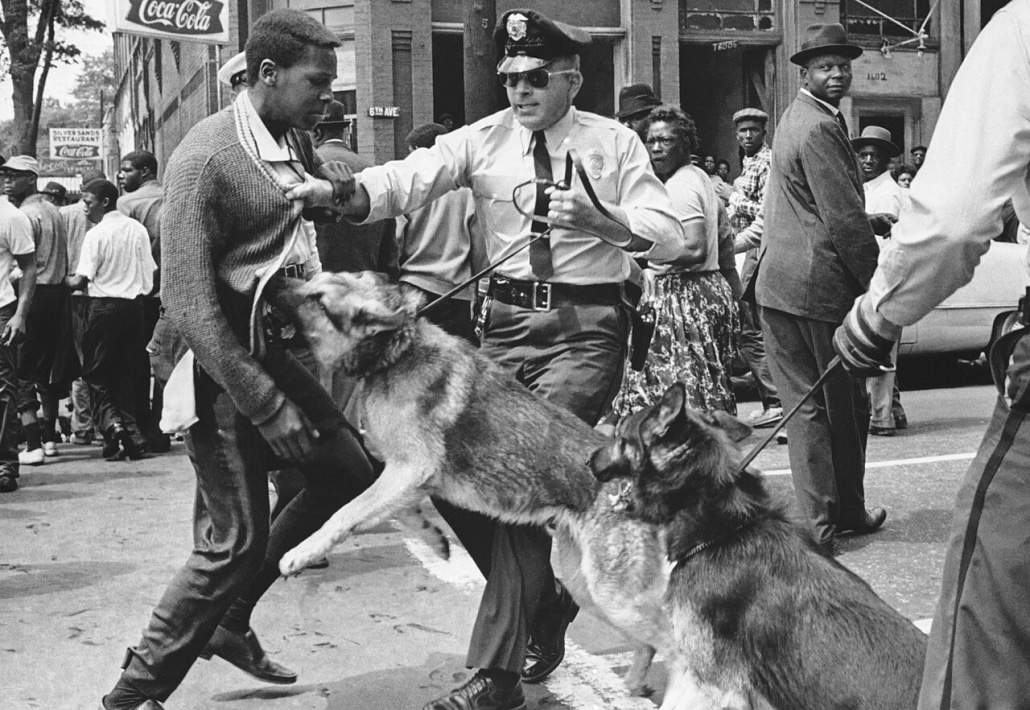
How Do You Want Your Family to Remember You?
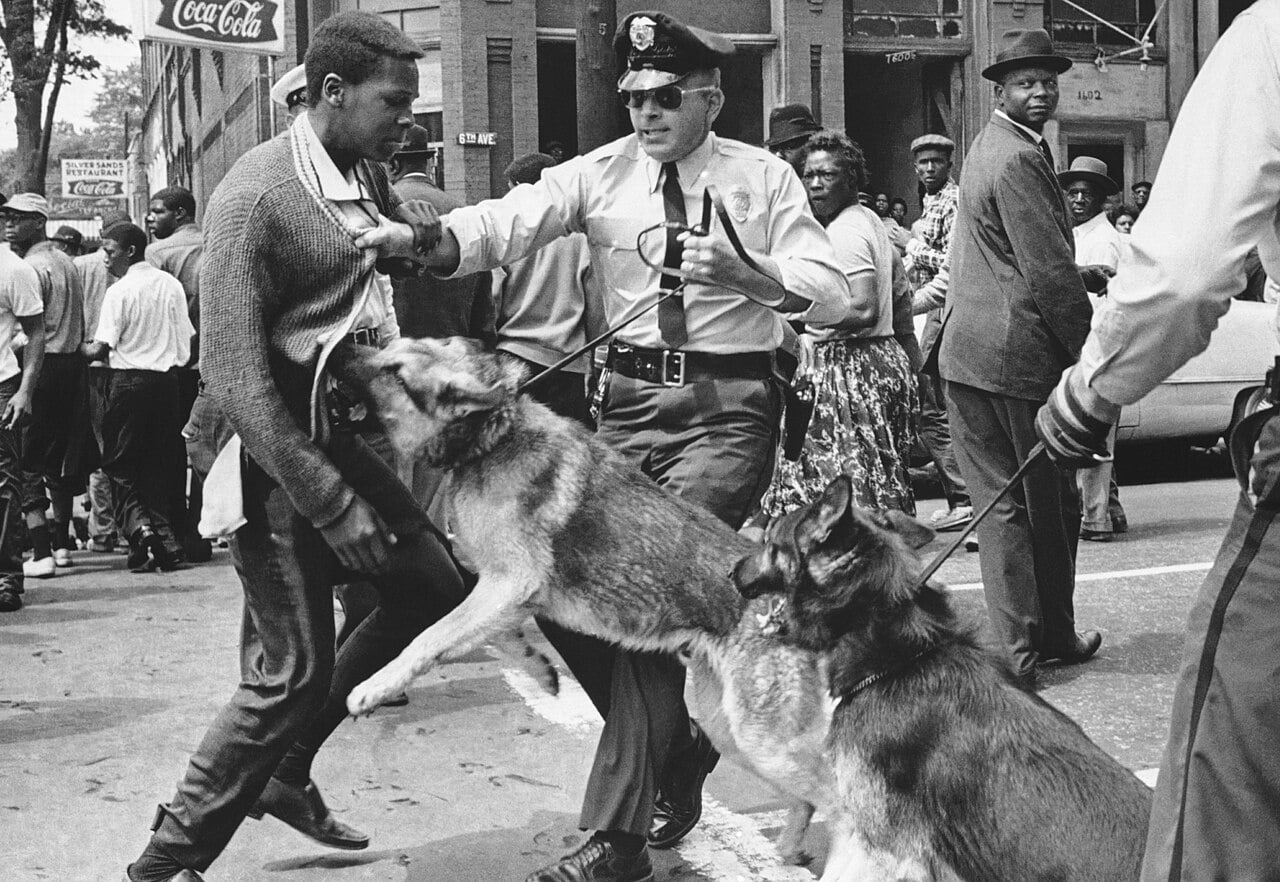
Do you want to he remembered as the guy being attacked by the dog, or as the guy controlling the dog?
Over the last several weeks, I’ve been thinking a lot about ugly government. Comparisons with the Gestapo have been increasingly prevalent, but other parallels have dominated my own thoughts.
When I was in seminary, before the fall of the Berlin Wall, I got to know a West German pastor who was at my US seminary for continuing education. Eberhart also had connections with his East German colleagues, who at that time were leading a growing resistance movement in Berlin, and their chief opponents were the East German Stasi. The Stasi, the secret police, were legendary for their data files. Their work was based on instilling fear, and they induced stunningly amazing numbers of East Germans into informing on their neighbors. Something along the lines of 1 in 6 East Germans were informants, whether out of fear or out of approval of what the East German government was doing.
When I read Marcy’s post about Hannah Natanson, I could not help but think of the Stasi.
In the course of my ministry, before South Africa abandoned apartheid, I came to know a South African Lutheran pastor named T. Simon Farishani. Farisani ran afoul of the legendarily violent South African Police, and was not simply arrested for making statements about equality but imprisoned and subjected to torture not once or twice, but four times. US Lutheran leaders who knew of his plight raises a huge international stink, which ultimately led the South African regime to release him and expel him from the country, allowing him to be treated at the Center for Victims of Torture in Minneapolis-St. Paul. The night before he was released, he told me that he prayed to die, so that he would be spared more torture the next day.
When I heard the news today of yet another killing by ICE in Minneapolis, I could not help but think of Farisani.
As I’ve watched the news from Minnesota, where I have more than a few clergy friends, I could not help but fear for them. More and more clergy are stepping away from benign statements of peace and love, and taking a pro-active stance against what is happening in their midst. I thought of them, and at the same time though about Archbishop Oscar Romero. Romero was appointed archbishop by Pope John Paul II based on his relatively conservative views, but as he watched what the Salvadoran government was doing to the poor and needy, he became increasingly vocal in challenging the regime. His sermons were broadcast on nationwide radio, and when he preached that the members of the Salvadoran military should refuse to do the dirty work of the government, the government decided that Romero had to be stopped. The next day, as Romero was holding the chalice at the celebration of Holy Communion, a government death squad burst into the sanctuary and shot him as he stood at the altar.
When I heard about the arrests of dozens of clergy in Minnesota, I could not help but think of Romero.
In the course of my ministry, I became friends with Bob and Jeannie Graetz. Bob was a white Lutheran pastor who took a call in Montgomery, Alabama, shortly after another young pastor came to town. Maybe you’ve heard of him: Martin Luther King Jr. Graetz had a choice between joining the white ministerial alliance as befitting his race, or the black ministerial alliance as befitting his congregation. He chose the black alliance.
Rosa Parks was a neighbor and a friend, and Bob and Jeannie were staunch supporters of the Montgomery Bus boycott that followed her refusal to give up her seat on a Mongomery bus. Bob and Jeannie joined their black neighbors in their protest work. They offered rides to people who were boycotting the buses. When the Montgomery City Council passed an ordinance against this, calling it an illegal taxi service, Bob continued offering rides, using the language of the ordinance that allowed giving rides to “friends.” Because to Bob and Jeannie, every black person in Montgomery had become one of their friends.
At one point, the black community decided to invite more arrests as a strategic move, so that the white community would look even worse in the eyes of the rest of the world. Bob volunteered to join his black clergy colleagues in this action, but they adamantly refused to let him. “Bob, if *we* get arrested,” meaning the black pastors, “they will throw us in cells on the black side of the jail. To our cellmates, we will be heroes. But if *you* get arrested, they will throw you in the cells on the white side of the jail. To your cellmates, you will be a traitor, and you know what happens to traitors. You don’t have to prove anything to us, so leave this kind of protest to us, and you keep up the work outside the jail.”
Bob and Jeannie Graetz paid a price for their support of the black community. They dealt with ostracism from the white community in Montgomery, and they had their home bombed not once but twice. And yet, they persisted.
I see the white community of Minneapolis, standing up to support their neighbors of color against the abuses of ICE, and I remember Bob and Jeannie Graetz.
My dad grew up in a bilingual German/English household, and when the family moved from Nebraska to central Missouri in 1943, his mom warned the kids not to speak German in their new town. “You can speak it at home, but not at school, not with your friends, and not around town.” And they didn’t. My dad, his older sister and his younger siblings, all kept their German to themselves.
When I hear about families in Minnesota not sending their kids to school, or sending them with proof of citizenship in their little pockets, or sending them with documents allowing their teachers to take custody of them if the parents were suddenly seized by ICE, I think about my dad.
As a teenager, I was an exchange student in West Germany. The dad in my host family was a kid during WWII and had been a member in the Hitler Youth as a kid, in the same way that thousands of US kids were Cub Scouts. It’s what you did at that age. He wasn’t old enough to have been pushed into military service during the war, but every one of his older relatives – dad, uncles, cousins, etc. – were. He and I talked not so much about the war as about the post-war occupation. He had some hilarious stories about clueless American soldiers (mostly 2nd lieutenants who were too filled with their own self-importance), as well as powerful stories that expressed his delight that his town was occupied by the US rather than the Soviet Union.
I remember all these folks, and am struck by how these memories are not about past events, past struggles, and past oppression. I remember all these folks, and how their stories about then are the stories we are living through right now.
I think of the Stasi then, and think of databases at the DOJ, databases built by Elon Musk and Mark Zuckerberg, and databases no doubt built by Peter Thiel and Palantir.
I think of the unaccountable South African Police then, and think of the unaccountable ICE and CPB today. If an ICE officer utters the magic words “I feared for my life,” they seem to be as free as bloodthirsty and vengeful and unaccountable old South African Police. Lock up those alleged terrorists, beat them and torture them, mock them and abuse them, and no one can stop you.
As I go about my work as a pastor, and see my colleagues doing the same — speaking up more and more loudly about the abuse being dished out by ICE and CPB — I wonder when the Archbishop Romero moment will come. Not if, but when. The shooting of a suburban mom a couple of weeks ago has escalated to the shooting today of an ICU nurse from a VA facility, and I cannot help but wonder when a shooting akin to Archbishop Romero will happen. Not if, but when.
No one who has heard me preach would ever accuse me of ignoring what is happening in the news. My parishioners might not agree with my politically, even as I challenged their own political views, but they have accepted my willingness to be the pastor of *everyone* in my congregation, not just those who shared my political stances. One member once put it like this, in the midst of a huge churchwide debate about gays and lesbians in the Evangelical Lutheran Church in America: “Pastor, I’m probably as far on the conservative end of the spectrum as you are on the liberal end, but I am honored to have you as my pastor.”
No comment about my pastoral work since then has ever warmed my heart more.
The stories of the Stasi are not simply remembrances of the past.
The stories of apartheid-era South African Police are not simply remembrances of the past.
The stories of Bob and Jeannie Graetz are not simply the remembrances of the past.
The stores of Archbishop Romero are not simply remembrances of the past.
These stories are playing out again today, in our midst, on the streets of the United States of America in 2026.
I remember these stories. I see Stephen Miller, and remember harangues of Hermann Goering and the departure of trains to concentration camps. I see Kash Patel and Greg Bovino, and remember Petrus Coetzee and brutality of the South African Police. I see ICE assailing the protesters of Minneapolis, and remember Bob and Jeannie Graetz. I see Kristi Noem, and remember my dad and his German-speaking siblings in central Missouri.
Surveillance-induced fear. Brutality-induced fear. The potential for governmental death squad-induced fear. This is our world today, and anyone who says otherwise is living with their head in the sand.
Between now and January 31st, Congress will be considering the appropriation bill for the Department of Homeland Security, including ICE and CBP, and the main battle will be fought in the Senate. My senators are Josh Hawley and Eric Schmitt — two of the most knee-jerk Trump supporters around — but I am not about to let them off the hook.
Do you want to be remembered like the Stasi? Then keep doing what you are doing.
Do you want to be remembered like the apartheid-era South African Police? Then keep doing what you are doing.
As things continue to escalate, do you want to be remembered like the killers of Archbishop Romero? Then keep doing what you are doing.
Ordinary Germans had a choice in how they reacted to the Stasi. Ordinary South Africans had a choice in how they reacted to the South African Police. Ordinary Americans had a choice in how they reacted to Bob and Jeannie Graetz and how they reacted to my bilingual dad, his parents, and his siblings.
Forget about how history will remember Stephen Miller, Kristi Noem, and Donald Trump, I will tell my senators. How do you want history – your neighbors, your kids, and your descendants — to remember you?


Leave a Reply
Want to join the discussion?Feel free to contribute!