
Trump’s Selective Drug Enforcement in Latin America
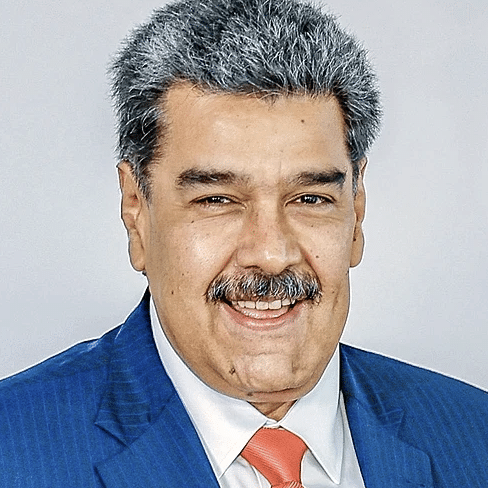
Donald Trump conducted a military invasion of Venezuela purportedly in service of arresting Nicolás Maduro to stand trial in the US.
The indictment against him (I assume it has been superseded since he was added in March of 2020) alleges that he personally was involved in negotiating FARC-sourced cocaine shipments.
5. While pursuing these and other objectives, NICOLÁS MADURO MOROS, the defendant, negotiated multi-ton shipments of FARC-produced cocaine; directed that the Cártel the Los Soles provide military-grade weapons to the FARC; coordinated foreign affairs with Honduras and other countries to facilitate large-scale drug trafficking; and solicited assistance from FARC leadership in training an unsanctioned militia group that functioned, in essence, as an armed forces unit for the Cártel de Los Soles.
Maduro’s former military intelligence head, Hugo Armando Carvajal Barrios, pled guilty in June. There’s no sign, at least not public, that Carvajal Barrios is cooperating (they’re holding a hearing this month before Judge Alvin Hellerstein because he claims not to have pled to the individual elements of the offense from which SDNY crafted an onerous sentence).
Meanwhile, I have already pointed to this excellent Bloomberg piece on the similar efforts SDNY made to bring former. President of Honduras Juan Orlando Hernández to justice. It describes how JOH’s family pitched Trump on a pardon in part by promising that with his pardon (and the return of his party to power, as has happened), Honduras would return the autonomous zones Trump allies like Peter Thiel have championed.
By July, the family and their lawyers had written an 18-page draft outlining some of the ways they might appeal to Trump’s pardon czar, Alice Marie Johnson. From Trump, they’d learned the language of modern political grievance: “Just like President Trump, President Hernández is a victim of lawfare, waged by the Biden administration.” If pardoned, Hernández would return to Honduras and dedicate himself to building a political movement in Latin America aligned with Trump’s foreign policy ambitions. The memo noted that Hondurans would go to the polls on Nov. 30 to elect a new president, and it suggested a timely pardon could energize conservatives in a region threatened by “radical left” regimes, including China and Venezuela. (Johnson didn’t respond to a request for comment.)
But it wasn’t only Trump who could benefit from a pardon. Castro, Hernández’s successor, repealed the legal framework that had established the country’s semi-autonomous economic development zones, including Próspera. That led the Honduran supreme court to declare those zones unconstitutional, triggering still-unresolved lawsuits from their investors. (Próspera continues to operate.) The memo asserted that Castro’s administration “has effectively stolen billions” from the financial backers of Próspera. The memo named Peter Thiel (“a longtime collaborator of Vice President J.D. Vance”) and Marc Andreessen (“who also donated millions to ensure that Trump’s policy goals could be achieved”).
A timely pardon—especially one delivered before the election—might remedy all that. It could also give Trump one more regional ally against the “narco-dicatorship” in Venezuela, where the Trump administration in September would begin launching military strikes against boats suspected of carrying drugs.
This kidnapping of Maduro is not about drug trafficking, though the indictment against him is real.
It’s about getting a piece of the action.
Update: Here’s the final paragraphs of a 1989 OLC opinion that then OLC head and future AG when Maduro was first indicted Bill Barr signed to rationalize the Panama invasion, on which this was surely modeled.
IV. Conclusion This Office concludes that at the direction of the President or the Attorney General the FBI may use its statutory authority under 28 U.S.C. § 533(1) and 18 U.S.C. § 3052 to investigate and arrest individuals for violations of applicable United States law, even if those actions depart from customary international law or unexecuted treaties. Moreover, we conclude that the President, acting through the Attorney General, has inherent constitutional authority to deploy the FBI to investigate and arrest individuals for violations of United States law, even if those actions contravene international law. Finally, we conclude that an arrest that is inconsistent with international or foreign law does not violate the Fourth Amendment.
35 There is some doubt whether the Fourth Amendment standard includes a requirement o f domestic law authority to arrest. The 1980 Opinion concluded that it does 4B Op O L C at 553-54. That Opinion relied principally on United States v. D i Re, 332 U S 581, 589-92 (1948), a case involving exclusion o f evidence obtained incident to an unauthorized arrest by federal officials. But it is not clear that Di Re was a Fourth Amendment decision, and it is also unclear that the-Constitution requires statutory or other authonty to arrest. See 1 Wayne R. LaFave, Search- and Seizure § 1 5(b) at 107 (2d ed. 1987) (concluding that D i Re is not a Fourth Amendment case but “simply an instance of the court utilizing its supervisory power to exclude from a federal prosecution evidence obtained pursuant to an illegal but constitutional federal arrest”). Cf George E Dix, Fourth Amendment Federalism: The Potential Requirement of State Law Authorization for Law Enforcement Activity, 14 Am J. Crim L. 1, 10 (1987) ( “There is considerable doubt. as to whether the Court has . . committed itself to the position that the fourth amendment reasonableness o f an arrest depends upon the existence o f state Jaw and the arrest’s validity under that law.”). In any event, as we have previously stated, we believe that authority exists for the Executive to authorize the FBI to make arrests in foreign countnes 3r’As to an arrest in a non-public place, there are circumstances in which an arrest warrant is required. Payton v New York., 445 U S 573, 576 (1980). While presumably an arrest warrant often could be obtained, there are limitations to the extraterritonal junsdiction o f the magistrate’s writ See 18 U.S C §§ 3041-3042 Commentators have questioned, however, whether the warrant requirements o f Payton and other cases should apply overseas. See Saltzburg, supra, 20 Va J Int’l L. at 762; Stephan, supra, 20 Va. J Int’l L at 792 n.44 37 We note that fear that our agents will be extradited for violations of foreign law during an enforcement operation authonzed by the President or the Attorney General is not a warranted concern The Secretary o f State always has discretion to refuse to extradite, even if the offense is covered by an extradition treaty entered into with another country See 18 U S C. § 3186 (Secretary of State “may” extradite the person committed under section 3184); Stndona v Grant, 619 F.2d 167 (2d Cir 1980), Wacker v. Bisson, 348 F.2d 602, 606 (5th Cir 1965). 183
WILLIAM P. BARR
Assistant Attorney General
Office of Legal Counsel
Update: Here’s the superseding indictment.The machine gun allegations are far sillier than I imagined.