

Posts

Applying Existentialist Ethics

The third and last chapter of The Ethics Of Ambiguity by Simone de Beauvoir applies the ideas in the first two chapters to the question how one should respond to oppression and tyranny. She focuses on the responses to the Nazis and to the oppression of the proletariat by the capitalists.

The Aesthetic Attitude

Many Frenchmen also sought relief in this thought in 1940 and the years which followed. “Let’s try to take the point of view of history,” they said upon learning that the Germans had entered Paris. And during the whole occupation certain intellectuals sought to keep “aloof from the fray” and to consider impartially contingent facts which did not concern them. Pp. 75-6.

De Beauvoir calls this the aesthetic attitude, and says it is merely flight from reality. In the real world, we are all in this together. What happens to others is our concern. Our freedom exists only in the presence and freedom of others. The aesthetic attitude is an effort to hide from the reality of our own freedom. These people aren’t free: they are locked in a tiny bubble of like-minded cowards (my word, not de Beauvoir’s), people afraid of the existential truth of human existence in the moment of crisis.

She says that the responsibility of the intellectual, the artist, and the critic is to create awareness of existential freedom as a common goal for all humanity, and to encourage everyone to accept the demands of that freedom in the face of tyranny.

How can we do that today? It seems to me that the people carrying whistles and filming the thugs attacking my neighbors in Chicago demonstrate their freedom and challenge to the rest of us to exercise our freedom as best we can. [As a former lawyer I remind everyone that if the goons arrest you while you’re demonstrating your freedom, STFU.]

Freedom And Liberation

The next two sections take up the ethics of dealing with oppression and tyranny. She says we must resist both, with violence if necessary. De Beauvoir follows Kant’s assertion that we are not to treat other people as means to our ends, or as objects, as we would a lump of coal, but as ends in themselves, autonomous creatures acting from their own freedom.

De Beauvoir conflates the ideas of tyranny and oppression, but there’s a useful distinction. The capitalist system is oppressive, in the Marxian sense. The capitalists extract most of the wealth created by systems of production. They claim that this is the natural order of things, and that nothing can be done to correct it. I tell that story in this post.

The oligarchs tell their story everywhere, and vilify every competing story as socialist or communist while never taking it on seriously. This is a standard tactic of the dominant class, as we saw reading Culture and Power: The Sociology of Pierre Bourdieu, as here.

Outside the workplace, the proles are free to pursue their own projects. De Beauvoir is contemptuous of many of those projects, seeing them as tools of further oppression:

… the trick of “enlightened” capitalism is to make [the worker] forget about his concern with genuine justification, offering him, when he leaves the factory where a mechanical job absorbs his transcendence, diversions in which this transcendence ends by petering out: there you have the politics of the American employing class which catches the worker in the trap of sports, “gadgets,” autos, and frigidaires. Pp. 87-88.

Tyranny is better seen as the domination of a social order by one person who treats all others as ends, fit only to fulfill the desires of the tyrant. Tyrants can limit the freedom of every individual in all aspects of their lives at all times, whether or not they choose to do so.

The difference between these two is reflected in the means used to resist. Oppression operates largely by mystification. People are acculturated to the capitalist system from birth, and have no means to construct an alternate view or attract a significant number of people even to question it. Thus this post. But this kind of change only occurs when enough people are ready to move into a different form of economic organization, Violence won’t make anyone change their minds about capitalism.

Tyranny either dies when the tyrant’s line dies out, as with Soviet Russia, or it is resisted with violence, as with Hitler and Mussolini. Treating the tyrants and their minions as objects is necessary if we are to remove their ability to restrict the freedom of ourselves and others. And it is fully justified.

The desirable thing would be to re-educate [them]; it would be necessary to expose the mystification and to put the men who are its victims in the presence of their freedom. But the urgency of the struggle forbids this slow labor. We are obliged to destroy not only the oppressor but also those who serve him, whether they do so out of ignorance or out of constraint. P. 98.

The Future

De Beauvoir says that the struggle for freedom is never-ending. In part this is the necessary result of her notion of freedom as generating new ways to be human, opening new futures for all. But also it results from the fact that we are merely human, and thus operate under many different forces. Many people will not accept their freedom, some will not accept new freedoms, others will accept it partially, as with the Adventurer, and still others will use it for their own private ends. Some will use it to oppress or tyrannize others. Some will not be willing to see themselves as oppressors in the Capitalist System or otherwise. The future is open, but only if we make it so.

Conclusion

One problem with reading texts like this one is the nagging feeling of elitism they generate. Throughout this book, de Beauvoir is judgmental. The descriptions of her categories is a good example, as is her snide comment on Frigidaires above. In the end, she seems to say that most people will never achieve her notion of freedom, but that it is the goal of people like her to show everyone their freedom and let them choose. Should we characterize that as elitism? If so, is that bad, or just annoying to people unwilling to cope with her level of abstraction?

In the end, I don’t see answers to the question I raised at the outset: what should we do to defeat rising fascism. We see signposts for a bad future in Arendt and Polyani but we don’t see off-ramps. We get ideas about how people think in other readings. We see responses and justifications for those responses in de Beauvoir. It’s disappointing that the best minds of that era have no answers for their future readers. But there we are. People who want their freedom will find a way. Maybe it starts with whistles.
 

Share this entry

Conclusion To Series On Individuality

Index to posts in this series


A stupid despot may constrain his slaves with iron chains; but a true politician binds them even more strongly by the chain of their own ideas; it is at the stable point of reason that he secures the end of the chain; this link is all the stronger in that we do not know of what it is made and we believe it to be our own work; despair and time eat away the bonds of iron and steel, but they are powerless against the habitual union of ideas, they can only tighten it still more; and on the soft fibres of the brain is founded the unshakable base of the soundest of Empires’. M. Servan, Le Soldat Citoyen, 1780, quoted in Foucault, Michel. Discipline and Punish: The Birth of the Prison, Pp. 102-103 Kindle Edition.


[The attitudes of Trump voters and non-voters] are created by their experiences in their environment. The people shaping those environment are the truly contemptible shitheads. Me.

The series was motivated by the idea that the books I’ve read over the years and the writing and thinking I’ve done here might give me some insight into Trump voters. Not the racists, the Christian Nationalists, the misogynysts, the homophobes, the Nazis, the nihilists and the other freaks, their motivation is obvious. It’s the regular folk who think they’re decent people I want to understand.

I had a tentative idea, an image of Trump voters trooping to the polls like so many soldiers. That led me to think about the nature of individuality, because soldiers surrender large parts of their nature to achieve what they think is a higher good.

I suppose others might see Harris voters the same way. That’s what the Repub operatives say. But it’s stupid. There is no information bubble telling regular Democrats what to think. The Democratic Party isn’t capable of telling anyone how to think about the world around us and the problems we face.

Democratic voters have to work out a view of reality based on a range of sources, from Billionaire Media to blogs to social media, teachers, friends, family, books etc. There are strategies for that, but very few, if any, just take the word of a tiny group of professionals, especially Democratic politicians, for anything.

Trump voters are immersed in the world view created and maintained by creepy billionaire right-wing donors, ratfuckers, enablers in the business and legal communities, grifters and loons. We see it all the time. We listen to our parents who have crossed the line into Foxworld. We hear it from cousins convinced the MMR vaccine is dangerous. We see it in stories like that of Ryleigh Cooper.

All of these filthy rich actors and their enablers are trying to kill our political community. They use words to veil intentions and their deeds are brutal. See The Human Condition by Hannah Arendt, p. 200, Kindle Edition. They’re succeeding at destroying, but they have no replacement and people are suffering. Ask Ryleigh Cooper and her family.

I don’t think there’s a single explanation for why people voted for Trump. That was a foolish idea. No matter the “reason” they give, it’s incomprehensible to me that anyone would vote for this deeply repulsive creep.

Conclusion to series

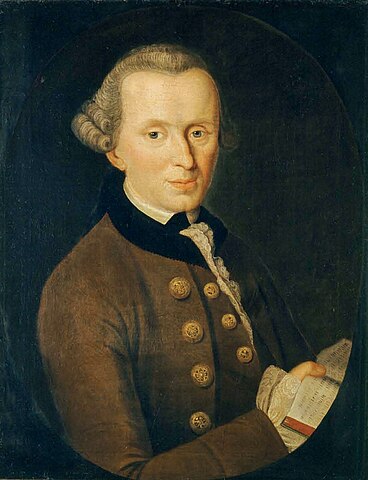
Immanuel Kant wrote a four-page essay titled Answer To The Question: What Is Enlightenment? In 1784. Here’s a readable free translation by Ted Humphrey, made available by the New York City Public Library. Here are the opening paragraphs.

1. Enlightenment is man’s emergence from his self-imposed immaturity.Immaturity is the inability to use one’s understanding without guidance from another. This immaturity is self-imposed when its cause lies not in lack of understanding, but in lack of resolve and courage to use it without guidance from another. Sapere Aude! “Have courage to use your own understanding!”–that is the motto of enlightenment.

2. Laziness and cowardice are the reasons why so great a proportion of men, long after nature has released them from alien guidance …nonetheless gladly remain in lifelong immaturity, and why it is so easy for others to establish themselves as their guardians.

It is so easy to be immature. If I have a book to serve as my understanding, a pastor to serve as my conscience, a physician to determine my diet for me, and so on, I need not exert myself at all. I need not think, if only I can pay: others will readily undertake the irksome work for me.

The guardians who have so benevolently taken over the supervision of men have carefully seen to it that the far greatest part of them (including the entire fair sex) regard taking the step to maturity as very dangerous, not to mention difficult.

Having first made their domestic livestock dumb, and having carefully made sure that these docile creatures will not take a single step without the go-cart to which they are harnessed, these guardians then show them the danger that threatens them, should they attempt to walk alone. Now this danger is not actually so great, for after falling a few times they would in the end certainly learn to walk; but an example of this kind makes men timid and usually frightens them out of all further attempts. Fn omitted; my formatting.

Side notes: Guidance probably means something more like instruction or direction. The word go-cart is probably better translated as something like pony-cart. I left the misogyny in, but should I have deleted it?

Kant’s guardians are a big part of the problem, just as Servan, Kant, Arendt, Bourdieu, Foucault, and many others have said. But there’s nothing to prevent any of the ridden from thinking for themselves. Nothing, says Kant, nothing but laziness and cowardice. It’s too much trouble. I might get it wrong. I don’t want to get cross-ways with my neighbor.

I’m not saying everyone has to spend hours and weeks and years studying things. But. Billions of people have taken the Covid vaccines. The incidence of death is nearly zero. The incidence of serious complications isn’t much greater. But lots of people listen to loons on social media. They don’t perform a single-step thought process to see that it’s safer to take the vaccine than risk illness and death from the disease. I think that’s what Kant means when he tells us to use our own understanding.

The billionaires and their cronies who created this bubble of non-thought, are the guardians Kant is talking about. They are riding their herd just as he said. and it’s tough to tell one individual in a herd from another.

Enough. I am a child of the Enlightenment. I’ll leave this series with this aphorism from David Hume, an Enlightenment philosopher. Here’s a link for context.

A wise man, therefore, proportions his belief to the evidence.

Share this entry