

Four Ways to Fight Fascism: Checking In
Throughout this year, I have argued there are four ways to fight fascism — and doing so through the guise of the Democratic Party (especially DC Democrats) is not yet the best way to do so.
I argued these were the four ways to peacefully fight Donald Trump’s authoritarianism:
- The Erica Chenoweth rule, which says that if you can get 3.5% of a population in the streets, it often leads to regime change.
- Beginning to peel off four people in the Senate or eight or nine people in the House.
- Rescuing Republicans from a predictable catastrophe like Democrats did in 2008 and 2020.
- Waiting until 2026, winning at least one house of Congress, and beginning to rein in Trump that way.
Since for many of you, today will be the last normal day of the year, and unless Trump sets off a predictable catastrophe, today will also be the last Nicole Sandler show we do, I wanted to check in on how we’re doing on these four issues.
The 3.5% rule
Start with people in the streets.
If 6.5 million people attended October’s No Kings rallies (some estimates go as high as 7 million), it would amount to about 1.8% of the US population. That would make them the biggest protests in American history, but still just halfway to that 3.5% mark, and not directly in response to a particular outrage. The organizing and openness of those protests was a huge accomplishment and, at the very least, taught a lot of people who had never protested before how to do so.
But it wasn’t enough to oust Trump.
A more interesting measure of people in the streets, however, is Chicago (and other anti-ICE/CBP protests). I have no idea what population of Chicago took part in mobilizing to oppose Stephen Miller’s goons. But there are aspects of that mobilization — perhaps most importantly the way media coverage arose from citizen witness to local media to independent media to mainstream outlets — that provided real lessons in how to thrive in a disastrous media environment.
One point I keep making about this kind of opposition: it does not have to be, and arguably is far more successful if it is not, coincident with the Democratic party. Some of the most powerful moments in Chicago’s opposition came when right wingers in conservative suburbs joined in — holy hell those people were assholes!!
Whatever else Stephen Miller’s terrible dragnets have done, they have renewed civil society in most places the invasions happened.
Peeling off defectors
Both Axios and Politico took a break from Dems in Disarray or ragebait stories this week to instead focus on Hakeem Jeffries, both focusing on Jeffries’ success at getting four “moderate” Republicans to vote for his discharge position extending ObamaCare subsidies for three years.
Time and again this year, Democrats under Minority Leader Hakeem Jeffries have maneuvered to successfully undercut the GOP agenda and put its leaders on the back foot. From a daily drumbeat on health care to the long-running saga over the late sex offender Jeffrey Epstein to a new focus on the rising cost of living, they believe they’re succeeding by making the party in power talk about Democratic priorities, not its own.
Their success was underscored this week when four House Republicans joined a Jeffries-led effort to force a vote on expiring Obamacare insurance subsidies — a major embarrassment for the GOP speaker.
“Our message to Mike Johnson is clear — you can run, but you cannot hide,” Jeffries said as he took a victory lap on the House steps Thursday.
And as Politico notes, it started (actually, two months earlier than they credit) with the Jeffrey Epstein effort.
Indeed, since Tom Massie and Ro Khanna, with Jeffries’ cooperation, chased Mike Johnson away a week earlier in July for fear of Epstein votes, Johnson has largely vacated his majority.
There have been limited instances where Republicans have defected on other issues. Just before the SCOTUS hearing on Trump’s illegal tariffs, for example, a handful of Republicans defected to pass resolutions against Trump tariffs.
Where things may get more interesting in the new year — on top of what is sure to be a frantic effort to fix the healthcare crisis Republicans are causing — is on Russia. The NDAA Trump signed yesterday included a number of restrictions on European and Ukrainian funding and troop alignment, measures that directly conflict with Trump’s National Security Strategy.
In a break with Trump, whose fellow Republicans hold majorities in both the House and Senate, this year’s NDAA includes several provisions to boost security in Europe, despite Trump early this month releasing a national security strategy seen as friendly to Russia and a reassessment of the US relationship with Europe.
The fiscal 2026 NDAA provides $800m for Ukraine – $400m in each of the next two years – as part of the Ukraine Security Assistance Initiative, which pays US companies for weapons for Ukraine’s military.
It also authorizes the Baltic Security Initiative and provides $175m to support Latvia, Lithuania and Estonia’s defense. And it limits the Department of Defense’s ability to drop the number of US forces in Europe to fewer than 76,000 and bars the US European commander from giving up the title of Nato supreme commander.
To be sure, thus far, Congress has done nothing to police Trump when he spends money in ways they tell him not to. But these restrictions (along with a few things to make Whiskey Pete Hegseth behave) might set up a conflict early in the year.
Remember: recruiting defectors actually takes efforts to reach out to them, often the opposite of what people think they want.
And while all that is not enough defectors to stop Trump, Marjorie Taylor Greene may set off a stampede for the exit. And that could make it easier for Jeffries, at least, to continue to pants Mike Johnson.
Predictable catastrophe
Democrats have done a good job of seeding the ground to get credit for rescuing the country from Trump-caused catastrophes in healthcare and the economy — and both will exacerbate the other in days ahead.
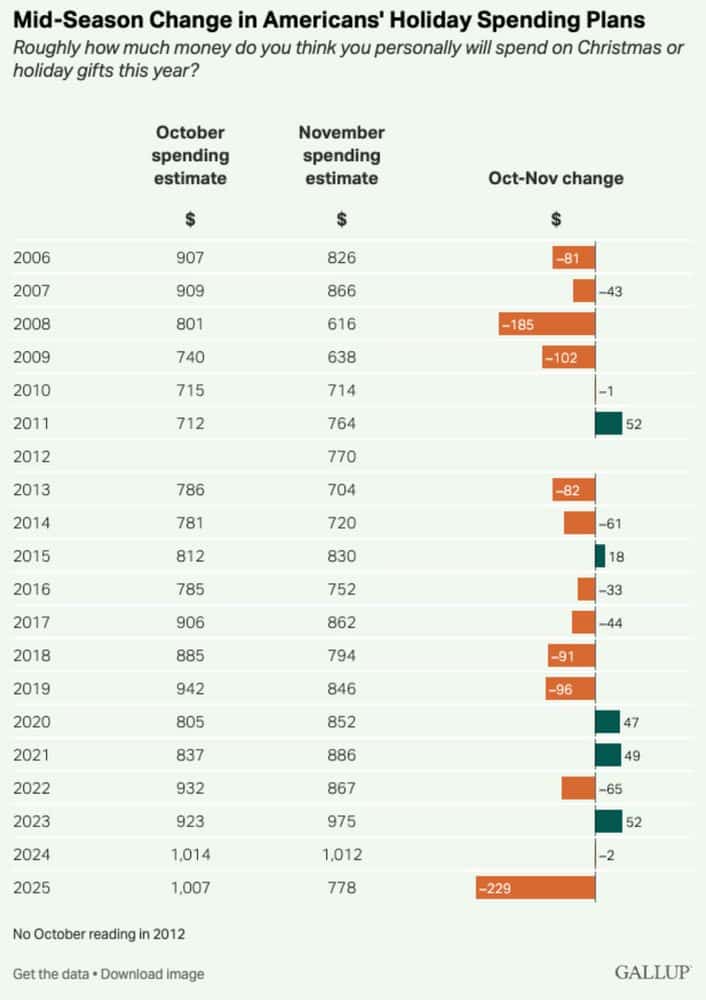
I’m less sanguine that Democrats have prepared to rescue the country (and claim credit) for other likely Trump catastrophes, like a collapsing AI bubble or epidemic. Laying the ground for both is really critical, in the former case bc AI bros plan to spend big in 2026 in the same way crypto bros did in 2024, and in the former case, because bigots are trying to blame rising measles (and, now, whooping cough) on migrants rather than assholes like RFK Jr.
2026
Democrats are doing surprisingly well to position themselves for 2026, both because they’re overperforming by numbers that suggest they will do well (including in elections, like TN-07, with midyear-levels of turnout), and because they’re matching Republican redistricting efforts (and Stephen Miller’s goon squads mean the redistricting in Texas may not turn out like Trump wants).
But it will be harder to achieve a true Blue Wave than in 2018.
Even as this year’s election results have left many in the party encouraged they can mount a massive blue wave, next year’s battleground is a far cry from 2018 — with fewer Republican-held seats for Democrats to easily target.
Democrats don’t need to win as many seats this time around, netting just three seats rather than two dozen to claim a majority. But the hill to reach a comfortable majority like the 235 seats they held after the last blue wave has grown much steeper, driven by multiple rounds of gerrymandering — including ongoing redistricting in several states that threatens to erode the battlefield even further.
The result is that Democrats could post a bigger national swing than in 2018 and still end up with a slimmer majority than they had after that year.
Where Democrats are doing better is in promising consequences if and when they do get a majority.
I’m more interested in Democrats promising those capitulating to Trump — whether it be law firms or Paramount — that there’ll be consequences in 2027 than I am in discussions about impeachment (except for people like RFK Jr, such discussions will work against other Democratic efforts, IMO).
Such efforts, in my opinion, are one way to do more to lay out Trump’s accountability for predictable disasters.
All in all, opponents of fascism have more momentum than they had when caught flat-footed in January. But there’s still a lot of work to do.


I have my personal grief with Jeffries’ public leadership, but I respect his accomplishments achieving House solidarity.
What about a fifth way: fighting fascism via the courts? People can fund the lawyers who are filing the lawsuits. They can also financial support the journalists and investigators who dig deep into weeds of the laws being violated on a daily basis.
Yeah, you’re right. It should be in there.
Not just funding lawyers to sue, but being willing to stand up yourself.
Thanks for your comment. I echo your frustration with Jeffries (and Schumer, and most all congressional party leaders) and their inability to fulfill the “public leader of the opposition” role.
Then I remind myself (daily, or more often if necessary) that *that is not their primary job*. Their primary job is to keep their caucus united. By that measure, Jeffries is doing a pretty good job (much as Pelosi did before him).
Well, we could join antifa but I can’t seem to find a phone number or locate the address of their headquarters.
/s
Well, why not ask the FBI? They have a handle on this, y’know. {grin}
But what if >3.5% of the population did write/phone/e-mail FBI HQ demanding details…?
Are there no petition websites in the US like 38 Degrees in the UK, to channel and focus attention on issues?
There are such sites, but my sense is that when it comes to moving members of Congress, both Dems and Republicans, such petitions are seen as bot-boosted spam.
Now if 3.5% of the US population hand-wrote a postcard, that would be hard to ignore.
… Or maybe called their congressperson (as I just did) to ask if they are OK with the DoJ violating a law, created by them!, requiring “all” the material in the Epstein Files to be released on Dec. 19th (TODAY). “Why are you conspiring in an ongoing cover-up of evidence—despite the demands of the victims that it be released—against child sexual predators?”
check the telephone pole flyers in Portland for antifa info
Don’t forget to support our Antifa® bake sales. They provide the lion’s share of our funding.
I prefer to donate to dark-money antiFA PACs for the untraceable aspects. :p
How much is left after the lion gets his share?
I’ve become newly aware of just how much a very young lion needs to eat!
I think we need to be careful with the “Chenowith Rule” thing. I see some false expectations around it. Like if we can just get 3.5% of the people in the streets on some sunny Saturday then, voila!, regime change. It’s not like that. Some of the protests she cites were long drawn out affairs with people not only protesting in the streets, but staying home from their jobs for days and weeks, or otherwise causing things to grind to a halt for a prolonged period of time. I’m not sure we are ready for that.
“Honk if you oppose fascism” => I’ll honk. Yes!!
“Take public transportation to oppose fascism” => I’ll have to think about it.
I agree–and when I first introduced it here I did note that it is contested. That’s also why I noted that these protests were not a specific response to something.
But I do think the immigration protests are closer to those that work.
One of the cautions I’ve seen about applying it here (I think from Chenoweth themself) is that the US is so huge, how do you measure that 3.5? No Kings are important because they are dispersed. But that kind of protest will work differently than millions in the streets of, say, DC.
The Montgomery bus boycott was not a nationwide 3.5% of the population event. But locally, it was much more than that. It also was a sustained movement. It wasn’t a daylong boycott or a weeklong boycott, but it extended for about a year.
Similarly, the march from Selma to Montgomery was not just a “wave some signs and honk if you love freedom” event, in opposition to Jim Crow and segregation and in favor of voting rights. It was a group of people marching to the state capitol to register to vote. .
And as Michael Harriot (among others) so loudly says, this was *not* a non-violent protest. The marchers were non-violent, but the bloody bodies lying on the ground on and near the Edmund Pettis testify to the violence of the segregationists who were trying to defend their privilege — something that had not been seriously challenged for decades.
Thanks for your comment.
Adding: Part of the *intent* by movement leaders undergirding Selma (and Birmingham, and the Freedom Rides, and the Mississippi Freedom Summer) was to create conflict with segregationist that would force one of two outcomes: 1) concession by the segregationists; or 2) violent resistance by the segregationists. King, Nash, Bevel, Lewis, Abernathy, Shuttlesworth, Lawson, et al, believed that their nonviolence in the face of violence could have a transformative political and social impact. Most of them interpreted their actions through the lens of Christian faith. Others drew on sources as diverse as Gandhi, Tolstoy, and Thoreau.
Rev. Lawson, who had studied in India with Gandhi’s followers, was particularly insistent that nonviolent action would almost inevitably provoke violent reactions *and* that when violence escalated it was essential for nonviolence to immediately escalate further.
Thomas Ricks’ 2022 book “Waging a Good War: A Military History of the Civil Rights Movement” is very good on all of this. Ricks repeatedly notes how many of the major confrontation of the Movement were small in scale yet yielded significant victories for the Movement, in part because of how strategic and disciplined its leaders were about recruiting, training, and deploying their “troops”. https://masscommons.wordpress.com/2025/10/01/waging-a-good-war-a-military-history-of-the-civil-rights-movement-1954-68/
Adding: an interesting historical analogy for the current immigration protests is the rise of the abolitionist movement in the 1850s in response (largely) to the Fugitive Slave Act.
When South Carolina and other states issued their “declarations of secession”, one of the primary reasons they gave for their actions was that the FSA was effectively null and void across the North. And the primary reason is was effectively null and void was abolitionists’ organizing in defense of those who were harassed and picked up by federal marshals under the FSA.
In Boston, after the massive and violent federal response to the organized (by the Boston Vigilance Committee) opposition to Burns’ arrest, trial, conviction, and deportation, industrialist/philanthropist Amos Abbott Lawrence wrote ” We went to bed one night old-fashioned, conservative, compromise Union Whigs & waked up stark mad Abolitionists.”
It wasn’t just Boston. By the end of the decade the FSA was less enforceable across most of the North than Prohibition was at the end of the 1920s.
Thanks. I had seen reference to FSA, but not more details. Will look closer.
We don’t know what happens when 3.5% show up, but I do know that October’s huge nationwide protest gave people inspiration and opportunity to move from keyboard angst to public fury. And the horn honking, it’s surprisingly powerful, especially when you live in a conservative area and it’s non-stop beeping during the protest. It makes you realize just how many people are paying attention, and wow are they ever pissed.
IDK if we need to reach a magical number. The election results from November give me hope, and the number of Republican congress critters retiring (ELISE STEFANIK _ BOOM!) show they are paying attention.
I subscribe to the Kristin Chenoweth rule: Get 1 or 2% of the population outdoors to sing so loud that together we shatter glass. *That* will get their attention.
Thanks for your comment. Yes, 1-2% (or 3-5%) of the population engaging in public demonstrations is significant enough to provoke responses; but Chenoweth has repeatedly stated that there’s nothing magical about the “3.5% rule”, and that there have been cases recently where more than 3.5% of a populace has protested and failed to overthrow a dictatorial regime. Strategy, tactics, recruitment, training, discipline, allies, etc., all matter as well.
P. S. This is (I think) an encouraging fact: there are *many* ways to overthrow/remove/render impotent an authoritarian regime.
The New Deal was possible because the 1929 crash happened in the first year of Hoover’s term. The evidence of the Depression was visible in the streets, the Republicans could not cover it up the way they are trying to now. We were already angry, but after we watched the clueless Republicans flail around for 3 years, we were ready to let Roosevelt do whatever he thought was best. We gave him massive Congressional majorities that lasted for 60 years. (!)
In 2008, however, Democrats took power a few months after the crash, and the Republicans were able to partially blame Obama for the increasing unemployment and mortgage foreclosures.
Then, Obama’s signature achievement, the very confusing ACA, didn’t take full effect for 4 more years, so the Republicans were able to bad-talk it and pick up 62 House seats in the 2010 elections.
Even if Democrats manage to take a house of Congress in 2026, Trump is likely to continue destroying the country and the Republican party until January 2029. (!)
There’s a lesson here for the Democrats. We have a tremendous opportunity, don’t take it for granted, don’t screw it up.
The lesson should include a pointed note that control of a swath of media made a critical difference for the GOP from the mid-1990s to now.
It’s essential we rapidly create effective approaches to communicate to the wider public to get past increasing right-wing control of media, even as the right-wing attempts to expand its grip, ex. Ellison-Paramount’s bid for WBD and Saudi Arabia’s efforts to buy other portions of Hollywood.
Roosevelt was met with much more political opposition early on than we typically remember (or are taught).
I know I learned at some point after HS that Roosevelt tried to use Hoover’s policies, as his advisors wanted, and those only made things worse, and *that* was when Roosevelt started doing it his way.
We contributed to James Talarico’s campaign. I saw his rally last night, he was on fire! If anyone has a chance to pick up a senate seat in Texas, it would be him. I don’t see Jasmine Crockett doing it. Now if only he were running against Ted Cruz…
If I was a politician I would plant my flag on being anti AI. AI is tremendously unpopular. Of course no DNC Dem is going there and so they can be killed in primaries. A dozen better D congress critters could go a long way. If and when an anti AI movement grows which includes that AI is really just a credit bubble to make the rich richer it can reshape the D party. Fighting AI is fighting fascism both directly and indirectly.
I agree.
As the parent of two young girls, I am aghast at the miserable tools offered by tech companies to monitor and protect my children. They have laptops (absolutely required to do homework via google classroom) but I am stuck with the dysfunctional Microsoft Parental Control tools that plainly does not work. They have smart phones, but apparently Apple considers that someone above 13 years old is beyond parental control. Social media and online computer games are crap and have tricks to avoid normal parental control (Roblox is impossible to monitor or control).
People are angry, and they need to channel this anger at the right target. It’s not the immigrants. I think that there is a huge popular anger against tech companies, enshittification, social media and a big (mainly justified) fear of AI. And politically it helps that the faces of this industry are billionaires like Zuckerberg, Musk, Thiel who are detested by the majority.
Go after all that tech crap hard. Join force with Europe and Australia to seriously regulate this industry. Break monopolies. I think it is a political winner.
#tu
The amount of power and water required to run the big AI facilities being built around the country and the concomitant push by private equity to purchase public utilities that will increase/transfer the cost of electricity/gas to the public needs to be front and center. The involvement with private equity/other “investors” in real estate, weapons, incarceration, etc. is happening apace and leading to increases in the numbers of unhoused, already an epidemic across the country. When I was moving my prescription coverage to a different outlet recently, they read a list of things I needed to agree to. One of the things they mentioned in another aside was that if I become unhoused, I can still keep my coverage. Elders are the largest demographic to the increasing numbers of unhoused. That they mention this is a warning sign, I thought.
There are things that AI could actually be good for – slogging through microscope slides looking for signs of cancer; analysing protein structures; other boring shit (I used to spend hours looking down a microscope for sperm cells – boring as hell but somebody had to do it because it helped solve rapes and murders).
AI in itself is not evil. But leave it in Trump and Elon’s hands and you can bet it’s not doing anything good.
And the environmental damage they will do using ancient steam tech to power the latest chips just makes me want to weep.