FBI Brags about Solving Not-Terrorist Not-Hacker Attack on the Grid

As part of its PR feed, the FBI routinely sends out self-summaries of some of its case. Today, it sent out this one, on Jason Woodring, who took a plea deal in June for several counts of destruction of an energy facility.

Back in 2013, the self-employed, live with mom, pool cleaner and heavy meth user, did (if you believe the energy companies affected, which the judge did when assessing a fine) millions of dollars of damage to transmission equipment.

On the afternoon of August 21, 2013, the FBI’s Little Rock Field Office was notified by a local energy provider about a downed 500,000-volt power line near an active railroad track in Cabot, Arkansas. A power outage ensued. Company officials and local law enforcement believed that very early in the morning, someone had climbed a 100-foot tall support tower and intentionally sawed off the shackles that held up the power line, which then fell across the railroad tracks. A short time later, a train struck the line and severed it.

[snip]

In addition to the power line’s support tower shackles being cut with a hacksaw (which had been left behind), someone had loosened most of the bolts holding the support tower to its cement base. Investigators believed that in a previous attempt to damage the support tower and take down the power line, the perpetrator had taken a steel cable—insulated in blue plastic hosing that’s often used for pool maintenance—and tied one end to the bottom of the support tower and the other end to a tree across the railroad tracks in the hopes that a train would run into the cable, pulling down the entire support tower and possibly toppling several nearby towers. Instead, the cable simply snapped when hit by the train, and the tower—and power line—remained in place. Pieces of the cable and the blue hosing from that attempt were found at the crime scene.

But then there were two more seemingly related incidents:

On September 29, 2013, again very early in the morning, an energy provider received an intruder alert at an extra-high voltage switching station in Scott, Arkansas, which was soon followed by a series of other alarms. Local law enforcement officers responded to find the station on fire. Damages in this instance exceeded $4 million.

And on the morning of October 6, 2013, an energy provider in the Jacksonville, Arkansas area experienced a loss of power for several hours, impacting thousands of people. Not long afterward, investigators found that a 115,000-volt transmission line had fallen down after someone managed to cut into two power poles and pull down one of the poles using a tractor. Damages were close to $50,000.


At least according to their public explanation (which may be sanitized to protect investigative methods), the FBI solved the crimes by taking a phone call from local cops, who had recognized when they responded to an explosion at Woodring’s house and figured he was a likely culprit. The cops’ ability to figure that out was presumably helped because FBI had involved the local Joint Terrorism Task Force, but it appears to be local police work that busted this guy.

The FBI vaguely references anti-government statements in their release.

While Woodring’s motives for his activities were not clear, he did leave some vague anti-government messages at two of the crime scenes, and at his recent sentencing hearing, he told the judge that he was trying to help society.

But reporting on Woodring make it sound more  like he was trying to cast off suspicion than lead an anti-government crusade, even if he did engage in conspiracy theories.

The deputies also found a message Woodring left behind, scrawled on a metal panel near the entry gate in black marker. He wrote it with his left hand, to disguise his handwriting. It seemed to combine a slogan for Anonymous, the mysterious network of Internet activists, with an oblique reference to the federal government, a kind of paranoid double entendre.

It said: “YOU SHOULD HAVE EXPECTED U.S.”

[snip]

Woodring kept up on his reading. He read the Bible. He was always surrounded by books on engineering, and had become increasingly fixated on various conspiracy theories, on “subliminal messages coming from the TV” and other plots. “He was really stuck on the whole Nostradamus thing,” his friend said, referring to the 16th century French seer who supposedly predicted all manner of contemporary world-historical events in his “Prophecies.”

FBI’s lack of information about motive is important given that Woodring was initially charged with a terrorist attack against a rail carrier and the two destruction of an energy facility charges to which he pled guilty can merit a terrorist enhancement.

But there’s not much from the public docket that suggests FBI did much beyond send Woodring to be evaluated for competence to stand defense, after which he pretty quickly pled.

I raise this for a few reasons. First, it’s yet another case of a white guy doing stuff that would be treated far differently if a Muslim had done the same.

But it’s also yet another example of how easy it would be to do physical damage to the government’s most panicked target, the electrical grid, and so so without either terrorism or hacking.
 

Share this entry

Buffalo’s ISIS Supporting Terrorist and Its Klan Supporting Terrorist

Screen Shot 2015-08-07 at 3.37.00 PM

Michael O’Neill

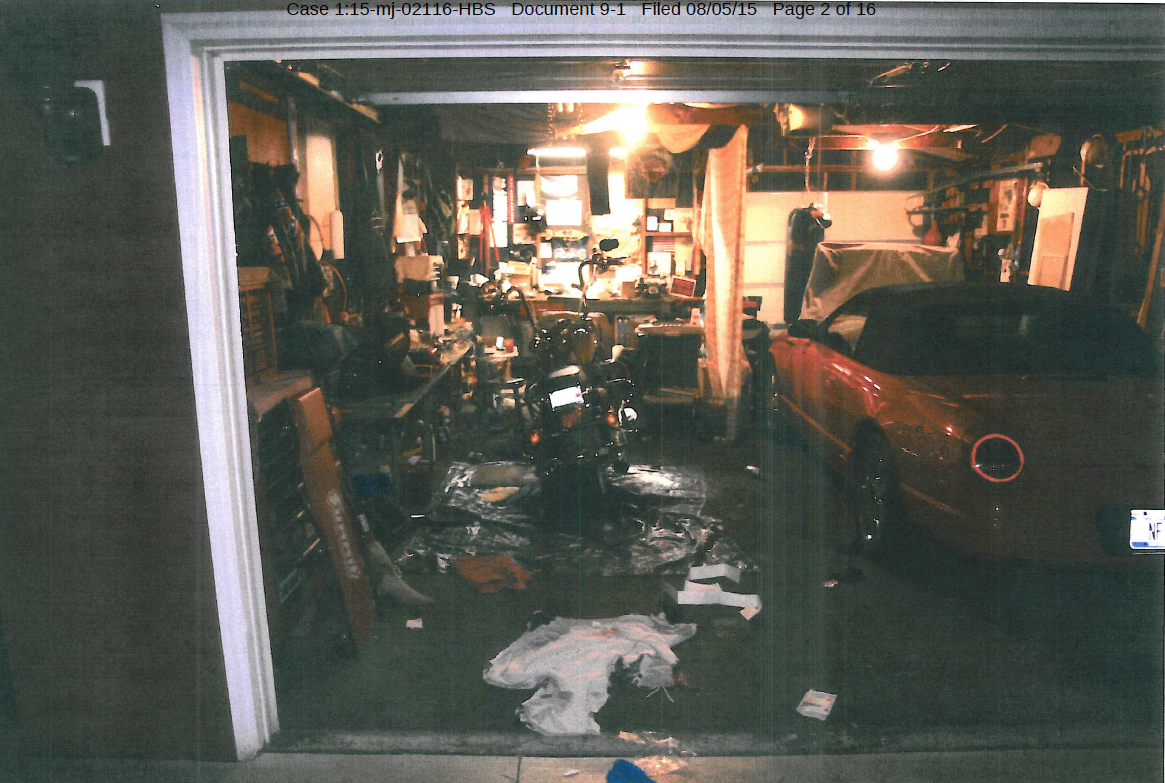
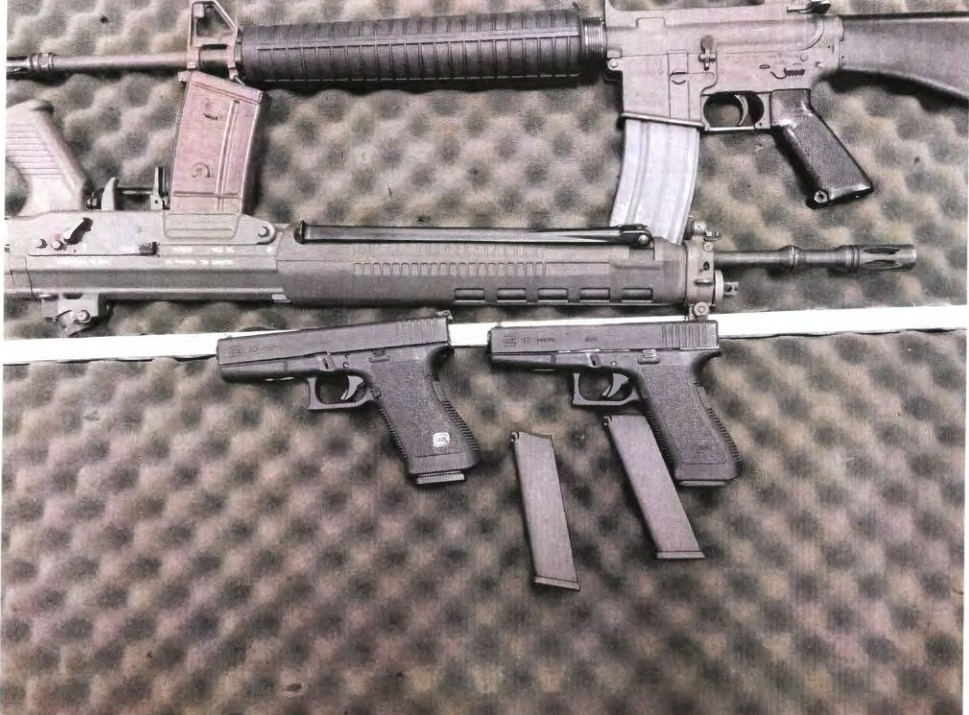
On January 21, 2015, the Niagara County Sheriff’s office responded to a report of an explosion at the house of Chair of the Niagara County Legislature, William Ross.  They discovered that his step-son, former corrections officer Michael O’Neill, who lived with his mother and step-father at the house, had blown off his leg while working with explosives in the garage. In addition to the one that exploded, there were 6 completed Improvised Explosive Devices in the garage, along with shrapnel, fireworks powder, and other explosives precursors.

The complaint made no mention of any evidence beyond the explosives precursors.

O’Neill was brought to a local hospital where he had his leg amputated.

When an ATF and Sheriff’s investigator interviewed O’Neill at the hospital, he claimed he had been making the bombs to blow up tree stumps.

Arafat Nagi

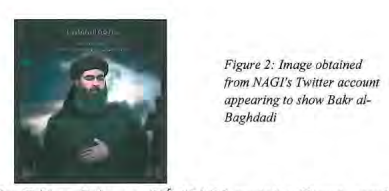
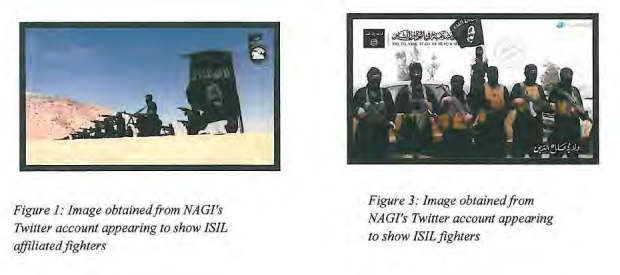
A week later, on July 29, also in the Buffalo area, FBI Agent Amanda Pike arrested US citizen Lackawanna resident Arafat Nagi on charges of attempting to materially support ISIS. The complaint laying out the case against Nagi relied on trips to Turkey and Yemen (Nagi has family in the latter), a slew of tweets supporting ISIS, and some 2012 and 2013 purchases of military equipment — including body armor and a machete — and Islamic flags from eBay. The complaint also included pictures Nagi had tweeted out depicting ISIS and extremist flags and Abu Bakr al-Baghdadi.

Screen Shot 2015-08-07 at 5.59.52 PM

The most recent event cited in the complaint was a February 28, 2015 conversation (apparently not taped) between Nagi and an associate who — given the redaction of a descriptive footnote — almost certainly either has a criminal record or is working off some arrest, in which Nagi said he’d use insurance money to travel to Syria. The associate — not Nagi — raised meeting with al-Baghdadi (presumed to be Abu Bakr al-Baghdadi).

Screen Shot 2015-08-07 at 6.03.20 PM

In spite of the silence about any precipitating event that led to Nagi’s arrest in July, the US Attorney for Western New York (and the husband of Lieutenant Governor Kathy Hochul), William Hochul, had a press conference to announce Nagi’s arrest. Both court documents and public reporting indicated that the Muslim community had tipped authorities off to Nagi’s increasing belligerence in support of radical views.

Michael O’Neill

On July 27, Magistrate Hugh Scott had a hearing on O’Neill’s custody. In spite of the government’s request, Scott did not place O’Neill in US Marshal custody right away, in part so his mother could visit him more easily.

On July 30, Magistrate Scott again deferred his decision on custody to receive briefing.

Arafat Nagi

On July 31, Nagi had his arraignment before the same judge, Magistrate Hugh Scott. Scott ordered Nagi, whose last incriminating act was in February, held without bail, citing the seriousness of his alleged crime and past (2013) violence. Scott further cited, “the volume and nature of the social media usage [that] indicate that Nagi has formed a strong intent to join and to support ISIL and was looking for opportunities to do so.”

Michael O’Neill

On August 5, Scott held a third hearing on O’Neill’s detention. O’Neill’s attorney argued that his 7 IEDs did not constitute bombs at all (remember, he said he was going to attack tree stumps with them). The government said they were, pointing to the shrapnel in one of the constructed bombs. The judge agreed, noting “there is no non-malevolent explanation for why that explosive powder needed to contain or to be associated with nails and other shrapnel.” Unlike in Nagi’s detention consideration, Scott did not mention his prior violence, such as the bar fight a year ago that was precipitated when O’Neill used a racial slur in response to a request for a lighter.

If I’m reading the docket correctly, after a recess in this Wednesday hearing, Scott issued his written opinion. Only then did the parties proffer new evidence. His defense shows that a number of DWUI charges (one of which resulted in him losing his gun permit in 2010,which in turn referenced earlier alcohol issues recorded by his work, presumably, the corrections facility where he used to work) had been resolved with no jail time.

Screen Shot 2015-08-07 at 5.28.28 PM

But only then — after the judge had already decided to hold O’Neill because he put BBs and nails in his IEDs — did the government introduce this evidence, evidence that had to have been apparent (and probably was collected) when the ATF and Sheriff’s investigator did their initial investigation of what O’Neill had been doing in the garage owned by the Chair of the County Legislature.

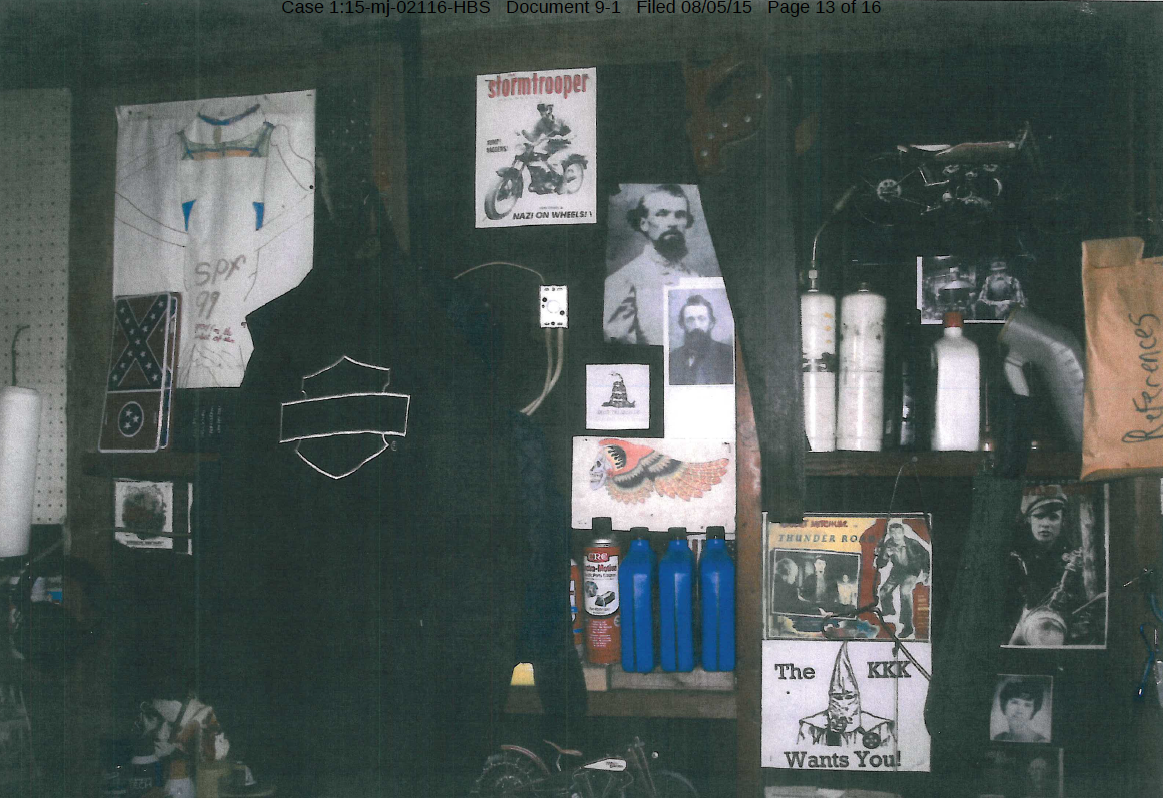
That evidence shows that the work bench at which Ross’ step-son was emptying fireworks for powder and adding nails to IEDs was decorated with a Stormtrooper poster, a picture of Nathan Bedford Forrest, a Confederate flag, and a poster advertising, “The KKK wants you.” O’Neill also appears to have had a sword (most visible in Exhibit 14) not mentioned in any legal document.

I don’t fault Scott that he didn’t mention the evidence that O’Neill was constructing bombs amid a bunch of white supremacist propaganda — he hadn’t been shown it or apparently even informed of it until he issued his opinion. But I find it notable that the prosecutors — and Hochul, who held a press conference upon the arrest of a guy who hadn’t done anything incriminating (at least according to the complaint) since February — didn’t mention this until this stage of the proceedings. And while Hochul commented publicly to the press, I don’t believe he had a formal press conference to highlight the guy making 7 bombs in his step-dad’s garage did so under the glare of the first Klan Grand Wizard.

O’Neill’s politically connected step-father, in whose garage he was assembling bombs right below Nazi and Klan paraphernalia, said “he didn’t know what O’Neill was doing and if he did, he would have alerted authorities,” which appears to make him far less attentive than the Muslims who reported Nagi’s belligerence. Judge Scott expressed some skepticism that Ross could miss both the explosives construction and the Nazi propaganda in clear view in his garage.

The US Attorney’s office says it is investigating O’Neill’s devices to see if they can determine where he learned to build the IEDs and whether they can determine precisely what “stumps” he had in mind for a target. Notably, these IEDs are probably powerful enough the government could charge O’Neill with possession of WMD, which carries a terrorist enhancement, if they discover he had plans of using those IEDs to terrorize.

Nagi and O’Neill

Since Nagi’s arrest, a number of commentators — including this post and a paragraph of this excellent Ryan Reilly piece — place this case among those where someone is accused of terrorism exclusively for speech. The bulk of the evidence in this case, aside from two trips to Turkey during which Nagi didn’t join ISIS, amounts to speech, albeit clearly hateful speech.

We don’t yet know whether O’Neill has engaged in similar public hate speech (aside from the racist comment last summer that seems to have gotten him hospitalized); what has been mentioned so far is dead tree propaganda, nothing that would reflect interaction with others (his neighbors, at least, had no idea what he was doing in the garage at all hours of the night). Moreover, there is the added (inexcusable but predictable) factor that this guy was the step-son of a politically connected guy, which would lead prosecutors to exercise some caution about crying terrorism without a good deal of evidence.

Still, these two extremists were working their way through the same court room at the same time. The contrast between the two cases is instructive.

Share this entry

We Were Calling Out the Pakistanis on a Lot of Secrets in Early 2011

One of my favorite ironies from the Greg Miller story on the Mullah Omar death — which doesn’t really try to explain why we’re just learning about a death that all sides likely knew about years ago — is that Mullah Omar, not Osama bin Laden, got hospitalized with kidney problems.

Omar was said to be afflicted with illnesses ranging from kidney failure to meningitis.

But I’m most interested in the timing of our confrontation of Pakistan that they were harboring in the kidney ward: early 2011, or around the same time we were planning our raid on Osama bin Laden (according to some accounts, with the involvement of top Pakistani officials).

In early 2011, then-CIA Director Leon Panetta confronted the president of Pakistan with a disturbing piece of intelligence. The spy agency had learned that Mohammad Omar, the Taliban leader who had become one of the world’s most wanted fugitives after the Sept. 11, 2001, attacks, was being treated at a hospital in southern Pakistan.

The American spy chief even identified the facility — the Aga Khan University Hospital in Karachi — and said the CIA had “some raw intelligence on this” that would soon be shared with its Pakistani counterpart, according to diplomatic files that summarize the exchange.

I just find it odd that, given the Raymond Davis confrontation and our plans — covert or not — to take out Osama bin Laden, we also had this confrontation.

My guess is one day we’ll learn that all these confrontations were of a piece, and that we’ve long known who was and wasn’t alive (including Ayman al-Zawahiri), but that the powers that be had reason to pretend these people weren’t corpses yet.

Until such time as the next terrorist narrative starts and you have to end the previous one.

Heck. This story might even be coming out as the counter-Osama bin Laden narratives did: to pressure the US about the corrupt deals they’ve long been living under.

Share this entry

Our Definitions of National Security Crimes Are Fucked

I realized something the other day.

For the purposes of hacking, a theater (or at least any mall it was attached to) might count as critical infrastructure that would deem it a National Security target, just as Sony Pictures was deemed critical infrastructure for sanction and retaliation purposes after it got hacked.

But if a mentally ill misogynist with a public track record of supporting right wing hate shoots up a movie showing, it would not be considered a national security target. Given his death, DOJ won’t be faced with the challenge of naming John Russell Houser’s crime, but they would have even less ability to punish Houser for his motivation and ties to other haters than they had with Dylann Roof.

DOJ had no such problem with Joseph Buddenberg and Nicole Kissane, who got charged with terrorism (under the Animal Enterprise Terrorism Act) yesterday because they freed some minks. And a bobcat.

So shooting African Americans worshipping in church is not terrorism, but freeing a bobcat is.

Meanwhile, most of the 204 mass shootings — averaging one a day — that happened this year have passed unremarked.

I laid out some of the problems with the disparity between Muslim terrorism and white supremacist terrorism (to say nothing of bobcat-freeing “terrorism”) the other day.

“This should in no way signify that this particular murder or any federal crime is of any lesser significance.” [than terrorism, Loretta Lynch claimed while announcing the Hate Crime charges against Roof

Except it is, by all appearances.

When asked, Lynch refused to comment on how DOJ is allocating resources, but reporting on the increase in terrorism analysts since 9/11 suggests the FBI has dedicated large amounts of new resources to fighting Islamic terrorism, domestically and abroad. In addition, there are a number of spying tools that are tied solely to international terrorism — but DOJ has managed to define, in secret, domestic terrorism espoused by Muslims in the U.S. as international terrorism. That means FBI has far more tools to dedicate to finding tweets posted by Muslims, and fewer to find the manifesto Roof wrote speaking of having ”the bravery to take it to the real world” against blacks and even Jews.

Perhaps most importantly, because of vastly expanded post-9/11 information sharing, local law enforcement offices have been deputized in the hunt for Muslim terrorists, receiving intelligence obtained through those additional spying tools and sharing tips back up with the FBI. By contrast, as one after another confrontation makes clear — most recently the video of a white Texas trooper escalating a traffic stop with African American woman Sandra Bland that ultimately ended in her death, purportedly by suicide — too many white local cops tend to prey on African Americans themselves rather than  the police who target African Americans for their race.

[snip]

Finally, the FBI has an incentive to call Roof’s attack something different, as it makes a big deal of its success in preventing “terrorist” attacks. If the Charleston attack was terrorism, it means FBI missed a terrorist plotting while tracking a bunch of Muslims who might not have acted without FBI incitement. That would be all the worse as the FBI might have stopped Roof during the background check conducted before he bought the murder weapon, if not for some confusion on a prior charge.

[snip]

I’m certainly not saying we should expand the already over-broad domestic dragnet to include white supremacists espousing ugly speech (but neither should hateful speech from Muslims be sufficient for a material support for terrorism charge, as it currently is). Yet as one after another white cop kills or leads to the death of unarmed African Americans, we have to ensure that we call like crimes by like names to emphasize the importance of protecting all Americans. DOJ under Eric Holder was superb at policing civil rights violations, and there’s no reason to believe that will change under DOJ’s second African American Attorney General, Loretta Lynch.

But hate crimes brought with the assistance of DOJ’s Civil Rights division (as these were) are not the same as terrorist crimes brought by national security prosecutors, nor are they as easy to prosecute. If our nation can’t keep African Americans worshipping in church safe, than we’re not delivering national security.

But I’d add to that. If we’re discussing mass killings with guns (remember, earlier this year Richard Burr tried to include commission of a violent crime while in possession of a gun among the definitions of terrorism) then it suggests far different solutions than just calling terrorism terrorism.

What if we focused all our energy on interceding before crazy men — of all sorts — shoot up public spaces rather than just one select group?

What if our definitions of national security started with a measure of impact rather than a picture of global threat?

Share this entry

John Carlin Complains that ISIL Is Targeting Same Youth FBI Long Has Been

I’m reviewing some of the videos from the Aspen Security Forum. This one features DOJ Assistant Attorney General for National Security John Carlin and CIA General Counsel Caroline Krass.

I’m including it here so you can review Carlin’s complaints in the first part of the video. He explains to Ken Dilanian that ISIL’s recruiting strategy is different from Al Qaeda’s in that they recruit the young and mentally ill. He calls them children, repeatedly, but points to just one that involved a minor. 80% are 40 and under, 40% are 21 and under. In other words, he’s mostly complaining that ISIL is targeting young men who are in their early 20s. He even uses the stereotype of a guy in his parents’ basement, interacting on social media without them knowing.

Carlin, of course, has just described FBI’s targeting strategy for terrorist stings, where they reach out to young men — many with mental disabilities — over social media, only then to throw an informant or undercover officer at the target, to convince him to press the button that (the target believes) will detonate a bomb — though of course the bomb is an FBI-supplied inert bomb. He should know this, because before the end of the panel, he invokes Mohamed Osman Mohamud, the Portland youth convicted for pressing a button who was first targeted by FBI’s informant when he was 16 or so (and whose father asked FBI for help, only to have them target his son).

I’m not contesting the truth of Carlin’s claims. But if this is a new strategy — essentially adopting the strategy the FBI has used since 9/11 (and especially since 2009) — one that Carlin deems especially outrageous, then it ought to reflect back on FBI’s practice. If it is outrageous for ISIL to target young and in some cases mentally unstable men because they are so vulnerable because they’re not yet old enough to resist, then it should also be considered outrageous for FBI to do the same to fluff their terrorism conviction rates. Plus, Carlin’s depiction of this as a new strategy suggests all those earlier targeted young men may not have been recruited by core al Qaeda.

Not to mention, the vulnerability of this population ought to point to a different way of combatting terrorism (and domestic terrorism, which has been a bigger problem in recent weeks): to make this community less vulnerable.


Share this entry

The Bipartisan Push for Internment Camps

On Friday, Franklin Graham posted this on his Facebook page:

Four innocent Marines (United States Marine Corps) killed and three others wounded in ‪#‎Chattanooga‬ yesterday including a policeman and another Marine–all by a radical Muslim whose family was allowed to immigrate to this country from Kuwait. We are under attack by Muslims at home and abroad. We should stop all immigration of Muslims to the U.S. until this threat with Islam has been settled. Every Muslim that comes into this country has the potential to be radicalized–and they do their killing to honor their religion and Muhammad. During World War 2, we didn’t allow Japanese to immigrate to America, nor did we allow Germans. Why are we allowing Muslims now? Do you agree? Let your Congressman know that we’ve got to put a stop to this and close the flood gates. Pray for the men and women who serve this nation in uniform, that God would protect them.

Also on Friday, former Democratic Presidential candidate Wes Clark said this in an interview:

We have got to identify the people who are most likely to be radicalized. We’ve got to cut this off at the beginning.  There are always a certain number of young people who are alienated.  They don’t get a job, they lost a girlfriend, their family doesn’t feel happy here and we can watch the signs of that. And there are members of the community who can reach out to those people and bring them back in and encourage them to look at their blessings here.

But I do think on a national policy level we need to look at what self-radicalization means because we are at war with this group of terrorists.  They do have an ideology. In World War II if someone supported Nazi Germany at the expense of the United States, we didn’t say that was freedom of speech, we put him in a camp, they were prisoners of war.

So, if these people are radicalized and they don’t support the United States and they are disloyal to the United States, as a matter of principle fine. It’s their right and it’s our right and obligation to segregate them from the normal community for the duration of the conflict.  And I think we’re going to have to increasingly get tough on this, not only in the United States but our allied nations like Britain, Germany and France are going to have to look at their domestic law procedures.

Interestingly, both comments were made in the wake of an attack that defies easy labeling, both according to the law and the absence of evidence of anything but depression. But nevertheless, the Chattanooga attack seemingly made it okay to talk about doing something we claim to have forsworn after our World War II experience. This, at a time when the number of people killed in Islamic terrorist attacks in the US since 9/11 still numbers in the tens.

Share this entry

A Tale of Two Gun Possessions: Dylann Roof and Alexander Ciccolo

Ciccolos GunsI have been wondering whether the FBI has been coy about the ISIS-related arrests they’ve leaked to the press, in part, because those “terrorist plots” look minor compared to the murder, allegedly by Dylann Roof, of nine people at a black church in Charleston. As of four days ago, after all, Jim Comey was still weighing whether the attack on the historic black church by a right wing extremist who had written a manifesto explaining his views is terrorism. Did FBI miss the Charleston terrorism attack because it was focusing so much more closely on potential ISIS attacks? Does it want to avoid calling it terrorism because it would mean they failed to prevent a terrorist attack?

I grew all the more curious when FBI announced that Roof only managed to purchase the gun for the attack because his March admission to possession of drugs in conjunction with a felony [local officials have since corrected the record to reflect a misdemeanor arrest] arrest did not get processed before the 3-day window during which dealers have to wait on background checks.

On April 11, Roof attempted to purchase a handgun from a store in West Columbia, South Carolina, a near suburb of Columbia. That day was a Saturday. On the next business day, April 13, an examiner in our West Virginia facility was assigned the case and began to process it.

Her initial check of Roof’s criminal history showed that he had been arrested in South Carolina March 1 on a felony drug charge. This charge alone is not enough to deny proceeding with the transaction. As a result, this charge required further inquiry of two potential reasons to deny the transaction. First, the person could have been convicted of a felony since the arrest. Second, the underlying facts of the arrest could show the person to be an unlawful drug user or addict.

[snip]

So the court records showed no conviction yet and what she thought were the relevant agencies had no information or hadn’t responded. While she processed the many, many other firearms purchases in her queue, the case remained in “delayed/pending.”

By Thursday, April 16, the case was still listed as “status pending,” so the gun dealer exercised its lawful discretion and transferred the gun to Dylann Roof.

Had the FBI tracked down Roof’s admission to doing drugs before that 3-day window expired, he might not have gotten the gun he used to kill 9 people, and maybe their lives would have been saved. (See this story from today on inaccuracies in the local records on Roof’s arrest.)

The release today of information on Alexander Ciccolo, the estranged son of a Boston cop who is charged with illegal gun purchases but allegedly was planning to conduct an ISIS-inspired attack on a university outside of Massachusetts, makes the comparison of these two alleged aspiring terrorists all the more poignant.

According to the detention memo and reporting from ABC, Ciccolo has had long difficulties with mental illness, and embraced Islam in roughly March 2013. On September 11, 2014, a “close acquaintance” (who may have been his father) reported him to the FBI, when they started monitoring his Facebook. On June 24 (just incidentally, a week after the Charleston attack, but also several weeks after Boston cops shot Usaama Rahim on June 2, and the month after Dzhokhar Tsarnaev (Ciccolo’s father took part in the manhunt for Tsarnaev) got sentenced to death in Massachusetts), an undercover informant (described as a “cooperating witness”) met with Ciccolo face-to-face; it’s unclear how long they had corresponded online first and how discussions of an attack first came up.

The detention memo makes it clear that Ciccolo was discussing attacks designed to inflict maximal casualties and he was modeling them at least partly on the Boston Marathon attack. Ciccolo — a cop’s son — said he had grown up around guns, so on that level, at least, he was probably far more competent than most plotters caught in stings. And while, as with most transcriptions of FBI recordings, this has lapses, the many changes in Ciccolo’s plans, as reported to the informant, makes it sounds like he was driving this plan (but also make him sound mentally ill). So Ciccolo looks like more of a threat than some of the people the FBI has caught in an FBI-planned plot.

That’s why the arrest and timing is interesting. On February 17, 2015, this guy — who was supposedly obsessed with Islam — was convicted of drunken driving, but given probation. That made it illegal for him to possess a gun that had been involved in interstate transit. An affidavit accompanying the detention memo describes that on July 2, after prompting from the informant, Ciccolo responded, “You get the rifles, I’ll get the powder” — though it also said Ciccolo had earlier “planned to rob a gun store to obtain firearms” — which for a number of reasons make the guns one of the dodgy aspects of his sting. On July 3, Ciccolo bought a pressure cooker from WalMart.

But you can’t arrest someone for buying a pressure cooker (at least not yet), especially given that he appears not to have obtained any powder to use in a pressure cooker bomb, given what they found in a search of his place. But you can arrest a felon for possessing guns.

On July 4, the informant gave Ciccolo (the memo says he “took possession of” and there is no mention of money exchanged) four guns, after which the FBI immediately arrested him.

And then the FBI sealed everything up. The docket still appears to be sealed, but he was apparently arraigned on July 6 (after two days), and the detention memo notes that he waived Miranda rights. “After the defendant was arrested, he waived his Miranda rights and spoke to FBI Special Agents Paul Ambrogio and Julia Cowley. The defendant refused to talk about the guns with which he was arrested but he reaffirmed his support for ISIL.”

The local press did report on the FBI’s search, but was denied information until today.

And thus far, at least, they haven’t charged Ciccolo with anything more — material support or a plan to engage in terrorism.

Now, as I have said, given the evidence in the documents released so far, it appears that Ciccolo may present more of a threat than most FBI sting targets (though he also seems like a guy who should have gotten mental health care years ago). As such, getting guns into his hands was a way for the FBI to get him in custody. We shall see how good the evidence is that Ciccolo, and not the informant, was driving the attack.

But ultimately, what we have here are two examples of alleged aspiring terrorists with prior arrest records tied to intoxicating substances that could be used to arrest them if they got a gun. In Ciccolo’s case, that was used as a way to get him in custody and — the FBI suggests — to prevent a planned attack on a college in another state. In Roof’s case, the FBI did the requisite background check but didn’t track down the actual records in timely fashion. Had the FBI tracked Roof — whose online activities the FBI continues to investigate, but appears to have been active on at least one Neo-Nazi site — as closely as it had been tracking Ciccolo, it might have caught him in a sting too.

But there’s no evidence the FBI tracks white supremacist threats of violence as closely as it tracks ISIS or Al Qaeda related threats of violence.

I’m not saying the FBI should have prevented the Charleston attack; I don’t think it’s possible for FBI to stop everything, nor do I support the kind of dragnets that might try.

But the comparison of what happened to these two alleged aspiring terrorists when they tried to obtain guns is notable.

Share this entry

Have Comey’s Double Secret Independence Day Arrestees Been Denied Presentment?

Jim Comey has used what has thus far been an infallible PR tactic since he started as FBI Director. He invites a bunch of handpicked journalists to lunch and eats them alive with his charisma, after which they dutifully report stuff that makes no sense.

In the latest incarnation, on the day after he made two unconvincing pleas for back-doors-called-front-doors to two Senate committees, hinting all the time of big threats over the Fourth, a bunch of journalists then reported that FBI had arrested some people.

Mr. Comey would not say what the plots entailed or how many people had been arrested, but he said the plotters were among more than 10 people with ties to the Islamic State — also known as ISIS or ISIL — who had been arrested across the country in the past month.

Meanwhile, more skeptical types like Dan Froomkin and Adam Johnson started reviewing FBI public announcements and even asking questions, only to have FBI respond, trust us. Froomkin found only one — yet another guy entrapped by the FBI — that looked like Comey’s claimed arrest.

I will have more to say about Comey’s discussion of terrorist arrestees who remain secret. I think they may in fact exist — indeed, I think it quite likely that FBI has already started using the enhanced material support sentences from the ironically named “USA Freedom Act” as leverage to get dopes on Twitter to turn informants into ISIS.

But the FBI has what should be a serious problem. It has been more than 3 days since July 4, since these purported arrests, well over 72 hours, the time period under which federal defendants should be presented and charged. And we’ve seen virtually no arrestees.

Where is the body? Or rather, the multiple bodies Comey insists exist?

Is the FBI subjecting these 10 guys to extended interrogations without telling the press or (potentially) even the local public defenders office so as to be able to extend the already extended “public safety” gutting of Miranda the FBI has been enacting of late? Have these defendants been denied presentment?

Where are the bodies, Comey?

Share this entry

Feinstein Wants to Introduce Reporting Mandate Jim Comey Says We Don’t Need

I’ll have a piece in Salon shortly about the two hearings on whether FBI should be able to mandate back doors (they call them front doors because that fools some Senators about the security problems with that) in software.

One thing not in there, however, has to do with a bill the Senate Intelligence Committee is considering that would require Facebook and Twitter and other social media to report terrorist content to authorities. ABC News, quoting Richard Clarke (who hasn’t had an official role in government for some years but is on ABC’s payroll) reported that the social media companies were not now reporting terrorist content.

In the middle of the SSCI hearing on this topic, Dianne Feinstein asked Jim Comey whether social media companies were reporting such content. Comey said they are (he did say they’ve gotten far better of late). Feinstein asked whether there ought to be a law anyway, to mandate behavior the companies are already doing. Comey suggested it wasn’t necessary. Feinstein said maybe they should mandate it anyway, like they do for child porn.

All of which made it clear that such a law is unnecessary, even before you get into the severe problems with the law (such as defining who is a terrorist and what counts as terrorist content).

SSCI will probably pass it anyway, because that’s how they respond to threats of late: by passing legislation that won’t address it.

Note, Feinstein also got visibly and audibly and persistently pissed at Ron Wyden for accurately describing what Deputy Attorney General Sally Yates had said she wanted in an earlier hearing: for providers to have keys that the FBI could use. Feinstein seems to believe good PR will eliminate all the technical problems with a back door plan, perhaps because then she won’t be held responsible for making us less secure as a result.

Update: The measures is here, in the Intelligence Authorization.

Update: Title changed for accuracy.

Share this entry

The Dangers of Crying Wolf

In the wake of yet another in a string of 40 terrorist panics that came to naught, two terrorism experts have posts commenting on crying wolf. Ali Soufan’s consultant firm treats the over-response to the Fourth of July warnings as justifiable, though notes the general sense of unease serves ISIL’s purpose.

While calls for the public to remain vigilant are common sense, they need not become an incessant drumbeat, as fears of lone wolf and known wolf attackers can too easily give way to cries of wolf that are taxing and counterproductive.

[snip]

That neither false alarm was terrorism related did little to blunt the worry that both could have been; indeed both were assumed to have been terrorism by a public told to expect the worst but not told why. The spectacle of massive law enforcement responses, which make sense given the history of ill-advised moderation and hesitation during active shooter situations, plays into the propaganda playbook of the Islamic State. Unspecific warnings to be on the lookout for an attack further add to the false but easily repeated sense that the national security situation is out of control. The nation is actually relatively safe, thanks to a decade of intense efforts by law enforcement and intelligence agencies. No one feels safe, however, given the attacks, tweets, and taunts of a terrorist group long active in Iraq and now in Syria.

This unease stems in part from the way the Islamic State has changed the landscape of terrorism, moving away from spectacular attacks that topple a society’s skyscrapers to banal but brutal attacks that destroy a society’s sense of security. A sound misheard as a gunshot at the premier military hospital in the United States can be assumed to be the start of a Tunisia-style terror attack precisely because such an attack is so easy to pull off. Shooting tourists on a beach in Tunisia or in an office in Paris means no one feels safe, even if no one is actually threatened beforehand.

[snip]

The group will gladly accept people crying wolf in its name as much as it accepts lone wolves acting in its name. A persistent level of perceived threat allows this approach to succeed where it should fail.

Peter Bergen weighs the costs of repeated panics more critically.

Since there was virtually no downside for U.S. national security officials to issue terrorism alerts, the American public has been regularly warned that some kind of serious terrorist attack is in the offing.

Crying wolf, however, does have repercussions. There are significant costs to these terror alerts, both economic and social.

This weekend, local governments and businesses spent significant sums putting temporary security upgrades in place. Some Americans made alternative vacation plans. In the past, many flights have been canceled and commerce impeded.

More fundamentally, the issuing of alerts undermines the essential purpose of counterterrorism — to prevent terrorist attacks, yes, but also to guarantee American citizens’ right to live outside the realm of fear that terrorists want to impose on us. Inflated, ineffectual warnings do not serve the purpose of effective counterterrorism; they contradict it.

We seem to have inverted President Franklin D. Roosevelt’s famous admonition “The only thing we have to fear is fear itself” so that our motto today is closer to “We will continually live in a state of self-imposed fear.”

When this happens, we are doing the job of terrorists for them.

I’d add two things.

First, don’t forget that sustained panics has helped the security state demand new authorities in the past, as when in 2004 an election year threat the CIA early discounted nevertheless served as the excuse to restart torture and the dragnet. Jim Comey was a part of that (though Comey seems to have served more as a willful dupe to the CIA and Cheney types than the instigator). So it should stand as a warning, especially when Comey is using the ISIL threat to demand encryption back doors.

But this discussion also needs some perspective. After all, as the national security state was panicking over loud noises, there was a slew of gun violence in Chicago.

After a relatively quiet start to the Fourth of July weekend in Chicago, a burst of gun violence overnight left three dead and 27 people wounded in just eight hours, including a 7-year-old boy killed after returning from a celebration.

“It’s crazy,” said Vedia Hailey, the grandmother of the boy, Amari Brown. “Who would shoot a 7-year-old in the chest? Who would do that to a baby? When is it going to stop?”

From 9:20 p.m Saturday until 4:45 a.m. Sunday, 30 people were shot across Chicago, three of them fatally, including Amari.

Even when casualties from senseless gun violence rival that of any terror attack in the US since 9/11, CNN doesn’t run it 24/7, nor do people seem all that concerned about the destruction of Chicago’s South Side’s sense of security.

Moreover, the costs go far beyond those Bergen lays out.

After all, if national security remains defined as counterterrorism (or maybe gets expanded to include hackers), we will ignore two bigger threats to our country and the globe: climate change and bankster havoc.

Every time we spend a holiday weekend hiding from manufactured fears, we will lose focus on bigger threats.

Over the weekend we celebrated the brave audacity of a bunch of men who dared to take risks to demand their autonomy (while denying it to their non-white and female chattel). Our country has since allowed itself to be dominated by fears.

Share this entry