I just wanted to share three lists I’ve made about this week so far.
Wednesday’s hearings
The first was about the range and magnitude of hearings on Wednesday.
4 court hearings today:
1) Review of Trump’s tariffs in SCOTUS
2) Hearing on FBI’s review of Jim Comey material w/o new warrant
3) Closing arguments and deliberation for sandwich guy in DC
4) Preliminary injunction hearing for CBP/ICE invasion of Chicago, featuring Greg Bovino vids
As I noted here, not only did it sound like there are at least five votes to throw out Trump’s tariffs, Neil Gorsuch also said some important things about whether Congress can abdicate its power to declare war.
The Comey hearing did not go well for the government. Magistrate Judge William Fitzpatrick ordered the government to hand over everything by end of day yesterday, to load up the grand jury transcripts to the docket, and to answer a bunch of questions.
ORDERED that, by 5:00 p.m. on November 6, 2025, the Government shall produce to Defendant, in writing, the following information:
Confirmation of whether the Government has divided the materials searched pursuant to the four 2019 and 2020 warrants at issue into materials that are responsive and non-responsive to those warrants, and, if so, a detailed explanation of the methodology used to make that determination;
A detailed explanation of whether, and for what period of time, the Government has preserved any materials identified as non-responsive to the four search warrants;
A description identifying which materials have been identified as responsive, if any; and
A description identifying which materials have previously been designated as privileged; and it is further
Fitzpatrick also forbade the government — which should apply both to this investigative team and the one trying to do the conspiracy against rights case in Florida — from searching the materials.
The government filed a notice of compliance, noting Fitzpatrick’s written order was filed just after noon, confirming it had handed him the materials, but not confirming that they had explained the scope and filter questions.
1 The Order at D.E. 161 was received via CM/ECF at 12:13 p.m. on November 6, 2025.
But after that, they filed an appeal of Fitzpatrick’s order to load the grand jury transcript that claimed Fitzpatrick had not filed a written order they noted in their earlier docketed filing.
1 A written order pursuant to the Magistrate Judge’s oral order at the November 5 hearing has not been entered on the docket.
They didn’t say whether they had answered Fitzpatrick’s questions (which, in any case, don’t reveal whether the investigative team had access). Fitzpatrick could simply file a response saying that Comey has an indvidualized need to figure out if Miles Starr relied on privileged information to get the indictment before he moves to suppress these warrants; in any case, stay tuned.
As you’ve no doubt heard, sandwich guy Sean Dunn was acquitted. Kudos to Sabrina Shroff, who is one of the most ferocious defense attorneys in the country.
After Wednesday, we got two horrible decisions — one at SCOTUS, one in the Sixth Circuit — for trans people. All was not good. But there was important movement in some places.
Will Millennials finally lead us beyond the War on Terror?
The second list marked four things that suggest we could move out of the world Dick Cheney significantly created.
Monday: Dick Cheney kicks it
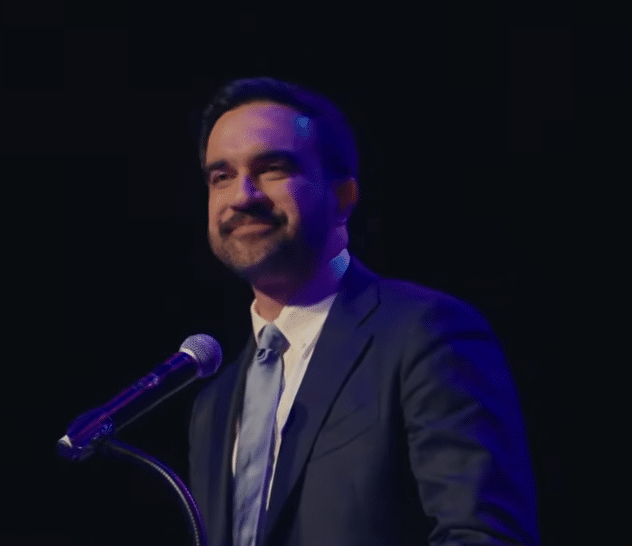
Tuesday: 34-yo Muslim becomes mayor of NYC
Wednesday: Gorsuch raises grave concerns abt Congress abdicating the power to declare war
Thursday: Pelosi announces retirement
Even assuming SCOTUS will throw out Trump’s tariffs, I’m sure we’ll be disappointed by whatever opinion they release doing so. Nevertheless I have hopes that this kind of language from Gorsuch makes it into that opinion.
JUSTICE GORSUCH: — we shouldn’t be concerned with — I want you to explain to me how you draw the line, because you say we shouldn’t be concerned because this is foreign affairs, the President has inherent authority, and so delegation off the books more or less.
GENERAL SAUER: Or at least —
JUSTICE GORSUCH: And if that’s true, what would — what would prohibit Congress from just abdicating all responsibility to regulate foreign commerce, for that matter, declare war to the President?
[snip]
JUSTICE GORSUCH: Can you give me a reason to accept it, though? That’s what I’m struggling and waiting for. What’s the reason to accept the notion that Congress can hand off the power to declare war to the President?
GENERAL SAUER: Well, we don’t contend that. Again, that would be —
JUSTICE GORSUCH: Well, you do. You say it’s unreviewable, that there’s no manageable standard, nothing to be done. And now you’re — I think you — tell me if I’m wrong. You’ve backed off that position
How to pay for free buses
Finally, there’s this observation.
Wednesday: The incoming Mayor of NYC names Lina Khan a key advisor
Thursday: Corrupt shareholders of Tesla create the Trillion dollar Keta-Man
When Jerry Nadler announced his retirement, Lina Khan was one of the first people mentioned as a worthy replacement. She almost immediately said she was not interested.
I’m wondering if she was already thinking about what more she can accomplish as an advisor to Mamdani.
This sure feels like a week that — if we survive long enough to look back at it — was a pivotal one.
Share this entry
https://www.emptywheel.net/wp-content/uploads/2025/11/Screenshot-2025-11-07-at-11.26.04.png546632emptywheelhttps://www.emptywheel.net/wp-content/uploads/2016/07/Logo-Web.pngemptywheel2025-11-07 05:45:142025-11-07 09:06:07May This Week Be a Pivot
Now that Magistrate Judge William Fitzpatrick has ordered that prosecutors provide Jim Comey with the grand jury transcripts along with all the evidence they used in their latest filing (which they had not provided to Comey beforehand), let’s return to the saga of the missing grand jury transcripts, shall we? Because they get closer to implicating Pam Bondi in misleading the court.
As I laid out here, on October 28, Judge Cameron McGowan Currie ordered prosecutors to give her all the transcripts of Lindsey the Insurance Lawyer’s actions in the grand jury. On October 31, DOJ delivered a package to her. Yesterday, Judge Currie ordered prosecutors to deliver what she had actually asked for: “remarks made by the indictment signer both before and after the testimony of the sole witness” during the presentment of the indictment the jury accepted, as well as “transcripts regarding the presentation of the three-count indictment” that the grand jury no-billed.
“Upon receiving this order” (which would have been yesterday, November 4), according to a new filing from Tyler Lemons, “the government immediately contacted the transcription service and requested the complete recording.” And then “the government requested that the transcription service transcribe the entire recording, which had not been done previously.” It provided those materials, for the first time recording the things Lindsey the Insurance Lawyer had done in the grand jury — both during the presentment where the grand jury rejected one of the counts, and before and after the presentment where they approved the indictment — today.
But that means that when Attorney General Pam Bondi ratified what Lindsey the Insurance Lawyer had done on October 31 …
In addition, based on my review of the grand jury proceedings in United States v. Corney and United States v. James, I hereby exercise the authority vested in the Attorney General by law, including 28 U.S.C. § 509, 510, and 515, to ratify Ms. Halligan’s actions before the grand jury and her signature on the indictments by the grand jury in each case.
… (using the same transcripts that were delivered to Judge Currie), those transcripts didn’t reveal what Lindsey the Insurance Lawyer had done.
At all!
This means two things:
First, that Pam Bondi in fact has not ratified anything Lindsey the Insurance Lawyer did, because she could not have reviewed any of it. DOJ did not yet have the recording, much less a transcript.
And it means that Pam Bondi ratified what Lindsey the Insurance Lawyer did, seemingly seeing precisely what Judge Currie did: the transcripts actually excluded everything Lindsey the Insurance Lawyer had done.
Update: An interesting wrinkle. Normally it’d take a long time to drag someone in the AG’s vicinity to answer for these irregularities. But not so here. Henry Charles Whitaker has filed notices of appearances in both the Comey and James cases in advance of next week’s hearing on these challenges. He’s the former FL Solicitor General, now serving as Bondi’s Counselor. That may backfire.
Update: Journalists who were in Currie’s hearing today report that DOJ still didn’t give Judge Currie the entire transcripts. There was a several minute section missing!
Share this entry
https://www.emptywheel.net/wp-content/uploads/2025/02/Screenshot-2025-02-22-at-09.16.18.png442440emptywheelhttps://www.emptywheel.net/wp-content/uploads/2016/07/Logo-Web.pngemptywheel2025-11-05 18:07:032025-11-13 13:19:37Tyler Lemons Narcs out Pam Bondi: She Couldn’t Have Ratified Lindsey Halligan’s Actions
Remember how, 72-hours ago, I wrote an interminable post about how this Comey case may be about more than just two charges filed back in September?
I argued, among other things, that Comey may have asked for grand jury transcripts not (just) because getting them in December would help him win a vindictive prosecution claim that’ll be heard a month earlier, but because one of the now-three judges involved in the case might see the validity of his argument, and order the government to provide him those transcripts now.
[W]hat these filings may do — especially the grand jury one — is affect several things going on, starting this week.
As noted, Judge Cameron McGowen Currie has ordered the government to give her the transcripts from both grand juries by tomorrow.
The undersigned has been appointed to hear this motion and finds it necessary to determine the extent of the indictment signer’s involvement in the gra.nd jury proceedings. Accordingly, the Government is directed to submit, no later than Monday, November 3, 2025, at 5:00 pm, for in camera review, all documents relating to the indictment signer’s participation in the grand jury proceedings, along with complete grand jury transcripts.
It’s genuinely unclear why she needs them, but it’s possible that by laying out Comey’s concern about privileged material in the grand jury, that will affect Judge Currie’s review.
Comey noted that Currie had already asked for these transcripts (which Nachmanoff surely noticed, since she did so in his docket).
Indeed, Judge Currie has already ordered the government to produce for in camera review “all documents relating to the indictment signer’s participation in the grand jury proceedings, along with complete grand jury transcripts.” ECF No. 95. Mr. Comey has argued that if Ms. Halligan alone secured and signed the indictment, dismissal would be required because she was unlawfully appointed.
Comey will not prevail on his motion for the grand jury transcripts until after the vindictive prosecution motion is briefed. But there’s nothing to stop Nachmanoff from making the same request that Currie did, to receive the transcripts for in chambers review. Similarly, there’s nothing to prevent William Fitzpatrick, the Magistrate Judge who’ll hold a hearing on the privilege question this Wednesday, to do the same.
By Politico’s description, loaner AUSA Tyler Lemons’ explanation of the potential spill in September appears to have been no more convincing today than it was in his reply brief, which I wrote about here.
Tyler Lemons, an assistant U.S. attorney brought in from North Carolina to assist Halligan with the case, responded to the judge. He said investigators reviewing the search warrant materials anew just days before Comey’s indictment halted the process after stumbling upon information they thought might have been subject to Comey’s attorney-client privilege with Richman. He said the materials are now “isolated on a desk in FBI headquarters.”
Lemons added, “We’re not going to touch this evidence until the court approves it.”
The magistrate judge said prosecutors are not permitted to look at the material themselves until the court has resolved any potential privilege claims. He said that prosecutors could continue to use evidence it believes is not privileged in court filings, but that they do so “at their own risk.” If they inadvertently use privileged material in their filings, he said, it could lead to consequences for the entire case.
ABC’s story suggests more concerns over the access itself being a Fourth Amendment violation, regardless of whether it was privileged or not. That seems to be why he ordered the government to share — by close of business tomorrow — not just the grand jury transcripts, but the material seized from Dan Richman five years ago, which the government has inexplicably not yet turned over.
But Comey’s attorneys raised separate concerns that by using those materials at all, the government may have violated Comey’s rights — not just by reviewing potentially privileged information, but also by revisiting evidence obtained by warrants that would now be considered stale.
Judge Fitzpatrick appeared to agree with those concerns during Wednesday’s hearing, as he repeatedly pressed Assistant U.S. Attorney Tyler Lemons over what materials the government had reviewed and why the disputes over privilege were not settled during the more than five years that the government had those communications in its possession
Fitzpatrick, citing what he described as “unusual” behavior by the Justice Department and the quickly approaching January trial date, ordered the government to hand over “all grand jury materials” related to its investigations of Comey by Thursday at 5 p.m. ET — an urgent deadline that reflected Fitzpatrick’s concern over the government’s conduct.
The big underlying issue though — the request that first precipitated this proceeding — was their demand for quick review of potentially privileged material that likely dates from the period after Donald Trump fired Jim Comey. DOJ has had this material for years, at least six months of which came when Bill Barr was aggressively pushing this investigation, yet they’ve never asked to breach these privilege claims before.
Which elicited the comment from Fitzpatrick that has made all the coverage, here, from ABC.
“We’re in a bit of a feeling of indict first, investigate second,” Magistrate Judge William Fitzpatrick said in a motions hearing in Alexandria, Virginia.
It’s not dissimilar to what a different Magistrate Judge, André Espionosa, said less than six months ago, when dismissing the charges against Newark Mayor Ras Baraka.
The hasty arrest of Newark Mayor Ras Baraka , followed swiftly by the dismissal of these trespassing charges a mere 13 days later, suggests a worrisome misstep by your Office . An arrest , particularly of a public figure , is not a preliminary investigative tool . It is a severe action, carrying significant reputational and personal consequences, and it should only be undertaken after a thorough , dispassionate evaluation of credible evidence .
It’s precisely that commitment to rigorous investigation and thoughtful prosecution that has 20 characterized the distinguished history of your Office, Mr. Demanovich [the AUSA whom Alina Habba sent in her stead], particularly over the last two decades. The bench and the bar have witnessed in that period, the diligence and care demonstrated by prior U.S. attorneys in New Jersey, whose leadership has consistently upheld the highest standards of prosecutorial ethics and professionalism Their legacy is one of careful deliberate action where charges were brought only after exhaustive evidence gathering and a thorough consideration of all facts That bedrock principle, consistently honored by your predecessors, is the foundation upon which the credibility and effectiveness of your Office rests.
So let this incident serve as an inflection point and a reminder to uphold your solemn oath to the people of this District and to your client, Justice itself, and ensure that every charge brought is the product of rigorous investigation and earned confidence in its merit, mirroring the exemplary conduct that has long defined your Office.
The apparent rush in this case, culminating today in the embarrassing retraction of charges, suggests a failure to adequately investigate, to carefully gather facts, and to thoughtfully consider the implications of your actions before wielding your immense power. Your Office must operate with higher standard than that.
To be sure, I don’t think they were reconsidering charging Comey.
Rather, I suspect they were hoping for a better theory of charges. I suspect they hope to bring follow-on charges to build their fever dream.
But they’ve been caught once again not doing the work of prosecutors.
The judged grilled one of Ms. Halligan’s deputies, Nathaniel Lemons, over prosecutors’ release of material in recent days, including private text exchanges intended to cast Mr. Richman and Mr. Comey in unflattering light in an otherwise quotidian court filing. He asked whether prosecutors had given Mr. Comey an opportunity to review such material first to challenge their release.
When Mr. Lemons said he had not offered Mr. Comey’s lawyers access to the material, obtained in several search warrants as part of an internal investigation of leaks in the Russia case during the first Trump administration, the judge chided him for placing an “unfair” burden on the defense.
That would undoubtedly be a violation of the discovery order, which required everything material to be turned over by October 13.
Update: The timeline on this gets more damning.
September 22: Lindsey Halligan appointed.
Days before Comey’s indictment: Investigators review the materials anew.
September 25: Miles Starr presents to the grand jury and then files notice of exposure to Attorney-Client material.
October 7: Lemons files notice of appearance, but refuses to tell Comey who the people referred to in indictment are.
October 10: Lemons starts pressuring Comey to access privileged material.
October 13: Lemons files for access to privileged material.
October 15: Lemons finally tells Comey who the people in the indictment are.
October 19: In bid to accelerate access to privileged material, Lemons accuses Patrick Fitzgerald of being part of classified leak — a slanderous attempt to criminalize sharing details of Trump’s misconduct.
November 3: Lemons files response relying on discovery Comey hasn’t yet received.
Share this entry
https://www.emptywheel.net/wp-content/uploads/2017/05/Screen-Shot-2017-05-09-at-4.12.07-PM.png396535emptywheelhttps://www.emptywheel.net/wp-content/uploads/2016/07/Logo-Web.pngemptywheel2025-11-05 15:29:032025-11-06 02:59:29Pam Bondi’s DOJ Gets Admonished a Second Time for Indict[ing] First, Investigat[ing] Second
On October 28, Judge Cameron McGowan Currie — the senior South Carolina Judge who’ll preside over Jim Comey and Tish James’ challenges to Lindsey Halligan’s appointment — instructed the government to give her the grand jury transcripts.
The undersigned has been appointed to hear this motion and finds it necessary to determine the extent of the indictment signer’s involvement in the grand jury proceedings. Accordingly, the Government is directed to submit, no later than Monday, November 3, 2025, at 5:00 pm, for in camera review, all documents relating to the indictment signer’s participation in the grand jury proceedings, along with complete grand jury transcripts.
On October 30, Jim Comey submitted a motion describing all the reasons it might be useful for him to see those transcripts, too.
Although those motions must be decided on their own merits, the circumstances described in both motions raise a strong possibility that there were “irregularities in the grand jury proceedings” that would provide a “basis for dismissal of the indictment.” Nguyen, 314 F. Supp. 2d at 616 (citations omitted). Indeed, Judge Currie has already ordered the government to produce for in camera review “all documents relating to the indictment signer’s participation in the grand jury proceedings, along with complete grand jury transcripts.” ECF No. 95. Mr. Comey has argued that if Ms. Halligan alone secured and signed the indictment, dismissal would be required because she was unlawfully appointed.
[snip]
For similar reasons, disclosure of the grand jury materials is reasonably calculated to provide additional support for Mr. Comey’s argument that he would not have been prosecuted but for President Trump’s animus toward Mr. Comey, including because of his protected speech.
On October 31, the government delivered a package of grand jury transcripts to Judge Currie.
Only, they didn’t include “all documents relating to the indictment signer’s participation in the grand jury proceedings, along with complete grand jury transcripts.”
Judge Currie exhibited remarkable patience when instructing DOJ, for the second time, to give her all the transcripts.
On October 28, 2025, the undersigned entered an order directing the Government to submit, for in camera review, “all documents relating to the indictment signer’s participation in the grand jury proceedings, along with complete grand jury transcripts.” ECF No. 95. On Friday, October 31, 2025, the court received a package containing, inter alia, a “Transcript of Grand Jury proceedings on September 25, 2025.” This court has reviewed the transcript and finds it fails to include remarks made by the indictment signer both before and after the testimony of the sole witness, which remarks were referenced by the indictment signer during the witness’s testimony. In addition, the package contains no records or transcripts regarding the presentation of the three-count indictment referenced in the Transcript of the Return of Grand Jury Indictment Proceedings before the Magistrate Judge.
Did DOJ really think Currie is stupid enough for this to work?
What makes all of this exceptionally stupid, though, is that Pam Bondi described reading the transcripts before she ratified the prosecution back on October 31, the same day the transcripts mysteriously weren’t all delivered to Judge Currie.
In addition, based on my review of the grand jury proceedings in United States v. Corney and United States v. James, I hereby exercise the authority vested in the Attorney General by law, including 28 U.S.C. § 509, 510, and 515, to ratify Ms. Halligan’s actions before the grand jury and her signature on the indictments by the grand jury in each case.
So whatever it is that led someone to withhold the most important parts of the Jim Comey transcript, Pam Bondi is now complicit in it.
And all of that will make it more likely that Judge Michael Nachmanoff will himself review the transcripts to see what all the fuss is about.
Share this entry
https://www.emptywheel.net/wp-content/uploads/2025/10/Screenshot-2025-10-04-at-12.21.55.png750948emptywheelhttps://www.emptywheel.net/wp-content/uploads/2016/07/Logo-Web.pngemptywheel2025-11-04 12:18:172025-11-04 12:18:17Cat Got the Indictment Singer’s [sic] Tongue?
Lindsey the Insurance Lawyer’s Loaner AUSAs have replied to Jim Comey’s opposition to their demand to a filter protocol to access attorney-client communications with Dan Richman.
Just a reminder, perhaps for their benefit more than yours (because you’re all super smart and can read), a significant part of Comey’s challenge to their rush to get a filter protocol is that any review of this material violated the Fourth Amendment. He argued there were two problems with doing so. First, the warrants were super old, over five years old. And also, because prosecutors charged him with different crimes — 18 USC 1001 and 1505 — than those for which the original warrants were approved.
The Fourth Amendment plainly prohibits the government from doing exactly what it seeks to do here: the Arctic Haze warrants were obtained more than five years ago in a separate and now-closed criminal investigation and authorized the seizure of evidence of separate offenses. Yet the government seeks to turn those warrants into general warrants to continue to rummage through materials belonging to Mr. Comey’s lawyer in an effort to seize evidence of separate alleged crimes. The Court should not authorize the government to conduct an unlawful review.
A. Applicable Law
Courts have repeatedly held that the government must execute search warrants within a reasonable period of time, including with respect to electronic data. As the Fourth Circuit has explained, district courts “retain[] the authority to determine that prolonged retention of nonresponsive data by the government violated the Fourth Amendment.” United States v. ZelayaVeliz, 94 F.4th 321, 338 (4th Cir. 2024) (citation omitted).6 That authority derives from application of the general “Fourth Amendment reasonableness” standard. Id. And “[c]ourts have applied this reasonableness standard to suppress evidence when the government delayed unreasonably in sifting through social media warrant returns for relevant evidence.” Id. (citing United States v. Cawthorn, 682 F. Supp. 3d 449, 458–60 (D. Md. 2023)). In Cawthorn, for instance, the district court held that two years was “an ample amount of time to conduct the necessary review” of digital materials, and “[c]ontinued access to search through the data beyond what the Government ha[d] already identified as responsive in its report would be unreasonable.” 682 F. Supp. 3d at 459 n.7. See id. at n.8 (noting that the good faith exception does not apply “where the error was not with the warrant itself but, rather, the government’s execution of that warrant in the context of a search of electronic data”) (citation omitted).
It is similarly well-established that “[u]nder the Fourth Amendment, when law enforcement personnel obtain a warrant to search for a specific crime but later, for whatever reason, seek to broaden their scope to search for evidence of another crime, a new warrant is required.” United States v. Nasher-Alneam, 399 F. Supp. 3d 579, 592 (S.D. W. Va. 2019) (citing United States v. Williams, 592 F.3d 511, 516 n.2 (4th Cir. 2010)); see also Terry v. Ohio, 392 U.S. 1, 19 (1968) (“The scope of the search must be strictly tied to and justified by the circumstances which rendered its initiation permissible.”) (cleaned up).
“Given the heightened potential for government abuse of stored electronic data, it is imperative that courts ensure that law enforcement scrupulously contain their searches to the scope of the search warrant which permitted the search in the first place. This is especially true where, as here, the illegal search was conducted at the behest of lawyers–the people in the best position to know what was allowed under the law.” Nasher-Alneam, 399 F. Supp. 3d at 595. A reasonable warrant thus “confine[s] the executing officers’ discretion by restricting them from rummaging through [digital] data in search of unrelated criminal activities.” Zelaya-Veliz, 94 F.4th at 337 (citation omitted).
6 Mr. Comey reserves his right to move to suppress these warrants, to the extent the government continues to use them in this manner. See, e.g., United States v. Place, 462 U.S. 696, 709–10 (1983) (a seizure lawful at its inception can nevertheless violate the Fourth Amendment based on agents’ subsequent conduct); DeMassa v. Nunez, 770 F.2d 1505, 1508 (9th Cir. 1985) (“an attorney’s clients have a legitimate expectation of privacy in their client files”). Until the government answers the questions the defense has previously raised about these warrants, which to date have remained unanswered and which are detailed at the end of this submission, the defense will not be in a position to file an appropriately targeted suppression motion.
Lindsey’s Loaner AUSAs completely ignore this discussion about the Fourth Amendment, dismissing it with a little wave of their hands. How dare a defendant ask about things like the Fourth Amendment, when we’re trying to get to his texts with his attorney, they ask!
Defendant’s response does not address the underlying premise of a filter protocol. Instead, Defendant first jumps to the underlying search warrants and presumptively declares that the government is conducting an unconstitutional search. This is wrong. The government is not asking to look at the raw returns from prior search warrants. The government is simply asking for a judicially approved filter protocol as to a small and specific subset of evidence that was lawfully obtained consistent with the terms of a federal search warrant.
They excuse doing so because the crimes DOJ investigated from 2017 to 2021 (for which they told investigators in EDVA there was not sufficient evidence to charge either Comey or Dan Richman) are “consistent with” the crime under investigation here, that Comey authorized Richman to share information anonymously (while Richman was still at FBI).
In 2019 and 2020, the government obtained a series of search warrants during an ongoing investigation into violations of 18 U.S.C. §641 (Theft and Conversion of Stolen Government Property) and 18 U.S.C. §793 (Unlawful Gathering or Transmission of National Defense Information). In ways consistent with the current prosecution, the prior government investigation focused in part on the relationship and communication between the Defendant and Daniel Richman (“Richman”). [my emphasis]
That “consistent with” is the only excuse they gave for snooping in these communications in search of evidence for a different crime.
And that’s important because, in an attempt to poo poo Comey’s concern about the investigative team’s access attorney-client communications, they confess that the FBI has been snooping through this material.
The government has proceeded with an abundance of caution in reviewing lawfully obtained evidence from the 2019 and 2020 search warrants. While reviewing evidence that was previously filtered by the Defendant’s attorney, an FBI agent noted that some of the communications appeared to involve an attorney and client. At that time, a prophylactic decision was made to remove the FBI agent from the investigative team and pause any further review of the evidence from the 2019 and 2020 search warrants. This was orally communicated to the investigative team and communicated through written instruction (email) to the lead investigators.
This sequence of events is what the Defendant relies on to assume taint. The presumption is wrong. No members are of the investigative team have been tainted by attorney-client privileged material. However, when undersigned counsel joined the prosecutorial team, a decision was made for the quarantinedevidence to remain that way to allow the Court to implement a filter protocol that completely removes any concern. The Defendant questions the government’s ability to safeguard privileged material. But the reality is that the government has proceeded with the utmost caution and respect for privileged material. [my emphasis]
Let’s lay this out in detail:
“While reviewing evidence that was previously filtered by the Defendant’s attorney:” We have been accessing this material without a new warrant
“[A]n FBI agent noted that some of the communications appeared to involve an attorney and client:” An FBI Agent we won’t otherwise identify discovered there were attorney-client communications in there
“[A] prophylactic decision was made to remove the FBI agent from the investigative team:” a decision was made [by the FBI General Counsel, who we will not name] to preserve the general investigation remove this particular agent from this particular investigative team
“This was orally communicated to the investigative team:” There’s no paper trail of the entire investigative team being told to stop
“[A]nd communicated through written instruction (email) to the lead investigators:” only the lead investigators (who may include the FBI agent in question) got written notice, meaning everyone else is carrying on as they were
“[W]hen undersigned counsel joined the prosecutorial team, a decision was made:” We don’t want to put our law licenses on the line, so instead we’re demanding a filter protocol without first getting a warrant
The initial reference to “quarantined evidence” (bolded above) must be in the page of this filing that is redacted. So it’s not clear whether it refers to just “five text threads identified” in Richman’s original privilege log. It doesn’t appear to be refer to the entire vat of materials from Richman, the one still accessible to some group of FBI Agents. And at least from the unredacted section, I see no explanation for what the attorney-client communication is, and whether Richman failed to identify it or whether it somehow escaped from that filter. Further, I see no explanation of whether that attorney-client communication remains accessible to investigators.
What I do know is that, in their bid to accelerate this process, Lindsey’s Loaner AUSAs claimed that Comey, “used current lead defense counsel [Patrick Fitzgerald] to improperly disclose classified information,” insinuating it was a crime for Jim Comey to release unclassified information about Donald Trump’s misconduct to the press. That is, they invoked crime-fraud exception pertaining to communications that — because they post-date the time Dan Richman left the FBI– are completely irrelevant to the charges at issue here, and because they were unclassified, were legal to share (albeit, per DOJ IG, a violation of FBI guidelines).
And that makes me very skeptical that these Loaner AUSAs have quarantined any of the problems at issue here.
Update: Reviewing this made me realize something. Prosecutors first started pressuring Comey for this filter protocol on October 10. They requested it even before providing discovery on October 13 (and attempted to delay discovery on most stuff for a week). Only after that did they confirm to Comey that Dan Richman is the one DOJ had charged him with lying about authorizing to share information 20 days earlier.
Share this entry
https://www.emptywheel.net/wp-content/uploads/2025/11/Screenshot-2025-11-03-at-13.08.40.png498454emptywheelhttps://www.emptywheel.net/wp-content/uploads/2016/07/Logo-Web.pngemptywheel2025-11-03 08:52:412025-11-03 12:19:07Tyler Lemons Confesses Kash Patel’s FBI Was Reading Previously Seized Material without a Renewed Warrant
I was disappointed, in the way we here in the peanut gallery sometimes are, that Tish James had to specifically rebut the silly things that Lindsey Halligan’s loaner AUSA, Roger Keller, claimed to try to excuse Lindsey’s stalking of Anna Bower.
Attorney General James’ original request asked Judge Jamal Walker to order the government to do three things:
Abstain from further extrajudicial statements like Lindsey’s Signal stalking of Bower
Follow rules and laws requiring prosecutors (and Federal employees generally) to retain their communications
Create and maintain a log of all contact between any government attorney or agent on this case and any member of the news media
As Lawfare’s excellent trial dispatch from Molly Roberts described, when initially presented with this question, loaner AUSA Keller — “a civil litigation lawyer by training,” Roberts helpfully noted — got hung up on a contact log tracking not just with the reporters Lindsey the Insurance Lawyer spoke to, but also with whom others (this is implicit, but let me make it more obvious) like Eagle Ed Martin did.
Keller responded to this request, that prosecutors follow the rules, by demanding that the defense follow the same rules … which is not how it works, both Abbe Lowell and Judge Walker reportedly responded.
The next motion invites a bit more controversy, or at least confusion. James also filed a motion prior to the arraignment asking the court to order the government to follow rules preventing disclosure of investigative and case materials, as well as to refrain from extrajudicial statements concerning the case to the press and public. This motion was prompted in part by an Oct. 20 article published inLawfare by my colleague, Senior Editor Anna Bower, detailing texts sent to her by Halligan in which Halligan criticizes Bower’s tweets about New York Times coverage of grand jury testimony in the case.
This violated, the filing says, Rule 6(e) of the Federal Rules of Criminal Procedure. It argues that the exchange with Bower and the other instances of apparent disclosure it describes—including pre-indictment reports that prosecutors intended to bring charges—also violate various rules, regulations, and ethical obligations. The motion doesn’t ask for a finding to that effect, only for an order to prevent such conduct in the future.
The judge, mentioning only “a journalist” and “an article published,” notes these oddities of the filing. Anyone hoping for a television-ready showdown in which the defense demands the prosecution be held in contempt is quickly disappointed: Judge Walker has interpreted the filing correctly, confirms Lowell.
The judge determines that leaves the prosecution three options: oppose the motion in its entirety; don’t oppose it at all; or oppose the proposed relief. The Eastern District prosecutors would have to preserve all documents relevant to the trial (a litigation hold) as well as create a log of all contact between its attorneys or agents and the media. The litigation hold doesn’t bother Keller. But he expresses reservations about the log, mentioning that “the defendant is also active on the Internet.” Specifically, he takes issue with her tweeting that she is innocent.
The judge, understandably, appears perplexed. He remarks that it’s unclear what Keller is asking. And it is: A public tweet from James in which she says “I am not fearful, I am fearless” has little to do with contact between her attorneys and the media. The misunderstanding only becomes greater when Keller elaborates that any log requirement for the government should also be a requirement for the defendant, and should cover “statements of innocence before the press.”
Does he mean that James should have to keep a record of any proclamations of her intention to fight the charges against her? Or does he mean she shouldn’t be allowed to make them at all?
Keller seems to be suggesting that the restrictions on the defendant’s public speech should mirror those placed on the prosecution. But this is not how these things work. Prosecutors have unique obligations not placed on defendants, who have First Amendment rights to protest their innocence.
Judge Walker delicately instructs Keller—a civil litigation lawyer by training, as it turns out—to take some time to think about the matter and get back to him. Lowell, for his part, declares that the rules to which government lawyers are held aren’t the same ones that apply to a defendant.
“The court certainly understands the requirements,” responds the judge. It is a little less certain that the prosecutor does. [my emphasis]
Now, when I first read Roberts’ dispatch, I honestly thought Keller’s confusion stemmed from that detail, “a civil litigation lawyer by training.” He just doesn’t know what he’s doing.
But when I started writing an abandoned post on his response, I came to believe he — like Lindsey the Insurance Lawyer — is mostly performing for a one man audience. To understand why I think that, check out how loaner AUSA Keller spends a 17¶¶ response:
Lindsey the Insurance Lawyer and loaner AUSA Keller ask that Walker not impose unilateral requirements to preserve all communications and keep a log [my emphasis]
Background: a grand jury indicted the Defendant
Walker should not impose unilateral requirements to preserve all communications and keep a log and also, US v. Trump! (citing the DC Circuit opinion partly upholding the gag on Trump), because Lindsey the Insurance Lawyer had to protect her client [my emphasis]
Here’s a citation that’s totally inapt but which will allow me to argue Tish James has to shut her yap
If the government has to “preserve all communications with any media person” and also keep a log of those contacts, “the unstated threat that she – at some future point in time – may engage in a ‘gotcha’ game where she brings a sanctions motion” may “chill all Government/media interaction” [my bold, italics original]
“There is no Court-imposed requirement that the Government preserves the records,” but can you imagine if a log of all communications means “all communications”?
If we have to follow the rules, Tish James has to follow rules for prosecutors too (citing US v Trump again)
“Defendant’s right to a fair trial does not give [her] the right to insist upon the opposite of that right – that is a trial prejudiced in [her] favor,” citing US v. Trump again
Because she’s a lawyer, Attorney General James has to adhere to NY rules of professional conduct even if Lindsey the Insurance Lawyer refuses to adhere to any rules of professional conduct
After her arraignment, James said she “will not bow” and there have to be rules against that!
Lindsey the Insurance Lawyer covertly bullying a journalist on disappearing messages is nowhere near as bad as Tish James saying “I will not bow” on a telly that Donald Trump can see!
Lindsey the Insurance Lawyer was just protecting her client — which client I will decline to name — “from substantial undue prejudice”
Grand jury secrecy is no big deal
Lindsey the Insurance Lawyer didn’t explicitly reveal what went on in the grand jury
Lindsey the Insurance Lawyer was merely — and heroically — “protect[ing] her client from unfair prejudice resulting from reporting half-truths”
I’m going to distract from the way Bower caught Lindsey the Insurance Lawyer pretending “thousand(s)” of dollars was not just two thousand
You should tell Tish to shut her yap!
I admit, the first time I read this filing, I read in terms of obvious bullshit to rebut, like I imagine lawyers do.
But when you lay it out like this, paragraph by paragraph, the pressing question becomes whether these people — not just Lindsey the Insurance Lawyer, Donald Trump’s defense attorney, but also loaner AUSA Keller — think Donald Trump, and not the US of A, are their client, a client demanding that his minions ensure that Tish James doesn’t become a rock star because of this prosecution.
Because otherwise, why demand that Tish James bow down? Why cite US v. Trump so prominently?
James addressed both these questions. She asked, Who exactly do these people think their client is?
Third, the government’s assertion that Ms. Halligan was only trying to protect “her client” raises the question of who she believes “her client” to be. Her “client” is neither the President, nor the Attorney General, nor the Administration, nor even her Office. It is the United States, as the case caption makes clear, and “[t]he United States wins its point whenever justice is done its citizens in the courts.”2 The point remains true regardless of whether the outcome is the one that the government favors. “Justice is done” when its “citizens in the courts” receive a fair trial. And in any event, a defendant’s fair trial rights decidedly trump any so-called “unfair prejudice” to the government’s case from public reporting. Courts have held that extrajudicial statements and comments by attorneys may be restricted to protect a defendant’s fair trial rights and the integrity of judicial proceedings—which override any desire by government prosecutors to “attempt to protect [Ms. Halligan’s] client from unfair prejudice.” Opp. at 6. See, e.g., Sheppard v. Maxwell, 384 U.S. 333, 361 (1966); Gentile v. State Bar of Nevada, 501 U.S. 1030, 1066 (1991).
2 DOJ, Remarks as Delivered by Attorney General Merrick B. Garland, https://www.justice.gov/archives/opa/speech/attorney-general-merrick-b-garland-deliversremarks-office-access-justices-gideon (Mar. 17, 2023).
The insistence that “fair trial rights decidedly trump any so-called ‘unfair prejudice'” is, I hope, an intentional double entendre.
James’ citation for the quote, “[t]he United States wins its point whenever justice is done its citizens in the courts,” is more subtle. The footnote cites this speech by Merrick Garland, a tribute to public defenders and defense attorneys generally, in which he emphasized the import of rule of law.
It reaffirmed that the law protects all of us – the poor as well as the rich, the powerless as well as the powerful.
In so doing, it reaffirmed this country’s commitment to the Rule of Law.
And trust in the Rule of Law is what holds American democracy together.
But the words, “[t]he United States wins its point whenever justice is done its citizens in the courts,” are not Garland’s words (though that was not the only speech where he used them). They were spoken by Willliam Taft’s Solicitor General, Frederick Lehmann, and they are inscribed on the building at DOJ. Judge Walker (a former AUSA) will presumably recognize that; Keller the loaner AUSA should: but Lindsey the Insurance Lawyer may see only a citation to Garland and worry about her boss — her client — again.
Then there’s James’s treatment of Keller the loaner AUSA’s inapt reliance on US v. Trump. She uses that to recall Trump’s misconduct as a defendant, something she knows well.
The government’s reliance on United States v. Trump, 88 F.4th 990 (D.C. Cir. 2023)—a case affirming a limited gag order placed on then-defendant Donald Trump in response to his public statements threatening witnesses, participants, and the judiciaryduring litigation—to defend Ms. Halligan’s interactions with the reporter is entirely misguided. Opp. at 3–4. Trump is relevant only to the extent that it proves the relative strength of a criminal defendant’s First Amendment rights and the extraordinary circumstances required to justify any burden on such rights. See id. (“[A] criminal defendant—who is presumed to be innocent—may very well have a greater constitutional claim than other trial participants to criticize and speak out against the prosecution and the criminal trial process that seek to take away his liberty.”). The Trump court set out facts justifying the order in vigorous detail, including a timeline of President Trump’s extensive attacks on witnesses, court officials, judges, law clerks, and other government personnel. See id. at 1010. It also catalogued the violent and threatening responses resulting from President Trump’s statements. See id. at 1011.
Even under those extraordinary circumstances, the court still found that “Mr. Trump [was] free to make statements criticizing the current administration, the Department of Justice, and the Special Counsel, as well as statements that this prosecution is politically motivated or that he [was] innocent of the charges against him.” Id. at 1028. Attorney General James’ speech, including following her initial appearance, cannot be reasonably compared to the statements that led to the United States v. Trump gag order, and regardless, would have been outside of its reach.
And James invoked Trump’s “almost weekly … disparaging comments against her” to suggest the government won’t win a war of the lesser wrong.
The comparison that the government now offers is to a public statement by a defendant who has faced almost weekly assertions by the President, or those carrying out his bidding, calling for her prosecution and conviction or making other disparaging comments against her. The government’s argument appears to be that “two wrongs don’t make a right.” But the defendant has not contravened the cited rules; the government has. The relief requested in the Motion is intended only to ensure that does not happen again and that, if it does, the government does not delete the evidence of its wrongdoing. That relief should be unobjectionable to the government.
The James prosecution is not functionally necessary for Donald Trump’s witch hunt — it is discrete punishment for someone who humiliated Donald Trump by treating him as a garden variety fraudster. That may be why Lindsey the Insurance Lawyer only got one loaner AUSA for this case, as compared to two overt ones for the Comey case (plus at least one more guy writing the filings), which is one part of the larger project. So maybe this is all about the posturing, an attempt to ensure that nothing about this prosecution backfires on the “client.”
But the focus on Trump — the need to respond to the totally inapt reliance on US v. Tump — distracted from something potentially more important.
Go back to bullet 5 again. Here’s that full quote:
Essentially, Defendant attempts to chill all Government/media interaction with the unstated threat that she – at some future point in time – may engage in a “gotcha” game where she brings a sanctions motion because the Government inadvertently failed to maintain a document or include a contact in its log.
This is an astonishing statement, one James addresses this way:
The opposition’s hyperbolic claim that the Motion seeks something like a gag order, Opp. at 3, fares no better. Government counsel and their agents have an ongoing obligation to refrain from certain types of extrajudicial statements and disclosures that may jeopardize a fair trial in this case. James Mot. at Sec. I. The defense is not asking the Court to “chill” all the government’s interaction with the media; it concedes that many statements that “a reasonable person would expect to be further disseminated by any means of public communications” are permissible.1 James Mot. at 9 (quoting Loc. Crim. R. 57.1(C)). Rather, the defense is seeking the Court’s assistance in assuring that the government adheres to the rules it has set for itself.
1 Another red herring, based on nothing in the Motion, is the government’s suggestion that Attorney General James is “attempt[ing] to chill all Government/media interaction” to later play “a ‘gotcha’ game” over the government’s failure to maintain a document or include a contact in its log. Opp. at 3. Following long-standing rules on extrajudicial statements is not “gotcha,” it is basic to the government’s obligation to protect fair trials.
These are prosecutors, wailing about being asked to retain documents! The government complains about being asked to preserve documents five times, plus the requirement that it maintain documents in its chill comment. And loaner AUSA Keller makes those complaints after having agreed to a litigation hold at the arraignment, something James notes in the first paragraph.
[A]s government counsel acknowledged at the October 24, 2025, initial appearance and arraignment, the government agreed to comply with the litigation hold request made in the Motion to prevent any further deletions and to preserve any other extrajudicial communications that may have been made.
Loaner AUSA Keller outright states that it would “chill” … something if prosecutors are asked to retain all their documents, something that normal prosecutors do as a matter of course, at least until a matter is concluded. This is like Trump demanding that he get to wipe every phone involved in this prosecution on a daily basis, after spending years misrepresenting what happened after Mueller team members left that team.
It’s not a “gotcha” if, as a prosecutor, you start deleting documents willy nilly. It is a real violation. It should be. Especially in a case like this one where the President accidentally issues orders on his social media site intended to be private. Is there a whole stash of Truth Social DMs about this case that have been deleted?
So I get the point of replying to the issues loaner AUSA Keller raised, including the inapt nod to the indignities that Donald Trump suffered after he got indicted and then threatened to kill witnesses (including the witness he almost got killed on January 6).
But that repeated complaint about merely retaining all your communications, particularly coming after already orally agreeing to do so, has me wondering if something much bigger than Lindsey the Insurance Lawyer’s stalking problem is going on.
Update: Judge Walker has issued the litigation hold but not required prosecutors to log their contact with journalists. He even extended his admonition on complying with Local Rules to James’ legal team as well as prosecutors.
The Court also ORDERS all counsel to comply with Local Rule 57.1, whichprohibits any “lawyer, law firm, or law enforcement personnel associated with the prosecution or defense” from making or authorizing4 certain extrajudicial statements, including offering “[a]ny opinion as to the accused’s guilt or innocence or as to the merits of the case or the evidence in the case,” subject to their professional obligations. E.D. Va. Crim. R. 57.1(C)(6). Any “lawyer who is participating . . . in the . . . litigation of [this] matter” may also have an ethical duty to refrain from making extrajudicial statements that pose a risk of prejudicing the proceeding. See ABA Model Rules of Prof’l Conduct R. 3.6 (2023).5
The footnotes to this passage decline to extend the local rules to Tish James herself, but does extend them to anything her attorneys advise her to say.
3 In its opposition to the motion, the government argues that the alleged statements regarding the grand jury proceedings do not “rise to the same level” as the defendant’s public statements proclaiming her innocence. ECF No. 30 at 5. The Court does not believe a comparison of the defendant’s public statements and the government’s interactions with the media does much to resolve any question presented here.
4 The parties do not discuss this point in their briefing, but the Court observes that the Local Rules’ prohibition on ‘authorizing’ extrajudicial statements would appear to apply to public statements a defendant might make with the advice of counsel—though Rule 57.1 binds only the lawyer, not the defendant.
5 The government argues that the defendant herself is subject to certain restrictions on her communication with the media because she is a “lawyer.” ECF No. 30 at 4 (quoting E.D. Va. Crim. R. 57.1(C)). But the Court finds that “lawyer” within the meaning of the Local Rules refers to a person practicing law in this district, not to any individual with a juris doctor degree or a bar license. Accordingly, this Order does not extend to the defendant’s speech as a defendant. But see supra n.2.
And he cites US v. Trump back at loaner AUSA Keller (making several copy and paste errors in the process) for the principle that defendants have more right to speak than the attorneys on the case.
At this stage of the litigation, the Court does not find that a restriction on the defendant’s own speech is necessary to ensure a fair trial for both sides. The Court certainly has the power to “control the speech and conduct even of defendants in criminal trials when necessary to protect the criminal justice process,” United States v. Trump, 88 F.4th 990, 1006 (D.C. Cir. 2023) (citing Nebraska Press, 427 U.S. 539, 553–54 (1976)). But so far, the government has not demonstrated that the defendant’s speech has risen to the level that it must be dampened in spite of her First Amendment rights in order to preserve a just legal process. See id. at 1008 (recognizing that “a criminal defendant—who is presumed to be innocent—may very well have a greater constitutional claim than other trial participants to criticize and speak out against [t]he prosecution and the [criminal] trial process . . . .”).
One of the funniest part of Judge Walker’s opinion his how he refers to Lindsey the Insurance Lawyer’s unlawful role.
The motion criticizes alleged communications between a government attorney1and a member of the media via the encrypted messaging app Signal.
1 The status of the government attorney who made the alleged statements is the subject of a motion pending before the Honorable Cameron McGowan Currie. ECF No. 22. Thus, the Court will avoid referencing the role of the attorney in this case. Additionally, this Court generally does not refer to government attorneys by name. It will not depart from that practice here
Share this entry
https://www.emptywheel.net/wp-content/uploads/2025/10/Screenshot-2025-10-04-at-12.21.55.png750948emptywheelhttps://www.emptywheel.net/wp-content/uploads/2016/07/Logo-Web.pngemptywheel2025-10-31 09:03:002025-11-02 06:09:44Lindsey the Insurance Lawyer’s Disappearing Agreement to a Litigation Hold
I think the dispute between Lindsey Halligan’s loaner AUSAs and Jim Comey is a fight that has ramifications for Trump’s larger attempt to use DOJ to punish his enemies.
According to court filings, investigators from the case got access to Comey’s attorney-client information, possibly on September 25, the day Halligan obtained the indictment. Before they had given Comey a shred of discovery, they sent him a draft filter protocol on October 10. Then on October 13 — still before they had handed over discovery, which appears to have revealed they got no new warrant to access this old material — the loaner AUSAs asked Judge Nachmanoff to approve a filter protocol that would give the government the first chance to make privilege determinations. Abiding by local rules, Comey didn’t respond right away, leading prosecutors (on October 20) to ask the judge to hasten his consideration of the matter, even while accusing Patrick Fitzgerald of being part of a “leak” behind sharing unclassified information under Dan Richman’s name. Which is one of the things Comey patiently explained that same day: the loaner AUSAs were defaming Fitzgerald. After Nachmanoff denied the prosecutors’ bid to rush the issue, Comey laid out all the problems with this bid to get access to his privileged communications on Monday (which I wrote about here).
Among other things, he noted that prosecutors don’t appear to have gotten a warrant to review this material for this alleged crime — they’re still relying on warrants obtained in 2020 to investigate a leak of classified information.
Comey requested that, before he had to suppress this material, Judge Nachmanoff first require prosecutors to answer a bunch of questions, such as who already accessed the material and under what authority.
Nachmanoff didn’t do that.
Instead, he ordered Magistrate Judge William Fitzpatrick to deal with it; Fitzpatrick, in turn, set a hearing for next Friday.
At one level, that looks like a punt.
But in effect, it makes it exceedingly unlikely that prosecutors will get their filter protocol.
Nachmanoff cited a relevant precedent for this, in which lawyers (including Roger Stone prosecutor, Aaron Zelinsky and Joe Biden Special Counsel Robert Hur, because this year of my life necessarily requires revisiting every fucking case I’ve ever covered before) tried to do the filter review for a law firm, only to have the Fourth Circuit remand it for a magistrate judge do it.
This Court assesses the appropriate contours of a privilege filter protocol according to the guidelines set forth in In re Search Warrant Issued June 13, 2019, 942 F.3d 159 (4th Cir. 2019), as amended (Oct. 31, 2019). In In re Search Warrant, a Baltimore law firm challenged the government’s use of a Department of Justice filter team to inspect attorney-client privileged materials seized from that firm. Id. at 164. The Fourth Circuit reversed the district court’s denial of the law firm’s motion to enjoin the filter team’s review of the seized material. Relevant to this case, the Fourth Circuit held that “a court is not entitled to delegate its judicial power and related functions to the executive branch, especially when the executive branch is an interested party in the pending dispute.” Id. at 176. The Fourth Circuit observed that, “[i]n addition to the separation of powers issues” that might arise, allowing members of the executive to conduct the filter, even if those members were trained lawyers, raised the possibility that “errors in privilege determinations” would result in “transmitting seized material to an investigation or prosecution team.” Id. at 177. It thus determined that the filter protocol “improperly delegated judicial functions to the Filter Team,” and that instead, “the magistrate judge (or an appointed special master) — rather than the Filter Team — must perform the privilege review of the seized materials[.]” Id. at 178, 181 (collecting cases).
Prosecutors had argued (in what might be their only reference to this, a directly relevant precedent) that informing Comey at the start mitigated the risk at the heart of the earlier case.
Further, the Proposed Protocol creates a process by which the putative privilege holders remain engaged and may assert a privilege over PPM, with any remaining disputes to be resolved by the Court. Indeed, the Proposed Protocol requires authorization from the potential privilege holder(s) or the Court before the Filter Team may disclose PPM to the Prosecution Team. Thus, this Protocol does not authorize the Government to adjudge whether specific material is privileged. Instead, the Protocol leaves adjudication of any unresolved privilege claims to the Court. See Fed. R. Evid. 501. Accordingly, unlike the concerns raised by In re Search Warrant, the Government has engaged the putative privilege holders from the onset and will continue to engage them and the Court, if necessary, as prescribed by the Protocol before disclosing any PPM. Cf. In re Search Warrant Issued June 13, 2019, 942 F.3d 159, 176-178 (4th Cir. 2019), as amended (Oct. 31, 2019) (discussing concerns of delegating judicial functions to the executive branch where the magistrate judge authorized an ex parte filter review of a search warrant return of a law firm).
Without even mentioning this (specious) claim from the loaner AUSAs, Nachmanoff treated the entire privilege review as one the In re Search Warrant opinion defines as a judicial function. That, plus the Fourth’s citation to the 2018 treatment of Michael Cohen’s communications (when I said every fucking case I’ve ever covered, I meant all of them) signals Nachmanoff will surely insist Fitzpatrick or someone Fitzpatrick appoints conduct any review.
But Nachmanoff went further in his seeming punt. He also suggested that, even before Fitzpatrick conduct a review, he should first answer a number of questions — questions that largely track those Comey raised, including the questions (cited at page 12 here) he raised.
The Fourth Circuit further concluded that adversarial proceedings before the magistrate judge were needed prior to the authorization of a filter team and protocol. Id. at 179.
Similarly here, briefing on the government’s proposed filter protocol raises several legal questions that must be resolved before any protocol is authorized. These questions include, but are not limited to, whether the original warrants authorizing the seizure of the materials at issue are stale, whether those warrants authorize the seizure and review of these materials for the crimes at issue in this case, whether the lead case agents or prosecution team in this case have been exposed to privileged materials, and what the proper procedures are, if any, for review of the materials at issue. See ECF 71 at 1, 5, 6, 8–10, 12.
Which is to say, this is a punt, but a punt saying, “binding Fourth Circuit precedent says Comey is right.”
Update: Comey has submitted three additional pretrial motions. He asked to:
Throw out the indictment because Ted Cruz’ questioning sucked and also Comey told the truth (and also to submit the actual video showing the questioning).
Share this entry
https://www.emptywheel.net/wp-content/uploads/2025/10/Judge_Michael_Nachmanoff.png11981075emptywheelhttps://www.emptywheel.net/wp-content/uploads/2016/07/Logo-Web.pngemptywheel2025-10-30 15:49:392025-10-30 15:53:33Judge Nachmanoff Punts on Privilege
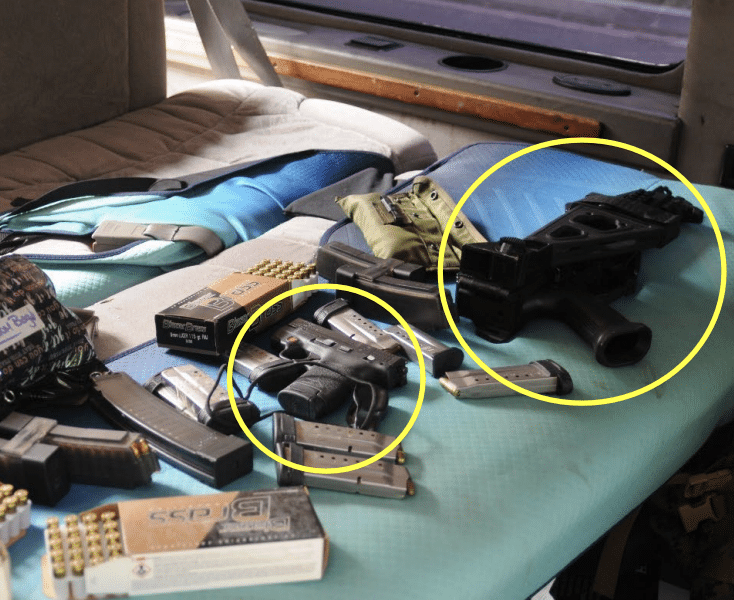
If it weren’t for a recent shift in DOJ’s prosecutorial focus, Jeanine Pirro’s wildly corrupt effort to suppress the larger criminal context of Tayler Taranto’s stalking of Barack Obama in 2023 would be no more than a garden variety authoritarian effort to rewrite history.
As ABC and Politico have written, two AUSAs who’ve been prosecuting Taranto, Carlos Valdivia and Samuel White, submitted a sentencing memo documenting how the Navy veteran with long-standing mental health issues first participated in January 6 and then, years later, drove his van containing guns and ammunition to stalk Kalorama, looking for Obama while ranting, “Gotta get the shot, stop at nothing to get the shot. This is where other people come to get the shot;”
The language in the memo about the January 6 attack and Taranto’s role in it attracted some press attention.
On January 6, 2021, thousands of people comprising a mob of rioters attacked the U.S. Capitol while a joint session of Congress met to certify the results of the 2020 presidential election. Taranto was accused of participating in the riot in Washington, D.C., by entering the U.S. Capitol Building. After the riot, Taranto returned to his home in the State of Washington, where he promoted conspiracy theories about the events of January 6, 2021.
And so Pirro (or someone at DOJ) did what all corrupt sycophants would do: put the two attorneys on leave for speaking the truth about Pirro’s liege.
Then, two of the AUSAs who bolloxed the Sydney Reid case, Jonathan Hornok and Travis Wolf, filed notices of appearance and submitted a new sentencing memo, asking for the same sentence. The description of January 6 as a riot, above, was removed (but not a quote of Taranto mentioning it).
More scandalously, the revised sentencing memo excised the description of how Taranto came to be stalking the former President, the passage in red, below: Because Donald Trump, as a private citizen, first doxed Obama.
The next day, on June 29, 2023, then-former President Donald Trump published on a social media platform the purported address of former President Barack Obama. Taranto re-posted the address on the same platform and thereafter started livestreaming from his van on his YouTube channel. Taranto broadcast footage of himself as he drove through the Kalorama neighborhood in Washington, D.C., claiming he was searching for “tunnels” he believed would provide him access to the private residences of certain high-profile individuals, including former President Obama. He parked his van, walked away from it, and approached a restricted area protected by the United States Secret Service. He walked through the nearby woods and stated, “Gotta get the shot, stop at nothing to get the shot.” [my emphasis]
As I said, if it weren’t for a recent shifted prosecutorial focus, criminalizing doxing partly as a way to criminalize otherwise peaceful protest against ICE and CBP, this kind of memory hole would be merely another instance of gross corruption and the human waste of professional careers destroyed because the aspiring dictator refuses to take accountability for his own actions.
But DOJ has recently arrested a number of people for doxing under 18 USC 119, a law that specifically protects law enforcement officers: first Gregory Curcio (who not only posted the address of an ICE lawyer, but invited others to swat her; his indictment included a domestic violence claim). Then Cynthia Raygoza, Ashleigh Brown, and Sandra Carmona Samane, who livestreamed from the house of an ICE officer they followed home.
Here’s how Bill Essayli, who regularly made shit up even before getting exposed for playing dress-up as a US Attorney the other day, said about the latter.
“Our brave federal agents put their lives on the line every day to keep our nation safe,” said Acting United States Attorney Bill Essayli. “The conduct of these defendants are deeply offensive to law enforcement officers and their families. If you threaten, dox, or harm in any manner one of our agents or employees, you will face prosecution and prison time.”
According to the indictment, on August 28, 2025, the defendants followed the victim – an ICE agent – from the Civic Center in downtown Los Angeles to his personal residence. The defendants livestreamed on their Instagram accounts their pursuit of the victim and provided directions as they followed the victim home, encouraging their viewers to share the livestream. Their Instagram accounts used to livestream the event were “ice_out_of_la,” “defendmesoamericanculture,” and “corn_maiden_design.”
Upon arriving at the victim’s personal residence, the defendants shouted to bystanders while livestreaming on Instagram that their “neighbor is ICE,” “la migra lives here,” and “ICE lives on your street and you should know.”
The defendants publicly disclosed on Instagram the victim’s home address and told viewers, “Come on down.”
Ashleigh Brown is the woman whose charges for being assaulted by an FPS officer were dismissed this week after defense attorneys discovered his criminal record. Unlike the Taranto case, there’s no claim the women did or would have been armed.
Mostly, they told this guy’s neighbors he was la migra, one of the men who kidnap workers from outside Home Depot.
Donald Trump’s doxing of Barack Obama was more consequential than what these three women did. Taranto was armed and, not least because of his mental health problems, dangerous.
Donald Trump’s own DOJ says the kind of doxing Donald Trump did should hold a five year sentencing in prison.
And DOJ just took ham-handed steps to pretend Trump didn’t do just that.
Share this entry
https://www.emptywheel.net/wp-content/uploads/2025/10/Screenshot-2025-10-30-at-07.43.38.png600734emptywheelhttps://www.emptywheel.net/wp-content/uploads/2016/07/Logo-Web.pngemptywheel2025-10-30 06:35:182025-10-30 07:14:01Jeanine Pirro Covers Up Donald Trump’s Doxing Conspiracy
The loaner AUSA in the Tish James case, Roger Keller, has responded to Attorney General James’ request that they be ordered to follow the rules (he even authored his own document, unlike the Comey loaner AUSAs). I’ll come back to it but it is … inadequate to the task, though it cites liberally and faithlessly from the DC Circuit opinion upholding part of the gag on criminal defendant Donald Trump.
In any case, that may be far less important a development than the order that Judge Cameron McGowen Currie gave in both the James and Comey cases.
As happened with the other challenges to Trump’s unlawfully appointed US Attorneys, Currie (a senior judge from another District within the same Circuit) was appointed by Fourth Circuit Chief Judge Albert Diaz to preside over the challenge to Lindsey Halligan’s appointment. While Comey included Halligan’s appointment paperwork in his challenge, James (who filed hers before she got any discovery) did not.
In any case, Currie wants more. She ordered DOJ to file, “all documents relating to the indictment signer’s participation in the grand jury proceedings, along with complete grand jury transcripts.”
The undersigned has been appointed to hear this motion and finds it necessary to determine the extent of the indictment signer’s involvement in the grand jury proceedings. Accordingly, the Government is directed to submit, no later than Monday, November 3, 2025, at 5:00 pm, for in camera review, all documents relating to the indictment signer’s participation in the grand jury proceedings, along with complete grand jury transcripts. In camera review is appropriate given the secrecy requirements applicable to grand jury proceedings. Fed. R. Crim. P. 6(e)(2).
Currie may need these simply to understand what the remedy would be if she ruled for Comey and James. As far as we know (and as news reports cited in both motions claim), unlike other challenges to Trump’s unlawful US Attorney appointments, Halligan was the only one present for the presentment, meaning if her appointment is unlawful, the indictments have to go away. Both Comey and James are arguing for dismissal with prejudice, though the argument is less compelling in James’ case (because unlike Comey, the statute of limitations did not expire). So Currie needs to understand how much of the case relies on Halligan’s presence.
Whatever Currie’s goal, reviewing these transcripts will likely to be exceedingly damning for Halligan, whom Currie refers to not as the “interim US Attorney” or even (as James referred to her) as the “purported interim US Attorney,” but as the “indictment signer.”
After all, they will show that Dan Richman gave testimony that debunked the very premise of the indictment against Comey; such a review may show that Halligan simply neglected to share that transcript with grand jurors. More damning still, it’ll reveal the testimony of James’ great-niece, Nakia Thompson, describing that she has paid almost nothing in rent since she lived in the home James bought for her in 2020, undercutting the entire claim that Attorney General James was intending to use the house as an investment property. It’ll reveal that Halligan got an Alexandria grand jury to indict James, bypassing those grand jurors in Norfolk who had heard Thompson’s testimony.
But Judge Currie may find something else Comey argued compelling: that because Halligan was not lawfully authorized to be US Attorney, Halligan’s mere presence in the grand jury was a violation of grand jury secrecy.
Here, Ms. Halligan’s unlawful appointment tainted the structural integrity of the grand jury process. Absent Ms. Halligan’s unlawful title, she would not have been able to enter the grand jury room, let alone present and sign an indictment. Indeed, the Federal Rules of Criminal Procedure allow only “attorneys for the government” to be “present while the grand jury is in session,” Fed. R. Crim. P. 6(d)(1), and define such attorneys to include only “attorney[s] authorized by law to conduct” grand jury proceedings, Fed. R. Crim. P. 1(b)(1)(D) (emphasis added). Those rules implement the longstanding principle “that the proper functioning of our grand jury system depends upon the secrecy of the grand jury proceedings”—a principle that “is ‘as important for the protection of the innocent as for the pursuit of the guilty.’” United States v. Sells Eng’g, Inc., 463 U.S. 418, 424 (1983) (citations omitted). By limiting participation to government attorneys “authorized by law,” Rules 1 and 6 maintain the secrecy of the grand jury proceeding and reinforce that an unlawfully appointed attorney’s presentation to the grand jury undermines the structure of that proceeding. The fundamental error here thus allows a presumption that Mr. Comey was prejudiced, “and any inquiry into harmless error would [require] unguided speculation.” Bank of Nova Scotia, 487 U.S. at 257.
Judge Currie may have very modest reasons for requesting these transcripts. But they will, almost inevitably, raise larger questions about both Halligan’s conduct, and that of the people who appointed her.
Share this entry
https://www.emptywheel.net/wp-content/uploads/2025/10/Screenshot-2025-10-04-at-12.21.55.png750948emptywheelhttps://www.emptywheel.net/wp-content/uploads/2016/07/Logo-Web.pngemptywheel2025-10-28 16:26:452025-10-29 05:04:18“The Indictment Signer:” Lindsey Halligan’s Time in the Grand Jury