Call and Response: Putin Demanded Greater Russia and Trump Agreed

Over the weekend, Putin and Donald Trump seem to have come to public agreement that, if elected in November, Trump would help Putin pursue Greater Russia.

In his session with Tucker Carlson, after all, Putin corrected the propagandist, informing him that, no, he didn’t invade Ukraine because of concerns about NATO expansion, but because he considers Ukraine — and much of Eastern Europe — part of Greater Russia. He subjected Tucker to a half hour lesson in his, Putin’s, mythology about Russia.

Tucker Carlson:Mr. President, thank you.

On February 24, 2022, you addressed your country in your nationwide address when the conflict in Ukraine started and you said that you were acting because you had come to the conclusion that the United States through NATO might initiate a quote, “surprise attack on our country”. And to American ears that sounds paranoid. Tell us why you believe the United States might strike Russia out of the blue. How did you conclude that?

Vladimir Putin:The point is not that the United States was going to launch a surprise strike on Russia, I didn’t say so. Are we having a talk show or serious conversation?

Tucker Carlson:That was a good quote. Thank you, it’s formidably, serious!

Vladimir Putin: Your education background is in history, as far as I understand, right?

Tucker Carlson: Yes.

Vladimir Putin: Then I will allow myself – just 30 seconds or one minute – to give a little historical background, if you don’t mind.

Tucker Carlson: Please.

Vladimir Putin: Look how did our relations with Ukraine begin, where does Ukraine come from.

[snip]

Tucker Carlson: May I ask… You are making the case that Ukraine, certain parts of Ukraine, Eastern Ukraine, in fact, has been Russia for hundreds of years, why wouldn’t you just take it when you became President 24 years ago? Your have nuclear weapons, they don’t. It’s actually your land. Why did you wait so long?

Vladimir Putin: I’ll tell you. I’m coming to that. This briefing is coming to an end. It might be boring, but it explains many things.

And then, within a day, Trump told a fabricated story that served to promise that not only wouldn’t he honor America’s commitment to defend NATO states, but would instead encourage Russia to do “whatever they hell they want.”

One of the presidents of a big country stood up and said, “Well, sir, if we don’t pay and we’re attacked by Russia, will you protect us?,” I said, “You didn’t pay. You’re delinquent.” He said, “Yes, let’s say that happened.” No, I would not protect you. In fact, I would encourage them to do whatever the hell they want. You got to pay. You got to pay your bills.

Call and response.

I still owe you a post(s) about my full understanding of the Russian investigation, one of the last parts of my Ball of Thread before I describe how Trump trained Republicans to hate rule of law. But I want to point to some aspects of 2016 — how Russia used similar calls and response to lock Trump in as part of the help they gave him.

As Adam Schiff addressed to in the exchange where he walked John Durham through all the elements of what Schiff described as “collusion” of which Durham claimed to be ignorant, Trump first asked for help, then got it.

Mr. Schiff. Don Jr. when offered dirt as part of what was described as Russian government effort to help the Trump Campaign said, “if it’s what you say, I love it;” Would you call that an invitation to get Russian help with dirt on Hillary Clinton?

Mr. Durham. The words speak for themselves, I supposed.

Mr. Schiff. I think they do. In fact, he said, especially late in summer. Late in summer was around when the Russians started to dump the stolen emails, wasn’t it?

Mr. Durham. Late in the summer, there was information that was disclosed by WikiLeaks in mid to late July.

Only, it happened even more than Schiff laid out. And it happened in ways that ensured Trump would be stuck down the road.

The way it worked with the Trump Tower Moscow dangle may be most instructive (this is, obviously, a paraphrase).

Late 2015, Felix Sater to Michael Cohen: Do you want the biggest bestest tower in Moscow? Are you willing to work with a former GRU officer and sanctioned banks to get it?

Cohen: Yes.

January 2016, Sater: Okay, then call the Kremlin.

January 2016, Michael Cohen to Dmitry Peskov, writing on a server hosted by Microsoft: Can I have Vladimir Putin’s help to build the biggest bestest tower in Moscow?

[Peskov pockets proof that Cohen and Trump were willing to work with a former GRU officer and sanctioned banks. Before the first primary, Putin pocketed his first receipt.]

May, after Trump has sealed the nomination, Sater to Cohen: You should fly to St. Petersburg to meet with Putin.

Cohen agrees, but once the DNC hack is revealed, Cohen decides that’s a bad idea and calls it off. Already, the stakes of having agreed to work with a former GRU officer have now gone up considerably.

July 27, Trump responding to some totally predictable questions, between asking Russia to hack Hillary some more and stating he would consider recognizing Russia’s seizure of Crimeia:

TRUMP: No, I have nothing to do with Russia, John (ph). How many times do I have say that? Are you a smart man? I have nothing to with Russia, I have nothing to do with Russia.

And even — for anything. What do I have to do with Russia? You know the closest I came to Russia, I bought a house a number of years ago in Palm Beach, Florida.

Palm Beach is a very expensive place. There was a man who went bankrupt and I bought the house for $40 million and I sold it to a Russian for $100 million including brokerage commissions. So I sold it. So I bought it for 40, I told it for 100 to a Russian. That was a number of years ago. I guess probably I sell condos to Russians, OK?

[snip]

TRUMP: Excuse me, listen. We wanted to; we were doing Miss Universe 4 or 5 years ago in Russia. It was a tremendous success. Very, very successful. And there were developers in Russia that wanted to put a lot of money into developments in Russia. And they wanted us to do it. But it never worked out.

Frankly I didn’t want to do it for a couple of different reasons. But we had a major developer, particular, but numerous developers that wanted to develop property in Moscow and other places. But we decided not to do it.

[Peskov now has a secret with Trump and Cohen, that in fact this was a lie.]

By the time Trump told this lie, Roger Stone was already working on getting advance notice of the contents of the John Podesta emails, a more specific ask. And Konstantin Kilimnik was preparing his trip to meet in a cigar bar with Paul Manafort where they would discuss how to win the swing states, how Manafort could get paid, and how to carve up Ukraine.

Later Steele dossier entries, sourced through Olga Galkina, who had started working directly with Peskov, claimed that Cohen had direct contact with the Kremlin (he had!), and claimed he was fixing Trump problems (he was! Trump’s sex worker problem!), but instead claimed that Cohen was instead fixing a Russian tie problem.

By the time those October Steele dossier entries were written, and especially by the time the December one was, Russia had done the following:

  • Gotten Cohen (and through him, Trump) to agree to work with sanctioned banks and a former GRU officer to get the biggest bestest Tower in Moscow
  • Left evidence of this fact on Cohen and Sater’s phones, in Trump Organization call records, and Trump Organization emails hosted by Microsoft, where they would be discoverable in case of investigation
  • Established a secret between the Kremlin and Trump: that the statements Trump made on the same day Russia obliged his request to hack Hillary, denying that he had ongoing discussions with Russia, were a lie
  • Made the substance of the lie look far, far worse, thereby increasing the chances the lie would be discovered, which it was

Through a predictable mix of narcissism and sloppiness, then, Trump had compromised himself without even thinking through the consequences.

Trump always insisted that his request that Russia further hack his opponent on July 27, 2016 was just a joke (and never really accounted for the Crimea comment). But Roger Stone was inserting himself into Trump’s public foreign policy statements as early as April.

And, after two conversations with Trump on July 31, Stone scripted a number of pro-Russian tweets for Trump to post. Trump didn’t post the tweets Stone sent; his staffers were instead cleaning up from the “Are you listening” comment. But Stone may have posted the ones he drafted himself.

Of course the Russians hacked @HillaryClinton’s e-mail- Putin doesn’t want the WAR with Russia neo-con Hillary’s donors have paid for

HYPOCRISY ! @HillaryClinton attacks Trump for non-relationship with Putin when she and Bill have taken millions from Russians oligarchs

Trump wants to end the cold war and defuse out tensions with Russia. Hillary ,neocon wants war. Putin gets it. @smerconish @realDonaldTrump

,@RealDonaldTrump wants to end new cold war tensions with Russia-thru tough negotiation- #detente #NYTimes

That is, in 2016, days before Stone’s lifelong friend Manafort would discuss election help in the same conversation as carving up Ukraine, days before Stone himself got advance notice of the Podesta emails, the rat-fucker was promising that Trump would end cold and hot wars with Russia.

By the time Stone did get those advance Podesta emails in mid-August 2016, the operation had already linked Stone to two Russian intelligence operations: the use of Julian Assange as a cut-out (and his request for a pardon), and the Shadow Brokers operation releasing NSA files publicly. That is, by chasing the carrot of stolen Hillary emails, Stone linked himself inextricably with two sticks, association with the most effective attacks on the US Deep State in recent history. Stone and Trump would have happily targeted the Deep State anyway, but Russia didn’t leave that to chance.

First Trump and Cohen compromised themselves by asking for help. Then Trump personally and through Stone made policy commitments. Along the way, Russia kept pocketing one or another receipt that would help bind Trump to those commitments, or if not, ensure some kind of leverage over him.

Here we are, eight years later, and that formula has only gotten more overt. At a time when winning the election is an existential necessity for Trump, one day after Putin made clear he is seeking not just Ukraine, but Greater Russia, Trump overtly promised to allow Russia to carve up NATO.

Past history suggests that may be no coincidence.

Update: Fixed a reference to Manafort.

Share this entry

Robert Hur Complained about Biden Notes that Trump Almost Certainly Already Declassified

If you ignore the overreading Robert Hur confessed to in order to justify writing a 388-page report that should have been 75, if you ignore the way Hur improperly used prejudicial language to attack a Presidential candidate and set up impeachment frenzy among Republicans, there are some interesting historic details about Robert Hur’s report, such as the details of what classified documents investigators found.

Thirty-four pages of the report consist of appendices, describing what investigators found where. And because Hur spent 156 pages explaining why he didn’t indict Biden based on the actions of Senate staffers shipping 2,000 boxes of Speech and Debate protected documents first to the Archives and then the University of Delaware decades ago, there are descriptions of how virtually all of the documents got where they ended up (except, of course, the two folders of Afghanistan documents around which he builds the excuse to write a 388-page report).

One of the most interesting descriptions, for example, explains how some of the most sensitive documents the FBI found — an envelope of documents about Obama’s Iran deal, including several with a bunch of compartment markings — probably ended up at Penn Biden Center.

The report describes that the documents were compiled in anticipation of a January 29, 2015 breakfast meeting at the Naval Observatory at which Biden attempted to persuade six Senators who had traveled to Israel together to support Obama’s Iran deal. Biden’s staffers got a bunch of compartmented documents delivered in advance; they were properly signed off in person. A picture of the breakfast meeting shows Biden with an envelope that may contain the documents in question.

Another picture shows Biden with some of the handwritten notes that would end up at Penn Biden Center.

Unlike he did with the Afghan documents, Hur did not invent a narrative to explain why Biden might have wanted to retain these. He noted that Promise Me, Dad, barely mention the Iran deal (it similarly barely mentioned the Afghanistan memo, but that didn’t deter Hur).

Hur surmises that Biden simply kept these really sensitive documents on hand, and they got moved, by someone else, when he left office.

Given his practice of having his front office staff store files he wanted to keep close at hand, Mr. Biden likely gave the EYES ONLY envelope to his executive assistant to keep within reach for future engagement with members of Congress. He and his staff appear to have eventually forgotten about it-along with other older files in the front-office collection-and staff members unwittingly moved it out of the West Wing at the end of the administration.

That’s how Hur declined to prosecute some of the most sensitive documents discovered (documents that, it should be said, would require Senators to testify if they were ever charged).

Less interesting and far more tedious are Biden’s Senate documents. Under Hur’s supervision, the FBI spent what must have been days and days going through the boxes sent in several passes to University of Delaware, discovering decades-old documents, many labeled Confidential which, he conceded, could be either a classification mark or Senate discretion.

Some of the documents are marked “CONFIDENTIAL.” While that is a valid marking for classified information, the term “CONFIDENTIAL” is also used in other contexts not involving classified information. Senate staffers could have understood these to be internal committee documents or simply sensitive documents created by authors who wanted to limit the number of people who viewed them.

It should trouble Members of Congress that Hur never took Speech and Debate under consideration in his analysis, particularly given that these were documents that Biden specifically didn’t want to retain.

Hur spent almost four pages discussing two binders (and one corresponding document found at Penn Biden Center) titled, “Weekend with Charlie Rose,” which were not marked as classified on the front.

It was, quite obviously, a briefing book that got brought back from Aspen to the Wilmington house and never moved from there.

In searching the contents of the box in the garage where they found one of the “Weekend With Charlie Rose” binders, agents found binders from other trips Mr. Biden took as vice president in the same box. 1340 A naval enlisted aide recalled that Mr. Biden kept such binders after returning from his trips. 1311

There must be hundreds of similar briefing books top officials brought back from one or another Aspen conference. That’s a problem. It’s not a crime.

You can see how tedious — and unnecessary — parts of this exercise were.

It’s Hur’s analysis of Biden’s diaries that I find most interesting, and troubling. Hur’s approach to these diaries is one of the most obvious flags of political bias in a report full of them.

Take his use of language. The word “diaries” appears 103 times in the report [note: someone with interns should replicate this work, as it is inexact]. In about five of those instances, Hur quotes the people around Biden referring to these notebooks as diaries. Two instances discuss the Presidential Record Act’s language treating diaries as personal records, exempt from PRA. Maybe ten or so appear in a section where Hur envisions that Biden would describe these as diaries as a defense, but the word is always put in Biden’s mouth. Hur adheres to using “notebooks” here.

Mr. Biden will likely say, he never believed his notebooks, which he thought of as his personal diaries, fell within that arrangement. He treated the notebooks markedly differently from the rest of his notes and other presidential records throughout his vice presidency, for example, allowing staff to store and review his notecards, but not his notebooks. 914 This treatment, he will argue, and the extremely personal content of some of the notebooks, shows that he considered them to be his personal property. Mr. Biden’s notebooks included gut-wrenching passages about his son’s death and other highly personal material. 915 His claim that he believed he did not need to send what he considered to be his personal diary to be stored at a government facility will likely appeal to some jurors. 916

We expect Mr. Biden also to contend that the presence of classified information in what he viewed as his diary did not change his thinking. As a member of the exclusive club of former presidents and vice presidents, Mr. Biden will claim that he knew such officials kept diaries, and he knew or expected that those diaries-like Mr. Reagan’s-contained classified information. 917 He also understood that former presidents and vice presidents took their diaries home upon leaving office, without being investigated or prosecuted for it. [all emphasis mine]

But the overwhelming bulk of those remaining 85 or so uses of the word “diaries” describe Reagan’s (or in two cases, other Presidents’) diaries.

By contrast, there are 461 uses of the word “notebook” in Hur’s report. That’s the word Hur uses to refer to what he quotes people around Biden calling the President’s diaries.

Reagan had diaries. And as a result, when DOJ discovered them, they remained untouched.

Biden has notebooks. By calling these notebooks, Hur permitted himself to do with Biden’s most private thoughts what DOJ did not do with Reagan’s: review them all.

Mr. Biden’s notebooks, which contained, among other things, his handwritten notes taken during classified meetings as vice president, presented a challenge. None of the pages contained classification markings but investigators assessed some of the content was potentially classified. Classification review by intelligence agencies of unmarked information is more challenging and time-consuming than for marked documents. We therefore reviewed all of Mr. Biden’s handwritten notes and selected thirty-seven excerpts totaling 109 notebook pages to submit for classification review. Investigators selected entries they believed were most likely highly classified and that a jury of laypeople would find was national defense information under the Espionage Act. [my emphasis]

All the gut-wrenching passages about Beau and whatever else (likely including a great many gut-wrenching passages about Hunter)? They’re identified with footnotes to make it easier for Jim Jordan to find them. Not dick pic-sniffing, honest. Just an attempt to find 37 excerpts that a jury of laypeople might believe were National Defense Information, even though the Presidential Records Act has a clear exception for diaries, and so this was never going to be charged anyway.

I was interested in what Hur selected anyway, but this background — the linguistic games Hur played to be able to snoop in Biden’s diaries — made the inquiry more important. Some of the 37 excerpts he chose were predictable.

Several weeks after the killing of Osama bin Laden, for example, then-Vice President Joe Biden wrote down his recollections about it, just like every other person involved.

On June 19, 2013, not quite two weeks after the first Snowden leaks, Biden attended a briefing by the National Security Agency.

Because it’s Joe Biden, there has to be an Amtrak connection.

But the selection that fries my ass about this exercise — the selection that makes me confident this shit is intended to blow up later in the year — is this one.

I have no doubt in my mind that these two pages of Biden’s diary are his version of these notes, Peter Strzok’s memorialization of Jim Comey’s description of what happened in the January 5, 2017 White House meeting where Comey, Barack Obama, Joe Biden, Susan Rice, and Sally Yates discussed what the fuck they were going to do about the fact that Trump’s incoming National Security Advisor had been picked up on FISA intercepts undermining Obama’s policy on Russia.

The red outline, as most will remember, is where someone who participated in Jeffrey Jensen’s review added an inaccurate note to package this up for a campaign attack on Biden.

The reason this fries my ass is that this meeting is something that Donald Trump and his allies have spent years politicizing and — as proven by that added misleading date — lying about.

The other reason this fries my ass is that Trump has declassified details of this, over, and over, and over. Hell, he even declassified the intercepts that might explain the HCS-O classification. It’s not entirely clear who did the declassification review of this (Hur had State stand in for the National Security Council to avoid conflict, but not in this case).

But particularly given the politicized background of this investigation, Hur should have left this well enough alone. It should not be the case that by licensing himself to snoop in Biden’s diaries, Hur can dig out the things Donald Trump would most like to read.

Robert Hur licensed himself to rifle through Joe Biden’s most personal thoughts by calling Biden’s stacks of paper “notebooks” rather than “diaries.” He then provided specific details about not just where to find the painful memories of his family struggles. But also one event that Trump has spent years trying to misrepresent.

Share this entry

Judge Mark Scarsi Refuses Accommodations That Trump’s Judges Have Granted

While the judges in former President Trump’s federal prosecutions have been issuing reasonable (in Tanya Chutkan’s case) and unreasonable (in Aileen Cannon’s case) extensions in pretrial deadlines, the judge in Hunter Biden’s Los Angeles case seems intent on keeping a politically damaging trial scheduled for the middle of campaign season, June 20.

Last week, Abbe Lowell requested two accommodations in the pretrial schedule in Los Angeles: first, that he be permitted to hold off filing the four (actually, three) filings fully briefed before Judge Maryellen Noreika that he will also file in Los Angeles: a motion to dismiss based on immunity under the diversion agreement, a selective and vindictive prosecution claim, and a claim that David Weiss was improperly appointed. Lowell also mentioned the constitutional challenge to the gun charge, but that won’t be filed in Los Angeles. At the initial appearance, Lowell said instead there would be one based on “the actions of the IRS agents that were involved.”

Here’s an updated version of my Howard Johnsons-colored table showing how all these cases interrelate, including the filings we should expect in both federal cases; I’ve put an updated version of the eight cases Lowell is juggling below (and have started tracking them here).

Lowell did not mention the as-yet unfiled motion to suppress the laptop he said he’d file in Delaware on January 30. I’ll come back to that.

In addition, Lowell requested a 3-week extension on the initial filing deadline, from February 20 to March 12, for the motions that will be unique to Los Angeles; he did not mention a filing about the IRS agents, but did mention motions on the Statute of Limitations (presumably affecting just the 2016 tax year), venue (possibly affecting both the 2016 and 2017 year), and multiplicity. To justify that, he cited a death in the family of one of the lawyers working on these filings, as well as several other deadlines pending:

  • Responses to motions to dismiss in the Garrett Ziegler and Rudy Giuliani lawsuits at the end of the month
  • A February 22 hearing in the John Paul Mac Isaac suit and Hunter’s countersuit
  • Hunter’s February 28 impeachment deposition in the House

Judge Scarsi denied the motion with no comment.

To be sure, I’m not remotely surprised Scarsi denied Lowell’s motion to hold off on the identical motions already filed in Delaware.

At the initial appearance on January 11, Scarsi raised those filings himself.

[T]he Court has gone through and actually read what’s been filed so far in Delaware. So the Court wanted to come up to speed on the issues [at] play here. And so, we’ve got — at least we’re up to speed in what’s been filed so far.

The parties have spent, it looks like, a lot of time, or will spend time briefing issues in Delaware. And I think that should help us expedite matters here, because it wouldn’t surprise me if some of the same issues raised in Delaware are raised in this Court. In fact, the Court anticipates that happening.

Scarsi even ordered the parties to cut the 70-page filings submitted before Judge Noreika down to something like 20, double his normal limit of 10 pages (the parties have yet to file a stipulation showing that’s what they’ve agreed on).

[T]he parties know from reading the Court’s standing order, the Court’s standing order in criminal contemplates that the page limitations on motions is 10 pages. Motions and oppositions, and replies not necessary.

Now the Court is willing to grant the parties a little leeway here, to exceed the page limits, you know, contemplating doubling them, at most.

Scarsi even recognized that the diversion filing might trigger an interlocutory appeal, because he warned Lowell that the precedent (which he named) governing interlocutory appeals in the Ninth Circuit is fairly limited and directed him to address that issue in his initial filing.

At the time, Lowell knew the briefing deadline before Judge Noreika, and so could have requested to hold those three identical motions at that point.

Plus, it’s not the case that the motions will be identical. The diversion filing in Los Angeles will and always would have been mostly a place-holder; if Noreika rules against Hunter regarding the diversion agreement, then there would be no basis to make the same claim in Los Angeles absent an interlocutory appeal in Delaware. It’s only if she rules for Hunter that Lowell’s claim that the immunity in the gun diversion extends to the tax case would come into play.

The selective and vindictive prosecution filing in Los Angeles will have to swap the comparators showing how no non-violent person in recovery from addiction has been charged with the same gun charges in Delaware with comparators showing that no one who has paid their taxes, much less someone who — Abbe Lowell claims but has not yet shown proof — overstated their income has been criminally charged, with a mention of Roger Stone’s more lenient treatment as well. Lowell mentioned the two tax laws criminally prohibiting the kind of pressure that Trump exercised in Hunter’s case only in passing; they would seem to be far more central here. And given the fact that the US Attorney for Los Angeles, Martin Estrada, was among those threatened as a result of the political pressure on this case, it would seem useful for Lowell to raise the threats elicited by those demanding this prosecution.

Even the Special Counsel challenge could be tweaked given Weiss’ admission to Congress that he has never been subject to the kind of oversight from political appointees that Morrison v. Olson requires. Weiss was already functioning as a Special Counsel before demanding appointment as such, presumably to get the opportunity to write another political hit piece targeting a Biden man (or men).

I’m not even that surprised that Scarsi refused to budge on the schedule. At the initial appearance he not only warned that he likes to move quickly,

Again, if we’re going to move this case either forward or expeditiously, and efficiently — and that’s what this Court likes to do. We like to move things along, because I think it’s better for all the parties and we don’t have things linger.

But Scarsi also suggested that because he set a schedule first, Judge Noreika should now have to accommodate his schedule.

So what I’m going to do is, I’ll go ahead and issue an order with those dates. That will hopefully prevent conflict with Delaware, because this order will be in place and the Court in Delaware will likely be aware of it.

So Lowell was on notice of all of that.

There’s one thing Lowell wasn’t on notice of on January 11, and his request for a delay may be about something other than the motions to dismiss.

Delaware Superior Court Judge Robert Robinson only set the February 22 hearing in the John Paul Mac Isaac lawsuit and Hunter’s counterclaim on February 1 at 8:52 AM. Per Lowell’s declaration and email record, 38 minutes after Robinson set that hearing, Lowell first reached out to prosecutors about this delay (in their dickish fashion, they blew him off for six days).

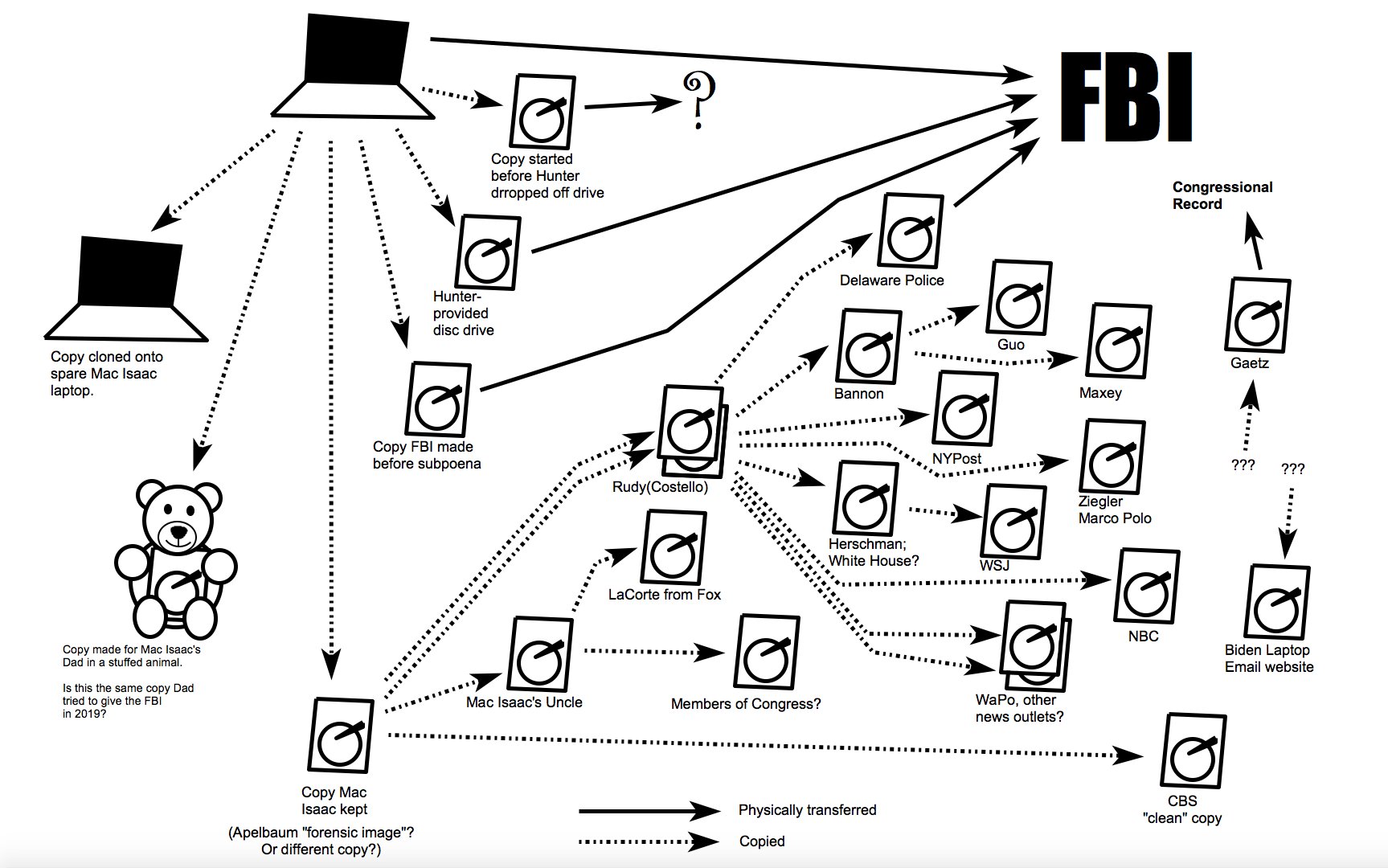
If Robinson were to rule in Hunter’s favor — if he were to rule that, under Delaware law, JPMI didn’t own Hunter’s laptop when he first offered it up to the FBI on either October 9 (JPMI’s version) or October 16, 2019 (FBI’s), less than a year after someone who may or may not be Hunter Biden dropped it off, if he were to rule that JPMI violated his own promise to protect Hunter Biden’s data, not least by snooping through Hunter’s data well before even he, JPMI, claimed his intake form gave him ownership of the laptop — then it might have fairly dramatic impact on any motion to suppress the laptop.

That’s true, not least, because (if you can believe JPMI and it’s not clear you can), after JPMI sent a hard drive with the data across state lines to his father, the FBI told his father that, “You may be in possession of something that you don’t own.” After which JPMI and his father sent that same data across even more state lines, including to Congress and Rudy Giuliani. And yet rather than opening a criminal investigation into JPMI for interstate trafficking of the potentially stolen data of the former Vice President’s son, David Weiss instead decided to build an entire case around that data.

Worse still, JPMI’s public claims about what he saw in the data are obviously false: of particular note, there are no known emails substantiating his claims that the laptop showed, “information about Ihor Kolomoyskyi and Mykola Zlochevsky, and their involvement in using Hunter and Devon to protect the billions they embezzled from the IMF.” The crime of which JPMI told the FBI they’d find evidence on the laptop was entirely made up — and made up to create a video that might serve Trump’s impeachment defense.

Lowell’s motion to compel — submitted in Delaware two days before that hearing was set — describes receiving “The Mac Shop files.” It doesn’t describe receiving the initial FBI legal review that concluded JPMI and his father likely didn’t own that laptop or data. It doesn’t describe receiving the 302s documenting the FBI’s interactions with JPMI (302s that were also not shown to case agents who might have to testify at trial). If warnings that JPMI didn’t own this data really exist, and if prosecutors are withholding it to cover up real problems with their reliance on the laptop, it would be fairly important evidence.

A favorable Delaware ruling would likely have more impact on the Los Angeles case than anything but a ruling in favor of Hunter’s diversion argument in Delaware, because it would show that David Weiss chose to use poison fruit to investigate Hunter Biden rather than pursue a case of interstate data theft. The SDNY case against those who stole Ashley Biden’s diary and a thumb drive with tax records and photographs on it and trafficked them across state lines shows that such things can be prosecuted.

At the initial hearing, Scarsi told Lowell that the, “February 20th date is for motions that you know now that you intend to bring.” When Lowell said he’d file a motion to suppress the laptop and everything else in Delaware, he pointed to several other things — such as reliance on witness testimony from a Los Angeles grand jury post-indictment and the filing for the warrant itself post-indictment — to get as a basis to suppress. Lowell still hasn’t mentioned a motion to suppress the laptop to Scarsi. He’s likely now trying to determine whether he can and should wait on a ruling from Robinson before he files such a suppression motion to Scarsi, who has promised to rule expeditiously.

It’s not surprising that Scarsi denied Lowell’s request (though it is a telling contrast to the treatment Trump is getting).

But it is also the case that these moving parts really may affect the case before him.

Update: Abbe Lowell has filed a status report in the Delaware case in case Judge Noreika decides she doesn’t want Scarsi to preempt her.


1) Delaware Gun Case (Maryellen Noreika)

[RECAP docket]

September 14: Indictment

October 3: Arraignment

October 12: First Discovery Production (350 pages focused on gun case), including iCloud data and “a copy of data from the defendant’s laptop”

October 13: Motion to Continue

October 19: Order resetting deadlines

November 1: Second Discovery Production (700,000 pages on tax charges — no mention of FARA investigations)

November 15: Hunter subpoena request

December 4: Weiss subpoena response

December 11: Motions due

December 12: Hunter subpoena reply

January 9: Third Discovery Production (500,000 pages focused on tax case)

January 16: Responses due

January 30: Replies due

January 30: Motion to compel

2) Los Angeles Tax Case (Mark Scarsi)

[RECAP docket]

Hunter was indicted on December 7 and made a combined arraignment/first appearance on January 11. At that hearing, Judge Mark Scarsi set an aggressive (and, from the sounds of things, strict) schedule as follows:

February 20, 2024: Motions due

March 11: Response due

March 18: Replies due

March 27 at 1:00 p.m.: Pretrial motion hearing

April 17: Orders resolving pretrial motions.

June 3 at 1:00 p.m.: Status conference

June 20: Trial

3) House Dick Pic Sniffing (James Comer and Jim Jordan)

November 8: James Comer sends a pre-impeachment vote subpoena

November 28: Lowell accepts Comer’s offer for Hunter to testify publicly

December 6: Comer and Jordan threaten contempt

December 13: Pre-impeachment deposition scheduled; Hunter gives a press conference and states his data has been “stolen” from him

December 13: Impeachment vote authorizing subpoena

January 10: Oversight and Judiciary refer Hunter for contempt

January 12: Lowell invites Comer and Jordan to send another subpoena, now that they have the authority to enforce it

January 14: Jordan and Comer take Lowell up on his invitation

February 28: Deposition

4) IRS Lawsuit (Tim Kelly)

[RECAP docket]

September 18: Privacy Act lawsuit

November 13: DOJ asks for extension to January 16

January 16: DOJ files motion for partial dismissal

January 23: Joint motion to continue

January 30: Original deadline for Hunter response

February 5: Amended complaint

February 9: DOJ asks for delay for response from February 20 to February 27

5) John Paul Mac Isaac’s Suit and Hunter’s Countersuit (Robert Robinson)

Last summer, John Paul Mac Isaac and Hunter both sat for depositions, on May 31 and June 29, respectively.

Last fall, Hunter Biden subpoenaed people like Rudy Giuliani, Robert Costello, Steve Bannon, Yaacov Apelbaum (who made a copy of the contents of the laptop), Tore Maras (who has described adding things to the laptop). In November, Hunter also served a subpoena on Apple.

On January 4, the parties to John Paul Mac Isaac’s suit and countersuit filed to have their pending motions decided by a judge. The media defendants — CNN and Politico — are filing to dismiss. Hunter and JPMI filed competing motions for summary judgment.

And Hunter is filing to quash a bunch of subpoenas, initially 14, to Hunter’s parents, uncle, ex-wife, former business partners, and several people with his father, like Ron Klain and Mike Morell. Though after that, JPMI attempted to subpoena Hunter’s daughters.

Since then, Judge Robinson stayed John Paul Mac Isaac’s subpoenas and scheduled hearings in the Motions to Dismiss (from CNN and Politico) and Motions for Summary Judgement (from Hunter and JPMI) for February 22.

6 AND 7) Hacking lawsuits against Garrett Ziegler and Rudy Giuliani (Hernan Vera)

[RECAP Ziegler docketRECAP Rudy docket]

September 13: Complaint against Ziegler

September 26: Complaint against Rudy and Costellonoticing Ziegler suit as related case

November 15: Ziegler gets 30 day extension

December 1: Costello gets 30 day extension

December 7: After swapping attorneys, Ziegler gets extension to December 21

December 21: Ziegler motion to dismiss and request for judicial notice (heavily reliant on JPMI suit)

January 17: Costello motion to dismiss with Rudy declaration that makes no notice of his fruit and nuts payments relating to Hunter Biden

January 22: Lowell successfully requests to harmonize MTD hearing for both hacking lawsuits

February 8: Rescheduled date for hearing on motion to dismiss

February 22: Rescheduled date for hearing on motion to dismiss

End of February: Response to motions to dismiss due

March 21: Joined date for hearing on motion to dismiss

8) Defamation against Patrick Byrne (Stephen Wilson)

November 8: Complaint

January 16: After swapping attorneys, Byrne asks for 30 day extension

February 6: Rescheduled response date

Share this entry

Robert Hur’s Box-Checking

In the middle of his explanation for why he believed that Joe Biden had willfully retained classified records pertaining to Afghanistan but that he couldn’t prove that beyond a reasonable doubt, Special Counsel Robert Hur admitted that jurors “who are unwilling to read too much into” what Hur describes as an 8-word utterance would find his case lacking.

But reasonable jurors who are unwilling to read too much into Mr. Biden’s brief aside to Zwonitzer–“I just found all the classified stuff downstairs”–may find a shortage of evidence to establish that Mr. Biden looked through the “Facts First” folder, which is the only folder known to contain national defense information. These jurors would acquit Mr. Biden of willfully retaining national defense information from the “Facts First” folder.

I’m puzzled how this is not a confession that he, Hur, was really reading too much into two file folders the FBI found in a box in Biden’s garage.

Indeed, that’s what two bizarre chapters in his story are, Hur the novelist, spinning a story about this box because, he admitted much earlier, this is the best he’s got.

As explained in Chapter Eleven, the strongest case for criminal charges against Mr. Biden relating to the Afghanistan documents would rest on his retention of the documents at the Virginia home in 2017.

The only other retained documents he even considered charging were Biden’s diaries, which Biden seems to have kept under the Presidential Records Act’s exclusion of diaries from the definition of Presidential Records (though Hur included a picture of Biden taking notes in one of these notebooks during a key meeting in the Situation Room, so that notebook, at least, was a Presidential Record).

(3) The term “personal records” means all documentary materials, or any reasonably segregable portion thereof, of a purely private or nonpublic character which do not relate to or have an effect upon the carrying out of the constitutional, statutory, or other official or ceremonial duties of the President. Such term includes–

(A) diaries, journals, or other personal notes serving as the functional equivalent of a diary or journal which are not prepared or utilized for, or circulated or communicated in the course of, transacting Government business;

To sustain his claim that those notebooks represented willful retention that he couldn’t prove, Hur got in a squabble about the precedent set by Ronald Reagan’s diaries, which similarly included classified information, but which weren’t charged even after they became key evidence in the Iran-Contra investigation. Biden had a precedent to rely on, and so Hur didn’t charge.

So left with only the box in the garage to appease the Republicans, Hur worked backward from this reference in a conversation Biden had with his ghost writer in 2017, the 66-word utterance on which he built a 388-page report:

So this was – I, early on, in ’09-I just found all the classified stuff downstairs-I wrote the President a handwritten 40-page memorandum arguing against deploying additional troops to Iraq-I mean, to Afghanistan-on the grounds that it wouldn’t matter, that the day we left would be like the day before we arrived. And I made the same argument … I wrote that piece 11 or 12 years ago. [my emphasis]

Only Hur didn’t call it a 66-word utterance. He called it an 8-word utterance, repeating those bolded eight words 23 times in the report without mention of the 40-page memorandum that Biden mentioned in the same sentence. Only once did he provide the full context.

Biden’s attorneys argued that given that Biden mentioned it in the very same sentence, it’s more likely that Biden was referring to that memo than two folders of documents found in a box in Biden’s garage.

We believe that an accurate recitation of the evidence on this point would recognize the strong likelihood that the President was referring in the recording to his private handwritten letter to President Obama — the one mentioned on this recording immediately after the eight words that you are focused on — rather than the marked classified Afghanistan documents discovered in the Wilmington garage.

There were drafts of the memo — which Biden wrote over Thanksgiving in 2009 in an attempt to dissuade President Obama from surging more troops into Afghanistan — in the box in the garage, but the FBI found the hand-written memo itself stored elsewhere in Biden’s Wilmington home. It too had classified information in it, but Hur treated it like the diaries it was found in, something Biden wrongly treated as a personal document.

Because these documents on Afghanistan were the only thing he had, Hur went to some length to spin a story that might be consistent with Biden finding those documents in a rental house in Virginia in early 2017 and, just weeks after having sent other marked classified documents back to the Naval Observatory, deciding to keep them.

Part of that involved telling two stories, which narratively collapse events from 2017 with the discovery of the documents in question, to provide motive.

Hur’s first attempt suggested that Biden willfully retained these documents to help write his book, Promise Me, Dad, on which he was working with the ghost writer to whom he mentioned classified documents.

MR. BIDEN’S SECOND BOOK, PROMISE ME, DAD, AND THE DISCOVERY OF CLASSIFIED AFGHANISTAN DOCUMENTS

Like many presidents, Mr. Biden has long viewed himself as a historic figure. Elected to the Senate at age twenty-nine, he considered running for president as early as 1980 and did so in 1988, 2008, and 2020. During his thirty-six years in the Senate, Mr. Biden believed he had built a record in both domestic and foreign affairs that made him worthy of the presidency.

In addition to the notebooks and notecards on which he took notes throughout his vice presidency, Mr. Biden collected papers and artifacts related to noteworthy issues and events in his public life. He used these materials to write memoirs published in 2007 and 2017, to document his legacy, and to cite as evidence that he was a man of presidential timber.

Only, that story didn’t work, because Promise Me, Dad wasn’t about Afghanistan, it was about Beau’s death and Biden’s subsequent decision not to run for President in 2016. And while Hur tried to fudge what surely was the result of a classification review, that book had no classified information in it.

As Biden’s attorneys noted, not only wasn’t Promise Me, Dad about Afghanistan, but Biden never wrote a book — never intended to write a book — about this Afghanistan policy dispute.

Your report erroneously (and repeatedly) makes statements about the value of the marked classified Afghanistan documents to President Biden, such as President Biden had a “strong motive” to keep them and they were an “irreplaceable contemporaneous record” like the notebooks. Report at 203. 231. These statements are contrary to the evidence and the documents themselves. First the President forcefully testified that he “never thought about writing a book about the 2009 Afghanistan policy review. Tr., Day II at 22. Thus, the President had no need to retain the documents for that purpose.

So Hur tried again in the following chapter. This time his story — one relying primarily on books other people wrote — Obama, Stan McChrystal, and Robert Gates, with only Ron Klain backing it with witness testimony — was that Biden needed the documents for vindication, when Afghanistan turned into America’s Vietnam. Secret vindication, I guess, given that Biden didn’t use this in the 2020 election.

To fully appreciate Mr. Biden’s references to Afghanistan in his conversation with Zwonitzer on February 16. 2017, it is helpful to understand Mr. Biden’s place in the fraught debate about American policy in Afghanistan in the early days of the Obama administration.

In that debate. Mr. Biden played a conspicuous role. He strongly opposed the military’s effort to send large numbers of U.S. troops to Afghanistan, and this opposition culminated in the lengthy handwritten memo Mr. Biden sent President Obama over the Thanksgiving holiday in 2009. By 2017, Mr. Biden believed his judgment as reflected in the memo had been vindicated by history. Years later, in December 2022 and January 2023. FBI agents found the handwritten Thanksgiving memo and marked classified documents containing his advice to President Obama in Mr. Biden’s Delaware home.

This is a closing argument. This language is wildly inappropriate in a declination memo, because Hur didn’t find the evidence to back this story!

Worse still, it’s stupid. Because all Biden needed for vindication was that 40-page memo, the one he mentioned in the very same sentence as he mentioned the classified documents. The one stored inside the house, not in a discarded box in the garage. The one he never used during the 2020 election.

But Hur was undeterred by a stupid motive argument.

Next, after admitting that the FBI never succeeded in tracing the Afghan documents, much less proving they were in the basement of the Virginia house, he used this photo analysis to claim that the box found in the garage is the same one that appeared in two pictures taken in Biden’s Wilmington office in 2019, shortly after everything was shipped from Virginia to Delaware.

Maybe that’s right? Or maybe (as some people argued in this thread on Xitter) the D on the box in the garage is shaped differently and in a different place on the box lid than the one in the picture. Whatever it is, it’s no smoking gun.

Finally, Hur goes to the contents of the box, claiming — with some justification — that some of the things in the box date to the same period when Biden uttered those 8 or maybe 66 words to his ghost writer.

Several folders in the garage box contained materials that Mr. Eiden appears to have accessed both shortly before and shortly after February 16 2017, the day Mr. Biden told Zwonitzer he had “just found classified documents downstairs. 582 For example, in January 2017 less than a month before told Zwonitzer he had just found the classified documents downstairs, Mr. Biden appears to have accessed documents later found in the box. On January 23, 2017. Biden wrote a notebook entry about a call scheduled for later that to finalize a deal with Creative Artists Agency (CAA), a talent agency that went on to represent him in negotiating his book deal for Promise Me, Dad. 583 The same entry also referenced Mr. Biden’s work with his sister on his “S Corp.”584

The box found in Mr. Biden’s garage contained a corresponding file folder, labeled “Signed Contracts Penn, CAA,” which contained the signature page of a final agreement between Mr. Biden and Creative Artists Agency.585 Mr. Biden signed the agreement, which was dated a few days after the notebook entry, on January 26, 2017.586 The folder also contained the final agreement between Mr. Biden and the Penn Biden Center-Mr. Biden’s primary employer after his vice presidency-which Mr. Biden signed, also on January 26, 2017. 587 And the folder contained a W-9 tax form for Mr. Biden’s S corporation, CelticCapri, which Mr. Biden used to receive income from book deals and speeches, among other purposes.588 The W-9 form listed Mr. Biden as the president of the S corporation and was signed by Mr. Biden and dated January 30, 2017-less than three weeks before Mr. Biden told Zwonitzer he had just found classified documents downstairs.589

The argument would be more persuasive, admittedly, if Hur didn’t confess that the FBI got the documents that had been in the box out of order when they repackaged them.

When FBI agents repackaged the contents of the ripped garage box into a new box on December 21, 2022, it appears the order of a few of the materials changed slightly. This chapter discusses in detail below two folders that contained marked classified documents about Afghanistan: the manila “Afganastan” folder and the red “Facts First” folder. It appears the “Afganastan” folder was near the “Facts First” folder in the garage box when agents recovered the box, but the precise original location of the “Afganastan” folder at that time is unknown.

Dudes. This was a consensual search of the President’s home, and you couldn’t even repackage documents competently? Really?

This argument would be more persuasive still if Hur weren’t ignoring some of the other things that were found in the box, that had nothing to do with Biden’s transition in 2017, which Biden’s attorneys described this way:

Your characterization of the box in the garage as containing only matters of “great personal significance” to the President is inconsistent with the facts. The evidence shows that this tattered box contained a random assortment of documents. including plainly unimportant ones such as: a short-term vacation lease; a VP-era memorandum on furniture at the Naval Observatory for purchase; talking points from speeches; campaign material; empty folders; a 1995 document commemorating Syracuse Law’s 100-year anniversary; and other random materials. In his interview. President Biden commented regarding one of the folders, which read “Pete Rouse”: “Christ that goes back a way,” confirming that he had not encountered that material in recent years. Tr., Day I, at 144. When asked how things like a binder labeled “Beau Iowa” got into the “beat-up” box. the President responded “Somebody must’ve, packing this up, just picked up all the stuff and put it in a box, because I didn’t.” Id. at 146. When asked about the later-dated material, the President responded: “[s]ee, that’s what makes me think just people gathered up whatever they found, and whenever the last thing was being moved. So the stuff moving out of the Vice President’s residence, at the end of the day, whatever they found. they put – they didn’t separate it out, you know, Speakers Bureau and Penn or whatever the hell it is. or Beau. They just put it in a single box. That’s the only thing I can think of.” Id. at 147. Some of the documents in the box contain what appears to be staff handwriting–including a D.C. tax return and a W2-further indicating that the box was likely filled by staff. We believe that an accurate recitation of the evidence on this point would include a description of these facts.

The true jumble of the box is particularly important because, elsewhere, Hur used the similar miscellany in a different box to rule out the possibility of willful retention for some of the documents found at the Penn Biden Center.

Finally, several of the files in the box where the EYES ONLY envelope was found appear to have been forgotten files of little value to Mr. Biden, such as the file about a 2011 ski trip. The files, therefore, do not appear to be a set that Mr. Biden personally curated. Nor do they appear to be the type of files people keep close as a matter of course in their everyday lives.

Hur adopted a different standard where it was clear only staffers were involved in packing a box than he did with a box that was central to “the strongest case for criminal charges against Mr. Biden.” Hur needed this box to be personally curated by Joe Biden, and so he omitted a bunch of random stuff that would debunk his story.

Still, this entire investigation should never have gotten this far, to where Hur was doing desperate last interviews three months after Biden’s own interview, to where Hur was spending 156 pages describing his declination decisions, and so in the process describing every single document at length.

To get there, Hur did something almost unheard of in declination decisions for 18 USC 793(e) cases: He treated “failure to deliver” as affirmative. Bizarrely, when he gets to the part of his discussion of the statute where he describes having to prove that Biden refused to deliver National Defense Information documents to an appropriate government official, he pivots, changes the subject, mid-paragraph.

Finally, the government must prove that a defendant willfully retained the material and failed to deliver it to an officer or employee “entitled to receive” the information. The statute does not define who is “entitled to receive” the information, so again, courts have looked to the governing rules concerning the handling of classified materials, primarily the executive order. 758 Generally, those entitled to receive the information are people with the requisite security clearance and the need to know. 759 Willfulness is a heightened mens rea, which as articulated by the Supreme Court in Bryan v. United States, requires proof “that the defendant acted with knowledge that his conduct was unlawful.” 760 Under the Espionage Act, an act is willful when “it is done voluntarily and intentionally and with the specific intent to do something that the law forbids. That is to say, with a bad purpose either to disobey or to disregard the law.” 761 While willfulness requires proving an intent to disobey the law, courts have applied Bryan’s standard of “simple willfulness” to Section 793(e) and rejected any need for the government to prove an intent to cause harm. 762

Accordingly, to prove a violation of Section 793(e) we would need to show that Mr. Biden knowingly retained national defense information and failed to deliver it to an appropriate government official, and that he knew this conduct was unlawful. [bizarre pivot] As discussed in more detail below, because of the interrelation between “national defense information” and “classified information,” when evaluating a potential Section 793(e) charge, the Department considers whether the information the person possessed was classified and whether the person knew it was classified.

In doing so, he dodges (here) the difficulty with charging a President with 793(e): That unlike actual clearance holders, Biden was never processed out of a clearance, which is where prosecutors fulfill that prong of the elements of offense when charging 793(e) along with other crimes, like leaking. When people with clearance leave their job, they’re reminded they have to give stuff back; because he wasn’t processed out of a clearance, Biden never got that talk.

Hur then wanders off a little ways, then returns to the question of delivering classified documents to someone entitled to receive them, by purporting to distinguish 793(e) from 793(d).

Subsection (d) also does not apply, because it requires a failure to deliver materials on demand, and when asked to return any classified materials from his vice presidency, Mr. Biden consented to searches and returned all potentially classified materials that were discovered. 767

Nuh uh! That’s not the difference between (d) and (e). The main difference is whether someone is authorized to have classified information or not.

(d) lawfully having possession … or willfully retains the same and fails to deliver it on demand to the officer or employee of the United States entitled to receive it;

(e) unauthorized possession … or willfully retains the same and fails to deliver it to the officer or employee of the United States entitled to receive it

Even for dirtbags like Jeremy Brown, DOJ generally only charges a retention charge absent something else after an officer asks for documents back. In Brown’s case, for example, they called an officer who had asked for the specific charged documents back to testify at trial to prove that prong of the elements of offense. And because Joe Biden was never processed out of a clearance, because the Archives never came looking for these, no one ever asked him to give the documents back.

Until he offered the documents up.

This entire report, all 388 pages of it, is based on a wild misrepresentation of how DOJ approaches Espionage Act prosecutions. And to the extent it’s not — to the extent that Hur is clinging to events caught on tape back in 2017 — the Statutes of Limitation have long expired.

And that gives up the game, even more than Robert Hur’s confession that jurors who weren’t, as he spent a year doing, “read[ing] too much into” some documents found in a box, would never convict on this.

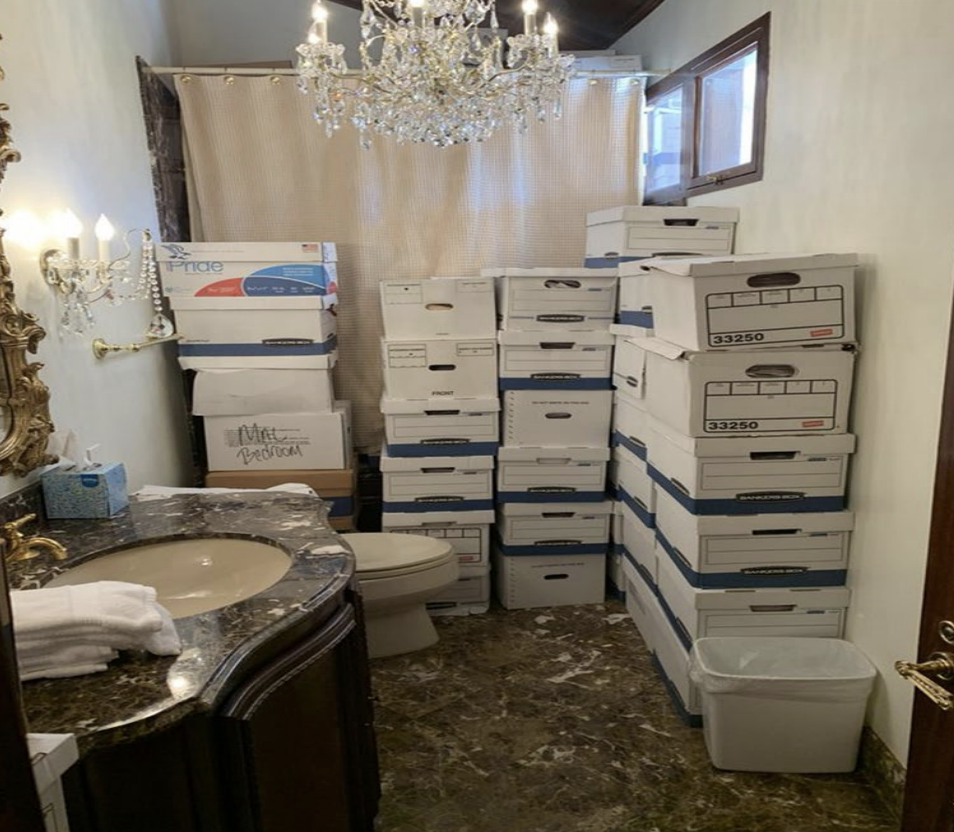
Hur spent a year trying to find facts that would allow him to charge Joe Biden, charge a President, doing backflips with the evidence along the way, and then writing up a report that provides far more evidence about 40 year old documents covered by Speech and Debate than we’ll ever learn about the stolen documents at Mar-a-Lago.

This was never an ethical prosecutorial pursuit. It was always about writing a novel for a rabid audience.

Or, as you might consider it, just an exercise in box-ticking for partisan ends.

Update: I’ve been corrected: The SOL on Espionage Act is 10 years.

Share this entry

Hur Report Open Thread: 388 Pages about a Single 8-Word Utterance

Robert Hur has released his report, declining charges against Biden but finding he did willfully retain information. He wrote a 388-page report about — by his own description — “a single 8-word utterance.”

I’ll do a running thread here.

Share this entry

Open Thread: Trump v. Anderson before SCOTUS

[NB: check the byline, thanks. /~Rayne]

Because everyone will likely be restless and itchy about today’s hearing, I’m putting up an open thread.

Feel free to discuss Trump v. Anderson here but bring all your off-topic discussion to this thread, stay on topic in other threads.

Wikipedia page for Trump v. Anderson here, in case you need a primer:

Trump v. Anderson (No. 23-719, filed January 3, 2024)

In a nutshell, Colorado’s state supreme court found Donald J. Trump disqualified from the state’s primary ballot under Section 3 of the 14th Amendment which bars candidates who have participated in insurrection or rebellion against the Constitution in spite of swearing an oath to uphold and defend the Constitution.

Trump appealed the ruling; the U.S. Supreme Court will hear oral arguments today.

The hearing is scheduled to begin at 10:00 a.m. ET.

You can listen to the arguments at https://www.supremecourt.gov/oral_arguments/live.aspx – they are expected to run over the scheduled 80 minutes.

Long-time community member harpie has shared quite a few more resources pertinent to today’s arguments below in comments (thanks, harpie!).

~ ~ ~

REMINDER: 

— We have been moving to a new minimum standard to support community security over the last year. Usernames should be unique and a minimum of 8 letters.

— We do not require a valid, working email, but you must use the same email address each time you publish a comment here. **Single-use disposable email addresses do not meet this standard.**

— If you have been commenting here but have less than 1000 comments published and been participating less than 10 years as of October 2022, you must update your username to match the new standard.

Changes will be made soon to the comment system; if you have not already changed your username to meet the standard by the time the changes are rolled out, you may find your comments do not clear for publication until your username meets the standard.

Thank you.

Share this entry

Stop Treating Rule of Law Like a Magical Sparkle Pony and Get Busy

Like everyone else, I anxiously await the DC Circuit decision on Trump’s immunity bid.

Unlike most people, I’m not yet convinced that the delay so far stems from Judge Karen Henderson deliberately stalling the decision.

To be sure, I identified Henderson as the key target for persuasion before the hearing. I even suggested she might happily join an opinion holding that unofficial acts may be charged criminally, without ruling regarding official acts.

Her statements at the hearing on immunity were a pleasant surprise; it seems she’ll easily reach that position, adopting at least the Blassingame standard that former Presidents can be charged for unofficial acts, like starting a coup to try to stay in office.

So, as I said, I’m still not convinced she’s stalling.

That’s because the decision is more complicated than most commentators appreciate.

There are three decisions in front of these judges. First, whether or not the court has jurisdiction to rule at all. Then, whether they should just rule for unofficial acts, like launching a coup to get reelected, or whether they should rule, generally, that Presidents can even be prosecuted for their official acts, like pardoning Roger Stone to buy his silence. Finally, they need to decide how to release the opinion, possibly in a way to give Trump fewer options to stall further.

Because the American Oversight amicus — a pretty convincing one! — raised a question about whether the DC Circuit had jurisdiction, it caused a potential split between Florence Pan and Michelle Childs, both Biden appointees, who otherwise seemed to agree on the scope of their ruling. Childs seemed very persuaded by the AO brief, and so very cautious about their basis to rule at all.

As a result, there’s no natural majority, meaning whatever opinion(s) get written will be far harder to map out. It is simply a far harder opinion than most people think, and if they get this wrong, it’s going to lead to far longer delays at both the en banc and SCOTUS level.

Talk to me in two weeks. If we’ve got no ruling then, I’m happy to start entertaining theories about deliberate delay.

What I don’t understand, however, is how the visible panic of a few TV lawyers who’ve been wrong every step of the way on the January 6 investigation has led to an all-out panic among Democrats.

The result has been self-inflicted impotence.

No judicial outcome will ever be sufficient, by itself, to beat Trump. No realistic Democrat should be staking their electoral hopes on one or some guilty verdicts — not because they wouldn’t help, but because you can’t control that.

Every single person reading this has in their power the ability to do something — whether it’s local electoral work, repeating discussions of Trump’s corruption so much that it begins to drown out stories about Hunter Biden, or educating your neighbors about Trump’s central role in rolling back reproductive choice — to help defeat Trump. Every second you spend worrying about Karen Henderson is time you’re not doing whatever it is that will be most useful in defeating Trump.

Stop making yourself impotent by worrying about the court cases. Stop hoping that any court case is going to be the Magical Sparkle Pony that makes this easy. Stop wallowing in provably false conspiracy theories about the January 6 investigation that ignore a bunch of public things the TV lawyers don’t talk about.

This is not going to be easy, I promise you. Find some way to make yourself useful to make it, at least, easier.

Share this entry

Hunter Biden’s Delayed Email Access on the JPMI Laptop

In both a footnote of his reply motion for discovery

1 The prosecution’s opposition briefs reveal some new evidentiary issues (e.g., seizing electronic evidence for the gun charges for the first time pursuant to a December 4, 2023 warrant; using a grand jury in California in connection with the tax case to elicit evidence for already-indicted gun charges in Delaware; seeking a search warrant in December 2023 to search for evidence in support of its charges three months after having charged; testing a leather pouch for cocaine residue in October 2023 that it had in its possession for five years; denying there was Probation’s approval for the diversion agreement) in addition to those raised in Mr. Biden’s motions to dismiss themselves (e.g., how a Delaware agreement for a diverted gun charge and two tax misdemeanors turned into multiple felonies in two jurisdictions following massive political pressure to do just that). Based on the prosecution’s admissions made only recently in its filings, Mr. Biden will expeditiously file a motion to suppress improperly gathered evidence. [my emphasis]

And two footnotes in his motion to compel

3 The search warrant on December 4, 2023, which post-dates the firearm indictment by almost three months, is the first time in the course of this five-year investigation that DOJ obtained a warrant to search the alleged laptop (and iCloud account and backup data) for evidence of federal firearms violations. The prosecution then used that warrant to purportedly review and seize, for the first time, text messages, photos, and other evidence in support of its felony charges, several of which the prosecution cited in its pleadings on January 16, 2024. (See DE 68 at 8–9.) Moreover, that warrant contained testimony (in support of finding probable cause) about the firearm obtained from a witness in a grand jury empaneled in the Central District of California in November 2023 after this indictment had already been brought. Accordingly, the issue raised—as a result of the prosecution’s recent filings—is one to explore at the evidentiary hearing Mr. Biden requested (DE 64) and a motion to suppress which will be filed promptly.

[snip]

18 Citing District of Delaware Search Warrant No. 23-507M. Unlike the Office’s prior search warrants during the five-year investigation that were for tax, financial, or foreign-business related offenses, this warrant was specifically for offenses pertaining to 18 U.S.C. §§ 922, 924 (firearms offenses). See supra n.3, and a further motion to suppress concerning this December 4, 2023 search will be forthcoming. [my emphasis]

Hunter Biden attorney Abbe Lowell said he would soon be filing a motion to suppress “improperly gathered evidence.”

Part of this will likely be a challenge to the belated pretextual testing of the gun for cocaine residue without also testing for fingerprints and dating of the residue to the time period immediately after Hunter purchased a gun.

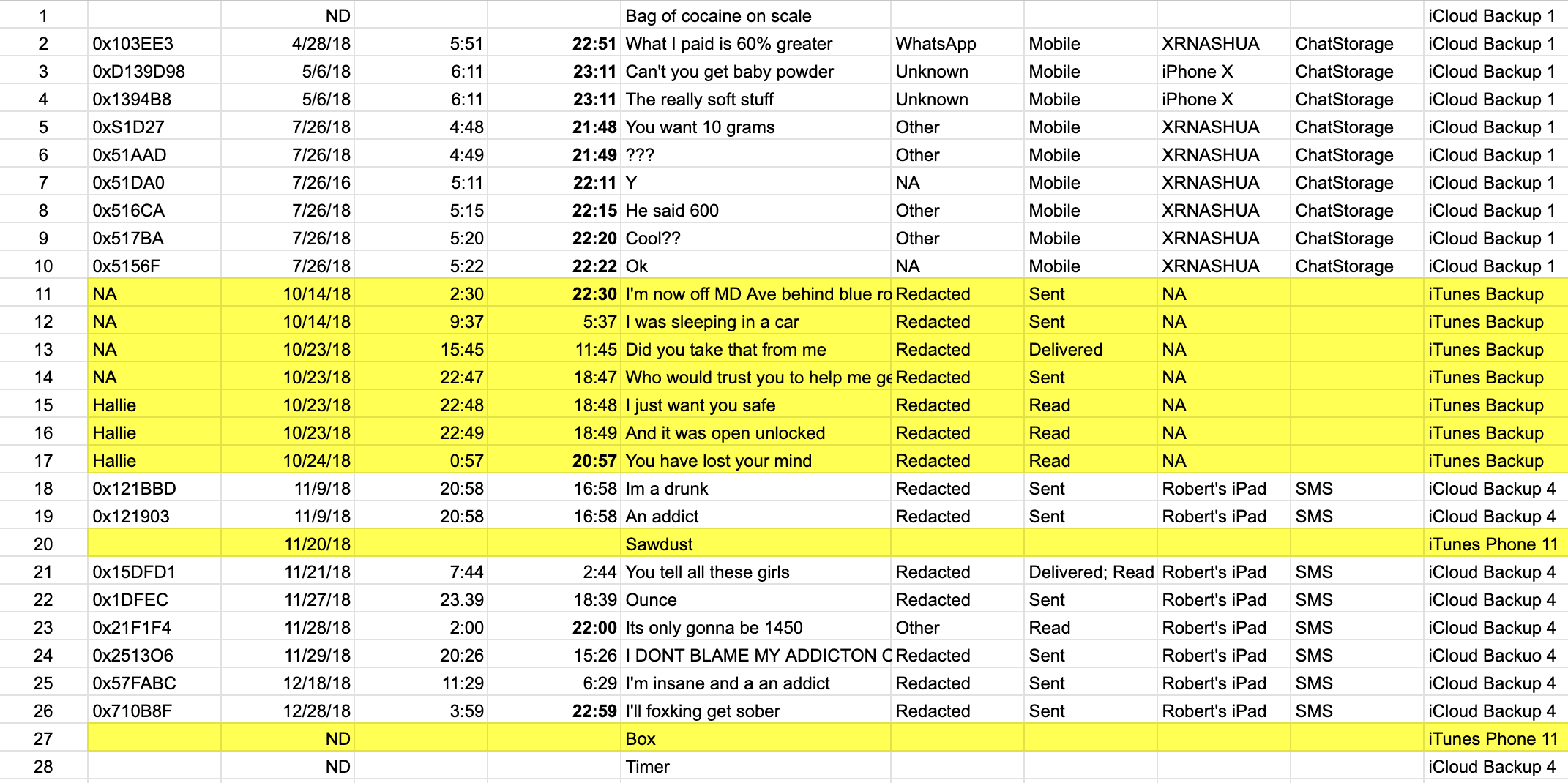
But in all three footnotes, he promises to challenge the December 4, 2023 warrant, which would implicate the original search warrant to Apple, the exploitation of the laptop, and follow-on searches for four devices backed up to his iCloud:

  • iPhone X (Apple Backup 1)
  • iPhone 6S (Apple Backup 3)
  • iPad Pro (Apple Backup 4)
  • iPhone XR (Apple Backup 11)

After over three years of controversy about the laptop attributed to Hunter Biden, this challenge may finally unpack the reliability of the device that has driven right wing frothers nuts ever since.

Game on!

There’s a variety of things that Lowell might rely on to challenge the use of the laptop — and possibly, the four backed up devices, as fruits of the laptop — some sound and some less so. They include:

  • A complaint that David Weiss used testimony obtained from a Los Angeles grand jury focused on tax crimes to obtain the December 2023 warrant, which will almost certainly be dismissed as normal prosecutorial dickishness.
  • If any of the devices entirely predate 2018, there should be no probable cause to search them for the 2018 charges. Based on emails available at BidenLaptopEmails dot com, Hunter Biden started using at least three different iPhone Xes in 2018 (but at least one of those was likely lost to hostile people). He had an iPhone 6S with the droidhunter account he used to access adult entertainment in early 2019, though the only known iPhone XR may have been tied to that account, rather than his Rosemont Seneca account (or there could be a later one). Otherwise, his iPhone 6S use appears to have significantly predated 2018. An iPad backed up to the laptop is an iPad Pro, which itself dates to 2016, and much of Hunter Biden’s known iPad Pro use was also in 2016 and earlier, which is the time frame investigators were most interested when they obtained those warrants.
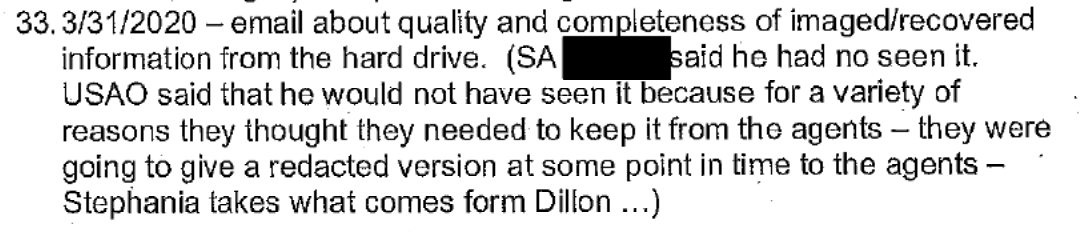
  • The fact that, per Gary Shapley’s notes, the FBI never validated when the files loaded onto the laptop were added to it in the first 10 months they used it (which also means they did not do so before obtaining four backup devices partly relying on it).
  • John Paul Mac Isaac’s acknowledgment that when his father first went to the FBI, the FBI agent with whom he spoke advised, “you should get a lawyer [because] You may be in possession of something you don’t own.”
  • JPMI’s description that the FBI was trying to boot up the laptop on December 9, 2019, before the FBI had the December 13, 2019 warrant.
  • The fact that the Attorney General’s Chief of Staff texted the Attorney General that he was sending him a laptop the day after the FBI obtained the known December 13, 2019 warrant, suggesting the laptop may have been used for something else, like potential impeachment defense.
  • Also per Shapley’s notes, that some of the means FBI used to determine the laptop was once associated with Hunter’s iCloud account — including call and email traffic with John Paul Mac Isaac and a cigar purchase made locally the day of the drop-off — could easily be spoofed by anyone in possession of the laptop.
  • The fact that, for two and a half months by the time the FBI claimed to have validated that the laptop was Hunter Biden’s, they had had full access for Hunter’s iCloud (and almost certainly had access to Hunter Biden’s Rosemont Seneca Google account for at least that long), which would have given them full access to a bunch of metadata that very much should have raised concerns about who had control of Hunter’s devices at any given time.

Those are just some of the potential bases for a Fourth Amendment challenge to using the laptop as evidence. There may be more.

It’s the last bullet that I want to focus on here. Shapley’s notes show that on November 6, 2019 — over a month after obtaining Hunter’s full iCloud account on September 25, 2019 — Josh Wilson used the serial number provided by JPMI and “determined that device was registered to [Hunter Biden] via apple ID account/iCloud account.”

It is absolutely the case that at 8:50AM Delaware time on October 21, 2018 — nine days after Hunter bought a gun and two days before he no longer possessed it — the laptop that would eventually end up at the FBI logged into Hunter’s iCloud account, though unlike some devices before and after, there’s no public confirmation of a tie to Apple directly, such as Apple welcoming him to a new computer or a receipt.

But there’s something unusual about what came next.

Normally, when Hunter Biden started using one of the new devices that can be clearly tied to his account, he would log into iCloud, then shortly thereafter log into one or another of his two Google accounts, Rosemont Seneca and/or droidhunter. As a result, Google would send security alerts to both the Gmail account and a whichever of the iCloud emails were set as backup.

For example, after Hunter bought a new laptop (possibly the laptop found at Keith Ablow’s in March 2019) on August 31, 2018, he signed into his iCloud account the next day, then, also on September 1, signed into his droidhunter Gmail account, then into his Rosemont Seneca account on September 2.

Someone signed into one of his new replacement iPhones, ordered through Asurion, on October 14 and then, on October 17, signed into his Rosemont Seneca Gmail account.

Someone signed into a new iPhone 8 Plus on October 23, 2018 — possibly the other replacement phone from Asurion — and then signed into his Rosemont Seneca Gmail account that same day.

Things are a bit fuzzier with some phones replaced through Apple the next spring, after his life was packed up on a laptop for delivery to John Paul Mac Isaac.

On February 21, 2019, he got a new iPhone, associated with his droidhunter account, and signed in on his droidhunter Gmail right away.

On March 1, 2019, he got a new iPhone XR — possibly the one obtained with the 2020 warrant. Then bought an adult themed App on March 7, then signed into his droidhunter email on March 9.

There are an astounding number of other devices used to log into one or another account associated with Hunter Biden’s digital life. But for recognizable device replacements, the pattern generally holds: Sign into Apple, then sign into Google.

But based on what is available on the public emails, after someone logged into Hunter’s iCloud account with a new laptop on October 21, 2018, it was weeks before a new Mac device logged into his Gmail accounts, starting with a November 16 attempt to log into Rosemont Seneca that was rejected by Google, followed by a reset of the droidhunter account and a login into that on November 20, followed by a login into Rosemont Seneca on November 24. Not only did those attempts come in the midst of a bunch of attempts to get into Hunter Biden’s Twitter account from a Mac. But on November 27, someone appears to have gotten into his iCloud account from Troutdale, OR.

New Mac devices also accessed Hunter’s Rosemont Seneca account on February 9 and February 20, 2019.

As I’ve already described, a great deal of Hunter Biden’s “normal” activity on his devices in this period looked like he was hacking himself. For example, on at least 36 occasions in 2017 and 2018, Wells Fargo shut down Hunter’s online access because of activity that looked, to it, like a hack. Many if not most of that was probably, instead, just Hunter Biden doing erratic things. In other cases, it’s impossible without more data to show whether a particular access or expenditure was Hunter himself, someone who had acquired one of his devices, or someone more malicious.

But there is a pattern, and the laptop ultimately shared with the FBI, he deviated from that pattern.

Certainly, David Weiss might argue that the FBI just hadn’t looked at Hunter Biden’s digital fingerprints that closely when they got a warrant on December 13, 2019.

But they’ve had five years to look at it in the interim period, and might have a harder time arguing that this pattern was normal.

Update: Just catching up to the Delaware docket (JPMI’s suit and Hunter’s countersuit). Judge Robert Robinson will hold hearings in everyone’s motions on February 22.

Update: Abbe Lowell has amended his lawsuit against the IRS, tweaking it to make statements that lawyers for Joseph Ziegler and Gary Shapley made. He told Mark Scarsi had had some motion regarding the disgruntled agents, so I expect this filing will be cited in that motion.

Share this entry

Abbe Lowell Already Accused David Weiss of a Brady Violation

There was something subtle but potentially important in Abbe Lowell’s motion to compel discovery in Hunter Biden’s gun case.

First, after discussing the discovery requests he sent in October and November, he described reminding prosecutors (this is actually in the October letter) that Leo Wise had assured Judge Maryellen Noreika on July 26 that prosecutors had provided all Brady materials.

Mr. Biden reminded the prosecution that this Court ordered the production of Brady materials on July 26 and October 3 and asked the prosecution to confirm whether further productions were forthcoming, or Mr. Biden would need to move to compel. Id. As the Court may recall, the prosecution told the Court at the July 26 hearing that it had already produced all Brady material. (7/26/23 Tr. at 7 (“THE COURT: Has all Brady material been produced? MR. WISE: Yes, Your Honor”.).) Yet, the prosecution did not send the first production for almost three months, until October 12, 2023, with a cover letter noting its production was “in response” to Mr. Biden’s October 8 letter requesting discovery. [emphasis original]

Then, later in the motion, Lowell described that the Delaware case file prosecutors didn’t provide until October 12 — in response to the October 8 letter — included a declination decision.

Despite assuring the Court all Brady material had been produced on July 26, 2023, since then, the prosecution has produced an October 2018 state police case file of the firearm incident that includes interview memoranda and deliberations among Delaware state prosecutors regarding whether to file charges—per the file, on October 30, 2018, after reviewing the facts, New Castle County prosecutors decided not to prosecute and closed the case. [emphasis original]

A decision not to charge for state crimes would be helpful but not definitive at a trial on federal charges. But it pretty clearly is helpful to Hunter Biden’s defense.

And yet, prosecutors hadn’t provided it to Chris Clark before, on July 26, Leo Wise assured Judge Noreika that prosecutors had provided all Brady.

I suspect the motion to compel is designed as much as a challenge — “is this your final answer?” — before Lowell makes further allegations that prosecutors withheld material helpful to Hunter’s defense. That is, I suspect Lowell knows of certain things, perhaps the memos that Joseph Ziegler’s original supervisor, Matthew Kutz, included in the case file documenting improper political influence, that also clearly count as Brady that he hasn’t received yet.

That said, I suspect there was a pretty good reason prosecutors didn’t bother to give Clark that Delaware case file before the hearing on July 26: because there was never any consideration of actually charging Hunter on the gun crimes. That is, whatever Brady they provided was likely focused on the tax case, not the gun one, because the gun charge was never going to be charged.

Until Leo Wise, who assured Judge Noreika that prosecutors had complied with Brady, decided that he was going to charge those gun crimes.

Particularly given DOJ’s increased focus on such things in recent years after some really big Brady violations, a serious Brady violation is one of the few things that would actually give Merrick Garland cause to shut down David Weiss as Special Counsel.

The declination decision, turned over a month after the indictment, isn’t that, yet. For Leo Wise, who assured the judge in this case that all Brady had been turned over, however, it’s a detail that might be more convenient if treated as proof they weren’t going to charge gun crimes before they did.

Share this entry

The December Warrant Shows David Weiss Wasn’t Going to Charge Gun Crimes Until Trump Elicited Threats

Over a week ago, NBC’s Gary Grumbach emailed me to figure out how he could access the then still-sealed warrant dockets I liberated.

To the best of my knowledge, neither he nor anyone else at NBC reported that the dockets revealed that David Weiss first obtained a warrant to search Hunter Biden’s iCloud content and a laptop attributed to him for evidence relating to the gun charges on December 4, 81 days after indicting him. Indeed, besides me, only right wing outlets (Fox, NYPost, Washington Examiner) reported on the warrant.

The existence of the warrant was first disclosed as part of a legal fight (MTD; response; reply) over whether David Weiss charged Hunter Biden only because pressure from Donald Trump and Jim Jordan generated threats that led Weiss to fear for the safety of his family.

Q Do you have concerns for the safety of individuals working in your office?

A Sure. I have safety concerns for everybody who has worked on the case, and we want to make sure that folks — yeah, folks are encouraged to do what they need to do with respect to the pursuit of justice generally and they not be intimidated in any way from performing their responsibilities.

Q Do you have concerns that the threats and harassment employees have received are intended to intimidate them into not doing their jobs?

A I really can’t speak to the intention of any actor in this realm. I just know that these — that certain actions have been taken by individuals, doxing, and, you know, threats that have been made, and that gives rise to concern. We’ve got to be able to do our jobs. And, sure, people shouldn’t be intimidated, threatened, or in any way influenced by others who — again, I don’t know what their motives are, but we’re just trying to do a public service here, so —

Q Have you yourself been the subject of any threats or harassment?

A I’ve certainly received messages, calls, emails from folks who have not been completely enamored of my — with my role in this case.

Q Do you have concerns for your safety or that of your family because of these threats?

A You know, I’m not — for myself, I’m not particularly concerned. Certainly I am concerned, as any parent or spouse would be for — yeah, for family, yep.

The fact that, in five years of investigating Hunter Biden, in the over two years after Hunter Biden’s book came out, David Weiss never obtained a warrant to search the iCloud content that he already had in possession for evidence to support gun charges (and also never sent the gun to the FBI lab for testing) is pretty compelling evidence that he never intended to charge Hunter for gun crimes until Donald Trump elicited threats that led Weiss to fear for the safety of his family. In his response, Weiss claims it is a Hollywood plot that such threats might lead him to renege on his decision to deal with the gun crime as part of a diversion agreement, making light of the same threats that, he told Congress, led him to be “concerned, as any parent or spouse would be for — yeah, for family, yep.”

This is unbelievably scandalous — that in the middle of a presidential campaign, Donald Trump ginned up threats against a prosecutor and then, for the first time, after the statute of limitations expired, that prosecutor sought new evidence to prosecute Joe Biden’s son.

Yet Gary Grumbach doesn’t think that’s newsworthy.

Instead, Grumbach is focused on important things: like whether Joe Biden will visit his son on his birthday.

Share this entry