How We Got to a Place Where Right Wingers Cheer Stealing Nuclear Documents

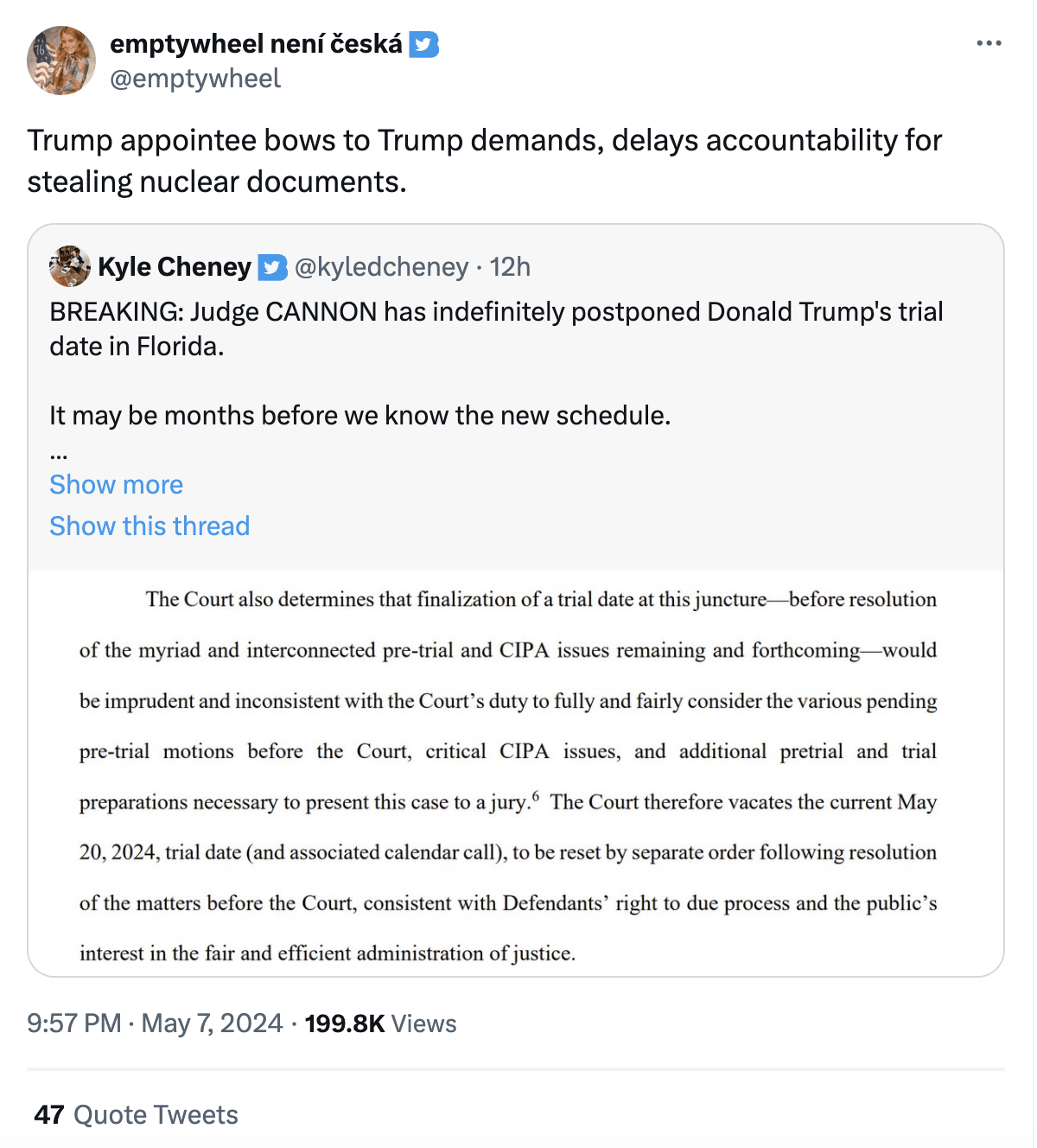
When Aileen Cannon issued her order delaying Trump’s stolen documents trial indefinitely, I posted this on Xitter.

The post was factual. Trump nominated Judge Cannon on May 21, 2020. Judge Cannon’s order ceded to the requests of Trump and his co-defendants for hearings on all sorts of requests that, before any other judge, would be deemed frivolous. She adopted deadlines Trump asked for last year. The order undoubtedly delayed accountability in this case, with the next deadlines set for a month after the original trial date. And Trump is alleged to have stolen nuclear documents. In the original 15 boxes returned in January 2022, there were three documents classified FRD, for a total of 57 pages and charged document 19, which was seized on August 8, 2022, is also classified FRD, formerly restricted, a classification used for nuclear stockpiles and targeting. All would have been covered by the Presidential Records Act and so belong to the US Government; Trump could declassify none of them on his own.

By 11 my time (plus-5 from ET), it had gone viral, with 200k views, 47 QTs, 4.4k likes, 1.6k RTs, and 300 responses.

The post is a good way to start thinking about the information economy that led us to a place where a Republican judge helps delay accountability for stealing nuclear documents and storing them in a closet normally storing campaign swag. This information economy creates an environment in which a former prosecutor like Aileen Cannon either believes, or claims to believe, outlandish claims of bias and ill-treatment solely because career national security officials — rebranded by Trump as the Deep State — did their job.

Take the responses. In addition to a bunch of lefty responses — including a bunch imagining there was some quick fix switch that Jack Smith can hit to remove Aileen Cannon — there were a range of MAGAt responses, including a bunch doubting that there were really nuclear documents.
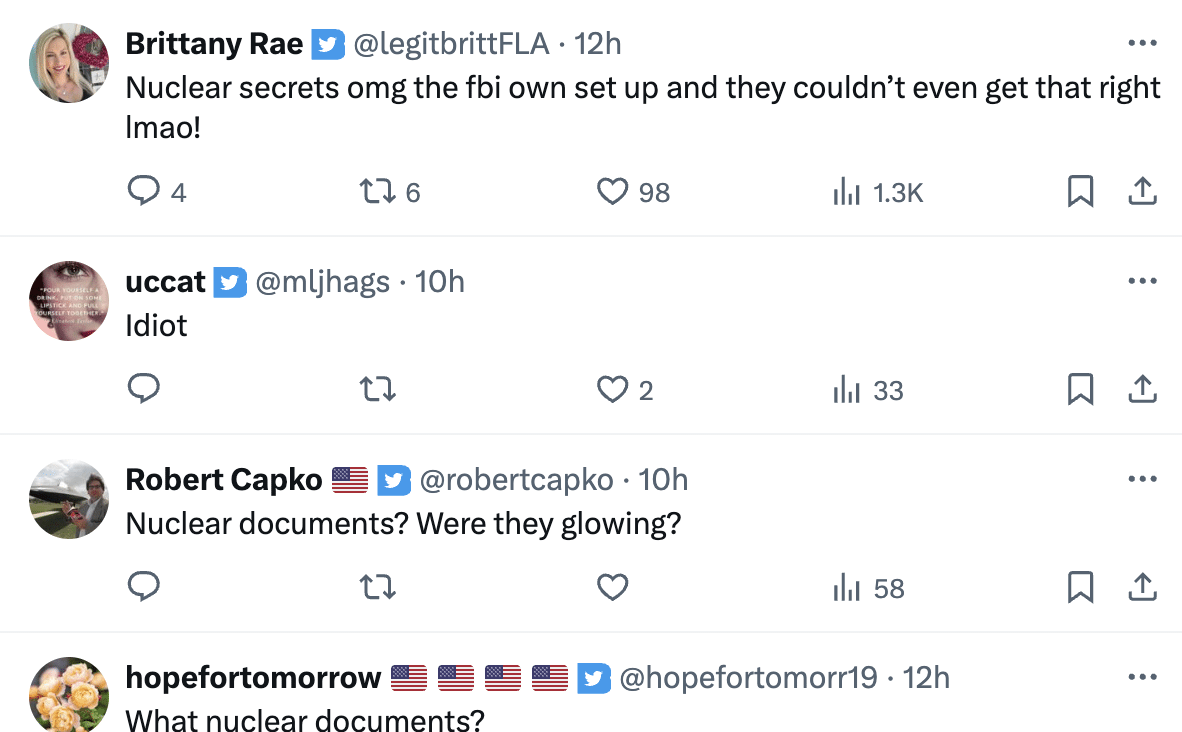
One of those was a full Pepe meme invoking Obama’s birth certificate.
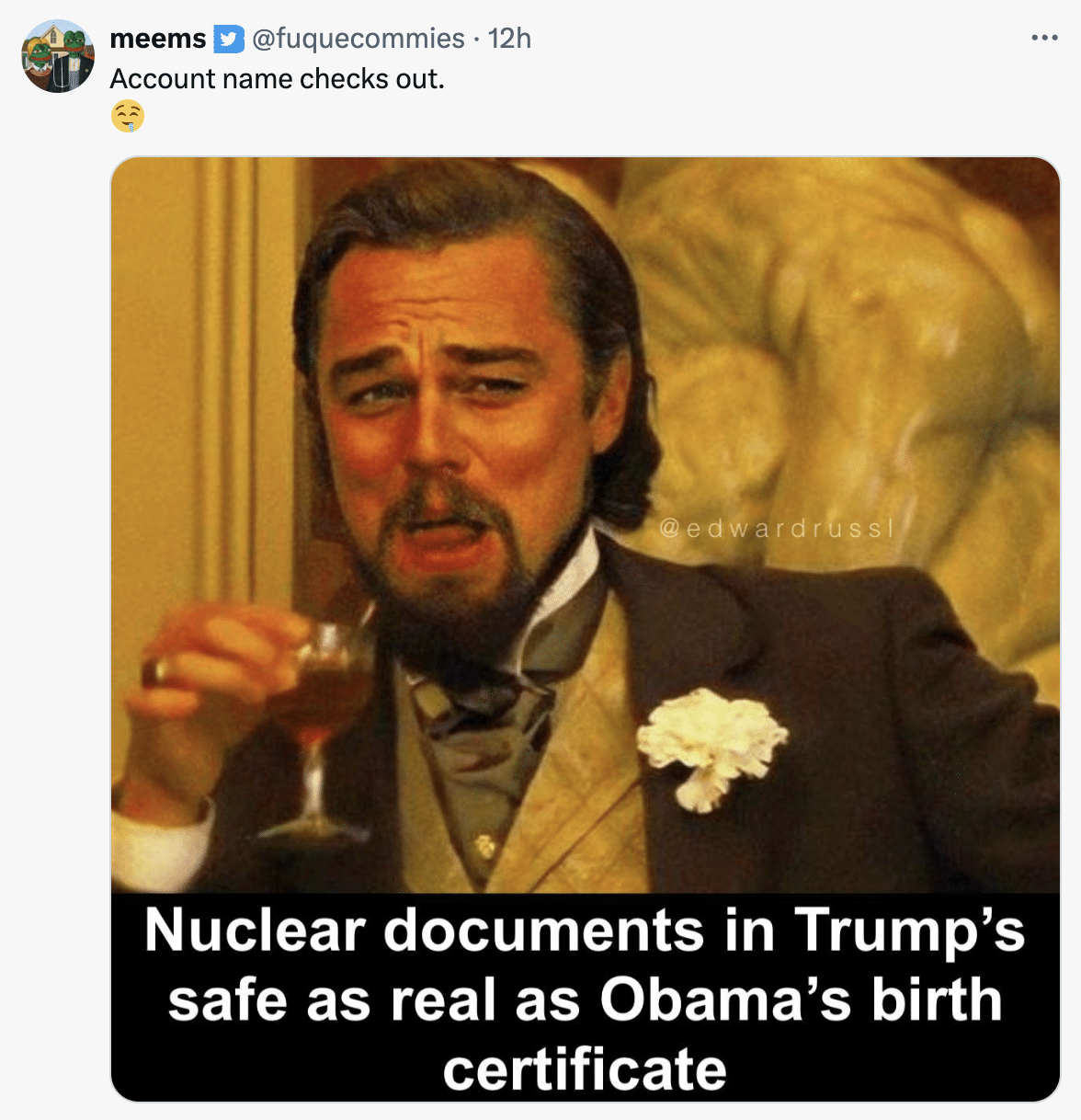
Several used the superbly inane retort MAGAts like to use with me: that my moniker should be “emptyhead” instead of “emptywheel.”

Several of the responses in the thread came from Alexander Sheppard, a Jan6er convicted of obstruction whom John Bates ordered released part way through a 19-month sentence pending the outcome of Joseph Fischer’s challenge to the application of 18 USC 1512(c)(2) over government objections that Sheppard still insists he’s a political prisoner.

This kind of viral response on Xitter is the point — right wingers have deliberately stoked such toxic viral responses for years. This is the kind of “engagement” Xitter’s billionaire owner has chosen to foster.

The point is not rational discussion, but instead the replacement of it with brainless mob-think, a mob-think designed to reinforce unquestioning partisan identity, a mob-think designed to drown out rational consideration of what it means that Judge Cannon has intervened in this way.

A mob-think that can be wielded to drown out the basic fact that Trump is accused of refusing to give back a nuclear document.

Of course, Elon Musk’s decision to grant people with a certain sized following, which includes me, checkmark status some months ago helps to ensure that anything I say will be visible to and therefore subject to this kind of mob treatment. Because of that involuntary checkmark, anything I say will be a magnet for this kind of mob response.

One reason the comment went viral is because of a few QTs from right wing influencers, not least Julie Kelly, who plays a key role in the right wing propaganda world. (The first post here is a QT, claiming that I am an example of the people invoked in her prior Tweet who (she falsely claims) hasn’t covered things I have covered; that is, Julie made my post go viral based on an outright lie, on top of the lie that I have never advocated that Smith ask Cannon to recuse because I doubt it would work.)
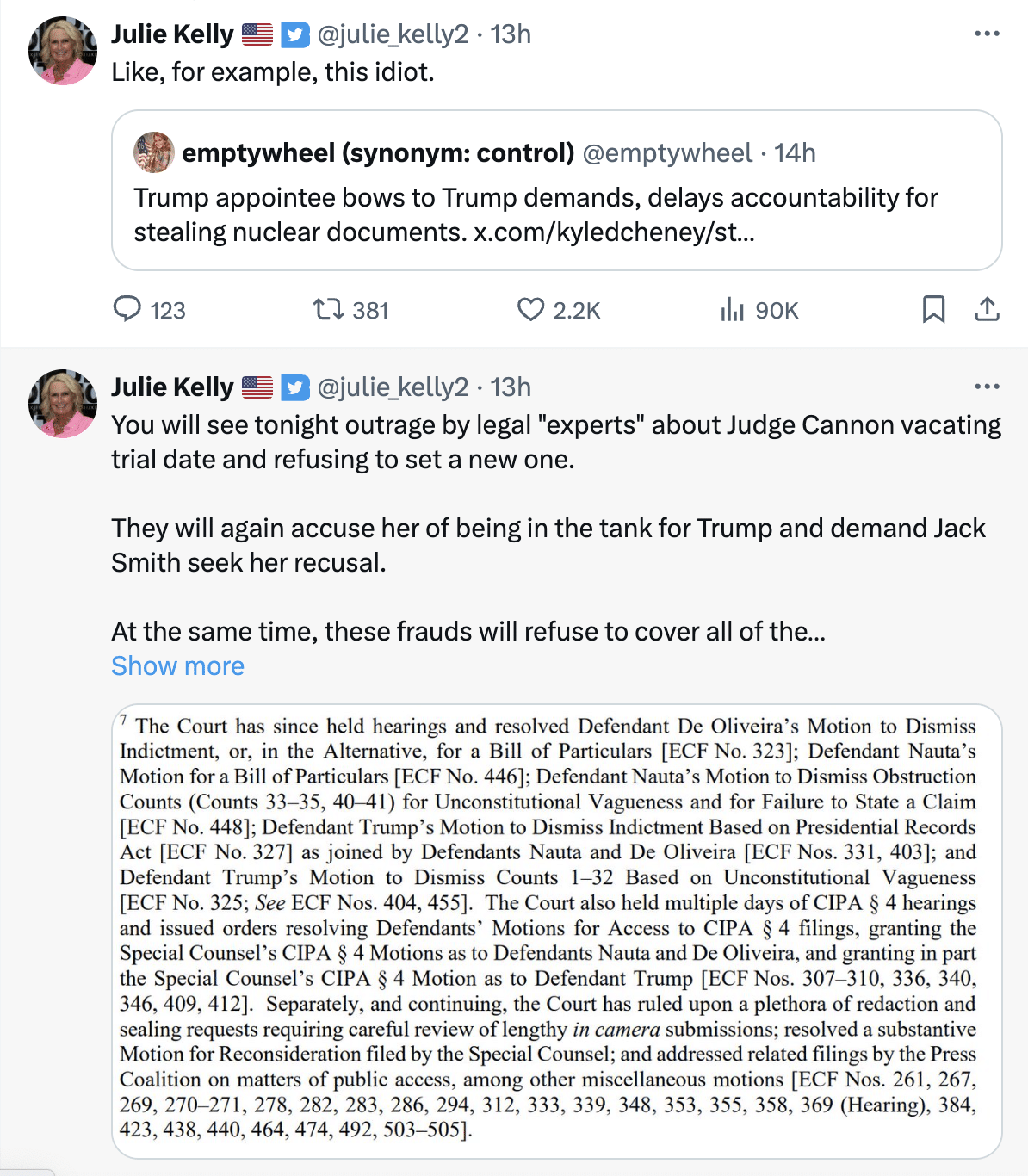
Julie has spent her time since January 6 running a PR campaign for the defendants, falsely claiming they were treated differently than other similarly situated defendants. I have repeatedly showed that Julie has refused to correct lies she has told about the number of January 6 defendants charged with assault and in some but by no means all cases, detained pre-trial. I’ve also had to explain really basic things to poor Julie, like how white people get charged with terrorism.

Julie has moved on from January 6 to Trump’s cases, providing the same kind of inflammatory, factually flawed claims she did for men who attacked cops. And she’s effective. Indeed, she spun the latest development that Aileen Cannon may use as political cover for shutting down the prosecution of a guy who stole nuclear documents. Julie has claimed that because FBI replaced certain documents with slip sheets, all the slip sheets were planted there by the FBI. That’s not remotely what the evidence shows (indeed, the evidence shows that a number of boxes had cover sheets without any documents, something even Tim Parlatore has backed). Nor does it convey the one place where altered box order will matter, which is for Trump — except that the altered document order shown thus far is almost certainly not implicated in any of the charged documents, because it involves Confidential, not Top Secret, documents.

Here is Julie’s coverage of the Robert Hur report, in which she spins Biden granting permission for the FBI to just come and grab boxes as somehow worse than Trump stalling, refusing to let the FBI actually look in boxes when they arrive, then withholding boxes and boxes.

Unlike the expansive raid of Mar-a-Lago, however, the bureau came unprepared. “The FBI dispatched two agents to retrieve the boxes in the garage the following day,” Hur wrote of the FBI’s visit to Delaware on December 21, 2022. “[The] agents conducted a limited search of the garage intended to determine whether it contained other classified documents. The two agents lacked sufficient resources to conduct a comprehensive search of the entire garage given the volume of material stored there.”

Authorities waited for Biden’s consent–he apparently did not want to turn over his notebooks–to search his home; agents were sent to Delaware on January 20, 2023. One item retrieved by the FBI, according to Hur, was Biden’s 2009 “handwritten memo [to President Obama detailing his opposition to the troop surge in Afghanistan] that contains information that remains classified up to the Secret level.”

But Biden and his associates will be spared prosecution. The same media echo chamber that raged for months about Trump’s threat to national security instead is condemning Hur for his “gratuitous” remarks about Biden’s faulty mental faculties.

In the meantime, Trump and his co-defendants are preparing for a tentative May 20 trial date in Florida, embroiled in costly and time-consuming legal battles with the DOJ.

Another example of the two-tiered standard of justice in Joe Biden’s America.

In spite of Julie’s close coverage of the Hur report, she has not told her rubes that the FBI similarly reordered documents in the most important box seized from Biden, nor gone back to admit that the problem she is now misrepresenting — that there were so many classified documents at Mar-a-Lago that FBI ran out of slip sheets — is evidence that the FBI was similarly unprepared for the Trump search.

Julie has similarly spun documents that show Mark Meadows was significantly responsible for getting the Biden White House involved in efforts to retrieve documents (because he tried to reach out to WHORM personally), and show key players at NARA hesitating before asking for further involvement of DOJ as the opposite, an aggressive effort to get Trump.

It doesn’t have to be true. It only has to feed the rubes.

And by feeding the rubes shamelessly false claims, Julie has become quite the celebrity, speaking at CPAC and regularly appearing on Steve Bannon’s show. Bannon knows a useful propagandist when he sees one!

Now, I’m not begrudging Julie the fame she has carefully cultivated with her shamelessness. She has earned it! The right wing propaganda network — the deliberate fostering of lies masterminded by people like accused fraudster Bannon — always rewards people who will tell the rubes what they want to hear.

What I’m trying to explain is how her role gives Aileen Cannon cover to do truly astonishing things, like entertain the notion that  putting a non-partisan in charge of the investigation of Trump for classified documents while putting a Trump appointee who had already deprived a Trump target of due process in charge of the Biden investigation is instead proof of selective prosecution against Trump.

In addition to that premise — that investigating Trump in the same way as investigating Biden is proof of selective prosecution against Trump — Aileen Cannon’s order yesterday and earlier orders signalled she is entertaining the following claims:

  • That Walt Nauta, who doesn’t claim to have sorted through any documents, must have the ability to sort through classified documents
  • That because the document investigation, which included crimes in DC, started in DC, and used DC SCIFs for the investigation, it’s proof that Jack Smith was deliberately attempting to bypass SDFL
  • That because Mark Meadows and Pat Philbin got the White House involved in document response, it’s proof that Biden improperly intervened
  • That even though multiple Trump-friendly witnesses testified that Trump didn’t even know Tom Fitton’s Clinton socks theory until 2022, he should be able to argue to jurors he applied it in 2021
  • That because NARA informed DOJ about classified documents, the same way they did with Joe Biden, it’s proof that NARA are part of the prosecution team as opposed to the victim
  • That because Trump’s surveillance system uses difficult software and one of the defense lawyers only uses an iPad, prosecutors have failed to meet discovery obligations
  • That Trump has immunity to steal nuclear documents that he couldn’t even declassify on his own

These are all, individually and collectively, crazy. It’s unclear whether Cannon truly believes them or simply doesn’t care. She has chosen to treat Trump’s claims according to the reality his propaganda bubble has created rather than the actual facts before her.

A lot of the responses to my Tweet were lefties imagining that Jack Smith has some kind of button he can press to get Aileen Cannon replaced; he doesn’t.

But even if he did, it wouldn’t solve the problem. Because the problem before us is that Trump’s mob and his judges have been trained to believe that applying any law to him amounts to a two-tiered system of justice by a very comprehensive propaganda machine.

Trump’s propaganda machine has drowned out facts and replaced it with grievance.

And until something starts cutting through that grievance, mere trials aren’t going to fix this.
Share this entry

400 Rich People Pay $40K to Hear Trump Glorify Cop Assailants

On Saturday, a bunch of people paid a lot of money — at least $40,000 apiece, and one or two people took Trump up on an offer to speak if they gave $1 million — to hear Trump glorify cop assailants.

Both WaPo (with bylines from Marianne LeVine, Josh Dawsey and Maegan Vazquez) and NYT (Maggie Haberman and Shane Goldmacher) dutifully gave Trump the headline he would have wanted.

Biden = Gestapo

By doing so, they accept as a both-sides question whether legal investigations Biden has nothing to do with make him a Nazi.

Five paragraphs in, NYT describes that Trump featured the recording made with then-accused, now convicted, January 6 felons; Maggie describes those detainees as “people arrested in connection with the Jan. 6, 2021, attack on the Capitol.”

Mr. Trump entered the event to the recording of the national anthem that he made with a group of people arrested in connection with the Jan. 6, 2021, attack on the Capitol by a pro-Trump mob seeking to disrupt the certification of Mr. Biden’s electoral college win. Mr. Trump praised the song.

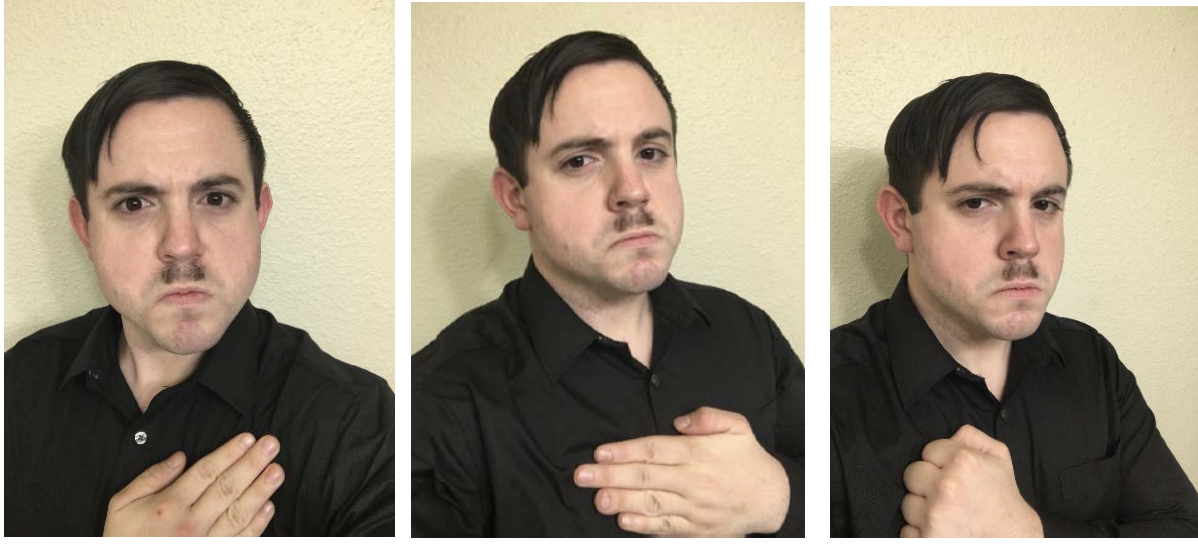
There’s no mention that most of these men assaulted cops and one of the handful who didn’t is a Nazi who likes dressing up as Hitler.

400 rich people paid what could be an average person’s annual salary to watch Trump glorify violent cop assailants, and NYT didn’t mention the violence part. WaPo didn’t mention the video at all and only mentioned political violence when describing the Biden campaign response.

NYT did describe that Trump celebrated Rod Blagojevich and WaPo described Trump claiming that Henry Cuellar was only charged with bribery because he is tough on the border.

Compare that treatment to USA Today Zac Anderson’s, which focuses the entire story on the recording and includes three paragraphs discussing the significance of Trump’s focus on it and two more explaining how we can be sure most of the singers were accused of assault.

The recording is part of Trump’s efforts to whitewash what happened when a mob of his supporters stormed the Capitol to stop Congress from certifying President Joe Biden’s victory.

The attack on the Capitol led to Trump’s second impeachment and contributed to felony charges being filed against the former president for efforts to overturn the 2020 election.

Yet Trump has embraced the Jan. 6 defendants on the campaign trail, calling them “unbelievable patriots” and “hostages” who have “been treated terribly and very unfairly.”

[snip]

It’s not clear which Jan. 6 defendants participated in the recording that Trump plays at his rallies, but many of the defendants held in the Washington, D.C., jail around the time when the recording apparently was made were accused of assaulting officers.

An analysis published by Just Security, an online forum hosted by the New York University School of Law, found that the vast majority of Jan. 6 defendants held in the D.C. Jail on March 13, 2023, were accused of assaulting officers. An individual who advised the group that made the recording told the Washington Post that it was made in February of 2023 at the D.C. jail, but said she did not know who the singers are.

USA Today also managed to avoid taking Trump’s bait to equate Biden with the Gestapo, not even in the body of the story.

400 people paid a lot of money to watch Trump celebrate men who assaulted cops. All 400 of those people are directly supporting  a culture of political violence. They need to be held accountable for their role in supporting political violence.

When that part gets suppressed — when those 400 people are given a pass for the political violence their dollars help to fund — it normalizes political violence.

That, not Trump’s manipulation of easy marks to get a headline detrimental to Joe Biden, is the story.

Share this entry

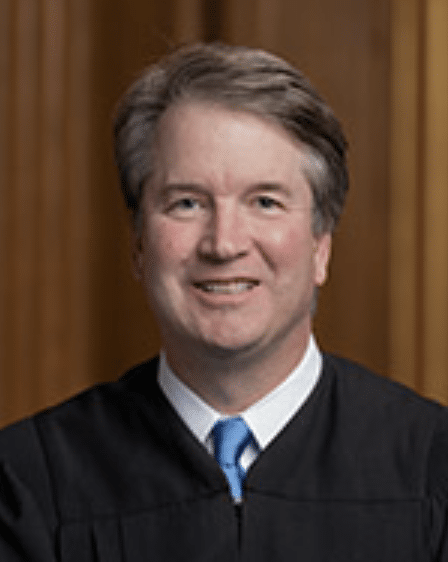
Brett Kavanaugh Thinks that Jack Smith Is as Crazy as Ken Starr Was

There was a subtle moment in yesterday’s SCOTUS hearing on Trump’s absolute immunity claim.

Former Whitewater prosecutor Brett Kavanaugh asked Michael Dreeben whether DOJ had weighed in on this prosecution.

Did the President weigh in? he asked. The Attorney General?

JUSTICE KAVANAUGH: As you’ve indicated, this case has huge implications for the presidency, for the future of the presidency, for the future of the country, in my view. You’ve referred to the Department a few times as having supported the position. Who in the Department? Is it the president, the attorney general?

MR. DREEBEN: The Solicitor General of the United States. Part of the way in which the special counsel functions is as a component of the Department of Justice.

The regulations envision that we reach out and consult. And on a question of this magnitude, that involves equities that are far beyond this prosecution, as the questions of the Court have —

JUSTICE KAVANAUGH: So it’s the solicitor general?

MR. DREEBEN: Yes.

Having been told that Jack Smith consulted with a Senate-confirmed DOJ official on these tough issues, Kavanaugh immediately launched into a screed about Morrison v. Olson, the circuit court decision that upheld the Independent Counsel statute.

JUSTICE KAVANAUGH: Okay. Second, like Justice Gorsuch, I’m not focused on the here and now of this case. I’m very concerned about the future. And I think one of the Court’s biggest mistakes was Morrison versus Olson.

MR. DREEBEN: Mm-hmm.

JUSTICE KAVANAUGH: I think that was a terrible decision for the presidency and for the country. And not because there were bad people who were independent counsels, but President Reagan’s administration, President Bush’s administration, President Clinton’s administration were really hampered —

MR. DREEBEN: Yes.

JUSTICE KAVANAUGH: — in their view —

MR. DREEBEN: Mm-hmm.

JUSTICE KAVANAUGH: — all three, by the independent counsel structure. And what I’m worried about here is that that was kind of let’s relax Article II a bit for the needs of the moment. And I’m worried about the similar kind of situation applying here. That was a prosecutor investigating a president in each of those circumstances. And someone picked from the opposite party, the current president and — usually —

MR. DREEBEN: Mm-hmm.

JUSTICE KAVANAUGH: — was how it worked. And Justice Scalia wrote that the — the fairness of a process must be adjudged on the basis of what it permits to happen —

Kavanaugh slipped here, and described the horror of “Presidents,” not former Presidents, routinely being subject to investigation going forward.

MR. DREEBEN: Mm-hmm.

JUSTICE KAVANAUGH: — not what it produced in a particular case. You’ve emphasized many times regularity, the Department of Justice. And he said: And I think this applied to the independent counsel system, and it could apply if presidents are routinely subject to investigation going forward. “One thing is certain, however. It involves investigating and perhaps prosecuting a particular individual. Can one imagine a less equitable manner of fulfilling the executive responsibility to investigate and prosecute? What would the reaction be if, in an area not covered by this statute, the Justice Department posted a public notice inviting applicants to assist in an investigation and possible prosecution of a certain prominent person? Does this not invite what Justice Jackson described as picking the man and then searching the law books or putting investigators to work to pin some offense on him? To be sure, the investigation must relate to the area of criminal offense” specified by the statute, “but that has often been and nothing prevents it from being very broad.” I paraphrased at the end because it was referring to the judges.

MR. DREEBEN: Mm-hmm. Yes.

JUSTICE KAVANAUGH: That’s the concern going forward, is that the — the system will — when former presidents are subject to prosecution and the history of Morrison versus Olson tells us it’s not going to stop. It’s going to — it’s going to cycle back and be used against the current president or the next president or — and the next president and the next president after that. All that, I want you to try to allay that concern. Why is this not Morrison v. Olson redux if we agree with you? [my emphasis]

Kavanaugh pretended, as he and others did throughout, that he wasn’t really suggesting this was a case of Morrison v. Olson redux; he was just talking hypothetically about the future.

JUSTICE KAVANAUGH: Right. No, I was just saying this is kind of the mirror image of that, is one way someone could perceive it, but I take your point about the different structural protections internally. And like Justice Scalia said, let me — I do not mean to suggest anything of the sort in the present case. I’m not talking about the present case. So I’m talking about the future.

This intervention came long after Kavanaugh suggested that charging Trump with defrauding the US for submitting fake election certificates and charging Trump with obstructing the vote certification after first charging hundreds of others with the same statute amounted to “creative” lawyering.

JUSTICE KAVANAUGH: Okay. For other official acts that the president may take that are not within that exclusive power, assume for the sake of argument this question that there’s not blanket immunity for those official acts but that to preserve the separation of powers, to provide fair notice, to make sure Congress has thought about this, that Congress has to speak clearly to criminalize official acts of the president by a specific reference. That seems to be what the OLC opinions suggest — I know you have a little bit of a disagreement with that — and what this Court’s cases also suggest.

JUSTICE KAVANAUGH: Well, it’s — isn’t — it’s a serious constitutional question whether a statute can be applied to the president’s official acts. So wouldn’t you always interpret the statute not to apply to the president, even under your formulation, unless Congress had spoken with some clarity?

MR. DREEBEN: I don’t think — I don’t think across the board that a serious constitutional question exists on applying any criminal statute to the president.

JUSTICE KAVANAUGH: The problem is the vague statute, you know, obstruction and 371, conspiracy to defraud the United States, can be used against a lot of presidential activities historically with a — a creative prosecutor who wants to go after a president.

But Kavanaugh returned to his insinuation that it was a stretch to prosecute a political candidate for submitting false certificates to Congress and the Archives under 18 USC 371 after his purported complaint about Morrison v. Olson.

Second, another point, you said talking about the criminal statutes, it’s very easy to characterize presidential actions as false or misleading under vague statutes. So President Lyndon Johnson, statements about the Vietnam War —

MR. DREEBEN: Mm-hmm.

JUSTICE KAVANAUGH: — say something’s false, turns out to be false that he says about the Vietnam War, 371 prosecution —

MR. DREEBEN: So —

JUSTICE KAVANAUGH: — after he leaves office?

None of this intervention made any sense; it wouldn’t even have made sense if offered by someone who hadn’t criminalized an abusive, yet consensual, blowjob for years.

After all, contrary to the demands of many, Merrick Garland didn’t appoint a Special Counsel until Trump declared himself a candidate. By that point, hundreds of people had already been charged under 18 USC 1512(c)(2) and DOJ was at least four months into Executive Privilege fights over testimony from Mike Pence’s aides and Trump’s White House counsel. Jack Smith was appointed nine months after Lisa Monaco publicly confirmed that DOJ was investigating the fake electors and six months after overt subpoenas focused on the scheme came out (to say nothing of the treatment of Rudy Giuliani’s phones starting a year earlier).

This is not a Morrison v. Olson issue.

Rather, Kavanaugh is using his well-established hatred for Morrison v. Olson to complain that Trump was investigated at all — and that, after such time that a conflict arose, Garland appointed a non-partisan figure to head the already mature investigation.

It was one of many examples yesterday where the aggrieved white men on the court vomited up false claims made by Trump.

Kavanaugh made no mention of the appointment of Robert Hur — not just a Republican but a Trump appointee who had deprived Andy McCabe of due process — to investigate Joe Biden for precisely the same crime for which Trump was charged. That’ll become pertinent at such time as Donald Trump’s claim to Jack Smith’s appointment gets to SCOTUS. After all, in that case, Trump will have been similarly treated as Joe Biden. In that case, Hur’s distinction between Biden’s actions and Trump’s should (but probably won’t) reassure the right wing Justices that Trump was not selectively prosecuted.

Speaking of things Kavanaugh didn’t mention, his false complaint — and which Clarence Thomas raised as well — comes at a curious time.

Because of Aileen Cannon’s dawdling, Trump’s challenge to Jack Smith’s appointment won’t get to SCOTUS for months, if ever.

But Hunter Biden, whose challenge to David Weiss’ appointment takes the same novel form as Trump’s — an appropriations clause challenge — may be before the Third Circuit as soon as next week. In a passage of Abbe Lowell’s response to Weiss’ demand that the Third Circuit give Lowell, an observant Jew, three days including Passover to establish jurisdiction for his interlocutory appeal, Lowell scolded Weiss for presuming to know the basis of his appeals.

The Special Counsel boasts that it prepared its motion in “two days” (Mot.Exped.3), but the legal errors that permeate its motion to dismiss only underscore why more time is needed to adequately research and thoughtfully brief the jurisdictional issues for this Court. The Special Counsel ignores numerous bases for jurisdiction (e.g., 28 U.S.C. §§ 1291 (collateral order doctrine), 1292(a)(1) (denial of Appropriations Clause injunction), and 1651 (mandamus)) over this appeal, and the legal claims it does make are flatly wrong, compare Mot.6 (falsely claiming “all Circuit Courts” reject reviewing denials of motions to enforce plea agreements as collateral orders), with United States v. Morales, 465 F. App’x 734, 736 (9th Cir. 2012) (“We also have jurisdiction over interlocutory appeals of orders denying a motion to dismiss an indictment on the ground that it was filed in breach of a plea agreement.”)

In addition to mandamus (suggesting they may either attack Judge Noreika’s immunity decision directly or ask the Third Circuit to order Delaware’s Probation Department to approve the diversion agreement that would give Hunter Biden immunity), Lowell also invoked an Appropriations clause injunction — basically an argument that Weiss is spending money he should not be.

Normally, this would never work and it’s unlikely to work here.

But even on the SCO challenge, there are a number of problems in addition to Lowell’s original complaint: that Weiss was appointed in violation of the rules requiring someone outside of DOJ to fill the role.

For example Weiss keeps claiming to be both US Attorney and Special Counsel at the same time (most obviously in claiming that tolling agreements signed as US Attorney were still valid as Special Counsel), or the newly evident fact that Weiss asked for Special Counsel status so that he could revisit a lead he was ordered to investigate — in the wake of Trump’s complaints to Bill Barr that Hunter Biden wasn’t being investigated diligently enough — back in 2020, a lead that incorporated Joe as well as Hunter Biden, a lead that uncovered an attempt to frame Joe Biden, an attempt to frame Joe Biden to which Weiss is a witness.

The oddities of Weiss’ investigation of Joe Biden’s son may even offer another claim that the right wing Justices claim to want to review. Jack Smith claims to have found only two or three charges with which Kavanaugh, who insists (former) Presidents can only be charged under statutes that formally apply to Presidents, would leave available to charge a President. But there’s one he missed: 26 USC 7217, which specifically prohibits the President from ordering up a tax investigation into someone, which Lowell invoked in his selective and vindictive prosecution claim. Lowell has not yet proven that Trump directly ordered tax officials, as opposed to Bill Barr and other top DOJ officials, to investigate Hunter Biden for tax crimes. But there’s a lot of circumstantial evidence that Trump pushed such an investigation. Certainly, statutes of limitation on Trump’s documented 2020 intrusions on the Hunter Biden investigation have not yet expired.

The Hunter Biden investigation has all the trappings of a politicized investigation that Kavanaugh claims to worry about — and with the Alexander Smirnov lead, it included Joe Biden, the Morisson v. Olson problem he claims to loathe.

That’s a made to order opportunity for Brett Kavanaugh to restrict such Special Counsel investigations.

Except, of course, it involves Democrats.

Share this entry

King John Would Like a Word with Justice Alito

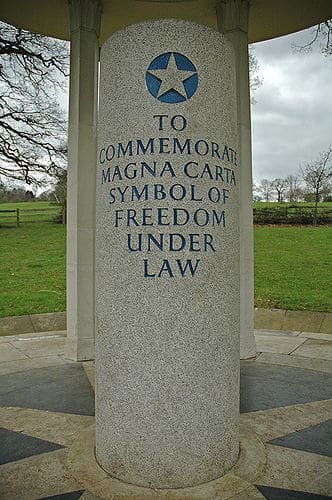
The Magna Carta Monument, Runnymede England

I am annoyed by folks who claim to love history and are blind to it. I am disgusted by folks who claim to love history, are willfully blind to it, and in their willful blindness try to use their power to inflict damage on others.

Why yes, I *did* listen to the oral arguments at SCOTUS today. Why do you ask?

sigh

Here’s an exchange between Justice Alito and Michael Dreeben, speaking for the government:

JUSTICE ALITO: Mr. Dreeben, you dispute the proposition that a former president has some form of immunity.

MR. DREEBEN: Mm-hmm.

JUSTICE ALITO: But, as I understand your argument, you do recognize that a former president has a form of special protection, namely, that statutes that are applicable to everybody must be interpreted differently under some circumstances when they are applied to a former president.

Isn’t that true?

MR. DREEBEN: It is true because, Justice Alito, of the general principle that courts construe statutes to avoid serious constitutional questions. And that has been the longstanding practice of the Office of Legal Counsel in the Department of Justice.

JUSTICE ALITO: All right. So this is more, I think, than just a — a quarrel about terminology, whether what the former president gets is some form of immunity or some form of special protection because it involves this difference which I’m sure you’re very well aware of.

If it’s just a form of special protection, in other words, statutes will be interpreted differently as applied to a former president, then that is something that has to be litigated at trial. The — the former president can make a motion to dismiss and may cite OLC opinions, and the district court may say: Well, that’s fine, I’m not bound by OLC and I interpret it differently, so let’s go to trial.

And then there has to be a trial, and that may involve great expense and it may take up a lot of time, and during the trial, the — the former president may be unable to engage in other activities that the former president would want to engage in. And then the outcome is dependent on the jury, the instructions to the jury and how the jury returns a verdict, and then it has to be taken up on appeal.

So the protection is greatly diluted if you take the form — if it takes the form that you have proposed. Now why is that better?

MR. DREEBEN: It’s better because it’s more balanced. The — the blanket immunity that Petitioner is arguing for just means that criminal prosecution is off the table, unless he says that impeachment and conviction have occurred.

Oh, the horrors of forcing a former president to defend himself in a trial! So sayeth Justice Alito, he who cites a 17th century English witchburner of a jurist (who also invented the marital rape exception), in order to justify denying women bodily autonomy.

If Justice Alito is fond of citing old English judicial writings, let me walk him back another 4 centuries and introduce him to John, by the grace of God King of England, Lord of Ireland, Duke of Normandy and Aquitaine, and Count of Anjou.

Once upon a time — long before a bunch of rabble-rousing colonial insurrectionists said that “Governments are instituted among Men, deriving their just powers from the consent of the governed, –That whenever any Form of Government becomes destructive of these ends, it is the Right of the People to alter or to abolish it, and to institute new Government, laying its foundation on such principles and organizing its powers in such form, as to them shall seem most likely to effect their Safety and Happiness.” — there was a little dustup between John, by the grace of God King of England etc., and a bunch of his barons, as well as various bishops and archbishops. The barons and clergy, distressed at what seemed to them to be very ill treatment at the hand of their king, expressed their frustrations in a manner that could not be ignored.

In June 1215, John and the barons negotiated an agreement. In it, after an introduction and 60 separate clauses in which King John agreed to various reforms and promised to make specific restitution in various particular cases that were demanded by his barons, the 1215 version of the Magna Carta ends like this:

* (61) SINCE WE [ed: John] HAVE GRANTED ALL THESE THINGS for God, for the better ordering of our kingdom, and to allay the discord that has arisen between us and our barons, and since we desire that they shall be enjoyed in their entirety, with lasting strength, for ever, we give and grant to the barons the following security:

The barons shall elect twenty-five of their number to keep, and cause to be observed with all their might, the peace and liberties granted and confirmed to them by this charter.

If we, our chief justice, our officials, or any of our servants offend in any respect against any man, or transgress any of the articles of the peace or of this security, and the offence is made known to four of the said twenty-five barons, they shall come to us – or in our absence from the kingdom to the chief justice – to declare it and claim immediate redress. If we, or in our absence abroad the chief justice, make no redress within forty days, reckoning from the day on which the offence was declared to us or to him, the four barons shall refer the matter to the rest of the twenty-five barons, who may distrain upon and assail us in every way possible, with the support of the whole community of the land, by seizing our castles, lands, possessions, or anything else saving only our own person and those of the queen and our children, until they have secured such redress as they have determined upon. Having secured the redress, they may then resume their normal obedience to us.

Any man who so desires may take an oath to obey the commands of the twenty-five barons for the achievement of these ends, and to join with them in assailing us to the utmost of his power. We give public and free permission to take this oath to any man who so desires, and at no time will we prohibit any man from taking it. Indeed, we will compel any of our subjects who are unwilling to take it to swear it at our command.

If one of the twenty-five barons dies or leaves the country, or is prevented in any other way from discharging his duties, the rest of them shall choose another baron in his place, at their discretion, who shall be duly sworn in as they were.

In the event of disagreement among the twenty-five barons on any matter referred to them for decision, the verdict of the majority present shall have the same validity as a unanimous verdict of the whole twenty-five, whether these were all present or some of those summoned were unwilling or unable to appear.

The twenty-five barons shall swear to obey all the above articles faithfully, and shall cause them to be obeyed by others to the best of their power.

We will not seek to procure from anyone, either by our own efforts or those of a third party, anything by which any part of these concessions or liberties might be revoked or diminished. Should such a thing be procured, it shall be null and void and we will at no time make use of it, either ourselves or through a third party.

* (62) We have remitted and pardoned fully to all men any ill-will, hurt, or grudges that have arisen between us and our subjects, whether clergy or laymen, since the beginning of the dispute. We have in addition remitted fully, and for our own part have also pardoned, to all clergy and laymen any offences committed as a result of the said dispute between Easter in the sixteenth year of our reign (i.e. 1215) and the restoration of peace.

In addition we have caused letters patent to be made for the barons, bearing witness to this security and to the concessions set out above, over the seals of Stephen archbishop of Canterbury, Henry archbishop of Dublin, the other bishops named above, and Master Pandulf.

* (63) IT IS ACCORDINGLY OUR WISH AND COMMAND that the English Church shall be free, and that men in our kingdom shall have and keep all these liberties, rights, and concessions, well and peaceably in their fullness and entirety for them and their heirs, of us and our heirs, in all things and all places for ever.

Both we and the barons have sworn that all this shall be observed in good faith and without deceit. Witness the abovementioned people and many others.

Given by our hand in the meadow that is called Runnymede, between Windsor and Staines, on the fifteenth day of June in the seventeenth year of our reign (i.e. 1215: the new regnal year began on 28 May).

Note the third paragraph, that begins “If we, our chief justice, . . .” In that paragraph, King John, by the grace of God King of England etc., is agreeing that he and his administration are not immune from accountability.

John and the barons agreed on a process for adjudicating disputes. They agreed on a panel that could both bring charges and judge them.  They agreed on how the panel should be chosen, and how the panel should select new members at the death of old ones. They agreed on how many members of the panel needed to agree in order for a judgment to be final. They agreed on a time frame for restitution. Most importantly, should John be found to have violated the terms of this document and yet refuse restitution, John, by the grace of God King of England etc., agreed that his castles and lands could be seized under order of the panel to make restitution for what he had done, or his officials had done on his behalf.

To be fair, the Magna Carta was changed and altered in the years and centuries that followed. But the original text of the original version makes it clear that even the King of England, Lord of Ireland, Duke of Normandy and Aquitaine, and Count of Anjou does not enjoy absolute immunity.

Trump may wish to be a monarch with absolute immunity and not a president.

Alito may wish to treat him as a monarch with absolute immunity and not a president.

But in a meadow at Runnymede, between Windsor and Staines, John, by the grace of God King of England, Lord of Ireland, Duke of Normandy and Aquitaine, and Count of Anjou, said no. That’s not how even a divinely appointed monarch is to be treated.

Share this entry

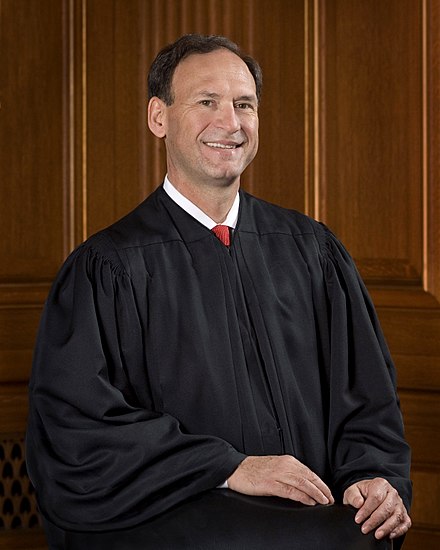
Sam Alito Says that Donald Trump Is a Maligned Ham Sandwich

I’m not, now, as full of despair as I was at one point in the SCOTUS hearing on Presidential immunity. (Here’s my live thread.) I believe that a majority of the court will rule that for private conduct — adopting the Blassingame rule that a President acting as candidate acts in a private role — a former President can be prosecuted.

But whooboy, Sam Alito really really believes everything Trump has said about this being a witch hunt. He repeatedly said that the protections that we assume ensure rule of law in the US — DOJ guidelines on prosecutions, the role of a grand jury, the role of a judge — are not enough in the case of Donald Trump. Sam Alito believes that Donald Trump should not have to be inconvenienced by a trial while he could be doing something else. Sam Alito also believes that January 6 was a mostly peaceful protest.

Alito even suggested that a President would be more likely to engage in violence after a closely contested election if he knew he might be prosecuted for it than not.

It was fairly insane.

Meanwhile, while I think there’s a majority (though Steve Vladeck is not as convinced) — with at least all the women in a majority — to let this case proceed at least on the private acts alleged in the indictment (with the huge caveat that Trump’s demands of Pence would not be considered a private act!), it’s clear that Neil Gorsuch doesn’t see how 18 USC 1512(c)(2) could be applied to Trump because we don’t know what corrupt purpose is, even though, of all the January 6 defendants, his corrupt purpose — his effort to obtain a improper private benefit — is most clearcut.

But there’s a whole lot of garbage that will come out of this decision, including immunity for core actions, like pardons and appointments, that could clearly be part of a bribe.

Notably, both Clarence Thomas and Brett Kavanaugh appear to be gunning for Special Counsels (though possibly only with respect to Presidents, not the sons of Presidents).

Michael Dreeben backtracked and backtracked far enough to preserve a case. But it’s not sure what else there will be.

Share this entry

The Phone Contacts between the “Total Moron” and the PAC Head

According to Person 16 — who has the potty mouth and performed candor we’ve come to expect from Eric Herschmann — Person 5 is a “total moron” — an opinion about Boris Epshteyn that Herschmann has expressed elsewhere.

“I certainly am not relying on any legal analysis from either of you or Boris who — to be clear — I think is an idiot,” Mr. Herschmann wrote in a different email. “When I questioned Boris’s legal experience to work on challenging a presidential election since he appeared to have none — challenges that resulted in multiple court failures — he boasted that he was ‘just having fun,’ while also taking selfies and posting pictures online of his escapades.”

Mr. Corcoran at one point sought to get on the phone with Mr. Herschmann to discuss his testimony, instead of simply sending the written directions, which alarmed Mr. Herschmann, given that Mr. Herschmann was a witness, the emails show.

In language that mirrored the federal statute against witness tampering, Mr. Herschmann told Mr. Corcoran that Mr. Epshteyn, himself under subpoena in Georgia, “should not in any way be involved in trying to influence, delay or prevent my testimony.”

“He is not in a position or qualified to opine on any of these issues,” Mr. Herschmann said.

At that same November 2, 2022 interview, Person 16 went on to tell Jack Smith’s investigators how Person 5 ingratiated himself to Trump after the former President left the White House.

Post January 2021, [Person 5] constantly sent FPOTUS what [he] had uncovered on the election fraud and maneuvered [his] way into FPOTUS’ circle. [Person 16] was unaware of an actual [redacted] for [Person 5], stating it was [Person 5] who would instruct media to report [on him] as [redacted].

I long laughed at the the way that journalist after journalist credited Ephsteyn with playing a role in Trump’s legal defense even while Ephsteyn was billing Trump’s PAC for strategy consulting, not law.

For the entirety of the time that Epshteyn was quarterbacking Trump’s response to the stolen documents probe, someone in his immediate vicinity has been telling reporters that he was playing a legal function, all the while billing Trump for the same old strategic consulting his firm, Georgetown Advisory, normally provides (though the two payments the campaign made to Epshteyn after Trump formalized his candidacy, totalling $30,000, were filed under “communications and legal consulting”).

NYT has, in various stories including Maggie in the byline, described Epshteyn’s role in the stolen documents case as “an in-house counsel who helps coordinate Mr. Trump’s legal efforts,” “in-house counsel for the former president who has become one of his most trusted advisers,” and “who has played a central role in coordinating lawyers on several of the investigations involving Mr. Trump.” Another even describes that Epshteyn “act[ed] as [a] lawyer [] for the Trump campaign.” The other day, Maggie described his role instead as “broader strategic consulting.”

All the time that NYT was describing Epshteyn as playing a legal role — and NYT is in no way alone in this — he was telling the Feds he wasn’t playing a legal function, he was instead playing a strategic consulting one. Many if not most of these stories also post-date the time, in September, when the FBI seized Epshteyn’s phone, which would give him a really good reason to try to claim to be a lawyer and not a political consultant.

According to Person 16, he “believed [Person 5] was now trying to create [redacted] to cover [him] for previous activities. [Person 16] believed [Person 49’s] records may reflect recent [redacted] that did not reflect what actually transpired.”

It was around the time of this interview, in November 2022, when Ephsteyn did start billing for legal services, even while the press was credulously reporting that he had always been serving in a legal role. That happened in the aftermath of Ephsteyn’s phone being seized, in September 2022.

Person 16 also thought that “total moron” Person 5 might have shifted the concern about witness tampering from the January 6 investigation[s] to the stolen document one.

[Person 16] could not recall where the information that the concern about witness tampering was related to the document investigation and not the January 6th Committee. [Person 16] commented that sounded like something [Person 5] would do.

That interview was in November 2022.

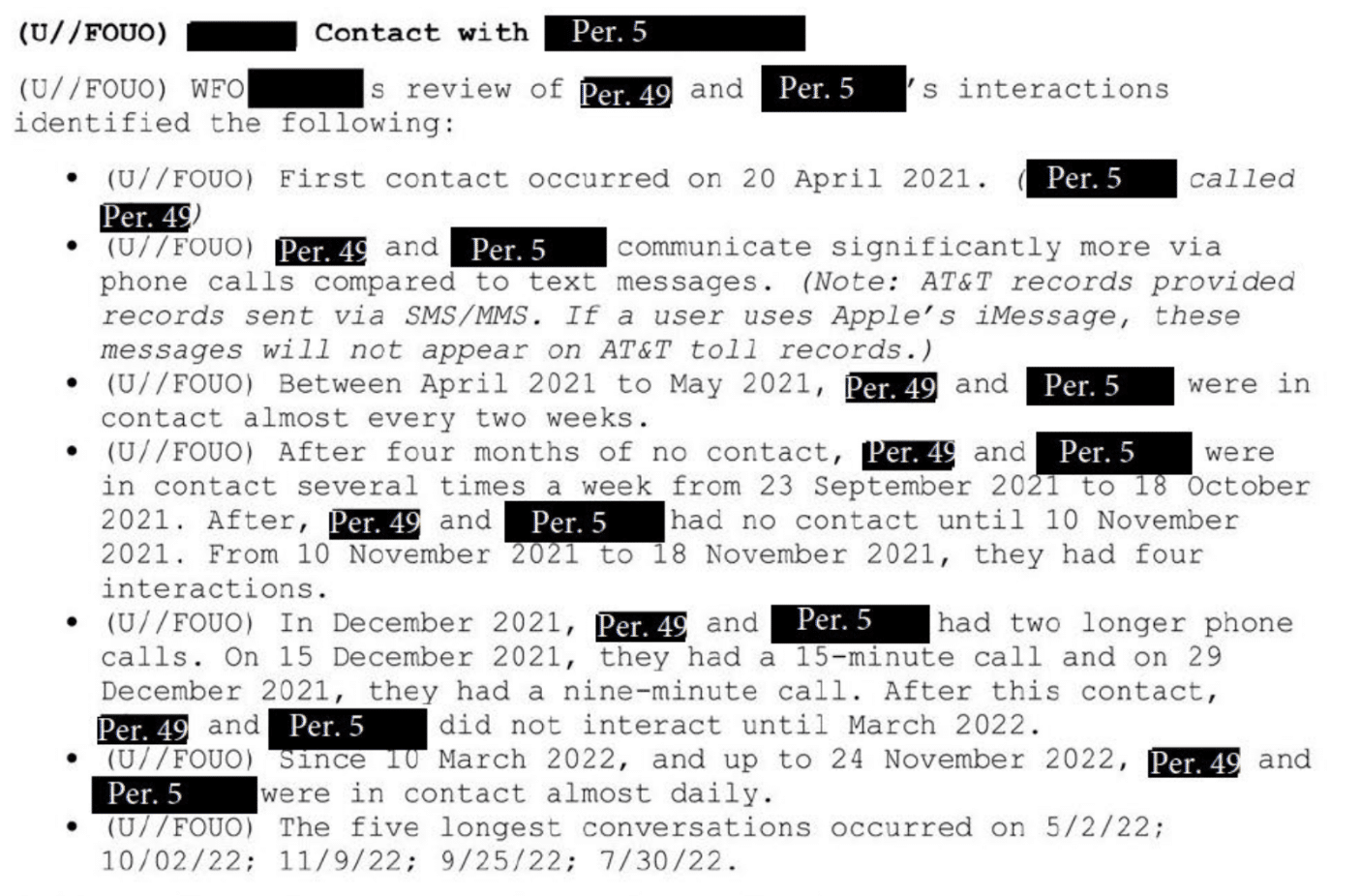
In January 2023, according to an exhibit submitted in support of a discovery request for records on all correspondence and/or communications regarding counsel, Jack Smith’s office asked the FBI to pull together the toll records between Person 49 — who may be Susie Wiles, the head of America First PAC — and both Person 5 and Stanley Woodward.

The contacts between Person 49 and Woodward are not that interesting — just four phone calls in fall 2022, when Woodward started representing Kash Patel.

The contacts between Person 5 (whom I suspect is Ephsteyn) and Person 49 (whom I suspect is Wiles) are more interesting.

The contacts started on April 20, 2021, when Person 5 called Person 49, with sustained contact for a few months and then a lapse.

The contacts resumed in September and October 2021 (when the January 6 Committee was ratcheting up).

There were four phone calls in one week in November 2021, and two longer calls in December 2021.

And then nothing, until when Ephsteyn started ingratiating himself in Trump’s orbit after the documents issue went public in February 2022. From that point forward they were “in contact almost daily.”

Of course, these SMS texts might not be that useful. The paragraph of the superseding stolen documents indictment that describes Wiles vetting Carlos De Oliveira’s loyalty before arranging legal representation of him describes that Nauta confirmed his now co-defendant’s loyalty on a Signal chat, not an SMS text.

Just over two weeks after the FBI discovered classified documents in the Storage Room and TRUMP’s office, on August 26, 2022, NAUTA called Trump Employee 5 and said words to the effect of, “someone just wants to make sure Carlos is good.” In response, Trump Employee 5 told NAUTA that DE OLIVEIRA was loyal and that DE OLIVEIRA would not do anything to affect his relationship with TRUMP. That same day, at NAUTA’s request, Trump Employee 5 confirmed in a Signal chat group with NAUTA and the PAC Representative that DE OLIVEIRA was loyal. That same day, TRUMP called DE OLIVEIRA and told DE OLIVEIRA that TRUMP would get DE OLIVEIRA an attorney. [my emphasis]

Among the exhibits included in this request for discovery is a fragment of an interview with Person 49 denying unequivocally that she had done such vetting (as well as an earlier interview in which she said Person 16 was at the forefront of finding lawyers). If this is Wiles, she denied conducting loyalty checks before agreeing to find legal representation for people.

Mind you, that’s not the only place Wiles shows up in the superseding indictment.

In August or September 2021, when he was no longer president, TRUMP met in his office at the Bedminster Club with a representative of his political action committee (the “PAC Representative”). During the meeting, TRUMP commented that an ongoing military operation in Country B was not going well. TRUMP showed the PAC Representative a classified map of Country B and told the PAC Representative that he should not be showing the map to the PAC Representative and to not get too close. The PAC Representative did not have a security clearance or any need-t0-know classified information about the military operation.

That was around the time when Person 49 resumed phone contact with Person 5 again.

This ABC piece talks about what a big deal it is that Wiles might have to testify at trial in the height of a campaign she’s leading (though Aileen Cannon seems dead set on preventing that from happening).

And this post describes how Wiles likely showed up in another Trump-related indictment as the Florida campaign official who interacted — unwittingly — with Yevgeniy Prigozhin’s trolls.

Share this entry

Mr. Smith Goes to SCOTUS

Yesterday, Jack Smith submitted his brief on Trump’s immunity claim to SCOTUS. I’m working on a post on it, but thought I should go ahead and post this stub so people can chat until that’s done.

Share this entry

NYT’s Limited Understanding of Trump’s “Tactics for Avoiding a Crisis Like the One He Now Faces”

There’s a funny passage in the 2,800-word NYT piece contrasting how Trump has managed Michael Cohen and Allen Weisselberg.

Initially sympathetic, Mr. Trump called Mr. Cohen a “good man” and the search “a disgraceful situation.” He also called Mr. Cohen with a message — stay strong — and the Trump Organization paid for Mr. Cohen’s main lawyer.

But Mr. Trump’s advisers were concerned about witness tampering accusations and he stopped reaching out. Their relationship soon soured.

NYT claims — apparently intending this to be a serious explanation — that Trump stopped trying to buy Cohen’s silence with a pardon and payments for a lawyer because of concerns about witness tampering.

I mean, I’m sure some of NYT’s sources claimed that. But given the amount of witness tampering Trump continued to engage in — publicly and privately — after leaving Cohen to fend for himself, the explanation is not remotely credible.

A far, far more likely explanation — one that is also more consistent with other aspects of NYT’s story — is that Trump and his attorneys intervened in the privilege review of phone content seized from Michael Cohen to conduct a risk assessment. (NYT says it relied on court records to tell this story, but they don’t mention that Trump abandoned Cohen only after getting access to what had been seized and why.) What Trump’s team saw before them in both the seized materials and the warrants used to seize Cohen’s devices may have led Trump to conclude, first, that Cohen had already showed signs of betrayal, by secretly recording the phone call over which they planned the hush payments to Karen McDougal.

Mr. Cohen’s lawyers discovered the recording as part of their review of the seized materials and shared it with Mr. Trump’s lawyers, according to the three people briefed on the matter.

“Obviously, there is an ongoing investigation, and we are sensitive to that,” Mr. Cohen’s lawyer, Lanny J. Davis, said in a statement. “But suffice it to say that when the recording is heard, it will not hurt Mr. Cohen. Any attempt at spin cannot change what is on the tape.”

NYT (including Maggie Haberman, who was also part of this story) was the first to break that story, and did so in the days after Cohen hired Lanny Davis, but it is not mentioned here.

Perhaps more importantly, Trump would have gotten a misleading sense from reviewing seized materials that Cohen was only being actively investigated for the taxi medallions and the hush payment.

That warrant may have led Trump to sincerely believe that prosecutors were only looking at the hush payment and business-related crimes, as he claimed on Fox News.

When Mr. Trump called into one of his favorite television shows, “Fox & Friends,” a few weeks after the search, he distanced himself from Mr. Cohen, who he said had handled just “a tiny, tiny little fraction” of his legal work, adding: “From what I understand, they’re looking at his businesses.”

“I’m not involved,” Mr. Trump added three times.

The warrants against Cohen built on each other and so built on the Mueller investigation, as I laid out here and here. But the warrant overtly tied to the April 2018 seizure didn’t mention other aspects of the investigation that might have made Trump more cautious about hanging Cohen out to dry, had he seen them.

Trump would not have known that Robert Mueller had succeeded in doing something SDNY does not seem to have done: accessed Cohen’s Trump Organization emails from Microsoft, thereby discovering documents regarding Trump’s ties to Russia that Trump Org had withheld from subpoena responses. Trump would not have known, then, that Mueller had established that Cohen told Congress a false story to cover up Trump’s own lies about Russia. That led to the first damning testimony from Cohen about Trump: That on his behalf, Cohen had contacted the Kremlin during the 2016 election and then lied to cover it up.

Plus, if Trump used the privilege review as a means to assess risk, it was based on a faulty assumption, an assumption mirrored in the NYT story.

NYT ties Cohen’s import as a witness to the crimes for which Cohen was investigated personally, even focusing exclusively on the hush payment and ignoring the lies about Russia. In a description of the damage Cohen’s congressional testimony did to Trump, NYT suggests that damage was limited to the hush payment, the thing that Trump allegedly engaged in financial fraud to cover up (predictably, NYT doesn’t mention the financial fraud alleged in the cover-up, just the cover-up).

When he pleaded guilty to federal charges that August, Mr. Cohen pointed the finger at Mr. Trump, saying he had paid the hush money “at the direction of” his former boss — an accusation he is expected to repeat on the witness stand in the Manhattan trial. A spokeswoman for Alvin L. Bragg, the Manhattan district attorney, declined to comment.

Before going to prison, Mr. Cohen also appeared before Congress, where he was asked who else had worked on the hush-money deal. His answer: Mr. Weisselberg.

The far more damaging thing Cohen did in that congressional testimony, though, was to tee up the way Trump adjusted his own business valuations he used for his business to maximize his profits. That was the basis for the fraud trial against Trump Org, and if the verdict sticks, it may cost Trump a half billion dollars and, unless he finds a way to cash in on Truth Social, may create follow-on financial problems.

In other words, Trump seems to have imagined Cohen would not find another way of avenging being hung out like he was, and NYT doesn’t include that other way — predicating investigations that threaten Trump Org itself and led to Weisselberg’s twin prosecutions — in their story.

Ultimately, NYT is still telling this story as if the newsworthy bit is Trump’s continued success at cheating the law, what they describe as, “the power and peril of Mr. Trump’s tactics for avoiding a crisis like the one he now faces.”

This “power and peril” pitch makes Trump the hero of the story and Cohen and Weisselberg contestants in a reality show, with Cohen inflating that contest with his wildly premature boast that “the biggest mistake” Trump ever made was not paying for Cohen’s defense and his claim, “I was the first lamb led to the slaughterhouse.”

If NYT weren’t making this a reality show, it might take away different lessons:

  • Trump has invested a great deal in using associates and co-conspirators to learn of the criminal investigation into him, with a Joint Defense Agreement incorporating 37 people during the Mueller investigation and $50 million of Republican campaign funds invested instead in paying attorneys who will at a minimum report back on investigative developments. Even with that $50 million investment (and the potential damage it’ll do to GOP fortunes in November), Trump has fewer tools to discover the status of ongoing investigations than he had when Republicans on both Intelligence Communities were using the committee to spy on investigations for him. Yet even with far more access to information than he currently has about ongoing investigations (the two federal cases against Trump are different, because Jack Smith has overproduced discovery), Trump miscalculated with Cohen.
  • The risk Cohen posed was not just — as NYT portrays — that he’ll testify against Trump at trial, at this trial. It was that he would disclose information that implicated Trump (and Weisselberg) in new investigations, as he did. As such, one lesson to take away from this, at least for those who don’t have an incentive to make Trump the protagonist of all stories, is that those spurned by Trump know a whole lot of shit about him, and that shit could turn into investigations that implicate the fraud that lies at the core of his persona. John Bolton, Mike Esper, and Mike Pence are all people whom Trump accused of disloyalty who thus far have only shared shit about Trump when prosecutors came asking. That could change.
  • As noted, NYT didn’t mention that Trump only turned on Cohen after discovering that prosecutors had obtained a damning recording from his phone. But he’s not the only Trump associate whose own blackmail on Trump was implicated in a criminal investigation. Mueller’s prosecutors were seeking Stone’s notes of all the calls he had with Trump during the 2016 election when they searched his homes (it’s not clear whether they ever found it), the existence to which Steve Bannon was also a witness. Both Stone and Bannon got their pardons, perhaps because they were better able at leveraging dirt on Trump for legal impunity than Cohen was.
  • NYT describes the injury to Trump here as, “his long-held fear that prosecutors would flip trusted aides into dangerous witnesses.” That’s just weird. It’s as if NYT hasn’t considered that the real danger is that he’ll do prison time for his crimes. The focus on loyalty rather than truthful testimony is especially odd in a piece that describes that Hope Hicks is likely to testify in Alvin Bragg’s case, who’ll testify with less of the circus and more credibility than Cohen. After all, even Jason Miller, still a top campaign manager for Trump, would be a key witness against Trump in a January 6 trial if he repeated the true description of how the campaign started refusing to support the Big Lie after a period in 2020. Bannon provided damaging testimony in the Roger Stone trial by being held to his prior grand jury testimony, and he remains a MAGAt in good standing.

Sometimes, it’s not disloyalty that can sustain a conviction, it’s truth, even truth from still-loyal associates.

Not for NYT, I guess. In a piece trying to extend this analogy to Walt Nauta and Carlos De Oliveira (the latter of whom, who really does have a colorable claim he didn’t know he was obstructing an investigation, is not similarly situated in my opinion), NYT describes that they were charged for their loyalty, not claims that sound pretty obviously false in the indictment.

Like Mr. Weisselberg, Mr. Nauta and Mr. De Oliveira remained loyal, and they are now paying the price: Mr. Smith charged both men not only with obstruction of justice, but also with lying to investigators.

Nauta and De Oliveira got charged, in part, because prosecutors believe they lied to protect Trump because that is a crime, just like it was a crime when Cohen and Stone and Mike Flynn and George Papadopoulos and Paul Manafort did it (Manafort was punished but not charged for those lies). But Nauta, especially, almost certainly got charged because prosecutors still haven’t been able to account for how much Trump intended to steal classified documents when he left the White House and still haven’t been able to account for the stolen classified documents that got flown to Bedminster in 2022. Nauta probably figures it’s a good bet to hope that Trump wins the presidency, ends his prosecution (or pardons him) and rewards him with a sinecure. That’s how having dirt on Trump works! But the prosecution is not over yet, and especially given the likelihood that this won’t go to trial before the election, he may change his mind.

Trump has absolutely succeeded in bolloxing all his criminal cases and may well succeed in delaying all the rest until he can pardon his way out of most of them. But if that effort fails, basic rules of gravity are likely to kick in and Trump will no more be a protagonist than all the other suspected criminals investigated by state and federal authorities.

Share this entry

Fridays with Nicole Sandler

Welcome to the Good Friday – Happy Birthday Marcy edition of Fridays with Nicole Sandler.

This weekend will be a bit quiet due to holiday observations and celebrations.

Share this entry