Posts

Aileen Cannon’s Not-Abnormal Orders

Judge Aileen Cannon just issued three orders in response to the motions I described here as well as a standard Classified Information Procedures Act (CIPA) request. They’ve got people in a panic, so I want to break them down by request and response.

Request 1: Motion to Implement Special Conditions of Release

Before Trump’s arraignment, DOJ asked for no special pre-trial release conditions, aside from Trump not breaking the law anymore. But Magistrate Judge Jonathan Goodman imposed one of his own: that Trump and Walt Nauta not communicate about the facts of the case with witnesses except through lawyers.

Goodman ordered the government to provide defendants with a list of witnesses this covered.

DOJ went beyond this — not only giving Trump and Nauta that list (of 84 witnesses), but also asking to file a sealed version on the docket, without explaining why it was doing so, and also asking Trump and Nauta to sign acknowledgment of the list.

Trump and Nauta objected to that part of it.

Defense counsel takes no position on the government’s motion to seal the list of witnesses, but the defense reserves the right to object to the special condition and the manner in which it was implemented by the government by providing a list of 84 witnesses in purported compliance with the court’s order.

I suggested, among other things, that Trump might oppose this because it could stymie his efforts to fundraise off of being an accused felon.

After that, a media coalition opposed the government motion, asking that any list be filed unsealed.

Cannon’s response, denying the motion without prejudice, basically requires the government to explain why it made the request in the first place.

PAPERLESS ORDER denying without prejudice 33 Government’s Motion to Implement Special Condition of Release. The Government seeks an order implementing a special condition of bond related to Defendants’ communication with eighty-four listed witnesses about the facts of the case, except through counsel [ECF No. 17 p. 4]. The Government conditions its request on the filing of the non-exhaustive list under seal. Defendants take no position on the Government’s seal request but reserve the right to object to the special condition and the manner by which the Government intends to implement it. In the meantime, numerous news organizations have moved to intervene to oppose the Government’s Motion to File Witness List Under Seal, citing the First Amendment and related legal principles 35 . Upon review of the foregoing materials, the Government’s Motion 33 is denied without prejudice, and the Motion to Intervene 35 and accompanying Motions to Appear Pro Hac Vice 36 37 38 39 are denied as moot. The Government’s Motion does not explain why filing the list with the Court is necessary; it does not offer a particularized basis to justify sealing the list from public view; it does not explain why partial sealing, redaction, or means other than sealing are unavailable or unsatisfactory; and it does not specify the duration of any proposed seal. See S.D. Fla. L.R. 5.4(a), (c)(1). The Clerk is directed to return the Pro Hac Vice fees to the filing attorneys. Signed by Judge Aileen M. Cannon on 6/26/2023. (sj00) (Entered: 06/26/2023) [my emphasis]

As written, Cannon, is not reconsidering the limits on contact with witnesses. Rather, she’s asking why the government feels the need to file the list and if so why it needs to be sealed.

Ultimately, Cannon is just shifting the presumptive power before she responds to the media outlets’ request, properly requiring the government to justify sealing something before doing so. As Kyle Cheney laid out in a worthwhile review of her history, Cannon has in the past been receptive to media requests.

Also of note in the proceedings: Cannon partially granted a motion by the Miami Herald to unseal key sealed documents in the case, agreeing to do so with redactions sought by the government.

So DOJ will refile its request with more justification and we’ll learn how Cannon really feels about this pre-release condition.

Request 2: Motion for a Continuance

On the same day, Friday, DOJ also asked for a multi-part motion for a continuance from the August trial date to a December one.

It laid out the following logic:

  1. The matter is not complex, meaning Trump doesn’t need a year to review discovery
  2. The matter does involve classified information, which will require using the Classified Information Procedures Act (CIPA), which takes some time
  3. Also, Trump will need more time to review discovery than the current schedule allows

DOJ provided some legal requests, as well as a proposed timeline.

In response to this request, Cannon asked the defendants what they think:

On or before July 6, 2023, Defendants shall respond to the Government’s Motion for Continuance 34, either individually or in a combined filing.

This is normal.

Request 3: Motion on CIPA

The motion for CIPA, which is mostly boilerplate, reviews how the process works, including steps that are mandated by law. DOJ included a standard order requesting the following:

  • Schedule a CIPA 2 conference to talk about the classified matters at issue
  • Appoint a Court Information Security Officer

In her order, Cannon cited the defendants’ lack off opposition.

The government has conferred with counsel for Defendant Trump and Defendant Nauta about this motion. They have stated that they have no objection to this motion. Counsel for Defendant Nauta, Stanley Woodward, has not yet been admitted pro hac vice or entered an appearance, but the government is providing him a courtesy copy of this pleading.

Then she granted both of these issues, setting the CIPA 2 conference for July 14 and appointing a CISO, both normal steps in this process. She did say,

The Court expresses no view on the other matters addressed in the Government’s Motion.

But those matters are dictated by law.

At this point, neither Cannon nor the defendants’ lawyers know how this works. The conference is the first step in introducing them all to it.

Cannon did say that “Defendants are not required to be present” which is also standard, and would be better here to discuss how this is going to work.

There is nothing to panic about here. Mostly, it seems, Cannon is trying to be careful.

I promise you, I’ll let you know if and when it is time to panic about Judge Cannon’s orders. Thus far, these are reasonable orders.

Share this entry

Aileen Cannon Issues Another Perfectly Routine Order

Judge Aileen Cannon set Donald Trump’s trial for hoarding 31 highly classified documents for August 14, 2023.

The trial won’t happen that quickly. This is, instead, an order stemming from Speedy Trial Act (and in any case, the trial would be set back a few weeks once Walt Nauta is arraigned, because barring a plea or other unforeseen developments, they will be tried together). Per the boilerplate, the two sides have to file Speedy Trial notices every 21 days from here on out.

Other parts of the boilerplate order are more interesting. For example, Judge Cannon ordered that each side can propose no more than 10 voir dire questions to be used in jury selection. This suggests that Cannon plans to conduct the questioning of the jury (again, this is routine in many places) and that she doesn’t envision the kind of 200 word questionnaire I would have envisioned to weed out bias.

Counsel shall be prepared to conduct limited voir dire following the Court’s questioning of the panel. Prior to Calendar Call, each party may file no more than 10 proposed voir dire questions (including any sub-parts) for the Court to consider asking of the venire. The Court will not permit the backstriking of jurors.

As I understand it, the reference to “backstriking” means that the two sides must issue peremptory challenges against jurors in real time, rather than seeing everyone who is qualified and picking the most disfavorable to kick off the jury.

This part of the order, more than anything else in this filing, could determine Donald J. Trump’s fate before a SDFL jury, because it would limit the degree to which both sides could hand pick a jury.

Another part of the order that may matter pertains to Rule 404(b) notices.

All responses pursuant to the Standing Discovery Order and/or Local Rule 88.10 shall be provided in a timely fashion in accordance with the dates scheduled by the magistrate judge. Noncompliance with the Standing Discovery Order, the Local Rules, or the Federal Rules of Criminal Procedure may result in sanctions. Any notice submitted pursuant to Federal Rule of Evidence 404(b) must be filed as a motion—not as a notice—and must identify with particularity the evidence to be introduced and the factual and legal basis supporting admission. Responses to such motions are due in accordance with the standard timing requirements set forth in Local Rule 7.1(c).

404(b) notices pertain to related conduct that is not itself part of the charges. Often it pertains to events that happened before the crime in question that show a predisposition to commit a crime (but character evidence is prohibited).

In the indictment, for example, the incident in which Trump leaked details of an Iran document may need to be introduced as Rule 404(b), because while it is itself a crime, it is not the crime charged in the indictment. Similarly, DOJ could try to introduce evidence that Trump selectively spilled classified information even as President.

Cannon will have discretion to exclude such information as prejudicial, among other things. And because the Milley incident is key to proving that Trump knew he could no longer declassify information, it could harm the case.

But we honestly don’t know whether she would do that! This order is boilerplate, and all it shows is that Cannon is, thus far, treating the trial of a former President as she would any other trial.

Update: This piece from Kyle Cheney is a useful review of how Judge Cannon has treated the few trials over which she has presided.

Share this entry

Aileen Cannon Did Something Normal

Aileen Cannon just issued an order for attorneys for Trump or Walt Nauta to contact DOJ’s Litigation Security Group to start the process of applying for security clearances by tomorrow.

This is just one order. It likely came as a result of DOJ contacting the Litigation Security Group, probably asking that a Court Security Officer be appointed, for this case, and alerting them that lawyers will need clearances. The Court Security Officer will be entrusted with the classified information that will, one day, be submitted at trial, including by ensuring that any filings to the docket are properly redacted. Possibly, it was Litigation Security Group, and not prosecutors, who contacted Judge Cannon and told her she needs to issue an order.

In other words, someone probably nudged her and told her this is the normal thing to do, and she did it.

It’s a bit awkward, because Nauta won’t even be arraigned until June 27, so he may not have any Florida lawyers file an appearance before then. But they are on notice that — if they don’t already hold clearance — they need to get their clearances stat.

Still, it happened. It is the normal thing that should happen. Cannon set short deadlines for things to happen, suggesting that she’s not starting out by helping Trump delay.

So, amid widespread concern, but also given evidence that DOJ is treating Trump with great deference, Cannon did something normal.

Share this entry

No Crime Alleged in the Mar-a-Lago Indictment Occurred in DC; Other Crimes Did

Today, SCOTUS ruled that the government can retry someone in the proper venue if the original case is thrown out on venue grounds without violating double jeopardy.

The decision matters for Vladislav Klyushin, “Putin’s pen-tester,” whose sole post-trial challenge to his Boston insider trading conviction was on venue grounds. The decision makes it more likely he’ll just move to sentencing and maybe decide to make his life easier by cooperating with the US government.

Contrary to what a bunch of TV lawyers are saying — who adopted this challenge as their favorite explanation for why Jack Smith would charge Trump under 18 USC 793(e) in Southern District of Florida rather than DC — the decision would never have mattered for Donald Trump.

I can’t tell you whether Smith charged Trump in Florida because he knew Trump would have successfully challenged venue elsewhere, because he has a larger strategy in mind, or because he just believes you don’t look for easy wins if you’re going to charge the former President of the United States. I suspect it is all of those things, plus a decision to do as much as possible to convince Republicans that this prosecution is legitimate, not merely an attempt to get Donald Trump.

I know that when Smith spoke publicly for all of three minutes, he mentioned the Florida venue twice.

Frankly, all the hand-wringing about venue in SDFL plays into the Republican doubters’ hands, because it sure makes it sound like you are trying to get Trump rather than prosecute a crime.

I can tell you those who think DC would have worked misunderstand the charge and misunderstand the only way an 18 USC 793(e) charge was going to be viable against the former President.

As a reminder, these are the elements of offense of 18 USC 793(e), taken from the very same jury instructions that a jury in SDFL one day may receive. As I showed in August, there was already abundant evidence that Trump met the elements of offense.

There are five elements:

  • Unauthorized possession (proof he had the documents after such time as he was no longer permitted to have them)
  • National Defense Information (NDI) (reasons a jury would agree that these documents were closely held and important to keeping the US safe)
  • Damage to the US (some kind of proof that Trump knew both that these documents could damage the US and that classified information could generally)
  • Willful (proof that he knew he had the documents, as distinct from — like Pence and probably Biden — he just accidentally removed them from his office along with other papers)
  • Refusal (some proof that he didn’t just not return the documents, but refused to do so)

To charge a former President — as distinct from someone who had clearance and brought stuff home from work — you have to prove two things: One, he knew he had  documents that remained classified after he left the Presidency, and two, that after such time as he realized he still had classified documents, he refused to give them back.

Biden and Pence discovered they had unauthorized possession of classified documents and they rushed to give them back.

By July 2021 — when Trump bragged about having documents that remained classified to a ghost writer — Trump knew he had unauthorized possession of classified documents. The Archives, Trump’s lawyers, and DOJ told him over and over that he had to give them back.

And then, in two different incidents, he took classified documents and removed them from a set of other documents that he did give back. That’s the refusal.

You do not have a crime with which you can charge a former President — as distinct from someone whose possession of classified documents would be unauthorized once he brought them outside the SCIF he had agreed to hold them in — until such time as he realizes he has them, someone asks for them back, and he refuses.

It is the refusing to give the documents back that is the provable crime, not the possession per se.

And Trump’s two big refusals — the two times he went to great efforts to sort through boxes personally to cull out documents he wanted to keep rather than return — were both in Florida, both long after he left the White House.

According to the indictment, Trump committed the act of refusing to give documents back under 18 USC 793(e) twice: once, from November 2021 until January 2022, when having been convinced he had to return documents, he went through box after box and carefully curated the boxes he returned on January 18, 2022 to keep some. The proof that he refused to give everything back in January 2022 is that there were still 38 classified documents when Evan Corcoran conducted a search in June, ten of which are charged as separate counts.

Trump refused again in May and June 2022, when he duped Evan Corcoran into claiming he had done a diligent search when in fact Trump had made sure that Corcoran would only search 30 of the 64 boxes Trump knew he still possessed. The proof that he withheld classified documents in June are the 100-some classified documents that the FBI found him to still have in his possession on August 8 of last year, 21 of which are charged as separate counts.

Jack Smith’s decision to charge this case in Florida — knowing full well he might face Aileen Cannon — was a decision about whether he could prove the elements of the offense of a crime that happened in Florida.

He is provably still considering charging crimes that happened in DC. He might even be contemplating charges for crimes that happened in New Jersey. Or maybe he is contemplating charging crimes that started in DC and ended in New Jersey.

I suspect we’re going to be surprised with the crimes he does charge, as virtually all the people saying this could have been charged in DC were surprised that he did choose to charge 18 USC 793(e), rather than just obstruction.

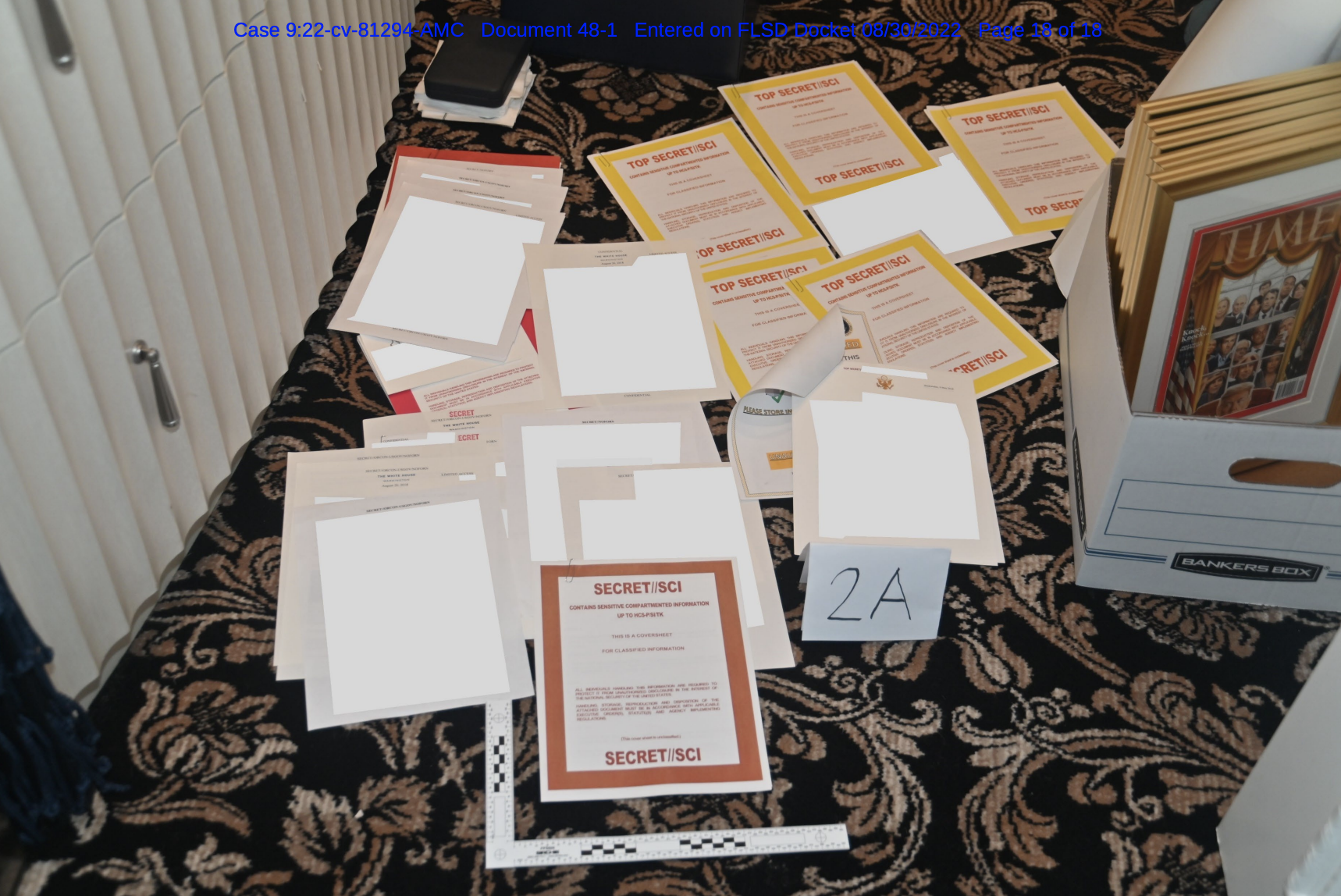
I wasn’t surprised. I laid out exactly how it would look last August; the big surprise to me are the pretty pictures proving Trump’s possession of these documents in Florida.

I also think virtually everyone is imagining that Smith is searching for the one trial to take Trump down, rather than making decisions about a package of conduct about which he might be able to reach a just resolution for the public interest.

I personally doubt an 18 USC 793(e) trial will happen in Florida (or elsewhere), because 793 prosecutions rarely go to trial.

They plead out.

And I promise you that Jack Smith would prefer to get a plea agreement with Donald Trump — however improbable that may seem to us now — than air 31 of the country’s most classified documents at trial.

The only prosecutorial decision Jack Smith has made public thus far is to charge a crime in Florida that happened in Florida. And none of us know how that decision fits in with the other prosecutorial decisions Smith might make or may already have made.

Share this entry

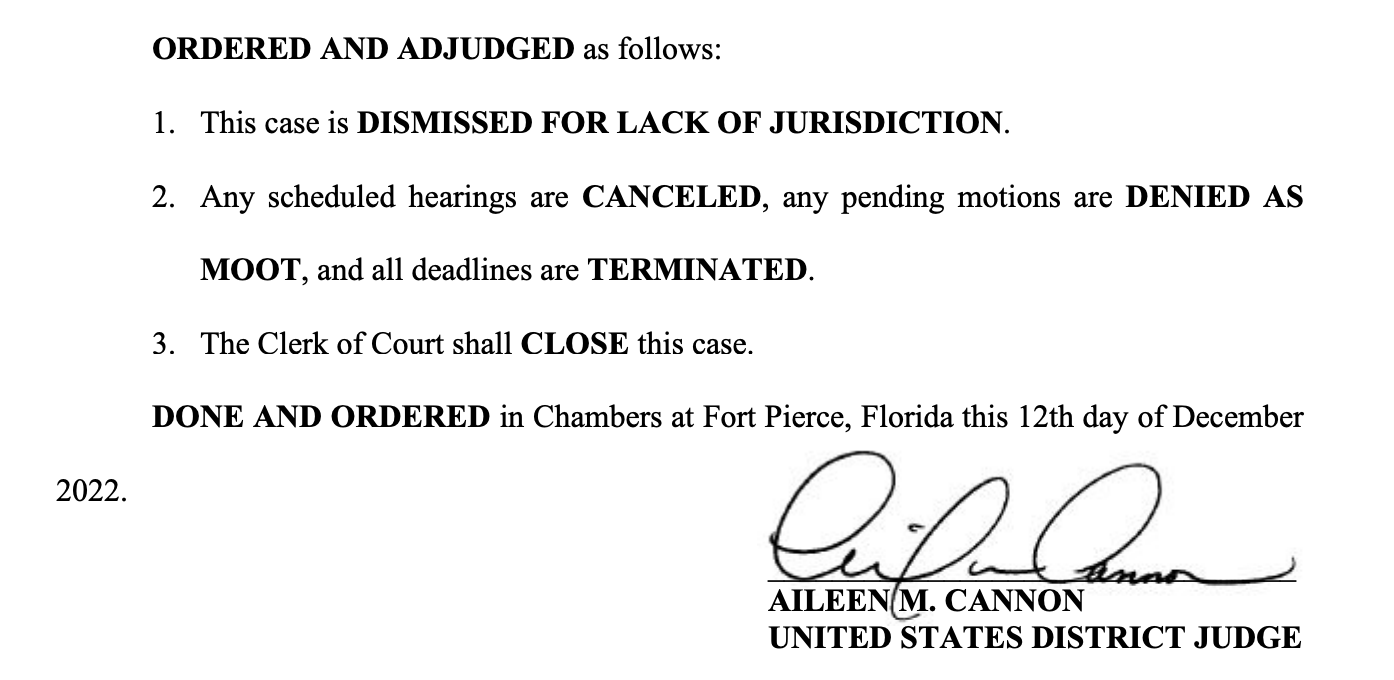
Judge Aileen Cannon Dismisses Donald Trump’s Documents Challenge

Judge Ailenn Cannon has just dismissed Trump’s document challenge for lack of jurisdiction.

After 98 days, DOJ can finally use the unclassified documents seized with a lawful warrant in the investigation of Donald Trump’s stolen documents.

Share this entry

11th Circuit to Trump: You’re Not Special

The 11th Circuit has, as expected, vacated Aileen Cannon’s order enjoining the government from investigating Donald Trump, remanding it with an order to dismiss the suit. (Though they gave Trump seven days to appeal before the order goes into effect.)

The opinion’s key point is that, were they to rule for Trump, it would create an impossible precedent, either halting much pre-indictment access to seized material, or creating an exception only for former Presidents.

In considering these arguments, we are faced with a choice: apply our usual test; drastically expand the availability of equitable jurisdiction for every subject of a search warrant; or carve out an unprecedented exception in our law for former presidents. We choose the first option. So the case must be dismissed.

[snip]

The law is clear. We cannot write a rule that allows any subject of a search warrant to block government investigations after the execution of the warrant. Nor can we write a rule that allows only former presidents to do so. Either approach would be  a radical reordering of our caselaw limiting the federal courts’ involvement in criminal investigations. And both would violate bedrock separation-of-powers limitations. Accordingly, we agree with the government that the district court improperly exercised equitable jurisdiction, and that dismissal of the entire proceeding is required.

Much of the opinion is an Richey analysis–the analysis Cannon worked so hard to manufacture. It’s not all that interesting. The key point is that, as Jay Bratt told Judge Cannon on August 30, the precedent in the circuit is clear.

But in conducting a Richey analysis, which it ultimately called a “sideshow,” the opinion took repeated swipes at the efforts Cannon went to make shit up to benefit Trump.

The district court was undeterred by this lack of information. It said that “based on the volume and nature of the seized material, the Court is satisfied that Plaintiff has an interest in and need for at least a portion of it,” though it cited only the government’s filings and not Plaintiff’s. But that is not enough. Courts that have authorized equitable jurisdiction have emphasized the importance of identifying “specific” documents and explaining the harm from their “seizure and retention.” See, e.g., Harbor Healthcare Sys., L.P. v. United States, 5 F.4th 593, 600 (5th Cir. 2021) (Harbor did “far more than assert vague allegations” by pointing to “thousands” of privileged documents that the government retained for four years). Neither the district court nor Plaintiff has offered such specifics.

The opinion was even more scathing, though, in dismissing the notion that leaking classified information would harm Trump.

Plaintiff has adopted two of the district court’s arguments, dedicating a single page of his brief to discussing the first and third theories of harm. On the first argument, Plaintiff echoes the district court and asserts that he faces an “unquantifiable potential harm by way of improper disclosure of sensitive information to the public.” It is not clear whether Plaintiff and the district court mean classified information or information that is sensitive to Plaintiff personally. If the former, permitting the United States to review classified documents does not suggest that they will be released. Any official who makes an improper disclosure of classified material risks her own criminal liability. See, e.g., 18 U.S.C. § 798. What’s more, any leak of classified material would be properly characterized as a harm to the United States and its citizens—not as a personal injury to Plaintiff.

The only thing specific to Trump’s status as an ex-President, besides the opinion’s repeated reminder that he is not special, is the way with which the opinion twice dismissed Trump’s claim that if he had designated these documents his personal property under the Presidential Records Act, it would allow him to keep it. That’s nonsense, of course, because warrants authorize the seizure of personal property as a general rule.

Indeed, Plaintiff does not press the district court’s theory on appeal. Instead, he argues that the Presidential Records Act gives him a possessory interest in the seized documents. This argument is unresponsive. Even if Plaintiff’s statutory interpretation were correct (a proposition that we neither consider nor endorse), personal interest in or ownership of a seized document is not synonymous with the need for its return.3 In most search warrants, the government seizes property that unambiguously belongs to the subject of a search. That cannot be enough to support equitable jurisdiction.

[snip]

Plaintiff’s alternative framing of his grievance is that he needs a special master and an injunction to protect documents that he designated as personal under the Presidential Records Act. But as we have said, the status of a document as personal or presidential does not alter the authority of the government to seize it under a warrant supported by probable cause; search warrants authorize the seizure of personal records as a matter of course. The Department of Justice has the documents because they were seized with a search warrant, not because of their status under the Presidential Records Act.

3 During discussion of this factor at oral argument, Plaintiff’s counsel noted that the seized items included “golf shirts” and “pictures of Celine Dion.” The government concedes that Plaintiff “may have a property interest in his personal effects.” While Plaintiff may have an interest in these items and others like them, we do not see the need for their immediate return after seizure under a presumptively lawful search warrant.

Here, Jim Trusty’s wails about Celine Dion really served to demonstrate how absurd the grievance was. Ultimately, Trump’s Celine Dion picture was not a sufficiently urgent piece of property to hold up a search warrant.

A very conservative panel, including two Trump appointees, just confirmed that he’s not special anymore.

Share this entry

How Richard Barnett Could Delay Resourcing of the Trump Investigation

In the rush to have something to say about what Special Counsel Jack Smith will do going forward, the chattering class has glommed onto this letter, signed by US Attorney for Southern Florida Juan Gonzalez under Jack Smith’s name, responding to a letter Jim Trusty sent to the 11th Circuit a day earlier. Trusty had claimed that the Special Master appointed to review the contents of Rudy Giuliani’s phones was a precedent for an instance where a judge used equitable jurisdiction to enjoin an investigation pending review by a Special Master.

The question raised was whether a court has previously asserted equitable jurisdiction to enjoin the government from using seized materials in an investigation pending review by a special master. The answer is yes. The United States agreed to this approach – and the existence of jurisdiction – in In the Matter of Search Warrants Executed on April 28, 2021, No. 21-MC-425-JPO (S.D.N.Y.) (involving property seized from Hon. Rudolph W. Giuliani) – and, under mutual agreement of the parties, no materials were utilized in the investigation until the special master process was completed. 1 See, e.g., Exhibit A. The process worked. On November 14, 2022, the United States filed a letter brief notifying the District Court that criminal charges were not forthcoming and requested the termination of the appointment of the special master. See Exhibit B. On November 16, 2022, the matter was closed. See Exhibit C.

As the government noted, none of what Trusty claimed was true: the government itself had sought a Special Master in Rudy’s case and Judge Paul Oetken had long been assigned the criminal case.

That is incorrect. As plaintiff recognizes, the court did not “enjoin the government,” id.; instead, the government itself volunteered that approach. Moreover, the records there were seized from an attorney’s office, the review was conducted on a rolling basis, and the case did not involve a separate civil proceeding invoking a district court’s anomalous jurisdiction. Cf. In the Matter of Search Warrants Executed on April 9, 2018, No. 18-mj-3161 (S.D.N.Y.) (involving similar circumstances). None of those is true here.

The government could have gone further than it did. The big difference between the Special Master appointed for Rudy and this one is that Aileen Cannon interfered in an ongoing investigation even though there was no cause shown even for a Special Master review, and indeed all the things that would normally be covered by such a review (the attorney-client privileged documents) were handled in the way the government was planning to handle them in the first place.

Josh Gerstein had first pointed to the letter to note that both Gonzalez, the US Attorney, and Smith, the Special Counsel, had submitted a document on Thanksgiving. The claim made by others that this letter showed particular toughness — or that that toughness was a sign of Smith’s approach — was pure silliness. DOJ has been debunking false claims made about the Special Master reviews of Trump’s lawyers since August. That they continue to do so is a continuation of what has gone before, not any new direction from Smith. Indeed, the most interesting thing about the letter, in my opinion, is that a US Attorney signed a letter under the authority of a Special Counsel, the equivalent of a US Attorney in seniority. If anything, it’s a testament that DOJ has not yet decided where such a case would be prosecuted, which would leave the decision to Smith.

A more useful place to look for tea leaves for Jack Smith’s approach going forward is in Mary Dohrmann’s workload — and overnight decisions about it.

Thomas Windom is the prosecutor usually cited when tracking the multiple strands of investigation into Trump’s culpability for January 6. But at least since the John Eastman warrant in August, Dohrmann has also been overtly involved. She’s been involved even as she continued to work on a bunch of other cases.

With two other prosecutors, for example, she tried Michael Riley, the Capitol Police cop convicted on one count of obstructing the investigation into January 6. In addition to Jacob Hiles (the January 6 defendant tied to Riley’s case), she has prosecuted a range of other January 6 defendants, ranging in apparent levels of import:

She has also been involved in several non-January 6 prosecutions:

In other words, on the day Smith was appointed, Dorhman was prosecuting several January 6 defendants for trespassing, several for assault, and a cop convicted of obstructing the investigation, even as she was investigating the former President. Though she hasn’t been involved in any of the conspiracy cases, Dohrmann’s view of January 6 must look dramatically different than what you’ll see reported on cable news.

As laid out above, Dorhmann has been juggling cases since January 6; this is typical of the resource allocation that DOJ has had to do on virtually all January 6 cases. That makes it hard to tell when she started handing off cases to free up time for the Trump investigation. That said, there have been more signs she’s handing off cases — both the Vaughn Gordon and Sean McHugh cases — in the days since Smith was named.

But something that happened in the Richard Barnett case revealed how her reassignments on account of Smith’s appointment have been going day-to-day.

Back on November 21 — three days after Garland appointed Jack Smith — Richard Barnett’s attorneys filed a motion asking to delay his trial, currently scheduled for December 12. Their reasons were largely specious. They want to delay until after the DC Circuit decides whether to reverse Carl Nichols’ outlier decision that threw out obstruction charges in the context of January 6; even Nichols hasn’t allowed defendants awaiting that decision to entirely delay their prosecution. They also want to delay in hopes the conspiracy theories that the incoming Republican House majority will chase provide some basis to challenge Barnett’s prosecution.

On November 4, 2022, a Congressional report from members of the House Judiciary Committee released a one thousand page report based on whistleblowers documenting the politicization and anti-conservative bias in the FBI and the Department of Justice. This historic report will no doubt serve as a road map for probes of the agencies now that the Republicans have gained control of the House of Representatives. Included among the many allegations is the recent revelation that the FBI fabricated schemes to entrap American citizens as false flag operations for political purposes. This devastating report was compounded ten days later on November 14, 2022, by revelations that the FBI was involved in infiltrating other groups of January 6th defendants.

As a third reason, Barrnett’s team noted that one of his lawyers, Joseph McBride (who famously said he didn’t “give a shit about being wrong” when floating conspiracy theories about January 6) had to reschedule a medical procedure for the day of the pretrial conference.

Mr. Barnett’s attorney, Mr. Joseph McBride, was scheduled to have a necessary medical procedure on November 17, 2022, but due to unforeseen complication, the procedure could not be performed and must be rescheduled for December 9, 2022, the day of the pretrial conference and a few days before trial.

Per Barnett’s filing, the government objected to the delay.

Counsel for the Government stated that they will oppose this motion, however, they agreed to stay the deadline for Exhibits, due Monday November 21, 2022, until this motion is resolved. The Government also requested that a status conference be scheduled for that purpose.

According to the government response, Barnett’s attorneys first requested this delay on November 17, the day before Smith was appointed. That’s the day Barnett’s team asked the government whether they objected to a delay.

The government has diligently been preparing for trial. Under the Court’s Amended Pretrial Order, the parties were due to exchange exhibit lists on November 21, 2022. ECF No. 63. On November 17, 2022, however, defense counsel Gross contacted the government to state that the defense again wanted to continue the trial. Defense counsel also indicated that the defense was not prepared to exchange exhibit lists on November 21.

By the time the government filed their response on November 22, four days after Smiths’ appointment, DOJ had changed its mind. DOJ still thinks Barnett’s reasons for delay are bullshit (and they are). But the government cited an imminent change in the prosecution team and suggested a trial a month or so out.

As reflected in the Defendant’s motion, the government initially opposed the Defendant’s request for a continuance. Def.’s Mot. at 1. As discussed below, the government maintains that certain of the Defendant’s proffered reasons do not support a continuance of the trial. Nevertheless, the government has considered all the attendant circumstances and no longer opposes the motion. Accordingly, for the reasons set forth below, the government submits that the Defendant’s motion should be granted without a hearing, the trial date vacated, and a status hearing set to discuss new trial dates.

[snip]

Finally, the government notes that while it is diligently preparing for trial, an imminent change in government counsel is anticipated. Thus, given the government’s strong interest in ensuring continuity in its trial team, coupled with the defendant’s lack of readiness, the government, in good faith, will not oppose the defendant’s continuance. Under such unique time constraints, the government therefore requests that the Court vacate the trial date, without need for a hearing, and set a new trial date and extend the remaining pretrial deadlines by 30 to 45 days. [my emphasis]

The judge in the case, Christopher Cooper, ruled on Wednesday that he will only delay the trial if both sides can fit in his schedule. In his order, he mostly trashed the defense excuses. But he noted that the government, too, should have planned prosecutorial changes accordingly.

The Court will reserve judgment on the Defendant’s 88 Motion to Continue the December 12, 2022 trial date pending receipt of a joint notice, to be filed by November 28, 2022, indicating specific dates on which the parties would be available for trial following a brief continuance. If the parties cannot offer a date that also conforms with the Court’s schedule, the Court will deny the motion and proceed with the scheduled trial. The Court finds that none of the reasons advanced in the Defendant’s motion are grounds for a continuance. This case was charged nearly two years ago, one trial date has already been vacated at the defense’s request, and the present date was set over four months ago. Defense counsel, which now number at least three, have had more than ample time to prepare for trial. The defense has not identified any material evidence that it is lacking, either from the government’s voluminous production of both case-specific and global discovery, or from other public sources. Nor is the pendency of the appeal in U.S. v. Miller an impediment to trial. This and other courts have proceeded with numerous January 6th trials involving the charge at issue in Miller. If the Circuit decides the issue in the defense’s favor, then Mr. Barnett will receive the benefit of that ruling. There is no good reason to halt the trial in the meantime. As for any anticipated change in government trial counsel, the government has been aware of the current trial date for months and should have planned accordingly. That said, the Court would be willing to exercise its discretion and grant a brief continuance should a mutually agreeable date be available. The Court notes, however, that it has a busy docket of both January 6th cases and other matters and therefore may not be able to accommodate the parties’ request. [my emphasis]

Unless and until Dorhmann spins off all her other cases, it won’t be clear whether a change in Barnett’s case indicated she expected to focus more time on Trump or that DOJ wanted to create single reporting lines through Smith (or even whether the change in prosecutorial team involved one of several other prosecutors assigned to the case).

Lisa Monaco has been micro-managing the approach to January 6 from the moment she was confirmed in April 2021. Sure, it’s certainly possible that DOJ didn’t make the final decision on whether to appoint a Special Counsel, and if so, whom, until after Trump announced he was running or until after the GOP won the House. Maybe they delayed any resource discussions until after finalizing a pick.

But depending on the reasons why DOJ changed its mind on Barnett’s case, it’s possible that his still-scheduled December 12 trial could delay the time until Smith has his team in place, by several weeks. It’s also possible DOJ will just go to trial, a high profile one that poses some evidentiary complexities, with the two other prosecutors.

As I’ve suggested above, managing the workload created by the January 6 attack has been unbelievably complex, with rolling reassignments among virtually all prosecution teams from the start. Dohrmann’s caseload is of interest only because the mix of cases she has carried range from trespassers to the former President.

But at this moment, as Smith decides how he’ll staff the investigation he is now overseeing, that caseload may create some avoidable complexities and potentially even a short delay, one that could have been avoided.

Update: In a filing not signed by Mary Dohrmann, the two sides offered January 9 as a possible trial date.

Share this entry

Trump Finally Describes How FBI Injured Him: By Taking his Celine Dion Picture

The most important part of the hearing in the stolen document case before the 11th Circuit Tuesday came when Chief Judge William Pryor asked what the 11th Circuit should do if they find for DOJ.

It seemed to me that because this is an appeal from an injunction for purposes of appellate jurisdiction, what we would do if you’re right we would vacate the injunction, vacate this order on the ground that there is a lack of equitable jurisdiction. But that would be it. What we would have jurisdiction over is not the entire case. We would have jurisdiction, if we have jurisdiction, it’s over that order, granting an injunction. Isn’t that right, technically, instead of reverse and remand, with instructions, it’s really just vacate.

If Pryor’s original view was right, it would allow DOJ to use the documents in a prosecution of Trump, but would leave Judge Aileen Cannon with the authority to still meddle in the case.

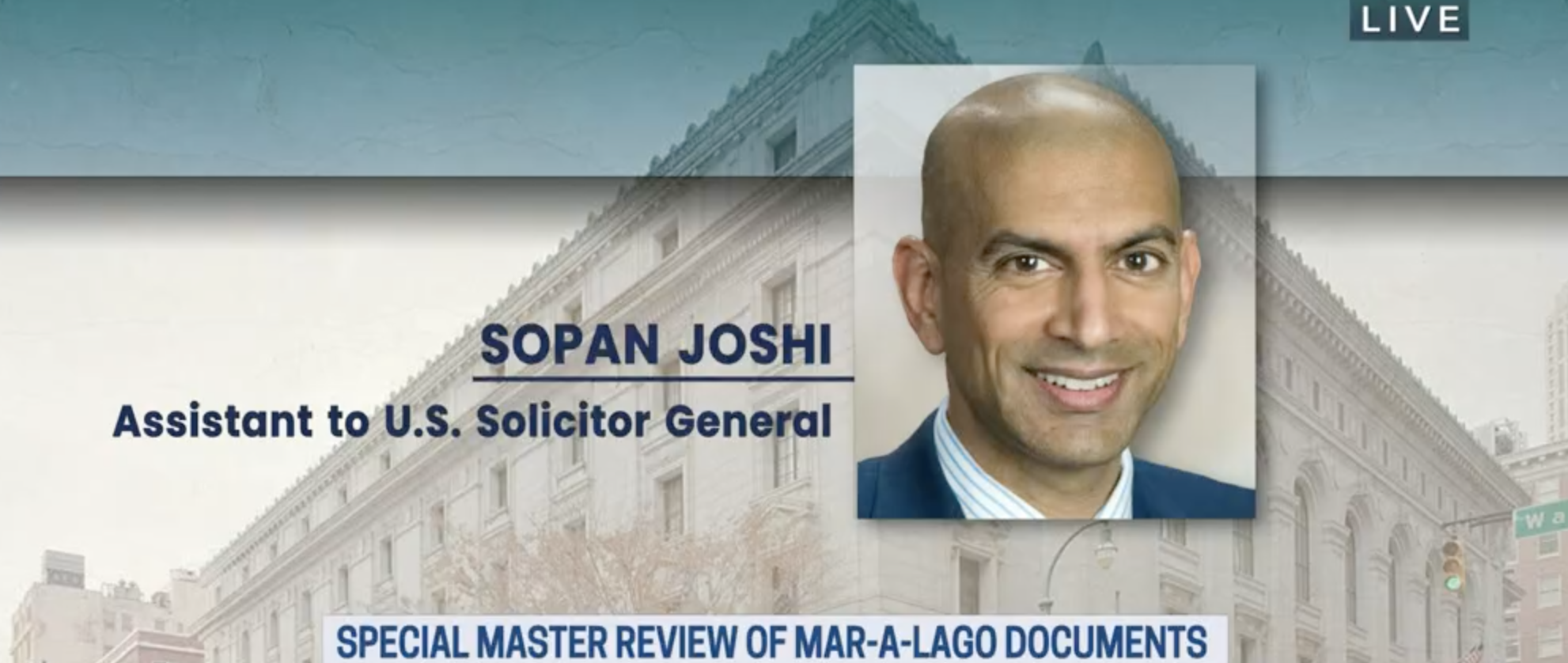
Sopan Joshi, arguing for DOJ, disagreed and walked Judge Pryor through a SCOTUS precedent that says that the Court would necessarily have the authority to reverse the decision entirely.

Joshi must have persuaded, to some degree, because Pryor decided,

If you’re right, what we’re really talking about is a middle position, that is, I was right about vacate but you’re right about the authority to remand with instructions to dismiss. Ordinarily if a District Court lacks jurisdiction, that’s what we do. We vacate and remand with instructions to dismiss.

Joshi replied, “Fair enough, and I’m not going to fight you too hard on it.

Judge Britt Grant then piped in to ask Joshi whether,

We, in your view, if we decide there was not equitable jurisdiction in the first place we wouldn’t need to go through the bases of jurisdiction for the injunction and Special Master or anything like that. The lack of jurisdiction as it was brought would resolve all the questions in your mind. Is that right?

Joshi was pretty happy with that too. “I think that’s right.”

This technical debate, which took up about a quarter of the hearing, not only betrays that at least two of the 11th Circuit Court judges are thinking of how to give DOJ what it wants, but how to do so procedurally. And they seemed persuaded, ultimately, that they should just vacate the entire Special Master appointment altogether, ending the entire Special Master process.

Things didn’t go so well for Jim Trusty, Trump’s lawyer. Just as he started to get going on claims about Biden ordering a search on a political candidate’s home (a lie), Grant interrupted and corrected his use of raid: “Do you think ‘raid’ is the right word for execution of a warrant?”

When Trusty tried to claim that this warrant had been a general warrant, Pryor scolded, “but you didn’t establish that it was a general warrant,” the first of multiple times when the judges reminded Trusty he had not made the arguments he presented today before, not before any court. Grant pointed out that Trusty was misstating what their purported goal was, which was originally to review for privilege.

Then, as Trusty reeled off the things FBI seized that, he said, were incredibly personal, Grant asked, “Do you think it’s rare for the target of a warrant to think it’s overreaching?”

Mic drop!

She was back again, a few minutes later, as Trusty tried to argue what he thought the binding precedent should be, rather than what it was. Grant got to the core issue, which was that Trusty was asking for special treatment.

If you set aside, which I understand that you won’t want to do, but if you do for the purposes of this question, set aside the fact that the target of the search warrant was a former president, are there any arguments that would be different than any defendant, any target of a warrant who wished to challenge a warrant before an indictment.

Trusty tried to reframe her question. “We’re not looking for special treatment for President Trump. We are recognizing there is a context here where no President–”

Pryor interrupted.

I don’t know that that’s particularly responsive. The question was, set aside the fact that the subject of the warrant is the President. What’s to distinguish this from any other subject of a criminal investigation?

When Trusty tried to raise the concerns that he claimed Trump had had all along, Pryor responded, “I don’t see where that case has been made.” Again, Trump didn’t make the arguments he needed to, in September, to get the relief he is demanding now.

That’s when Pryor laid out the real practical problem with Trusty’s claims.

We have to determine when it’s proper for a District Court to do this in the first place, which is what we’re looking at now. And the last question was one posed that makes clear that basically, other than the fact that this involves a former President, everything else about this is indistinguishable from any pre-indictment search warrant. And we’ve got to be concerned about the precedent that we would create that would allow any target of a federal criminal investigation to go into a district court and to have a district court entertain this kind of petition, exercise equitable jurisdiction, and interfere with the Executive Branch’s ongoing investigation.

After Trusty started wailing more about personal documents, Pryor described,

You’ve talked about all these other records and property that were seized. The problem is the search warrant was for classified documents and boxes and other items that are intermingled with that. I don’t think it’s necessarily the fault of the government if someone has intermingled classified documents and all kinds of other personal property.

That’s when Trusty revealed that FBI took a picture of Celine Dion.

Dion, remember, refused Trump’s request to play his inauguration.

Now Trump’s grave injury all begins to make sense! FBI hurt him by taking his Celine Dion picture. All the wailing and screaming since August now begin to make sense.

Trusty went on blathering, claiming — for example — that the injunction hadn’t harmed the government because they had months before and after the seizure to conduct their investigation. When Trusty claimed the injunction was overblown, Pryor invited,

Think of the extraordinary nature from our perspective of an injunction against the Executive Branch in a pre-indictment situation. Under the separation of powers, the judiciary doesn’t interfere with those kinds of prosecutorial and investigatory decisions. Right? That’s the whole nature of this kind of jurisdiction.

After Pryor asked about a new argument Trusty was making, Joshi reeled off the five different arguments that Trump has advanced.

Joshi closed with the practical fear Pryor had raised: If Trump has his way, every “defendant” will demand pre-indictment intervention.

This emphasizes how anomalous and extraordinary what the district court did her was. And I heard Mr. Trusty agree that there was no difference between this and other defendants. And I think that just emphasizes how the anomalous could become commonplace. And we think the court should reverse.

Andrew Brasher seemed more sympathetic to Trusty’s arguments, at one point asking how much more of a delay this would cause, as if he might let this all play out (and that’s what would happen if the 11th didn’t entirely vacate Cannon’s order.

But ultimately, Trump was treated as if not a defendant, then at least someone who could create untenable rights for other defendants, which sounded like something neither Pryor nor Grant were willing to do.

Share this entry

Ransacked! 120 Minutes before 11th Circuit Hearing, Trump Attempts to Create a Fourth Amendment Injury

Less than two hours before the 11th Circuit hearing that may result in Judge Aileen Cannon being reversed for intervening in the Trump investigation, Trump’s attorneys (notably excluding Chris Kise) filed a motion for access to the affidavit for his search.

That this is a transparent attempt to give Judge Cannon some basis to intervene in both the Special Master review and the 11th Circuit appeal has not stopped reporters from treating it as a reasonable request.

It’s not.

Even if all the claims made in it were true, it still wouldn’t provide basis to give Trump the affidavit that (among other things) identifies who he could retaliate against for cooperating with investigators.

One of the most important paragraphs (and footnote) is this one.

Moreover, Plaintiff’s counsel has reviewed most of the seized materials over the last several weeks. The fact the Government took a huge volume of personal and family photographs, newspapers, thank-you notes, campaign materials, books, and golf shirts demonstrates that this search and seizure was nothing more than a general ransacking. 7 This raises serious questions about how the affiant characterized his or her assertion of probable cause and the justification for seizing thousands of personal and private items. Plaintiff must have an opportunity to review the affidavit and determine whether the Fourth Amendment was respected, intentionally subverted, or recklessly violated by a DOJ bent on getting its nose under the Mar-a-Lago tent.

7 A general rummaging through the belongings of President Trump is a particularly ominous moment in law enforcement history. With DOJ and some state officials engaging in various efforts to investigate President Trump, the search smacks of pretextual conduct with hopes of feeding personal documents to prosecutors or agents who might find use for them in unrelated pursuits. Authorization to seize “any other containers/boxes that are collectively stored or found together with the aforementioned documents and containers/boxes” is an invitation to “rummage,” which every court has recognized as barred under the Fourth Amendment. See Andresen v. Maryland, 427 U.S. 463, 480 (1976) (quoting Coolidge v. New Hampshire, 403 U.S. 443, 467 (1971)). [my emphasis]

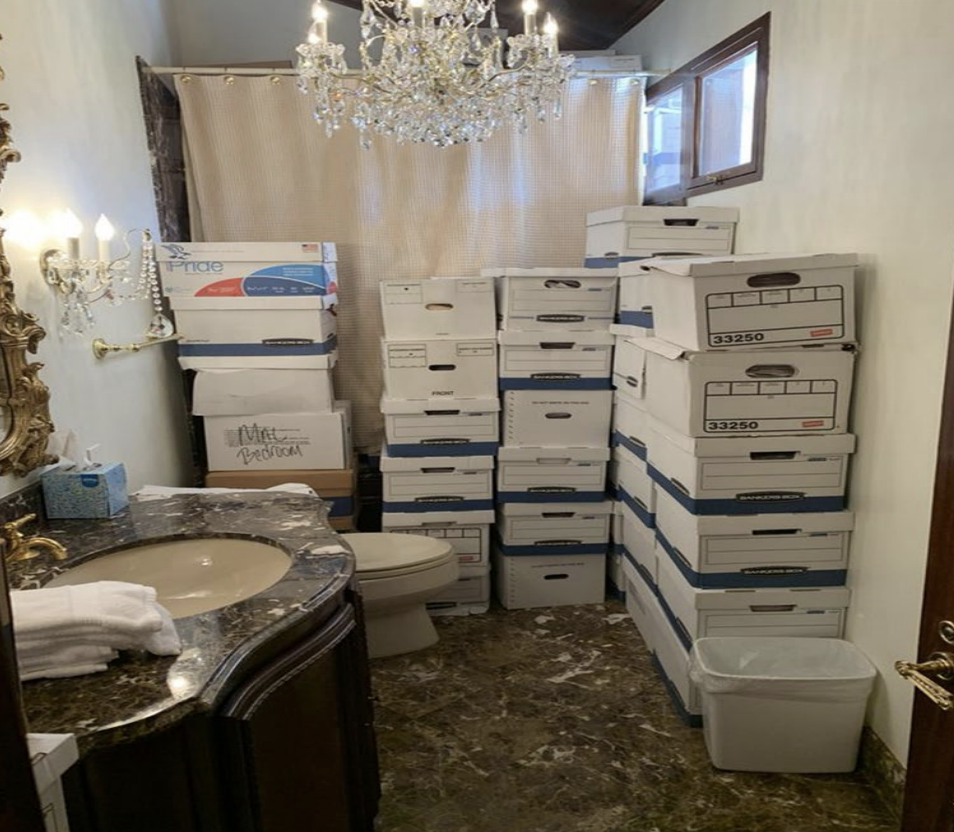
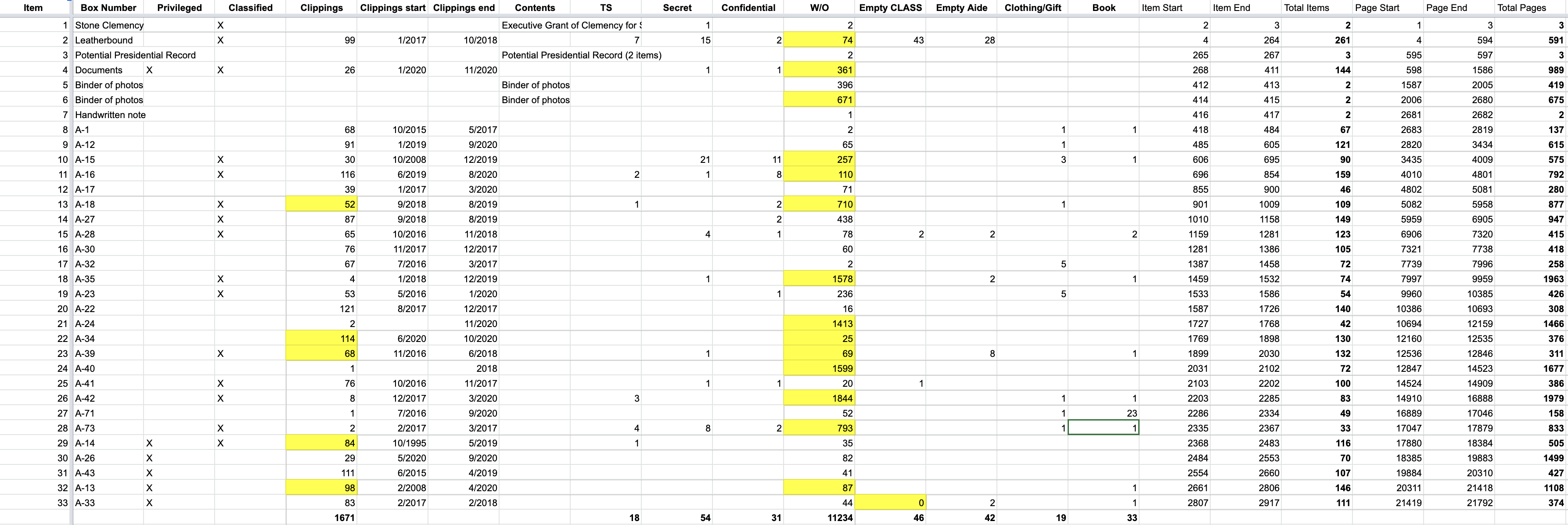
Start with the books and sweaty golf shirts. According to a part of the affidavit that Trump has not contested (the highlighted items below are the ones that changed with an updated inventory), the FBI seized a total of 33 books in the search on August 8, across 33 items seized; the bulk, 23, were all in one box together. That box was likely close to another that had multiple Top Secret documents, as well as a book. Those books got seized because they were next to stolen Top Secret documents. There was likewise a piece of clothing or a gift the box with stolen Top Secret documents. And altogether, there were just 19 gifts or pieces of clothing seized.

That’s what Trump wants you to think amounts to a ransacking.

Many of the other items are actually things about which there is an active dispute before Raymond Dearie (as noted in this filing).

For purposes of the yellow-highlighted Disputes, the Special Master will see that three issues account for the overwhelming majority of disputes. From the government’s perspective, the three conceptual issues are:

1. Annotations. – Books, magazine articles, and newspaper clippings with markings are original Presidential records.

2. Thank you notes for presidential acts or events. – Thank you notes reflecting gratitude for acts taken in the course of official duties are Presidential records.

3. Briefing book compilations with indexes. – Briefing material and other work product prepared by presidential staff for the President are Presidential records.

Trump wants to claim press clippings on which he made annotations are personal; the Presidential Records Act says otherwise. Trump wants to claim that thank you notes sent to him in his role as President are personal; the Presidential Records Act says otherwise.

Among the campaign materials taken were several letters written by Kurt Hilbert about stealing the election in Georgia, as well as something written by Cleta Mitchell. Sure, those are campaign materials. They are also evidence of a crime. They were also returned already, and could have been returned earlier had Judge Cannon not intervened.

Trump’s claim that it is unusual for the FBI to seize personal materials as part of a search warrant (bolded above) is particularly ridiculous, not least because Plain View doctrine clearly says that DOJ can refer items seized with a warrant for prosecution.

But it’s particularly notable given this language in the order appointing Jack Smith.

The Special Counsel is authorized to prosecute federal crimes arising from the investigation ofthese matters. The Special Counsel is also authorized to refer to the appropriate United States Attorney discrete prosecutions that may arise from the Special Counsel’s investigation.

It permits Smith to refer things for further prosecution, including (presumably) any evidence of a crime he sees in the materials seized from Mar-a-Lago.

At this late hour, after being reversed once already, Judge Cannon is unlikely to get further over her skis.

But it likely will come up in the hearing starting in (now) 45 minutes, so Jim Trusty can claim, for the first time, that there has been a Fourth Amendment violation that merits Judge Cannon’s intervention under Richey.

Update: Even though improper to do so procedurally, Trusty did raise this argument, over and over at the hearing (he even complained that the FBI had taken Trump’s Celine Dion photo). That led both William Pryor and Britt Grant to observe that Trump’s argument kept changing over the course of the litigation before the 11th Circuit. Sopan Joshi, arguing for DOJ, laid out five such changes.

More importantly, the Chief Judge of the 11th Circuit noted that the reason so many personal items were seized is because Trump chose to store stolen classified records with his personal belongings.

You’ve talked about all these other records and property that were seized. The problem is the search warrant was for classified documents and boxes and other items that are intermingled with that. I don’t think it’s necessarily the fault of the government if someone has intermingled classified documents and all kinds of other personal property.

I don’t think Judge Cannon will be in a position to act on this motion for very long, but I think this comment from Pryor would give her pause before she did so anyway.

Share this entry

11th Circuit Showdown: The Fight to Get the Documents to Charge against Trump

A 2PM Eastern today, an 11th Circuit panel including William Pryor, Britt Grant, and Andrew Brasher will consider DOJ’s expedited motion to overturn Judge Aileen Cannon’s decision to appoint a Special Master. Oral arguments should be available here. The briefs are here:

Grant and Brasher were on the panel that already held that Cannon erred in intervening given that there was no evidence of callous disregard for Trump’s rights, so I fancy DOJ’s chances. That said, there’s no predicting how Pryor would rule, and if he were to support Trump’s support for Tom Fitton’s erroneous theory that there was no basis to question a President’s designations of something as a personal document, it might cause difficulties for an eventual prosecution.

For the reasons I laid out here, the decision the 11th Circuit makes, and how quickly they make it, will dictate how quickly DOJ could charge the stolen document case. DOJ likely has already discussed what documents they could charge without creating more national security damage. But particularly for any document that mixes classified documents with unclassified ones, DOJ first has to ensure possession of the documents they would charge before indicting (or even using the documents in interviews with Trump’s associates).

Two documents that are likely to be charged also include unclassified information:

  • The 11-page document compiling a confidential document, a secret document, messages (all post-dating Trump’s presidency) from a pollster, a religious leader, and a book author, as well as a document over which Trump has claimed privilege. This document would show that someone in Trump’s office accessed classified documents after leaving the White House and may show Trump using classified documents for his own benefit. The document was stored in a desk drawer in Trump’s office.
  • The packet including clemency for Roger Stone, which includes a one-page and a two-page document, one of which (presumably the information on the French President) is classified secret. This was also stored in a drawer in Trump’s office, though not necessarily the same one as the compilation. There’s no reason for Trump to include an official pardon in his desk drawer, but the tie between the Stone clemency and Macron may well explain why he did so. Given how Stone insinuated he would harm Trump if he wasn’t pardoned, the reasons Trump kept the document close at hand are likely to be quite interesting.

Trump’s team has been aggressively trying to prevent DOJ from keeping possession of these documents, by claiming that the first packet is both personal, attorney-client, and Executive privileged, and by claiming that other pardon packets can be Trump’s personal possession. It’s highly likely that Raymond Dearie will rule for DOJ on both those disputes. But if and when he does, Trump would object and Aileen Cannon would get to consider it anew.

That would make these documents unavailable for investigative purposes until after the new year. Whereas, if the 11th Circuit rules for DOJ, the government would be able to present these to a grand jury within weeks (assuming a quick decision and SCOTUS declining to review the decision, as happened with the last decision).

Share this entry