
Huge Backlog Remains in Karachi for NATO Supplies; Driver Killed Near Peshawar

The Express Tribune reports today that despite the fact that the NATO supply route through Pakistan reopened three weeks ago, the huge backlog of thousands of trucks at the port in Karachi has still not yet seen the first truck leave. The trucks that are moving along the supply route at this time are those that were at or close to the border at the time of the closing. We also learn that today marked the first attack on a supply convoy inside Pakistan since the route reopened, with one driver being killed by gunmen.

The number of trucks and cargo containers waiting in Karachi is huge:

The ban on Nato supplies routes through Pakistan may have officially been lifted three weeks ago but the containers carrying goods for international forces stationed in Afghanistan remain stranded at the Karachi Port Trust (KPT).

/snip/

“There has been no clearance of Nato cargo at KPT so far, but we expect the process will begin in the current week,” Hayat told The Express Tribune adding there was no hindrance on the part of the KPT as consignees needed to get their cargoes cleared from the customs department.

There are 3,851 vehicles and 1,983 containers belonging to Nato currently stranded at the KPT.

NATO owes a large bill for storage during the long closure of the route:

When the supply routes were resumed some three weeks ago, port authorities expected to receive up to Rs2.2 billion from Nato for storing its containers and vehicles for an extended period of time. Known as demurrage charges, the expected amount has now exceeded Rs2.5 billion, according to Hayat.

Meanwhile, a small convoy of trucks was attacked near Peshawar:

Gunmen in the outskirts of Peshawar Tuesday attacked a container truck carrying supplies to Nato troops in Afghanistan, killing the driver, officials said.

/snip/

Tuesday’s attack took place near the market in Jamrud town on the outskirts of Peshawar, the main city in the troubled northwest, local administration official Bakhtiar Khan said.

“Two armed men riding on a motorbike opened fire on a container carrying supplies for Nato troops across the border and killed its driver,” Khan told AFP, adding that the driver’s helper was seriously wounded.

Another administration official said the truck was part of a convoy of three or four vehicles travelling without security protection when they came under attack.

Although they have not yet claimed responsibility, it seems likely the Pakistani Taliban carried out the attack:

However, the Pakistani Taliban had threatened earlier to attack the supply trucks and kill its drivers if they tried to resume supplies to troops in Afghanistan, and right-wing and extremist religious groups have held large demonstrations against the resumption of supply lines.

Tehreek-i-Taliban Pakistan (TTP) spokesman Ehsanullah Ehsan had told AFP that the Taliban “will not allow any truck to pass and will attack it,” hours after Pakistan confirmed it had decided to reopen vital Nato supply routes into Afghanistan which have been closed since November.

“We will not only attack the supply truck but will also kill the drivers (of Nato supply trucks),” Ehsan had said.

Clearing the backlog from Karachi and getting the supplies through Pakistan into Afghanistan is looking like it will be a very long, expensive and dangerous process.
Share this entry

When Green on Blue Attacks Aren’t “Technically” Green on Blue Attacks

On April 30, AP’s Robert Burns revealed that the number of attacks on NATO soldiers by Afghan military and police had been systematically under-reported because only attacks resulting in fatalities were reported. An attack in Herat, Afghanistan over the weekend now raises the possibility that another category of Afghan attacks on personnel associated with the NATO coalition’s efforts is also under-reported. In Sunday’s attack, three contractors involved in training Afghan forces were killed, but the Reuters report on this attack mentions that since those killed were contractors and not military personnel, the attack was not “technically” a green on blue attack. Ironically, Burns’ exposure of the under-reporting on non-fatal attacks has resulted in at least some them now being reported, and there was one today.

Burns’ report opens with his discovery of the under-reporting:

The military is under-reporting the number of times that Afghan soldiers and police open fire on American and other foreign troops.

The U.S.-led coalition routinely reports each time an American or other foreign soldier is killed by an Afghan in uniform. But The Associated Press has learned it does not report insider attacks in which the Afghan wounds — or misses — his U.S. or allied target. It also doesn’t report the wounding of troops who were attacked alongside those who were killed.

CNN was the first to report the Herat attack yesterday. It is important to note that they first cite information from an Afghan police official before they cite NATO:

An Afghan policeman opened fire at a training center in western Afghanistan on Sunday, killing three Americans, a police official told CNN.

The Afghan official, who declined to be named, said the three victims were most probably trainers at the West Zone Police Training Center in Herat province. The shooter was also killed, the official said.

NATO spokesman Maj. Adam Wojack said the three killed were civilian contractors working for the International Security Assistance Force. He could not confirm their nationality or what their specific jobs were.

Today’s story from Reuters on the multiple NATO-related deaths in Afghanistan yesterday has the line about this event not “technically” being a green on blue event: Read more

Share this entry

Taliban Role Large in Green on Green Attacks

At least eleven Afghan soldiers were killed yesterday in two separate attacks. The Taliban has claimed responsibility for both attacks. In the Washington Post’s coverage of the attacks, they take second billing to the attack on the NATO fuel tankers. In both cases, however, apparent Afghan soldiers were involved in the attacks on their fellow troops:

Afghan authorities were investigating whether the checkpoint attack in Helmand’s remote and arid Washer district was organized with the help of an Afghan soldier whose whereabouts since the raid were unknown, said Daud Ahmadi, a spokesman for Helmand’s governor.

“Police reinforcements were sent, and they killed seven Taliban in gun battles,” Ahmadi said.

“We suspect the missing soldier was involved in a plot in the killings of the nine army soldiers but have to investigate this point,” he said.

/snip/

Also Wednesday, a man wearing an Afghan army uniform blew himself up at a checkpoint in the eastern province of Logar, killing three Afghan troops, the Associated Press reported. The Taliban asserted responsibility for the attack.

The New York Times devotes a separate article to the two attacks, and places it in a larger context of increasing deaths among Afghan troops, many of which they attribute to Taliban infiltration of the ranks of Afghan forces. [The Times places the death toll at 11 instead of 12, reporting only 2 deaths in the suicide bombing instead of 3.] The Times notes the strategy behind the Taliban’s attacks:

With the American-led coalition increasingly ceding a greater role in the fight to Afghan forces, one of the chief aims of the Taliban and its insurgent allies has been to show that the Afghan Army and police force are incapable of protecting themselves, never mind ordinary people.

The article goes on to note that there have been 227 deaths of Afghan forces in the last four months, compared to 162 coalition deaths. A rather harsh explanation is provided for why this is noteworthy:

While General Azimi offered no comparative data for Afghan casualties during the same period in previous years, the Afghan Army has in the past often suffered fewer deaths than coalition forces because its soldiers tended to back away from fighting the Taliban.

The Times discusses the infiltration strategy of the Taliban while relaying results of an Afghan court convicting an Afghan soldier in an earlier green on blue attack that killed 4 French soldiers:

The Taliban said the convicted soldier was an infiltrator and praised him for his bravery. The insurgents routinely claim as their own Afghan soldiers who turn their weapons on coalition allies, although coalition and Afghan officials say most of the cases appear to be caused by personal animosity, not insurgent infiltration.

Since coalition reporting of green on blue events is so short on details, discriminating between true infiltrators and events where “personal animosity” takes over on the spur of the moment is not possible in all cases. However, yesterday’s event in which an Afghan soldier facilitated an attack by a larger group of the Taliban on an outpost is not the first time we have seen evidence of obvious coordination between an Afghan soldier and an outside group of attackers. Infiltration seems certain in these sorts of attacks.

The issue of infiltration is a bit murkier in the case of the suicide bomber. The Times points out that Afghan army uniforms are readily available for purchase. Since Afghanistan maintains a biometric database on its forces, if the suicide bomber’s body can be fingerprinted or a face or iris scan can be carried out, it will be possible to say with some certainty whether he was a member of the Afghan forces. Given the coalition’s hesitance to provide details, however, it seems very unlikely the results of such an analysis will be released.

Share this entry

Taliban Destroy 22 Supply Trucks in Afghanistan: No “Protection” Money on Northern Route?

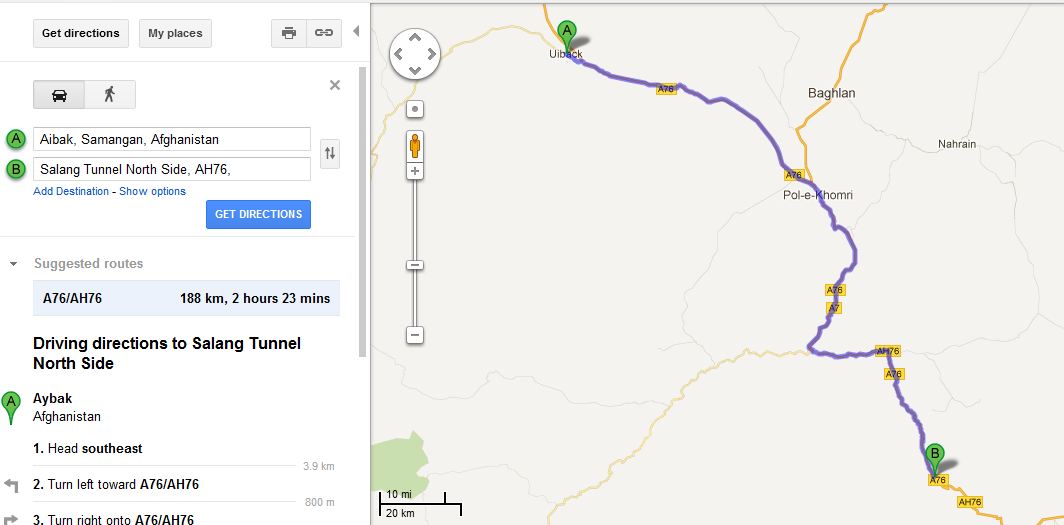
Google Map showing relative locations of Aibak and the Salang tunnel in Afghanistan. (Click on map for a larger view.)

When the flow of supply trucks through Pakistan into Afghanistan restarted earlier this month, I pointed out a report from the Express Tribune on the large amounts of cash paid to the Taliban as “protection” money. A detail in that report is that the protection money paid is to “Afghan Taliban and local militants who are active on the Pak-Afghan borders”.

Today, the Taliban have claimed responsibility for an attack that destroyed 22 NATO supply trucks, most of which were fuel tankers. The attack was in Aibak, in Samangan province. The screen capture of a Google map of the area shown here indicates that Aibak is only 117 miles from the northern opening of the Salang tunnel that is the key choke point on the “northern route” that NATO used for supplies while the Pakistan crossings were closed. Does today’s attack mean that the Taliban in the north of Afghanistan have now placed a marker indicating that protection money will have to paid to them as well? It is not clear whether they were paid protection money while the Pakistan route was closed and it has now stopped or if they are angling for a hefty protection fee when this route is used for evacuation of NATO equipment as the drawdown moves into its active phase soon.

Here is Reuters’ description of the attack:

 A bomb planted by the Taliban destroyed 22 NATO trucks carrying supplies to their forces in northern Afghanistan, the Taliban and police said on Wednesday.

Eighteen fuel trucks and four supply vehicles were parked in Aibak, the capital of Samangan province, when a bomb ripped through them, wounding one person, local police said.

“At 2 a.m. the mujahideen attacked the invader NATO trucks,” the Taliban said in a statement, referring to the wagons which had been driven from Uzbekistan to Afghanistan’s north.

The Taliban in this region have been flexing their muscle lately:

The trucks were attacked in the same province where prominent anti-Taliban lawmaker Ahmad Khan Samangani was killed on Saturday at his daughter’s wedding, in a suicide bomb attack that killed 22 other guests.

It will be very interesting to see if reports of protection money along the norther route begin to surface.

One more aspect of this attack bears watching. From the AP story on the attack as carried by Dawn:

 ”We put explosives on a fuel tanker. When it exploded, we fired on the trucks,” Taliban spokesman Zabiullah Mujahid told The Associated Press in a telephone call.

Sidiq Azizi, a spokesman for the province, said many tankers and semi-trailers caught fire after the bomb went off around 2 a.m.

By mid-day, heavy black smoke still poured from the Rabatak area of the province where the truckers had stopped to rest. Firefighters were spraying water on the burning vehicles.

”There was a big boom,” Azizi said.

”It’s possible that is was a magnetic bomb from insurgents. We are investigating.”

The referral to a magnetic bomb is interesting. Going back to the Reuters report:

Separately, police in neighboring Baghlan province said they had detained 10 suspected Taliban members with so-called magnetic bombs, which they were trying to attach to supply trucks.

Will NATO try to assert that the magnetic bombs are supplied by Iran? Recall that Iran was accused of using a magnetic bomb in India to attack an Israeli diplomat in reprisal for the presumed Israeli magnetic bombs that have been used to kill Iranian nuclear scientists. The US made accusations of Iran helping the Taliban back in 2010 but never provided conclusive evidence for the Sunni Taliban and Shia Iranian regime working together. Will the accusations resurface based on the magnets?

Share this entry

More Damage from Panetta’s Vaccine Ruse: UN Doctor on Polio Vaccine Drive Shot; Hundreds of Thousands Denied Polio Vaccine

As one of only three countries in the world where polio is still endemic, Pakistan launched a three day vaccination drive yesterday with a target of vaccinating the 318,000 children in North and South Waziristan who have not received their vaccinations. Across all of Pakistan, the goal is to vaccinate 34 million children under the age of five. The drive is being held despite a push by the Taliban to prevent vaccinations in tribal areas. The Taliban’s ban on vaccinations is aimed at stopping US drone strikes in the tribal areas and is in response to the vaccination ruse by the CIA.  Dr. Shakeel Afridi pretended to be doling out hepatitis vaccines in a failed attempt to retrieve DNA samples for the CIA from the bin Laden compound when it was under surveillance prior to the attack that killed Osama bin Laden. Today, a UN doctor and his driver were wounded when a shooter opened fire on them in Karachi. The doctor was reported to be working on the vaccine program.

Dawn reported yesterday that a jirga was convened today in the tribal areas to try to find a solution to the Taliban’s vaccine ban. That article gives good background information on the ban:

Although a nationwide anti-polio campaign was launched on Monday, the authorities were yet to convince the Taliban shura on the importance of getting children of North and South Waziristan vaccinated against the debilitating disease.

/snip/

Commander Hafiz Gul Bahadur, who leads the powerful Taliban Shura, had banned the anti-polio drive in North Waziristan on June 16 and said that children would not take polio drops unless the government stopped drone strikes in the area.

He was followed by Commander Mullah Nazir in South Waziristan and other militant commanders in FRs D.I. Khan and Kohat.

In South Waziristan, the ban is much stricter because it prohibits vaccination against all eight childhood diseases, including polio.

“We have asked health workers to be careful and don’t put their lives at risk,” the official said, adding that they were waiting for the government’s response.

However, the Taliban ban is not the only barrier to vaccines:

He [the official quoted above] said the military operation in Orakzai and Khyber agencies was one of the factors which deprived children of the much needed vaccines.

Just the two tribal agencies of North and South Waziristan account for a large number of unvaccinated children: Read more

Share this entry

Rehman: Drones in Pakistan “Radicalize Footsoldiers, Tribes and Entire Villages”

I had missed Christiane Amanpour’s Monday evening interview with Pakistan’s Ambassador Sherry Rehman, but an article in today’s Express Tribune alerted me to it. Video from the interview is embedded above. Putting aside the ridiculous crap added by CNN producers (I’m assuming Amanpour has better journalistic sense than to clutter news with this crap) alluding to “the marriage from hell” and the god-awful Elton John reference, the key revelation in the interview is that Rehman maintains that even though the US apologized and Pakistan reopened supply routes, that does not mean that Pakistan has agreed to more drone strikes. Further, Rehman emphasized how the strikes produce more insurgents.

From the Express Tribune article:

In an exclusive interview with CNN’s Christiane Amanpour, Ambassador Rehman said America’s drone war “radicalises foot soldiers, tribes and entire villages in our region. And what we see, really, is that increasingly Pakistan is feared as a predatory footprint.”

In response to a question, she denied the assertions that apology over the Salala incident meant that Pakistan had allowed the drone programme to continue. However, she said that the apology over the incident that killed 24 Pakistani soldiers has “opened the space for an opportunity where we can have constructive conversations that might be to the satisfaction of both sides. Right now, we have not given a go-ahead at all”.

But she categorically emphasised that Pakistan’s concerns over the drone strikes could not be ‘brushed aside’.

Ambassador Rehman said that CIA’s covert drone war ‘tests’ the relationship between Pakistan and the US at every juncture. “We honestly feel that there are better ways of eliminating al Qaeda now, which can be done with our help. And we have been doing that consistently. We’re the heavy lifters in this relationship.”

CNN chose not to include in the video this bit of the interview which the Express Tribune found significant:

When questioned about whether Pakistan accepted the accounting of how the Obama administration identified militants, Rehman said it was worrisome “because this leads to what you call signature strikes, if I’m not mistaken, where a certain level of suspected activity generates or motivates the trigger for – I really don’t know what motivates the trigger for X level or Y level of drone strikes.”

I guess CNN doesn’t want us worrying about how the Obama administration might be killing people who don’t deserve it. That would upset the bullshit story they are trying to reinforce. They probably should add a note warning us not to read Glenn Greenwald on this question, either.

At least Rehman understands that when you take the signature strike concept to its extreme and send in follow-on strikes to hit people who are digging through the rubble of the first strike in a search for possible survivors, you are going to radicalize those most closely affected by these actions: the tribes and villages who lose members in these horrific strikes. The CIA’s choice to kill in this manner is clearly assuring the CIA of an even larger group of targets in the future, because for each victim killed in this manner, many new insurgents take up arms.

Share this entry

McClatchy Exposes NATO Lies on Afghan Force Capability

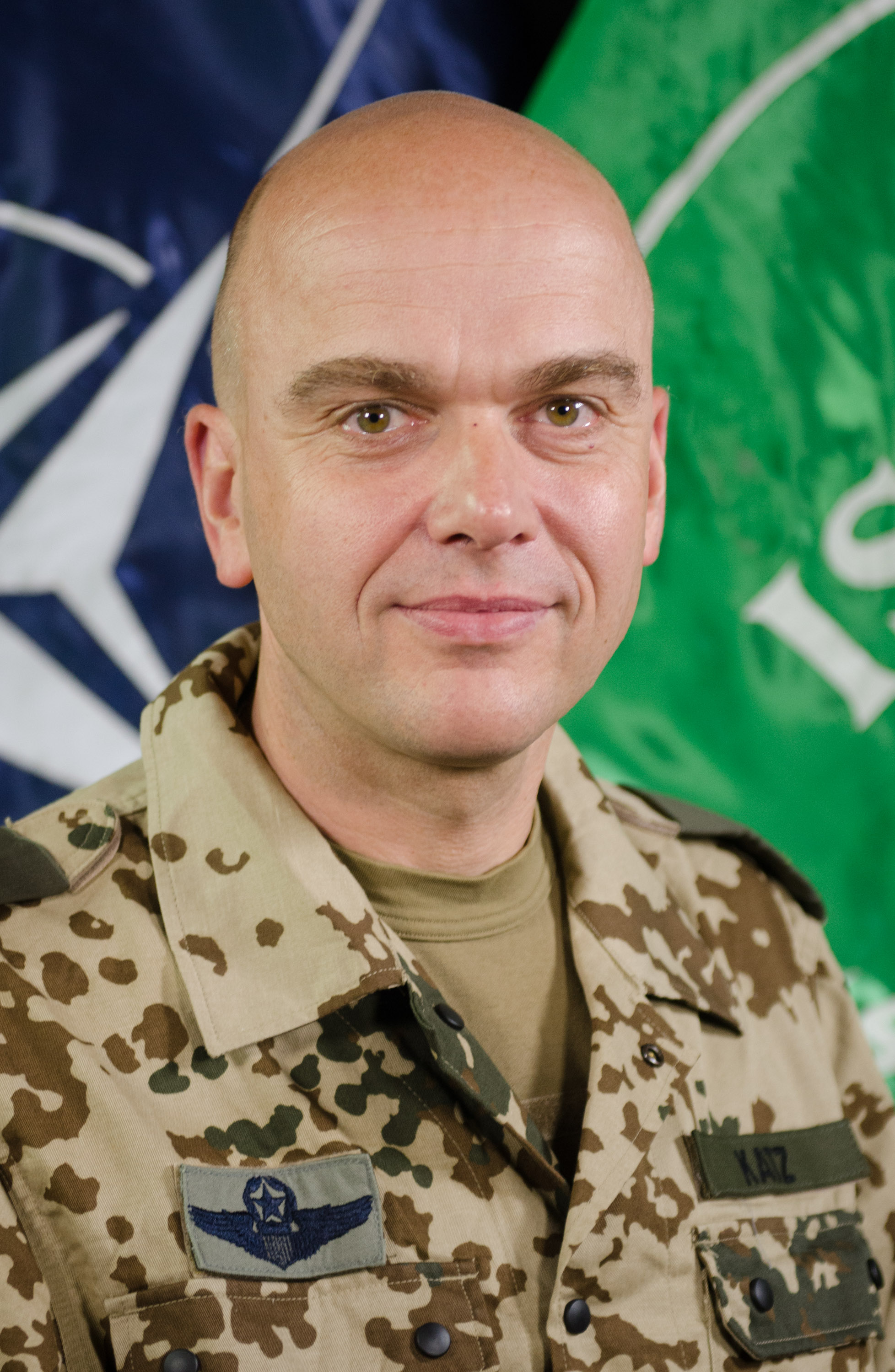
According to ISAF, Geunter Katz has been their spokesman only since June, 2012. He appears to be off to quite a start on spinning falsehoods.

Back in April, I noted that it appeared that NATO was engaged in an effort to bolster the image of Afghan forces by overstating their role in repelling insurgent attacks, assigning capabilities to them that seemed suddenly much higher than seen in previous descriptions. Yesterday, Jon Stephenson of McClatchy confirmed that NATO is indeed overstating the capabilites of Afghan forces, providing both direct observation of an event in which NATO lied about the role of Afghan forces and interviews with Afghan commanders who confirm that NATO is lying about their capabilites.

Here is how I described the sudden change in NATO behavior in April, in a post titled “NATO Response to Taliban Attacks: Pump Up Image of Afghan Forces“:

 Because it is clear that the Obama administration steadfastly refuses to address its rapidly failing Afghanistan strategy prior to November’s elections, NATO is forced to labor under the increasingly difficult prospect of handing over security responsibility to Afghan forces as the surge of NATO troops is drawn down this summer and then remaining combat troops are withdrawn over the next two years. In a desperate attempt to make that process less ludicrous, NATO chose to respond to this weekend’s coordinated attacks by the Taliban by burnishing the image of Afghan security forces. After suffering greatly from repeated “isolated incidents” of Afghan forces killing NATO forces and with the devastating reports of the ineptitude and duplicity of Afghan forces from Lt. Col. Daniel Davis, the tarnished image of Afghan forces threatens to derail the planned “victory” scenario of departing Afghanistan by handing over security to Afghan forces.

The McClatchy article published yesterday confirms my suspicions from April. First, Stephenson demonstrates that NATO is lying about public perceptions in Afghanistan on Afghan force capabilities:

Despite the recent spike in violence, and ongoing questions about the readiness and reliability of Afghan forces, Gen. Katz said that the war in Afghanistan was going according to plan and that Afghan forces were becoming “more and more capable.”

However, Afghans interviewed by McClatchy over the weekend were deeply skeptical about the ability of their country’s forces to protect them once foreign forces leave. On Monday, Katz told McClatchy that the coalition’s own research showed that many Afghans were positive about the Afghan National Security Forces.

“When we go out and ask the people on the street . . . they’re saying they have confidence in the ANSF,” Katz said. “They are confident that, by the end of 2014, they will be capable of doing the job.”

Particularly important is how McClatchy exposed a direct lie from NATO on an operation to repel an insurgent attack: Read more

Share this entry

Deadly Fallout from Reopening of Pakistan Border Crossings: Taliban IED’s, US Drone Strikes on First Responders

Last week, US Secretary of State Hillary Clinton apologized to Pakistan over the November attack on a Pakistan border post in which the US killed 24 Pakistani troops. The apology was delivered on Tuesday and the first supply trucks passed through the Chaman border crossing into Afghanistan on Thursday (who knew Pakistan took July 4th off?). I noted on Thursday that the Express Tribune was reporting that “protection money” would once again be flowing to the Taliban in Afghanistan to secure safe passage for the supply convoys. I asked if we would see an uptick in Taliban attacks on NATO due to the increased cash flow. Sadly, it did not take long for an answer to that question, as the Taliban today has claimed responsibility for an IED attack yesterday that killed six Americans. And just in case you were wondering whether the reopening of the border crossings meant that the US would curtail drone strikes inside Pakistan, the US struck on Friday, just one day after the crossings opened. This was a particularly brutal attack, with missiles striking initially and then in at least two follow-up strikes at the same site. It seems likely that at least some of those targeted in the follow-on strikes may have been rescue personnel.

Here is my question from Thursday on whether the Taliban will be able to step up attacks on NATO due to increased cash flow from protection money:

It will be very interesting to see whether the Afghan Taliban is suddenly able to bring more weapons and IED’s into their attacks on NATO now that they have a renewed source of funding.

The Washington Post describes the IED attack that killed six Americans and the Taliban claiming responsibility:

All six troops killed in a weekend roadside bombing in eastern Afghanistan were Americans, NATO confirmed Monday.

/snip/

The Taliban on Monday claimed responsibility for the deaths of the six U.S. troops — the latest caused by bombs planted by insurgents along roads, paths or mountain tracks.

Taliban spokesman Zabiullah Mujahid said in a statement the blast struck the U.S. troops in their armored vehicle around 8 p.m. Sunday in Wardak province, just south of Kabul.

But the Taliban were busy, as that was not their only attack:

Also in the east, authorities said gunmen assassinated a chief prosecutor in Ghazni province Monday morning as he drove to work. Mohammad Ali Ahmadi, the deputy provincial governor, said Sahar Gul was shot twice — once in the head and once in the chest.

The Taliban routinely target Afghan government officials to weaken support for President Hamid Karzai’s administration.

It appears that despite Pakistan’s continued protests over US drone strikes, the US did not slow drone strikes either just before or just after the agreement that allowed the border crossings to reopen. There was a strike on July 1, just two days before Clinton issued her apology and then the strike on Friday, just one day after the first supply trucks in over six months crossed into Afghanistan.

More details on Friday’s strike come from al Jazeera:

At least 21 people have been killed in drone strikes in Pakistan’s North Waziristan days after the South Asian country agreed to reopen the NATO supply routes into Afghanistan.

According to official sources, six missiles were fired from a US drone at a compound in Gharlamay village of Datta Khel town near the border with neighbouring Afghanistan.

Security officials identified the dead as “militants”.

/snip/

The initial strike on a house killed nine. Then three others were killed in a second attack when they drove to the site to recover dead bodies. And a third drone killed another three five minutes later, a senior security official in Peshawar told the AFP news agency.

So not only is the US continuing to send drones into Pakistan when Pakistan’s citizens are demanding a stop to the practice, the worst aspects of those attacks are continuing. Even though it has been pointed out very clearly that it is US policy to send follow-on attacks on sites while rescuers are looking for victims of the attack and the UN has pointed out that this practice constitutes a war crime, the US continues the practice in the most offensive way possible by repeating it only one day after an event that could have been a major step forward in US-Pakistan relations.

Even though earlier in the year he may have been trying to dodge war crime accusations, John Brennan now has become a honey badger. He don’t care about war crimes or demands from Pakistan’s citizens and government.

Share this entry

NATO Supply Shipments Through Pakistan Resume With Payments to Afghan Taliban Instead of Pakistan

After US Secretary of State Hillary Clinton issued an apology to Pakistan on Tuesday, the first supply trucks entered Afghanistan from Pakistan this morning. Although there had been suggestions during the negotiations to re-open the supply lines that were closed last November after the US killed over 20 Pakistani troops at a border post that Pakistan would charge a “toll” of up to $5000 per container shipped through the country, no fees to Pakistan are being paid. There does, however, appear to be an agreement in the works under which the US will re-pave the highway destroyed by the supply convoys. The Express Tribune is reporting this morning that extortion payments from the US to the Afghan Taliban for “protection” of the convoys, a practice that was in place prior to closure of the supply routes, will resume.

Here is the apology Clinton delivered to her counterpart in Pakistan:

This morning, I spoke by telephone with Pakistani Foreign Minister Hina Rabbani Khar.

I once again reiterated our deepest regrets for the tragic incident in Salala last November. I offered our sincere condolences to the families of the Pakistani soldiers who lost their lives. Foreign Minister Khar and I acknowledged the mistakes that resulted in the loss of Pakistani military lives. We are sorry for the losses suffered by the Pakistani military. We are committed to working closely with Pakistan and Afghanistan to prevent this from ever happening again.

As I told the former Prime Minister of Pakistan days after the Salala incident, America respects Pakistan’s sovereignty and is committed to working together in pursuit of shared objectives on the basis of mutual interests and mutual respect.

Reuters brings us the news of the first trucks passing from Pakistan into Afghanistan:

A pair of trucks carrying NATO supplies crossed into Afghanistan on Thursday, Pakistani customs officials said, the first time in more than seven months that Pakistan has allowed Western nations to use its roads to supply troops in Afghanistan.

Customs officials said the container trucks had passed through the Chaman border crossing into southern Afghanistan, a milestone following a deal this week with the United States ending the impasse triggered by the killing of 24 Pakistani soldiers by U.S. aircraft last November.

/snip/

While Pakistan got the apology it wanted for the November border killings, the government agreed to drop demands to raise fees on supply trucks going into Afghanistan.

Instead of getting direct fees for the trucks passing through Pakistan, it appears that the US will rebuild highways destroyed by them: Read more

Share this entry

Albright Attempts to Deflect Neutron Activation Issue at Parchin

On May 15, I pointed out that the claims associated with the cartoon published by George Jahn of AP purporting to depict a high explosives chamber used by Iran at Parchin (this is a new link for the cartoon, the AP link in the May 15 post no longer works for me) and in a report by David Albright claiming that Iran has taken actions aimed at cleansing the Parchin site were rendered baseless by the likelihood that if the accused work on a neutron initiator for a nuclear weapon had indeed been carried out at Parchin, then the chamber would be rendered radioactive throughout the thickness of its steel by the process of neutron activation. Yesterday, Albright published even more photos of the Parchin site that he claims document further cleansing activity and in the discussion section of his report he finally addressed the issue of neutron activation. In order to make the issue of neutron activation go away, Albright is now proposing that  the uranium deuteride presumed to be present in the explosion would produce too low a flux of neutrons to produce appreciable neutron activation of the chamber’s steel, even though Jahn is claiming that the Iranians placed a neutron detector outside the chamber, presumably to measure the neutron flux that passed through its steel walls.

Here is the relevant portion of a 2009 report by Albright describing the neutron initiator:

If the data in this document are correct and the descriptions of the work are accurate, then this report appears to be describing a plan to further develop and test a critical component of a nuclear weapon, specifically a neutron initiator made out of uranium deuteride (UD3), which when finished (and subsequently manufactured) would most likely be placed at the center of a fission bomb made from weapon-grade uranium. This type of initiator works by the high explosives compressing the nuclear core and the initiator, producing a spurt of neutrons as a result of fusion in D-D reactions. The neutrons flood the core of weapon-grade uranium and initiate the chain reaction.

Albright goes on to describe the issue of producing neutrons and measuring their production:

The measurement of the neutrons emitted by this UD3 source would be the hardest measurement Iran would need to make in developing a nuclear weapon. This assumes that Iran believes it cannot do a full-scale nuclear test, although it would be expected to do a “cold test” of the full device as a way to gain confidence the nuclear weapon would perform as expected. . . The timing of the explosion and resulting shock waves would need to be perfect in order to get enough fusion to create a spurt of neutrons in a reliable manner at exactly the right instant. The experiment itself is very difficult to do. There are relatively few neutrons emitted in a brief period of time and there is a lot of noise from the electronics that interferes with the neutron measurements.

It should be noted here that although Albright is discussing a “cold test”, that means the test is carried out without the weapons grade uranium which the initiator sets off in the nuclear explosion. The uranium deuteride is still present as the primary part of the initiator and is producing the neutrons which are to be measured. Although Albright does claim that few neutrons are produced in the explosion in the latter part of the description, he refers to a “spurt” of neutrons that “flood” the weapons grade uranium in the earlier portion. The fact remains that in such an experiment, significant quantities of uranium are present and there would be neutrons released into the steel of the chamber the entire time the uranium is present, not just during the brief explosion.

As further support for the uranium deuteride initiator being the primary focus of the narrative promoted by Albright and Jahn, it should be kept in mind that Jahn mentions that the chamber is “equipped with” “a neutron detection system outside the explosion chamber to measure neutron emissions”. Jahn goes on to quote another expert who posits the use of uranium in the experiments with explosives: Read more

Share this entry