The Checkered Neocon History of Mansoor Ijaz, Instigator of Pakistan’s “Memogate”

[youtube]http://www.youtube.com/watch?v=qFoUCUE6-U0[/youtube]

As I noted yesterday, Josh Rogin has been doing outstanding work on the issue now rocking Pakistan, a memo purportedly sent from the highest levels of the Pakistani civilian government seeking US support for shutting down the branch of Pakistan’s ISI that deals with the Taliban and the Haqqani Network and weakening Pakistan’s military.  Now that Rogin has confirmed existence of the memo (and today has even provided a copy of it), I’d like to return to the figure who got this whole scandal started, Mansoor Ijaz.  Here is information Rogin dug up regarding Mansoor Ijaz back on November 8, when Michael Mullen was still denying existence of the memo:

This is only the latest time that Ijaz has raised controversy concerning his alleged role as a secret international diplomat. In 1996, he was accused of trying to extort money from the Pakistani government in exchange for delivering votes in the U.S. House of Representatives on a Pakistan-related trade provision.

Ijaz, who runs the firm Crescent Investment Management LLC in New York, has been an interlocutor between U.S. officials and foreign government for years, amid constant accusations of financial conflicts of interest. He reportedly arranged meetings between U.S. officials and former Pakistani Prime Ministers Benazir Bhutto and Nawaz Sharif.

He also reportedly gave over $1 million to Democratic politicians in the 1990s and attended Christmas events at former President Bill Clinton‘s White House. Ijaz has ties to former CIA Director James Woolsey and his investment firm partner is Reagan administration official James Alan Abrahamson.

In the mid-1990s, Ijaz traveled to Sudan several times and claimed to be relaying messages from the Sudanese regime to the Clinton administration regarding intelligence on bin Laden, who was living there at the time. Ijaz has claimed that his work gave the United States a chance to kill the al Qaeda leader but that the Clinton administration dropped the ball. National Security AdvisorSandy Berger, who served under Clinton, has called Ijaz’s allegations “ludicrous and irresponsible.”

Those are some pretty damning allegations.  Before moving to the detail from the source Rogin linked on Ijaz’s attempt to get $15 million from Pakistan in return for securing a positive vote in the House of Representatives for the Brown Amendment back in 1995, it’s worth getting the context for this bill.  From the Center for Arms Control and Non-Proliferation: Read more

Share this entry

Rogin Obtains Proof Mullen Received Ijaz Memo, Pakistan Ambassador Recalled, Offers Resignation

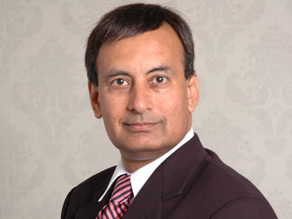
Husain Haqqani, Pakistan's Ambassador to the US. (Wikimedia Commons)

Back on October 10, Mansoor Ijaz, an American from a Pakistani family, published a remarkable column in Financial Times in which he claimed to have been involved in the passing last May of a memo purportedly from Pakistan’s President Asif Ali Zardari to Michael Mullen, who was at that time Chair of the Joint Chiefs of Staff. Ijaz described the memo as being prepared out of fears that Pakistan faced an imminent military coup as fallout from the government’s embarrassment over the ease with which the US carried out its mission to kill Osama bin Laden inside Pakistan. After Josh Rogin published denials from Mullen on November 8 that Mullen had any knowledge of the memo, Ijaz responded by publishing a number of communications with a Pakistani official from the time period in which the memo was being crafted. These communications are widely believed to have been with Husain Haqqani, Pakistan’s Ambassador to the United States.  In a flurry of action yesterday, Josh Rogin provided confirmation from Mullen that he had indeed received the memo, Pakistan recalled Haqqani for discussions and Haqqani offered to resign.

Unfortunately, the draconian “Terms and Conditions” at Financial Times prevent treatment of their material in the same way sane publications can be excerpted for quotes, so it will be necessary for readers to go through their ridiculous “free registration” process to read the Ijaz column in full at the link above. Suffice it to say that Ijaz described an offer represented as coming from Zardari to eliminate the branch of Pakistan’s secret Interservices Intelligence Agency (ISI) that deals with the Taliban and the Haqqani Network. Zardari sought US protection for taking such action.

Here is the denial Rogin obtained on November 8 from Mullen’s spokesman, Captian John Kirby:

“Adm. Mullen does not know Mr. Ijaz and has no recollection of receiving any correspondence from him,” Kirby told The Cable. “I cannot say definitively that correspondence did not come from him — the admiral received many missives as chairman from many people every day, some official, some not. But he does not recall one from this individual. And in any case, he did not take any action with respect to our relationship with Pakistan based on any such correspondence … preferring to work at the relationship directly through [Pakistani Army Chief of Staff] Gen. [Ashfaq Parvez] Kayani and inside the interagency process.”

Rogin goes on to describe Pakistani denials from that same time period:

Mullen’s denial represents the first official U.S. comment on the Ijaz memo, which since Oct. 10 has mushroomed into a huge controversy in Pakistan. Several parts of Pakistan’s civilian government denied that Ijaz’s memorandum ever existed. On Oct. 30, Zardari spokesman Farhatullah Babar called Ijaz’s op-ed a “fantasy article” and criticized the FT for running it in the first place.

“Mansoor Ijaz’s allegation is nothing more than a desperate bid by an individual, whom recognition and credibility has eluded, to seek media attention through concocted stories,” Babar said. “Why would the president of Pakistan choose a private person of questionable credentials to carry a letter to U.S. officials? Since when Mansoor has become a courier of messages of the president of Pakistan?”

Here is the admission from Kirby that Rogin obtained yesterday on the existence of the memo:

“Adm. Mullen had no recollection of the memo and no relationship with Mr. Ijaz. After the original article appeared on Foreign Policy‘s website, he felt it incumbent upon himself to check his memory. He reached out to others who he believed might have had knowledge of such a memo, and one of them was able to produce a copy of it,” Kirby said. “That said, neither the contents of the memo nor the proof of its existence altered or affected in any way the manner in which Adm. Mullen conducted himself in his relationship with Gen. Kayani and the Pakistani government. He did not find it at all credible and took no note of it then or later. Therefore, he addressed it with no one.”

Rogin also spoke with Husain Haqqani:

In an interview late on Wednesday afternoon, Washington time, Haqqani confirmed to The Cable that he will travel to Islamabad and has sent a letter to Zardari offering his resignation.

“At no point was I asked by you or anyone in the Pakistani government to draft a memo and at no point did I draft or deliver such a memo,” Haqqani said that he had written in his letter to Zardari.

“I’ve been consistently vilified as being against the Pakistani military even though I have only opposed military intervention in political affairs,” Haqqani said that he wrote. “It’s not easy to operate under the shadow of innuendo and I have not been named by anyone so far, but I am offering to resign in the national interest and leave that to the will of the president.”

Rogin goes on to speculate on the possibility that Zardari may sacrifice Haqqani in order to quell the controversy surrounding the memo, but from Haqqani’s statements Rogin provided, it does not appear that Haqqani will go quietly.

Dawn, which is usually considered to be closely aligned with Pakistan’s military, described yesterday’s events in this way:

A senior diplomatic source, when asked to comment on reports Ambassador Haqqani had sent his resignation to the president, said: “We cannot call it a resignation. He has sent a letter to prove that he is not guilty.”

In his message, the ambassador is believed to have written that he was not responsible for the letter that allegedly sought US support for sacking the ISI and army chiefs. The ambassador offered to resign if proven guilty.

Haqqani left his office at lunch and did not return. Before leaving, he sent an email to dozens of Pakistani journalists, giving details of a news conference he addressed in the morning on ties with US.

Earlier in the day, Information Minister Firdous Ashiq Awan said the government had summoned Ambassador Haqqani to Islamabad to learn more about a letter ‘falsely’ attributed to the president.

The Express Tribune chose merely to run a Reuters article that rehashes Rogin’s revelations (without citing him).

It will be very interesting to see what unfolds when Haqqani arrives in Islamabad.

 

Share this entry

Night Raids, Drones and Raymond Davis Still in Af-Pak News

A vitally important loya jirga, or grand gathering, is underway in Afghanistan with leaders from all over the country converging to share their views on the future of the Afghanistan-US relationship.  Afghan President Hamid Karzai has announced that a prerequisite for any deal with the US is an end to night raids.  Perhaps because of the importance of the meetings in Afghanistan, today saw a particularly large drone attack just across the border in Pakistan, with at least 15 killed in the attack.  Raymond Davis also makes a surprise re-appearance in today’s news, with former Pakistan Foreign Minister Shah Mehmood Qureshi providing more details on his resignation when he was under pressure for refusing to grant diplomatic immunity to Raymond Davis.

The loya jirga starts today and the Taliban has vowed to attack it:

 About 2,000 Afghan community and political leaders will gather on Wednesday in Kabul under tight security for four days of deliberations on the country’s most pressing issues, including ties with main ally the United States.

The meeting, known as a loya jirga, or grand assembly, cannot make laws, and whatever it decides has to be approved by parliament, but the subjects up for debate are among the most sensitive: the scope of a U.S. military presence after a 2014 deadline for foreign combat troops to leave and the idea of peace talks with the Taliban.

The Taliban, who have long fought to oust foreign forces, have dismissed the meeting as a ruse to cement what they see as foreign interference and have already tried to disrupt it. They have vowed to target participants and said they had a copy of the jirga security plan.

Afghan President Hamid Karzai is using the occasion to say that no agreement with the US is possible without an end to night raids: Read more

Share this entry

IAEA Iran Report Fallout Continues: France Leads Militancy, MEK Rumors, Iran Reconsiders Cooperation

Reaction to the leaked IAEA report on Iran’s nuclear technology continues.  In a remarkable article in the New York Times that reads more like an Op-Ed (h/t MadDog), we see the writer urging the US to join the more militant posturing coming from . . .France. [It appears that the world has now completely inverted from the days of Freedom Fries in 2003.]  In addition, the New York Times has joined in repeating the whispers that some sort of Mossad-MEK operation was involved in the blast in Iran that killed the head of their missile development program. Also, Iran is discussing changing the extent to which it cooperates with the IAEA. International intrigue surrounding Iran also is enhanced with conflicting reports on the cause of death of Ahmed Rezaei in Dubai. Rezaei is the son of  Mohsen Rezaei, who previously served as head of the Revolutionary Guards, ran for President of Iran and now heads the Expediency Council.  Dubai has termed the death a suicide but most Iranian sources are labeling it suspicious.

The Op-Ed piece in the New York Times masquerading as a news article is penned by John Vinocur who is based in Paris for the Times’ sister publication the International Herald Tribune.  Vinocur opens with a slap at US leadership:

If the Obama administration wants to lead from behind in imposing sanctions to halt Iran’s nuclear weapon drive, it shouldn’t look for France to play the convenient associate.

That’s not the way the French would describe their role in the world. Rather, the fact is that France, in many respects, led the United States into battle in Libya and provided much of the willpower leading to a victory over the Qaddafi regime that is shared by the Americans, British and others.

Vinocur then misrepresents the findings of the IAEA report, stating flatly that “the Iranians now have enough fuel on hand to produce four nuclear weapons”, leaving out the key piece of information that this fuel has not yet been enriched to weapons grade and that there is no evidence or even any suggestion that Iran is engaging in enrichment to weapons grade. Read more

Share this entry

Iraq Redux? Media Parroting Dubious IAEA Iran Claims


In a remarkable column in the Guardian, Brian Whitaker points out both the uncritical way in which most of the press is merely parroting the accusations in the IAEA report on Iran’s nuclear technology and how this process feels very much like the propaganda campaign that led to the invasion of Iraq:

“One of the oldest tricks in the run-up to a war is to spread terrifying stories of things that the enemy may be about to do. Government officials plant these tales, journalists water them and the public, for the most part, swallow them.” I wrote this paragraph in December 2002, some three months before the US launched its invasion of Iraq, but it seems just as applicable today in relation to Iran.

The Iraq war of 2003 followed a long media build-up in which talk about Saddam Hussein’s imaginary weapons of mass destruction, simply by virtue of its constant repetition, led many prominent journalists to abandon their critical faculties. The Washington Post, for instance, devoted an extraordinary 1,800 words to an extremely flimsy (but scary) story suggesting Iraq had supplied nerve gas to al-Qaida. The paper later conceded that its coverage of the Iraqi WMD issue had been seriously defective, but by then it was too late to undo the damage.

Whitaker then goes on to cite a number of media stories that breathlessly cite the IAEA allegations without any meaningful evaluation of the claims therein.  He cites b’s work at Moon of Alabama on the nanodiamond alternative to the claims of an explosive trigger device as an example of how one would go about critically examining the claims in the report.

He then closes with this:

Of course, these are extremely murky waters and I’m not at all sure who to believe. There is probably a lot of deception taking place on both sides. But what seems to me extraordinary is the reluctance of journalists – especially in the US mainstream – to acknowledge the uncertainties and their willingness to accept what, as far as Iran is concerned, are the most incriminating interpretations.

In addition to the examples Whitaker cites in his column (please read the entire column), I would offer the video above, where Christiane Amanpour interviews David Sanger.  In this interview, as in most other media reports, there isn’t even acknowledgment that the report itself admits that there is no proof that an active nuclear weapons development program has indeed been restarted in Iran after it was halted in 2003.  Instead, Amanpour and Sanger go into speculative details of how the US can intervene and prevent full development of a nuclear weapon.  They do stop short of war, but certainly point out how it would not be surprising.

There is one more sadly ironic parallel between the current buildup of rhetoric over Iran and the buildup to war in Iraq.  Throughout this process it should be kept in mind that the CIA’s WMD program took a very big hit when Robert Novak Dick Cheney outed Valerie Plame on July 14, 2003 as the Bush administration madly tried to to justify the faulty intelligence it fabricated and spread prior to the March, 2003 Iraq invasion.  Had Plame not been outed, the CIA’s capability in gathering WMD intelligence could have continued unabated, rather than needing a major regrouping after one of its major operatives was outed.  Perhaps the current state of intelligence on what is happening in Iran would be much better had that not happened.

There are a number of posts at Moon of Alabama providing chapter and verse on the debunking of the IAEA report, so I won’t repeat those details and links here.  Instead, I would just note that the credibility of the report has been brought into question by a number of independent observers, but that is a very difficult piece of information to obtain if one is exposed only to the traditional media outlets.  Let’s hope that the Iraq 2003 parallel isn’t so complete that traditional media only realize the low quality of the current “intelligence” after a war has started.

Share this entry

Did the US Authorize Albright and Sanger to Publish the IAEA Iran Report?

Partial screengrab from ISIS website showing link for IAEA Iran report.

Major media organizations around the world are reacting to the IAEA’s report on Iran’s nuclear technology.

Okay, anyone who reads my posts knows that the sentence above should include a link to the IAEA’s website and its posting of the original report. But I can’t include that link, because the IAEA hasn’t posted the report yet.  The report is posted (pdf) at the website for David Albright’s Institute for Science and International Security, where it showed up early yesterday afternoon, and at the New York Times (pdf), in association with a story by David Sanger and William Broad.  I believe that the Times copy was posted several hours after the ISIS copy.

The IAEA’s website has this information about the report, on a page with the heading “Report On Iran Nuclear Safeguards Sent to IAEA Board”:

An IAEA report on nuclear verification in Iran was circulated on 8 November 2011 to the Agency’s Board of Governors and the UN Security Council.

The Agency’s 35-member Board of Governors will consider the report at its next meeting in Vienna from 17 November 2011. The document’s circulation is currently restricted to IAEA Member States and unless the IAEA Board decides otherwise the Agency cannot authorize its release to the public.

The report, Implementation of the NPT Safeguards Agreement and Relevant Provisions of Security Council Resolutions in the Islamic Republic of Iran, was issued by the IAEA Director General. It covers developments since the last report on 2 September 2011, as well as issues of longer standing.

Note that David Albright figured prominently in many media stories leading up to the appearance of the report.  He clearly had already read the report and was busy spreading his take on what the report means.

Given that Albright’s interpretation of the report fits so well with the Obama administration’s take, a question that comes to mind is whether the US authorized Albright to post the report. The IAEA information quoted above states that the IAEA is not authorized to release the report but that it was sent yesterday to the IAEA’s Board of Governors and to the UN Security Council.  The information also states that current circulation is “restricted to IAEA Member States”.  The US is a Member State of the IAEA.

Did the US authorize Albright’s release of the report? Read more

Share this entry

Truth, Justice, and the American Way of Empire

One of my first reactions to the news that Nicolas Sarkozy told Obama he doesn’t like Bibi Netanyahu is to note that Sarko is right.

“I cannot bear Netanyahu, he’s a liar,” Sarkozy told Obama, unaware that the microphones in their meeting room had been switched on, enabling reporters in a separate location to listen in to a simultaneous translation.

“You’re fed up with him, but I have to deal with him even more often than you,” Obama replied, according to the French interpreter.

Bibi is a liar. Particularly in the context of relations with the Palestinians, Bibi has repeatedly broken promises not to expand settlements.

Nevertheless, the Neocons are now gunning against Obama for his response–which was effectively non-committal.

Hell, it’s not even like Obama responded by calling Bibi an ungrateful ally, like Bob Gates has said on the record.

But I couldn’t help but connect this flap to the firing, last week, of the general in charge of training Afghans, John Allen.

Gen. John Allen, the commander of U.S. and NATO troops in Afghanistan, just announced that he fired Maj. Gen. Peter Fuller, the deputy commander of the crucial mission to train Afghan security forces. Fuller, a recent arrival to Afghanistan, gave a surprisingly harsh interview to Politico criticizing Afghan President Hamid Karzai and the Afghan generals he mentors as “isolated from reality.”

Allen is having none of it. “These unfortunate comments are neither indicative of our current solid relationship with the government of Afghanistan, its leadership, or our joint commitment to prevail here in Afghanistan,” Allen said in a statement.

His crime? Pointing out how ungrateful Hamid Karzai is for our efforts in Afghanistan (which is pretty similar to what Gates did with Bibi).

A senior U.S. Army officer in Afghanistan called key elements of the government “isolated from reality,” said they don’t appreciate America’s sacrifice for their nation and offered up some choice words for President Hamid Karzai.

[snip]

The two-star general flashed irritation when he brought up Karzai’s recent remarks that Afghanistan would side with Pakistan in a war against the U.S., blasting the president’s comments as “erratic,” and adding, “Why don’t you just poke me in the eye with a needle! You’ve got to be kidding me … I’m sorry, we just gave you $11.6 billion and now you’re telling me, ‘I don’t really care’?”

Now, frankly, I think Allen mistook our own actions for generosity rather than strategic self-interest. Gates, at least, seemed to acknowledge that we would continue to support Israel anyway out of our own (misguided) self-interest.

But it seems worth note that we are increasingly whining about the ungrateful response to our exercise of self-interest. And then trying to pretend we didn’t.

Share this entry

The Declining Credibility of the IAEA

Yesterday, I pointed out that the IAEA is preparing to release a report on potential development of nuclear weapons in Iran almost exactly two years after the departure of Mohamed ElBaradei as its leader.  As discussed in that post, one of the key pieces of evidence that is anticipated to be discussed in the report is a large steel container in which explosions are carried out.  The claim will be that this chamber is being used to test the use of conventional explosives as a trigger device for a nuclear weapon.

Even before the official report comes out, there are now serious questions about the credibility of the claims on the steel tank.  In a post yesterday at Moon of Alabama, b informs us that there is a likely very different use of the conventional explosive technology and the steel chamber where the explosions are carried out.  A key to unraveling this mystery was an examination of the area of expertise for the Russian scientist cited as the source of the explosive technology in the Washington Post’s “scoop” of the expected content of the IAEA report.  From the Moon of Alabama post:

Dr. Vyacheslav Danilenko is a well known Ukrainian (“former Soviet”) scientist. But his specialties are not “weapon” or “nuclear” science, indeed there seems to be nothing to support that claim, but the production of nanodiamonds via detonations (ppt). According to the history of detonation nanodiamonds he describes in chapter 10 of Ultrananocrystalline Diamond – Synthesis, Properties, and Applications (pdf) he has worked in that field since 1962, invented new methods used in the process and is related with Alit, an Ukrainian company that produces nanodiamonds.

/snip/

Some years ago Iran launched a big Nano Technology Initiative which includes Iranian research on detonation nanodiamonds (pdf). Iran is officially planing to produce them on industrial scale. It holds regular international conferences and invites experts on nanotechnology from all over the world. It is quite likely that famous international scientists in that field, like Dr. Danilenko, have been invited, gave talks in Iran and cooperate with its scientists.

Producing nanodiamonds via detonations uses large confined containers with water cooling, for which Danilenko seems to have a patent. The Ukrainian company he works with, Alit, shows such a detonation chamber on its webpage as does the picture above from the French-German nano-research company ISL. The detonation nanodiamond explanation thereby also fits with another allegation from the IAEA report:

So it turns out that the most likely use of the “bus-sized steel container” is the production of nanodiamonds.  As b points out in an update, that explanation now has reached the Guardian (though without citing Moon of Alabama, I would note): Read more

Share this entry

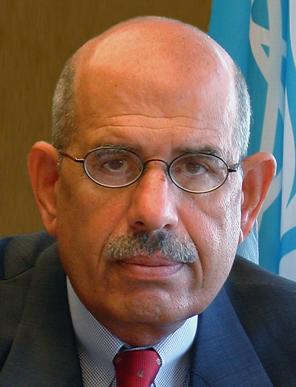
Two Years After ElBaradei’s Departure, IAEA Joins Anti-Iran Drumbeat

Mohamed ElBaradei (Wikimedia Commons photo)

As I noted on Thursday, the “sport” of predicting when Israel will attack Iran has now moved from the progressive blogosphere to many conventional news outlets.  This week will see a major escalation in the anti-Iran rhetoric after the release of a much-anticipated report on Iran from the International Atomic Energy Agency.  Many news outlets already are saying this report will be damning for Iran.  Today, the Washington Post devotes front-page prominence to its “scoop” of details expected to be contained in the report. The title for the article, which seems meant to be read with breathless fear, is “IAEA says foreign expertise has brought Iran to threshold of nuclear capability”.

Here is the how the Post article opens:

Intelligence provided to U.N. nuclear officials shows that Iran’s government has mastered the critical steps needed to build a nuclear weapon, receiving assistance from foreign scientists to overcome key technical hurdles, according to Western diplomats and nuclear experts briefed on the findings.

So, outsiders have provided assistance to Iran so that they have “mastered key steps needed to build a nuclear weapon”.  But, if we dig a bit deeper in the article, we have a little more detail on just what these “key steps” are.  The Post seems to be relying almost exclusively on information provided by David Albright of the Institute for Science and International Security, a non-partisan organization concentrating on nonproliferation:

Albright said IAEA officials, based on the totality of the evidence given to them, have concluded that Iran “has sufficient information to design and produce a workable implosion nuclear device” using highly enriched uranium as its fissile core. In the presentation, he described intelligence that points to a formalized and rigorous process for gaining all the necessary skills for weapons-building, using native talent as well as a generous helping of foreign expertise.

It would appear that the latest basis for war will be the conclusion that Iran has developed technology for a nuclear trigger. Read more

Share this entry

The Dangers of Hiring BAE’s Mercenaries

How stupid was Moammar Qaddafi, who reportedly hired the same mercenary firm that tried to take out Equatorial Guinea’s dictator in 2004?

A total of 50 private soldiers, including 19 South Africans, are reported to have travelled to Libya on instructions to smuggle the former dictator from his birthplace of Sirte over the border to Niger.

Among them were said to be members of the team led by former SAS officer Simon Mann on the “Wonga coup” to unseat Equatorial Guinea’s dictator.

In addition to Simon Mann, after all, those plotters also had ties to Mark Thatcher, Maggie’s kid. And in addition to Sir Mark’s involvement with that coup attempt, Thatcher was involved in the BAE kick-back scheme with Saudi Arabia. And that scheme reportedly funded covert operations … presumably things like the Wonga coup. Led by the same Saudi family the head of which Qaddafi allegedly tried to assassinate.

Perhaps, after Qaddafi’s “secret” deal with Britain on the Lockerbie bomber, he thought he could trust the same mercenaries tied to a very British coup. Or perhaps he was just in a pinch and couldn’t get any more reliable mercenaries to help him escape Libya.

But it appears Qaddafi shouldn’t have trusted these particular mercs.

It has been alleged that one of the security firms who provided mercenaries for the mission may have acted as a “double agent”, helping Nato to pinpoint Gaddafi’s convoy for attack, and that the dictator’s escape was “meant to fail”.

[snip]

A source in the private security sector said it was “highly likely” that one of those involved deliberately recruited mercenaries who were ill-equipped to handle the mission.

“These guys did not have the experience to be successful,” he said. “The formation of the convoy, the way they tried to leave Sirte, it’s clear they were meant to fail.

“Someone got paid to protect him and at the same time to deliver him.”

Which makes it all the more interesting that Hillary was hanging out in Libya they day before Qaddafi was assassinated. I have noted how convenient it is that Qaddafi didn’t survive to testify at the ICC about how Ibn Sheikh al-Libi was suicided so conveniently; the same is true of his Lockerbie deal. I guess if you own the mercs “protecting” someone, it becomes a lot easier to arrange such convenient assassinations?

I guess dictators today can’t find mercenaries like they used to.

Share this entry