Is Stuart Delery the One Who Flubbed DOJ’s FOIA Response?

Screen shot 2013-03-10 at 2.54.50 PMIn a piece describing how badly the Administration has botched its treatment of the Anwar al-Awlaki killing, Daniel Klaidman elaborates on his past reporting on why the Administration responded the way it did. Of particular note, he reveals the white paper was written not by anyone in DOJ’s Office of Legal Counsel, but by the then Senior Counselor to Eric Holder, Stuart Delery.

A Justice Department lawyer named Stuart Delery set out to produce a stripped down version of the memo. But the White House had still not decided what form the disclosure would take. One proposal was an op-ed piece that would run under Holder’s byline, but Delery’s document ended up being so long that option was scrapped. Another possibility was releasing a white paper to the public. In the end, the White House settled on letting Holder deliver a so-called “top-wave” speech, an address that would deal with a host of pressing national security issues and would include a section on the legal rationale behind killing American citizens. But, critically, the administration did not give anything separately to Congress.

Soon thereafter, a draft of the speech was sent over to the White House for approval. For reasons that remain unclear, it languished on National Security Adviser Tom Donilon’s desk for months. Then, in January 2012, it was circulated by the National Security Council for final approval.

So the white paper was written not by the department that wrote the actual legal memo authorizing killing Awlaki (remember, both Marty Lederman and David Barron were long gone by this point), but in the Office of Attorney General.

With that in mind, consider how grossly unresponsive the Office of Information Policy (which handles FOIA requests involving the OAG) was to the ACLU FOIA for information on the authority for killing Awlaki, which I laid out here and here.

Read more

Share this entry

Anwar al-Awlaki Is the New Aluminum Tube

Mark Mazzetti, Charlie Savage, and Scott Shane team up to provide the government’s best case — and at times, an irresponsibly credulous one — for the killing of Anwar al-Awlaki and the collateral deaths of Samir Khan and Abdulrahman al-Awlaki.

Yet even in a 3,600 word story, they don’t present any evidence against the senior Awlaki that was fresher than a year old — the October 2010 toner cartridge plot — at the time the Yemeni-American was killed. (I’m not saying the government didn’t have more recent intelligence; it just doesn’t appear in this very Administration-friendly case.) Not surprisingly, then, the story completely ignores questions about the definition of “imminent threat” used in the OLC memo and whether Awlaki was an “imminent” threat when he was killed.

The “linked in various ways” standard for killing Americans

Moreover, the case they do present has various weaknesses.

The story provides a fair amount of space to Awlaki’s celebration of the Nidal Hasan attack (though it does make it clear Awlaki did not respond enthusiastically to Hasan’s queries before the attack).

Investigators quickly discovered that the major had exchanged e-mails with Mr. Awlaki, though the cleric’s replies had been cautious and noncommittal. But four days after the shootings, the cleric removed any doubt about where he stood.

“Nidal Hassan is a hero,” he wrote on his widely read blog. “He is a man of conscience who could not bear living the contradiction of being a Muslim and serving in an army that is fighting against his own people.”

It uses far vaguer language to describe Awlaki’s role in the Faisal Shahzad and toner cartridge plots.

Meanwhile, attacks linked in various ways to Mr. Awlaki continued to mount, including the attempted car bombing of Times Square in May 2010 by Faisal Shahzad, a naturalized American citizen who had reached out to the preacher on the Internet, and the attempted bombing by Al Qaeda in the Arabian Peninsula of cargo planes bound for the United States that October.

“Linked in various ways” seems to be the new standard for killing an American. That, in spite of the fact that Shahzad’s tie to Awlaki seems to be the same Hasan had: an inspiration, but not any involvement in the plot. And while Awlaki is reported to have had some role in the toner cartridge plot, reports from Saudi infiltrator Jabir al-Fayfi apparently fingered others in AQAP as the chief plotters.

I guess that would be too much nuance to include in a 3,600 word article.

NYT doesn’t care about problems with the Abu Tarak explanation

Which leaves the UndieBomb attack as the sole attack in which the NYT presents evidence about Awlaki’s direct role. But there’s a problem with their claims there, too.

The would-be underwear bomber told F.B.I. agents that after he went to Yemen and tracked down Mr. Awlaki, his online hero, the cleric had discussed “martyrdom and jihad” with him, approved him for a suicide mission, helped him prepare a martyrdom video and directed him to detonate his bomb over United States territory, according to court documents.

In his initial 50-minute interrogation on Dec. 25, 2009, before he stopped speaking for a month, Mr. Abdulmutallab said he had been sent by a terrorist named Abu Tarek, although intelligence agencies quickly found indications that Mr. Awlaki was probably involved. When Mr. Abdulmutallab resumed cooperating with interrogators in late January, an official said, he admitted that “Abu Tarek” was Mr. Awlaki. With the Nigerian’s statements, American officials had witness confirmation that Mr. Awlaki was clearly a direct plotter, no longer just a dangerous propagandist.

I don’t doubt that Awlaki was directly involved in this attack in some way. And I got the same explanation about Abu Tarak from “an official” back when I first noted the discrepancy between DOJ’s public claims (thanks for not crediting me on that one, NYT boys). But either Abdulmutallab said something beyond “Abu Tarak was Awlaki,” or the entire explanation is not credible.

That’s because Abdulmutallab’s initial interrogation — according to the version presented by Jonathan Tukel in the opening arguments of Abdulmutallab’s trial — said Abu Tarak did the following:

  1. Spoke daily with Abdulmutallab about jihad and martyrdom
  2. Suggested to Abdulmutallab that he become involved in a plane attack against the United States aircraft
  3. Gave him training in detonating the bomb
  4. Told him to make sure he attacked a U.S. aircraft and make sure the attack takes place over the United States

Yet according to the version of Abdulmutallab’s interrogation presented in his sentencing memo, here’s who did those things:

  1. Awlaki and Abdulmutallab discussed martyrdom and jihad
  2. Defendant and Ibrahim Al Asiri discussed defendant’s desire to commit an act of jihad; Asiri discussed a plan for a martyrdom mission with Awlaki, who gave it final approval
  3. Asiri trained defendant in the use of the bomb
  4. Awlaki instructed defendant that the only requirements were that the attack be on a U.S. airliner, and that the attack take place over U.S. soil

Read more

Share this entry

The NYT Grants David Barron and Marty Lederman a Mulligan on 18 USC 1119

I’ll have far more to say about this irresponsibly credulous accounting of the background to the Anwar al-Awlaki killing from the NYT tomorrow. But for the moment I wanted to point to an interesting detail about the genesis of the June-July 2010 OLC memo.

The NYT explains that David Barron and Marty Lederman wrote an initial short OLC memo to authorize Anwar al-Awlaki’s killing. But then, after reading a blog post that describes why such a killing would be a violation of 18 USC 1119, they decided they needed to do a more thorough memo.

According to officials familiar with the deliberations, the lawyers threw themselves into the project and swiftly completed a short memorandum. It preliminarily concluded, based on the evidence available at the time, that Mr. Awlaki was a lawful target because he was participating in the war with Al Qaeda and also because he was a specific threat to the country. The overlapping reasoning justified a strike either by the Pentagon, which generally operated within the Congressional authorization to use military force against Al Qaeda, or by the C.I.A., a civilian agency which generally operated within a “national self-defense” framework deriving from a president’s security powers.

They also analyzed other bodies of law to see whether they would render a strike impermissible, concluding that they did not. For example, the Yemeni government had granted permission for airstrikes on its soil as long as the United States did not acknowledge its role, so such strikes would not violate Yemeni sovereignty.

And while the Constitution generally requires judicial process before the government may kill an American, the Supreme Court has held that in some contexts — like when the police, in order to protect innocent bystanders, ram a car to stop a high-speed chase — no prior permission from a judge is necessary; the lawyers concluded that the wartime threat posed by Mr. Awlaki qualified as such a context, and so his constitutional rights did not bar the government from killing him without a trial.

But as months passed, Mr. Barron and Mr. Lederman grew uneasy. They told colleagues there were issues they had not adequately addressed, particularly after reading a legal blog that focused on a statute that bars Americans from killing other Americans overseas. In light of the gravity of the question and with more time, they began drafting a second, more comprehensive memo, expanding and refining their legal analysis and, in an unusual step, researching and citing dense thickets of intelligence reports supporting the premise that Mr. Awlaki was plotting attacks. [my emphasis]

This post — an April 8, 2010 post entitled “Let’s Call Killing al-Awlaki What It Is — Murder” — is almost certainly the blog post in question. There’s almost nothing else written on 1119 (there’s this legal journal article, but from Fall 2011), much less focusing specifically on Awlaki and published in a legal blog.

Which is interesting, because the post describes one of the possible bases for arguing that 1119 does not apply to the killing of Awlaki that Obama is just ignoring the statute as Commander-in-Chief.

Which leads us to the second possible explanation of why 18 USC 1119 does not apply: because Obama has authorized the CIA to kill al-Awlaki.  That explanation seems implicit in much of the media’s coverage of the Obama administration’s decision; I have yet to see any reporter ask why Obama believes he has the legal authority to order Americans killed, given that 18 USC 1119 specifically criminalizes such killings.  The argument, however, is deeply problematic — and eerily reminiscent of debates over the Bush administration’s authorization of torture. The Bush administration argued that Bush had the authority as Commander-in-Chief to ignore the federal torture statute, 18 USC 2340; the Obama administration seems to now be arguing, albeit implicitly, that Obama has the authority as Commander-in-Chief to ignore the foreign-murder statute.

As I noted, while the white paper, at least, plays a neat rhetorical game to collapse AUMF and Article II authorizations, ultimately it uses this language to explain why an Article II authorized killing of Awlaki would not violate 1119.

Similarly, under the Constitution and the inherent right to national self-defense recognized in international law, the President may authorize the use of force against a U.S. citizen who is a member of al-Qa’ida or its associated forces who poses an imminent threat of violent attack against the United States.

In other words, the white paper, at least, does precisely what Kevin Jon Heller warned might be so troubling — it said that if the President authorized Awlaki’s killing, it would mean 1119 would not apply.

To the extent that the white paper fairly reflects the content of the OLC memo, then, David Barron and Marty Lederman failed to find a counterargument to precisely the argument that appears to have convinced them to write a second, longer OLC memo in the first place.

Which may be why the NYT article goes to such lengths to try to explain away this apparent problem.

Read more

Share this entry

House Intelligence Committee Moves to Learn How OTHER Services Don’t Throw Away Incidental US Person Data

I’ve long been tracking the implications of the Air Force’s policy to keep US person data incidentally collected using domestic drones. Effectively, it would allow the government to collect data on select locations (such as a likely drug trafficking route), so long as it didn’t target any particular American, and then refer back to or data mine that information in the future.

The policy is (not surprisingly, since both are DOD) very nearly parallel to what we think is happening with the NSA’s collections. So long as they weren’t originally targeting a US person, the government seems to be saying, nothing prevents them from going back to use the data in the future.

Which is why I’m not all that impressed by the House Intelligence Committee’s push, in this year’s appropriations bill, to require other services and DOD agencies to lay out what they’re doing with domestic collections.

Congress has directed the Secretary of Defense to report on the handling of surveillance data collected by military unmanned aerial systems operating in domestic airspace.  A provision in the 2013 continuing appropriations conference bill approved by the House yesterday explained:

“The conferees are aware of concerns that have been raised regarding the use of unmanned aerial vehicles (UAV) and their sensors in domestic airspace. The conferees understand that the Air Force has policies and procedures in place governing the disposition of UAV collections that may inadvertently capture matters of concern to law enforcement agencies. These policies and procedures are designed to ensure constitutional protections and proper separation between the military and law enforcement. However, it is unclear if other Services and Defense agencies have similar policies and procedures in place, or if these policies and procedures need to be revised or standardized. Therefore, the conferees direct the Secretary of Defense to report to the congressional defense committees on the policies and procedures in place across the Services and Defense agencies governing the use of such collections and to identify any additional steps that need to be taken to ensure that such policies and procedures are adequate and consistent across the Department of Defense. This report shall be submitted not later than 90 days after the enactment of this Act.” [my emphasis]

Given the liberal policies the Air Force uses on “incidentally” collected information, it doesn’t seem to offer much protection under the Fourth Amendment (not least because the Clapper decision means we would never be able to challenge such collection). Rather, this effort seems designed to placate concerns about violations of Posse Comitatus and potentially stave off real privacy efforts.

When the Michael Chertoff threatened to use satellites to conduct this kind of surveillance 5 years ago, Democrats (led by Bennie Thompson and Jane Harman) balked, and forced Chertoff to back down. Since then, however, drones that can and do conduct the same kind of surveillance (in the guise of training, mind you!) have been rolled out without, until just recently, any focus on the same issues.

Yet another example of what a Democratic President can get away with that a Republican cannot.

Share this entry

“Engaged in Combat”

Last night, Rand Paul said this:

Well, words do make a difference, and I would feel a little more comfortable if we would get in writing a letter that says he doesn’t believe killing people not actively engaged in combat with drones in America, on American soil, is constitutional.

Today, Eric Holder wrote Paul this letter.

It has come to my attention that you have now asked an additional question. “Does the President have the authority to use a weaponized drone to kill an American not engaged in combat on American soil?” The answer to that question is no.

Aside from noting that Holder took out the “actively” modifier in Paul’s statement (though Paul said some version of this so many times last night that Holder’s formulation might be justified by one of those other ones), I’d have to say that Paul has only managed to move the pea under a different shell in this shell game.

Because now we need a definition of what “engaged in combat” means.


Share this entry

Snowpocalypse and Obama’s Drone Talk

As I’ve said a few times, I suspect one reason the Administration may be acting so ridiculously with respect to drones is because the families of Anwar and Abdulrahman al-Awlaki and Samir Khan are suing for wrongful death. The ace in the hole the Administration would use to dismiss that suit would normally be state secrets. But as more and more officials discuss aspects of the drone program, it will be harder to sustain any state secrets invocation if they need one (though that didn’t help the Jeppesen plaintiffs). And if the suit goes forward, there might be really interesting claims exposed, more so with Samir Khan (who no one has accused of being operational) and Abdulrahman than Anwar al-Awlaki.

That is, recent events have made it more likely that wrongful death suit will turn into precisely what Steve Vladeck has proposed for targeted killings of Americans, a real review of the killings.

And that may be more true after the President makes some kind of public statement on drones, as Eric Holder suggested yesterday he would (see 53:00 and following).

What you will hear from the President in a relatively short period of time is, uh–I don’t want to preempt this, but we talked about a need for greater transparency, in what we share, what we talk about. Because I am really confident that if the American people had access, for example–some of this stuff cannot be shared. I understand that. But at least the representatives of the American people had the ability–as members of the Intelligence Committee have been able to see–some of those OLC opinions, there would be a greater degree of comfort that people would have to understand that this government does these things reluctantly, but also we do it in conformity with international law, with domestic law, and with our values as of the American people.

And so I think there is going to be a greater effort at transparency, a number of steps are going to be taken–I expect you are going to hear the President speaking, about this.

Which is why I find it interesting that DOJ used the overblown snowpocalpyse to request a two-day delay in its reply to ACLU’s response to the government’s motion to dismiss the wrongful death suit. Judge Rosemary Collyer granted the request, giving DOJ the weekend to write its brief. After all, DOJ has had a full month to write their brief, and it can be filed remotely. They didn’t ask for a delay because of not-snow. I suspect they asked for a delay because the Administration is in the middle of changing its approach to targeted killing transparency.

That doesn’t mean they’re about to let a judge review their legal case for killing Awlaki and friends. But it likely does mean they need to account for how a Presidential speech acknowledging drone killing will affect this suit.

Share this entry

Democrats Refuse Non-Binding Resolution Limiting Presidential Drones against Non-Combatants, Too

I noted earlier that Eric Holder suggested that a law prohibiting the use of drones against non-combatant Americans in the US would be unconstitutional.

Grassley: Do you believe Congress has the Constitutional authority to pass a law prohibiting the President’s authority to use drone aircraft to use lethal force against Americans on US soil and if not, why not?

Holder: I’m not sure that such a bill would be constitutional. It might run contrary to the Article II powers that the President has.

That’s interesting background for a move Rand Paul tried at roughly hour 8 of his filibuster.

He proposed a non-binding resolution saying precisely what Grassley had laid out 10 hour earlier, voicing the position of the Senate to be opposed to the “use of drones to target Americans on American soil who pose no imminent threat.”

As I understand it, the resolution was independent from the Brennan nomination (so it would not disrupt that, aside from a vote).

But — as just one of two Democrats to show up during this filibuster (Ron Wyden showed up in support during the 3:00 hour) — Dick Durbin showed up to oppose Paul’s unanimous consent to call for that resolution.

Durbin promised his subcommittee of the Senate Judiciary Committee would hold a hearing on drones. Nevertheless, he objected to Paul’s resolution. He suggested more Constitutional review of this simple measure was needed.

A leader of the Democratic party (and the President’s fellow Chicagoan) opposed a non-binding resolution prohibiting the use of drones in the US against non-combatants out of Constitutional concerns.

I’ve got a lot of theories why that might be. A belief this is all about making trouble for another nomination. insistence that nothing limit potential Article II claims.

But I keep thinking about the fact that there’s a wrongful death suit out there, with state secrets as the fallback claim crumbling with the public discussion.

Share this entry

Wondering Wednesday: Suicide in Singapore, Drone Over Brooklyn, and Telco Tattlers

Help me get over the hump and clue me in on a few things. I’ve been scratching my head wondering about these topics.

Suicide in Singapore — The recent “suicide” of a U.S. electronics engineer in Singapore looks fishy to me. It looked not-right to Financial Times as well; it appears no other domestic news outlet picked up this case for investigative reporting before FT. The deceased, who’d worked for a government research institute on a project related to Chinese telecom equipment company Huawei, is alleged to have hung himself, but two details about this case set off my hinky meter.

•  Every photo I’ve seen of engineer Shane Todd depicts a happy chap. Sure, depressed folks can hide their emotions, but comparing a photo of his family after his death to photos of him and you’ll see the difference. My gut tells me that if he was truly depressed, he should have looked more like his folks–flat, withdrawn, low affect. Perhaps meds could have messed with his head more than depression itself. But I’m not a psychologist or a pharmacologist, what do I know?

•  Among all the details of the case, it’s said the victim’s face postmortem was white when his body was discovered. This doesn’t strike me as consistent with hanging; there should have been lividity above the ligature. Conveniently, Singapore’s law enforcement cleaned everything up so quickly there was no chance to see the crime scene or the body as found. Law enforcement also snagged the victim’s laptop and all other work-related stored content, save for a hard drive that looked like a speaker. Everything he was working on “disappeared” except for the contents of that drive.

The engineer had been very concerned about technology he was working on and its possible transfer, which included gallium nitride transistors with potential for both commercial and military applications. After poking around for some time on gallium compounds used in various computing, communications and other technology, nothing screams at me as highly sensitive technology that might get someone “suicided.” But…as I went through abstracts, it seems odd there are a substantive number of Chinese researchers working in on GaN-based technologies.

Thought these two points in particular jar my senses, more than just these two points don’t sit well. Read the story at the link above and see for yourself. (Original FT link here.)

What do you make of this case? Suicide or no? Strategic technology or no? Read more

Share this entry

Incapacitating Terrorists in the US: the FBI’s Job

Remember when I suggested that a targeted killing in the US would look a lot like the killing of Imam Luqman Abdullah in 2009 (though I’m not saying that Abdullah’s killing was a targeted killing), in which bunch of FBI’s Hostage Rescue Team members flew in from around the country, set up an “arrest” operation, sicced a dog on him, and then shot him 21 times as he tried to hold off the dog?

Here are three assertions in the letters Eric Holder and John Brennan made in response to Rand Paul’s question about whether “the President has the power to authorize lethal force, such as a drone strike, against a US citizen on US soil, and without trial,” each addressing a different agency which might conceivably conduct targeted killing.

DOD

It is possible, I suppose, to imagine an extraordinary circumstance in which it would be necessary and appropriate under the Constitution and applicable laws of the United States for the President to authorize the military to use lethal force within the territory of the Untied States.

CIA

I can, however, state unequivocally that the agency I have been nominated to lead, the CIA, does not conduct lethal operations inside the United States — nor does it have any authority to do so. Thus, if I am fortunate enough to be confirmed as CIA Director, I would have no “power” to authorize such operations.

DOJ

As a policy matter, moreover, we reject the use of military force where well-established law enforcement authorities in this country provide the best means for incapacitating a terrorist threat. We have a long history of using the criminal justice system to incapacitate individuals located in our country who pose a threat to the United States and its interests abroad. Hundreds of individuals have been arrested and convicted of terrorist-related offenses in our federal courts.

All three answers are interesting. Paul is upset that Holder said the President could use lethal military force in the US. Holder invoked Pearl Harbor and 9/11, during the latter of which the Vice President, on his sole authority, ordered DOD to shoot down domestic aircraft in the US. If Paul has a problem, he should probably also have a problem with Dick Cheney’s order on 9/11.

Brennan’s answer about the CIA is a masterpiece of misdirection. Brennan doesn’t answer whether the CIA can operate in the US, which is broadly covered by other questions Paul asked so easily could and should have been included in his answer. He uses very interesting scare quotes around power. He makes it very clear that this answer does not address the legal question of whether the CIA could do this (he says DOJ will answer that, but Holder in fact didn’t address whether CIA could be ordered to kill in the US). Most importantly, however, Brennan answers a question Paul didn’t answer: Whether the CIA Director could order the CIA to use lethal force in the US.

The CIA, of course, conducts covert operations based on Presidential authorization, not CIA Director authorization. And Brennan stopped well short of answering whether the President could authorize the CIA to conduct lethal operations in the US, and whether the Executive Branch believed the President could authorize such strikes based on his own authority. And as I said, Holder quite simply didn’t answer that question at all.

Finally, though, I love the way Eric Holder discusses trials only after talking about using law enforcement — like the FBI — to incapacitate terrorists and other evil-doers twice.

Holder didn’t comment, one way or another, on whether the President could authorize law enforcement authorities to conduct targeted killings in the US. And since the precedents for using lethal force in the white paper are domestic law enforcement cases, that use of lethal force would come with the most cover from legal precedent.

In short, none of these assertions constitutes a denial that a particular agency could, under certain circumstances, could conduct targeted killing in the US. All they say, in conjunction, is that were a targeted killing to be conducted in the US, it would most likely be conducted by law enforcement.

Share this entry

Did Pakistan Carry Out Its Own Drone Strikes?

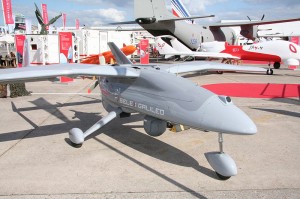
Falco drone, which about half the size of a Predator.  GAO reports that Pakistan has the Falco. (Image via Wikipedia)

Falco drone, which about half the size of a Predator. GAO reports that Pakistan has the Falco. (Image via Wikipedia)

While his nomination is pending as Director of CIA, His High Holiness of Moral Rectitude John Brennan has seen fit to pause his wanton destruction via drones in both Pakistan and Yemen. Mysteriously, though, there appears to be some confusion over the last two strikes in Pakistan. The New York Times is now reporting that the US disavows strikes that were reported February 6 and February 8 in Pakistan:

When news of the two latest drone strikes emerged from Pakistan’s tribal belt in early February, it seemed to be business as usual by the C.I.A.

/snip/

Yet there was one problem, according to three American officials with knowledge of the program: The United States did not carry out those attacks.

“They were not ours,” said one of the officials, speaking on the condition of anonymity because of the drone program’s secrecy. “We haven’t had any kinetic activity since January.”

But, as noted by the Times, contemporaneous reporting of both of these strikes followed the usual descriptions that assume US drones were responsible. Here is how Long War Journal described the February 6 attack:

The US launched an airstrike in Pakistan’s Taliban-controlled tribal agency of North Waziristan today, killing five “militants” in an area known to host al Qaeda and other foreign terror groups. The drone strike is the first recorded in Pakistan in nearly four weeks.

The CIA-operated, remotely piloted Predators or the more deadly Reapers fired upwards of six missiles at a compound in the Spin Wam area of North Waziristan. The airstrike leveled the compound and killed five people and wounded several more, according to reports from the region.

Significantly, Long War Journal did note at that time that the pause in strikes was already underway:

Today’s strike broke a 26-day pause in the attacks in Pakistan; the last strike was on Jan. 10. The US has launched eight drone strikes in Pakistan so far this year.

Similarly, the February 8 strike was assumed to be carried out by the US. Here is an account from the Express Tribune from a link I retweeted that day:

A US drone strike in South Waziristan on Friday evening killed at least eight people and left two wounded, Express News reported.

Two missiles struck a house in the village of Babar Ghar, a tribal district bordering Afghanistan which is a stronghold of Taliban and al Qaeda-linked militants.

So, if the US denial is to be believed (although the Times article quotes Chris Woods of The Bureau of Investigative Journalism warning us to take the disavowal “with a pinch of salt”), who did carry out the strikes? Returning to the Times article:

Two senior United States officials said there had been no American involvement in the attacks. A third official said the C.I.A. had not paid the reports much attention because no American forces had been involved. But that official said American intelligence pointed to the Pakistan Air Force as having conducted the first strike, probably as part of a military operation against Pakistani Taliban militants in the neighboring Orakzai tribal agency.

The second attack was more mysterious. “It could have been the Pakistani military,” the official said. “It could have been the Taliban fighting among themselves. Or it could have been simply bad reporting.”

Getting accurate news out of Pakistan’s tribal area is notoriously difficult, but since there have been so many drone strikes there, one would think the locals can distinguish between drone strikes and other sorts of attacks such as missiles fired from jets or mortars launched from nearby cover. Going especially to the February 6 strike, where the anonymous US official tells the Times that they believe Pakistan’s Air Force is responsible, the question then becomes whether the strike was missiles fired from a jet or from a drone.

Does Pakistan have drones? Remarkably, the GAO has reported (pdf) that they indeed do:

In addition, an Italian manufacturer has produced and exported the Falco UAV system to Pakistan.

The website AirForce-Technology.com reports that Pakistan has 50 Falco drones and they appear to be roughly half the size of the Predator drones used so commonly in Pakistan by the US. It also appears that they can be armed although as initially delivered to Pakistan they were not:

Though the Falco UAV is large enough to accommodate both a missile and targeting system, it will currently be used for only reconnaissance and surveillance applications. Falco will be equipped with laser-guided missiles in the future to carry out offensive operations. The Falco UAV has one hard point on each wing and will carry a load capacity of up to 25kg.

Recall also that Pakistan evicted the US from the Shamsi Air Base in December, 2011 in response to the border incident in which the US killed 24 Pakistani troops the previous month. That base had been the primary location from which the US launched drones into Pakistan’s tribal area until then, so Pakistan inherited a base ready for offensive drone use.

It will be very interesting to see whether new reports of drone strikes in Pakistan surface with the US claiming not to have been involved. Pakistan will find it difficult to maintain its current cynical political position on US strikes where it is believed by most that Pakistan privately permits the US to carry out strikes (and occasionally may provide target locations) but publicly protests the strikes once they are carried out. If they are shown conclusively to have armed their Falco drones and to have used them to carry out their own strikes, the politics will have to shift dramatically.

Update: Dawn is now reporting that Pakistan’s military denies any role in these two strikes:

Commenting on the report published in the New York Times on Tuesday, a spokesman for the Inter Services Public Relations (ISPR) said “such an accusation is a distortion of the facts and seems to be aimed at diluting Pakistan’s stance on drone strikes.”


Share this entry