“The Gloves Come Off” Memorandum of Notification

Operational flexibility: This is a highly classified area. All I want to say is that there was “before” 9/11 and “after” 9/11. After 9/11 the gloves come off.

-Cofer Black, 9/11 Congressional Inquiry, September 26, 2002

When Cofer Black, the main author of the plan laid out in the September 17, 2001 Memorandum of Notification that appears to be at issue in the FOIA dispute between the CIA and White House and the ACLU (post 1, post 2, post 3, post 4, post 5), testified before the 9/11 Congressional Inquiry, he described the expanded operational flexibility CIA’s counterterrorism efforts gained after 9/11 by saying “the gloves come off.”

As this post shows, the legal means by which “the gloves come off” was the MON in question. Thus, rather than referring to the MON by its date, perhaps the best way for us to think of it is as the “Gloves Come Off MON.”

Before we get into what the MON did, here’s what the National Security Act, as amended, says such MONs are supposed to do. The NSA requires the President to notify congressional intelligence and appropriations committees (or, in rare cases, the Gang of Eight) of any covert operations he has authorized the CIA to conduct. Some important excerpts:

SEC. 503. [50 U.S.C. 413b] (a) The President may not authorize the conduct of a covert action by departments, agencies, or entities of the United States Government unless the President determines such an action is necessary to support identifiable foreign policy objectives of the United States and is important to the national security of the United States, which determination shall be set forth in a finding that shall meet each of the following conditions:

(1) Each finding shall be in writing, unless immediate action by the United States is required and time does not permit the preparation of a written finding, in which case a written record of the President’s decision shall be contemporaneously made and shall be reduced to a written finding as soon as possible but in no event more than 48 hours after the decision is made.

[snip]

(5) A finding may not authorize any action that would violate the Constitution or any statute of the United States.

[snip]

(d) The President shall ensure that the congressional intelligence committees, or, if applicable, the Members of Congress specified in subsection (c)(2) [the Gang of Eight], are notified of any significant change in a previously approved covert action, or any significant undertaking pursuant to a previously approved finding, in the same manner as findings are reported pursuant to subsection (c).

As used in this title, the term ‘‘covert action’’ means an activity or activities of the United States Government to influence political, economic, or military conditions abroad, where it is intended that the role of the United States Government will not be apparent or acknowledged publicly, but does not include—

(1) activities the primary purpose of which is to acquire intelligence, traditional counterintelligence activities, traditional activities to improve or maintain the operational security of United States Government programs, or administrative activities;

Basically, the MONs are supposed to provide an up-to-date written notice of all the  potentially very embarrassing things the CIA is doing. And given that MONs cannot authorize unconstitutional or illegal (within the US) actions, it should impose some legal limits to covert operations.

Dick Cheney, in a 1989 speech complaining about Congressional overreach in foreign policy (Charlie Savage just posted this), described how this requirement to inform Congress of covert ops provided a way for Congress to oppose such actions by defunding any ongoing ones.

The 1980 law [requiring notice] did not challenge the President’s inherent constitutional authority to initiate covert actions. In fact, that law specifically denied any intention to require advance congressional approval for such actions.

[snip]

Any time Congress feels that an operation is unwise, it may step in to prohibit funds in the coming budget cycle from being used for that purpose. As a result, all operations of extended duration have the committees’ tacit support.

That’s the understanding of the limitations MONs might impose on Presidents that Cheney brought to discussions of the Gloves Come Off MON.

Bob Woodward provides an extensive discussion of what George Tenet and Cofer Black requested in this MON in Bush at War.

At the heart of the proposal was a recommendation that the president give what Tenet labeled “exceptional authorities” to the CIA to destroy al Qaeda in Afghanistan and the rest of the world. He wanted a broad intelligence order permitting the CIA to conduct covert operations without having to come back for formal approval for each specific operation. The current process involved too much time, lawyering, reviews and debate. The CIA needed new, robust authority to operate without restraint. Tenet also wanted encouragement from the president to take risks.

Another key component, he said, was to “use exceptional authorities to detain al Qaeda operatives worldwide.” That meant the CIA could use foreign intelligence services or other paid assets. Tenet and his senior deputies would be authorized to approve “snatch” operations abroad, truly exceptional power.

Tenet had brought a draft of a presidential intelligence order, called a finding, that would give the CIA power to use the full range of covert instruments, including deadly force. For more than two decades, the CIA had simply modified previous presidential findings to obtain its formal authority for counterterrorism. His new proposal, technically called a Memorandum of Notification, was presented as a modification to the worldwide counterterrorism intelligence finding signed by Ronald Reagan in 1986. As if symbolically erasing the recent past, it superseded five such memoranda signed by President Clinton.

Woodward describes other things included in Tenet’s request:

  • Providing hundreds of millions to “heavily subsidize Arab liaison services,” effectively “buying” key services in Egypt, Jordan, and Algeria
  • Equipping Predator drones with Hellfire missiles for lethal missions to take out top al Qaeda figures Read more
Share this entry

John Brennan Praises the Object of His Own Intimate Knowledge

John Brennan, the guy whose role in torture and illegal wiretapping the Obama Administration continues to protect by looking relentlessly forward, also once admitted to having intimate knowledge of the NYPD’s spy program.

President Barack Obama’s homeland security adviser, John Brennan, who was the deputy executive director the CIA when the NYPD intelligence programs began, said he was intimately familiar with the CIA-NYPD partnership. He said that agency knew what the rules were and did not cross any lines.

Curiously, Brennan picked the day after Najibullah Zazi testified to praise the NYPD for its role in identifying terrorists (and proclaim, again, that he and the CIA and the NYPD hadn’t done anything illegal).

John Brennan said Friday at an NYPD event that the federal government can’t identify terrorists and stop attacks without help from local agencies.

He said the NYPD’s work has been responsible for keeping the city safe and that the department has done nothing illegal.

It doesn’t inspire great confidence that Brennan seems so unaware that the NYPD pointedly did not find Zazi and his accomplices, in spite of the fact that the NYPD believed Zazi’s imam was cooperating fully with the NYPD.

Is it possible that Obama’s top Homeland Security Advisor doesn’t even know that the NYPD’s spy program failed to find the most serious Islamic threats to NYC in recent years?

Share this entry

Is It the CIA–or the Saudis–Who Want Signature Strikes in Yemen?

This is, IMO, the most telling line in this entire article on the CIA’s request to use the signature strikes in Yemen that proved so problematic in Pakistan:

The JSOC has broader authority than the CIA to pursue militants in Yemen and is not seeking permission to use signature strikes, U.S. officials said.

After all, in Pakistan, where only the CIA flies drones, David Petraeus has sharply limited the use of signature strikes. But in Yemen, where both JSOC and CIA fly drones (and operate on the ground), JSOC sees no need but Petraeus does.

Consider what that means in conjunction with this:

The CIA, the National Security Agency and other spy services have deployed more officers and resources to Yemen over the past several years to augment counterterrorism operations that were previously handled almost exclusively by the U.S. Joint Special Operations Command.

The CIA began flying armed drones over Yemen last year after opening a secret base on the Arabian Peninsula. The agency also has worked with the Saudi and Yemeni intelligence services to build networks of informants — much the way it did in Pakistan before ramping up drone strikes there.

That is, these signature strikes would be operating from a base in Saudi Arabia (or is it in Oman), with informants developed, in significant part, by the Saudis (ya think)? And this authority, if granted, would permit the killing of people whose identities the CIA did not know.

The Saudis have, in the past, asked for Predator drones specifically so they could use them to attack the Houthi rebels in Yemen. They have blamed the Houthis and other unrest in Yemen on Iran, their rival for hegemony in the Middle East. At least according to what the Yemenis claimed to their Parliament, Saudi intelligence was involved in the disastrous strike on al-Majalah.

Now maybe this crazed plan wasn’t dreamed up by the Saudis.

But it sure sounds like a backdoor way for the Saudis to access control over drones and their targets in Yemen, without the CIA double-checking their work.

Mind you, the article suggests that even former CIA Saudi station chief John Brennan is likely to oppose this idea.

The CIA might be able to replicate that success in Yemen, the former intelligence official said. But he expressed skepticism that White House officials, including counterterrorism adviser John O. Brennan, would approve the CIA’s Yemen request.

So maybe I’m completely wrong that this is a way to give the Saudis more control.

Still. There are a lot of other reasons this is a terrible idea, many of them readily apparent just from the many contradictions in this piece. But the degree to which it outsources more control of our already counterproductive drone program to the Saudis is certainly one big reason, IMO, why it’s a terrible idea.

Update: Since I’m talking about Saudi Arabia’s interests in Yemen, I ought to point out this news.

On March 28, a Saudi diplomat named Abdullah al Khalidi was kidnapped by al Qaeda in the Arabian Peninsula (AQAP) in the port city of Aden, Yemen. AQAP’s gunmen captured al Khalidi, who served as Saudi Arabia’s deputy consul in Aden, as he was getting into his car outside of his residence.

Sometime thereafter the Saudi embassy in Sanaa received a call from an ex-Guantanamo detainee named Mishaal Mohammed Rasheed al Shadoukhi. According to Saudi government sources cited by Asharq Al Awsat, al Shadoukhi assured the Saudi ambassador to Yemen, Ali Al Hamdan, that al Khalidi was “fine and in good health.”

Al Shadoukhi issued several demands, including the “release of all female prisoners” who are in Saudi custody and connected to al Qaeda, the release of various other detainees held by Saudi authorities, and a ransom payment that is to be negotiated.

Al Shadoukhi also told the ambassador that the Saudis could send an emissary to Jaar, a southern Yemeni town controlled by al Qaeda and its allies, if they want to discuss al Khalidi’s “case” with his kidnappers further.

Al Shadoukhi is one of the many Saudis who went through “deradicalization”–a process which seems to have resulted in some double agents and some people aware that the Saudis were recruiting double agents.
Share this entry

Like NYPD, FBI Also Investigating How Many Times a Day Muslims Pray

Yesterday, the AP won a well-deserved Pulitzer for, among other things, revealing that the NYPD had sent an officer on a junket whitewater trip so he could count how many times a day the Muslim students on the trip prayed.

But the NYPD is not the only authority investigating Muslims based on whether they pray five times a day. A group of Muslims are suing FBI and CBP because they keep getting searched and asked how often they pray.

The four plaintiffs describe how, since 2008, all of them have been subjected to invasive searches and grilling about their religious practices during border crossings (most are talking about Canadian crossings, but this includes airports). All of the plaintiffs have had this occur on at least four different occasions.

Upon information and belief, Defendants began implementing a policy or a course of conduct under which Defendants ask Muslim American travelers attempting to re-enter the United States through the United States-Canada border at multiple international ports of entry a detailed list of questions about their religious beliefs and religious practices.

Upon information and belief, citizens of other faiths are not questioned about their religious beliefs and religious practices.

Defendants’ course of conduct or policy includes asking Muslim American travelers, at minimum, a fixed set of questions about their Islamic religious practices, which
include, but are not limited to the following:

a. Which mosque do you go to?
b. How many times a day do you pray?
c. Who is your religious leader?
d. Do you perform your morning prayer at the mosque?

When CAIR submitted a complaint to DHS, they said their “complaint process does not provide individuals with legal or procedural rights or remedies.”

This will be an interesting counterpart to David House’s suit, which recently was permitted to go forward; House argues the search was intended, in part, to access information on Bradley Manning’s supporters and therefore was an illegal abridgment of his First Amendment.

Treatment of Americans at the border has long been excepted from all First and Fourth Amendment protections. It will be interesting if, in light of clear targeting on First Amendment grounds, civil liberties supporters can start to chip away at the egregious exception.

Share this entry

Scientist Who Destroyed Iraq’s Chemical Weapons the Last To Be Freed

In a little noticed piece (best as I can tell, only NYPost picked it up in the US), AFP reports that the last Iraqi WMD scientist still held in prison, Mahmud Faraj Bilal Al Samarrai, is set to be released.

“The judicial authorities have decided to free Mahmud Faraj Bilal al Samarrai,” he said.

That’s welcome news for Bilal al Samarrai, I’m sure. But here’s the detail that ought to interest American taxpayers even more:

In a letter to the CIA in 2006, made public by his lawyer, the former head of research and development at the military industries ministry recalled that he had given himself up to the CIA on March 2, 2003.

[snip]

Samarrai said his immediate superior, General Faez Abdullah Shahin, was never jailed and Saddam scientific adviser General Hammudi al Saadi was freed in 2005, as was deputy premier and military industries minister Abdel Tawab Mullah Hawaish.

The AFP provides the evidence of the bombshell there, but doesn’t make it explicit. This guy “gave himself up” to the CIA on March 2, 2003, more that two weeks before the war started.

Which is all the more troubling paired with the Iraq Survey Group report, which makes clear Bilal al Samarrai (whom they refer to as Bilal) is the guy who destroyed undeclared chemical weapons in response to IAEA inspections in 1991.

Following a particularly invasive IAEA inspection in late-June 1991, Saddam ordered Dr. Mahmud Faraj Bilal, former deputy of the CW program, to destroy all hidden CW and BW materials, according to an interview with Bilal after OIF

[snip]

A senior Iraqi scientist who directed the destruction of chemical and biological munitions contends that the decision to destroy the hidden materials was made at the end of June 1991. David Kay’s inspection and the ensuing controversy prompted Iraqi concerns about renewed war with the United States, according to Dr. Mahmud Firaj Bilal. Amir Rashid contacted Dr. Bilal and ordered that all hidden chemical and biological munitions be destroyed within 48 hours. When Bilal responded that this was impossible, Rashid directed that Bilal use the resources of the Iraqi Air Force and the surface-to-surface missile force to accomplish the task. Dr. Bilal gathered his colleagues from Al Muthanna State Establishment, went to the locations of the stored munitions, and began the destruction.

[snip]

ISG interviewed Dr. Mahmud Firaj Bilal, the Iraqi scientist who supervised the destruction of Iraq’s undeclared chemical munitions, along with a number of Iraqi higher officials who were knowledgeable of the weapons destruction. Although other sources have corroborated parts of Dr. Bilal’s account, ISG’s understanding of Iraq’s chemical and biological warfare agent unilateral destruction is heavily dependent on Dr. Bilal’s information, which is a weakness in our analysis. Nevertheless, as with Iraq’s long range missiles, we obtained a reasonably coherent account of the disposition of the CW munitions, though we were not able physically to verify the story. The UN has, however, verified some of it.

  • Iraq likely destroyed all 20 concealed CW Al Husayn missile warheads in the summer of 1991, according to Dr. Bilal based on UN-sponsored excavations. All were “binary” GB/GF nerve agent warheads filled with a mixture of isopropanol and cyclohexanol and MPF. Read more
Share this entry

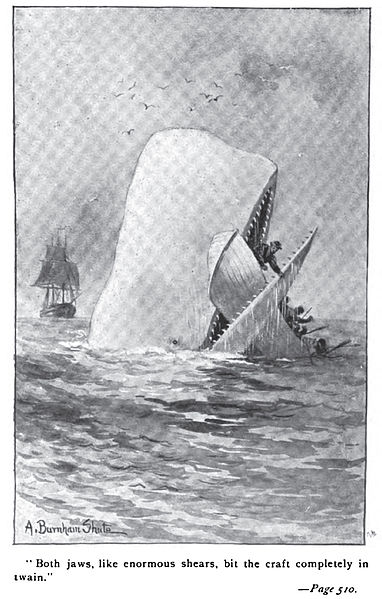
The War-Mongers Find Their Great White Whale

Der Speigel reports that a German ship that allegedly picked up Iranian weapons in (US-dominated) Djibouti and headed from there towards Syria has been stopped to check whether the allegation it contains arms is correct.

A German-owned freighter loaded with weapons from Iran was stopped on Friday near the Syrian port of Tartus in the Mediterranean Sea, SPIEGEL has learned.

A few days prior, the Atlantic Cruiser, owned by the Emden carrier Bockstiegel, had allegedly picked up heavy military equipment and munitions meant for Syrian dictator Bashar Assad’s regime from an Iranian freighter at the Djibouti port. The cargo, desperately needed reinforcements for Assad’s crackdown on dissidents, was supposed to be unloaded on Friday.But defectors from inside the Syrian government had learned of the delivery and warned the shipping company. On Friday the Atlantic Cruiser suddenly changed course, heading for the Turkish harbor of Iskenderun instead. Then the ship stopped some 80 kilometers (50 miles) southwest of Tartus, sailing in circles for the next few hours.

“We stopped the ship after getting information on the weapons cargo,” shipping agent Torsten Lüddeke of Hamburg-based C.E.G. Bulk Chartering told SPIEGEL.

Iran? Check. Providing arms to Bashar al-Assad? Check. Exposed by (western-backed) rebels? Check.

The whole thing seems made to order for those trying to sow war against Iran and its allies.

The best part of this–at which none of the newspapers reporting on this seem to have blinked–is the name of the shipping company that chartered the ship:

the ship had been chartered by an Odessa, Ukraine-based company called White Whale Shipping

Hahahahaha! This is rich! We’re hunting a white whale in the eastern Mediterranean as people try to gin up another war.

Share this entry

CIA General Counsel: The Osama bin Laden Killing Was Legal Because … “Triumph!”

In this post, I unpacked how the CIA General Counsel, Stephen Preston, managed to argue that “the CIA is an institution of laws and the rule of law is integral to Agency operations” even while admitting that courts had no review over many of its activities.

In the rest of his speech, Preston examines a “hypothetical case” that I will eventually argue is the Anwar al-Awlaki killing, and then a concrete example, the Osama bin Laden killing.

While the OBL case doesn’t elucidate much–anything–really about CIA’s legal process, I want to examine what Preston said because it’s so lame.

The OBL section takes up 794 words out of the 3,488 words total in the speech–over a fifth of the speech. Preston starts by claiming (in just over 50 words) he wants to examine the OBL example because it shows “that the rule of law reaches the most sensitive activities in which the Agency is engaged.”

In the next paragraph (68 words) Preston says he won’t dwell on the importance of the OBL op in terms of the larger fight against al Qaeda, because that’s already been covered; instead, he’ll focus on the law. Except,

But if you will indulge me, there are a few other aspects of this historic event that warrant mention up front.

Preston then spends three paragraphs describing what a “triumph” of intelligence (195 words), an example of momentous Presidential decision-making (70 words), and a “triumph” for our military (164 words) the op was. Preston spends well over half the section of the speech purporting to show that the rule of law reached the most sensitive CIA ops talking, instead, about what a triumph nailing OBL is.

That’s the kind of analysis he’s conducting to make sure all this is legal, I guess? Will it be a “triumph”?  Read more

Share this entry

Data Mining Adoptive Parents along with Suspected Terrorists

I’m a sucker for groups of adoptive kids. Like the time when a group of Michigan families with adopted Ethiopian kids had a rambunctious reunion at my favorite Ethiopian restaurant, with the owner catering to the kids like a grandparent. Or the time I shared a restaurant in Guangzhou with a bunch of French families who had just picked up their baby daughters; they somehow expected these girls who had lived in Chinese orphanages to immediately understand how to act like proper French kids.

There’s a lot that can be abusive in international adoptions, but when I see joyful gatherings like these, I’m awestruck by the faith such parents have in our common humanity.

Which is why I’ve been obsessing by one of the implications of this post. As I noted, DHS’s Inspector General helpfully explained that among all the other people in DHS’ IDENT database are the American citizens who had adopted internationally.

Individuals with fingerprints in IDENT include persons with an immigration history, such as aliens who have been removed but have reentered the country, immigration visa applicants, legal permanent residents, naturalized citizens, and some U.S. citizens.
IDENT includes two categories of U.S. citizens:

  • Citizens who have adopted a child from abroad (which involves U.S. Citizenship and Immigration Services), participated in a trusted traveler program, or may have been fingerprinted by immigration officials for smuggling aliens or drugs across U.S. borders;
  • Individuals who were not citizens at the time that their fingerprints were collected, but subsequently became citizens through naturalization, legal permanent residency, or immigration.[my emphasis]

Now, we can be pretty sure that when NCTC decided it needed to acquire US agency databases and data mine them with their existing terrorism databases, complete with the US person data they included, the IDENT database–the primary purpose of which is to track people who’ve come through the immigration system–was one of the first databases they went after.

Which is another way of saying the US persons in the IDENT database should assume they’ll also be in NCTC’s databases for five years. Including those parents who adopted children from China or Ethiopia or Guatemala or Romania.

“Well, if they’ve done nothing wrong they don’t have anything to be worried about.”

Perhaps. Except that the kind of people who adopt kids internationally may also tend to have reason for a significant number of international connections, whether because of religious faith, an effort to establish some tie to their child’s native country, or a comfort with international travel.

There are a lot of people whose biometric data shouldn’t be mined along with a bunch of terrorist suspects. At the top of that list, though, are families whose primary interaction with Bureau of Customs and Immigration Services entailed adopting a baby from another country.

Share this entry

Did Covert Officer A–Whose Identity John Kiriakou Allegedly Leaked–Leave the CIA?

DOJ has apparently failed in its efforts to get John Kiriakou to agree to a plea deal; they’ve just indicted him.

Interestingly, the indictment describes Covert Officer A–whose identity Kiriakou allegedly leaked–differently than the complaint did. The complaint described him this way:

Covert Officer A is currently a covert CIA employee whose relationship to the CIA has been classified for more than two decades.

Here’s how the indictment describes him:

Covert Officer A was a covert CIA employee whose association with the CIA has been classified for more than two decades. Covert Office A was a covert agent as defined at Title 50, United States Code, Section 426(4), and the United States Government was taking affirmative measures to conceal Covert Officer A’s intelligence relationship to the United States. The association of Covert Officer A with the [Rendition, Detention, and Interrogation] Program was also classified and constituted national defense information. [my emphasis]

With the exception of the bolded passage, the information on Covert Officer A’s relationship to the CIA is now all past tense.

Which suggests several possibilities: That Covert Officer A’s status has been changed to permit this prosecution; Covert Officer A is no longer covert (though is still classified); Covert Officer A has left the CIA; or that Covert Officer A is no longer alive. Update: DOJ says this is the way they normally write their indictments.

Alternately (given the way the CIA screws up leak investigations) maybe they were giving Pat Fitzgerald bad information during the investigation. Nahh! The CIA wouldn’t screw up another leak prosecution, would they?

Update: Compare how they describe Covert Officer A with how they describe Deuce Martinez–whose employment, but not identity–is described in the past tense.

Officer B was employed by the CIA as an analyst assigned to the CIA Counterterrorism Center. Though the fact that the CIA employed Officer B was not itself classified, the associations of Officer B with the RDI Program and with the Abu Zubaydah operation were classified and constituted national defense information.

Update: The DOJ announcement says Covert Officer A “remains covert.”


Share this entry

The National Security Council Was Briefed on Anna Chapman before Her Arrest

I frankly wasn’t all that interested in the news that Russian spy Anna Chapman was setting a honey trap for an Obama cabinet official…

In a documentary broadcast last night, FBI counter-intelligence chief Frank Figliuzzi claimed the glamorous Russian agent got close enough to ‘disturb’ U.S. spy catchers.

He said the fear that Miss Chapman was close to seducing a sitting member of the Obama administration spurred agents to swoop on the 10-strong spy ring of which she was a part.

Mr Figliuzzi told the Channel 4 documentary the auburn-haired spy got ‘closer and closer to higher and higher ranking leadership… she got close enough to disturb us.’

‘We were becoming very concerned,’ he said. ‘They were getting close enough to a sitting US cabinet member that we thought we could no longer allow this to continue.’

Until Laura Rozen noted that Peter Orszag left the White House in July 2010. Since most of the cabinet level officials with some base in NY, where Chapman lived and socialized–like Hillary Clinton and Susan Rice–are female, I simply hadn’t thought that much about who her target could have been. Though Orszag presents an interesting possibility (not least because he was personally involved in our cybersecurity efforts at the time). And an even more interesting date, to me, is the day the White House announced his departure: June 22, just 3 days before they started rolling up the Russian spy network.

Now, whether or not Orszag was the target (I’ve got some other suspicions, and if he was, Chapman would have been targeting Orszag during the period after he got engaged but before he got married), her comment was enough to get me to refer back to my coverage on Chapman’s arrest.

And there are a few interesting details about it. Here’s a timeline I put together:

June 9: Chapman’s laptop chats with Russian Official #1 surveilled

June 11: Obama briefed about Russian spy swap

June 16: Chapman’s laptop chats with Russian Official #1 surveilled

June 18: Obama chairs NSC meeting on Russian spy swap

June 24: Obama and Dmitri Medvedev go to Ray’s Hell Burger

June 25: Complaint against 9 spies dated

June 26: FBI collects evidence against last two remaining spies; FBI agent says to Chapman, “I know you are going back to Moscow in two weeks.”

June 27: Spies arrested

June 29: Russian Foreign Minister Sergey Lavrov complains about timing of arrest; Obama reported to be miffed about timing of arrest; DOJ attributes timing to pending travel–presumably Chapman’s

Week of July 5: White House almost cancels spy swap because names of proposed spies in Russia leaked

July 10: Two weeks after FBI Agent said Chapman would be traveling to Russian in two weeks

Of particular note is the June 18 NSC meeting. Most key cabinet members that would make interesting targets for Russian spies are members of the NSC. Director of OMB attends NSC meetings that pertain to its area of responsibility. They all learned–at least in the abstract–of the looming spy trade on June 18, 2010, a week before the FBI started rolling up the spies.

Read more

Share this entry