Truck-sized Holes: Journalists Challenged by Technology Blindness

[photo: liebeslakritze via Flickr]

[photo: liebeslakritze via Flickr]

Note: The following piece was written just before news broke about Booz Allen Hamilton employee Edward Snowden. With this in mind, let’s look at the reporting we’ve see up to this point; problems with reporting to date may remain even with the new disclosures.

ZDNet bemoaned the failure of journalism in the wake of disclosures this past week regarding the National Security Administration’s surveillance program; they took issue in particular with the Washington Post’s June 7 report. The challenge to journalists at WaPo and other outlets, particularly those who do not have a strong grasp of information technology, can be seen in the reporting around access to social media systems.

Some outlets focused on “direct access.” Others reported on “access,” but were not clear about direct or indirect access.

Yet more reporting focused on awareness of the program and authorization or lack thereof on the part of the largest social media firms cited on the leaked NSA slides.

Journalists are not asking what “access” means in order to clarify what each corporation understands direct and indirect access to mean with regard to their systems.

Does “direct access” mean someone physically camped out on site within reach of the data center?

Does “direct access” mean someone with global administrative rights and capability offsite of the data center? Some might call this remote access, but without clarification, what is the truth?

I don’t know about you but I can drive a Mack truck through the gap between these two questions.

So which “direct access” have the social media firms not permitted? Which “direct access” has been taken without authorization of corporate management? ZDNet focuses carefully on authorization, noting the changes in Washington Post’s story with regard to “knowingly participated,” changed later to read “whose cooperation is essential PRISM operations.”

This begs the same questions with regard to any other form of access which is not direct. Note carefully that a key NSA slide is entitled, “Dates when PRISM Collection Began For Each Provider.” It doesn’t actually say “gained access,” direct or otherwise. Read more

Share this entry

DOD Inspector General Report: SOCOM Purged Their Osama bin Laden Files after Judicial Watch FOIA

I wanted to point to one more detail from the DOD Inspector General’s report on Leon Panetta’s leaks to Zero Dark 30’s filmakers.

The very last page of the report describes how Admiral William McRaven responded after realizing the SEALs who had participated in the raid on Osama bin Laden’s compound had all hung around a Hollywood producer with their name badges exposed.

According to ADM McRaven, the DoD provided the operators and their families an inordinate level of security. ADM McRaven held a meeting with the families to discuss force protection measures and tell the families that additional protective monitoring will be provided, and to call security personnel if they sensed anything. ADM McRaven also directed that the names and photographs associated with the raid not be released. This effort included purging these records to another Government Agency. [my emphasis]

The report doesn’t reveal when SOCOM purged its records and handed the documents to, presumably though not definitely, CIA, though if McRaven directed it, it happened after he took command in August 2011. (Update: That’s probably not right, as he was in command of the operation in any case.)

But it’s a relevant question because Judicial Watch had FOIAed pictures of OBL on May 3, 2011, and sued 10 days later, so before all the leaking and presumably therefore the purging began. On June 26, 2011, just two days after Panetta’s leaky party, the government stalled on the suit, saying Judicial Watch had not exhausted its administrative remedies. By September 26, DOD claimed they had no pictures of OBL (though earlier this year there were reports 7 new photos had been found) and CIA claimed none of the 52 pictures they had could be released. Along with that filing, McRaven submitted a declaration explaining why these photos couldn’t be released, though the interesting parts remain redacted. John Bennett’s declaration for the CIA does not describe when the Agency searched its files for photographs, and therefore doesn’t indicate whether they searched before or after DOD purged its files.

Now, none of this timing would mitigate CIA’s claims about the extremely grave harm that would arise from releasing OBL death porn.

But it is, at the very least, very sketchy — and all that’s before having a really good sense of when the purging and the FOIA response occurred.

Update: I spoke to Judicial Watch’s lawyer for this FOIA, Michael Bekesha, and they have never been informed of this purge. Though it may explain some other details about the progress of the FOIA, including some funkiness with the classification of the photos.

Update: Here’s DOD’s declaration about their search from September 26, 2011.

It’s interesting for two reasons. First, they make claims about SOCOM files that is the exact opposite of what DOD said in the NYT/ACLU FOIA for Anwar al-Awlaki related OLC memos. Whereas in the drone FOIA, they claimed CENTCOM handled SOCOM’s FOIA responses, this one says,

The mission of USSOCOM is to provide Special Operations Forces to defend the United States and its interests. A priority of USSOCOM is to “Deter, Disrupt, and Defeat Terrorist Threats,” and a primary aspect of this priority is to plan and conduct special operations. When a special operation is conducted, the military service Components of USSOCOM (U.S. Army Special Operations Command, Navy Special Warfare Command, U.S. Air Force Special Operations Command, and Marine Corps Special Operations Command) provide Special Operations Forces (personnel and equipment) to the operation. Accordingly, it is DoD FOIA policy that documents created or maintained by these military service Components during or for a joint special operation come under the cognizance of USSOCOM and not the military services for purposes of the FOIA. Therefore, USSOCOM and not the military services, is responsible for the searches of records responsive to plaintiff’s FOIA request at those service components that may have participated in the subject operation.

And like CIA, they don’t date their search description at SOCOM, so don’t say whether it happened pre- or post-purge.

USSOCOM searched the Headquarters and relevant Components, and no records responsive to plaintiff’s request were located. The specific filing systems searched at the Headquarters USSOCOM offices and relevant Components were all hard copy and electronic records including all email records during the inclusive dates of May 1, 2011, through May 31, 2011.

Share this entry

Putin’s Congressional Puppets

I have to give this to Michele Bachmann. Unlike most of the members of Congress she traveled to Russia with last week, she has not (at least not apparently) been suckered by Vladimir Putin to play his patsy.

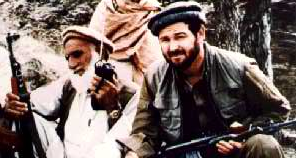
Jim already described Dana Rohrabacher’s posturing with Steven Seagal while he attempted to replay his glory days palling around with the mujahadeen. Subsequent to that, Rohrabacher defended Putin’s abuse of power in fighting his former soulmates.

“If you are in the middle of an insurrection with Chechnya, and hundreds of people are being killed and there are terrorist actions taking place and kids are being blown up in schools, yeah, guess what, there are people who overstep the bounds of legality,” he said.

While the rule of law is important, Rohrabacher added, “We shouldn’t be describing people who are under this type of threat, we shouldn’t be describing them as if they are Adolf Hitler or they’re back to the old Communism days.”

Meanwhile, both Rohrabacher and Steve King bravely defended Putin’s prosecution of Pussy Riot.

“It’s hard to find sympathy for people who would do that to people’s faith,” King said.

But I’m most amused by the script William Keating (who represents parts of Boston and its southwest suburbs) is speaking from, parroting FSB’s assurances that the Marathon attack could have been prevented if only FBI had been more responsive to the tip they had provided the FBI and CIA.

Keating said the letter contained a lot of details about Tamerlan Tsarnaev, including his birthday, telephone number, cellphone number, where he lived in Cambridge and information about his wife and child. He said it also referenced the possibility that Tsarnaev might be considering changing names.
The Russians also had information about his mother, including her Skype address, Keating said.
Keating told the AP that the Russians believed Tsarnaev wanted to go to Palestine and engage in terrorist activities, but was unable to master the language.
‘‘That was the level of detail they were providing in this letter,’’ Keating said.
Keating said the intelligence officials believed that if Russia and the U.S. had worked together more closely, the bombings might have been averted. He said a top Russian counterintelligence official told the delegation that ‘‘had we had the same level of communication as we do now, the Boston bombing may never have happened.’’

Note Keating doesn’t make clear whether the details from the texts on Palestine were included in what the Russians sent us (the Russians translated the letter for the CODEL), or whether they only now shared it with the CODEL.
Read more

Share this entry

Growing Signs of Intelligence from Intelligence Community, or Just Another Turf War?

On Saturday, I wrote about a remarkable about-face taken by AP’s George Jahn in his reporting on Iran’s nuclear technology. Instead of following his usual routine of parroting leaks from US and Israeli sources meant to put Iranian intentions on nuclear technology in the worst possible light, Jahn instead wrote about how dependent the UN’s IAEA is on US intelligence to develop its evaluation of what is happening in Iran. Further, Jahn highlighted how US credibility on WMD intelligence was forever harmed by the overstated evaluations of Iraqi WMD leading up the invasion of Iraq in 2003. My post was written from the point of view that somehow Jahn had realized how badly he has been played by the intelligence community over the years and has now decided to question the reliability of the information being fed to him.

In comments on the post, Marcy considered whether the reversal could be framed in a different way:

Not to get all 11-dimensional, but any chance his sources asked him to leak this? That is, more stenography, but to justify reversing course?

In what could be yet another framing of what is happening in the intelligence community, Lara Jakes of AP worte an article published Monday in which she described what may be a movement within the intelligence community to promote what appears to be a healthy move toward reasoned debate among the various agencies within the intelligence community. Couching the opening of the article within the uncertainty over whether Osama bin Laden really was at the compound in Abbottabad where he was eventually killed, Jakes describes what appears to be a new movement toward debate:

As the world now knows well, President Barack Obama ultimately decided to launch a May 2011 raid on the Abbottabad compound that killed bin Laden. But the level of widespread skepticism that Cardillo shared with other top-level officials — which nearly scuttled the raid — reflected a sea change within the U.S. spy community, one that embraces debate to avoid “slam-dunk” intelligence in tough national security decisions.

Wow. Here we have a second AP reporter making a reference to the failed Iraq intelligence in 2003 only two days after Jahn’s introspective that cited the same failure. But, when she finally revisits the “slam-dunk” reference many paragraphs later, Jakes elides the most important factor that led to the intelligence failure. Here is her description: Read more

Share this entry

Jahn Does Complete Reversal, Questions Sources Instead of Transcribing Iran Nuke Propaganda

Man Bites Dog

It was a development worthy of the proverbial mythical headline reversing the natural order of the world. For a very long time, I have mercilessly attacked George Jahn of the AP for the role he has played while serving to move anti-Iran propaganda into newspapers across the globe. Here’s how I described his usual role in my most recent post about him:

I have often described the process of “diplomats” close to the IAEA’s Vienna headquarters gaining access to documents and other confidential information relating to Iran’s nuclear activities and then selectively leaking the most damaging aspects of that information to George Jahn of AP. Sometimes, the information also is shared with Fredrik Dahl of Reuters, who, like Jahn, is also based in Vienna. Many believe that Israeli diplomats are most often responsible for these leaks and for shaping the stories to put Iran in the worst possible light.

Another key aspect of Jahn’s role has been his reliance on David Albright of the Institute for Science and International Security, whom Jahn has relied on regularly for adding that special “think-tank aura” to the propaganda that has been funneled to him.

Yesterday, the stage was set for Jahn to transcribe more propaganda into the record. A new IAEA report was available (pdf; I see that there is a typo on the date on the cover page, it is a 2013 report instead of the 2012 appearing there, note 2013 embedded in the document ID code) and David Albright had already taken to the fainting couch, proclaiming the evil portents of the sudden appearance of New Asphalt (!) at the Parchin site in Iran where the US and Israel claim Iran has carried out blast chamber experiments to develop a trigger for a nuclear weapon (and where the suspect building, and presumably the blast chamber itself, itself remains standing, despite a hilarious cat and mouse game Iran has played at the site). But, in true “man bites dog” fashion, Jahn chose not to play the New Asphalt game and instead published an article that puts much of the intelligence gathering of the IAEA into a perspective that calls into question the motives of those who supply the bulk of that intelligence to the UN’s nuclear watchdog agency.

Jahn wastes no time, opening the article by proclaiming that the US supplies the bulk of intelligence on Iran’s nuclear program to the IAEA and that US credibility on weapons intelligence took a huge hit in 2003 with the Iraq fiasco:

The U.N. nuclear agency responsible for probing whether Iran has worked on a nuclear bomb depends on the United States and its allies for most of its intelligence, complicating the agency’s efforts to produce findings that can be widely accepted by the international community.

Much of the world looks at U.S. intelligence on weapons development with a suspicious eye, given American claims a decade ago that Iraq had developed weapons of mass destruction. The U.S. used those claims to justify a war; Iraq, it turned out, had no such weapons.

Jahn even went so far as to get IAEA sources to provide an estimate of how the US and its allies dominate the intelligence that is provided: Read more

Share this entry

Tamerlan Tsarnaev: Not a Step by Step Investigation

Screen shot 2013-05-24 at 12.19.43 PMIn a piece summarizing investigators’ understanding of Tamerlan Tsarnaev based largely on their investigations in Russia, ABC unironically quotes Dana Rohrabacher — who used to play dress-up mujahadeen when they were fighting Russia in Afghanistan — on intelligence-sharing tensions with Russia.

That communication gap has become a target for a group of American lawmakers who plan to visit Russia next week to investigate the bombing.

“If there was a distrust, or lack of cooperation because of that distrust, between the Russian intelligence and the FBI, then that needs to be fixed and we will be talking about that,” Rep. Dana Rohrabacher (R-Calif.), the chairman of the House Committee on Foreign Affairs’ Subcommittee on Europe, Eurasia and Emerging Threats who is leading the Congressional delegation, told ABC News by telephone.

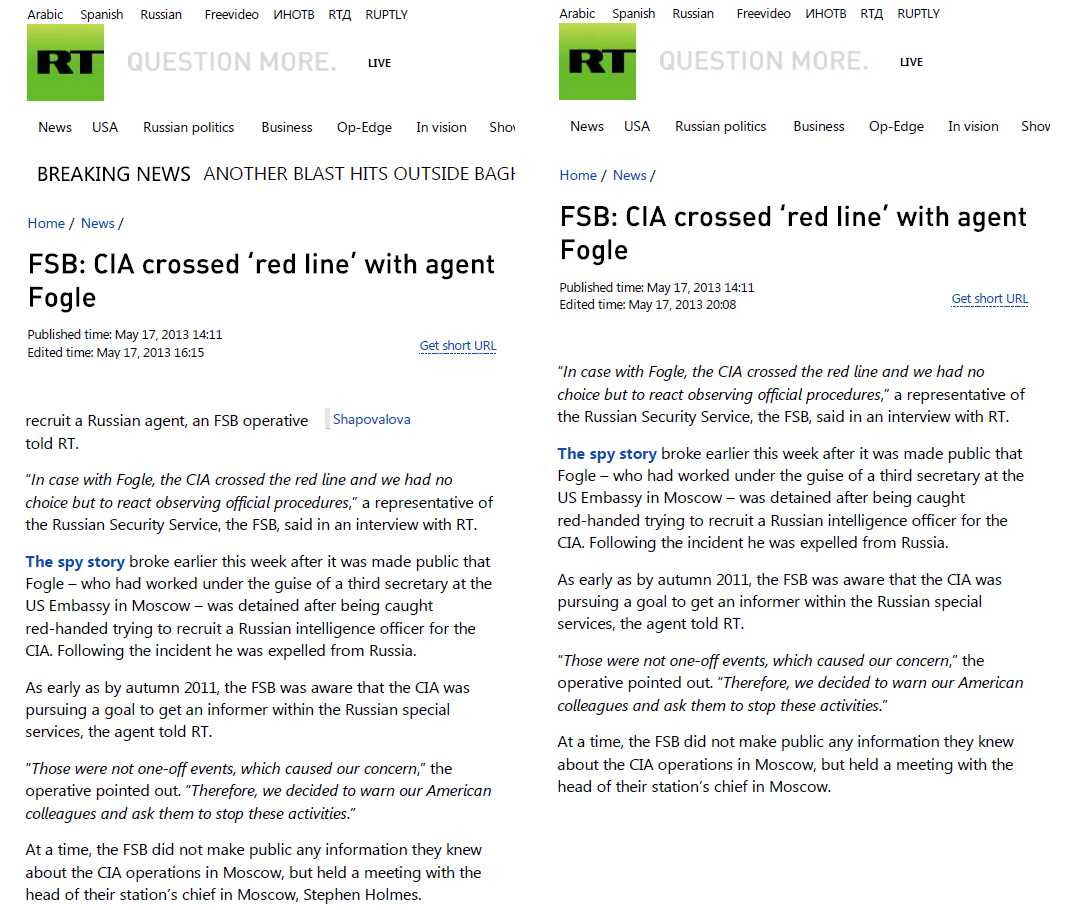
ABC makes no mention of the recent escalation of intelligence tensions, from the failed recruitment in March followed by the refused entry on May 5 of US lawyer Thomas Firestone, the May 14 exposure of Ryan Fogle, who allegedly was attempting to recruit FSB’s expert on Chechen extremists, and the May 17 exposure of someone FSB claimed was CIA’s Station Chief in Moscow.

That is, ABC doesn’t point to the pretty extraordinary ways Russia is trying to drive up tensions even as we’re supposed to be working together to understand the Boston Marathon attack.

Nor does it mention that the FBI “and other law enforcement personnel” killed Russian Ibragim Todashev, just as they were purportedly getting him to sign a confession to involvement, with Tamerlan, in a grisly 2011 triple murder.  The now-dead Todashev will not be able to shed any more light on what kind of relationship he had with Tamerlan, nor what relations with Russian nuts of all types they might have had.

There’s a lot it doesn’t mention.

It does, however, in the 25th and 26th paragraph (the last two), admit this:

While the officials described their cooperation with the Russians as “unprecedented,” they grumbled privately that they have been unable to do a methodical step-by-step investigation like they are used to doing in the U.S., or even in other countries where they have long-standing cooperation. American investigators from the FBI have been unable to travel to Dagestan without permission from the Russian authorities.

Still, they insist they have been able to confirm much of what they have been told by Russian government officials from what one official vaguely described as “other channels.”

I do hope these “other channels” are truly independent. Because it seems Russia is not only limiting the degree to which the FBI can investigate Tsarnaev, but inventing new reasons to add to tensions with the US.

Share this entry

“At the Highest Levels of the U.S. Government” … Like the President?

Update: Obama did, in fact, take responsibility for ordering the killing.

And as President, I would have been derelict in my duty had I not authorized the strike that took out Awlaki.

There’s something missing from Eric Holder’s 8 paragraphs justifying the assassination of Anwar al-Awlaki.

In spite of the many sanctioned leaks asserting that President Obama “insist[s] on approving every new name on an expanding ‘kill list,'” Holder never explicitly says Obama did so with Awlaki. The Attorney General attributes the decision itself to “high-level U.S. government officials,” “senior officials,” and “senior officials” again.

Here’s how he describes the review process:

The decision to use lethal force is one of the gravest that our government, at every level, can face. The operation to target Anwar al-Aulaqi was thus subjected to an exceptionally rigorous interagency legal review: not only did I and other Department of Justice lawyers conclude after a thorough and searching review that the operation was lawful, but so too did other departments and agencies within the U.S. government.

The decision to target Anwar al-Aulaqi was additionally subjected to extensive policy review at the highest level of the U.S. Government, and senior U.S. officials also briefed the appropriate committees of Congress on the possibility of using lethal force against al-Aulaqi. Indeed, the Administration informed the relevant congressional oversight committees that it had approved the use of lethal force against al-Aulaqi in February 2010 — well over a year before the operation in question — and the legal justification was subsequently explained in detail to those committees, well before action was taken against Aulaqi. This extensive outreach is consistent with the Administration’s strong and continuing commitment to congressional oversight of our counterterrorism operations — oversight which ensures, as the President stated during his State of the Union address, that our actions are “consistent with our laws and systems of checks and balances.”

Sure, the code words meaning “the President” are in there: “at every level,” “at the highest level of the U.S. Government.” It quotes Obama’s State of the Union address at the very end, like a flourish detached from the nasty killing bit.

And the process described here, where “the Administration” informs the intelligence committees of the lethal force operations “it had approved,” is clearly that of a covert op, which requires the President’s to inform Congress of covert ops he has approved.

But unlike DOJ and the congressional committees, he’s not named in the decision process that ended up killing Awlaki. (Though Holder does later say that Obama approved the Disposition Matrix which he describes will soon be briefed to Congress, which of course implies Presidential approval for all the drone deaths to come, but not Awlaki’s.)

This might be a picayune observation if this Administration had not, secretly, made almost unprecedented efforts to keep a short phrase indicating the President (Bush) had authorized the torture program.

In his letter, Holder references Obama’s Archives Speech pledge that “whenever possible, my administration will make all information available to the American people so that they can make informed judgments and hold us accountable” (though in Holder’s letter, the “us” becomes “their Government”). He ends this letter by assuring its recipients “that the President and his national security team are mindful of this Administration’s pledge to public accountability for our counterterrorism efforts.”

But on the specific issue of Anwar al-Awlaki’s killing, this letter allows Obama (along with the CIA and DOD, presumably to avoid helping the ACLU in its FOIA — though it may be too late) to avoid any accountability.

Perhaps tomorrow Obama will stand before a bunch of cameras and admit “I personally ordered an American citizen to be drone killed.” But this letter feels like an effort to help him avoid publicly accepting just that responsibility.

Update: As QuietAmerican reminded me, Obama is quoted in that NYT piece as saying the decision to kill Awlaki was “an easy one.”

Share this entry

The Laughable Currently Operative AP Pushback Story

It has taken several days for the government — apparently, almost exclusively DOJ — to try to spin its secret seizure of AP call records. The new version of the government’s ever-evolving story is that the reason the AP story was so damaging was because it prevented CIA from using the mole to locate Ibrahim al-Asiri, AQAP’s bomb-maker.

Here’s how the guy who headed DOJ’s Office of Legal Policy until last year explained this on Friday.

About a year ago, someone within the government who had access to highly classified information about an intelligence operation in Yemen involving a double agent saw fit to talk about it with the Associated Press. When senior government officials learned that the Associated Press had this story and intended to publish it, those officials realized that the agent’s cover had been blown. Anxious for his safety, the officials prevailed on the AP to delay publication so that first the agent’s family and then the agent himself could be extracted to safety. The AP then published its story, which focused on thwarting a plot to use a new and improved underwear bomb to blow up an airplane bound for the United States.

What went completely without mention in the initial coverage was the fact that thwarting this plot was not the objective of the ongoing undercover operation. Its true objective was to gain enough intelligence to locate and neutralize the master bomb builder, Ibrahim Hassan al-Ashiri, who works with an Al-Qaeda affiliate, Al-Qaeda in the Arabian Peninsula (AQAP). Penetrating AQAP is incredibly difficult. This double agent provided a rare opportunity to gain critical, life-saving information. Whoever disclosed the information obtained by the AP had not only put the agent’s life and his family’s life in danger. He also killed a golden opportunity to save untold more lives that now remain at risk due to al-Ashiri remaining at large.

Here’s how three former high-ranking DOJ officials explained it in an op-ed today.

The United States and its allies were trying to locate a master bomb builder affiliated with Al Qaeda in the Arabian Peninsula, a group that was extremely difficult to penetrate. After considerable effort and danger, an agent was inserted inside the group. Although that agent succeeded in foiling one serious bombing plot against the United States, he was rendered ineffective once his existence was disclosed.

And here’s how Walter Pincus reported it today.

Whoever provided the initial leak to the Associated Press in April 2012 not only broke the law but caused the abrupt end to a secret, joint U.S./Saudi/British operation in Yemen that offered valuable intelligence against al-Qaeda in the Arabian Peninsula.

One goal was to get AQAP’s operational head, Fahd Mohammed Ahmed al-Quso. That happened one day before the AP story appeared.

A second goal was to find and possibly kill AQAP bombmaker Ibrahim Hassan al-Asiri, whose first underwear device almost killed Prince Mohammed bin Nayef, Saudi Arabia’s anti-terrorism chief.

[snip]

Hitting targets in the United States is one of AQAP’s goals. In association with Saudi intelligence, the CIA inserted a Saudi who convinced AQAP that he wanted to be a suicide bomber. Eventually he was outfitted with Asiri’s newest device, which he was to use on a U.S. aircraft. After the device was delivered to U.S. officials, someone or several people leaked the information to the AP. [my emphasis]

Now, Pincus’ story is generally balanced. Unlike the other two, he admits that Fahd al-Quso got killed while the AP held their story and that, in killing Quso, the government accomplished at least one objective of the mole’s mission and did so thanks to AP’s willingness to cede to government requests about this story. He also admits that before the AP ever came to the government with the story, the mole’s UndieBomb had already been delivered to the US.

That chronology is important. And it is one backed by the government’s official timeline (not to mention the CNN report that said the mole had turned over the bomb around April 20 and the report that Robert Mueller traveled to Yemen for an unscheduled 45 minute meeting on April 24). The day after the AP story, Jay Carney said that Obama had been informed about the plot in “early April.”

Q Do you expect that he’ll address at all — I know we got statements yesterday, but the Yemeni al Qaeda plot, do you think he will address that at all in his remarks today?

MR. CARNEY: I don’t expect him to address that issue in his remarks. I mean, I will say that he’s certainly pleased with the success of our intelligence and counterterrorism officials in foiling the attempt by al Qaeda to use this explosive device. It is indicative of the kind of work that our intelligence and counterterrorism services are performing regularly to counter the threat posed by al Qaeda in general, and AQAP in particular.

So he was regularly — as you know, he was made aware of this development in early April and he was regularly briefed on it by John Brennan. [my emphasis]

The NSC’s official statement on that day also said Obama had been informed of the plot in April.

So the government rolled up the plot in April — almost certainly by April 24 — and then the AP came to the CIA and White House with their story about a foiled plot on May 2.

It’s that timing that undermines the claim that the government still hoped to use the mole to get at Ibrahim al-Asiri. Because to maintain that claim, you’d have to explain how an AQAP operative who had been entrusted with the latest version of Ibrahim al-Asiri’s UndieBomb sometime in early April, had left (at least as far as Sanaa), had not apparently succeeded in his mission (which was, after all, meant to be a suicide bombing), could return to AQAP without the UndieBomb and infiltrate even further than he had the first time.

“Oh, hi, AQAP gatekeeper” — their story must imagine the mole saying as he returned to AQAP — “I’ve both failed in my mission and somehow lost the bomb you gave me, but based on that would you be willing to let me spend some quality time with even higher-ranking AQAP operatives?”

The government must believe AQAP has far worse counterintelligence than Asiri’s longevity would seem to suggest. Alternately, they’re just inventing stories right now to justify their seizure.

Read more

Share this entry

The James Rosen Affidavit Was the 20th Document in the Docket

Screen shot 2013-05-20 at 3.45.46 PMThe is sort of a weedy point.

But if you look at the docket associated with DOJ’s attempt to get James Rosen’s communications, you’ll see it is listed as document 20 in the docket.

Yet no other documents — aside from the order approving the warrant — appear, unsealed, in the docket.

We can’t be sure, but I wonder whether the 19 earlier, still-sealed documents in the docket constitute unsuccessful efforts to get this material. For example, I wonder whether Google initially balked at supplying the material based on the Privacy Protection Act, so DOJ invented the language claiming Rosen was a co-conspirator in Espionage which (at pages 4-5) exempted the materials in question from privacy protection.

In addition, the return associated with the affidavit shows how Google would narrow the search to just those communications between Rosen and Stephen Jin-Yoo Kim. Which suggests some of those 19 earlier documents may have been Google’s successful attempt to limit an earlier much broader request including all of Rosen’s communications.

Particularly given Kim’s quoted blame for being snookered on Rosen, I wonder whether DOJ initially really was going to claim he was responsible for the leak?

In any case, if I were Fox News, I would move to unseal the docket.

Share this entry

Did AP Learn about Fake UndieBomb 2.0 because Real Marshals Deployed to Prevent It?

In my next post, I’m going to revisit this post, where I showed 372 days ago that at least one or two of the major early sources for the most damning information on UndieBomb 2.0 came from non-US based sources.

But before that, check out this passage from the ABC story that first revealed UndieBomb 2.0 was an inside job.

The plot appeared timed to coincide with the first anniversary of Osama bin Laden’s death, but the bomber did not get as far as purchasing plane tickets or choosing a flight. As ABC News first reported last week, the plot led the U.S. to order scores of air marshals to Europe to protect U.S.-bound aircraft. Flights out of Gatwick Airport in England received 100 percent coverage, according to U.S. officials.

While I haven’t been able to find the reporting in question [update: see below], at least according to the article, ABC had been told the previous week — around the same time the AP first learned about the purported UndieBomb 2.0 plot — that there was a massive effort on the part of the US Air Marshals to cover a bunch of US-bound planes …

… that the Intelligence Community knew had no UndieBomb on board.

Read more

Share this entry