War against Ukraine’s sovereignty by Russia and pro-Russian separatists

How the Deep State Taught Stephen Miller to Love Socialism

Recent reporting suggests that the CIA — more than Trump’s other top intelligence advisors — continues to give the President unvarnished advice. And by yoking that advice to spectacular covert operative success (and probably a good deal of boasting to the press), the CIA seems to be building value with Trump and his stupider advisors (with the exception of the deliberately stupidest, Steve Witkoff).

Remain in Ukraine

Take Ukraine. A recent profile of how the US betrayed Ukraine describes the CIA has remained there fighting.

But there was a counternarrative, spooled out largely in secret. At its center was the C.I.A.

Where Mr. Hegseth had marginalized his Ukraine-supporting generals, the C.I.A. director, Mr. Ratcliffe, had consistently protected his own officers’ efforts for Ukraine. He kept the agency’s presence in the country at full strength; funding for its programs there even increased. When Mr. Trump ordered the March aid freeze, the U.S. military rushed to shut down all intelligence sharing. But when Mr. Ratcliffe explained the risk facing C.I.A. officers in Ukraine, the White House allowed the agency to keep sharing intelligence about Russian threats inside Ukraine.

CIA didn’t just remain in Ukraine collecting intelligence. They’ve played a role in Ukraine’s spectacular success in using drone attacks to degrade Russia’s security.

In June, beleaguered U.S. military officers met with their C.I.A. counterparts to help craft a more concerted Ukrainian campaign. It would focus exclusively on oil refineries and, instead of supply tanks, would target the refineries’ Achilles’ heel: A C.I.A. expert had identified a type of coupler that was so hard to replace or repair that a refinery would remain offline for weeks. (To avoid backlash, they would not supply weapons and other equipment that Mr. Vance’s allies wanted for other priorities.)

Russia no doubt understands the CIA remains intelligent (heh) and focused on its original adversary. When they recruited Witkoff to manage Trump’s capitulation, they specifically ordered him not to bring CIA.

Steve Witkoff, a billionaire real-estate developer and longtime golfing partner of Donald Trump, was just days into his job as the new president’s special envoy to the Middle East when he received a tantalizing message from the crown prince of Saudi Arabia.

Vladimir Putin was interested in meeting Witkoff—so interested that he might consider releasing an American prisoner to him. The invitation came from a Kremlin moneyman named Kirill Dmitriev, using the de facto Saudi ruler, Mohammed bin Salman, as an intermediary.

There was just one thing: Witkoff would be expected to come alone, without any CIA handlers, diplomats or even an interpreter, a person familiar with the outreach said.

And Witkoff, obedient to Putin’s demands, continues to refuse CIA briefings.

Witkoff has declined multiple offers from the CIA for a briefing on Russia.

[snip]

Ahead of his trip, the CIA offered to brief Witkoff; he declined. Nor was he accompanied by an interpreter: He had been told that Russia’s president wouldn’t allow him to bring another person into the meeting.

A White House official said he participated in multiple briefings before his first trip to Russia, including Trump’s intelligence briefing. The CIA regularly briefs him on other issues like Gaza—but not Russia.

Inform Trump that Ukraine did not strike Russia

The thing is, the ability to provide accurate intelligence and (I assume this was more important) really cool attacks that make the attacker look strong appears to be increasing the CIA’s value to Trump.

Not only did CIA conclude (unsurprisingly) that Putin was lying when he recently claimed that Ukraine had attempted to target his residence,

The CIA has assessed Ukraine was not targeting a residence used by Russian President Vladimir Putin in a recent drone attack in the north of his country, according to US officials, undercutting an assertion the Russian leader had made to President Donald Trump in a Monday phone call.

The CIA’s director John Ratcliffe briefed Trump on the assessment Wednesday, the officials said.

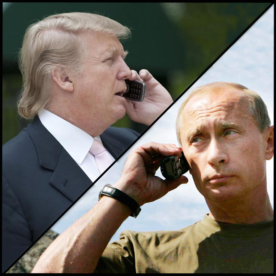
Russia had publicly raised allegations Ukraine attempted to hit Putin’s home Monday, and Trump told reporters Putin had told him of it over the phone. At the time, the president said he was troubled by the reported action, seeming to believe the Russian leader even as Ukraine strenuously denied it was behind any such attack.

“I don’t like it. It’s not good,” Trump said, describing himself as “very angry” upon hearing the claim.

But in the wake of Ratcliffe’s briefing, Trump has repeated that conclusion.

President Donald Trump on Sunday told reporters that U.S. officials have determined that Ukraine did not target a residence belonging to Russian President Vladimir Putin in a drone attack last week, disputing Kremlin claims that Trump had initially greeted with deep concern.

Russian Foreign Minister Sergey Lavrov last week said Ukraine launched a wave of drones at Putin’s state residence in the northwestern Novgorod region that the Russian defense systems were able to defeat. Lavrov also criticized Kyiv for launching the attack at a moment of intensive negotiations to end the war.

The allegation came just a day after Ukrainian President Volodymyr Zelenskyy had traveled to Florida for talks with Trump on the U.S. administration’s still-evolving 20-point plan aimed at ending the war. Zelenskyy quickly denied the Kremlin allegation.

Trump said that “something happened nearby” Putin’s residence but that Americans officials didn’t find the Russian president’s residence was targeted.

“I don’t believe that strike happened,” Trump told reporters as he traveled back to Washington on Sunday after spending two weeks at his home in Florida. “We don’t believe that happened, now that we’ve been able to check.”

Sure, this is just one instance, one single time when Trump believed his own spooks over Putin. But given that Trump first started to parrot obviously bullshit Russian claims eight years ago, in Helsinki, the fact that Trump would accept CIA’s judgment and in the process withstand an obvious attempt to pull Trump back towards capitulation, the instance feels momentous.

Venezuela central to success of operation

And given the CIA’s role in delivering one of the most sadistic thrills of this term, Trump may have no way back.

NYT dedicated an an entire story to describing how CIA (probably assisted by the $50 million reward the FBI offered) recruited someone within Maduro’s government who shared details of the dictators pattern of life.

The American spy agency, the people said, produced the intelligence that led to the capture of Mr. Maduro, monitoring his position and movements with a fleet of stealth drones that provided near constant monitoring over Venezuela, in addition to the information provided by its Venezuelan sources.

The C.I.A. had a group of officers on the ground in Venezuela working clandestinely beginning in August, according to a person familiar with the agency’s work. The officers gathered information about Mr. Maduro’s “pattern of life” and movements.

It is not clear how the C.I.A. recruited the Venezuelan source who informed the Americans of Mr. Maduro’s location. But former officials said the agency was clearly aided by the $50 million reward the U.S. government offered for information leading to Mr. Maduro’s capture.

Given how volatile things are in Venezuela, the CIA may not be able to sustain this person’s loyalty (or life, not least because Trump has made it a lot harder to support assets in various ways).

But for now, the CIA is taking credit for a key role in one of Trump’s only successes — and Trump is boasting of their work (again, in ways that may get assets in the field killed).

Advise Trump to keep regime members

Even before that success, though, CIA advised — and Trump heeded their advice — to stick with a Maduro loyalist to govern after his snatching. WSJ reports that senior Trump officials asked for this analysis weeks before the snatch.

Senior Trump administration officials commissioned the CIA to undertake the analytical assessment and debated it during discussions about day-after plans for Venezuela, the people said. The people familiar with the assessment said they were unsure of the precise date it was produced.

The report was briefed to Trump in recent weeks, according to two of the people.

The assessment didn’t describe how Maduro could lose power, or advocate for removing him, but attempted to gauge the domestic situation in Venezuela in the event that he did, people familiar with it said.

The intelligence report, the people said, cited Rodríguez and two other top Venezuelan regime figures as possible interim rulers who could keep order. The people familiar with the assessment didn’t identify the other two officials, but besides Rodríguez, the two most influential power brokers are Interior Minister Diosdado Cabello and Defense Minister Vladimir Padrino.

This advice may well backfire in the near term. It is undoubtedly the case that a Chavista will have far more ability to sustain order. But particularly given Trump’s belated realization that the oil won’t pay for itself — and the US government will have to subsidize oil development, it will very quickly sour at least some of the people most excited by this invasion, the Cuban-American community.

And ultimately, the Administration has gone all in with Chavistas who rule through brutal repression, as Stephen Miller said in that batshit interview with Jake Tapper where he also repeatedly said that Venezuela is an island.

For those who may be indicted, the best choice they can possibly make is to be part of a constructive decision-making process for the future of Venezuela. The best decision they can make is to cooperate fully and completely with the United States to be part of building this brighter future for Venezuela.

When Miller envisions cooperating with the other people who were indicted, he’s stating that he’s happy to cooperate with Diosdado Cabello, who has been far more involved in the day-to-day trafficking than Maduro, and who is very much an ideological Chavista.

Stephen Miller went on TV — around the same time as Trump said he was going to give welfare to oil companies so they could benefit Venezuela — and bragged about working with precisely the socialists he has defined his entire existence in opposition to.

John Ratcliffe’s CIA, the Deep State! after building Donald Trump’s trust over a year, convinced Stephen Miller to love socialists.

Ratcliffe bypassed the DNI gatekeeper

Meanwhile, Tulsi has remained silent since the snatch.
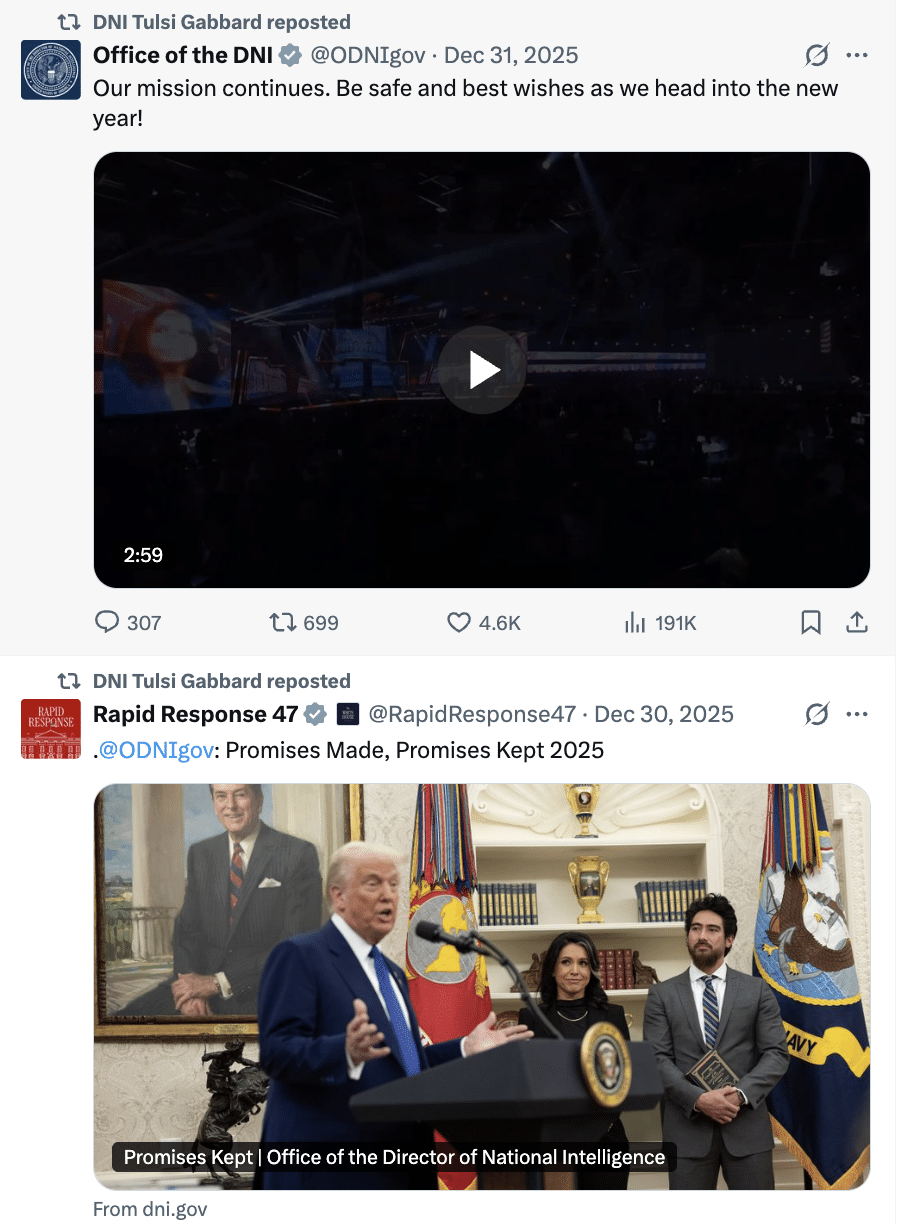
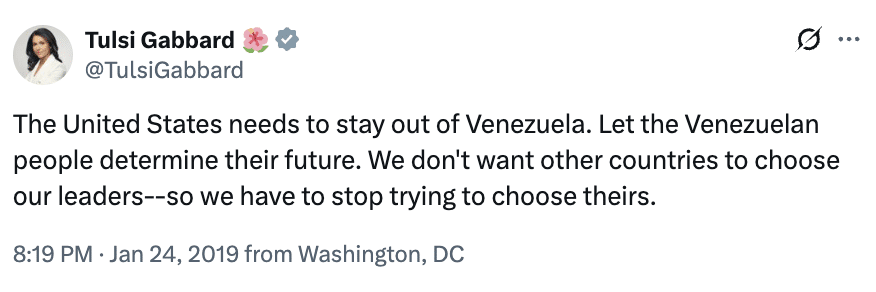
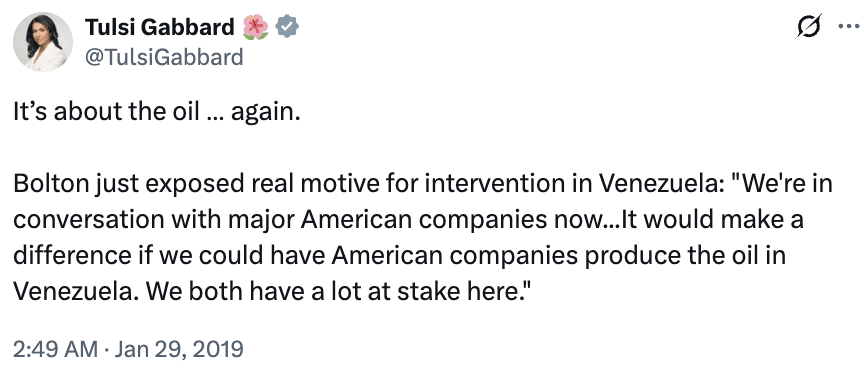
Leaving people to mock her past statements predicting precisely what is happening in Venezuela.
Tulsi almost lost her job in advance of the Iran strikes after posting a video warning of World War III.

It’s not necessarily a good thing that Tulsi’s skepticism is being supplanted with Ratcliffe’s willingness to go big on covert operations. Both of them suck. Neither can offer wise counsel to Trump (but both likely know Venezuela is not an island).

But at least some reality has begun to seep into Trump’s thinking.

Update, January 8: Sure enough, Bloomberg reports that Tulsi was systematically excluded from the planning for Venezuela.

The White House excluded Director of National Intelligence Tulsi Gabbard from months of planning to oust Nicolas Maduro because her previous opposition to military action in Venezuela cast doubt on her willingness to support the operation, people familiar with the matter said.

The move to cut Gabbard out of the meetings was so well-known that some White House aides joked that the acronym of her title, DNI, stood for “Do Not Invite,” according to three of the people. They asked not to be identified discussing private conversations. A White House official denied there was any such joke.

As a Democratic congresswoman in 2019, Gabbard said the US needs to “stay out” of Venezuela, and as recently as last month she railed against “warmongers” pushing the US into conflict.

The exclusion was the latest evidence of long-running tension over Gabbard’s role in the Donald Trump administration, and has underscored how the president’s decision to oust Maduro — despite campaigning against starting new wars — has widened fissures not only among his MAGA supporters but also within his team.

Tulsi’s people even pointed to that hilarious tweet to push back on this story.

A senior intelligence official pushed back against the characterization that Gabbard had been excluded, saying she provided intelligence that helped the overall mission, even if it was less operational and more analytical. An ODNI spokeswoman referred Bloomberg to a social media post Gabbard wrote Tuesday lauding servicemembers for the operation’s “flawless execution” of the move to capture Maduro.

“President Trump promised the American people he would secure our borders, confront narcoterrorism, dangerous drug cartels, and drug traffickers,” she wrote. The post broke a days-long silence after other top national security officials cheered the operation in press conferences, TV interviews and on social media.

Share this entry

Fridays with Nicole Sandler

Listen on Spotify (transcripts available)

Listen on Apple (transcripts available)

Share this entry

Four Ways to Fight Fascism: Checking In

Throughout this year, I have argued there are four ways to fight fascism — and doing so through the guise of the Democratic Party (especially DC Democrats) is not yet the best way to do so.

I argued these were the four ways to peacefully fight Donald Trump’s authoritarianism:

  1. The Erica Chenoweth rule, which says that if you can get 3.5% of a population in the streets, it often leads to regime change.
  2. Beginning to peel off four people in the Senate or eight or nine people in the House.
  3. Rescuing Republicans from a predictable catastrophe like Democrats did in 2008 and 2020.
  4. Waiting until 2026, winning at least one house of Congress, and beginning to rein in Trump that way.

Since for many of you, today will be the last normal day of the year, and unless Trump sets off a predictable catastrophe, today will also be the last Nicole Sandler show we do, I wanted to check in on how we’re doing on these four issues.

The 3.5% rule

Start with people in the streets.

If 6.5 million people attended October’s No Kings rallies (some estimates go as high as 7 million), it would amount to about 1.8% of the US population. That would make them the biggest protests in American history, but still just halfway to that 3.5% mark, and not directly in response to a particular outrage. The organizing and openness of those protests was a huge accomplishment and, at the very least, taught a lot of people who had never protested before how to do so.

But it wasn’t enough to oust Trump.

A more interesting measure of people in the streets, however, is Chicago (and other anti-ICE/CBP protests). I have no idea what population of Chicago took part in mobilizing to oppose Stephen Miller’s goons. But there are aspects of that mobilization — perhaps most importantly the way media coverage arose from citizen witness to local media to independent media to mainstream outlets — that provided real lessons in how to thrive in a disastrous media environment.

One point I keep making about this kind of opposition: it does not have to be, and arguably is far more successful if it is not, coincident with the Democratic party. Some of the most powerful moments in Chicago’s opposition came when right wingers in conservative suburbs joined in — holy hell those people were assholes!!

Whatever else Stephen Miller’s terrible dragnets have done, they have renewed civil society in most places the invasions happened.

Peeling off defectors

Both Axios and Politico took a break from Dems in Disarray or ragebait stories this week to instead focus on Hakeem Jeffries, both focusing on Jeffries’ success at getting four “moderate” Republicans to vote for his discharge position extending ObamaCare subsidies for three years.

Time and again this year, Democrats under Minority Leader Hakeem Jeffries have maneuvered to successfully undercut the GOP agenda and put its leaders on the back foot. From a daily drumbeat on health care to the long-running saga over the late sex offender Jeffrey Epstein to a new focus on the rising cost of living, they believe they’re succeeding by making the party in power talk about Democratic priorities, not its own.

Their success was underscored this week when four House Republicans joined a Jeffries-led effort to force a vote on expiring Obamacare insurance subsidies — a major embarrassment for the GOP speaker.

“Our message to Mike Johnson is clear — you can run, but you cannot hide,” Jeffries said as he took a victory lap on the House steps Thursday.

And as Politico notes, it started (actually, two months earlier than they credit) with the Jeffrey Epstein effort.

Indeed, since Tom Massie and Ro Khanna, with Jeffries’ cooperation, chased Mike Johnson away a week earlier in July for fear of Epstein votes, Johnson has largely vacated his majority.

There have been limited instances where Republicans have defected on other issues. Just before the SCOTUS hearing on Trump’s illegal tariffs, for example, a handful of Republicans defected to pass resolutions against Trump tariffs.

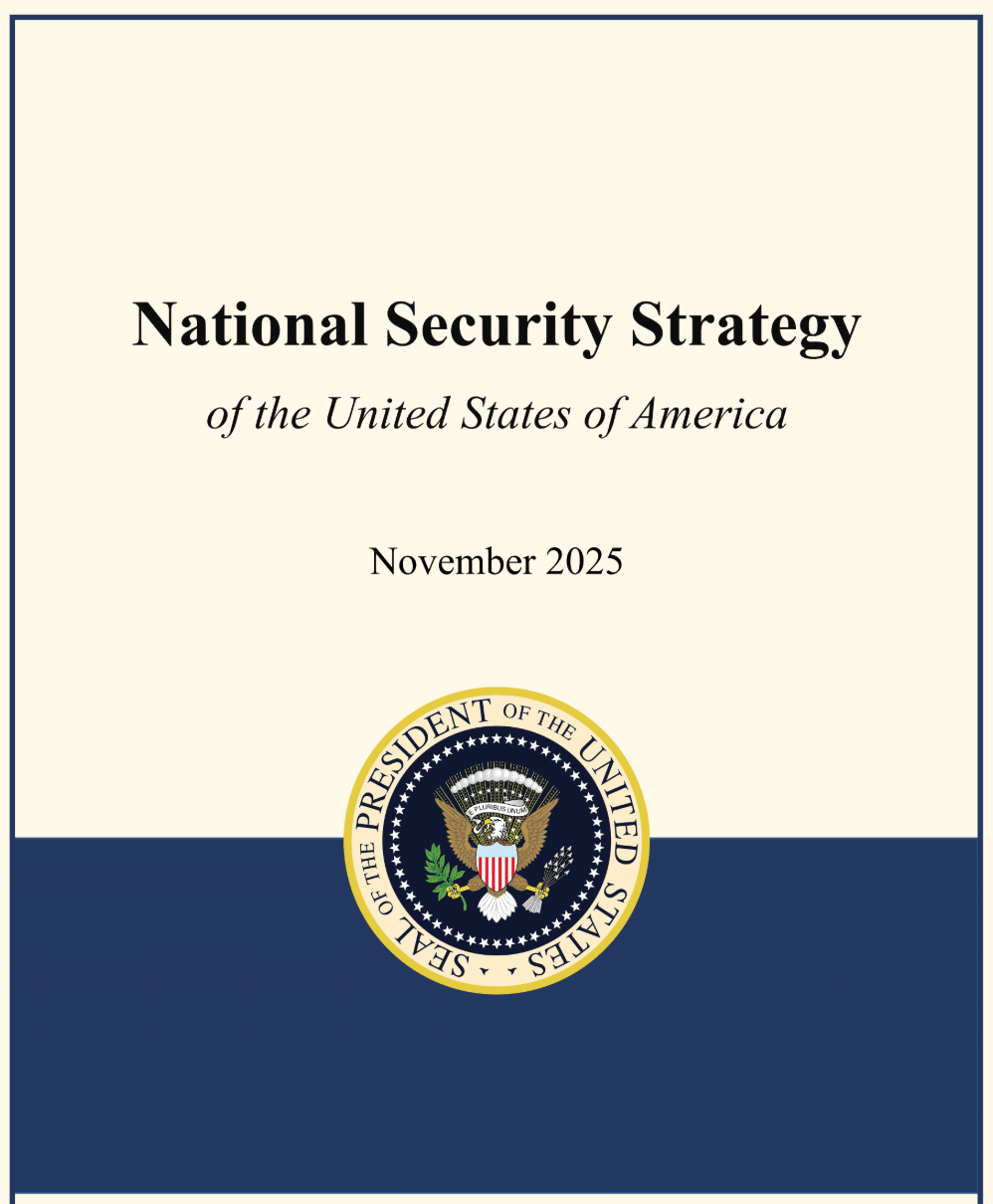
Where things may get more interesting in the new year — on top of what is sure to be a frantic effort to fix the healthcare crisis Republicans are causing — is on Russia. The NDAA Trump signed yesterday included a number of restrictions on European and Ukrainian funding and troop alignment, measures that directly conflict with Trump’s National Security Strategy.

In a break with Trump, whose fellow Republicans hold majorities in both the House and Senate, this year’s NDAA includes several provisions to boost security in Europe, despite Trump early this month releasing a national security strategy seen as friendly to Russia and a reassessment of the US relationship with Europe.

The fiscal 2026 NDAA provides $800m for Ukraine – $400m in each of the next two years – as part of the Ukraine Security Assistance Initiative, which pays US companies for weapons for Ukraine’s military.

It also authorizes the Baltic Security Initiative and provides $175m to support Latvia, Lithuania and Estonia’s defense. And it limits the Department of Defense’s ability to drop the number of US forces in Europe to fewer than 76,000 and bars the US European commander from giving up the title of Nato supreme commander.

To be sure, thus far, Congress has done nothing to police Trump when he spends money in ways they tell him not to. But these restrictions (along with a few things to make Whiskey Pete Hegseth behave) might set up a conflict early in the year.

Remember: recruiting defectors actually takes efforts to reach out to them, often the opposite of what people think they want.

And while all that is not enough defectors to stop Trump, Marjorie Taylor Greene may set off a stampede for the exit. And that could make it easier for Jeffries, at least, to continue to pants Mike Johnson.

Predictable catastrophe

Democrats have done a good job of seeding the ground to get credit for rescuing the country from Trump-caused catastrophes in healthcare and the economy — and both will exacerbate the other in days ahead.

I’m less sanguine that Democrats have prepared to rescue the country (and claim credit) for other likely Trump catastrophes, like a collapsing AI bubble or epidemic. Laying the ground for both is really critical, in the former case bc AI bros plan to spend big in 2026 in the same way crypto bros did in 2024, and in the former case, because bigots are trying to blame rising measles (and, now, whooping cough) on migrants rather than assholes like RFK Jr.

2026

Democrats are doing surprisingly well to position themselves for 2026, both because they’re overperforming by numbers that suggest they will do well (including in elections, like TN-07, with midyear-levels of turnout), and because they’re matching Republican redistricting efforts (and Stephen Miller’s goon squads mean the redistricting in Texas may not turn out like Trump wants).

But it will be harder to achieve a true Blue Wave than in 2018.

Even as this year’s election results have left many in the party encouraged they can mount a massive blue wave, next year’s battleground is a far cry from 2018 — with fewer Republican-held seats for Democrats to easily target.

Democrats don’t need to win as many seats this time around, netting just three seats rather than two dozen to claim a majority. But the hill to reach a comfortable majority like the 235 seats they held after the last blue wave has grown much steeper, driven by multiple rounds of gerrymandering — including ongoing redistricting in several states that threatens to erode the battlefield even further.

The result is that Democrats could post a bigger national swing than in 2018 and still end up with a slimmer majority than they had after that year.

Where Democrats are doing better is in promising consequences if and when they do get a majority.

I’m more interested in Democrats promising those capitulating to Trump — whether it be law firms or Paramount — that there’ll be consequences in 2027 than I am in discussions about impeachment (except for people like RFK Jr, such discussions will work against other Democratic efforts, IMO).

Such efforts, in my opinion, are one way to do more to lay out Trump’s accountability for predictable disasters.

All in all, opponents of fascism have more momentum than they had when caught flat-footed in January. But there’s still a lot of work to do.

Share this entry

Susie’s Assessment: Failure after Failure

The right wing response to the Vanity Fair profile of Susie Wiles (onetwo) reveals a lot about the structure of Trump’s power.

While there’s nothing surprising in the profile, Chris Whipple caught Wiles admitting to failures those of outside the White House bubble all recognize, or making laughably false claims to cover them up. And while mostly the response to the profile has been a typical beltway feeding frenzy, much of the focus has been on those expressions of truth or false claims, including how some of them — Wiles’ claims that Trump was targeting Letitia James, her confession that Trump is seeking regime change in Venezuela, Trump’s awareness that Putin wants all of Ukraine — could have lasting legal and political repercussions.

Not so the right wing, though. Theirs has been a two-fold response: first, declaring not that the profile got anything wrong, much less made up any of the abundant direct quotes, but instead that they remain loyal to Susie Wiles. After everyone had performed their expression of loyalty, the right wing turned to complaining that photographer Christopher Anderson captured Trump’s aides’ ugliness and warts.

Behind those expressions of loyalty and vanity complaints, however, the profile includes a string of confessions that Trump, that Susie Wiles, that they all have failed.

Circling the motherfucking wagons

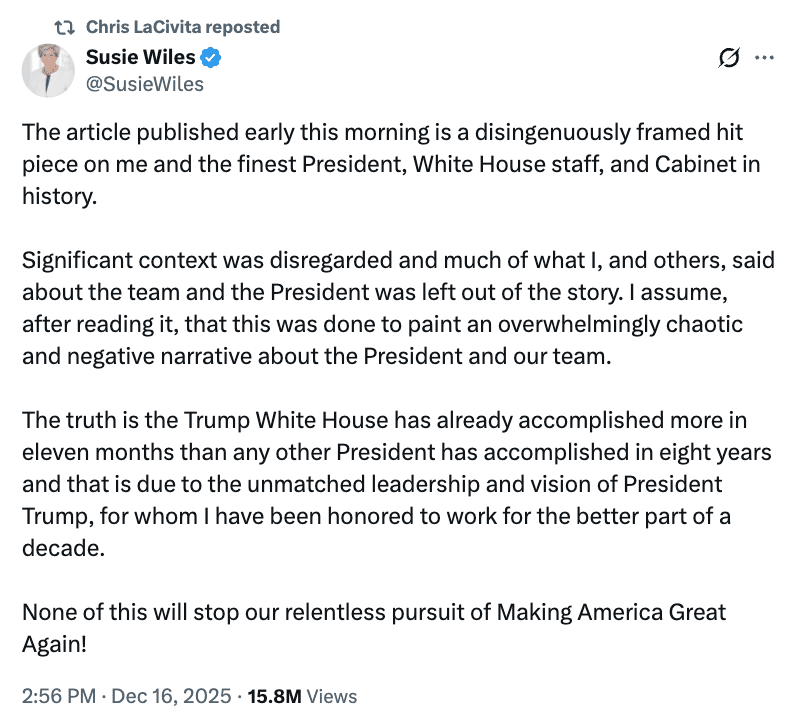
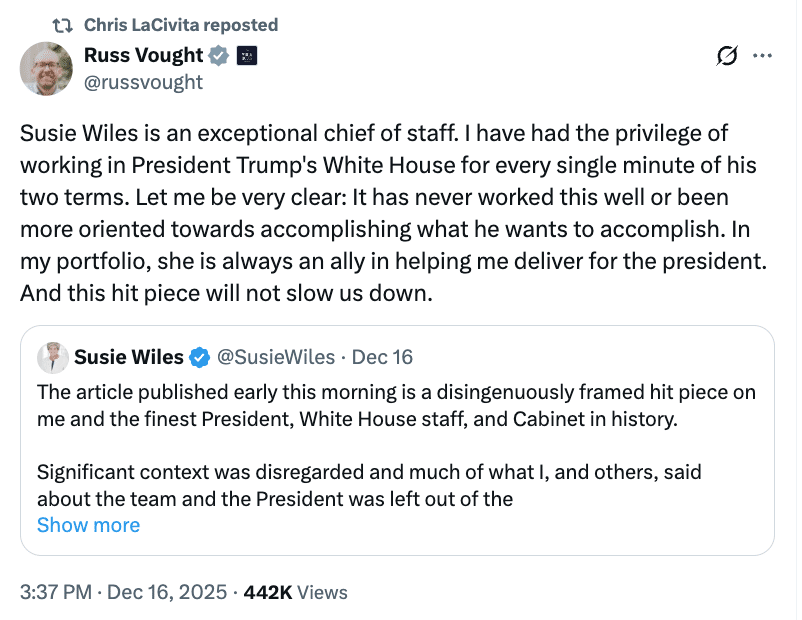
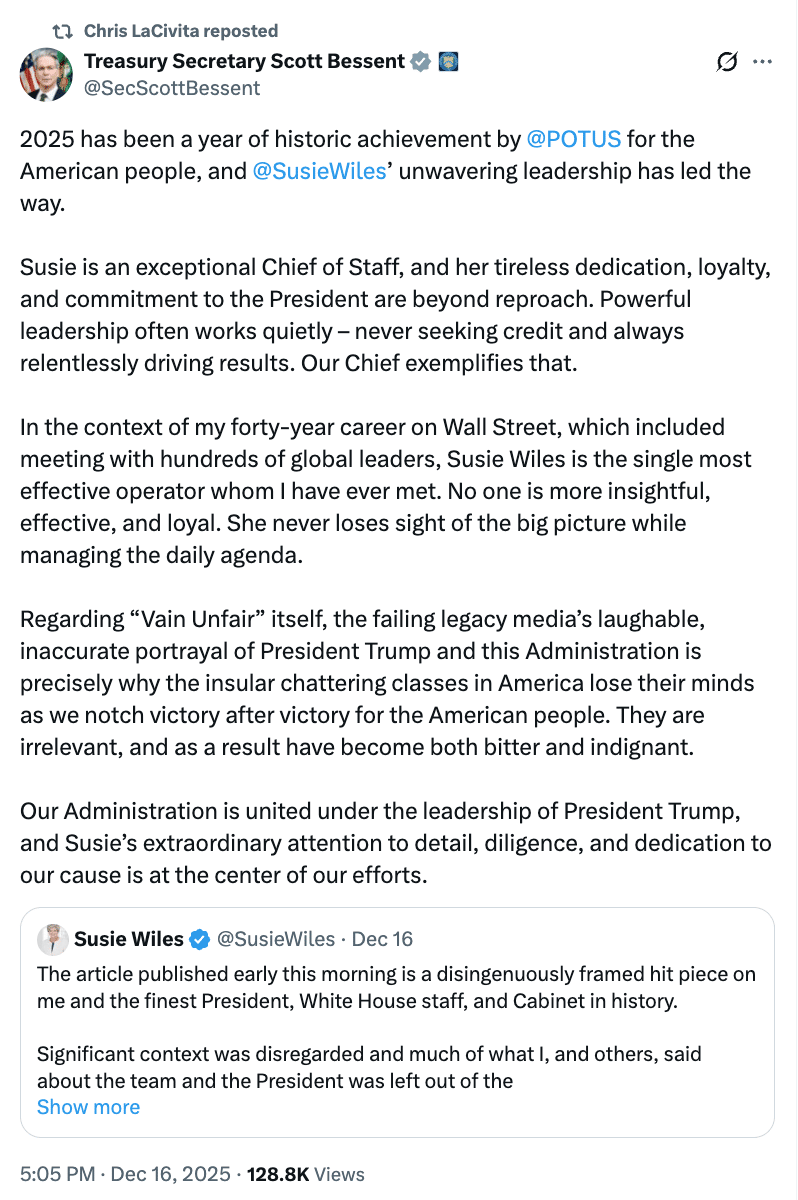
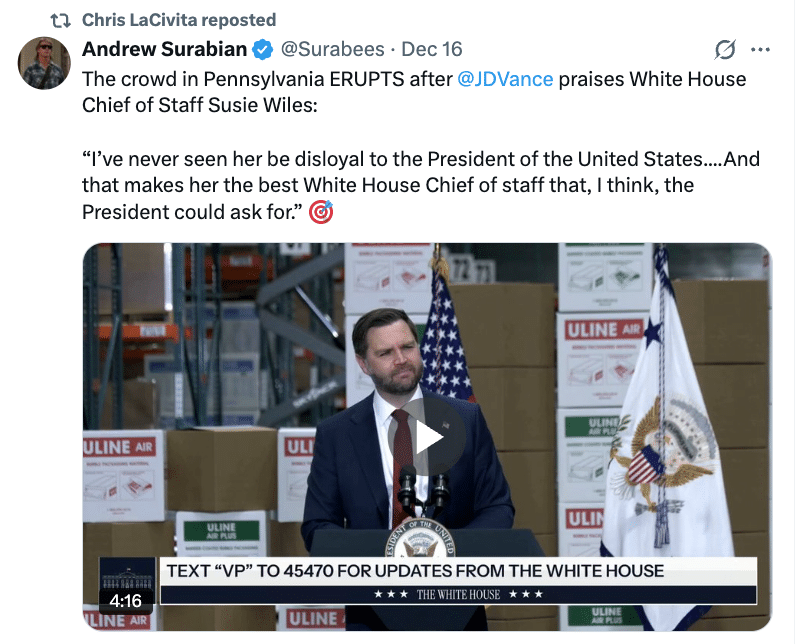
The immediate response was a performance of loyalty. First Wiles claimed in a (for her) very rare tweet that the profile had taken things out of context and ignored positive things she said. Then one after another Trump loyalist RTed that tweet and testified to how great she is and how loyal they are to her or she is to Trump.

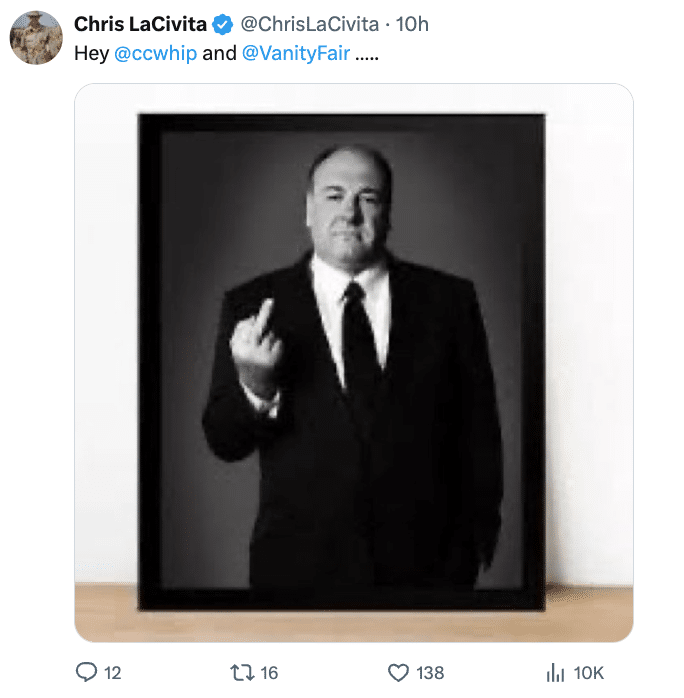
The loyalty oaths were particularly amusing to watch through Chris LaCivita’s eyes. First he RTed Wiles’ tweet.

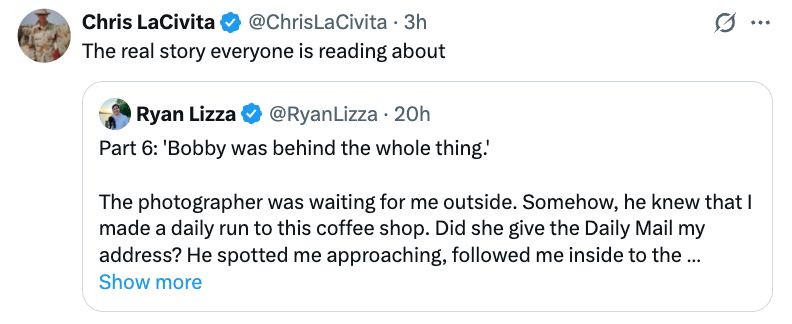
Then he tried to distract with yesterday’s scandal.

Then he posted one…

After another declaration of loyalty to Wiles. This Don Jr tweet — “When others cowered, she stood strong” is quite long and amusing in the original.

Scott Bessent’s claim of inaccuracy is especially notable given how Wiles described half of Trump’s advisors to be opposed to Trump’s tariffs (as I’ll show below).

LaCivita thought dumb boomerang memes would be persuasive.

More celebration of blind loyalty.

Failures hailing her role in their failure.

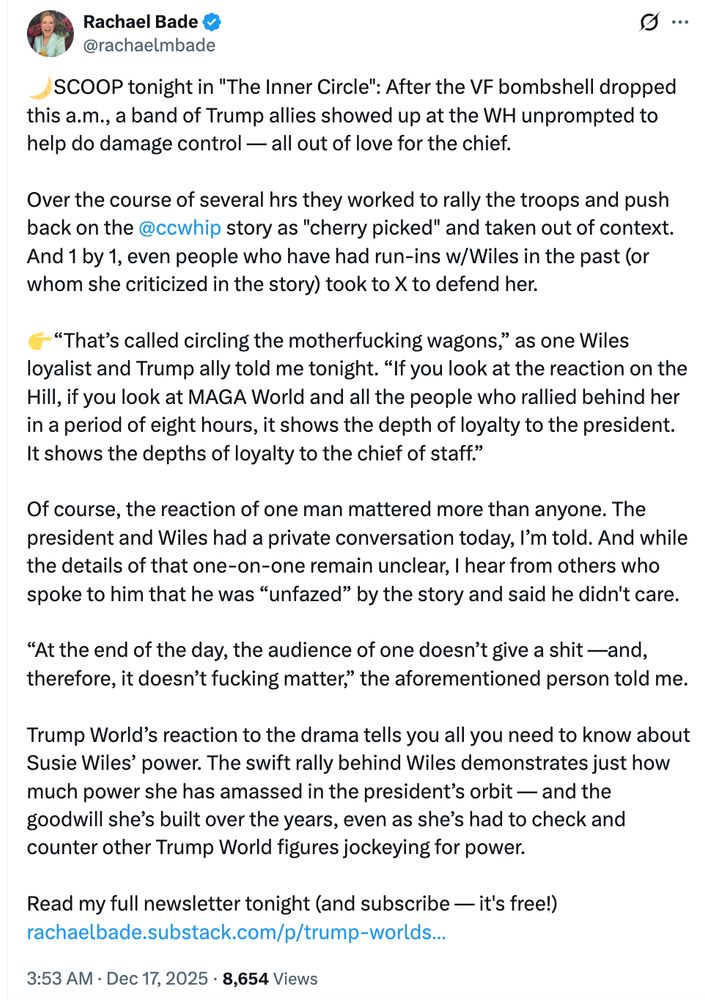
All leading up to this tweet, from the lady who used to pretend to be objective but now works with the former Trump spox who tried to hide behind the shrubbery, once.

Rachael Bade really did claim it was a big scoop to describe a “Wiles loyalist and Trump ally” explaining what was visible on Xitter for all to see as “circling the motherfucking wagons.”

Sure. It’s clear that’s what you were doing. But honestly, a good many people who read the profiles weren’t seeking to split the White House, they were seeking to understand what Trump’s low-key Chief of Staff does or thinks.

The loyalty that prevents you from seeing the failures she confessed doesn’t prevent us from seeing them.

Karoline Leavitt’s nasty gender-affirming care

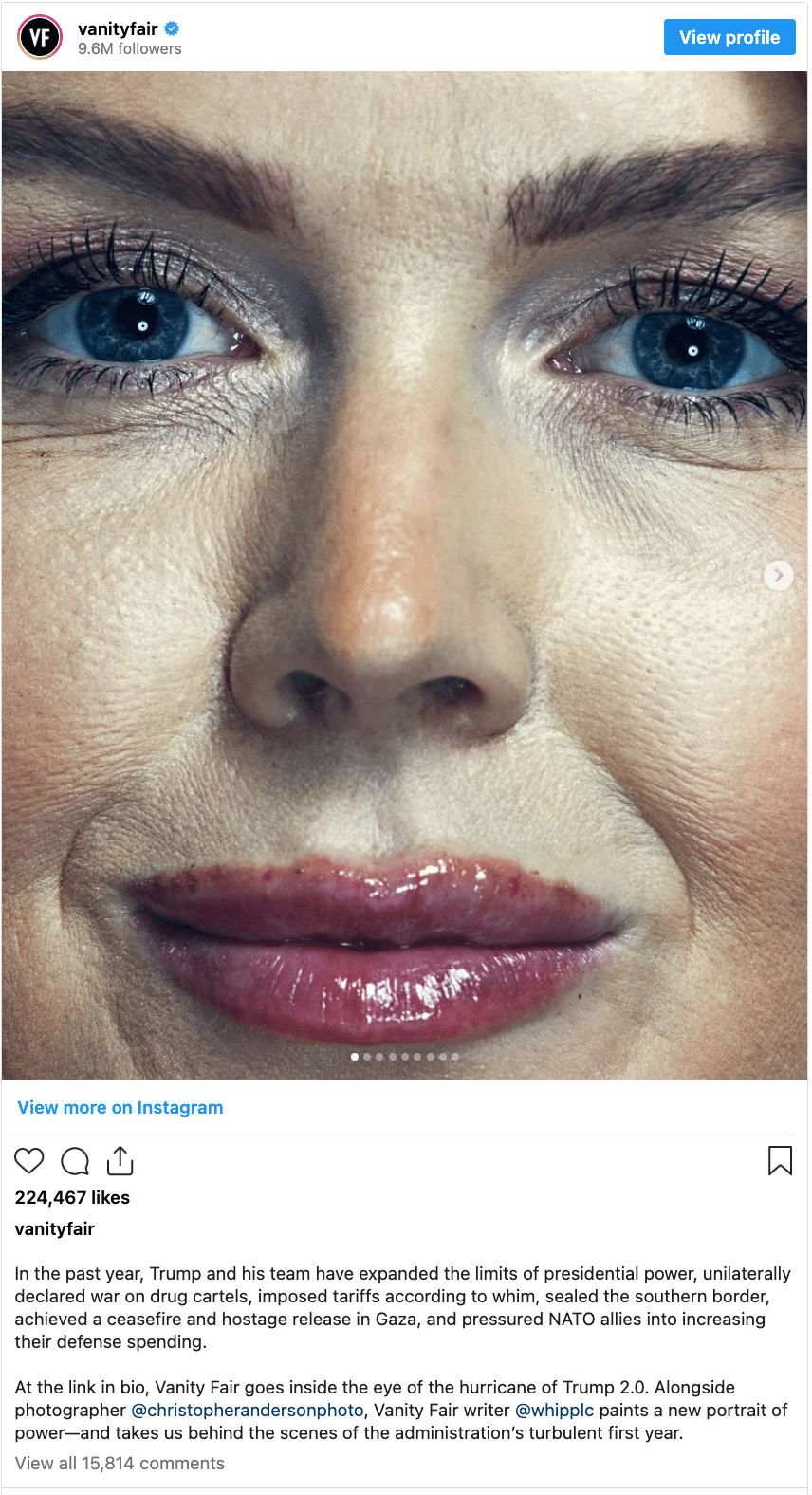
Then people started complaining about the photography, particular a picture that revealed the slop on Karoline Leavitt’s face and the injection marks in her lips.

WaPo did a great interview with the photographer, Christopher Anderson, where he explained his view of photojournalism and truth.

I want to talk to you about the portraits that you did for Vanity Fair. As I assume you have heard, they’ve caused a bit of a splash on social media. Can you tell me how you conceived of them?

I conceived of it many years ago. I did a whole book of American politics called “Stump” (2014), where I did all close-ups. It was my attempt to circumnavigate the stage-managed image of politics and cut through the image that the public relations team wants to be presented, and get at something that feels more revealing about the theater of politics. It’s something I’ve been doing for a long time. I have done it to all sides of the political spectrum, not just Republicans. It’s part of how I think about portraiture in a lot of ways: close, intimate, revealing.

[snip]

The images are really arresting. What is your response to people who say that these images are unfair? There’s been a lot of attention about Karoline Leavitt’s lips and [what appear to be] injection sites.

I didn’t put the injection sites on her. People seem to be shocked that I didn’t use Photoshop to retouch out blemishes and her injection marks. I find it shocking that someone would expect me to retouch out those things.

[snip]

Were they coming camera-ready, or was there a hair-and-makeup team?

Most of them came camera-ready or with their own hair-and-makeup team. Karoline Leavitt has her own personal groomer that was there.

I mean, we don’t know if Karoline Leavitt still has that groomer today now that the photos are published.

Well, what can I say? That’s the makeup that she puts on, those are the injections she gave herself. If they show up in a photo, what do you want me to say? I don’t know if it says something about the world we live in, the age of Photoshop, the age of AI filters on your Instagram, but the fact that the internet is freaking out because they’re seeing real photos and not retouched ones says something to me.

Click through for the great quote about Stephen Miller’s plea for kindness.

The self-deceptions and truths from within the bubble

But none of this pushback — none of it — claims that lifelong chronicler of Chiefs of Staff Chris Whipple ever made up a quote.

Accordingly, that means no one has disputed Wiles’ admission that Trump’s policies have largely failed.

Here’s how Whipple summarized Trump’s term so far, close to the beginning of part one:

It’s been a busy year. Trump and his team have expanded the limits of presidential power, unilaterally declared war on drug cartels, imposed tariffs according to whim, sealed the southern border, achieved a ceasefire and hostage release in Gaza, and pressured NATO allies into increasing their defense spending.

At the same time, Trump has waged war on his political enemies; pardoned the January 6 rioters, firing nearly everyone involved in their investigation and prosecution; sued media companies into multimillion-dollar settlements; indicted multiple government officials he perceives as his foes; and pressured universities to toe his line. He’s redefined the way presidents behave—verbally abusing women, minorities, and almost anyone who offends him. Charlie Kirk’s assassination in September turbocharged Trump’s campaign of revenge and retribution. Critics have compared this moment to a Reichstag fire, a modern version of Hitler’s exploitation of the torching of Berlin’s parliament.

How he tells this story — though Wiles’ own assessments of Trump’s success or failure — is more interesting. The following, save the last one, are presented in the order Whipple addresses them in the profile.

End the congressional filibuster and remove Nicolás Maduro from power. [A November portrayal; results still TBD]

The agenda was twofold: ending the congressional filibuster and forcing Venezuelan president Nicolás Maduro from power.

Pardon just those who were January 6 “happenstancers.” [Wiles lies to cover up her failure to achieve this goal]

Wiles explained: “In every case, of the ones he was looking at, in every case, they had already served more time than the sentencing guidelines would have suggested. So given that, I sort of got on board.” (According to court records, many of the January 6 rioters pardoned by Trump had received sentences that were lighter than the guidelines.) “There have been a couple of times where I’ve been outvoted,” Wiles said. “And if there’s a tie, he wins.”

Preserve parts of USAID. [Complete failure, but one Marco Rubio is lying about]

Musk forged ahead—all throttle, no brake. “Elon’s attitude is you have to get it done fast. If you’re an incrementalist, you just won’t get your rocket to the moon,” Wiles said. “And so with that attitude, you’re going to break some china. But no rational person could think the USAID process was a good one. Nobody.”

[snip]

Did Rubio have any regrets about the untold number of lives that PEPFAR’s evisceration might cost? “No. First of all, whoever says that, it’s just not being accurate,” he told me. “We are not eviscerating PEPFAR.

Stephen Miller’s deportation policies. [In Wiles’ estimation, a failure]

Not long after the El Salvador deportation fiasco, in Louisiana, ICE agents arrested and deported two mothers, along with their children, ages seven, four, and two, to Honduras. The children were US citizens and the four-year-old was being treated for stage 4 cancer. Wiles couldn’t explain it.

“It could be an overzealous Border Patrol agent, I don’t know,” she said of the case, in which both mothers had reportedly been arrested after voluntarily attending routine immigration meetings. “I can’t understand how you make that mistake, but somebody did.”

Tariffs. [Wiles failed to prevent Trump’s worst instincts and the results have been worse than she imagined]

Wiles believed a middle ground on tariffs would ultimately succeed, she said, “but it’s been more painful than I expected.”

Invading blue cities. [Wiles says Trump won’t do this to stay in power]

Will the president use the military to suppress or even prevent voting during the midterms and beyond?

“I say it is categorically false, will not happen, it’s just wrongheaded,” she snapped.

November’s election. [Wiles knew they were in trouble, but even so was overoptimistic]

Wiles thought the GOP had a chance of electing the governor in New Jersey, but she knew they were in for a tough night.

The Epstein files. [Trump and Kash, both lying about what was in the files but that’s okay because MAGAts aren’t obsessed with Epstein]

For years, Kash has been saying, ‘Got to release the files, got to release the files.’ And he’s been saying that with a view of what he thought was in these files that turns out not to be right.”

[snip]

Wiles said. “It’s the Joe Rogan listeners. It’s the people that are sort of new to our world. It’s not the MAGA base.”

Murderboats and frivolous wars. [Pure self-deception]

“Not that he wanted to kill people necessarily, but stopping the killing wasn’t his first thought. It’s his first and last thought now.”

[snip]

“He wants to keep on blowing boats up until Maduro cries uncle. And people way smarter than me on that say that he will.”

Russian peace efforts. [Wiles says they’re lying about Russia wanting peace]

Trump’s team was divided on whether Putin’s goal was anything less than a complete Russian takeover of Ukraine. “The experts think that if he could get the rest of Donetsk, then he would be happy,” Wiles told me in August. But privately, Trump wasn’t buying it—he didn’t believe Putin wanted peace. “Donald Trump thinks he wants the whole country,” Wiles told me.

In October I asked Rubio if that was true. “There are offers on the table right now to basically stop this war at its current lines of contact, okay?” he said. “Which include substantial parts of Ukrainian territory, including Crimea, which they’ve controlled since 2014. And the Russians continue to turn it down. And so…you do start to wonder, well, maybe what this guy wants is the entire country.” (In Wiles’s office is a photograph of Trump and Putin standing together, signed by Trump: “TO SUSIE YOU ARE THE GREATEST! DONALD.”)

Trump would only spend 90 days on retribution. [Wiles is in denial]

“Yes, I do,” she’d replied. “We have a loose agreement that the score settling will end before the first 90 days are over.”

In late August, I asked Wiles: “Remember when you said to me months ago that Trump promised to end the revenge and retribution tour after 90 days?”

“I don’t think he’s on a retribution tour,” she said.

Trump’s biggest accomplishments: Peace and the Big Ugly

“I think the country is beginning to see that he’s proud to be an agent of peace. I think that surprises people. Doesn’t surprise me, but it doesn’t fit with the Donald Trump people think they know. I think this legislation [the so-called One Big Beautiful Bill], which funded the entire domestic agenda, is a huge accomplishment. And even though it isn’t popular in total, the component parts of it are. And that will be a very big deal in the midterms.”

That is, like the Epstein scandal more generally, Wiles either invents bubble-wrapped fictions about Trump’s own success, or concedes she, or Trump, has failed.

But Trump’s aides — the people complicit in this failure — don’t care.

They’re just going to circle the motherfucking wagons and demand loyalty.

Share this entry

Donald Trump Will Piss Away the Western Order Investing in Jared Kushner’s Imagined Business Savvy

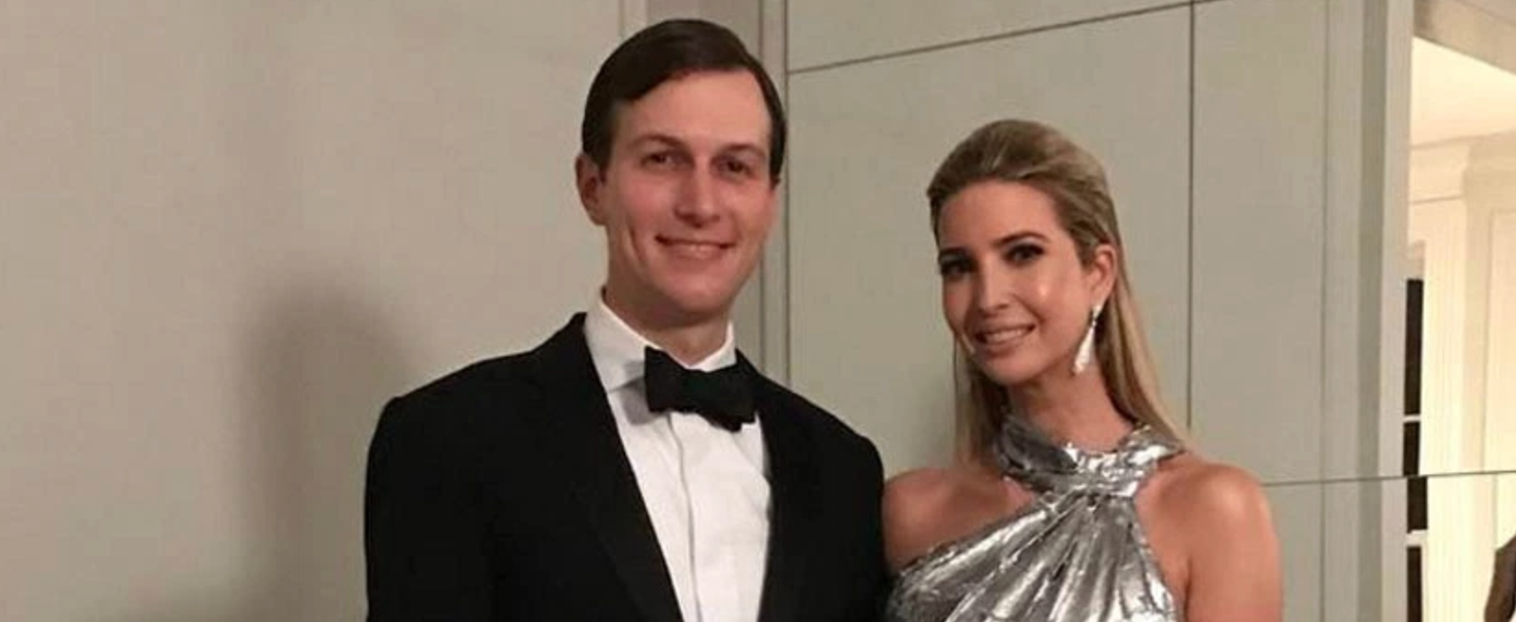
It is just over nine years to the day since Jared Kushner naively asked Russian Ambassador Sergei Kislyak to use Russian secure facilities to communicate in such a way that US spies wouldn’t find them.

Kushner went forward with the meeting that Kislyak had requested on November 16. It took place at Trump Tower on November 30, 2016.1139 At Kushner’s invitation, Flynn also attended; Bannon was invited but did not attend.1140 During the meeting, which lasted approximately 30 minutes, Kushner expressed a desire on the part of the incoming Administration to start afresh with U.S.-Russian relations.1141 Kushner also asked Kislyak to identify the best person (whether Kislyak or someone else) with whom to direct future discussions—someone who had contact with Putin and the ability to speak for him.1142

The three men also discussed U.S. policy toward Syria, and Kislyak floated the idea of having Russian generals brief the Transition Team on the topic using a secure communications line.1143 After Flynn explained that there was no secure line in the Transition Team offices, Kushner asked Kislyak if they could communicate using secure facilities at the Russian Embassy.1144 Kislyak quickly rejected that idea.1145

Shortly after Kushner indicated his enthusiasm for back-channel discussions that US spies couldn’t find, Sergei Kislyak threw Sergey Gorkov at him — someone who would dangle financial goodies that would require overturning sanctions to collect, someone functionally analogous to Kirill Dmitriev.

The accounts from Kushner and Gorkov differ as to whether the meeting was diplomatic or business in nature. Kushner told the Office that the meeting was diplomatic, with Gorkov expressing disappointment with U.S.-Russia relations under President Obama and hopes for improved relations with the incoming Administration.1157 According to Kushner, although Gorkov told Kushner a little bit about his bank and made some statements about the Russian economy, the two did not discuss Kushner’s companies or private business dealings of any kind.1158 (At the time of the meeting, Kushner Companies had a debt obligation coming due on the building it owned at 666 Fifth Avenue, and there had been public reporting both about efforts to secure lending on the property and possible conflicts of interest for Kushner arising out of his company’s borrowing from foreign lenders.1159)

In contrast, in a 2017 public statement, VEB suggested Gorkov met with Kushner in Kushner’s capacity as CEO of Kushner Companies for the purpose of discussing business, rather than as part of a diplomatic effort. In particular, VEB characterized Gorkov’s meeting with Kushner as part of a series of “roadshow meetings” with “representatives of major US banks and business circles,” which included “negotiations” and discussion of the “most promising business lines and sectors.”1160

It’s all there in the Mueller Report, plain as day: From the very start Jared Kushner planned to use his role in Trump’s White House for his own benefit. It was in the background of his dealings with Mohammed bin Salman, who has domesticated him since. It was the plan for Russia, too, until Mike Flynn’s shitty OpSec scuttled the plan.

Even in the first iteration of this fraud, Jared was hiding what he was doing from the Secretary of State — at that point Rex Tillerson.

And then Kirill Dmitriev picked right up where he left off eight years earlier, finding the weak venal levers for Trump and, ultimately, Jared. The plan didn’t succeed in February. It came closer but didn’t succeed in August. In November, once Dmitriev finally got Kushner on board, it seems to be succeeding.

It’s all worth revisiting again given this important (but nauseating) report from WSJ– one they themselves suggest is the follow-up to their report, Make Money Not War: Trump’s Real Plan for Peace in Ukraine.

The way the Russians succeeded in getting Trump to sell out Ukraine and the West (and I promise you, Trump has no fucking clue the ramifications of this and probably doesn’t give a fuck anyway) was by taking the $300 billion seized by Europe as punishment for their invasion of Ukraine — money Europeans were hoping to use to arm Ukraine — and instead used it to bribe Trump, effectively.

The Trump administration in recent weeks has handed its European counterparts a series of documents, each a single page, laying out its vision for the reconstruction of Ukraine and the return of Russia to the global economy.

The proposals have sparked an intense battle at the negotiating table between America and its traditional allies in Europe. The outcome stands to profoundly alter the economic map of the continent.

The U.S. blueprint has been spelled out in appendices to current peace proposals that aren’t public but were described to The Wall Street Journal by U.S. and European officials. The documents detail plans for U.S. financial firms and other businesses to tap roughly $200 billion of frozen Russian assets for projects in Ukraine—including a massive new data center to be powered by a nuclear plant currently occupied by Russian troops.

Another appendix offers America’s broad-strokes vision for bringing Russia’s economy in from the cold, with U.S. companies investing in strategic sectors from rare-earth extraction to drilling for oil in the Arctic, and helping to restore Russian energy flows to Western Europe and the rest of the world.

[snip]

If the U.S. vision prevails, it would override Europe’s own plans to shore up Ukraine’s wartime government and further cement Russia’s economic isolation. The result is what several officials described as a frenzied race to move ahead before the U.S. imposes its own arrangements.

U.S. officials involved in the negotiations say Europe’s approach would quickly deplete the frozen funds. Washington, on the other hand, would tap Wall Street executives and private-equity billionaires to invest the money and expand the amount available to invest. One official involved in the talks said the pot could grow to $800 billion under American management. “Our sensibility is that we really understand financial growth,” the official said.

On Wednesday, Ukrainian President Volodymyr Zelensky said he had held productive conversations with the investment firm BlackRock’s chief executive, Larry Fink.

The U.S. negotiating team sees shared economic activity and energy interdependence as the cornerstone of its business-for-peace philosophy: Ukrainian data centers would draw power from the currently Russian-occupied Zaporizhzhia nuclear plant, Europe’s largest, for example.

Some European officials who have seen the documents said they weren’t sure whether to take some of the U.S. proposals seriously. One official compared them to President Trump’s vision of building a Riviera-style development in Gaza. Another, referring to the proposed U.S.-Russia energy deals, said it was an economic version of the 1945 conference where World War II victors divvied up Europe. “It’s like Yalta,” he said.

Just as pitching Trump on a Riviera where millions of Gazans once lived, Bibi Netanyahu solicited Trump’s assistance in genocide, so has Dmitriev convinced Trump to sell out the Western order by turning the nuclear plant they stole into fuel for a data center.

As Judd Legum lays out, this is all happening via a guy, Jared, effectively serving as an agent of the Saudis.

Kushner is engaged in activities that can only be conducted by government officials. The Logan Act bars private citizens from engaging in negotiations with foreign governments without authorization. Kushner is acting in an authorized capacity, under Trump’s direction, and that creates a host of legal issues.

As a de facto SGE with substantial authority, the Foreign Emoluments Clause of the Constitution prohibits Kushner from accepting “any present, Emolument, Office, or Title, of any kind whatever, from any King, Prince, or foreign State.”

Since leaving the White House in 2021, Kushner has raised at least $4.8 billion for Affinity Partners, his private equity firm. Nearly 99% of Affinity Partners’ funding comes from foreign sources. The largest investment, $2 billion, came from the Public Investment Fund of Saudi Arabia (PIF).

The Saudi government pays Kushner 1.25% of its investment, or $25 million annually. Other investors, including the governments of Qatar and the United Arab Emirates (UAE), pay annual fees of up to 2%. As of September 2024, Affinity Partners had collected $157 million in fees, mainly from Middle Eastern governments.

Kushner is continuing to collect these fees as he serves in a top foreign policy role for the Trump administration. This is precisely the kind of behavior the Foreign Emoluments Clause was designed to prevent.

See also Legum’s assessment of Jared’s role in Paramount’s effort to buy Warner using foreign (and Jared’s) money.

Horse trading away a half century alliance is bad enough.

But remember: These people are horrible businessmen. There’s no sign that Jared has any competence to judge these deals on the merits. He’s not a competent businessman, he’s a captured one.

And Trump was vastly more successful as a businessman when reality TV show producers controlled the plot than he every was IRL.

Throw enough goodies at my son-in-law and I will betray Europe, Donald Trump seems to be saying.

And that’s all it took.

Share this entry

Michael Anton and the Secret National Security Strategy

Lawrence Freedman must have finished his post on the National Security Strategy before the latest news on it, which is that there’s an even more alarming longer version.

Nevertheless, Freedman’s observations about the process behind the document — that Michael Anton is thought to have started it, before he left in September, and Stephen Miller may have finished it — provide one possible explanation for why the document is so short, shoddy, and unenthusiastic about matters of standard policy.

It is worth reading the most recent NSS in its entirety. It is less polished than its predecessor, betrays little evidence of consultation, and is considerably shorter (33 as against 70 pages). It reads like time had run out and a deadline had been reached. It ends abruptly with a short discussion on Africa, this administration’s least important region, without a proper conclusion. It was released without fanfare in the early hours of Friday morning, without a press conference, suggesting the White House was not sure what to do with it.

The first draft has been attributed to Michael Anton, who was the Director of Policy Planning in the State Department until September 2025, when he left. It may be that Stephen Miller, Trump’s deputy chief of staff who represents the hardest line MAGA views, completed the document or at least oversaw its completion. This perhaps explains why, as Gideon Rachman notes, when restating standard policy positions, for example on Taiwan, the prose is ‘dutiful’ – ‘one senses that the author’s heart is not in it.’ Only on the civilizational issues and when praising Trump does it get fired up.

Much of the document seeks to give the administration’s disparate policies, including those directed against DEI hires or climate change or immigration, some coherence and international relevance.

This hypothesis — that some of its unfinished nature arises from having its author, Michael Anton, depart before he finished would raise a bunch of questions in any case.

Politico first reported Anton’s departure in August (so in the wake of the Anchorage summit), but said he would leave once he finished the National Security Strategy.

A senior Trump administration official and a Senate aide said Anton plans to depart this fall. The State Department later confirmed that he is leaving his post.

Anton, who directs the State Department’s Policy Planning Staff, has been a low-profile but powerful presence with major roles on Russia, Iran and other foreign policy matters, including helping shape President Donald Trump’s still-unpublished national security strategy.

With Secretary of State Marco Rubio also serving as the national security adviser, a handful of political appointees such as Anton and Counselor Mike Needham have taken on more of the daily responsibilities of running the State Department.

Anton is expected to leave as the Trump administration wraps up writing the national security strategy, of which he is a lead author, according to the senior administration official. The official, and others, were granted anonymity to discuss internal deliberations.

[snip]

The Senate aide and another person familiar with administration dynamics said that Anton had been frustrated by Office of Presidential Personnel Director Sergio Gor shooting down a number of his potential hires and officials with the Trump administration such as Pentagon policy chief Elbridge Colby freelancing on key issues.

Anton had tried to resign in the spring amid frustration with the foreign policy processes of the administration, but Needham refused to let him do so, according to the Senate aide and two other people familiar with the matter.

The aide and one of those people said Anton was frustrated after being passed over as deputy national security adviser in the reshuffle after the departure of former national security adviser Mike Waltz.

But he ended up leaving in September, months before the NSS was dumped onto the world with no notice.

Which makes the Defense One claim all the more interesting. There’s a longer version of the NSS, which is even more inflammatory.

A longer version of the NSS, circulated before the White House published the unclassified version late Thursday night, shares the main points: competition with China, withdrawal from Europe’s defense, a new focus on the Western Hemisphere. But the unpublished version also proposes new vehicles for leadership on the world stage and a different way to put its thumb on the scales of Europe’s future—through its cultural values.

It was even more hostile to the EU than the public version is.

Austria, Hungary, Italy, and Poland are listed as countries the U.S. should “work more with…with the goal of pulling them away from the [European Union].”

“And we should support parties, movements, and intellectual and cultural figures who seek sovereignty and preservation/restoration of traditional European ways of life…while remaining pro-American,” the document says.

It excluded European nations from the alternative to the G7 it proposed, a C5 composed of China, Russia, India, Japan, and the US.

His national security strategy proposes taking this a step further, creating a new body of major powers, one that isn’t hemmed in by the G7’s requirements that the countries be both wealthy and democratically governed.

The strategy proposes a “Core 5,” or C5, made up of the U.S., China, Russia, India and Japan—which are several of the countries with more than 100 million people. It would meet regularly, as the G7 does, for summits with specific themes.

Most interesting — and something to which I’ll return — the unpublished version disavows hegemony.

The full NSS also spends some time discussing the “failure” of American hegemony, a term that isn’t mentioned in the publicly released version.

“Hegemony is the wrong thing to want and it wasn’t achievable,” according to the document.

These are, at this point, just data points. The existing NSS is shoddy and illogical. Michael Anton was going to see it through to completion but did not. There is reportedly a longer version — could that be what Anton wrote? Or could that be why he left before it was finished?

And we’re left with something that could have been written by Russia.

Share this entry

The National Security Strategy’s Structure and Presumptions

Last week, the Trump Administration released the National Security Strategy that was dated from the month before.

In an effort to highlight how the Administration — no doubt led by Stephen Miller and his fascist allies — claims to have adopted a utilitarian foreign policy stemming from things called principles and based on wildly imaginary assessment of America’s current strengths, this post will lay out what is in it. (Note, the titles are links.)

Follow-ups will say more.

Pages 2-3: My fellow Americans

This is a letter from Trump bragging about what he claims his accomplishments since Biden left are. They include:

  • Restoring borders (this does not explicitly talk about immigration)
  • Kicking qualified trans service members and other “DEI” hires out of the military
  • Making NATO allies pay 5% in defense costs
  • Getting Congress to pay $1 trillion for a Golden Dome that won’t work
  • Launching a trade war that has devastated soybean farmers, bankrupted many small businesses, and allowed China to acquire leverage by withholding rare earth products
  • Attacking Iran’s nuclear facility and claiming the attack did more damage than it did (this makes no mention of the inconclusive attack on the Houthis or the murderboat strikes)
  • Forcing Americans to prefer oil and gas over strategically smarter renewable energy
  • Ending eight wars (he claims)

Among the things this letter does not mention is destroying USAID and America’s soft power, and obviously it treats some of the grave damage Trump has done with his trade war and attacks on science and universities as strengths.

Page 4: Contents

Pages 5-6: Ends over Values

Two pages describing that the US has been doing everything wrong since the Cold War, chasing “platitudes” (also known as values) rather than desired ends.

Pages 7-8: What Should the US Want

These two pages describe a bunch of things it claims the US should, normatively, want.

Just half of these are things Trump has actually pursued (and even there, some of Trump’s policies have gone beyond what Trump says is ideal):

  • ¶3 Secure borders and controlled immigration
  • ¶5 A lethal military in which everyone is proud of their mission
  • ¶6 A Golden Dome
  • ¶10 A reinvigorated American culture (code for white nationalism)

More than half of these are things Trump has affirmatively destroyed:

  • ¶1 Continued survival of US sovereignty
  • ¶2 Protect the country from human trafficking, foreign influence, propaganda, and espionage
  • ¶4 “A resilient national infrastructure that can withstand natural disasters, resist and thwart foreign threat”
  • ¶7 The most dynamic economy
  • ¶8 A robust industrial base
  • ¶9 Unrivaled soft power that “believe[s] in our country’s inherent greatness and decency”)

Page 9: What do “we” want from the rest of the world?

  • A Trump corollary to the Monroe Doctrine
  • Halt damage an unnamed China has done while keeping stability in Indo-Pacific and keeping shipping lanes free and supply chains secure
  • Impose Stephen Miller’s idea of civilizational identity on Europe
  • “[P]revent an adversarial power from dominating the Middle East, its oil and gas supplies, and the chokepoints through which they pass while avoiding the ‘forever wars’ that bogged us down”
  • “[E]nsure that U.S. technology and U.S. standards—particularly in AI, biotech, and quantum computing—drive the world forward”

Note, this section parallels the discussion of regions, below, with the exception of laying out how the US will remain the standard-setter in the world by being an asshole and adopting crank conspiracies.

Pages 10-11: What are America’s means to get these ends?

This includes a list of things the US did have when Trump took over (I’ve italicized those which he has squandered, though there are others he is squandering):

  • A still nimble political system that can course correct;
  • The world’s single largest and most innovative economy, which both generates wealth we can invest in strategic interests and provides leverage over countries that want access to our markets;
  • The world’s leading financial system and capital markets, including the dollar’s global reserve currency status;
  • The world’s most advanced, most innovative, and most profitable technology sector, which undergirds our economy, provides a qualitative edge to our military, and strengthens our global influence;
  • The world’s most powerful and capable military;
  • A broad network of alliances, with treaty allies and partners in the world’s most strategically important regions;
  • An enviable geography with abundant natural resources, no competing powers physically dominant in our Hemisphere, borders at no risk of military invasion, and other great powers separated by vast oceans;
  • Unmatched “soft power” and cultural influence; and
  • The courage, willpower, and patriotism of the American people.

It also includes a list of things that Trump thinks are good, which I’ve restated to reflect reality:

  • “Instilling a culture of competence:” They’ve gotten rid of brown people and women who made them insecure
  • “Unleashing our enormous energy production capacity:” They’ve forced America to stop competing in renewable energy
  • “Reindustrializing our economy:” They’ve gutted the economy with tariffs
  • “Returning economic freedom to our citizens:” They’ve exploded the deficit with tax cuts to oligarchs huge tax cuts while cutting the health care that drives the economy
  • “Investing in emerging technologies and basic science:” They’ve destroyed America’s higher educational advantage and replaced it with state socialism

The strategy

Pages 12-15: Principles [sic]

This starts with a page of shite about Trump’s greatness. Then includes the following bullets:

  • Focused Definition of the National Interest (Trump will ignore key parts of the world)
  • Peace Through Strength (white nationalism)
  • Predisposition to Non-Intervention (with excuses permitted for invasions of choice)
  • Primacy of Nations (a nice way of saying they’ll gut international organizations)
  • Sovereignty and Respect (in which the NSS protects projecting “free speech” demands into other sovereign nations)
  • Balance of Power (China and Russia can extend their power so long as they allow America to do the same)
  • Pro-American Work (claims utterly inconsistent with Trump’s catering to oligarchs)
  • Fairness (code for making NATO, Japan, and South Korea pay more)
  • Competence and Merit (White men should not have to compete with brown people and women, and especially should not have to compete with H1B holders)

Pages 15-19: Priorities

  • The Era of Mass Migration Is Over: “Border security is the primary element of national security”
  • Protection of Core Rights and Liberties: This is defined as “the rights of free speech, freedom of religion and of conscience, and the right to choose and steer our common govern,” but apparently does not include due process or similar rights for Europeans or the Anglosphere
  • Burden-Sharing and Burden-Shifting: “The United States will stand ready to help— potentially through more favorable treatment on commercial matters, technology sharing, and defense procurement—those counties that willingly take more responsibility for security in their neighborhoods and align their export controls with ours.”
  • Realignment Through Peace: The President will intervene everywhere and claim to have fostered peace
  • Economic Security
    • Balanced Trade
    • Securing Access to Critical Supply Chains and Material
    • Reindustrialization
    • Reviving our Defense Industrial Base: We need to build drones in the US cheaply
    • Energy Dominance (in oil, gas, coal, and nuclear, explicitly)
    • Preserving and Growing America’s Financial Sector Dominance

Page 19: The Regions

A half page excusing largely ignoring key swaths of the world, as when you dedicate just a half page to Africa or mention Russia only in a section discussing Europe not as a place but a greatness to be imposed from outside.

Pages 19-23: Western Hemisphere: The Donroe Doctrine

  • Enlist: Treat a swath of countries as agents insofar as they can help stop the movement of people and drugs
  • Expand: Eight paragraphs on combatting “foreign influence” not named as Chinese, and three paragraphs imagining this can be driven by corporate investment

Pages 23-29: Asia: Win the Economic Future, Prevent Military Confrontation

  • Leading from a position of strength: Asia has gotten strong through manufacturing and we will combat that with false platitudes
  • Economics: the Ultimate Stakes: A claim that Trump’s disastrous trade policy will bring results the opposite of what have happened
  • Deterring Military Threats: A lot of talk about deterrence, some in passive voice

Pages 29-31: Promoting European Greatness

These are the two pages attracting the most attention, and I will return to it. Note that Europe is not described as a place, like the other regions are. The only mentions of Russia (ten) are in this section, and Russia is defined as not-Europe (and therefore not addressed as a region at all).

Pages 31-33: The Middle East: Shift Burdens, Build Peace

This section claims the Middle East is no longer as important because it is not longer the dominant energy producer, and then explains that major conflicts (including radicalism) are no big deal anymore.

Half of page 33: Africa

Africa will not get aid. It will get investment and Trump claims of peace deals.


Share this entry

The Art of War, Ukraine Edition

[NB: check the byline, thanks. /~Rayne]

Marcy shared this observation yesterday via Bluesky about Ukraine’s attack on Russian air bases:

emptywheel @[email protected]

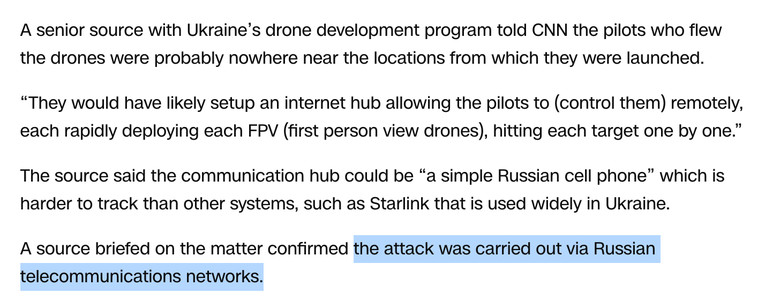
The Ukrainian attack used RU telecom networks rather than Starlink.

Hard to guess whether this will drive Putin or Elon nuts first.

https://edition.cnn.com/2025/06/02/europe/inside-ukraine-drone-attack-russian-air-bases-latam-intl

Jun 02, 2025, 07:30 PM

The brazenness of using Russia’s telecom networks is noteworthy, especially after concerns that Ukraine’s military operations could be compromised by Russian access to Elon Musk’s Starlink satellite communications.

The avoidance of Starlink for this mission named Operation Spiderweb (Ukrainian: Operatsija Pavutyna) suggests Ukraine accepted this possibility as reality and deliberately worked around the compromised network.

The success of the mission may also suggest this was a solid assumption and avoiding Starlink an effective decision.

There are two points in reporting about Operation Spiderweb which haven’t been analyzed further:

— The specificity of the plan’s inception;

— The role of Ukraine’s security service, the Sluzhba bezpeky Ukrainy (SBU).

CNN and other outlets reported the number of drones Ukraine used to attack Russian military aircraft (117) and the amount of time the operation took from inception to the attack (one year, six months and nine days). The candor is rather shocking; perhaps cognitive dissonance explains why there haven’t been many analysts picking apart these openly shared details.

But these details may have messages within them considering how in-your-face they are. The number 117 seems peculiar because it’s an odd number though it’s not prime. Were all the drones that were smuggled in deployed? Was this another reason why the Trojan Horse wooden sheds were booby trapped — to eliminate any drones that did not deploy properly? Or perhaps the number simply is what it is on the face of it.

The exactness of the operation’s inception, though, seems deliberate, as if launch date meant something. Depending on how the one year, six months, and nine days are counted, the spiderweb began on November 22, 2023 or on December 23, 2023.

November 22 marked the beginning of the Orange Revolution in 2004.

December 23 marked the holiday observed by Ukraine’s Armed Forces — Operational Servicemen Day.

Just as importantly, June 1 on which the attack occurred was the anniversary of the day Ukraine transferred the last of its nuclear warheads to Russia in 1996 under the terms of the Budapest Memorandum to which the US was a party. In other words, this message might not have been intended just for Russia.

The Budapest Memorandum may also explain the role of SBU to effect this operation. While one source in CNN’s reporting attributed the successful mission to “Ukraine’s special services,” most reports credited the operation to the SBU.

SBU is Ukraine’s counterintelligence organization with paramilitary features. It does not have the same reporting structure as Ukraine’s Armed Forces. It’s also responsible for the security of Ukraine’s president and reports directly to him. The flat structure may have ensured the level of secrecy necessary to carry out Operation Spiderweb.

The not-quite-military role of the SBU may also have been critical to lawfare. An operation conducted by SBU may be construed as a counterintelligence operation and not a military operation, fuzzing the ability of the target to respond under terms of its own doctrine or terms of treaties. If a trigger for Russia to launch an escalated military response is the use of conventional kinetic weapons on its soil by another country’s armed forces, Operation Spiderweb skirts this threshold having used non-traditional weapons deployed by a counterintelligence function.

By its subtle emphasis on the Budapest Memorandum, Ukraine made a point of Russia’s failure to comply with the memorandum’s terms after repeated threats of nuclear attacks against Ukraine and the west. Targeting long-range aircraft capable of carrying nuclear weapons, Ukraine punctuated the Memorandum’s terms including nuclear non-proliferation.

Ukraine’s president Volodymyr Zelenskyy has had a number of top military personnel swapped out during the course of the Russo-Ukraine war (ex. the commander of the Joint Forces of the Armed Forces in June 2024, the commander-in-chief of the Armed Forces in February 2024, all regional military recruitment chiefs in August 2023), which might have suggested to outsiders cohesiveness could have been compromised by poor performance, disagreements with the conduct of the war, and plain old corruption. The personnel changes may have given the appearance Ukraine was not fully aligned toward repelling Russian aggression.

But as Sun Tzu wrote in The Art of War, all warfare is based on deception.

The illusion these personnel changes created may have been relied upon as a head fake, allowing Vladimir Putin and the Russian military to feel excessively confident about the outcome of the war. That confidence was surely ruptured just as Russia and Ukraine entered a new round of negotiations to end the war this Monday in Istanbul. Russia opened by presenting a “memorandum” of terms but Ukraine has expressed its lack of faith in Russia’s compliance with co-signed memoranda.

Detonating explosives targeting the Kerch Strait bridge — a bridge one one likely use if driving from Turkey to Ukraine — added emphasis.

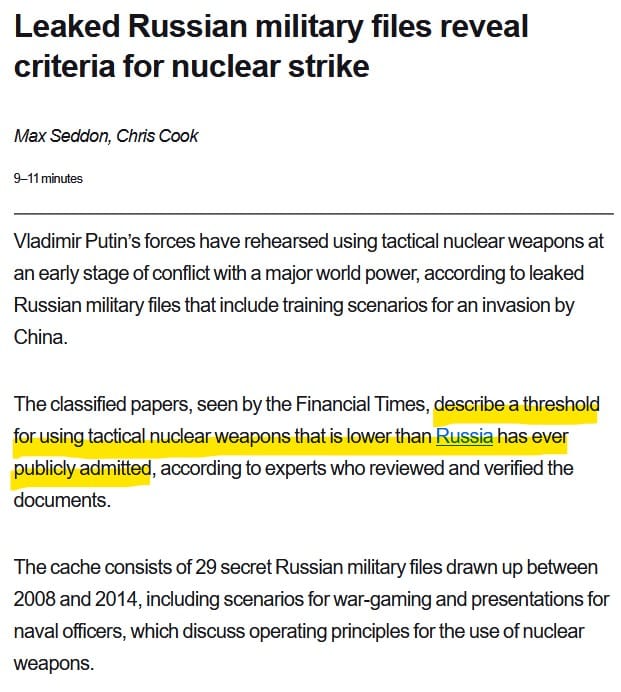
There is one more important facet to the timing of the operation’s inception. In February 2024, the Financial Times reported on leaked Russian military files:

When exactly were these documents leaked? To whom had they been leaked and how long was it before the Financial Times reported on them?

Is it possible the inception of Operation Spiderweb coincided with the leak of these documents which occurred after repeated attempts by Russia to blackmail Ukraine and the west using the threat of nuclear war?

Which brings up a third point not discussed in media coverage of Operation Spiderweb: by eliminating a sizeable portion of Russia’s capacity to deliver nuclear weapons, Ukraine has blunted Russia’s threat against the west and China.

This was worth all the military aid provided to Ukraine to date, and then some. Ukraine has more than earned a place in the European Community and NATO.

Share this entry

JD Vance at the Munich Security Conference: A Speech by Gaslight

How Vance unsettled the Europeans

While Musk was ripping through the US government like a 10 tonne toddler on cocaine, Vice President JD Vance was dispatched to the Munich Security Conference last week to tell Europeans how to run their democracies. His 19 minute speech, coupled with Trumps’ announcement that peace in Ukraine would be decided in a meeting between the US and Russia only, has swept the legs out from under Europe, NATO, and the post-war transatlantic consensus.

The speech itself was deeply weird, and breathtakingly hypocritical. Who was it for? It’s inscrutable. It wasn’t the people in the room, Vance even joked that the room would hate it. Much of it, like talk of abortion clinic perimeters, Christians burning Qurans, and weird inaccurate anecdotes about prayers didn’t make sense for a Defense crowd. The talk couldn’t have been for  the base back home; they’ll never see it, and wouldn’t get the references if they did.

Could the Europeans be the audience? Unlikely. It misunderstood European coalition politics to the point of embarrassment. I doubt it was for his boss, who isn’t particularly interested in European details, and anyway is busy destroying the state back home with Elon Musk and Elon’s emotional support human. Perhaps it was for the Heritage-Leonard Leo-Peter Thiel crowd, but then it doesn’t accomplish much more than meeting up with them and complaining about the unmanliness of Europeans over scotch.

Vance opened with talking about an Afghan man who had driven his car into a market and killed two people recently in Munich. He segued smoothly from a convincing show of human sympathy to unconvincing and suddenly icky attempt to link migration and violence. Mass violence in Europe is an issue, but it isn’t anywhere close to how prevalent it is in America. And the common factor of mass violence events isn’t migration status, it’s men.

For me, as an American who has made the EU my home, the most disturbing aspect was the pure hit by hit gaslighting Vance delivered to his audience. Based on the faces of the mostly silent crowd, they were disturbed too. He took what could have been a strong list of America’s political flaws, and scolded the Europeans for them. It was manipulative and shameless, but at least is was also transparently manipulative. No one in the room was buying it.

A group of EU mukities being annoyed with their Vance scolding session

Not particularly into this nonsense.

Vance’s speech was a scold, talking about a number of fairly niche European issues that wouldn’t read to the regime’s American supporters back home. But he also spoke as if Germany, and indeed all of Europe, was failing to meet some obligation to the US Constitution. He seemed unable to distinguish between the legal systems of the many nations of Europe, and our Constitution. He criticized the German firewall policy to keep Nazi-adjacent parties out of the German government. But he seemed to mistake it for some formal legal mechanism, rather than just rejecting associating with someone during negotiations. Coming from the American winner-take-all system, he didn’t seem to understand the many methods of how governments are formed and fall in Europe.

It was like the geopolitical version of Americans traveling abroad who are shocked to find that local laws do apply to them, and that you can’t pay in dollars.

Perhaps the most embarrassing moment in the speech was one of his most fervent, about the Romanian election. He was outraged that the Romanian supreme court ordered a re-run of an election because of credible allegations of Russian interference. But, of course, this was a constitutional choice made by the empowered body in Romania, which importantly here, is not subject to the US Constitution.

Vance doesn’t have a lower division polysci major’s understanding of European political realities. About Romania’s troubles, he said “But if your democracy can be destroyed with a few hundred thousand dollars of digital advertising from a foreign country, then it wasn’t very strong to begin with.” Here I have to give a long, deep sigh. That is correct, Mr. Vance.

Part of the project of the European Union is to help politically weakened  former eastern bloc European democracies strengthen their institutions with the goal of becoming robust democracies, one day. After decades of Soviet oppression and exploitation, institutions are weak and corruption is endemic in many of these countries. They are not strong democracies right now, and we all know that over here. It’s part of the grand conversation of the European Union. Even the former Soviet block countries’ institutions generally countenance that fact. That’s why you might want to have a method of re-running an election in an unstable situation.

Honestly though, the US could take a hint or two from some of these “not strong to begin with” democracies. Having a mechanism to re-run the 2000 election would have done this country a good turn and saved a lot of trouble, however the re-run went.

It’s hard to overemphasize how much Vance didn’t understand, or even care to understand, the nations he was speaking to and about. He misunderstood perimeter laws in the UK, coalitions in Germany, speech law everywhere, and what the European Union exists for.

But Also, Rank Hypocrisy

He pounded out the words “If you’re running in fear of your own voters, there is nothing America can do for you,” this, from a country that purges its own voter rolls along ethnic and political lines regularly. Politically motivated voter purges are uncommon in the EU, whereas they are an expected piece of electioneering in America. We even have to tell people to check and recheck they have’t been caught up in partisan voter purges every election. That’s so uncommon in Europe as to be a sign of political crisis, rather than business as usual.

Vance bellowed out at the crowd that “Thin mandates produce unstable results…” without the slightest sign of self-awareness. I have to agree with him in principle, but coalitions and alternatives to FPTP voting means that unclear and close results are rarer in Europe than America. He also conveniently omitted that his ticket won by 1.5% of the vote, but everyone in that room knew it.

One of the points he seemed very confident of was that “…there’s no more urgent issue than mass migration.” Migration is a complex issue in Europe, but most urgent? No, the data simply doesn’t support that. In fact Europeans largely agree on the need for migration, but the details are devilish. Many of us in Europe put inflation, inequality, and even climate change above migration. EU wide, the relevance of migration has been dropping steadily since the crisis a decade ago. Migration is there, but it doesn’t approach the rolling crises of consumer prices, inequality, and energy costs the truly plague Europe.

Americans don’t really worry about energy and resources the same way Europe does. Most of America’s inflation problems are more or less self-inflicted, but Europe has to rely on trade with the rest of the world to meet many of its existential needs. If Vance only talked to the AfD, Le Pen, and maybe Orban, he can definitely construct an ersatz man-child Europe, terrified of brown families crossing the Mediterranean looking for a better life. But that’s not all of Europe, and not even most of it these days.

But being an American talking about mass violence events in Europe is a tricky proposition. Being from a country where the most common cause of death in child is a bullet, Vance’s sentiment of “tak(ing) our shared civilization in a new direction” misses that a lot of Europeans don’t consider America very civilized, largely because of peculiar cultural norms like gun violence.

At one point, out of nowhere, Vance said “If American democracy can survive 10 years of Greta Thunburg scolding, you guys can survive a few months of Elon Musk.” I have no clue what this means. I think it was meant to be a laugh line. Maybe it just sounded good in his head.

Vance mainly spoke of an America that doesn’t exist. There is no broad consensus in America, no easy confidence about a bright future. The nation is checked out, divided, and struggling to survive. He wouldn’t dare try to give a ‘Morning in America’ speech any further west than Munich. He couldn’t even do it in Munich. No one was buying what he was selling.

The Europeans saw Vance as meddling, interfering in the ways that he was accusing them of doing, because he doesn’t understand European decorum around speech. Decorum is taken seriously in a way that American’s don’t understand, and a serious person is expected to watch their words in a way that Trump’s people don’t get, or care to get.

Vance often seems like the smart grownup in an administration of weirdos and troglodytes, but he’s not. He just cleans up ok. Give him some runway, and he shows he’s just as regressive and weird as the rest of the bunch. Vance is just another one of the idiot wrecking crew tearing their way through America, and now the world.

The Response

The consequences of this political clown show were immediate.

The one-two punch of Vance in Munich and Trump cutting everyone but Putin out of negotiating the Ukraine war has shocked Europe, possibly into action. Macron has hosted a meeting of leaders in Paris, including the largest states in the EU and the UK’s Keir Starmer, who is something of a self-appointed American whisperer.

It doesn’t mean the EU is springing into action. Springing is not a thing the EU does, but meetings are. It does point to the EU waking up to how dangerous the Americans really are right now, and also how delusional. Settling the Ukraine war without Ukraine at the table is insane, and both Zelensky and European leaders have pointed that out. If the Ukrainians don’t stop fighting, and they won’t, the war doesn’t end. It just turns into Russia’s Vietnam, or Algeria, or Afghanistan, again. And Ukraine becomes a field of bones and blood and hate.

There’s talk in Europe of peace keepers in Ukraine. Not serious talk, and peacekeepers are a terrible idea, but at least they’ve started throwing spaghetti at the wall.

NATO head Mark Rutte is out pounding the pavement with leaders and press about the need to get military spending in Europe up to 5% of Everyone’s GDP. It’s a transparent call to be able to cut the Americans out and take on threats like Russia and Iran on their own. But it’s also a hard lift, at a time when economics and climate change are pressing Europe. The countries most at risk — Poland, Finland, and the Baltics, are already ramping up to resist Russian invasion. This isn’t paranoia, Russian political elites have promised to come get them after Ukraine for years.

The US, and its power to bind things together geopolitically is gone, possibly for good. But the old European terrors, mainly Russia and in-fighting, persist.

Share this entry

The Mixed Emotions of November 9th

h/t rocksunderwater (public domain)

In Germany, November 9th is a day of very mixed emotions.

In 1923, this was the date on which the “Beer Hall Putsch” took place, a failed violent coup led by Hitler and the Nazis to overthrown the Weimar government. The following April, Hitler was convicted of high treason and sentenced to five years in prison (the bare minimum sentence). While in prison, Hitler was given various privileges, and he wrote the first volume of Mein Kampf. By the end of the year, Hitler was released, and he pivoted the Nazi party to seek power via legitimate means. Ten years later, Hitler had become the Chancellor of Germany.

Fifteen years to the day after the Beer Hall Putsch, in 1938, came Kristallnacht, the Night of Broken Glass. On that night, the German authorities stood by as Hitler’s Storm Troopers and members of the Hitler Youth stormed Jewish businesses and buildings, synagogues and schools, hospitals and homes, breaking their windows and ransacking the property. While the Nazis claimed the violence was a spontaneous reaction to the murder of a Nazi official, it was instead a well-planned attack, thousands of Jews were rounded up and sent to concentration camps, and the Nazis demanded the Jewish community pay a huge “Atonement Tax” of 1 billion Reichsmarks, and any insurance payouts to Jews were seized by the government.

As bad as those memories are for Germany, an entirely different memory of November 9th was created in 1989, when after a tumultuous summer, the Berlin Wall came down. JD Bindenagel was the career State Department officer serving as the deputy chief of mission at the US mission in East Germany’s capital of Berlin, and he described it like this in 2019:

On Nov. 9, 1989, there was no sign of revolution. Sure, change was coming—but slowly, we thought. After all, the Solidarity movement in Poland began in the early 1980s. I spent the afternoon at an Aspen Institute reception hosted by David Anderson for his new deputy director, Hildegard Boucsein, with leaders from East and West Berlin, absorbed in our day-to-day business. In the early evening, I attended a reception along with the mayors and many political leaders of East and West Berlin, Allied military commanders and East German lawyer Wolfgang Vogel. Not one of us had any inkling of the events that were about to turn the world upside down.

As the event was ending, Wolfgang Vogel asked me for a ride. I was happy to oblige and hoped to discuss changes to the GDR travel law, the target of the countrywide demonstrations for freedom. On the way, he told me that the Politburo planned to reform the travel law and that the communist leadership had met that day to adopt new rules to satisfy East Germans’ demand for more freedom of travel. I dropped Vogel off at his golden-colored Mercedes near West Berlin’s shopping boulevard, Ku’Damm. Happy about my scoop on the Politburo deliberations, I headed to the embassy. Vogel’s comments would surely make for an exciting report back to the State Department in Washington.

I arrived at the embassy at 7:30 p.m. and went directly to our political section, where I found an animated team of diplomats. At a televised press conference, government spokesman Guenter Schabowski had just announced the Politburo decision to lift travel restrictions, leaving everyone at the embassy stunned. East Germans could now get visitor visas from their local “People’s Police” station, and the East German government would open a new processing center for emigration cases. When an Italian journalist asked the spokesman when the new rules would go into effect, Schabowski fumbled with his papers, unsure—and then mumbled: “Unverzueglich” (immediately). With that, my Vogel scoop evaporated.

At this point, excitement filled the embassy. None of us had the official text of the statement or knew how East Germans planned to implement the new rules. Although Schabowski’s declaration was astounding, it was open to widely varying interpretations. Still dazed by the announcement, we anticipated the rebroadcast an hour later.

At 8 p.m., Political Counselor Jon Greenwald and I watched as West Germany’s news program “Tagesschau” led with the story. By then, political officer Imre Lipping had picked up the official statement and returned to the embassy to report to Washington. Heather Troutman, another political officer, wrote an on-the-ground report that the guards at Checkpoint Charlie were telling East Germans to get visas. Greenwald cabled the text of Schabowski’s announcement to Washington: East Germans had won the freedom to travel and emigrate.

As the cable arrived in Washington, I called the White House Situation Room and State Department Operations Center to discuss the report and alert them to the latest developments. I then called Harry Gilmore, the American minister in West Berlin.

“Harry,” I said, “it looks like you’re going to have a lot of visitors soon. We’re just not sure yet what that rush of visitors will look like.”

We assumed that, at best, East Germans would start crossing into West Berlin the next day. In those first moments, the wall remained impassable. After all, these were Germans; they were known for following the rules. Schabowski had announced the visa rules, and we believed there would be an orderly process. East Germans, however, were following West German television coverage, as well. And, as it turned out, they decided to hold their government to its word immediately.

I headed home around 10 p.m. to watch events unfold on West German television. On my way to Pankow, I was surprised by the unusual amount of traffic. The “Trabi,” with its two-cycle engine and a body made of plasticized pressed-wood, spewing gas and oil smoke, was always in short supply. Perhaps one of the most striking symbols of East Germany’s economy, those iconic cars now filled the streets despite the late hour—and they were headed to the Bornholmer Strasse checkpoint. Near the checkpoint, drivers were abandoning them left and right.

Ahead of me, the blazing lights of a West German television crew led by Der Spiegel reporter Georg Mascolo illuminated the checkpoint. The TV crew, safely ensconced in the West, was preparing for a live broadcast. Despite the bright lights, all I could make out was a steadily growing number of demonstrators gathering at the checkpoint. From the tumult, I could faintly hear yells of “Tor auf!” (Open the gate!) Anxious East Germans had started confronting the East German border guards. Inside the crossing, armed border police waited for instructions.

Amid a massive movement of people, fed by live TV, the revolution that had started so slowly was rapidly spinning out of control. The question running through my mind was whether the Soviet Army would stay in its barracks. There were 380,000 Soviet soldiers in East Germany. In diplomatic circles, we expected that the Soviet Union, the military superpower, would not give up East Germany without a fight. Our role was to worry—the constant modus operandi of a diplomat. But this time, our concern didn’t last long.

When I arrived home around 10:15 p.m., I turned on the TV, called the State Department with the latest developments, and called Ambassador Richard Barkley and then Harry Gilmore again: “Remember I told you that you’d be seeing lots of visitors?” I said. “Well, that might be tonight.”

Just minutes later, I witnessed on live television as a wave of East Berliners broke through the checkpoint at Bornholmer Strasse, where I had been just minutes earlier. My wife, Jean, joined me, and we watched a stream of people crossing the bridge while TV cameras transmitted their pictures around the world. Lights came on in the neighborhood. I was elated. East Germans had made their point clear. After 40 years of Cold War, East Berliners were determined to have freedom.

Bindenagel was elated, the German people were elated (Bindenagel gave more detail in a video interview here, and Deutsche Welle has a host of anniversary articles and interviews here), and the West (broadly speaking) was elated.

A certain KGB agent stationed in East Germany and assigned to work with the Stasi (the East German Secret Police) was most certainly not elated, and grew increasingly frustrated in the weeks that followed. The BBC described the agent’s reaction like this:

It is 5 December 1989 in Dresden, a few weeks after the Berlin Wall has fallen. East German communism is dying on its feet, people power seems irresistible.

Crowds storm the Dresden headquarters of the Stasi, the East German secret police, who suddenly seem helpless.

Then a small group of demonstrators decides to head across the road, to a large house that is the local headquarters of the Soviet secret service, the KGB.

“The guard on the gate immediately rushed back into the house,” recalls one of the group, Siegfried Dannath. But shortly afterwards “an officer emerged – quite small, agitated”.

“He said to our group, ‘Don’t try to force your way into this property. My comrades are armed, and they’re authorised to use their weapons in an emergency.'”

That persuaded the group to withdraw.

But the KGB officer knew how dangerous the situation remained. He described later how he rang the headquarters of a Red Army tank unit to ask for protection.

The answer he received was a devastating, life-changing shock.

“We cannot do anything without orders from Moscow,” the voice at the other end replied. “And Moscow is silent.”

That phrase, “Moscow is silent” has haunted this man ever since. Defiant yet helpless as the 1989 revolution swept over him, he has now himself become “Moscow” – the President of Russia, Vladimir Putin.

For Putin, this was the beginning of the fall of the great Russian empire, and everything Putin has done since was been an effort to restore the greatness of Great Mother Russia, with himself as her leader and savior.

On this November 9th, it is the Germans and West who are worried and Putin who is elated, as Donald Trump prepares to take office. Putin dreams of an end to US military support for Ukraine, a diminished US role in NATO (if not a complete withdrawal from the alliance), and a weakening of the Five Eyes intelligence sharing agreement between the US and the UK, Canada, Australia, and New Zealand.

On this November 9th, Putin’s dreams are looking closer to becoming a reality.

On this November 9th, Moscow is no longer silent.

Share this entry