OATHS BROKEN, OATH KEEPERS BOWED: Sentences for 2 more in marquee Jan. 6 conspiracy case

Raw emotions positively dominated a federal courthouse in Washington, D.C. this week as the Justice Department secured significant sentences for two more Oath Keepers involved in a larger conspiracy to forcibly stop America’s transfer of power on Jan. 6, 2021. 

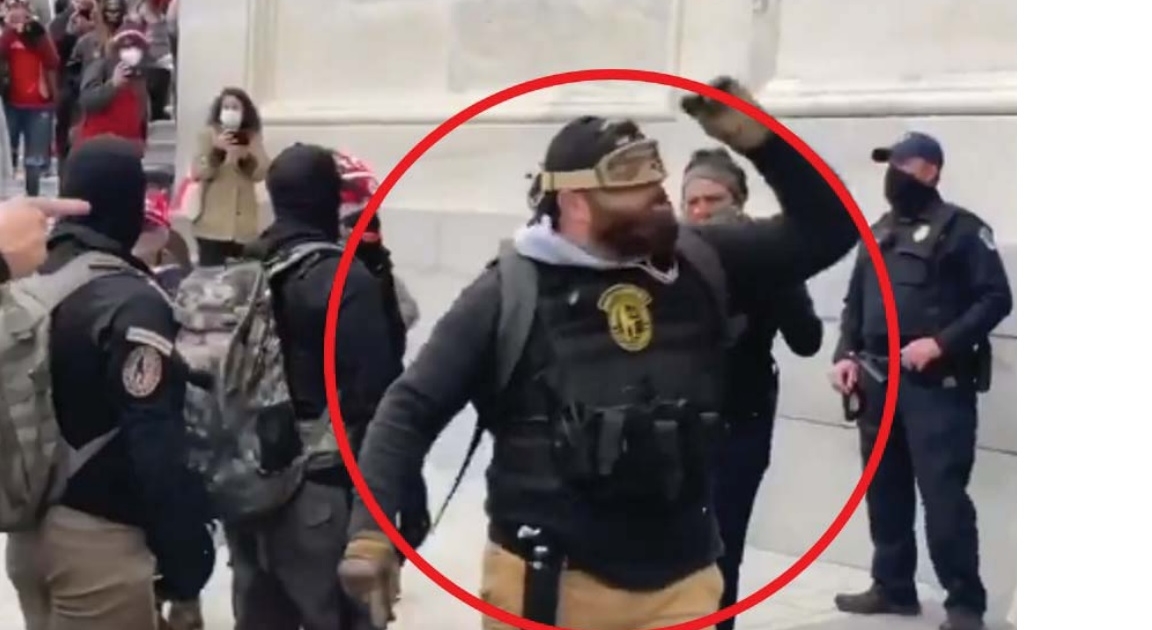
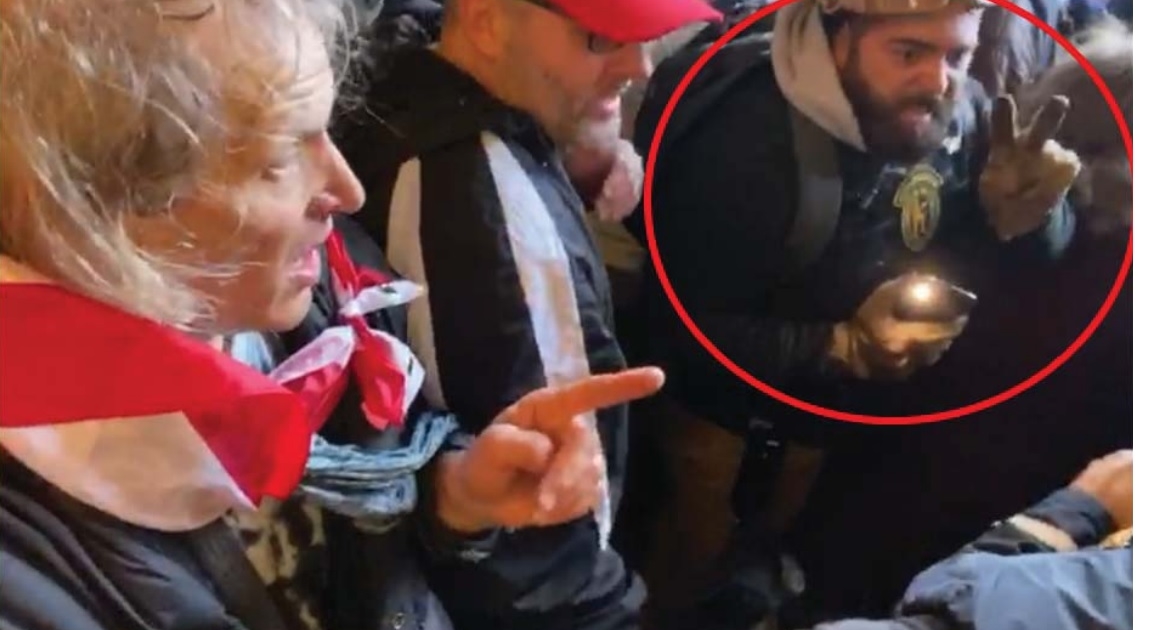
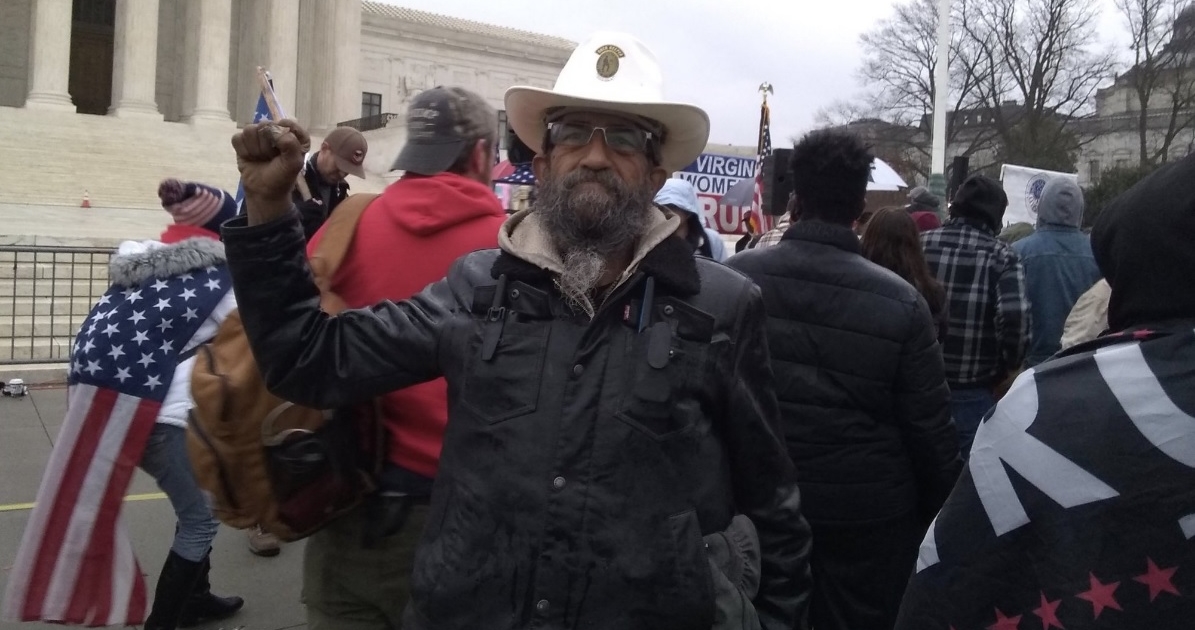
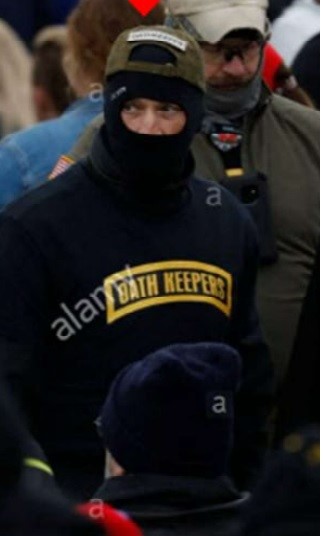
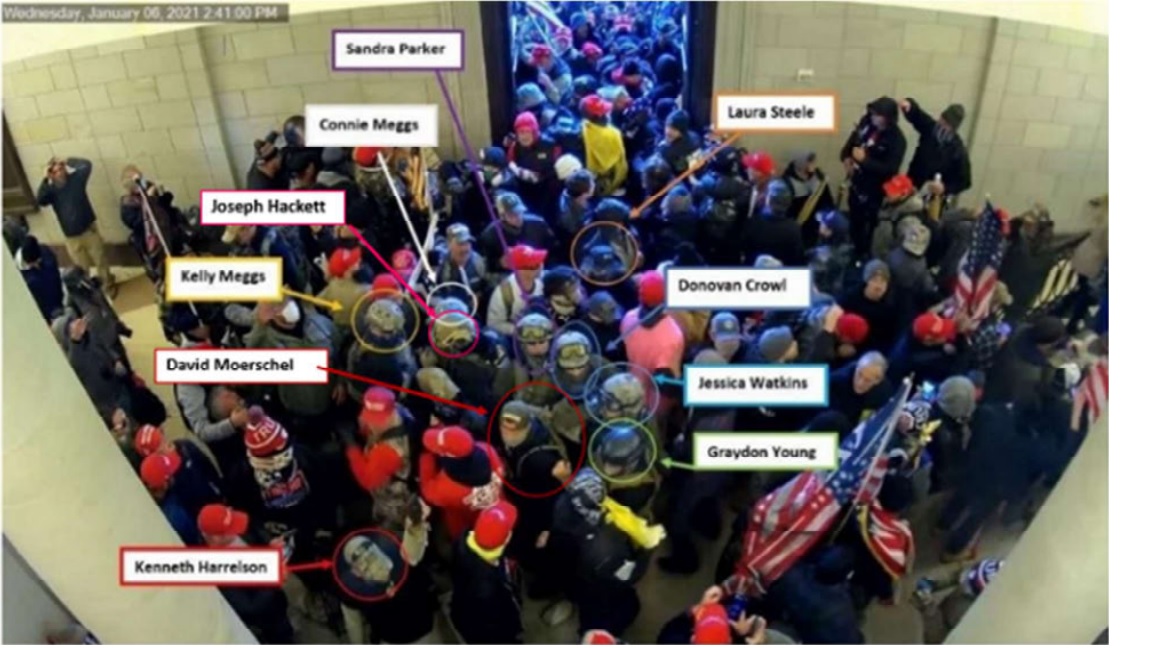
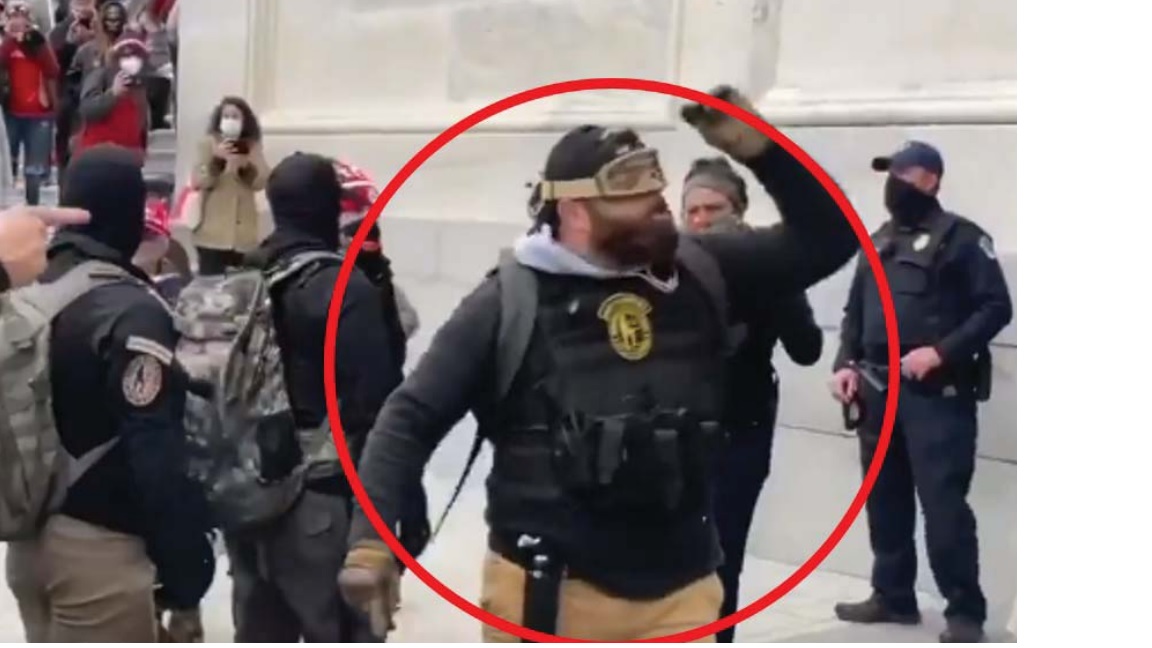
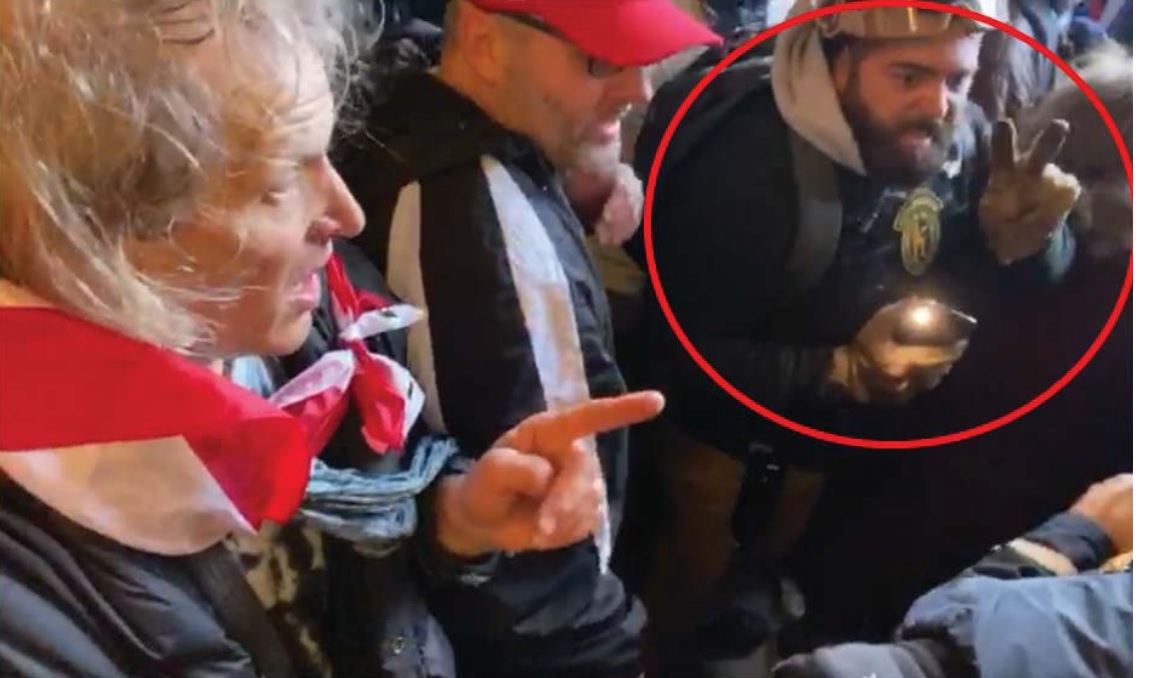
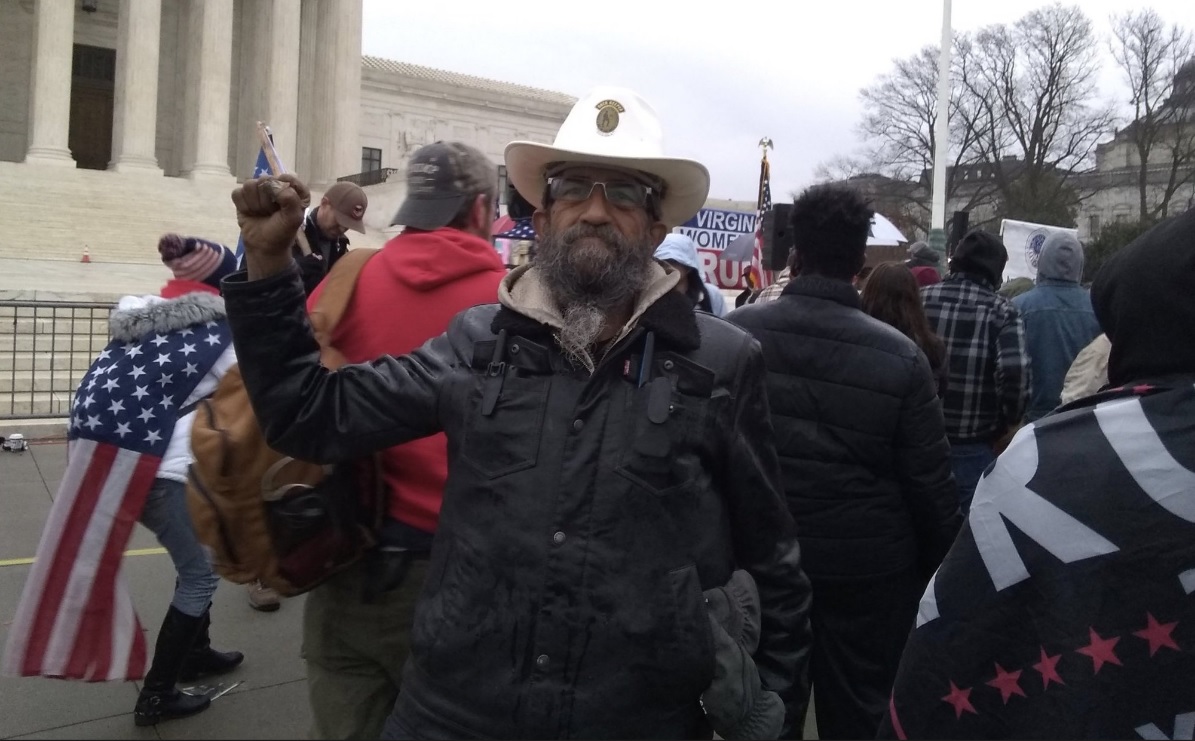
On the heels of an 18-year-sentence delivered to a defiant Elmer Stewart Rhodes, the leader of the far-right group, and a 12-year-sentence handed down to Kelly Meggs, Rhodes’ deputy on the 6th, U.S. District Judge Amit Mehta sentenced Oath Keeper Jessica Watkins, once the founder of the Ohio Regular Militia, to 8.5 years and Kenneth Harrelson, a ground team leader on the 6th, to four years. Both were acquitted of the sedition charge in this case but they were found guilty of multiple felonies including serious obstruction charges. Sedition itself is rarely prosecuted in the United States and rarer still are these prosecutions successful since the bar to prove this sort of conspiracy is set so high. 

This week marked a victory for the Justice Department, the rule of law, and the victims of Jan. 6 even if Donald Trump, the man who started it all, has yet to bear any real legal responsibility for his role in inciting an attack on the U.S. Capitol to stay in power. 

That day may come. But in the meantime, the willing pawns in Trump’s betrayal of the U.S. Constitution and common decency alike will now begin to serve their time. 

Underlining the severity of events, prosecutors initially sought an 18-year sentence for Watkins noting the jury’s conclusion that her true objective on Jan.6 was to storm the Capitol, use her body—and the bodies of her recruits—to violently obstruct the certification of the 2020 election, and intimidate Congress and impede police. 

Judge Mehta told a highly emotional Watkins in court Friday that though she was acquitted of the most serious charge, at the time of Jan. 6 she was nevertheless a self-professed Oath Keeper who conspired to mar and disrupt democratic proceedings and lead recruits who, he believed, wouldn’t have been there but for her leadership. That would include, Mehta noted, Oath Keepers Bennie and Sandra Parker. She also led Donovan Crowl and Graydon Young into the fray. 

Watkins was on the Nov. 9, 2020, GoTo Meeting with Stewart Rhodes and other Oath Keepers, where, Judge Mehta described, the origins of a violent conspiracy began to emerge. Before sentencing, the judge told her she “knew exactly what Rhodes had said, [and] was listening carefully on the call.” 

In that meeting, Rhodes said he had abandoned all hope of a peaceful way to keep Trump in office or stave off a civil war. There was “nothing left but to fight,” and “we’re not getting out of this without a fight,”  he said in November 2020. 

He was primed for violence and ready to issue orders. Watkins was ready to take them. 

Jessica Watkins

She would ask Rhodes then about providing weapons for Oath Keeper events, Mehta noted, pointing to a discussion about transporting altered, weaponized pool cues. She and Oath Keeper Donovan Crowl called them “nightsticks.” 

The foreseeable violence of Jan. 6 was evident in her constant willingness to prepare for it in the days and weeks leading up to the certification, Mehta said. And on that day, Watkins used an “aggressive, assaultive” posture and was “purposeful” as she coursed through the Capitol. Communications between her and others like Oath Keeper Donovan Crowl showed she wasn’t in D.C. merely to provide a security detail for Trump VIPs or to protect Trump supporters attending speeches like she and her defendants argued at trial.

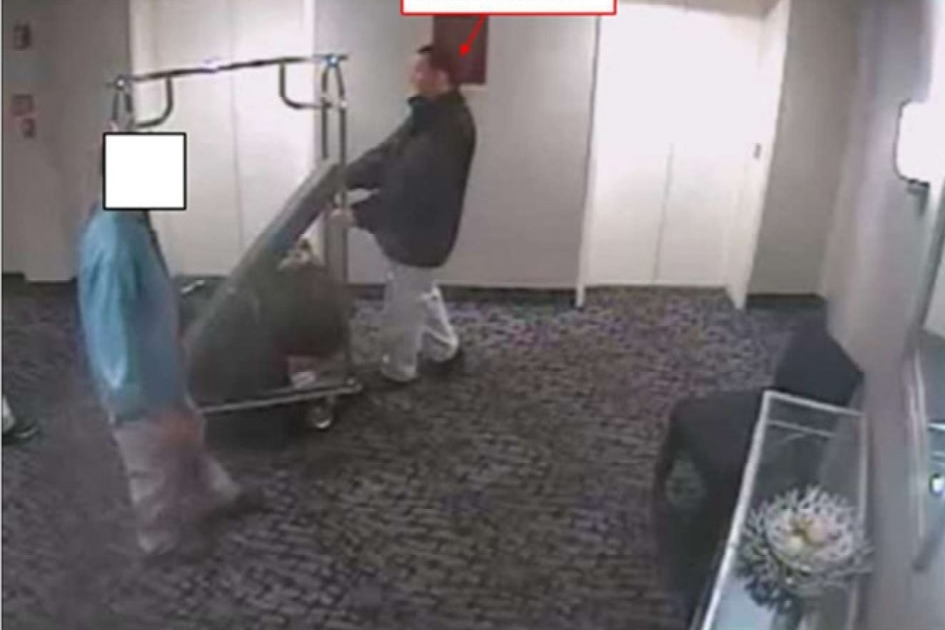
She understood why Oath Keepers had set up the arsenal of weapons they dubbed a “quick reaction force” or a “QRF” at a hotel in northern Virginia, Mehta said. She brought an AR-15 from her home base of Ohio to Winchester, Virginia on the 6th. At trial, she said she decided to leave it at Crowl’s property there because she worried cleaning staff at the hotel outside of D.C. (the QRF) would “freak out” if they saw them. 

In court Friday, Mehta told Watkins he believed she would have gone to get weapons if Rhodes had asked her and it was “small comfort” that she had left her own personal weapon further behind. 

In any event, it is unlikely Watkins would have needed to drive hours back to Winchester anyway: The arsenal at the hotel in Arlington, Virginia, was just over the Potomac River from the U.S. Capitol, and it had more weapons than Oath Keeper Terry Cummings had seen in one place since his time in the military, he testified in October.

Watkins was part of the first stack, or line formation, inside of the Capitol. Leading the group on the ground was Kelly Meggs. He was sentenced to 12 years for seditious conspiracy earlier this week. Watkins used Zello, a walkie-talkie messaging app to communicate her maneuvering inside the Capitol and Mehta said there was no doubt that she pushed her way past police and headed toward the Senate. She could be seen and heard in footage urging “push! push! push!” and encouraging rioters to overrun police. 

Watkins kept some of her communications tied to Jan. 6 intact but others she deleted, and this, both the jury and Judge Mehta concluded, indicated an intent to conceal her activities and obstruct an investigation into her crimes after she was identified in press reports in the wake of the attack. He told Watkins he didn’t know if there was a direct connection between Rhodes’ orders to Oath Keepers to delete communications after the 6th and her decision to remove her own communications but he considered it obstruction nonetheless. 

Mehta agreed to a terrorism enhancement sought by the Justice Department but still went below the guidelines. He was sympathetic to her and her background. Watkins is transgender and she had a difficult upbringing in a strict religious household. Once in the Army she temporarily went AWOL because of harassment from a bunkmate who discovered her online searches involving gender identity. Her military service didn’t earn her any special deference at sentencing. 

“I don’t think you’re Stewart Rhodes. I don’t think you’re Kelly Meggs. But your role in those events was more than a foot soldier. I think you can appreciate that,” Mehta told her in court Friday. 

She nodded slightly as he spoke to her. 

Watkins was racked with emotions during the sentencing hearing. She burst into tears the moment she took the podium and it was her chance to ask for mercy from the court. After somewhat composing herself, she spoke loudly though often her voice would quake as her tears flowed. She clutched a tissue for a few moments as she spoke. Her face flushed.

 I wrote this letter to you today to express my feelings of remorse considering my participation in Jan 6. As I said previously, my actions and behaviors that fateful day were wrong and as I now understand, criminal. This is what has brought me before you today and why you must hold me responsible. The events of Jan. 6 are unfortunate and while I believe in peaceful protest and redress of government, violence is never the answer,” Watkins said.

She expressed her “strong” frustration with people who assaulted police and told Judge Mehta since she had been incarcerated she had studied video evidence online and emphatically claimed she had “solved the crime” of a police assault on Jan. 6 unrelated to her case.

She also said she accepted that “her actions in and around the Capitol inspired those people to a degree.” 

“They saw me there and that probably fired them up,” she said, noting how Oath Keepers were pat on the back as they ascended the Capitol steps. 

“At trial, I said I was an idiot for going in there. But idiots can be held responsible and this idiot must be held responsible,” she said. 

Watkins cried as she left the stand, saying she still loved her country and that it was never her intent to harm it or anyone. She regretted that Metropolitan Police Officer Christopher Owens was not present Friday. She wanted to personally apologize again though she aired the same sentiments at trial while he was in the courtroom. Owens, who was on the receiving end of Watkins’ push inside the Capitol, issued a poignant and painful victim impact statement two days before her sentencing. She was present for it but unable to address him then.

Judge Mehta’s empathy for Watkins was substantial. She had overcome a lot, he said. And in a tone that sounded stern yet near fatherly, the federal judge looked at Watkins earnestly, telling her he believed she was someone who could one day be a role model for others. 

“I’m happy you have found someone who loves you. You and he tried to make a go of it with your own business… you served as a firefighter and a medic, and frankly, I do believe that the purpose of the Ohio State Regular Militia was not to battle our government,” Mehta said. “But somewhere along the line, that all got waylaid and perverted. I don’t know what it was. Whether it was Alex Jones or other corners of the internet you found yourself in; you clearly began to have delusional thoughts about what the risks were if the other guy won and what you would need to do to ensure the safety of your countrymen.” 

No one with a “human bone in their body,” Mehta added, could hear Watkins’ life story and not feel some degree of compassion.

“You have overcome a lot. You are resilient. You are someone who could serve as a role model. I say that at a time when people who are trans are so readily vilified and used for political purposes. It makes it all the more hard for me to understand why there is still a lack of empathy for those who suffered that day. Maybe it’s part of the process, the journey,” Mehta said. 

The “lack of empathy” the judge referred to was tied to Watkins’ remarks in private calls reviewed by prosecutors and raised at sentencing. In one call, she had derided police who came under attack on Jan. 6 and spoke publicly of their post-traumatic stress. 

“‘Boo hoo, poor little police officers got a little PTSD, wah! ‘I had to stand there and hold the door open for people. Wah!'” Watkins had said, according to prosecutor Alexandra Hughes.

Her attorney, Jonathan Crisp, said Watkins had undertaken efforts at deradicalization. She’s been detained for two years. Mehta did raise the question with Crisp of how he could reconcile her seeming callousness in the phone call with her more remorseful presentation in court. The lawyer, who is a JAG and served in Iraq but did not see combat, admitted, “it may sound evil,” to make the comment but it came from an opinion that any wearer of any uniform in law enforcement or military service should expect that risk, danger and sacrifice effectively come with the territory. Crisp argued that wasn’t to diminish the unique circumstances of Jan. 6 and the unexpected conditions police were under, but that was the opinion, deluded as others may perceive it to be.

At her sentencing as well as at Rhodes and Meggs’ sentencing and later, at Harrelson’s, the judge made it a point to underline to each that their sentences would need to reflect the role they played and how serious it had impacted not just people of the United States but also the very people who defended the Capitol with their lives, forsaking their own families, self-interest and self-preservation instincts. 

Mehta said it was an officer’s job to expect sacrifice though this did not diminish their heroism in the face of something that, “I would dare say, even a police officer would have expected [on the 6th.]”

Roughly an hour after Watkins, her co-defendant Florida Oath Keeper Kenneth Harrelson was sentenced by Judge Mehta to four years in prison. Prosecutors initially sought 15. Much like it was with Watkins, Harrelson was deeply emotional before the judge. 

He was acquitted of seditious conspiracy. He was also acquitted of conspiracy to obstruct proceedings and destruction of property. The jury convicted him on just two of six counts that he faced: obstructing an official proceeding and conspiracy to prevent an officer from discharging his duties. He did not testify at trial whereas Watkins, Rhodes, and co-defendant Thomas Caldwell, did. 

Harrelson was somewhat enigmatic in court. He was reserved throughout roughly 30 days of proceedings; reading from paperwork ceaselessly, his head down and face close to the pages before him. His lawyer, Bradley Geyer, while certainly not a shrinking violet when he would speak before the jury, was among the least chatty attorneys at trial, seemingly preferring to let Harrelson fade into the background. 

Harrelson wasn’t a prolific texter or user of social media and very few of his messages emerged in evidence. He deleted most and deleted Signal off his phone. The extent of his communications around the 6th is something that will remain a mystery for prosecutors for sometime and maybe forever. 

“We don’t know what we don’t know,” Assistant U.S. Attorney Jeffrey Nestler said in court Friday. 

Prosecutors considered Harrelson a “ground team leader” who took orders from Meggs. Another fellow Oath Keeper, Jason Dolan, told the jury in October he considered Harrelson to be his superior and it was Dolan who also helped transport weapons to the QRF in Arlington. Harrelson also participated in firearms training with Meggs and was close with Rhodes in the days leading up to the critical Nov. 9 GoTo meeting. Like Watkins, Harrelson heard Rhodes call for violence if Trump wasn’t permitted to stay in the White House (despite his defeat). 

At sentencing, Judge Mehta was unwilling to add leadership enhancements to Harrelson’s sentence because while he thought there were elements of Harrelson’s role that could fall into the leadership category, what he reviewed he didn’t consider dispositive proof that the Florida man “controlled” anyone in a significant sense on the 6th.

Harrelson went up the Capitol steps in the first stack led by Meggs and once atop, turned to wave at others to come inside. Once in, he and Dolan screamed “treason!” at police officers and “This is our fucking house!” Dolan told the jury when he was on the stand this was done to put fear into lawmakers preparing to certify the election. 

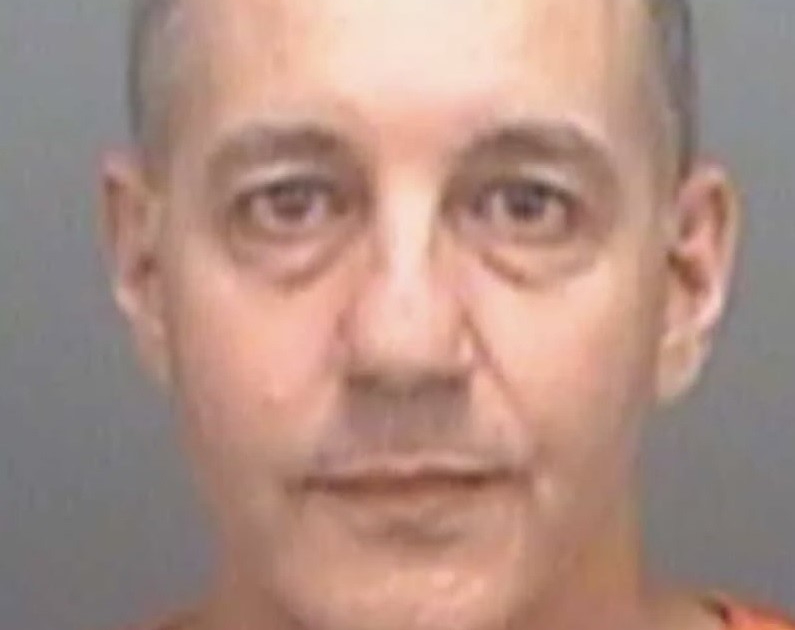
Kenneth Harrelson

When law enforcement came calling for Harrelson after the 6th, he hid the AR-15 he brought to the D.C. area as well as the rifle case. He failed to tell investigators about several photos he took on the 6th during the melee. 

And, Nestler noted, he didn’t show any remorse in the days afterward. Quite the contrary: he continued to speak with Meggs, Rhodes and Oath Keeper and Roger Stone security goon Jeremy Brown

Mehta told Harrelson he believed he was just as responsible in many ways for the conspiracy as his cohorts on Jan. 6, including his superior Kelly Meggs. He knew the QRF was packed to the gills with weapons, for one, and his time in the Capitol—while fleeting—was not unimportant since it advanced the group’s mutual attempt to stop Congress from its work.

Oath Keepers like Caleb Berry testified at another Oath Keeper trial that Harrelson had bubbled over after leaving the Capitol because he had patted down an officer at one point and made a tantalizing revelation.

“It was clear as day in the video that you did pat down Officer [Ryan] Salke as you are leaving the building and if that were not enough, we had [Oath Keeper] Graydon Young who testified you did pat him down and Caleb Berry said you told him you did the pat down and said you were surprised at how little armor they had,” Mehta said. 

Mehta noted too how Berry, who pleaded guilty to conspiracy and obstruction of an official proceeding in July 2021, said Harrelson was “pumped” at this and excited. Then the men talked about how they could have been more effective if they would have brought gas masks and firearms. 

At the trial and at sentencing, Geyer emphasized how rioters burst into singing the National Anthem on the stairs. And while Geyer and the defendants had invoked that moment with a type of romantic patriotic reverence in court last year, on Friday, Mehta’s tone was pointed when he told the Army veteran” video may have indeed shown rioters singing the National Anthem on the Capitol steps as the Oath keepers ascended and burst inside,  but it, more importantly, showed him walking through the crowd to the landing. 

“And you are the first one. You were the first one to get close enough to see what was happening at the doors and what was transpiring there. Nevertheless, you enter and you immediately start recording and the words “treason!” are being uttered” Mehta said. 

Harrelson claimed once inside, he and Meggs attempted to “help” U.S. Capitol Police Officer Harry Dunn after coming upon him in the small rotunda near then-Speaker of the House Nancy Pelosi’s office.

A jury may have agreed that as Harrelson made his way through a Capitol under siege, the Florida Oath Keeper would have, at the bare minimum, clearly understood this was not the place to be. The judge said he would only guess that the jury acquitted him of the conspiracy to obstruct charge because they didn’t agree beyond a reasonable doubt that he actually understood how Congressional proceedings actually worked. (Harrelson voted once his entire life and in a state election; had no political interests prior to his involvement with Rhodes and the Oath Keepers and had a very hardscrabble upbringing with a “junkie mom,” his attorney said, and an absentee father.) 

Harrelson has a one-point terrorism enhancement on his sentence because he did intimidate officials: staffers were trapped inside the office he stalked outside of; police inside, like Officer Dunn had been fighting off the mob, defending colleagues, helping people who were overcome, when Harrelson and Meggs came upon him, adding to his already crushing burden. 

When he spoke on his own behalf, Harrelson cried several times, sniffing hard with his body tightening up as he delivered remarks to the court. 

“I got into the wrong car at the wrong time and I went to the wrong place with the wrong people,” Harrelson said before going to explain how he got to D.C.. and was told to report to Michael Greene, a designated Oath Keepers operations leader on the 6th. Greene was acquitted of conspiracy at the third Oath keepers trial in March.

“I have no gripes with the government… I shouldn’t have been there. I should have paid more attention to what was being said [and] on my phone…to Officer Harry Dunn: I would like to truly apologize. when he came up those stairs and expressed that they were killing his friends and carrying out his buddies on stretchers,  all I said was ‘really’? I didn’t know what was happening on the west side…I didn’t know I was hurting anyone and I could have done more and I apologize. I think about that a lot,” he said, choking through tears. “I know I should have done more. I apologize.”

Harrelson continued on to say that he had “demolished” his life, loved his wife and children, was scared for them, and apologized to them as well. 

After Mehta sentenced him, and after the terms of his supervision were read and the Oath Keeper left the courtroom in his prison-issued jumpsuit, he turned his head to the pews and blew his wife a kiss. 

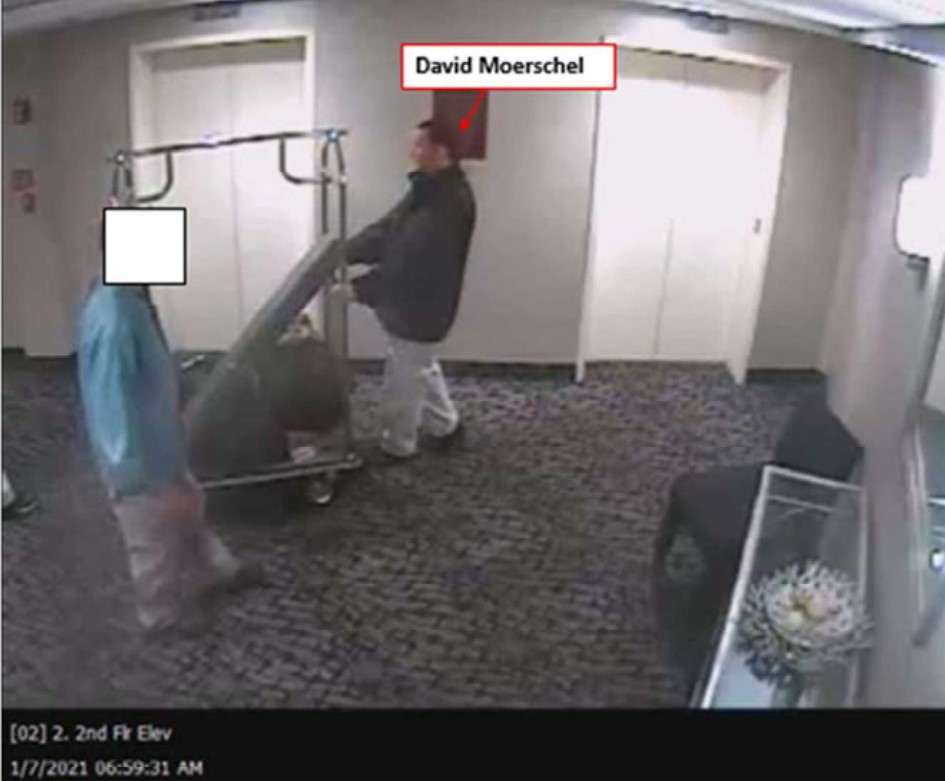
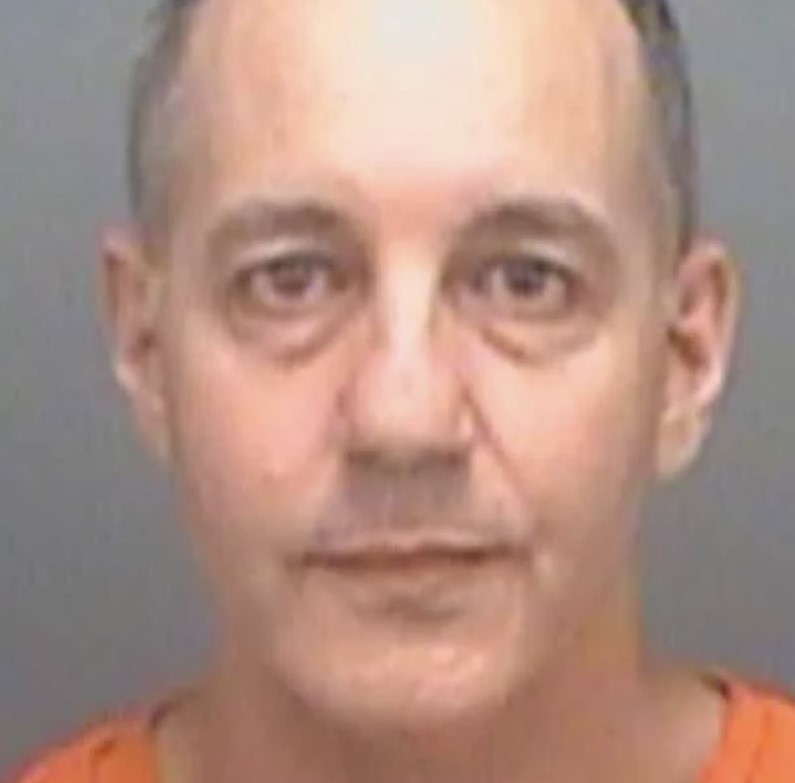
(Coming up this week at the federal courthouse: Oath Keepers and co-conspirators Roberto Minuta, Edward Vallejo, Joseph Hackett, and David Moerschel— all of whom were found guilty of seditious conspiracy—will be sentenced on June 1 and 2.)

Share this entry

‘NOTHING HAS CHANGED, MR. RHODES, NOTHING HAS CHANGED’: Seditious Oath Keeper Elmer Rhodes sentenced to 18 years

After expressing zero remorse and heralding himself to a federal judge as a “political prisoner” who “like Donald Trump only committed the crime of opposing those who are destroying our country,” Oath Keeper Elmer Stewart Rhodes was sentenced to 18 years in prison for his role leading and orchestrating a seditious conspiracy to stop America’s transfer of presidential power by force on Jan. 6, 2021. 

It would have been surprising if Rhodes took any other tack when it was his chance to speak. 

But Rhodes offered no surprises at the Prettyman courthouse in Washington, D.C. on Thursday. 

He was unrepentant, just as he was at trial when he testified on his own behalf for a little over a day. Even then, as a jury actively held his fate in their hands, he publicly smeared proceedings in jailhouse interviews while comparing himself to Nelson Mandela. And just four days ago, in yet another interview from jail, Rhodes kept up The Big Lie. 

The 2020 election was fraudulent, he argued, and the U.S. government had launched a “terror campaign” on Jan. 6 defendants. Four days ago he called for “regime change” and in words that could haunt any appeal of his conviction in the future, he added: “We’re going to have to stop it, the American people” and “It’s not going to stop until it’s stopped.” 

In his bright orange jumpsuit on Thursday, Rhodes gripped the sides of the podium as he read eagerly from his lengthy remarks, perhaps soothed by the sound of his own voice. 

“All Jan. 6 defendants are political prisoners. They are grossly overcharged. A steep sentence here won’t help or deter people, it will make people think this government is even more illegitimate than before,” Rhodes said.

He continued on to issue what sounded like a veiled threat with his voice moving from even and calm to more emphatic as his tone was slightly raised. 

“Characterizing Trump supporters as racists, fools and led down the primrose path by Trump as fools doesn’t help either,” Rhodes exclaimed. “My goal will be to be an American Solzhenitsyn to expose the criminality of this regime.”

He said his guilt was “preordained” and told presiding U.S. District Judge Amit Mehta claims that he is a white supremacist should lead him to “sue for defamation.” He said the “regime change” he hoped for a few days ago meant he hoped Trump would win in 2024. He went on a tear about leftist violence and antifa. Rhodes may impress himself or his supporters with such diatribes, but Judge Mehta appeared thoroughly unimpressed. (Mehta has presided over three Oath Keepers trials alone in recent months and his familiarity with this defense is arguably second to none.)

So long did Rhodes’ defiant remarks ramble on that Mehta actually interrupted him at one point and quite politely reminded him that his time speaking was finite. 

When Rhodes was finally done, Mehta looked at the Oath Keeper leader. On Thursday, Rhodes met Mehta’s eyes only sometimes. He frequently jotted down notes as Mehta spoke. 

“Mr. Rhodes, you are convicted of seditious conspiracy. You are a lawyer. You understand what that means,” Mehta said. 

For those who are not, Mehta provided a background. It was true, he said, neither Rhodes nor his conspirators assaulted police. It was true there were those who “did worse” in this regard on Jan. 6 than Rhodes specifically or members of his organization. 

But Rhodes is unique nonetheless. The seditious conspiracy he led against the United States is the most serious crime one can commit against this government, Mehta said. 

“It is an offense against the government to use force. It is an offense against the people of this country,” Mehta told Rhodes. 

The Oath Keeper founder looked right at the judge at this comment. 

“This isn’t confined to one day or how you reacted… it is a series of acts in which you and others committed to use force, including potentially with weapons against the government of the United States as it transitioned from one president to the other. And what was the motive? You didn’t like the new guy. I get it. But let me be clear to you, Mr. Rhodes, and anyone else who is listening: In this country, we don’t paint with a broad brush, and shame on you if you do,” Mehta said.

He continued: “What we cannot have, what we absolutely cannot have is a group of citizens who because they did not like the outcome of an election and don’t believe the law was carried out in the way they believe it should be, for them to take up arms and foment a revolution. That’s what you did. Those aren’t my words. Those are yours… you are not a political prisoner, Mr. Rhodes. You are not here for your beliefs or because Joe Biden is president or because you supported the other guy.”

The evidence presented to jurors was convincing beyond a reasonable doubt, Mehta underlined. And though Rhodes has been quick to whine about unfair jurors, Mehta reminded him Thursday that it was this jury that acquitted him of multiple other counts. 

“But they found you guilty of sedition. That was a jury of your peers. Make no mistake about it,” Mehta said. 

Telling Rhodes the enduring legacy of Jan. 6 belonged to the police and people working on Capitol Hill that day who “protected this democracy as we know it,” Mehta emphasized how law enforcement officers “laid their bodies on the line.” 

“You talk about keeping oaths? No one is more emblematic of that than those police officers. Their heroism, their stamina, their courage. But for their acts, it could have been a far uglier day than it already was and it is one of the blackest stains on our country. People shouldn’t forget that,” he said. 

In the days leading up to Jan. 6, Rhodes convinced dozens of people to come to Washington, D.C. simply because he called on them to do so, the judge said. 

“You sir, present an ongoing threat and peril to this country and to the fabric of this country. You are smart, charismatic, and compelling and that is frankly, what makes you dangerous,” Mehta said. “Anyone think for a moment that Joseph Hackett would come to D.C. with a weapon to fight in the streets? That only happens because of you, Mr. Rhodes.”

Everyone Rhodes called to D.C. for Jan. 6 was a victim of the “lies and propaganda” he shared. It would have been one thing, the judge noted, if Rhodes had looked at what happened on Jan. 6 and said anywhere in his communications with Oath Keepers or in public that it wasn’t a good development. But he didn’t. He celebrated the carnage. 

And just three days after the attack on the Capitol, Rhodes wasn’t dialing it back. 

At trial in November, Jason Alpers, a military veteran and government witness, testified that he met with Rhodes on the night of Jan. 10 in a parking lot outside of an electronics store. Alpers said he was asked to meet with Rhodes by one of Alpers’ former employees. Rhodes, Alpers said, wanted to pass a message to Trump.  

Uneasy about the meeting from the outset, Alpers secretly recorded Rhodes. The recording was played for jurors. 

“If he’s not going to do the right thing, and he’s just going to let himself be removed illegally, then we should have brought rifles,” Rhodes told Alpers. “We could have fixed it right then and there.”

Rhodes said he would have hung then-Speaker of the House Nancy Pelosi from a “fucking lamppost.” 

The Oath Keepers defense has hinged almost entirely on the claim that members did not come to the Capitol on Jan. 6 to foment violence, but to act as a “security detail.” 

After the judge read Rhodes’ own words back to him from that Jan. 10 meeting, Mehta noted: “Doesn’t sound like you were there for a security detail.” 

Mehta pointed to Rhodes’ comments during a “Freedom Corner Rally” broadcast from the jailhouse four days ago and how Rhodes said, “at the risk of another charge, I’m going to leave it at that” after he mentioned finding a “way to fix this” situation for Jan. 6 defendants.

With just a hint of exasperation, Mehta told the 58-year-old: ”Nothing has changed, Mr. Rhodes. Nothing has changed.”

“The reality is, based on the words we hear you speak, the moment you are released, you will be prepared to take up arms against your government. Not because you think the wrong president is in office but because you think that is an appropriate way to have redress of government when the law is applied in a way you don’t think it should be,” Mehta said. 

And then perhaps encapsulating the very gravity of his decision, Mehta told Rhodes that when the Oath Keeper found himself in a bad place, “everyone else did too, leaving everyone as objects of his willingness to engage in violence.”

“And we just cannot have that in this country,” Mehta said.  

In an interview during a break in proceedings Thursday, U.S. Capitol Police Officer Harry Dunn told me it was clear that Rhodes had no remorse. 

“He didn’t care how much time he got,” Dunn said. 

The sentence brought him little comfort, he said. 

Rhodes is “misguided,” and he is fixated on assigning himself labels, Dunn said. Rhodes picked “political prisoner” as his label because he certainly wasn’t going to choose the more accurate one of “insurrectionist,” Dunn said. 

If Trump is elected in 2024 or Ron DeSantis wins the White House or there is any political candidate that has sympathy for seditionists, Dunn expects there could be pardons for Oath Keepers in the future. DeSantis has already said he would consider them. Including one for Trump. 

“That’s why we need to make sure they don’t get the opportunity to pardon them. That’s why we have to have people vote for people who aren’t insurrectionists or seditionists. There is a possibility it could happen we have to make sure it doesn’t. We the American people,” Dunn said. 

Rhodes’ sentence gave him little solace. Dunn said while it was abundantly clear to him that Mehta understood the threat Rhodes poses to society until there is also accountability for Trump, lawmakers, or even some of the influencers involved with undertaking or promoting the violence and destruction of Jan. 6, he genuinely worries about what is ahead.

“My heart and mind still wander about this looming threat. It’s hard to find comfort knowing this threat still exists,” Dunn said. 

A day prior, when Dunn delivered a victim impact statement to the defendants, Rhodes rarely looked at Dunn. He was writing notes most of the afternoon. On occasion, he did look up though his face was expressionless. 

Dunn described how the violence on Jan. 6 upended his life and left him, nearly 900 days later, “a shell of his former self,” Rhodes didn’t look up then. Then Dunn uttered three words that snapped the extremist leader right to attention: “real oath keepers.” 

Dunn was describing how on the day he testified at the Oath Keepers trial, he was originally scheduled to speak to first responders. But instead of talking to them—“real oath keepers, real victims”— he had to testify instead and tell the jury about “what actually happened” on Jan. 6. 

Dunn turned to look right at the defendants when he said this. Rhodes looked back at Dunn. His head was already cocked to one side but the “real oath keepers” remark prompted Rhodes’ neck to crane downward even further. He didn’t blink. He seemed to bristle instead, though he kept it just barely under the surface. 

Tasha Adams, who recently won her divorce after a years-long estrangement from Rhodes, told me in an interview Thursday that she thinks Rhodes is “incapable” of feeling remorse. 

“He only ever adjusts his version of reality to fit into his personal storyline. He believes he has done nothing wrong, that he has been wronged himself, and that someday he’ll get even,” Adams wrote in an email. 

In court Thursday, Rhodes was “speaking to get the attention of DeSantis and Trump,” she said. 

“He is in this for the pardon and the long game, even if that is not 2024. Even if it means 2028. He is not sorry. He is only sorry it wasn’t bigger,” she wrote. 

As for Adams, there is closure with the sentence.

She has been outspoken about her now ex-husband as she watched the trial from afar. She has publicly described his history of abusing her or isolating her. And when the government submitted its sentencing proposal, prosecutors included excerpts of an interview with Adams where she described the depths of Rhodes’ abuses against her and their children. 

“There was always violence in little ways. If he was really mad over something, he would want to do what he called martial arts training which included sticks and knives with a dulled edge or a knife with its edge taped. He would usually hurt us when he would do this training and it would always wind up with whoever he was angry at at the time. It was never just rough training or when he was happy with you… I don’t know if you can see all the scars on my arms. That’s from knife training. He would keep me pinned down in a chair….and he would hit the chair or sofa next to my head when he was upset with me,” she told Assistant U.S. Attorney Kathryn Rakoczy. 

“[I have] closure in that I know at least we have a couple of years of peace. I’m more focused on getting passed this next election, but at least we are all in the clear for a while.  It is also a statement. It says that Stewart is definitively not a good guy. Which is extremely powerful to me, after decades of people telling me what a good man is and how lucky I am,” Adams said Thursday.

Today, her children are happy and relieved, she said. 

“They were of course hoping for 25 years. But 18 is pretty solid. I think they’re mostly glad to just not have to think about him for a while,” Adams wrote. 

I also asked Adams what the big takeaway was for the day or what she thinks society can do to move away from extremism. 

“That is a very big question. I wish we could find a way to move away from the fear of change. I really believe that is what extremism is deeply rooted in. Extremists are a group of people whose self-worth is completely entangled with a way of life that society has grown up and left behind. We don’t need those old belief systems of race, and gender and control anymore. And yet they truly they believe they will cease to exist in any meaningful way without them. I don’t know if there is a way to solve it, beyond time and communication (whenever possible,)” she wrote. 

Judge Mehta also sentenced Rhodes’ 54-year-old co-defendant Kelly Meggs to 12 years in prison on Thursday. Meggs was found guilty of seditious conspiracy, too. (Rhodes was also convicted of obstruction of an official proceeding and tampering with documents and proceedings. Meggs was also found guilty of conspiracy to obstruct a proceeding, obstruction of an official proceeding, conspiracy to prevent an officer from discharging their duties, and tampering with documents or proceedings.)

Meggs cried several times as he spoke in court, reeling at the pain he said he caused his family. Many of his family members, including his sister and son, attended the hearing. No one showed up for Rhodes. The moment Meggs’ sister, Crystal, approached the podium to provide character testimony, Meggs began to weep. His face turned red and his shoulders shook as he cried. A marshal handed him a box of tissues. 

“I truly apologize for being here,” Meggs said, choking through tears. “It has not only ruined my life but the life of my entire family.”

Meggs’ son, Zachary, asked Mehta to show mercy on his father. His father put him through college and employed him at a car dealership, he said. Without his father at home, he fears he won’t be able to keep the family’s house.

Meggs’ wife, Connie Meggs, was tried separately and found guilty in March for obstructing an official proceeding. Connie was one of several Oath Keepers who breached the Capitol in a stack formation on Jan. 6. 

Zachary is getting married soon and he told Judge Mehta he “would really like to have my father at the wedding.” 

Meggs’ lawyer, Stanley Woodward, also represents Connie Meggs and as such, didn’t find it prudent to read a letter she wrote in support of her husband in court. Meggs, as he cried, said his “deepest regret is the pain I’ve caused my wife.” 

“I have failed her. I have caused my wife more pain than she should ever deserve, incarceration and home confinement for two years all because of me,” he said. 

Meggs also lamented how he lost his life as he knew it, including things like cars and retirement accounts. 

“Everything has been taken away… I’ve been taken away from my family for 828 days. I want to apologize to everyone I’ve let down,” Meggs said amid tears.

Meggs also addressed Officer Dunn who was seated in the pews behind him. Though Mehta said neither the jury nor he ever found any evidence to support the claim by Oath Keepers at trial that they were “helping” Dunn on the 6th, Meggs nonetheless circled around that unsupported claim once more Thursday.

Then he apologized. 

“Officer Dunn, if my presence in any way affected you, I do apologize, sir,” Meggs said before a U.S. Marshal quickly approached him and told him to turn around and address the judge. Defendants are not allowed to turn to address people in the pews. 

During the trial, prosecutors showed jurors a patch Meggs wore on Jan. 6.  It read, “I don’t believe in anything, I’m just here for the violence.” 

Before he was sentenced, Meggs said yes, he did wear a patch that said “I’m just here for the violence.” 

“I wasn’t there to cause violence or instigate violence. I was there to keep the violence from happening to anyone. It’s what I had done so many times before and what I was doing that day,” Meggs said. 

Whether he forgot or omitted it for convenience, Meggs did not mention the front half of the slogan: “I don’t believe in anything.” 

Meggs admitted the language he used in numerous texts and Oath Keepers communications was vile, but he chalked it up to hyperbole. 

And as to his own public comments about the trial—which have included the assessment that it is “bullshit” and that the jury is biased—Meggs said only: “I don’t blame them for having bias. I would too if my town had been locked down for some violent event but I still think they were biased.” 

In truth, the jury was vetted for bias extensively by both prosecutors and the defense, and in the end, the final verdicts were a mixed bag of acquittals and convictions. 

Mehta addressed Meggs directly before sentencing him. 

There may have been dispute by the defense about whether Meggs was looking for Nancy Pelosi once inside the Capitol on Jan. 6, for example. But while on this day he called that language unfortunate and hyperbolic, nonetheless, “there was a lot of it,” Mehta said. 

Witnesses at trial described how Meggs went searching for Rhodes on Jan. 6 and turned to him for direction and leadership. Meggs also led efforts to coordinate and establish a huge arsenal of guns to be held at a hotel in northern Virginia, just outside of Washington, D.C. This was what Oath Keepers dubbed a “quick reaction force” or QRF.

Mehta was at times incredulous with Meggs’ defense.

If Oath Keepers were there for security, why did they need the QRF? If the Oath Keeper talk was bombast and just bombast—well, Mehta said, he could understand a person believing that to be the case with one message.

But two? Or three? 

“I don’t know how anyone can stand here today and say this is just bombast. You were telling others on this ‘OK FL hangout chat,’ you were prepared to die and that’s what patriots did by the thousands,” Mehta said. 

And like he told Rhodes during his sentencing, it didn’t sound like Meggs was part of any security detail; the jury didn’t believe that and neither did he. Meggs didn’t even step foot in the area he claimed he was slated to be in to provide security, the judge added. And it didn’t help matters that Meggs had discussed bringing Proud Boys to D.C. to act as force multipliers on the 6th. 

The former chapter leader may disagree with the jury’s decision and that’s fair, Mehta acknowledged.

“But we have a process like this for a reason. In the mind of the 12 people in that jury, beyond a reasonable doubt, you committed conspiracy offenses in many ways that day,” Mehta said. 

The pain Meggs expressed in court was tangible and the judge said he felt it deeply.

“I have felt it deeply with every sentence I’ve made in connection to [Jan. 6] cases,” Mehta said. 

He added that he still finds it “astonishing how average Americans somehow transformed into criminals in the weeks before Jan. 6.”

“In contemplating violence to prevent the transfer of power: maybe you were just under the spell of Mr. Rhodes. I don’t know. Even today, I get it. I don’t really blame you for it. Unlike Rhodes, who I think poses a real threat, you’re not in the same category but you do continue to say things that are not consistent with reality,” he said.

This February, Meggs said in a media interview that police had invited people inside the Capitol and that he thought it was acceptable for him to walk through the door. Mehta also underlined the absurdity of Meggs’ claims that somehow if there was just more closed-circuit footage from the 6th made public, he would be absolved. 

That blurs the fact that there was access to every single hour of his conduct that day, Mehta said. 

In the end, Meggs still opposed the U.S. government by force.

“We have a process,” Mehta underlined. “It’s called an election. If your guy or gal loses, you hope for better results next time. You don’t take to the streets or join in for a war in the streets. You don’t rush into the U.S. Capitol with the hope of trying to stop the electoral count.”

On Friday, Rhodes’ and Meggs’ co-defendants Jessica Watkins and Kenneth Harrelson will be sentenced. Fellow co-defendant Thomas Caldwell’s sentencing date was originally set for this Wednesday but it was vacated on Monday as Judge Mehta awaits a ruling from the circuit in another Jan. 6 case that will provide a definition of the “corruptly” requirement in the obstruction of an official proceeding statute.

Share this entry

Stewart Rhodes: Yale Law Grad, Seditionist, Terrorist, and Ongoing Threat to Democracy

Judge Amit Mehta, one of the most measured judges in DC, just sentenced Stewart Rhodes to 18 years in prison.

In sentencing Rhodes, Judge Mehta observed,

I dare say Mr. Rhodes, and I have never said this to anyone I have sentenced: You, sir, present an ongoing threat and a peril to this country, the Republic and the very fabric of democracy.

Brandi Buchman will have a much more detailed report much later today, after fellow seditionist Kelly Meggs also gets his sentence.

Until then, consider this an thread for talking about Yale Law Grads who take up terrorism.

Update: Kelly Meggs, the car salesman who set up cooperation between the Oath Keepers, Proud Boys, 3 Percenters, and Roger Stone before the attack and led the main stack into the Capitol, was sentenced to 12 years.

I’m really grateful we’ll have more of Brandi’s evocative reports from the courthouse. If you’d like to support Brandi’s coverage, please consider donating

Share this entry

ABC Reports that Sources Familiar Say 2 + 2 = 5

In a piece describing that Jack Smith has substantially completed his investigation into stolen documents, WSJ reported Trump’s associates believed that the former President would be indicted and were already making plans to profit off him being charged with one or more federal crimes.

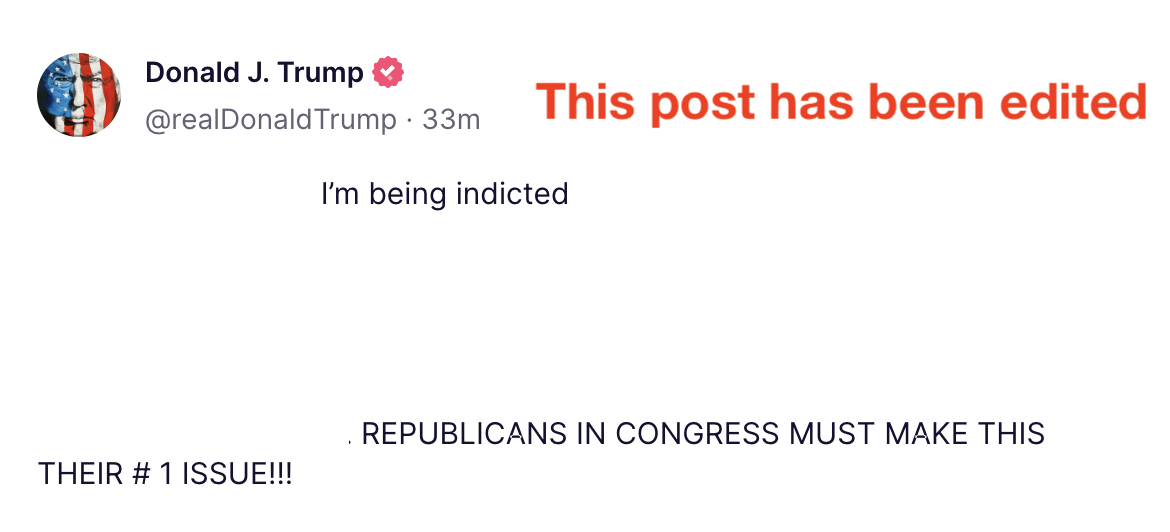
Some of Trump’s close associates are bracing for his indictment and anticipate being able to fundraise off a prosecution, people in the former president’s circle said, as clashes within the Trump legal team have led to the departure of a key lawyer.

Hours after WSJ reported that Trump was going to try to profit off being a criminal suspect, he posted a letter, with just one substantive paragraph, on Truth Social. Aside from the letterhead and signatures from Jim Trusty and John Rowley, it was indistinguishable from Trump’s other grievance-farming on his failing social media platform, claiming that,

Unlike President Biden, his son Hunter, or the Biden family, President Trump is being treated unfairly. No President of the United States has ever, in the history of the country, been baselessly investigated in such an outrageous and unlawful fashion.

Then it asked for a meeting with the recused Attorney General to discuss the “ongoing injustice being perpetrated by your Special Counsel.”

It copied unnamed members of Congress, the last thing a letter seriously asking for dialogue with the Attorney General would do.

It’s a campaign stunt, not a letter designed to request a meeting about potential upcoming indictment(s). In fact, just days ago, Tim Parlatore explained that he quit because Boris Epshteyn would not permit him to engage in that kind of discussion professionally.

Nevertheless, multiple news outlets decided to treat this letter as a serious bid for discussion with the recused Attorney General. In ABC’s case, it falsely claimed that the letter “present[ed] arguments” that Trump should not be charged in the stolen documents case, citing “sources familiar with the matter.”

The letter, though thin on details, presents arguments that Trump should not be charged in the investigation related to his alleged mishandling of classified documents, sources familiar with the matter tell ABC News.

In other words, rather than convey to ABC’s readers what the document actually says — which is nothing more than a claim Trump is being treated unfairly, a claim that is easy to debunk — its reporters called up Trump’s lawyers and transcribed what they claimed the letter said, or perhaps simply parroted their cover for releasing a letter better designed to raise money and sow violence, rather than just reporting what the letter actually did say.

Because “sources familiar” told them so, ABC reported the letter said something it did not. 2 + 2 = 5.

Jim Trusty used to work at DOJ. He knows how to write such a letter. He did not. But ABC nevertheless claimed that he and John Rowley did.

2 + 2 = 5.

As the two journalists described how the letter was something that it wasn’t on Twitter, one of them — Alex Mallin — likened it to Trump’s purported request to speak with Garland last August, just before Garland publicly spoke about the search on Trump’s beach resort.

He didn’t mention that Trump’s comment came after Trump’s false claims of victimhood led a Trump supporter and January 6 participant to attempt to breach the Cincinnati FBI office. He didn’t mention that that earlier outreach sure looked like an implicit threat.

I really get the inclination to treat Trump’s response to being caught stealing classified documents as if it is a normal legal proceeding. I get the inclination to pretend everything is normal.

But that doesn’t justify describing the plain content of the letter as something it’s not.

The letter is a fundraising vehicle. It’s an attempt to discredit rule of law. It’s probably an attempt to sow violence again. Claiming it is something else because sources you’ve granted anonymity said it is is not journalism.

Share this entry

The Potential International Grift Hiding behind the Stolen Documents Investigation

Back in November, Devlin Barrett (along with WaPo’s Trump-whisperer, Josh Dawsey) published a column claiming investigators had found nothing to suggest that Trump was trying to monetize the documents he stole.

That review has not found any apparent business advantage to the types of classified information in Trump’s possession, these people said. FBI interviews with witnesses so far, they said, also do not point to any nefarious effort by Trump to leverage, sell or use the government secrets. Instead, the former president seemed motivated by a more basic desire not to give up what he believed was his property, these people said.

I mocked Devlin’s credulity at the time. His story was utterly inconsistent with — and made no mention of — several details we (or I) already knew about the documents. It also showed no consideration of the value that the already-described documents would have for Trump’s business partners, the Saudis.

As Devlin Barrett’s sources would have it, a man whose business ties to the Saudis include a $2 billion investment in his son-in-lawa golf partnership of undisclosed value, and a new hotel development in Oman would have no business interest in stealing highly sensitive documents describing Iran’s missile systems.

The story was transparently an attempt by someone to prematurely cement an investigative conclusion, almost a month before the stay on DOJ’s access to the unclassified documents seized last August was lifted. Just two days later, Trump announced his bid for another Presidential term, and two days after that, Merrick Garland appointed Jack Smith, someone who had no partisan stake in issuing premature exoneration for Trump.

Yesterday, as the NYT published a second substantive story about Jack Smith’s subpoena for information about Trump’s business deals, Devlin published a perfunctory one. Even before he describes the subpoena, Devlin reports a single source concluding, as his sources concluded last November, “nothing to see here.”

But the inquiry produced little that wasn’t already publicly known, this person said, speaking on the condition of anonymity to discuss an ongoing criminal investigation.

Prosecutors sought information on any real estate and development deals reached in China, France, Turkey, Saudi Arabia, Kuwait, the United Arab Emirates and Oman, the person said.

The Trump Organization’s public website lists only one deal in that time frame in one of those countries, Oman, and that deal was done after Trump left the White House.

Devlin’s story notes his earlier report, but not how wildly it conflicted with even the events known at the time, emphasizing China not Iran.

The Washington Post reported last year that while the classified documents included sensitive information about U.S. intelligence-gathering aimed at China, among other subjects, investigators did not see an obvious financial motive in the type of documents recovered from Mar-a-Lago.

NYT’s more substantive story on this inquiry expresses far less certainty than Devlin’s single attributed source about what the subpoena obtained, much less what Smith already had to support this line of inquiry.

The Trump Organization swore off any foreign deals while he was in the White House, and the only such deal Mr. Trump is known to have made since then was with a Saudi-based real estate company to license its name to a housing, hotel and golf complex that will be built in Oman. He struck that deal last fall just before announcing his third presidential campaign.

The push by Mr. Smith’s prosecutors to gain insight into the former president’s foreign business was part of a subpoena — previously reported by The New York Times — that was sent to the Trump Organization and sought records related to Mr. Trump’s dealings with a Saudi-backed golf venture known as LIV Golf, which is holding tournaments at some of his golf clubs. (Mr. Trump’s arrangement with LIV Golf was reached well after he removed documents from the White House.)

Collectively, the subpoena’s demand for records related to the golf venture and other foreign ventures since 2017 suggests that Mr. Smith is exploring whether there is any connection between Mr. Trump’s deal-making abroad and the classified documents he took with him when he left office.

It is unclear what material the Trump Organization has turned over in response to the subpoena or whether Mr. Smith has obtained any separate evidence supporting that theory.

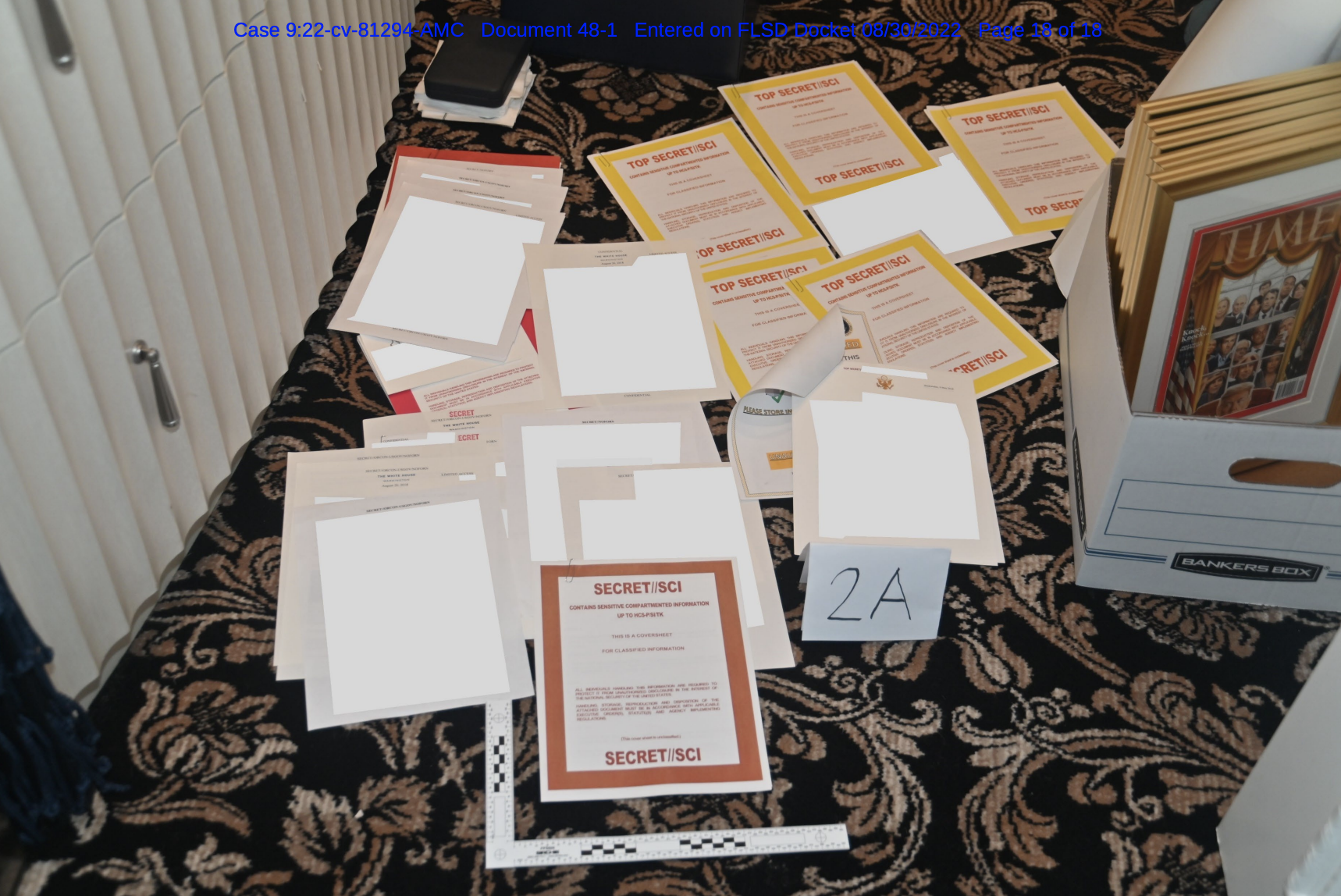
Neither story describes whether the subpoena listed which crimes are under investigation. On that topic, the NYT, as part of boilerplate, repeats the same thing I do when I make boilerplate recitations of the crimes under investigation: 18 USC 793(e), refusing to return classified documents, and 18 USC 1519, obstruction of the efforts to get those classified documents back.

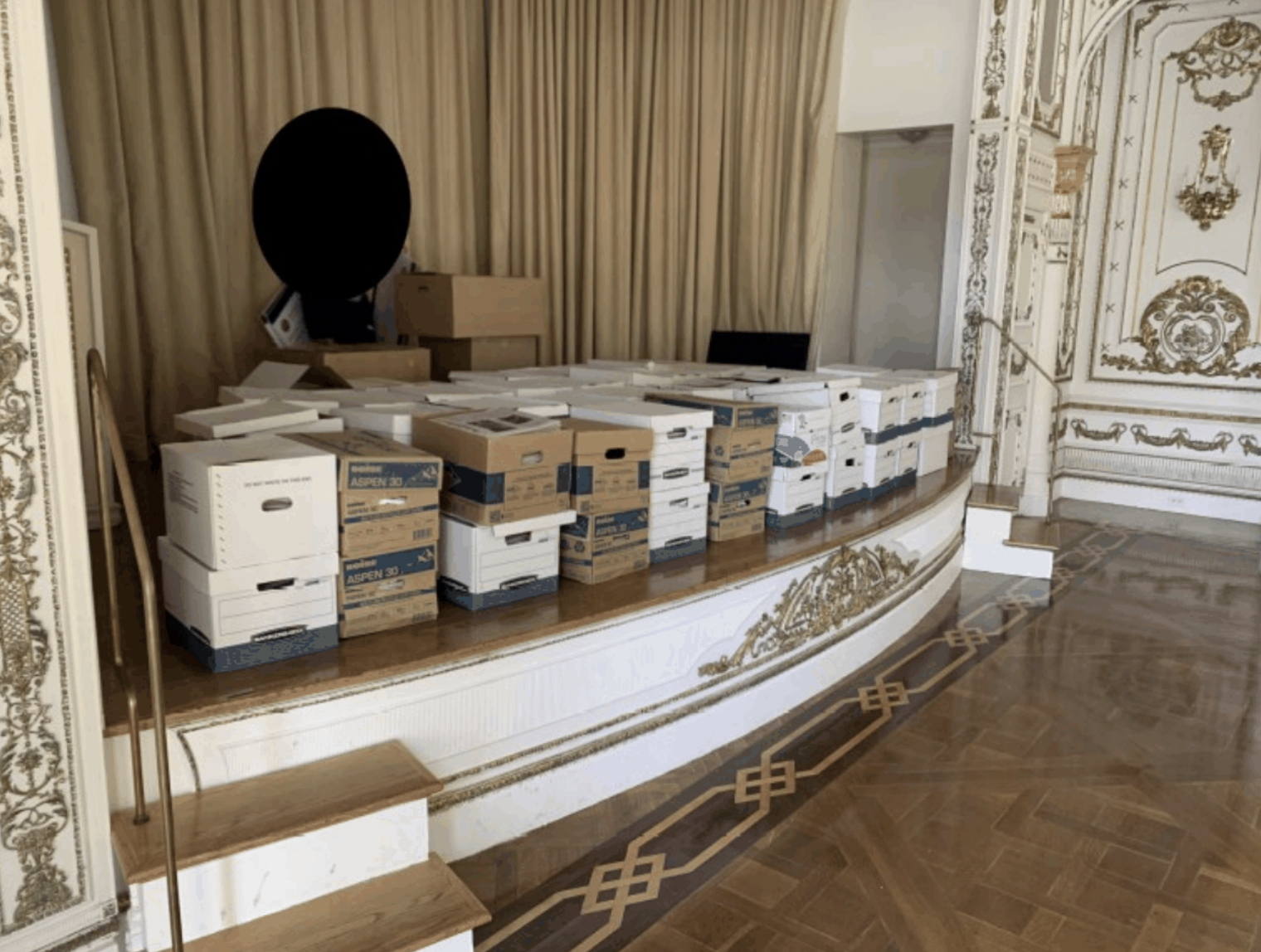
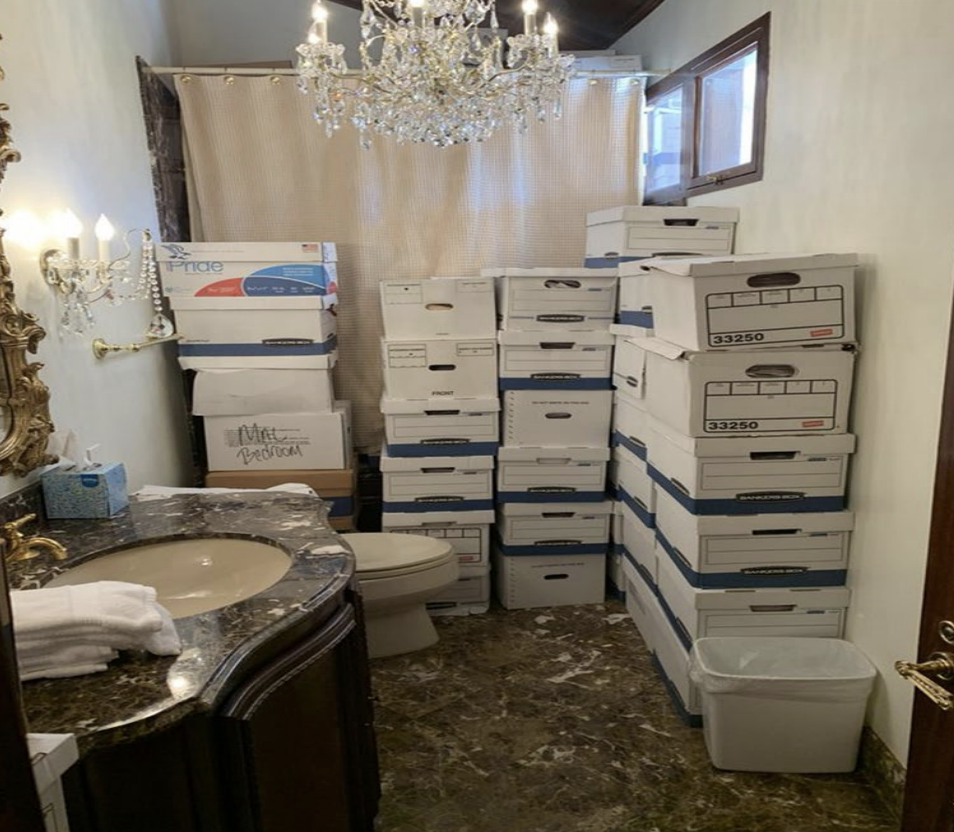
While establishing a motive for why Mr. Trump kept hold of certain documents could be helpful to Mr. Smith, it would not necessarily be required in proving that Mr. Trump willfully maintained possession of national defense secrets or that he obstructed the government’s repeated efforts to get the materials back. Those two potential crimes have long been at the heart of the government’s documents investigation.

Devlin uses similar boilerplate.

The Mar-a-Lago investigation has centered on two potential crimes — possible obstruction for not complying with the subpoena, and possible mishandling of national security secrets for keeping classified documents in an unauthorized location

We are — all of us, myself included — forgetting the third statute included on the search warrant that once seemed a mere backstop to the others, 18 USC 2071, intentionally removing government documents. That statute, which once upon a time might have been used as the crime to which Trump could plead down in a plea agreement, carries only a three year max sentence. But along with that sentence, it disqualifies someone convicted of it from holding public office, something that would be challenged constitutionally following any jury verdict but which would be waived under any plea deal.

Whoever, having the custody of any such record, proceeding, map, book, document, paper, or other thing, willfully and unlawfully conceals, removes, mutilates, obliterates, falsifies, or destroys the same, shall be fined under this title or imprisoned not more than three years, or both; and shall forfeit his office and be disqualified from holding any office under the United States.

I’ve always believed (as have experts I trust) that this would be a particularly hard crime with which to charge a former President, largely because a President has legal access to these documents until noon on January 20. But asking about business deals Trump might have been pursuing while in the presidency, all the way back to 2017, might provide evidence of intent that predates the actual removal of the documents.

And learning about Trump’s business deals with, especially, the Saudis, might develop evidence for 18 USC 794, the far more serious crime of providing intelligence to help a foreign government.

Let me caution, I still think it exceedingly unlikely that Smith is pursuing 794 charges against Trump for stealing documents and then selling them to the Saudis, to be paid in the form of golf tournaments and branding deals in Oman. Please don’t take from my mention of this that I’m predicting Smith is going to Go There. Rather, I suspect Smith is thinking of a package of potential charges that would give Trump an option to plead down quietly, one sufficiently ugly to make Republican politicians not want to join him in his fight. I’m merely stating that taking documents and refusing to give them back — which is the currently known lead charge in this investigation– is a dramatically different fact set than taking them and sharing them with a foreign government that pays you a lot of money, especially one that subsequently engaged in multiple actions — keeping gas prices high during the election and chumming up to China — that seem to have surprised the US intelligence community, as if some intelligence visibility had gone dark before those happened.

But let me go back to Devlin’s source’s certainty that there’s nothing to see there. It’s an odd claim to make given the number of other gaps in understanding that seem to exist in the understanding of those not directly participating in the investigation.

The story where NYT first broke the Trump business deal subpoena described at least five different subpoenas to Trump Org (though way down at the bottom of the story, it describes “numerous” subpoenas):

  1. The subpoena including the golf deal and — we now learn — all business deals Trump has chased since 2017
  2. A subpoena to Trump Organization seeking additional surveillance footage
  3. A subpoena to “the software company that handles all of the surveillance footage for the Trump Organization, including at Mar-a-Lago”
  4. First, a subpoena to Matthew Calamari, Jr.
  5. Then, a subpoena to Matthew Calamari, Sr.

Matthew Sr., at least, would have visibility on business deals with the Saudis and others. But all the reports on the two interviews with the Calamaris suggest they were focused, instead, on why Walt Nauta contacted them after DOJ first subpoenaed surveillance footage.

To resolve the issue about the gaps in the surveillance footage, the special counsel last week subpoenaed Matthew Calamari Sr, the Trump Organization’s security chief who became its chief operating officer, and his son Matthew Calamari Jr, the director of corporate security.

Both Calamaris testified to the federal grand jury in Washington on Thursday, and were questioned in part on a text message that Trump’s valet, Walt Nauta, had sent them around the time that the justice department last year asked for the surveillance footage, one of the people said.

The text message is understood to involve Nauta asking Matthew Calamari Sr to call him back about the justice department’s request, one of the people said – initially a point of confusion for the justice department, which appears to have thought the text was to Calamari Jr.

Most reporters assume the gaps DOJ is trying to close pertain to Nauta’s own actions in advance of Evan Corcoran’s search of the storage closet. I’m not sure. That’s because DOJ got sufficient visibility from what they did receive to list the storage closet, Trump’s office, and Trump’s residence in the search warrant supporting the August search of Mar-a-Lago. They got sufficient visibility to lead Nauta to revise his testimony afterwards. That’s why I emphasized in my last post on this that DOJ asked for five months of surveillance video, predating the day, by eight days, that Trump sent boxes to NARA in January 2022. The gaps in question might have shown other people, not Nauta, entering the storage closet, or have shown Nauta entering at times entirely removed from the date of the subpoena. If — strictly hypothetically — those gaps coincided with business meetings with foreigners at Mar-a-Lago, it would be a flashing siren saying, “look here for the good stuff.” It might also explain why Nauta immediately reached out to Calamari about the video, if he knew some of that video would show things that were far more damning than the mere attempt to obstruct a subpoena response.

If Nauta had involvement in earlier sketchy activities, predating the subpoena, it might explain why — as Hugo Lowell reported — Nauta fairly obviously attempted to monitor Evan Corcoran’s own search.

The notes described how Corcoran told Nauta about the subpoena before he started looking for classified documents because Corcoran needed him to unlock the storage room – which prosecutors have taken as a sign that Nauta was closely involved at essentially every step of the search.

Corcoran then described how Nauta had offered to help him go through the boxes, which he declined and told Nauta he should stay outside. But going through around 60 boxes in the storage room took longer than expected, and the search ended up lasting several days.

The notes also suggested to prosecutors that there were times when the storage room might have been left unattended while the search for classified documents was ongoing, one of the people said, such as when Corcoran needed to take a break and walked out to the pool area nearby.

One more thing that might explain prosecutors’ concerns about gaps in the surveillance footage is if they coincided with the times when Corcoran had left the room unattended.

Yet every time someone writes about Nauta, they include language that might come from the vicinity of Stanley Woodward, the lawyer that Nauta shares with Kash Patel (as well as Peter Navarro and convicted seditionist Kelly Meggs and his wife), suggesting that it was a mistake not to immunize Nauta, as DOJ did with Kash, because it has prevented them from substantiating an obstruction case. The version of this in the NYT — which reflects the kind of internal DOJ dissent that WaPo has reported regarding a push to adopt a more cooperative stance in advance of the search — is especially unpersuasive.

Last fall, prosecutors faced a critical decision after investigators felt Mr. Nauta had misled them. To gain Mr. Nauta’s cooperation, prosecutors could have used a carrot and negotiated with his lawyers, explaining that Mr. Nauta would face no legal consequences as long as he gave a thorough version of what had gone on behind closed doors at the property.

Or the prosecutors could have used a stick and wielded the specter of criminal charges to push — or even frighten — Mr. Nauta into telling them what they wanted to know.

The prosecutors went with the stick, telling Mr. Nauta’s lawyers that he was under investigation and they were considering charging him with a crime.

The move backfired, as Mr. Nauta’s lawyers more or less cut off communication with the government. The decision to take an aggressive posture toward Mr. Nauta prompted internal concerns within the Justice Department. Some investigators believed that top prosecutors, including Jay Bratt, the head of the counterespionage section of the national security division at the Justice Department, had mishandled Mr. Nauta and cut off a chance to win his voluntary cooperation.

More than six months later, prosecutors have still not charged Mr. Nauta or reached out to him to renew their conversation. Having gotten little from him as a witness, they are still seeking information from other witnesses about the movement of the boxes.

If being misled by Nauta led prosecutors to look more closely at the larger timeline of the missing surveillance video, only to find suspect ties to the Saudis, it was in no way a mistake. On the contrary, Woodward’s own decisions would have directly led to intensified scrutiny  of his client (as his decisions similarly are, in the effort to get Navarro to turn over Presidential Records Act documents).

And there’s something that is routinely missed in all of this coverage. The Guardian’s Lowell rightly suggests that because Trump didn’t directly tell Corcoran to search only the storage closet, it might present challenges to an obstruction case. But Trump’s choice to use Nauta as an obvious gatekeeper makes it far easier to charge Nauta with 18 USC 793(g), conspiring to hoard classified documents. So the observation that DOJ hasn’t chosen to charge Nauta with just false statements in the interim six months should in no way be taken as solace by Nauta, because what has happened in the interim puts him at risk of charges that carry a ten year sentence for each document in question rather than the few months he might face for lying to the FBI.

Nauta’s not the only one who might insulate Trump from obstruction charges but expose all of them to greater Espionage Act danger.

Witness the evolution of how Tim Parlatore described Boris Epshteyn’s role in the investigation. In March, Parlatore described that, until such time as Boris started being treated as a target, his access to people “inside the palace gates” was useful.

Mr. Epshteyn’s legal role with Mr. Trump, while less often focused on gritty legal details, has been to try to serve as a gatekeeper between the lawyers on the front lines and the former president, who is said to sometimes roll his eyes at the frequency of Mr. Epshteyn’s calls but picks up the phone.

“Boris has access to information and a network that is useful to us,” said one of the team’s lawyers, Timothy Parlatore, whom Mr. Epshteyn hired. “It’s good to have someone who’s a lawyer who is also inside the palace gates.”

Mr. Parlatore suggested that he was not worried that Mr. Epshteyn, like a substantial number of other Trump lawyers, had become at least tangentially embroiled in some of the same investigations on which he was helping to defend Mr. Trump.

“Absent any solid indication that Boris is a target here, I don’t think it affects us,” Mr. Parlatore said.

But in the wake of Parlatore’s departure from Trump’s legal team a week ago, he went on Paula Reid’s show (on whose show he had earlier told an utterly ridiculous story about Trump using classified folders to block a light by the side of his bed) and lambasted Boris as an impediment to communication between Trump and his lawyers.

Boris Epshteyn [] had really done everything he could to try to block us [the lawyers], to prevent us from doing what we could to defend the President, and ultimately it got to a point where — it’s difficult enough fighting against DOJ and, in this case, Special Counsel, but when you also have people within the tent that are also trying to undermine you, block you, and really make it so that I can’t do what I know that I know that I need to do as a lawyer, and when I’m getting in the fights like that, that’s detracting from what is necessary to defend the client and ultimately was not in the client’s best interest, so I made the decision to withdraw.

[snip]

He served as kind of a filter to prevent us from getting information to the client and getting information from the client. In my opinion, he was not very honest with us or with the client on certain things. There were certain things — like the searches that he had attempted to interfere with, and then more recently, as we’re coming down to the end of this investigation where Jack Smith and ultimately Merrick Garland is going to make a decision as to what to do – as we put together our defense strategy to help educate Merrick Garland as to how best to handle this matter, he was preventing us from engaging in that strategy. [my emphasis]

At one level, this publicity stunt appears to be an attempt to persuade Trump that he should fire Boris. WaPo’s coverage of this clash describes that Parlatore’s public appearance followed what seems to have been a “he goes or we go” meeting with Trump a week ago (though Jim Trusty, at least thus far, has not chosen to follow Parlatore).

Before this weekend’s public feud, members of Trump’s legal team tried to settle the conflict quietly. Parlatore and another lawyer for Trump, James Trusty, recently traveled to Florida to advise Trump that he needed to remove Epshteyn from the document case and the 2020 election case, according to a person familiar with the matter who spoke on the condition of anonymity to reveal private deliberations. Smith, the special counsel, is tasked with investigating both cases.

[snip]

Trump did not appear to take Parlatore and Trusty’s advice, as Epshteyn remained in his role as a key legal adviser and coordinator to Trump.

Parlatore has said he’d be willing to return if Boris were gone.

At another level, Parlatore seems to be getting out while the getting is good, shortly before any charges are filed, so he’s not stuck defending an uncooperative client who won’t pay his bills. (Update: WSJ reports that the investigation is all but done and some associates are prepping for Trump to be charged.) The publicity stunt gives him the first say on who is responsible for what comes next, too. If Trump gets charged, Tim Parlatore didn’t fuck up, Boris did.

The publicity stunt, with its claim that Boris lied to both him and Trump, may also be an attempt to insulate Trump. As such it may be little different than the ridiculous folder-on-the-bedside-light story.

But Parlatore’s response to Reid’s follow-up on Parlatore’s claim that Boris interfered with searches may be more than that.

Reid: What searches are those?

Parlatore: This is the searches at Bedminster, um, initially. There was a lot of pushback from him where he didn’t want us doing the search and we had to, eventually, overcome him.

Reid: Why didn’t he want you to do the search?

Parlatore: I don’t know.

Trump’s lawyer do not know — never have! — why Boris was so reluctant to allow a search of the property to which Trump flew to host a Saudi golf tournament directly after failing to comply with a subpoena.

Immediately after that exchange, Reid invited Parlatore to clarify that when he testified to the grand jury in December, he did so in lieu of any custodian of records for the searches done on Mar-a-Lago. Parlatore clarified he did not testify in response to a subpoena and on several occasions, when he offered to come back and clarify, prosecutors declined his generous offer.

Reid then gave him an opportunity to explain why the claims Parlatore made to Congress (which conflicted with known facts and which Epshteyn declined to sign) didn’t fundamentally conflict with the insta-declassification story Boris has told. Parlatore left me convinced that everyone is lying, meaning by choosing to retain Boris over Parlatore, Trump is just picking which lie he finds more convenient.

Nevertheless, Parlatore got his story out. He got to describe how the story he planned to tell Merrick Garland doesn’t conflict with the currently operative declassification story and more importantly, that if his December testimony to the grand jury was incomplete in any way, it’s all Boris’ fault.

Parlatore said, midway between his testimony and now, that if Boris started looking like a target, he might be in trouble. But in the wake of a two day interview between Boris and Smith’s attorneys and in the wake of subpoenas that raise increased questions about why Boris may have tried to prevent any search of the property at which Trump hosted the Saudis immediately after Trump blew off a subpoena, Parlatore took to the TV and offered his defense. If Jack Smith finds the Bedminster obstruction interesting enough, Parlatore may well have earned himself a subpoena.

The belated, convenient description of Boris as a filter rather than worthwhile access “inside the palace gates” is particularly interesting given WaPo’s description about what kind of advice Boris gave, in lieu of legal advice.

Epshteyn, a lawyer, had helped guide communications for Trump’s campaign and the White House.

According to the source, Parlatore and Trusty argued that the lawyers needed to focus on protecting Trump legally, not politically.

A source close to the Trump campaign who spoke on the condition of anonymity to disclose the team’s private thinking defended Epshteyn and said he is focused on protecting Trump from a variety of angles, whether it’s legal, political or related to the media.

Parlatore imagines he was trying to defend Trump legally. Boris thinks he’s defending Trump from a “variety of angles,” one of which is politics. That’s consistent with how Boris billed his time, which until after the August search he billed as political consulting. But it also suggests Boris was not just a gap in Parlatore’s knowledge, but also a gap in any privilege claims Trump can make over the others.

If Trump’s own ex-lawyer says that Boris was lying to both sides about what went on there’s a big gap in anyone’s knowledge — at least outside the team that has been investigating for a year.

Plus there’s all the stuff — even beyond the evidence collected in this investigation that DOJ would have obtained about these particular documents — that DOJ already knows.

During the Mueller investigation, for example, DOJ spent some time investigating how Trump shared highly classified Israeli intelligence with Russia just days after he fired Jim Comey. That includes the way in which White House staffers altered the MemCon of that meeting (much as, years later, the White House would alter the MemCon of Trump’s perfect phone call with Volodymyr Zelenskyy). That particular leak of classified information did not violate US law, because as President, Trump could declassify it. But it is precedent for Trump sharing the secrets of America and its allies with foreign countries that have helped him.

More directly on point, DOJ has abundant evidence regarding Trump’s approval of Tom Barrack’s efforts to tailor US policy to serve the Emirates and, secondarily, the Saudis, including to treat Mohammed bin Salman with full diplomatic status. On Barrack’s request, during the course of discovery, DOJ obtained a great deal of information from other agencies about Trump’s policy towards the Gulf Kingdoms. DOJ’s prosecution of Barrack ended in failure. But what it showed is that from the very start, the guy who got Paul Manafort hired did so knowing he could use it to promise to shape US policy to the Emirates’ interests. Like sharing classified information with Russia in 2017, Trump’s choice to shape US policy to serve the Emiratis and Saudis is not illegal. It’s only after he left the presidency where a quid pro quo could be important.

Unless, of course, such business discussions started earlier.

Again, I want to emphasize that I’m not saying Jack Smith is about to indict Trump for selling US secrets to the Saudis. But investigative developments reported out in the last several weeks have suggested that this investigation may not be the obstruction investigation everyone is treating it as.

Instead, Jack Smith may get to obstruction via a conspiracy to hoard classified documents.

Update: Corrected date on NARA document return.

Share this entry

Peter Baker Discovers that Russia Sows Partisan Antagonism and Then Helps Them Do So!

I laughed yesterday when Peter Baker tweeted about how “striking” it is that Vladimir Putin is adopting Trump’s perceived enemies as his own.

But then Baker wrote up his laughably naive observation into a NYT story.

Baker, you’ll recall, is one of NYT’s crack journalists who buried Trump’s admission that he had spoken to Putin about adoptions before writing a false explanation about the June 9, 2016 Trump Tower meeting emphasizing adoptions. Baker and Maggie Haberman chose instead to emphasize Trump’s scripted attack on Jeff Sessions. The Mueller Report showed that NYT’s willingness to dumbly repeat Trump’s script proved even more useful to Trump’s efforts to undermine the Rule of Law than his covert effort to get Corey Lewandowski to ferry orders to Jeff Sessions.

And here we are, almost five years later, and Baker still naively plays into obvious Russian efforts to sow division in the US, in significant part by playing to Trump’s narcissism and the feral loyalty of Trump’s supporters, to say nothing of playing up racial division. Baker picks out three names from among 500 newly added to Russian sanctions: Tish James, Brad Raffensperger, and Michael Byrd, the Black cop who prevented Ashli Babbitt from breaching the hallway through which Members of Congress were fleeing by shooting her.

Among the 500 people singled out for travel and financial restrictions on Friday were Americans seen as adversaries by Mr. Trump, including Letitia James, the state attorney general of New York who has investigated and sued him. Brad Raffensperger, the secretary of state of Georgia who rebuffed Mr. Trump’s pressure to reverse the outcome of the 2020 election, also made the list. And Lt. Michael Byrd, the Capitol Police officer who shot the pro-Trump rioter Ashli Babbitt on Jan. 6, 2021, was another notable name.

Reviewed more broadly, however, the sanctions were an attack on US Rule of Law generally, or certainly the notion that Trump’s people should be subject to it. They include the current or former Attorneys General of California, Colorado, Connecticut, Delaware, Illinois, Maryland, Minnesota, Nevada, New Hampshire, New Mexico, New York, Oklahoma, Oregon, Rhode Island, Vermont, Virginia, Washington, Washington, DC, Wisconsin. Aside from former Oklahoma AG John O’Connor, which may be a mistake, it almost seems like they worked from an outdated membership list from the Democratic Attorneys General Association. Though for some reason, Putin missed Michigan’s Attorney General Dana Nessel, maybe because she’s a badass lesbian who makes Putin afraid.

The sanctions list does include every US Attorney who has presided over the January 6 investigation.

  • Michael Sherwin (who as Acting US Attorney in DC oversaw the beginning of the January 6 investigation)
  • Channing Phillips (who, as Acting US Attorney for DC in 2021 oversaw the early parts of the January 6 investigation)
  • Michael Graves (currently US Attorney for DC overseeing the January 6 investigation)
  • Jack Smith (Special Counsel)

But it also includes other senior legal officials, some of whom have gotten more attention for investigating Russia than Trump.

The inclusion of Kohler, who played a key role in the Trump stolen documents case but who also presided over the Charles McGonigal and other Oleg Deripaska cases that came through SDNY, is particularly notable. This is, in significant part, an attempt to suggest that if either Russia or Trump is held accountable legally, it will harm Russia. It is a transparent effort — no different than dozens of similar efforts going back to 2016, and to the extent that this plays to racism, goes back a half century — to lead Trump supporters to believe their interests are more aligned with Putin’s than those of the United States, or at least the United States when led by Joe Biden.

In addition to Brad Raffensperger, Putin also included Mark Esper, who got fired as Defense Secretary because he undercut Trump’s authority to attack the US government by invoking the insurrection act.

A broad swathe of the list includes members of NGOs, particularly those NGOs that fascists are attempting to discredit with claims that attempts to combat disinformation equate to censorship. Nina Jankewicz got sanctioned in her own right.

Of two members of the Open Society Fund, Leonard Benardo is included; his name may become prominent if John Durham’s abusive attempt to investigate Benardo, which may be detailed in the classified section of the Durham Report, begins to leak.

Along with all those defenders of truth and justice, Putin included Stephen Colbert and Heather Cox Richardson.

Again, this is a transparent effort, one that continues past efforts that extend to sheltering members of the far right and stoking US racism, to supplant the allegiance of Trump’s supporters to the United States with an affiliation, through Trump, to Russia. Trump’s narcissism might lead him to magnify these sanctions. His campaign advisors likely will try to prevent that.

But Putin won’t need to rely on Trump to magnify this statement of a shared allegiance.

He has Peter Baker for that.

Baker somehow could not distinguish language as transparent truth from language as an attempt to manipulate, and so stated as fact that “Trump’s perceived enemies” are Putin’s own. Aside from the law enforcement officials who’ve targeted both Russian hackers and Trump, they’re not. Rather, this is an attempt — an utterly transparent one!! — to make Trump’s followers believe that, and so regard Russia more favorably.

Because Baker thought his banal observation about these sanctions was worth a story in the NYT, he called up the Russian Foreign Ministry for comment. That’s how the claim that the people who attacked democracy on January 6 are simply dissidents got inserted into the NYT.

None of those three has anything to do with Russia policy and the only reason they would have come to Moscow’s attention is because Mr. Trump has publicly assailed them. The Russian Foreign Ministry offered no specific explanation for why they would be included on the list but did say that among its targets were “those in government and law enforcement agencies who are directly involved in the persecution of dissidents in the wake of the so-called storming of the Capitol.”

You got played, Peter Baker, into serving as a mouthpiece for Russian propaganda.

You got played into contributing to Russia’s efforts to undermine US democracy.

Share this entry

Rudy’s Very Bad Week

Three things happened with Rudy Giuliani’s legal woes this week that could have larger repercussions.

As the Philly Inquirer reported, Bruce Castor, the sole noticed attorney in one of the voter fraud lawsuits against Rudy from 2020, asked to be relieved. The Inky lays out how people close to Trump asked Castor to sponsor Joseph Sibley Pro Hac Vice into Philadelphia, only to have Sibley refuse to sign something and then back out of the case, leaving Castor holding the bag. Castor complains that he hasn’t gotten paid and hasn’t gotten Rudy to cooperate at all on discovery.

But a more interesting detail may be that some unnamed lawyer recently contacted Castor to inform him he would pay for the representation, but would do nothing to secure cooperation from Rudy.

23. A lawyer, previously unknown to Petitioner, wrote to Petitioner portraying that he represented Mr. Giuliani, and Petitioner immediately inquired in a response writing when this lawyer would be assuming responsibility for defending the present case.

24. Instead, the lawyer wrote Petitioner that he would be coordinating funding for Defendants, that payment would be forthcoming, but that Defendants expected Petitioner to conduct their defense.

[snip]

26. Petitioner advised the lawyer, who contacted him to relate that funding for the Defendants was forthcoming, of the motion to compel discovery, and pleaded with him to solicit substantive cooperation from Defendants (since this lawyer evidently was in contact with Defendants), in addition to simply the payment of Petitioners’ fees. Petitioner also continued to contact Defendants directly to keep them informed of developments, such as the motion to compel, further demands for payment of the retainer, and to seek cooperation in the discovery process. Petitioner unequivocally threatened both the newly revealed lawyer who was promising funding, and Defendants that he would file the instant motion to withdraw if Defendants failed to comply with Petitioner’s demands by a certain deadline.  [emphasis original]

This is a plea by Castor not to have to represent an uncooperative defendant for free. But it also reads like a plea by Castor not to force him to risk his legal reputation in a situation where shady lawyers call up out of the blue and promise to pay respectable lawyers to stall a case.

Sibley, the guy who was supposed to represent this case in Philly and who also represented Christina Bobb before the January 6 Committee, remains Rudy’s lawyer of record in Ruby Freeman’s lawsuit in DC, which I wrote about here. Depending on your vantage point, it either seems that Sibley is having as much trouble as Castor is getting Rudy’s cooperation, or that the lawyer has successfully stonewalled discovery so as to avoid increasing Rudy’s criminal liability.

I should say, had successfully stonewalled.

Yesterday, Judge Beryl Howell issued an order requiring certain cooperation from Rudy, including that he list all his devices, social media accounts, and financial assets on which he allegedly defamed Freeman and her daughter, Shaye Moss, with deadlines attached.

MINUTE ORDER (paperless): Upon consideration of plaintiffs’ [44] Motion to Compel Discovery, For Attorneys’ Fees and Costs, and For Sanctions (“Motion”), defendant’s [51] Response to Plaintiffs’ Motion to Compel, plaintiffs’ [56] Reply in Support of Plaintiffs’ Motion, and the parties’ representations to the Court in the proceedings held on May 19, 2023 regarding plaintiffs’ Motion, GRANTING plaintiffs’ Motion in part, and RERSERVING [sic] ruling in part.

Specifically, plaintiffs’ Motion is GRANTED as follows:

1) by May 30, 2023, defendant Rudolph W. Giuliani shall file a declaration, subject to penalty of perjury, that details:

a) All efforts taken to preserve, collect, and search potentially responsive data and locations that may contain responsive materials to all of plaintiffs’ Requests for Production (RFP);

b) A complete list of all “locations and data” that defendant used to communicate about any materials responsive to any of Plaintiffs’ RFPs (including, but not limited to, specific email accounts, text messaging platforms, other messaging applications, social media, devices, hardware, and any form of communication);

c) The specific “data” located in the TrustPoint database, including–

i) a list identifying the source devices from which the data was extracted or obtained;

ii) for each such device, the type of device (i.e., iPhone, Macbook, laptop, iPad, etc.) and user, if known;

iii) a list identifying any social media accounts, messaging applications, and email accounts from which the data was extracted or obtained; and

iv) for each such account and application, the account name and user; and

d) What searches, if any, have occurred as to both categories (b) and (c), see Plaintiffs’ [44-16] Proposed Order Granting Plaintiffs’ Motion; and

2) By May 30, 2023, in order to evaluate defendant’s claim of an inability to afford the cost of access to, and search of, the TrustPoint dataset or to use a professional vendor, either to access the original electronic devices seized from defendant by the Federal Bureau of Investigation in April 2021 and returned to defendant, or, alternatively, to conduct a search of the archived TrustPoint dataset, defendant is DIRECTED to produce to plaintiffs:

a) full and complete responses to plaintiffs’ requests for financial information in RFP Nos. 40 and 41; and

b) documentation to support his estimated costs for further searches on the TrustPoint dataset.

3) By June 16, 2023, plaintiffs are DIRECTED to submit to the Court an assessment of defendant’s ability to bear the cost of further searches, along with any response to defendant’s submission required under paragraph 1, above; and

4) By June 30, 2023, defendant shall file any response to plaintiffs’ submission required under paragraph 3, above.

The Court RESERVES ruling on the remainder of plaintiffs’ relief, pending the parties’ compliance with directions set out in paragraphs 1) through 4), above. Signed by Judge Beryl A. Howell on May 19, 2023.

In two weeks, if and when Rudy continues to stonewall, then Judge Howell will start imposing penalties on him.

The 3-hour hearing that led to this order was as interesting for the insane comments Rudy made outside the courthouse as anything else. The guy who helped Trump attempt a coup complained that he is being persecuted by fascists. And he claimed that he faces no legal risk from either the Jack Smith investigation or the Fani Willis one, in the latter of which he was already specifically named as a target.

Outside the courthouse following the hearing, Giuliani said he hadn’t received any communication from Justice Department Special Counsel Jack Smith’s office and wasn’t worried about federal charges since he cooperated with investigators immediately after the Jan. 6, 2021, attack on the US Capitol.

Asked if he had any pending federal grand jury subpoenas, he replied, “not that I know of.”

Regarding a separate probe into efforts by former President Donald Trump and allies to overturn Georgia’s 2020 election results by the Fulton County district attorney’s office, Giuliani said he wasn’t worried because he was serving as an attorney at the time. Last summer, his lawyer confirmed that they’d received notice Giuliani was a target of that probe.

He said on Friday that he hadn’t heard anything from that office since he appeared before a special investigative grand jury in August 2022; District Attorney Fani Willis recently indicated that charges could come later this summer.

Sure, Pops. A judge found crime-fraud exception over a year ago, and you’re in no danger because you’re a lawyer.

Side note: I find it interesting that Robert Costello, who represented Rudy in the Ukraine investigation and before the January 6 Committee and who was involved in the “Hunter Biden” “laptop” caper, has not sued Rudy for payment. He did sue Bannon, for what must be far less unpaid work. Maybe some shady lawyer showed up and found a way to pay Costello too?

Finally, against the background of 1) the lawsuits that Rudy appears to be attempting to stonewall for free, 2) the twin criminal investigations that are expected to start issuing indictments no later than August, and 3) Trump’s attempt to win the presidency again, a former Rudy associate, Noelle Dunphy, filed a lawsuit against Rudy for sexual assault and harassment and unpaid labor going back to 2019.

This lawsuit is — and it is designed to be — eye-popping, alleging lots of drunken coerced sex, some bigotry and kink caught on tape, as well as allegations that implicate Trump just in time for campaign season.

Just as one example, Dunphy makes an allegation that exactly matches a John Kiriakou claim about Rudy selling pardons for $2 million, but unlike some of her other allegations, she doesn’t claim to have proof.

132. He also asked Ms. Dunphy if she knew anyone in need of a pardon, telling her that he was selling pardons for $2 million, which he and President Trump would split. He told Ms. Dunphy that she could refer individuals seeking pardons to him, so long as they did not go through “the normal channels” of the Office of the Pardon Attorney, because correspondence going to that office would be subject to disclosure under the Freedom of Information Act.

And the allegation is not tied, in any way, to the complaints in the lawsuit. But it is one thing that has ensured the lawsuit will attract a lot of attention.

I’m sure many of the claims made in this suit are true, but packaged up as it is, it feels too convenient, just like the “Hunter Biden” “laptop.”

What makes that analogy even more apt, in my own humble opinion, is that the period during which Dunphy most credibly claims to have had damaging contact with Rudy largely overlaps with the period in which Rudy was hunting dirt in Ukraine to help Trump win the presidency, from January 21 through November 2019. She claims to have reviewed his interview with Viktor Shokin as well as his plan to accuse Marie Yovanovitch of corruption. Throughout that period, she claims have been involved in the shady pitches he received. One of those pitches — one she recorded! — involved a $72 billion gas deal in China.

See what I mean about how it feels like the “Hunter Biden” “laptop”?

Meanwhile, she suggests she’s a first-hand witness to matters that were part of the Ukraine investigation into Rudy, and that Rudy coached her to obstruct justice. She says she and Rudy discussed whether he had an obligation to register under FARA — and as proof, she included a photo from a February 9, 2019 meeting with Lev Parnas.

A week later, she claims, after reviewing the emails he had exchanged with various Ukrainian officials, she offered to file a FARA registration for Rudy, but he declined because, he said, he had immunity.

Perhaps most incredible, she claimed that in June and July of 2019, the guy who had just spent a year helping Trump dodge obstruction of justice charges, “asked Ms. Dunphy for help Googling information about obstruction of justice, among other topics.” I don’t doubt that that search exists in her Google account, but I do question whether it got there in the way she describes.

That same period, she claims, is when he first instructed her not to talk to the FBI about him — at a time when the investigation into Parnas and Igor Fruman was not yet public.

Dunphy claims that on October 22, 2019 — after the arrest of Parnas and Fruman but at a time when (at least according to SDNY’s subsequent claims) the investigation into Rudy was not overt — the FBI called and asked for an interview.

209. On October 22, 2019, Ms. Dunphy received a voicemail from the FBI regarding an investigation they were conducting into Giuliani. The FBI was apparently aware that she was working for Giuliani and sought to interview her. The FBI was clear that Ms. Dunphy was considered a witness and was not a target of the investigation.

Nowhere in this 70-page lawsuit does Dunphy say whether she ever was interviewed about all the things she witnessed firsthand when Rudy was soliciting dirt from Ukraine. She does say that within a month, on a day when the FBI showed up in person seeking an interview, Rudy promised to put her on his payroll, seemingly tying that payment to her willingness to claim she didn’t know who he was.

210. On November 19, 2019, Ms. Dunphy went to Giuliani’s home office, and they spoke. Giuliani promised Ms. Dunphy that he would officially put Ms. Dunphy on the books and would “straighten it [i.e., her employment situation] out.” Giuliani and Ms. Dunphy discussed Giuliani’s increasing legal concerns, including his fear that Lev Parnas was “turning on him” in connection with the FBI investigation. Ms. Dunphy told him that the FBI had come to her family’s home in Florida that day seeking to question her. Giuliani informed Ms. Dunphy that his friend and private detective, Bo Dietl, had already told him the specific FBI agents who were involved. Ms. Dunphy was concerned that Giuliani was apparently so powerful that his investigators had secret information, including the names of the FBI agents who had just appeared at her family’s Florida home. Giuliani demanded that Ms. Dunphy not talk to or cooperate with the FBI. Giuliani told Ms. Dunphy that they are all “after him” and that one or two of them are “going to get totally destroyed.” This situation made Ms. Dunphy confused and fearful, and added another layer of tension to a work environment that was already outrageously hostile.13

13 From this point on, Giuliani often spoke to Ms. Dunphy about he FBI’s investigation of him, and Ms. Dunphy understood that participating in these discussions was part of her work for him. He told her that if the FBI sought to interview her, she should “not remember” anything, and should claim that she did not know Giuliani. Ms. Dunphy refused to agree to lie to the FBI, which angered Giuliani.

It’s certainly possible that Bill Barr’s very active obstruction of the investigation at that point — an effort to stave off impeachment, though Dunphy doesn’t mention impeachment — led the FBI to decide not to interview her. But that wouldn’t explain why the FBI wouldn’t interview her in 2021, when the investigation did become overt.

At one level, this lawsuit seems more like an offer to testify to the FBI at a time (have I mentioned there’s an election coming up?) when the statutes of limitation still have a year before they expire.

At another, it’s an implicit threat.

Close to the beginning of the lawsuit, Dunphy reveals that — whether because he thought it’d be a good idea or because he got really drunk and did something stupid — Rudy accessed his work email account from her computer, giving her access to a his email correspondence with a whole lot of corrupt people.

93. Therefore, Giuliani added one of his work email accounts into Ms. Dunphy’s email program on her computer, typing his password onto her computer.

94. Once Giuliani’s email account was loaded onto Ms. Dunphy’s computer, at least 23,000 emails associated with the account, including many from before her employment with Giuliani, were stored on her computer.

95. Since Giuliani gave Ms. Dunphy access to his email account, she had access to information that was, upon information and belief, privileged, confidential, and highly sensitive.

96. For example, Ms. Dunphy was given access to emails from, to, or concerning President Trump, the Trump family (including emails from Donald Trump, Jr., Ivanka Trump, and Eric Trump), Trump’s son-in-law Jared Kushner, former FBI director Louis Freeh, Trump lawyer Jay Sekulow, Secretaries of State, former aides to President Trump such as Steve Bannon, Reince Priebus, and Kellyanne Conway, former Attorneys General Michael Mukasey and Jeff Sessions, media figures such as Rupert Murdoch, Sean Hannity, and Tucker Carlson, and other notable figures including Newt Gingrich, presidential candidates for Ukraine, President Recep Tayyip Erdogan of Turkey, the Ailes family, the LeFrak family, Bernard Kerik, Igor Fruman, Lev Parnas, and attorneys Marc Mukasey, Robert Costello, Victoria Toensing, Fred Fielding, and Joe DeGenova.

97. Ms. Dunphy understood that she was given access to these emails because she was employed by Giuliani and the Giuliani Companies. Indeed, although Giuliani and his surrogates have argued that Ms. Dunphy was not an employee of Giuliani or the Giuliani Companies, it is impossible to understand Giuliani’s decision to give Ms. Dunphy complete access to (and copies of) these sensitive emails in any other context.

98. As a lawyer, Giuliani sent and received emails containing privileged information that could not legally be shared with Ms. Dunphy if she were not an employee or consultant. Likewise, Giuliani’s business often involved highly confidential information, and upon information and belief, there were confidentiality and nondisclosure agreements governing access to some of this information. Upon information and belief, those agreements barred Giuliani from sharing covered confidential information with someone who was not an employee or consultant.

99. Giuliani never asked Ms. Dunphy to sign a non-disclosure or confidentiality agreement.

Dunphy suggests she continued to have access to Rudy’s emails and his social media accounts — the very same social media accounts he is trying to hide from Ruby Freeman — through January 31, 2021.

And, as she notes, Rudy never asked Dunphy to sign a non-disclosure agreement about all this.

The FBI may be seeking this information. Several plaintiffs, including Freeman, definitely are (Dunphy also helpfully includes a summary of the property he owns, including five homes). And nothing prevents her from sharing it with them unless Rudy retroactively claims she was an employee, covered by non-disclosure obligations, through this entire period, with the $2 million payment she claims he promised her to go along with that nondisclosure agreement.

Not just Rudy — but also the entire Trump family (have I mentioned there’s an election coming up?), Rupert Murdoch and some of his star current and former employees, as well as a bunch of lawyers who’ve been involved in some shady shit — all of them have an incentive to retroactively make her status as an employee official, so that she won’t release these communications.

Many of these very same emails would have been unavailable to the FBI under a privilege claim, but unless Dunphy is an employee, then she can hand them over because Rudy waived privilege over them. I can’t decide whether I’m more interested in seeing the emails that might show Jay Sekulow alerted Trump to the false claims that were made on his behalf during the Russian investigation, or the ones that show Hannity was about to board a plane to meet with a mobbed up Russian asset in support of Trump’s 2020 election bid. But if I know of specific emails I’d like to see, then the people named in paragraph 96 surely do as well.

And that, I think, is the point — perhaps a bid to invite some unnamed lawyer to call her, too, to say he can fund certain things.

But such an unnamed lawyer will need to get there before Ruby Freeman does.

Share this entry

DOJ Arrests Enrique Tarrio’s Cop Buddy, Shane Lamond

On Friday, DOJ arrested the DC police lieutenant, Shane Lamond, whom Enrique Tarrio repeatedly used during trial in an attempt to claim he had cooperated with police and therefore hadn’t planned a seditious attack on the Capitol.

The indictment charges Lamond with one count of obstructing the investigation into the Proud Boys’ burning of the Black Lives Matter flag in December 2020, and three counts of lying in an June 2, 2021 interview when he claimed:

  • Lamond’s relationship consisted of just receiving tips from Tarrio instead of him providing confidential information to him
  • He never tipped Tarrio off to details of the BLM investigation
  • He didn’t provide Tarrio advance notice of the warrant for his arrest obtained on December 30, 2020

The case is largely built off Telegram communications obtained from Tarrio’s seized phone (which, remember, took a year to exploit, in part because Tarrio had good security for it).

One of the eye-popping details in the indictment is that of 147 Telegram texts Lamond and Tarrio exchanged between December 18 (when Tarrio took the blame for burning the BLM flag — though he’s not actually the one who burned it) and January 4, when he was arrested, 101 of their Telegram messages were auto-destructed.

Between December 18, 2020, and through at least January 4, 2021, LAMOND and Tarrio used Telegram to exchange approximately 145 messages using the secret chat function, utilizing end-to-end encryption and self-destruct timers. At least 101 of these messages were destroyed.

DOJ established what these texts said in significant part based on what Tarrio then told others about his communications with Lamond.

The case is largely built off the Telegram messages that would have been found on Tarrio’s phone when it was seized in January 4.

But not entirely.

Paragraphs 53 to 64 rely on Telegram texts sent after Tarrio’s arrest — and so must come from some other phone (possibly the one he borrowed after his arrest). They substantially pertain to January 6. I believe the March 16 grand jury that returned the indictment is the one that has been focused on January 6 cases.

That section includes language establishing that the investigation into the Proud Boys continues and Lamond knew of the investigation into the Proud Boys by January 7.

56. By January 7, 2021, LAMOND was aware of the Federal Investigation.

57. As part of the Federal Investigation, beginning on January 6, 2021, and continuing to the present, the FBI and USAO investigated and continue to investigate Tarrio’s, the Proud Boys”, and their associates’ participation in and planning for the January 6 Attack.

This is the kind of language that DOJ would use to lay out obstruction of a second investigation, the January 6 one. Given that the investigation is ongoing, it could put Lamond on the hook for ongoing obstruction of the investigation.

Yet they didn’t charge him for that, even though they describe that he told a lie about tipping off Tarrio to details about the January 6 investigation, in addition to tipping him off about the BLM investigation.

71. During the interview, LAMOND misleadingly stated that he had “one or two” conversations with Tarrio on January 6, 2021, or the day after, and that Tarrio had told LAMOND that Tarrio believed he could have stopped the January 6 Attack.

72. LAMOND did not disclose that Tarrio had identified to LAMOND an associate who was present at the U.S. Capitol on January 6 or that Tarrio had previously made comments about attending events in Washington, D.C. on January 6.

With no additional work, DOJ could charge Lamond with this lie too, and with it, obstructing a second investigation.

In other words, this looks like an opening gambit, one that invites Lamond to start cooperating in the January 6 investigation or risk being added to a conspiracy with a guy who just got convicted of sedition.

I’ve argued for years that a number of other investigative steps in the January 6 investigation were awaiting the Proud Boys trial and verdict.

Lamond’s prosecution is one of those things. And this indictment was structured to be an investigative indictment.

Update: Here’s a list of all the people IDed in this indictment.

Person 1: Someone whom Tarrio told on December 30, 2020, that, per his “contact,” the DA of DC had not yet signed his arrest warrant.

Person 2: Someone on MOSD who asked if Tarrio’s arrest would happen on January 6. (This should be available in the threads released at trial).

Person 3: An official with the Capitol Police Department whom Lamond likened hate crimes with political crimes.

Person 4: Another personal contact of Tarrio’s, he explained on January 1 that “he says that he doesn’t think they’re going to sign off on it.”

Person 5: Possibly a girlfriend of Tarrio’s. After he tells the person, “warrant was just signed,” she says, “Babe :/”

Person 6: Almost certainly Alex Jones, Lamond describes that it’s “fucking bad when Person 6 was the voice of reason and they wouldn’t listen to him.” Lamond parrots Jones’ cover story.

Person 7: After MD cops visited her house on January 6, Tarrio asked Lamond if she was on the suspect list.

Share this entry

The Media’s Past Indifference to Trump’s Past Abuse of Pardons Invites Him To Do It Again

It took former Reagan and Poppy appointee Wayne Beyer to raise the subject of pardons as the very first question at CNN’s Town Hall on Wednesday.

[Wayne] BEYER: My question to you is: will you pardon the January 6th rioters who were convicted of federal offenses?

TRUMP: I am inclined to pardon many of them. I can’t say for every single one because a couple of them, probably, they got out of control.

But, you know, when you look at Antifa, what they’ve done to Portland, and if you look at Antifa, look at what they’ve done to Minneapolis and so many other – so many other places, look at what they did to Seattle. And BLM – BLM, many people were killed.

These people – I’m not trying to justify anything, but you have two standards of justice in this country, and what they’ve done – and I love that question because what they’ve done to see many people is nothing – nothing. And then what they’ve done to these people, they’ve persecuted these people.

And yeah, my answer is I am most likely – if I get in, I will most likely – I would say it will be a large portion of them. You know, they did a very –

And it’ll be very early on. And they’re living in hell right now.

Given his legal focus on police misconduct and sometime membership in a GOP lawyers association, Beyer may have been teeing Trump up to promise to pardon the men and women who attacked the Capitol on January 6 and might have assassinated Mike Pence. Given his background, this feels like a scripted question, designed to provide Trump an opportunity to promise those facing prosecution (including some lawyers!) to remain loyal to Trump.

In response, Kaitlin Collins attempted to point out Trump’s hypocrisy by raising one of the several cops and former cops who rioted on January 6, to say nothing of the former and active duty service men and women who participated in the attack (she was probably alluding to Thomas Webster, the most celebrated of the former cops charged with assaults, but he is not the only one). That only teed up another opportunity for Trump to undermine the rule of law in the US.

COLLINS: So when it comes to pardons –

TRUMP: They’re living in hell, and they’re policemen, and they’re firemen, and they’re soldiers, and they’re carpenters and electricians and they’re great people. Many of them are just great people.

COLLINS: Mr. President, one of the people who was convicted was a former policeman but he was convicted of attacking a police officer, I should note.

But when you said you are considering pardoning a large portion of those charged with crimes on January 6th, does that include the four Proud Boys members who were charged and convicted of seditious conspiracy?

TRUMP: I don’t know. I’ll have to look at their case, but I will say in Washington, D.C., you cannot get a fair trial, you cannot. Just like in New York City, you can’t get a fair trial either.

Collins made no mention — none — about Trump’s past pardons. She let one of the most unprecedented abuses committed during Trump’s first term, his pardons for those who lied to protect him, go unmentioned even when discussing a topic directly on point.

She’s not alone in her silence. Six months after Trump announced he was running, I’m aware of no deep dive on Trump’s abuse of the pardon power in his first term, not even the pardons that were — as a mass pardon of January 6 convicts would be — pardons of criminals whose crimes served his own power.

Take Paul Manafort. Whatever you imagine the Mueller Report says, whether or not you’ve read the far more damning Senate Intelligence Committee Report, it is a fact that Trump pardoned his way out of legal trouble with Manafort.

After entering into a plea deal in September 2018 that averted a damaging trial during the 2018 pre-election period, Manafort immediately changed his testimony on several key subjects. Judge Amy Berman Jackson ultimately ruled that his changed testimony amounted to lies that breached his plea agreement. She ruled that Manafort lied about three topics, one of which was what happened during an August 2, 2016 meeting with Konstantin Kilimnik at which:

  • Manafort explained how the campaign planned to win the swing states where Trump would eventually win the election
  • Kilimnik discussed how Manafort could get millions in payments from his Ukrainian paymasters and $19 million in disputed funds forgiven with Oleg Deripaska
  • Kilimnik recruited Manafort’s involvement in a plan to carve up Ukraine very similar to the plan Russia pursued until they invaded last February

Had Manafort not entered the plea deal he abrogated within hours, weeks of pre-election coverage would have focused on Manafort’s FARA trial, the proof that Manafort had worked for pro-Russian Ukrainians and then lied to cover it up. Such a trial might have led to even greater Republicans losses in the November 2018 elections.

On the other hand, had Manafort cooperated in good faith, Mueller would have had three witnesses to the meeting, days after the conventions, where Manafort took steps — either wittingly or unwittingly — that provided someone who played a key role in the Russian interference operation with inside information about the Trump campaign.

Instead, Manafort forestalled the trial and undermined any value that his damning testimony (including that Roger Stone had pre-knowledge that WikiLeaks would release John Podesta emails) would have.

And after Manafort lied to cover up what really happened at that meeting and thereby faced a stiffer sentence, Trump pardoned his former campaign manager. In the process, Trump — who has bitched about the cost of the Mueller investigation — reversed the forfeitures that would have contributed to the expense of investigating Manafort’s crimes.

Intelligence judgments since make the meeting even more damning. In June 2020, the FBI offered a $250,000 reward for information leading to Kilimnik’s arrest. The Senate Intelligence Committee Report included two redacted sections (one, two) describing evidence that Kilimnik may have been more closely tied the hack-and-leak activities.

An April 2021 sanctions report stated as fact that Kilimnik had shared campaign information with Russian intelligence.

Konstantin Kilimnik (Kilimnik) is a Russian and Ukrainian political consultant and known Russian Intelligence Services agent implementing influence operations on their behalf. During the 2016 U.S. presidential election campaign, Kilimnik provided the Russian Intelligence Services with sensitive information on polling and campaign strategy. Additionally, Kilimnik sought to promote the narrative that Ukraine, not Russia, had interfered in the 2016 U.S. presidential election. In 2018, Kilimnik was indicted on charges of obstruction of justice and conspiracy to obstruct justice regarding unregistered lobbying work. Kilimnik has also sought to assist designated former President of Ukraine Viktor Yanukovych. At Yanukovych’s direction, Kilimnik sought to institute a plan that would return Yanukovych to power in Ukraine.

Kilimnik was designated pursuant to E.O. 13848 for having engaged in foreign interference in the U.S. 2020 presidential election. [my emphasis]

The declassified intelligence report on the 2020 election (which was declassified in March 2021 but completed in classified form on January 7, 2021, before Trump left office) described that Kilimnik continued to interfere in US elections in 2020.

A network of Ukraine-linked individuals— including Russian influence agent Konstantin Kilimnik—who were also connected to the Russian Federal Security Service (FSB) took steps throughout the election cycle to damage US ties to Ukraine, denigrate President Biden and his candidacy, and benefit former President Trump’s prospects for reelection. We assess this network also sought to discredit the Obama administration by emphasizing accusations of corruption by US officials, and to falsely blame Ukraine for interfering in the 2016 US presidential election.

Derkach, Kilimnik, and their associates sought to use prominent US persons and media conduits to launder their narratives to US officials and audiences. These Russian proxies met with and provided materials to Trump administration-linked US persons to advocate for formal investigations; hired a US firm to petition US officials; and attempted to make contact with several senior US officials. They also made contact with established US media figures and helped produce a documentary that aired on a US television network in late January 2020.

In other words, the tie to Kilimnik ended up being far more damaging than imagined at the time of the Mueller Report, but by the time voters learned it, Trump had already bought Manafort’s silence with a pardon, one that because it reversed the forfeiture, ended up being worth millions to Trump’s former Campaign Manager.

Though the evidence is sketchier, Trump may have pardoned his way out of even worse Russian trouble with Roger Stone. A jury found that Trump’s rat-fucker lied to cover up the true means by which he learned that WikiLeaks would release files from John Podesta (Manafort and Gates both testified that he did get advance knowledge). As Stone was about to report to prison, Stone did a series of appearances where he specified the number of calls Stone had with Trump during 2016 that (Stone claimed, unreliably) prosecutors had asked him about, a list of calls that may have come from a notebook of such contacts prosecutors hoped to find in the search of Stone’s properties. And amid Stone’s claims to have refused to tell prosecutors about the substance of dozens of contacts he had with Trump during 2016, Trump first commuted Stone’s sentence and then — the same day as Manafort — pardoned him.

Importantly, within days of getting that full pardon, Stone met with Trump to thank him for that pardon. At what was likely the same meeting, they talked about January 6, including Trump speaking; the meeting immediately preceded the White House’s shift on making that speech happen. Prosecutors have tied a January 3 appearance Stone did with the Proud Boys with efforts some of those Proud Boys made days later to prevent the vote certification.

Which leads to the most remarkable unremarked pardon of one of Trump’s co-conspirators, that of Steve Bannon.

Bannon did not get pardoned, directly, for lying to cover up what went on in 2016 (indeed, Bannon’s testimony helped to convict Stone).

Rather, as one of his last acts as President, Trump pardoned Bannon for defrauding Trump voters, to the tune of millions, using Trump’s image to do that.

Several of Bannon’s victims testified about believing they were investing in Trump’s wall at his co-conspirator Timothy Shea’s trial. Public school teacher Nicole Keller described investing because border security was so important to her late border patrol agent spouse.

Q. Why did you decide to donate to We Build the Wall? A. My late husband was a border patrol agent. We lived at the southern border in the Rio Grand Valley from 1998 through fall of 2007. Border security is something that is very — was very important to him. He dedicated his career to it. At that point in time, I was a teacher at the southern border. I taught sixth grade and high school science. And we believed that the southern border should be secure, just like the door to our house. It’s not that we’re trying to keep people out; it’s just making sure when someone comes in to our home or residence, we know who they are and what business that they might have at our house.

William Ward, a veteran and retired Washington State Medicare fraud administrator, described contributing because he didn’t believe Congress was doing enough to build Trump’s wall.

Q. Why did you decide to make that donation to We Build the Wall?

A. It was symbolic on my part more than anything else, that I thought if there were a whole lot of people that donated that way, that it might draw some attention to what I think is a difficulty along our Southern Border.

Q. Why do you think there’s a difficulty along the Southern Border? Explain what you mean by that, please.

A. Well, it’s a personal view, but I’m not sure that Congress has done what they should in passing laws that have sort of gotten out of date with the truth on the ground now, for a couple of decades, and that I think that’s where it should start. It should be a congressional thing.

Both described feeling cheated when they discovered their donations were being misused. Keller:

Q. Did there come a time when you became concerned that We Build the Wall wasn’t using donors’ money properly?

A. There did, yes.

Q. Why did you become concerned about that?

A. Again, it was something that was being talked about on news websites.

Q. And when you saw news that caused you concern, what, if anything, did you do about it?

A. I went to the GoFundMe website and tried to get my money back. Mr. Kolfage had implied that if I did not — if the monies were not used as they could be, that we would get our money back.

Q. Were you able to get your money back?

A. I was not, no.

Q. Why did you want your money back?

A. I was insulted that somebody had taken what should be a position of honor and valor, being injured for their country, and, instead, used it to defraud me.

And Ward:

Q. Did there come a time when you became concerned that We Build the Wall wasn’t using donated money in the right way?

A. Yes, there was.

Q. Why did you become concerned about that?

A. The — again, going through a news feed at breakfast every morning, I saw something that there was an investigation of misuse of the funds.

Q. When you saw that, what, if anything, did you do?

A. I got a hold of the GoFundMe page to see if I could recover my donation.

Q. Were you able to get your donation back?

A. No, I was not.

Q. Why did you want your money back?

A. I just felt I’d been cheated.

A restitution filing ordered the defendants to pay over $25 million to their victims.

Bannon cheated people who believed in Trump and his goddamn wall. And Trump pardoned him for it. And Kaitlan Collins didn’t think it worth mentioning to an audience of potential Trump supporters.

Trump obviously didn’t find the charges themselves faulty; he didn’t pardon Bannon’s co-conspirators. They were just sentenced — to three to four-plus years in prison — for the fraud they perpetrated against Trump supporters. And while Dustin Stockton’s testimony to the January 6 Committee has proven unreliable, he and Jennifer Lawrence claimed they were floated pardons in conjunction with their involvement with planning January 6.

The full story of why Trump pardoned Bannon in one of his last acts as President has not been — may never be — told. But there’s no way to regard a pardon for defrauding Trump supporters outside the context of Bannon’s involvement in Trump’s efforts to overturn the election. And, particularly given the absence of any defect in the charges themselves — given that Trump didn’t pardon all the Build the Wall fraudsters — it’s impossible to understand Bannon’s pardon as anything but payback.

And yet, when Kaitlin Collins talked about how horrible it would be if Trump started pardoning everyone else who helped Trump attack Congress, she treated as if it would be an unprecedented abuse. She did so even though she made that tie herself in breaking the story of the Bannon pardon.

Bannon’s pardon would follow a frantic scramble during the President’s final hours in office as attorneys and top aides debated his inclusion on Trump’s outgoing clemency list. Despite their falling out in recent years, Trump was eager to pardon his former aide after recently reconnecting with him as he helped fan Trump’s conspiracy theories about the election.

[snip]

Things shifted in recent months as Bannon attempted to breach Trump’s inner circle once again by offering advice before the election and pushing his false theories after Trump had lost.

One concern that had stalled debate over the pardon was Bannon’s possible connection to the riot of Trump supporters at the US Capitol earlier this month, a source familiar with the discussions told CNN.

“All hell is going to break loose tomorrow,” Bannon promised listeners of his podcast – “War Room” – on January 5, the day before the deadly siege on the Capitol.

[snip]

While some advisers believed it was decided last weekend that Bannon was not getting a pardon, Trump continued to raise it into Tuesday night. Throughout the day, Trump had continued to contemplate pardons that aides believed were settled, including for his former strategist – something he continued to go back and forth on into Tuesday night, sources told CNN.

Ultimately, Trump sided with Bannon.

It would be the exact same thing Trump did in the wake of the November 2020 election, at a time he thought he would face no consequences for such an abuse of the pardon power.

Trump waited to pardon those who had protected him until after voters weighed in. He waited, because he knew that making these pardons before an election would harm his chances of getting elected.

And yet no one — not even Collins, when discussing pardons in the direct context of the next election — could be bothered to mention how abusive were Trump’s past pardons.

Of course Trump will pardon January 6 criminals if he wins in 2024, Kaitlan! Why wouldn’t he?!?! You let him blather on for an hour, even discussed future pardons with him, with not a single mention of his past abuses.

Share this entry

Three Things: Turf’s Up

[NB: check the byline, thanks. Some of this content may be speculative. /~Rayne]

Last week Thursday, LIV Golf was mentioned in The New York Time’s article, Justice Dept. Intensifying Efforts to Determine if Trump Hid Documents. It’s the new professional golf tour funded by the Kingdom of Saudi Arabia’s sovereign wealth fund, the Public Investment Fund.

We’ve had a little fun with the new LIV Golf tour and the game of golf in comments. We should spend a little more time on this subject if Special Counsel Jack Smith thought Trump’s LIV-related business was subpoena worthy. Three Trump golf courses — Trump National-Bedminster NJ, Trump National-Sterling VA, Trump National-Doral FL — will host three of LIV Golf tour’s 14 events this season. Trump’s Bedminster and Doral courses hosted LIV during its inaugural season.

For those who are unfamiliar with the history of LIV Golf, here’s a timeline of its history along with some key points in U.S.-Saudi and Saudi-tangential events.

1994 — Aussie pro golfer Greg Norman tried to establish an alternative tour competing with the PGA with financial assist from Rupert Murdoch.

The idea of a breakaway circuit from the PGA Tour is far from a novel idea; the PGA Tour itself came to pass after players split from the PGA of America in 1967 to form the Tournament Players Division. More recently, former World No. 1 Greg Norman and media tycoon Rupert Murdoch attempted to create a “World Golf Tour” in the mid-1990s featuring the top players competing in an eight-event series. A television contract with Murdoch’s Fox Sports was even secured. But the endeavor was squashed as then-PGA Tour Commissioner Tim Finchem flexed both the tour’s legal chops and standing in the game. Other iterations of a world tour have come and gone without much fanfare.

November 2016 — U.S. general election won by Donald Trump, Republicans take Congress.

February 3, 2017 — Using the Congressional Review Act to fast track their effort, Senate passes a joint resolution already approved by the house, disproving the Securities and Exchange Commission’s Rule 13q-1, which implemented Section 1504 of the Dodd-Frank Wall Street Reform and Consumer Protection Act.

Section 1504 and SEC rule 13q-1 enacted the U.S.’ participation in the EITI’s anti-corruption effort.

February 13, 2017 — Trump signed the disproving resolution. (Probably just another coincidence that Michael Flynn resigned this day as National Security Adviser.)

September 2017 — Saudi journalist Jamal Khashoggi became a columnist for the Washington Post.

October 25, 2017 — Jared Kushner departed for an unpublicized meeting with government officials in Saudi Arabia.

October 25, 2017 — Treasury Secretary Steve Mnuchin and Undersecretary for Terrorism and Financial Intelligence Sigal Mandelker traveled separately from Kushner to participate in bilateral discussions, which included the memorandum of understanding with the Terrorist Financing Targeting Center (TFTC). The U.S. and Saudi Arabia chair the TFTC while Gulf States form its membership.

October 30, 2017 — Jared Kushner met with Crown Prince Mohammed bin Salman, discussing strategy until 4:00 am. News reports didn’t indicate when exactly Kushner arrived or when discussions began. (Paul Manafort, Rick Gates, George Papadopolous were indicted this day, but not Kushner; good thing “excellent guy” Papadopolous as a former Trump campaign “energy and oil consultant” wasn’t involved in Kushner’s work with Saudi Arabia, that we knew of at that time.)

November 4, 2017 — At 7:49 am EDT, Trump tweeted,

“Would very much appreciate Saudi Arabia doing their IPO of Aramco with the New York Stock Exchange. Important to the United States!”

November 4, 2017 — (approximately 5:00 pm EDT, midnight Riyadh local time) At least 10 Saudi princes and dozens of government ministers were arrested and detained under what has been reported as an anti-corruption initiative. Prince Alwaleed Bin Talal, a critic of Trump and a tech industry investor of note, was among those arrested this weekend.

November 4, 2017 — At 11:12 pm EDT Reuters reported Trump said he had spoken with King Salman bin Abdulaziz about listing Saudi Aramco on the NYSE. The IPO is expected to be the largest offering ever.

October 2, 2018 — Jamal Khashoggi assassinated by dismemberment at the order of KSA’s crown prince Mohammad bin Salman.

November 6, 2018 — U.S. mid-term elections swings control of Congress with blue wave.

2019 — Greg Norman pursued again the development and launch of a PGA alternative including the Premier Golf League.

August 29, 2019 — Trump tweeted a classified satellite image of the failed Safir rocket launch in Iran.

The Office of the Director of National Intelligence referred questions about the image to the White House, which declined to comment.

“We had a photo and I released it, which I have the absolute right to do,” the president told reporters late Friday.

January 3, 2020 — Trump authorized assassination of Iran’s major general Qasem Soleimani by a U.S. drone strike near the Baghdad International Airport in Iraq.

November 2020 — U.S. general election won by Biden, Democrats take Congress.

January 20, 2021 — Trump departs White House as his term ends.

October 29, 2021 — Greg Norman named CEO of LIV — a subset of KSA’s Public Investment Fund — which said it would make $200 million investment in an Asian tour with tourneys across Asia, Europe and the Middle East.

May 2022: Amos Hochstein and Brett McGurk believe they make a deal for a two-part increase of production

June 2, 2022: OPEC announces the first part of production increases and Biden announces his Saudi trip

June 3, 2022: Trump travels from Mar-a-Lago to Bedminster for Saudi golf tournament

June 7, 2022: Adam Schiff and others send Biden a letter warning about Saudi Arabia

Prior to July 15, 2022: Briefings for Intelligence Committees on secret plan

July 15, 2022: Biden meets with Mohammed bin Salman

August 3, 2022: Saudis announce half of production increase promised (“the first public warning”)

September 5, 2022: OPEC announced production cuts

Late September 2022: US officials begin hearing of deep production cuts on October 5

September 24, 2022: MbS says there will be no production cuts

September 27, 2022: Abdulaziz argues cuts would impede diversification plans

September 28, 2022: Saudis inform the US they will announce production cuts

October 26 2022: Jared Kushner speaks at Saudi investment summit

Note the items in italics – they’re from Marcy’s timeline in her post The Intelligence Gaps Where the Saudis Hid Their October Surprise which she published last October.

Diversification of cash earned from oil into non-fossil fuel investments is what the PIF does; LIV Golf is one of the many diverse investments, and Trump along with the Trump organization is a beneficiary of that investment — and possibly an investment as well.

~ 3 ~

The LIV Golf league is in competition with the U.S.-based Pro Golfers Association Tour (PGA) for talent as well as media coverage even though it is not as focused on U.S. courses as the PGA. Golfers are required by the PGA to choose between tours — they must commit to the PGA or the other. They can’t play for both since doing so would create conflicts in timing and in contracts with TV/cable networks carrying golf events.

(Much of this conflict sounds very familiar to those who remember Trump’s first foray into sports with the USFL. His demand that USFL play in the fall and not the spring, putting the new league in direct conflict with the NFL, ultimately caused the demise of the USFL. Trump tried multiple times to get into the sports industry between the USFL and LIV Golf.)

Greg Norman has been open for the last three decades about his motivation for creating a new league and tour. While he claims he wants to promote golf, he’s simply in it for the money.

Golf has been and remains a sport for the wealthy. Equipment is expensive, membership at a course is expensive, the amount of time required to practice and become proficient to make the sport enjoyable requires considerable freedom from financial encumbrances. If Norman was really trying to promote the sport, he’d find ways to make it more accessible, but no. He just wants players including himself to make more money.

This makes Norman the perfect tool for sportswashing — he has no moral qualms about focusing on more money for golf, without regard for the reasons why sponsors are so ready with cash.

Never mind the little problem of a Saudi journalist working for an American news outlet being sawn into pieces because they expressed dissent. As Norman sees it, “We’ve all made mistakes.

His callousness is breathtaking, openly taking blood money and blowing off a gruesome murder because golf. The tour will just blow by the inconvenience of working for a murderer, wash away the taint with enough bankable green and enough manicured greens.

If the CEO of LIV Golf is this indifferent to the kind of people from which he takes money, one has to wonder just how deeply this insensitivity goes into the tour’s operations.

No wonder, then, Trump and his courses are engaged with LIV — they’re equally tactless and hard-hearted fit.

No wonder these business connections have been subpoenaed.

It would be nice to know if Trump’s creepy Victorian doll of a son-in-law Kushner negotiated the postmortem tacit approval of Khashoggi’s assassination and the delivery of Soleimani’s death in exchange for future support to both Kushner in the form of a massive $2 billion payout and Trump’s participation in LIV Golf as a key money and image laundering vehicle golf course host for the tour.

~ 2 ~

One of our long-time community members, WilliamOckham, went through last Thursday’s NYT article looking for sourcing. The article was focused on the Department of Justice’s subpoena of surveillance videotape at Mar-a-Lago in relation to classified documents in Trump’s possession after he left office.  It looked like Trump’s attorney Evan Corcoran (or Corcoran’s attorney(s)) was the possible sole source for the NYT’s multi-contributor piece.

What seemed odd was the mention of LIV Golf toward the middle of the article, in these two grafs — the 11th and 12th of 30 total paragraphs:

One of the previously unreported subpoenas to the Trump Organization sought records pertaining to Mr. Trump’s dealings with a Saudi-backed professional golf venture known as LIV Golf, which is holding tournaments at some of Mr. Trump’s golf resorts.

It is unclear what bearing Mr. Trump’s relationship with LIV Golf has on the broader investigation, but it suggests that the prosecutors are examining certain elements of Mr. Trump’s family business.

These two grafs are immaculately conceived and virgin birthed. There’s no source mentioned.

Yet  the NYT felt its readers would want to know now that the Special Counsel was looking into Trump’s LIV Golf business.

Or was it not that the public needed to know, but that the source felt others needed to know who had not known about this subpoena just as the public hadn’t known?

What are the chances this subpoena has been quiet not only for diplomatic reasons, but for counterintelligence reasons?

What are the chances other Trump courses have also been subpoenaed by the Special Counsel — those which have not been involved so far in LIV Golf?

~ 1 ~

NYT included a link to a graphic-centric report published in mid-December — Inside Mar-a-Lago, Where Thousands Partied Near Secret Files.

I admit to missing this piece at the time; it was published just as the news media enters its annual doldrums. Because the public is generally busy wrapping up both the end of the year and wrapping holiday presents, news readership falls off. Evergreen stuff is published, like ever popular year-end listicles – quick and easy to produce, keeps for a while, pure fluffy filler.

A graphic piece without a corresponding news peg fits this time period well and might have been a way to clean the NYT’s desk of a piece it couldn’t offer earlier. The interactive graphic report on Mar-a-Lago and the location of the presidential records and classified documents in the 20-acre facility ended up buried at the front end of the holiday dump zone.

But like other evergreen work, this piece kept well and suited the NYT’s article as an interstitial adder.

What puzzles me, though, is what the NYT’s team working on this piece — including Maggie Haberman — didn’t notice or didn’t point out there had been recent and obvious grounds work on the compound.

Note the yellow highlight I’ve added to this graphic:

As reported, there are two doors off the pool area which allow access to the hallway leading to the storage beneath Mar-a-Lago’s main floor – they’re highlighted in yellow.

I’ve also highlighted Trump’s personal office in the building to the right. It’s been noted there are stairs to the office which have not had a barrier to prevent access, except on rare occasions when a cordon has been strung across the first steps.

I suspect there’s an elevator in the building somewhere which hasn’t been mentioned because Trump’s physical condition (and possibly his neurological condition) makes it unlikely he climbs up nearly three flights of stairs on the regular.

Lastly, I’ve highlighted in the upper right the entrance to an underground tunnel. I know we’ve discussed it here before that there was at least one tunnel beneath Mar-a-Lago’s grounds, but unfortunately it was in comments and not in the body of a post. The tunnel I highlighted travels under the public roadway to the Mar-a-Lago beachhouse property on the other side of S. Ocean Boulevard. Anyone coming off the beach at the beachhouse can access this tunnel based on photos available across the internet.

Here are examples of photos on the internet showing the Mar-a-Lago property on both sides of the roadway.

This one is a Google Maps snapshot taken by Google as it scanned the road in February 2021 (gee, I wonder why the flag was at half mast).

On the left hidden behind greens and a low stucco wall is a stairwell to the tunnel beneath the roadway. On the right behind the greens is the tunnel’s other entrance leading to a walkway which traverses the lawn diagonally toward the buildings.

Here is a screen capture from an overhead video taken by drone, dated August 2022; I’ve circled the approximate entrances to the tunnels in orange. No idea the exact date this was taken, whether before or after the FBI served a warrant on Mar-a-Lago.

And here is another Google Maps snapshot taken by Google as it scanned the road in October 2022, before the NYT article but after the FBI served the warrant.

Note the wall at the corner over the tunnel, hiding the entrance from the road and any pedestrians on foot. The NYT’s interactive graphics piece shows this wall but makes no observation that work has been done at this corner.

Go a little further around the bend and you’ll not only see the grounds work in progress but at least one rental container within car lengths of the tunnel’s location.

Trump has owned Mar-a-Lago since 1985 and lived there on site when in Florida.

After all this time — at least eight years by the Google Street View photos available online — why was this amount of grounds work along this wall near the tunnel needed last year?

~ 0 ~

Like Trump’s disgusting habit of cheating at golf and like he cheats on his wives, his relationship with LIV Golf is all kinds of awkward and revolting.

Meanwhile, the Biden administration has had to play nicely with KSA this past month because of KSA’s role in helping get Americans out of Sudan.

They had to make all kinds of nice noises about this in spite of KSA fucking over Biden about oil production.

I can’t rule out there are even more awkward bits out there, like KSA’s new friendliness with Iran which may have been shaped by Trump’s assassination of General Soleimani, or China’s overtures with KSA and Iran which are likely efforts to smooth the way for China’s Belt and Road Initiative.

Nor have I forgotten the possibility that Trump’s war crime committed to obtain Syrian oil may begun with help and for the benefit of KSA. It crossed my mind when there were recent attacks in Syria on Americans that this matter may still be in play in spite of Biden administration’s change in sanctions for development of that Syrian oil — especially since the drone attack in al-Hasakah which killed an American contractor just happened to be in Block 26 in eastern Syria where Trump permitted oil development for his war crime.

We shouldn’t expect to hear much about the subpoena of LIV Golf business. There’s more likely to be news about specific Trump courses like Bedminster – the parent corporation already having been convicted of fraud.

But we can watch for geopolitical disturbances in tandem with the dates Trump courses host LIV Golf events.

Fri, May 26 – Sun, May 28
Trump National Golf Club Washington DC, Sterling, VA

Fri, Aug 11 – Sun, Aug 13
Trump National Golf Club Bedminster, Bedminster, NJ

Fri, Oct 20 – Sun, Oct 22
Trump National Doral Miami, Miami, FL

Share this entry