Posts

Shorter DOJ: We Made Shit Up … Please Free Mike Flynn

Congratulations to the lawyers who worked all weekend to meet Judge Emmet Sullivan’s deadline to certify all the documents (with just eight explicit caveats and then another slew built in) submitted in the Mike Flynn motion to dismiss proceeding. I doubted you could pull it off time-wise.

In your rush you seem to have provided Judge Sullivan even more evidence that nothing about this proceeding is normal. Indeed, some of this submission almost makes Sidney Powell’s submissions look tidy by comparison.

The slew of caveats

Effectively, the certification (signed by Jocelyn Ballantine, with individual declarations signed by three others, in part because there are things that Ballantine almost certainly knows are inaccurate or include material omissions), says there have been no material alterations to the documents submitted in the proceeding except for:

  1. Redactions done in the name of classification, law enforcement sensitive, or privacy that serve to hide material information pertaining to Brandon Van Grack, Bill Barnett, and the reason a third document was altered by adding a date (at a minimum)
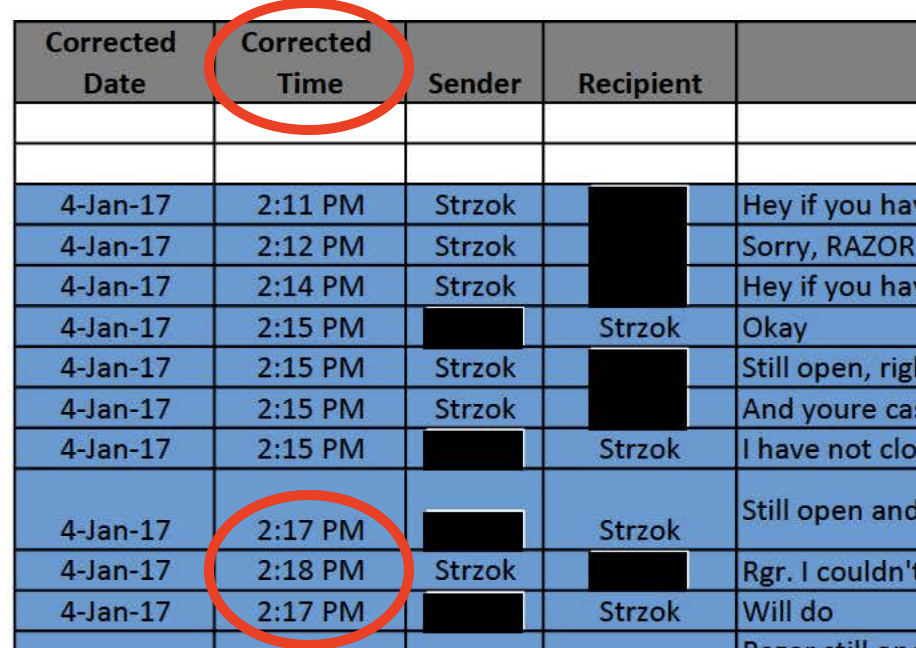
  2. A set of texts where “irrelevant information and excess metadata” was excluded and an error introduced in the process of creating a table showing “corrected date, corrected time,” which raises far more questions about the provenance of the document
  3. The Bill Barnett interview report that DOJ had submitted to Sullivan as “a 302” is instead a “report” that is not being certified in normal fashion, in part, because DOJ is hiding redactions that withhold material information about Brandon Van Grack
  4. An NSL declaration done by Jocelyn Ballantine that may hide the existence of at least one earlier financial NSL served on Mike Flynn that WDMO didn’t ask her to summarize
  5. A new set of text messages between Peter Strzok and Lisa Page that DOJ admits they’re not relying on (but nevertheless committed an additional Privacy Act violation in releasing), which was not redacted to hide personal information
  6. Three documents submitted by Sidney Powell that DOJ won’t certify (two of which, however, are probably more accurate than what DOJ has submitted)
  7. “Unintelligible” markings in transcripts of notes where DOJ was unsuccessful at getting the author or their lawyer to conduct a last minute review over a matter of hours on a Sunday (DOJ does not specify how many of their transcripts this includes); some of these appear significant
  8. Inconsistencies on how redactions and unintelligible text were marked in transcriptions which, in some cases, is affirmatively misleading
  9. Lots of documents where the certification doesn’t list the Bates numbers, with some hilarious results
  10. Inconsistencies on whether DOJ certifies all copies of a particular document that got submitted multiple times, which in one case would raise questions about the production of these documents
  11. An admission that, for some reason, the motion to dismiss didn’t rely on the final 302 of Flynn’s January 24, 2017 interview
  12. A new inaccurate date, ironically describing a Kevin Clinesmith email
  13. A claim that both Strzok and McCabe’s lawyers have confirmed their clients’ notes were not altered, but only Strzok’s lawyer is quoted

For all of the exhibits that accompanied the motion to dismiss, DOJ uses the docket number, not the exhibit number, even though Sullivan is supposed to be ruling on that MTD that uses exhibit numbers. That’ll make it a lot harder for him to use the transcriptions, which otherwise would make it more obvious that DOJ misrepresented what some of these documents say, including their “smoking gun,” the Bill Priestap notes.

In addition, in a lot of the documents with problems (including all undated notes to which dates were added), DOJ doesn’t include Bates numbers in its certification, even though it does elsewhere. There’s good reason for this. In the case of the re-altered altered documents, those new exhibits should have new Bates stamps, but don’t. In other cases, DOJ submitted multiple versions of the same document with different Bates stamps, in others, when they resubmitted exhibits they retained the Bates stamp. That’s … not a legal process reflecting any regularity.

DOJ still pretends to have no fucking clue about documents they relied on in the motion to dismiss

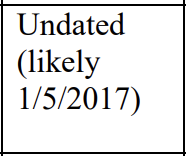
Perhaps the most pathetic (and by that I mean, I would hate to be the lawyer banking my bar membership on this ploy) detail in this package is the way they try to deal with the fact they’ve made false misrepresentations about Strzok’s January 5, 2017 notes. In one place in the table of documents, they describe the date of the notes this way:
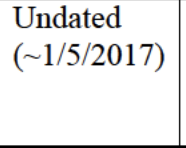
In another, they describe it — the very same notes, just repackaged so they could submit them with the wrong date — this way:
Above both transcriptions, DOJ includes the following note.
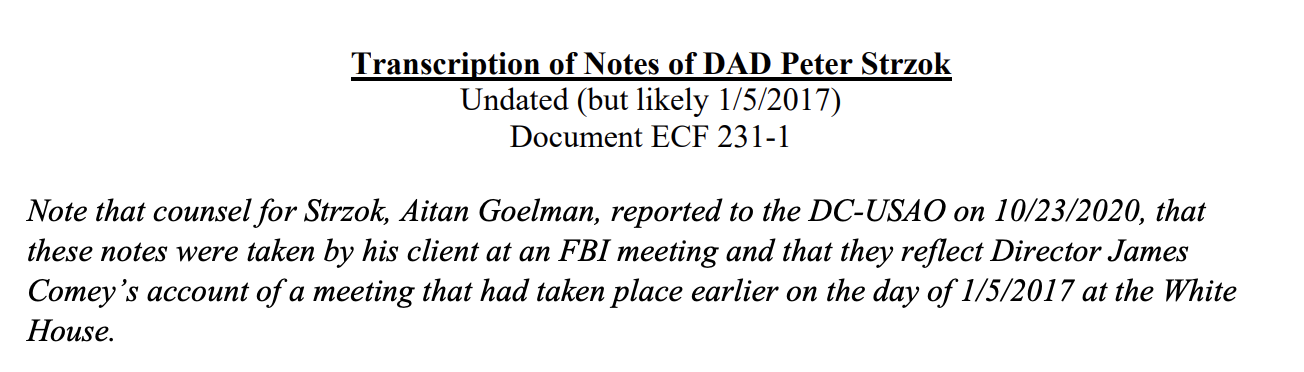
I understand why DOJ is still claiming to be unsure about the date. It’s an attempt to minimize the damage from previously providing false dates so as to avoid being punished for knowing misrepresentations in their alterations (they’re still at risk though, because they’re incorrect dates kept changing). But this will just make it very easy for Sullivan to point out that the people making this representation are therefore confessing to being completely unfamiliar with documents on which the MTD heavily relies, which means he shouldn’t take the MTD all that seriously.

The shell game behind the actual declarations

As noted, this declaration is a filing signed by Jocelyn Ballantine, submitting declarations from three other people:

  • Executive Assistant Director John Brown, whose job it is to submit declarations like this
  • EDMO AUSA Sayler Fleming, one of the AUSAs conducting this irregular investigation
  • Keith Kohne, one of the FBI Agents conducting the investigation

Brown starts by excluding three documents from his general certification (these are the ones that Fleming and Kohne will be on the hook for):

5. To the best of my knowledge, and based on the information provided to me, the Government Exhibits described in Exhibit A, 9 with the exception of ECF Nos. 198-8 and 249-1, are true and correct copies of documents and records, including copies of select pages of a larger record, maintained by the FBI pursuant to the applicable records retention policy. See ECF Nos. 198-2, 198-3, 198-4, 198-5, 198-6, 198-7, 198-9, 198-10, 198-11, 198-12, 198-13, and 198-14 9 9

6 To the best of my knowledge, and based on the information provided to me, the Discovery Documents described in Exhibit B, with the exception of ECF Nos. 228-3, are true and correct copies of documents and records maintained by the FBI pursuant to the applicable records retention policy. See ECF Nos. 231-1, 237-1. 251-1, 9 257-1. 259-1, 9 259-2, 259-3, and 264-1

Effectively, he is saying these documents are real and that Ballantine’s claims about the reasons for classification are valid.

He then says this about Ballantine’s own summary, which purports to be a summary of all the NSLs used against Mike Flynn, but which may not include one or more financial NSLs obtained in 2016.

One of the Discovery Documents is a summary substitution of classified materials that were provided to DC-USAO by the FBI. See ECF 257-2. This summary substitution was prepared by AUSA Jocelyn Ballantine, and was reviewed, approved, and declassified by the FBI To the best of my knowledge, and based on the information provided to me, the information contained therein truly and correctly summarizes the underlying classified information provided by the FBI and maintained by the FBI pursuant to the applicable records retention policy.

He’s saying that her summary accurately summarizes what she says it does, but he’s not saying that her description of it is accurate (which it wouldn’t be if EDMO told her to leave out 2016 NSLs).

Then it’s Fleming’s turn. After reviewing her role in this shoddy review and asserting that she has no reason to believe that the documents she got from FBI were irregular, she then explains why she did a summary of the texts that Strzok and a bunch of other people sent in early 2017: Just to get rid of unnecessary metadata, she says.

3. Among the documents and records that I reviewed were spreadsheets of electronic messages exchanged between FBI personnel involved in the Michael T. Flynn investigation and prosecution. The spreadsheets produced to EDMO contained messages and metadata that were not relevant to my review.

4. I created Government Exhibit ECF 198-8 and Discovery Document ECF 228-3. These exhibits truly and correctly reflect excerpts from documents and record maintained by the FBI pursuant to the applicable records retention policy that were provided to EDMO/DC-USAO for review.1

Then she admits someone — she doesn’t say who — made an error.

1 There is a single typographical error in these exhibits. A single message (“Will do.”) from DAD Peter Strzok, sent on 4-Jan-17, is incorrectly identified as having been sent at 2:17PM; the message was actually sent at 2:18PM.

What she doesn’t explain, though, is why her table has two headings that show she or someone else had to “correct” the dates and times in the spreadsheet (which may be where the typo got introduced, or retained).
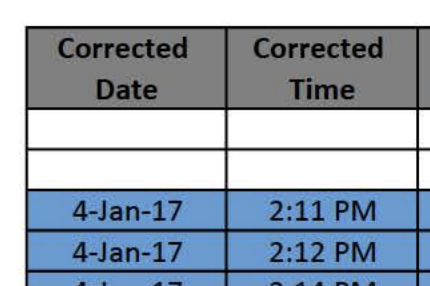
Given that heading, she has no business treating the data she got as reliable, because either she or someone upstream from her had to fix it.

Then Keith Kohne steps in, the guy who conducted an incompetent interview (and possibly one of the guys who altered dates on government exhibits). He doesn’t provide any explanation of why he’s making the declaration — not even the standard boilerplate you’d find in an affidavit. He says only,

 I, Keith Kohne, hereby declare, pursuant to 28 U.S.C. § 1746, that the document attached as Exhibit 1 to the Government’s Supplemental Filing in Support of Motion to Dismiss … is a true and correct copy of the report of the interview of William J. Barnett conducted on September 17, 2020.

Understand that this declaration lacks the certification afforded by the rules of FBI record-keeping. It lacks Brown’s certification that the data in was redacted properly (this was not). And it doesn’t explain why it wasn’t finalized as a 302 and submitted into FBI record-keeping systems.

Collectively, then, these declarations stop well short of certifying those texts, Ballantine’s summary, or the Barnett’s interview.

We already know that the Barnett interview is withholding material information. I guess we should assume there are problems with the other two documents as well.

Documents and comments

Here are the documents:

Draft closing communication (198-2) [Docket 2, Exhibit 1]

In the certification but not the exhibit referenced, DOJ redacts Bill Barnett’s name, who wrote the document, as well as that of Joe Pientka, who approved it. That serves to make it harder to figure out that the closing EC materially conflicts with unredacted claims Barnett made in his interview, particularly with regards to Barnett’s awareness that the investigation was a counterintelligence investigation considering 18 USC 951 charges.

It’s all the more problematic given that DOJ has submitted two versions of this document with the same Bates numbers; the earlier one does have the names redacted.

Opening Electronic Communication (198-3) [Docket 3, Exhibit 2]

This doesn’t include Bates numbers.

Mary McCord 302 (198-4) [Docket 4, Exhibit 3]

As with other documents, this one was specially declassified for this release. Another copy has been released under BuzzFeed’s FOIA.

Sally Yates 302 (198-5) [Docket 5, Exhibit 4]

Flynn got a summary of this before he allocuted his guilty plea before Sullivan.

170302 Jim Comey Transcript (198-6) [Docket 6, Exhibit 5]

As DOJ notes, HPSCI used a court reporter on this, so they didn’t have to certify it.

170214 Draft Flynn 302 (198-7) [Docket 7, Exhibit 6]

For some reason (I’ll return to this), DOJ submitted a draft version of the 302, rather than the final one (both have previously been submitted in this docket, and a less-redacted version of the 302 was released prior to this in BuzzFeed’s FOIA). Nowhere in the motion to dismiss does Timothy Shea acknowledge that he wasn’t relying on the final 302.

Text massages and electronic messages (198-8) [Docket 8, Exhibit 7]

The certification doesn’t include Bates stamps.

This is the document that has an admittedly minor error in one of the time stamps, saying that Strzok texted “Will do” at 2:18 instead of 2:17. But the error is interesting given that the table’s headings read, “Corrected Date, Corrected Time,” meaning these aren’t just copied, the times (and dates) were “corrected” (which is presumably where the error was introduced), raising questions about what they were corrected from. [My annotation.]

This is one of the documents that FBI EAD John Brown did not certify, which ought to raise questions about how these dates and times got “corrected.” Instead, the authentication reads:

Truly and correctly reflects information contained in documents and records maintained by the FBI, pursuant to the applicable records retention policy that were provided to EDMO.

Without an explanation of how why this data needed to be corrected, I think there are real questions whether this fulfills the requirement here.

Emails about the Logan Act (198-9) [Docket 9, Exhibit 8]

The certification doesn’t include Bates numbers.

170121-22 Emails about providing briefings (198-10) [Docket 10, Exhibit 9]

This certification doesn’t include Bates numbers.

170124 Emails of questions Flynn might ask (198-10) [Docket 10, Exhibit 9]

This certification doesn’t include Bates numbers. This matters both because they’re mixing docket number and exhibit number, but also because there are two copies of the identical document with a different Bates number in the docket.

Emails about 1001 warnings (198-10) [Docket 10, Exhibit 9]

This certification doesn’t include Bates numbers. This matters both because they’re mixing docket number and exhibit number, but also because there are two copies of the identical document with a different Bates number in the docket.

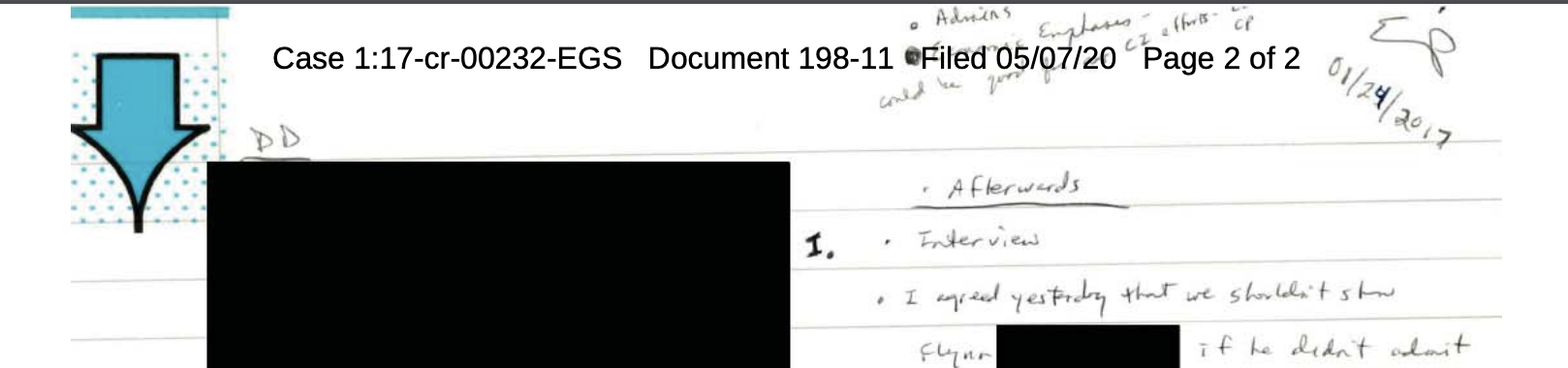
170124 Bill Priestap Notes (198-11) [Docket 11, Exhibit 10]

This certification doesn’t include Bates numbers. This matters both because they’re mixing docket number and exhibit number, but also because there are two copies of the same document with a different Bates number in the docket, yet both have the blue sticky that is hidden in later documents (raising questions about why there are two separate direct scans).

170124 Andrew McCabe write-up (198-12) [Docket 12, Exhibit 11]

This document doesn’t have a Bates stamp on it at all, which is especially problematic given that another less redacted version of the document is in this docket, with a Bates stamp of the same series as other documents submitted with the motion to dismiss.

The May version, with the Bates stamp, makes it clear that McCabe agreed with Flynn that leaks were a problem. [My annotations.]

The motion to dismiss version redacts that.

McCabe’s comment about leaks in no way qualifies under any claimed basis for redaction stated in certification.

It also appears to redact the prior declassification stamp.

One thing DOJ did by submitting this without a Bates stamp is avoided admitting that the document is not at all new, as the Motion to Dismiss suggested.

170124 Strzok and Pientka Notes of Flynn interview (198-13) [Docket 13, Exhibit 12]

These were released as the same exhibit, which given that they don’t use Bates numbers to identify which is which, effectively means they haven’t told Judge Sullivan which Agent’s notes are which, something that Sidney Powell wailed mightily about the last time it happened. They do, however, get it right in the transcript.

In the Pientka notes, however, there are numerous examples of things that are clear, at least from the context, that don’t get transcribed properly.

170822 Strzok 302 (198-14) [Docket 14, Exhibit 13]

This had already been produced in this docket.

200917 “Report” of Bill Barnett’s interview (249-1)

In the Government Supplemental Filing accompanying this interview, they claim that this is, “The FBI 302” of the Barnett interview. Here, they’re correctly noting that it’s not actually a 302, which makes it even more problematic than it already was.

The certification makes it clear that this “report” is maintained differently than normal 302s. Rather than certifying it as,

True and correct copy of a document or record maintained by the FBI pursuant to the applicable records retention policy.

It is instead certified as,

True and correct copy of the report of that interview.

I’m not sure Sullivan is going to be that thrilled that FBI itself is not treating this interview with the regularity of other investigative documents.

This “report” is probably one of the reasons why DOJ included this language in the filing.

There have been no material alterations made to any of the 14 Government Exhibits filed in support of the motion to dismiss and the supplement to the motion to dismiss. Several of the documents contain routine redactions made by the FBI to protect classified information, and/or law enforcement sensitive information, and/or made to comply with the Local Rule to remove Privacy Act information.

As I have laid out, DOJ withheld material information — most notably, all the nice things Barnett said about Brandon Van Grack — by redacting information that would otherwise be unsealed.

This is one of the documents that EAD John Brown did not certify; instead, one of the agents who did the interview did, which suggests it could not be certified properly. It also suggests that Ballantine, who knows it is withholding material information, doesn’t want to be in a position where she can see it (even though she sent an unredacted copy to Flynn).

Text messages (228-3)

The certification notes these are identical to the 198-8 text messages, with the error under heading, “corrected time.” It’s unclear why, in this one case, DOJ admitted to the same exhibit being filed multiple times, since in other cases they don’t note it.

170105 Strzok Notes (231-1)

The transcription of these notes don’t note the redactions. That’s significant because the only difference between this set of notes and the later, altered ones, is that they declassified a bit more information in the latter case.

170125 Gauhar Notes (237-1)

The transcription is inconsistent about whether it treats cross-outs as unintelligible or not, in one place treating a heading “Intro” as intelligible, but not references to “Thanksgiving” and “He said.”

170125 Strzok Notes (237-1)

By labeling these notes as Strzok’s, DOJ makes it more clear that they redacted information that must match other sets of notes from the same meeting.

170130 [Draft] Executive Summary of Flynn investigation (237-1)

The certification doesn’t reveal that this is a draft document, not a finalized one.

170330 Dana Boente Notes (237-1)

Undated McCabe Notes (248-2/259-1)

The transcription doesn’t note that McCabe crossed off his notes on Flynn. Nor does it admit that it redacted what appears to be a continuation of the discussion of Flynn.

The authentication notes that it is,

True and correct copy of a document or record maintained by the FBI pursuant to the applicable records retention policy (ECF 259-1)

That means they’re only certifying that this is something in FBI records (which it shouldn’t be, since it’s a re-altered altered document).

They also leave out Bates numbers, which is problematic because the re-altered document is technically a new document, but it retains the same Bates stamp.

170105 Strzok Notes (248-3/259-2)

The transcription reveals that two of the three new things revealed in the new copy were unintelligible to DOJ, which raises real questions about why they left it unredacted.

The authentication notes that it is,

True and correct copy of a document or record maintained by the FBI pursuant to the applicable records retention policy (ECF 259-2)

That means they’re only certifying that this is something in FBI records (which it shouldn’t be, since it’s a re-altered altered document).

They also leave out Bates numbers, which is problematic because the re-altered document is technically a new document, but it retains the same Bates stamp.

Undated Strzok Notes (248-4/259-3)

As with some others, the transcription doesn’t note all the redactions, which in this case raises questions about why they included notes from the day before.

In addition, they leave out a scribble in front of the word “willfullness” meaning Strzok switched what they were measuring with regards to whether Flynn’s lies about Turkey were deliberate.

The authentication notes that it is,

True and correct copy of a document or record maintained by the FBI pursuant to the applicable records retention policy (ECF 259-3)

That means they’re only certifying that this is something in FBI records (which it shouldn’t be, since it’s a re-altered altered document).

They also leave out Bates numbers, which is problematic because the re-altered document is technically a new document, but it retains the same Bates stamp.

170306 Jim Crowell Notes (251-1)

As expected, DOJ was thoroughly dishonest with this document. They don’t reveal that they’ve redacted something — either a date, or names — where they indicate that they’ve added a date. One way or another, this transcription is false.
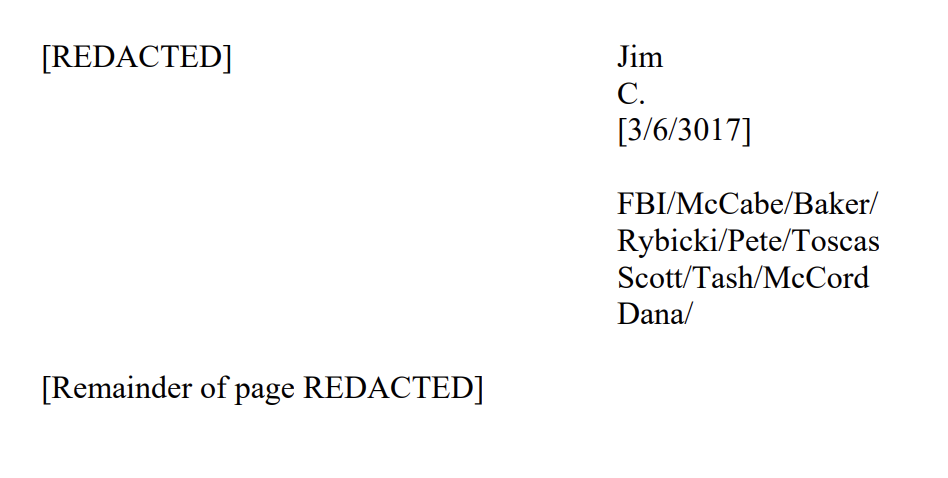
Plus, if they’ve redacted the names of non-senior people in the meeting (which is the non-suspect excuse for the redaction), then they need to note that in the transcription. The alternative, of course, is worse, that they knowingly altered the date.

This is one instance where not revealing whether DOJ consulted with the author is especially problematic. But since Crowell is now a DC judge just next door to Sullivan’s courthouse, maybe he can just go ask.

170329 Gauhar Notes (251-1)

180119 Schools Notes (251-1)

161226 Clinesmith NSL Email (257-1)

The certification provides the wrong date for this email, labeling it 12/26/16. [My annotations.]

it was 12/23/16.
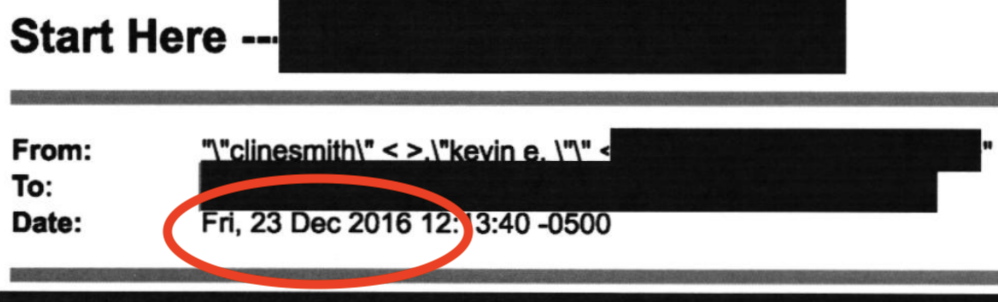
Unlike some of the other things here, I think this is just a sloppy error, not an affirmative misrepresentation. But it is ironic that they made the error with Clinesmith.

200924 Ballantine Summary Substitution of NSLs issued in Crossfire Razor (257-2)

In her notice of discovery correspondence accompanying this, Ballantine doesn’t note that she wrote this summary for EDMO to review for them to, in turn, give back to her to give to Flynn. That’s important, because it’s unclear whether the summary shows all NSLs, or only NSLs for the period in question. Both Barnett’s testimony and the Kevin Clinesmith email included suggest the latter.

170125 OGC Notes (264-1)

This doesn’t include Bates numbers, which is interesting because an older 2019 Bates stamp not seen elsewhere is included (possibly indicating that this was previously shared with DOJ IG).
The Government Agent Who Altered Andrew McCabe’s Notes Remains Unnamed

The frothers have convinced themselves that the sticky notes via which misleading dates were added to Peter Strzok and Andrew McCabe’s handwritten notes do not amount to “altering” those notes. That’s nonsense. Not only did the date added to Strzok’s notes suggest they could have been written on January 4, 2017 when several documents that had already been submitted in the docket (as well as other public documents) made it clear the notes had to have been written on January 5, 2017. But the added date — indicating that whoever wrote it thought the notes could be January 4 or 5 — don’t match the notice DOJ originally gave Sidney Powell about the notes, which suggested the could have been written on January 3.

There are further problems with the alterations, not least that DOJ claims that these documents were “scanned.” A comparison of the original set of notes with the altered one, along with the blue sticky visible on Bill Priestap’s notes with how the same kind of blue sticky appeared on McCabe’s altered notes make it clear these were copied, along with being scanned, a step that made the alterations far less visible.

Worse still, rather than providing unaltered versions of the notes, DOJ instead provided altered versions of the altered notes. That’s easiest to see by comparing the original, altered McCabe notes, where you can see the lined page underneath the added date.

With the altered altered notes.

It’s clear that rather than simply taking the sticky off, DOJ instead simply whited out the date, along with the lines of the page beneath it.

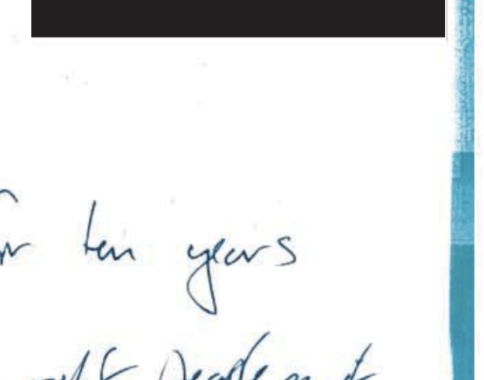
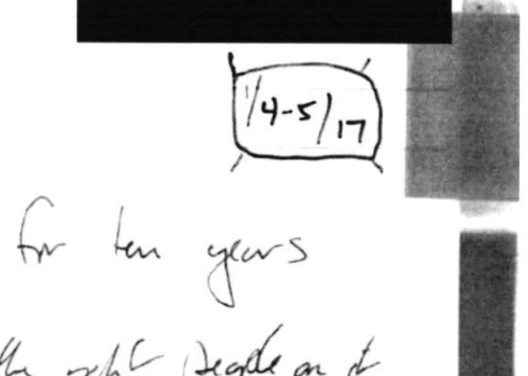
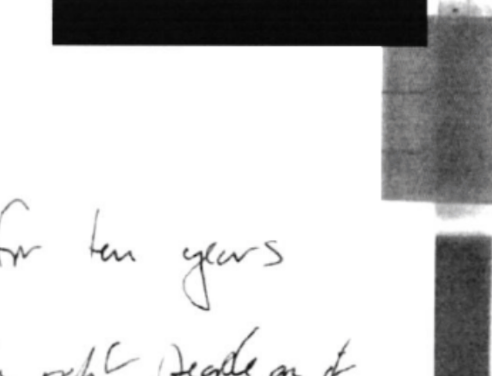
But you can see this by comparing the three versions of the Strzok notes. Unaltered:

First alteration:

Second alteration:

The sticky is still visible in the second alteration, which suggests they’ve done the same thing they did with McCabe’s altered notes, just edit out the alteration, rather than scan the original document. I suspect the reason they doubled down on altering documents is because doing otherwise would make it clear that the McCabe notes, in particular, could not have been “scanned,” because it would have made the blue sticky visible.

So tomorrow they’re going to have to certify that their re-altered notes are “authentic.”

There may be a far more interesting reason why DOJ chose to re-alter the altered documents rather than providing the originals.

In both Jocelyn Ballantine’s notice of discovery correspondence about the Strzok notes:

During the review, agents for EDMO placed a single yellow sticky note on each page of the notes with estimated dates (the notes themselves are undated). Those two sticky notes were inadvertently not removed when the notes were scanned.

I am providing replacement versions of these documents, and ask that you destroy the prior versions provided to you. We have determined, and confirmed with counsel for Peter Strzok, that the content of the notes was not otherwise altered.

And her notice of compliance, falsely claiming to comply with Judge Emmet Sullivan’s order to authenticate all the documents submitted in this case, she blamed WDMO FBI Agents for the alteration to Strzok’s notes.

In response to the Court and counsel’s questions, the government has learned that, during the review of the Strzok notes, FBI agents assigned to the EDMO review placed a single yellow sticky note on each page of the Strzok notes with estimated dates (the notes themselves are undated). Those two sticky notes were inadvertently not removed when the notes were scanned by FBI Headquarters, before they were forwarded to our office for production.

But her notice of discovery correspondence accompanying the newly altered McCabe notes:

At some point during the course of the review of this page of notes, government agents placed a clear sticky notes (with a colored tab) on this page of notes. On the clear portion of this tab was written the date of 5/10/2017. This sticky note was inadvertently not removed when the notes were scanned.

I am providing a replacement version of this document, and ask that you destroy the prior version provided to you. The content of the notes was not otherwise altered.

And her notice of compliance, she didn’t reveal who had altered McCabe’s notes.

Similarly, the government has learned that, at some point during the review of the McCabe notes, someone placed a blue “flag” with clear adhesive to the McCabe notes with an estimated date (the notes themselves are also undated). Again, the flag was inadvertently not removed when the notes were scanned by FBI Headquarters, before they were forwarded to our office for production.

In one case, she blames, “government agents,” in the other case, she blames “someone.” Blaming “someone” is not a very good way to convince a judge you’re not pulling a fast one.

Realtering the altered notes is not either.

Note, too, that while Ballantine says she has reviewed the contents of Strzok’s notes with his lawyer, she only claims that the content of the McCabe notes has not been altered. If the redactions change the meaning of the notes, falsely tying a SSCI briefing to the notes about Flynn, I can see why she might do that.

By realtering the notes, DOJ is hiding that the altered notes were not, in fact, scans (because if they had been scanned the alteration would have been obvious because the stickies in both cases were colored, and FBI’s scans pick up color).

But I suspect they’re also hiding who that “government agent” is who altered McCabe’s notes.

Government Caught Between a Recusal Motion and Desperation

Last week, Sidney Powell made her first formal request that Judge Emmet Sullivan recuse.

In response, Judge Sullivan said (while noting the proper time for such a request was last year), file a motion.

Sidney did.

It was a shitshow.

Nevertheless, Judge Sullivan politely invited the government to weigh in.

They’ve now done so. While not disagreeing with Flynn, they argue that the way to proceed is on the motion to dismiss — and press for urgent response.

The United States of America, by and through its undersigned counsel, respectfully files this response to General Michael T. Flynn’s Motion to Disqualify Judge Emmet Sullivan, United States v. Flynn, 17-cr-232 (Doc. 161), filed on October 7, 2020. As this Court is aware, during the mandamus proceedings before the en banc Court of Appeals for the D.C. Circuit, General Flynn asked that “any further proceedings be conducted by a different judge.” In re Flynn, No. 20-2153, Doc. 1846621 at 24. While the government did not address that request in its written pleadings, when asked during oral argument, the government offered that it had “reluctantly come to the view that there is now at least a question about appearances of impartiality” because this Court’s filing of a petition for en banc review suggested a “level of investment in the proceedings that is problematic.” In re Flynn, No. 20-2153, Doc. 1859900 (Transcript of the August 11, 2020, Hearing) at 54. The D.C. Circuit rejected that view. In re Flynn, No. 20-5143, 2020 WL 5104220, at *16 (D.C. Cir. Aug. 31, 2020).

Based in part on subsequent events, including the hearing held before the Court on September 29, 2020, General Flynn again raises the serious charge that this Court is biased and has engaged in misconduct. The government does not believe that adjudicating General Flynn’s motion is the most appropriate way for this Court to proceed. Consistent with the en banc D.C. Circuit’s statement that “[a]s the underlying criminal case resumes in the District Court, we trust and expect the District Court to proceed with appropriate dispatch,” In re Flynn, 2020 WL 5104220, at *7, the government respectfully submits that instead the Court should immediately grant the unopposed motion to dismiss the criminal information with prejudice. Doing so would avoid any further delay to General Flynn and to the government, and would eliminate any need for the Court to address the disqualification motion, which would be moot.

This is a nifty way to use the purportedly agreeing sides against each other.

The government wants this done by November 3. That makes Sulliavan’s response to Powell on recusal easier.


The “Scanned” Andrew McCabe Notes Weren’t [Just] “Scanned”

The story DOJ offered yesterday to explain why they had altered several exhibits of undated notes raise more questions then they answered. In both cases where DOJ has admitted the exhibits had added dates — Peter Strzok and Andrew McCabe — those dates are problematic.

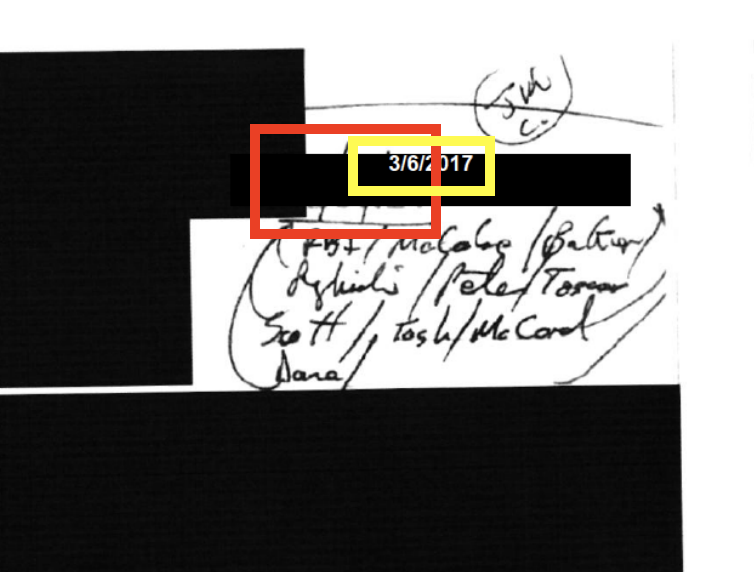
Plus, the excuse offered for those dates — that someone forgot to take off a clear sticky and post-it notes before copying the exhibit — can’t explain the third instance where DOJ added a date, where they incorporated it into the redaction of notes taken from a meeting involving ODAG’s office.

Indeed, the redaction may even cover an existing date (see what look like the slashes of a date, outlined in red, though that could also record the names of other attendees), with a date added in the redaction (outlined in yellow).

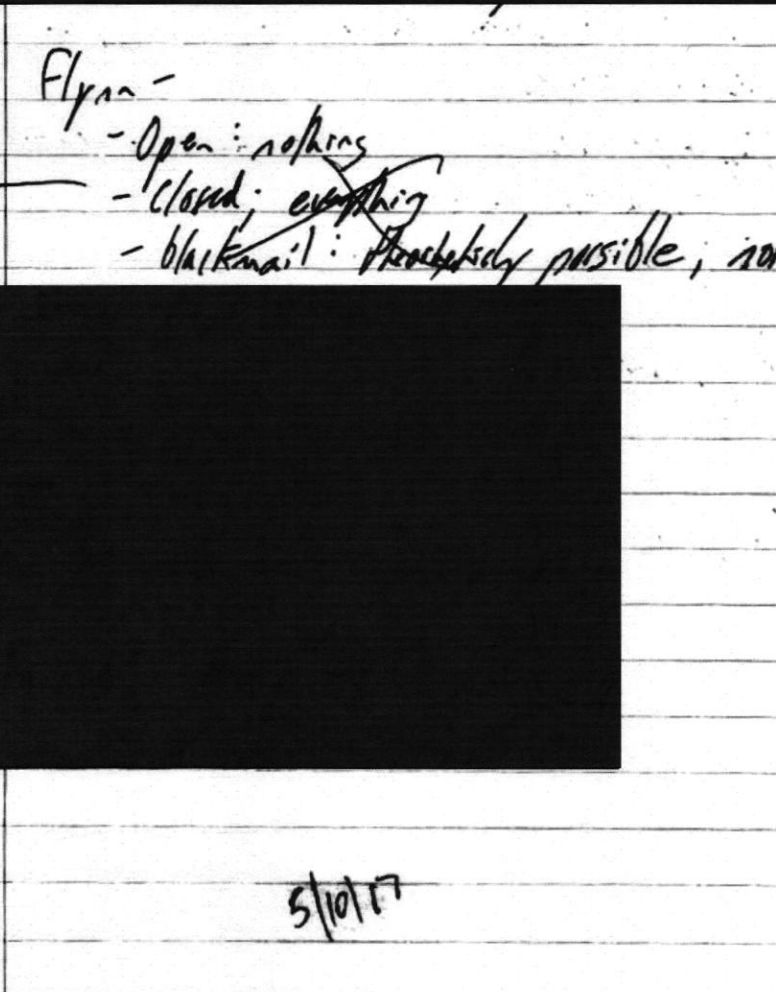
Moreover, there’s a problem with the excuse DOJ offered about the McCabe notes, which went as follows:

Similarly, the government has learned that, at some point during the review of the McCabe notes, someone placed a blue “flag” with clear adhesive to the McCabe notes with an estimated date (the notes themselves are also undated). Again, the flag was inadvertently not removed when the notes were scanned by FBI Headquarters, before they were forwarded to our office for production.

That is, DOJ is claiming that “someone” missed a blue “flag” when they were “scanning” McCabe’s notes and so inadvertently left a date — the wrong date, probably — on the exhibit, without leaving any sign on the exhibit itself.

The problem with this explanation is that we know precisely what a blue sticky left on an actual “scan” looks like. It looks just like what we say in the Bill Priestap notes submitted three times under two different Bates stamp numbers.

That is, if the document were just scanned, it would show up quite obviously, as it does here, and would be impossible to miss.

And yet this “scan” attributed to “somebody” doesn’t show up, possibly because the redaction covers it.


McCabe Casts Doubt on the Date Added to His Notes, Too

In my coverage of the way DOJ has added dates to undated notes, I’ve always said that I have no reason to believe that the date DOJ added to Andrew McCabe’s notes was erroneous.

Now I do.

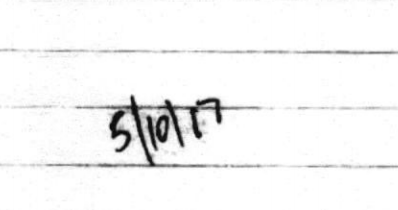
In a letter that McCabe’s lawyer, Michael Bromwich sent to Judge Sullivan last week, he explains why the May 10, 2017 date added to McCabe’s notes couldn’t be remotely credible. That’s because he was busy cleaning up the Jim Comey firing.

The date “5/10/17” that appears on Exhibit B is not in Mr. McCabe’s handwriting and he did not enter the date that now appears there. Further, contrary to counsel’s claim, Mr. McCabe did not brief the Senate Intelligence Committee on anything on May 10. That was the day after President Trump had fired FBI Director Comey and Mr. McCabe was consumed with various other responsibilities. Mr. McCabe did participate in a public Senate Select Committee on Intelligence hearing and closed briefing on worldwide threats, along with other intelligence community officials, on May 11. Neither the public hearing nor the secret briefing had anything to do with Mr. Flynn. Counsel did not seek to confirm the accuracy of its claims with Mr. McCabe or us about Mr. McCabe’s notes before filing the Third Supplement.

Update: Bromwich is not saying that the date is not correct. He’s saying that the implication, created by the redaction, that McCabe briefed Flynn to SSCI on May 10, 2017 is incorrect.

These appear to be notes tracking McCabe’s day. The top half, redacted save the time and description, explains that at 5:15 PM on whatever day this was, McCabe was doing World Wide Threat hearing prep.

Then, on the same day but in no way related to it, he reviewed the Flynn case in some way or another.

The redaction also almost certainly splits the Flynn related information in half (note the bracket starting at “closed” and extending well into the redaction).

In any case, nothing in these notes suggest this happened after Comey’s firing, which is the point they’re trying to make of it.

Update: According to McCabe’s book, nothing happened after he attended a WWT prep session on May 10, because that took several hours, he had already been in two draining meetings at the White House that day, and he was pooped.

As the president requested, I went back to the White House that afternoon. When I arrived, at 2 P.M., the bodyguard Keith Schiller came down again and greeted me like I was his buddy, like someone he sees every day—Hey, what’s going on?

[snip]

When I left the Oval Office, I went straight to a prep session at the Bureau. Jim Comey had been preparing for two weeks to testify at the Senate Intelligence Committee’s Worldwide Threats Hearing—an annual event where the director of national intelligence and the heads of the FBI, CIA, National Security Agency, and Defense Intelligence Agency share their assessments of the most urgent threats to U.S. national security and answer questions from senators about those threats. Preparation for the hearing typically involves a number of lengthy background sessions with staff and a review of hundreds of pages of briefing material; it also requires drafting an official statement for the record.

[snip]

So when I left the Oval Office, I went straight back to a prep session that night. I had been to a lot of these meetings for Comey and Mueller—when I was involved in the prepping. Usually I had been the guy sitting at the right hand of the director, listening to everyone else’s contributions and trying to distill it all into better formulations.

Chiming in when you have a shapely little idea, I quickly discovered, is very different from sitting at the head of the table while a dozen people to your right and left argue the pros and cons of issue after issue, firing ideas and comments at you nonstop—all of which you have to take in while also assessing how those answers will be interpreted and processed by members of Congress, the president, and the media. I had never fully appreciated the complexity of that task. After two and a half hours of this, my tank was full. I had to get some sleep.

The passage makes clear that he had been a part of Comey’s prep before Comey was fired, and that prep had been going on for two weeks. Which suggests that McCabe could have attended a WWT hearing any time in the previous two weeks.

That’s not definitive, of course (though it was almost certainly written with the benefit of McCabe’s notes). But this passage suggests the date is wrong, and the Flynn briefing took place before Comey’s firing.

DOJ Has Submitted Proof They Knew the January 5, 2017 Meeting Took Place on January 5, 2017

I’ve been harping on the process that facilitated Sidney Powell — and then President Trump — falsely blaming Joe Biden for raising the Logan Act in the context of the government’s response to Mike Flynn’s attempts to secretly undermine sanctions on Russia.

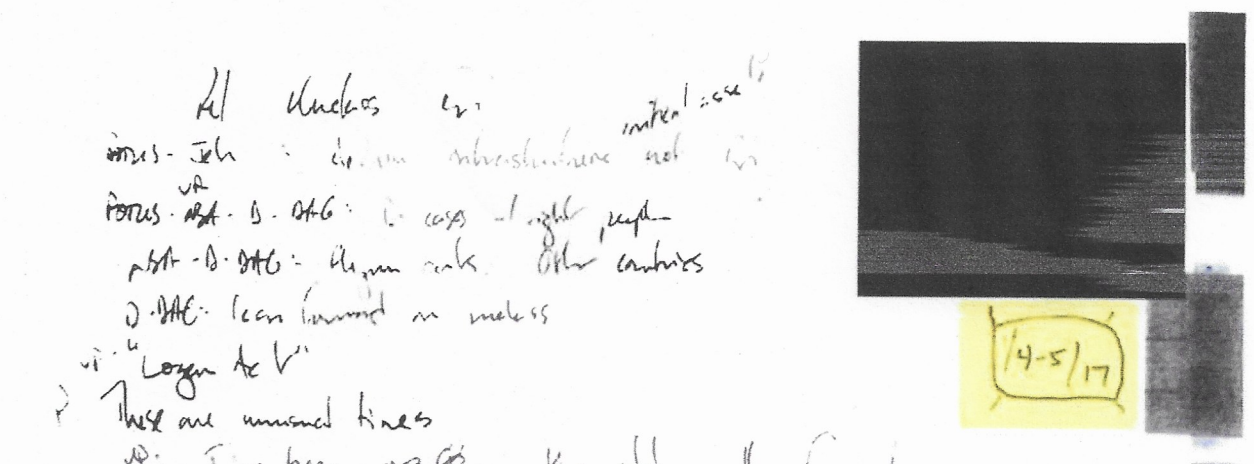
That process started on June 23, when prosecutor Jocelyn Ballantine sent an undated copy of Peter Strzok’s notes to Sidney Powell, explaining that they had been found as part of Jeffrey Jensen’s review. Using the royal “we,” she professed uncertainty about when those notes were written.

The enclosed document was obtained and analyzed by USA EDMO during the course of its review. This page of notes was taken by former Deputy Assistant Director Peter Strzok. While the page itself is undated; we believe that the notes were taken in early January 2017, possibly between January 3 and January 5.

Sidney Powell, referencing those notes, claimed they were believed to date from January 4 and asserted that they showed Joe Biden raising the Logan Act.

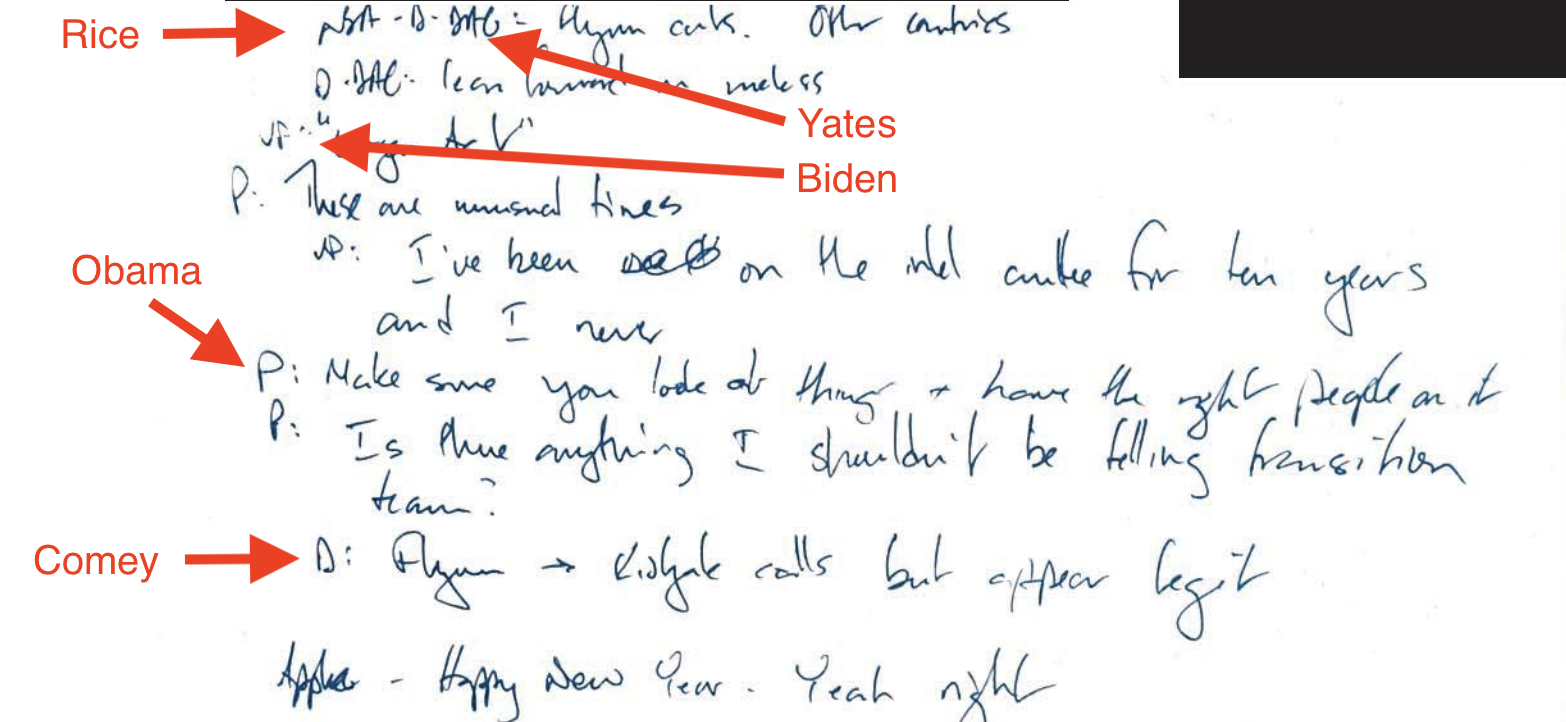
Strzok’s notes believed to be of January 4, 2017, reveal that former President Obama, James Comey, Sally Yates, Joe Biden, and apparently Susan Rice discussed the transcripts of Flynn’s calls and how to proceed against him. Mr. Obama himself directed that “the right people” investigate General Flynn. This caused former FBI Director Comey to acknowledge the obvious: General Flynn’s phone calls with Ambassador Kislyak “appear legit.” According to Strzok’s notes, it appears that Vice President Biden personally raised the idea of the Logan Act.

Then, on September 23, Ballantine sent Powell a set of Strzok’s notes with a different Bates stamp than the first. When it was submitted — by Powell — to the docket, it had a date on it that did not appear on the earlier set: 1/4-5/17.

Then, five days after Powell (who has had multiple conversations with Trump’s campaign lawyer, Jenna Ellis, including about this case) loaded the now-dated notes onto the docket, President Trump publicly accused Joe Biden of giving “the idea for the Logan Act against General Flynn” in their first debate.

President Donald J. Trump: (01:02:22)
We’ve caught them all. We’ve got it all on tape. We’ve caught them all. And by the way, you gave the idea for the Logan Act against General Flynn. You better take a look at that, because we caught you in a sense, and President Obama was sitting in the office.

Thus it happened that an error introduced into the Flynn proceeding got turned into a campaign prop.

The thing is, DOJ has abundant proof that Jeffrey Jensen knew (or should have known) there was no uncertainty about the date when those notes were handed over to Powell. Indeed, if he did not know, then the entire premise of their motion to dismiss falls apart.

In Timothy Shea’s motion to dismiss, he obliquely attributed the radical change in DOJ’s view of Mike Flynn’s prosecution to Jeffrey Jensen’s review of the case, citing three dockets where Powell uploaded information that Ballantine had shared with the explanation (one, two) that the material came out of Jeffrey Jensen’s review.

After a considered review of all the facts and circumstances of this case, including newly discovered and disclosed information appended to the defendant’s supplemental pleadings, ECF Nos. 181, 188-190,1 the Government has concluded that the interview of Mr. Flynn was untethered to, and unjustified by, the FBI’s counterintelligence investigation into Mr. Flynn—a no longer justifiably predicated investigation that the FBI had, in the Bureau’s own words, prepared to close because it had yielded an “absence of any derogatory information.”

1 This review not only included newly discovered and disclosed information, but also recently declassified information as well.

All the purportedly “newly discovered” information, then, comes from Jensen.

Bill Barr cited Jensen’s review even more explicitly in an interview with Catherine Herridge.

What action has the Justice Department taken today in the Michael Flynn case?

We dismissed or are moving to dismiss the charges against General Flynn. At any stage during a proceeding, even after indictment or a conviction or a guilty plea, the Department can move to dismiss the charges if we determine that our standards of prosecution have not been met.

As you recall, in January, General Flynn moved to withdraw his plea, and also alleged misconduct by the government. And at that time, I asked a very seasoned U.S. attorney, who had spent ten years as an FBI agent and ten years as a career prosecutor, Jeff Jensen, from St. Louis, to come in and take a fresh look at this whole case. And he found some additional material. And last week, he came in and briefed me and made a recommendation that we dismiss the case, which I fully agreed with, as did the U.S. attorney in D.C. So we’ve moved to dismiss the case.

So this decision to dismiss by the Justice Department, this all came together really within the last week, based on new evidence?

Right. Well U.S. Attorney Jensen since January has been investigating this. And he reported to me last week.

In other words, both Shea and Barr represented that the case laid out in the motion to dismiss is the case that Jensen made that persuaded Barr to drop the prosecution.

That means we should expect Jensen to have deep familiarity with all the documents that — the motion to dismiss claims — formed the basis of his review.

I put a list of those exhibits here (along with an explanation that virtually everything cited in it was already known when DOJ first charged Flynn, when Michael Horowitz concluded the investigation was properly predicated, and when Bill Barr’s DOJ called for prison time in January).

Among those documents that Timothy Shea — and before him, Jeffrey Jensen — relied on to claim that DOJ should drop Flynn’s prosecution is the 302 from Mary McCord’s July 17, 2017 interview with Mueller’s team. The motion to dismiss cites McCord at least 26 times, relying on her interview to understand details of what happened in early January 2017, after the government discovered Flynn’s calls that explained why Russia didn’t retaliate for sanctions. Of particular note, the motion to dismiss that arose from Jensen’s analysis cites McCord’s interview regarding the discussion about the Logan Act — including that the investigation remained a counterintelligence one after discussing the Kislyak description. McCord’s description of the Logan Acti discussion reveals precisely who first raised it: ODNI GC Bob Litt.

General Counsel at the Office of the Director of National Intelligence (ODNI) Bob Litt raised the issue of a possible Logan Act violation. McCord was not familiar with the Logan Act at the time and made a note to herself to look it up later.

DOJ should never have let Powell form the conclusion that Joe Biden first suggested the Logan Act, because they were relying on a document that made it clear that Litt had already raised it. That’s where Jim Comey got the idea, before he went into that January 5, 2017 meeting.

Another document Shea and Jensen relied on in arguing that DOJ should end the Flynn prosecution is the 302 from Sally Yates’ August 15, 2017 interview with Mueller’s team. Shea’s motion to dismiss — based off Jensen’s analysis — cites Yates’ 302 at least 20 times, including in its discussion of the Logan Act. What Shea didn’t cite, but what shows up in the first substantive paragraph of the 302, is a description of how Yates first learned of the Flynn-Kislyak calls at a meeting at the White House on January 5, 2017.

Yates first learned of the December 2016 calls between (LTG Michael) Flynn and (Russian Ambassador to the United States, Sergey) Kislyak on January 5, 2017, while in the Oval Office. Yates, along with then-FBI Director James Comey, then-CIA Director John Brennan, and the-Director of National Intelligence James Clapper, were at the White House to brief members of the Obama Administration on the classified Intelligence Community Assessment on Russian Activities in Recent U.S. Elections. President Obama was joined by his National Security Advisor, Susan Rice, and others from the National Security Council. After the briefing, Obama dismissed the group but asked Yates and Comey to stay behind. Obama started by saying he had “learned of the information about Flynn” and his conversation with Kislyak about sanctions. Obama specified he did not want additional information on the matter, but was seeking information on whether the White House should be treating Flynn any differently, given the information. At that point, Yates had no idea what the President was talking about, but figured it out based on the conversation. Yates recalled Comey mentioning the Logan Act, but can’t recall if he specified there was an “investigation.” Comey did not talk about prosecution in the meeting. It was not clear to Yates from where the President first received the information. Yates did not recall Comey’s response to the President’s question about how to treat Flynn. She was so surprised by the information she was hearing that she was having a hard time processing it and listening to the conversation at the same time.

That long paragraph that very clearly describes the meeting at the White House captured in Peter Strzok’s notes directly precedes one that Shea (and so by association, Jensen) rely on heavily. According to Yates, Jim Comey was the one who raised the Logan Act in that meeting, not Joe Biden. And McCord, which they also rely on, makes it clear Comey got the idea from Litt.

Finally, the Shea motion to dismiss based on Jensen’s analysis relies on Jim Comey’s HPSCI testimony — one of just two documents that DOJ may not already have reviewed before Mike Flynn’s guilty plea. It cites the Comey transcript 16 times, including for a paragraph on the Logan Act.

As Sally Yates did, Comey described that the meeting at the White House involving the two of them took place on January 5.

I had not briefed the Department of Justice about this, and found myself at the Oval Office on the 5th of January to brief the President on the separate effort that you all are aware of by the Intelligence Community to report on what the Russians had done during the election. And in the course of that conversation, the President mentioned this [redacted] And that was the first time the Acting Attorney General, Sally Yates, had heard about it.

In no place does the Timothy Shea motion to dismiss, based off Jeffrey Jensen’s analysis, raise any questions about the veracity of these witnesses. Indeed, the motion relies on those documents as reliable descriptions of what happened in January 2017.

That means that either the DC US Attorney’s Office and Jeffrey Jensen are very familiar with the documents they rely on heavily to argue that Judge Sullivan must dismiss Flynn’s prosecution, in which case they affirmatively misled the court when they claimed to have no idea on what date the meeting described by both Yates and Comey occurred. That would mean, though, that Jensen affirmatively misled the court about a detail three months before the President used that error to make a campaign attack. And somehow an exhibit got altered to match that affirmative misinformation.

Alternately, none of the people claiming that these documents justify dismissing Flynn’s prosecution really know what these documents say.

Certainly, all parties should be on the hook for an exhibit that got altered to suggest the meeting could have taken place on January 4.

DOJ Hid Material Comments about Brandon Van Grack from Judge Sullivan in the William Barnett 302

The redactions on the 302 of William Barnett — the pro-Trump FBI Agent who recently gave an interview riddled with contradictions that Republicans have tried to use to undermine the Mike Flynn case — look like they were done by a five year old with finger paint.

It appears there were at least two and possibly three passes on redactions. There are redactions with rounded edges that appear to redact information that is actually classified. There may be more substantive redactions done of full sentences, including a passage marked to be “pending unsealing” by the court. There’s information on the investigation into Mike Flynn’s secret work for Turkey that is redacted, too, which is problematic, given that Judge Emmet Sullivan asked about that investigation into Flynn in Tuesday’s hearing. It’s clear from the unredacted bits of the 302 that Barnett had fewer problems, if any, with that investigation than he did with Flynn’s cover-up of his calls to Sergey Kislyak, so by redacting those discussions, the FBI is hiding Barnett making positive comments about part of the investigation into Flynn.

Then there’s a bunch of stuff — that includes names but also material that appears to be unflattering to General Flynn — that appears to have been redacted with block redactions after the fact, such as this redaction that seems to fade away to nowhere.

The redactions of names are a mess too, with irregular box redactions and in a few places, different typeface sizes.

That’s mostly aesthetics. But it suggests that — in spite of an FBI declassification stamp applied on September 24 — some or all of these redactions weren’t done by the people who normally do such things.

It’s the treatment of names where things delve into legally suspect area. The name of Barnett, Peter Strzok, and Andrew McCabe are not redacted. The names of other FBI and DOJ personnel generally are, though some have labels so you can follow repeated discussions of those people.

It’s in the treatment of Robert Mueller’s lawyers where things get inexcusable.

DOJ has a general rule that all Mueller AUSAs are public (as seen in the Mueller 302s released under FOIA, as well as phone records FOIAed by Judicial Watch), but all FBI personnel are not. Here, however, FBI left the name of some Mueller prosecutors unredacted, and redacted others. The unredacted names are those the GOP would like to spin as biased (including with an attack on Jeannie Rhee which actually shows Barnett being an abusive dick simply because Rhee tried to do her job):

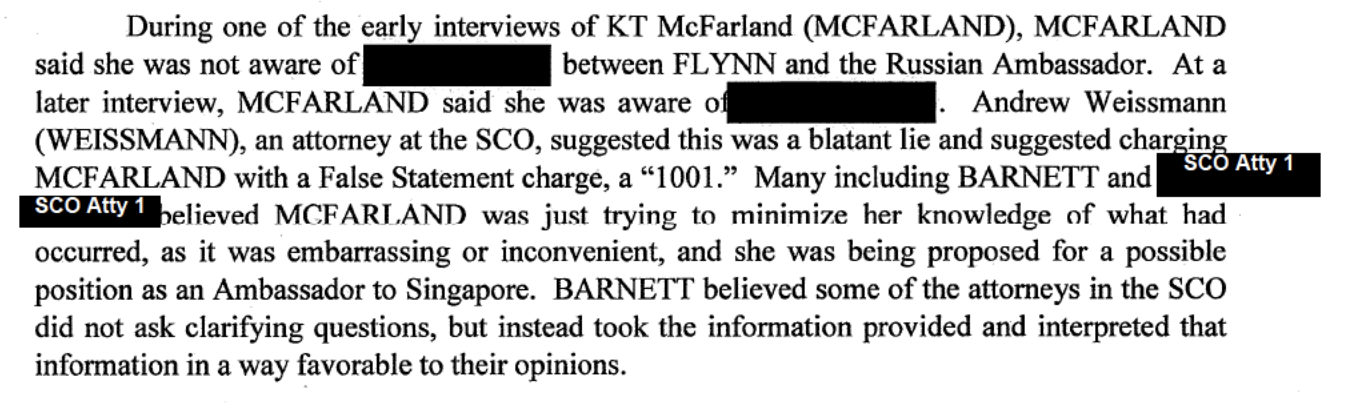
Meanwhile there are at least two Mueller prosecutors whose names are redacted:

The FBI might be excusing this disparate treatment by making a distinction between lawyers who’ve left DOJ and those who haven’t.

Except that raises questions about whether there are unmarked references to Zainab Ahmad who, as the second prosecutor on the Flynn case, should show up in any interview of Barnett’s work with Mueller, but who has also left DOJ (and so would be unredacted if that’s the rule purportedly adopted here).

I have made several inquiries at DOJ for an explanation but gotten no response. But we know that someone at DOJ did these redactions, because Jocelyn Ballantine shared an unredacted copy of the 302 with Flynn’s lawyers, explaining that DOJ would submit the redacted copy to the docket themselves. Ken Kohl, who (multiple people have described) has a history of problematic actions, is the one who actually signed the filing uploading the 302 to the docket.

If I were Ballatine, I’d think very seriously about whether I wanted to remain silent after having witnessed how this 302 was submitted.

The result of redacting Van Grack’s name is that it hides from Judge Sullivan (and Amicus John Gleeson) many complimentary things that Barnett had to say about Van Grack:

DOJ’s star witness purportedly backing its claim that the investigation into Mike Flynn was abusive had a number of good things to say about the prosecutor that purportedly committed some of the abuse. Significantly, DOJ’s star witness, Barnett, claims that Van Grack agreed with Barnett in viewing KT McFarland’s lies in the least incriminating light.

And DOJ redacted Van Grack’s name, thereby obscuring that.

Sidney Powell made a number of allegations about Van Grack on Tuesday, including that Van Grack demanded Mike Flynn lie in the Bijan Kian case, something sharply at odds with Barnett’s claim that Van Grack interpreted McFarland’s answers in the least damning light. And Judge Sullivan asked about the significance of Van Grack’s withdrawal from the case Tuesday, something DOJ dismissed as irrelevant even while they were hiding material details about Van Grack.

So Brandon Van Grack’s conduct is central to the matter before Judge Sullivan. And DOJ is withholding favorable information about Van Grack by redacting his name in this 302, even while relying on the 302 for what DOJ claims is damning information elsewhere.

It would be clear legal misconduct to hide that information, effectively hiding evidence that debunks DOJ’s claims of abuse with a treatment of redactions that is plainly inconsistent with past DOJ practice (including on the release of a 302 discussed in Barnett’s own 302).

And yet that’s what DOJ has done.

DOJ [or Flynn’s Team] Altered an Exhibit in the Mike Flynn Case to Support a False Smear of Joe Biden

As noted, Peter Strzok’s lawyer has confirmed something I laid out earlier: DOJ submitted at least two sets of Strzok’s notes in its effort to blow up the Mike Flynn prosecution that had been altered to add a date that Strzok did not write himself.

This post will lay out why it matters.

I discovered that DOJ [or Flynn’s team] had altered Strzok’s notes because DOJ shared — and Sidney Powell submitted in purported support of her claim of prosecutorial abuse — two sets of those notes.

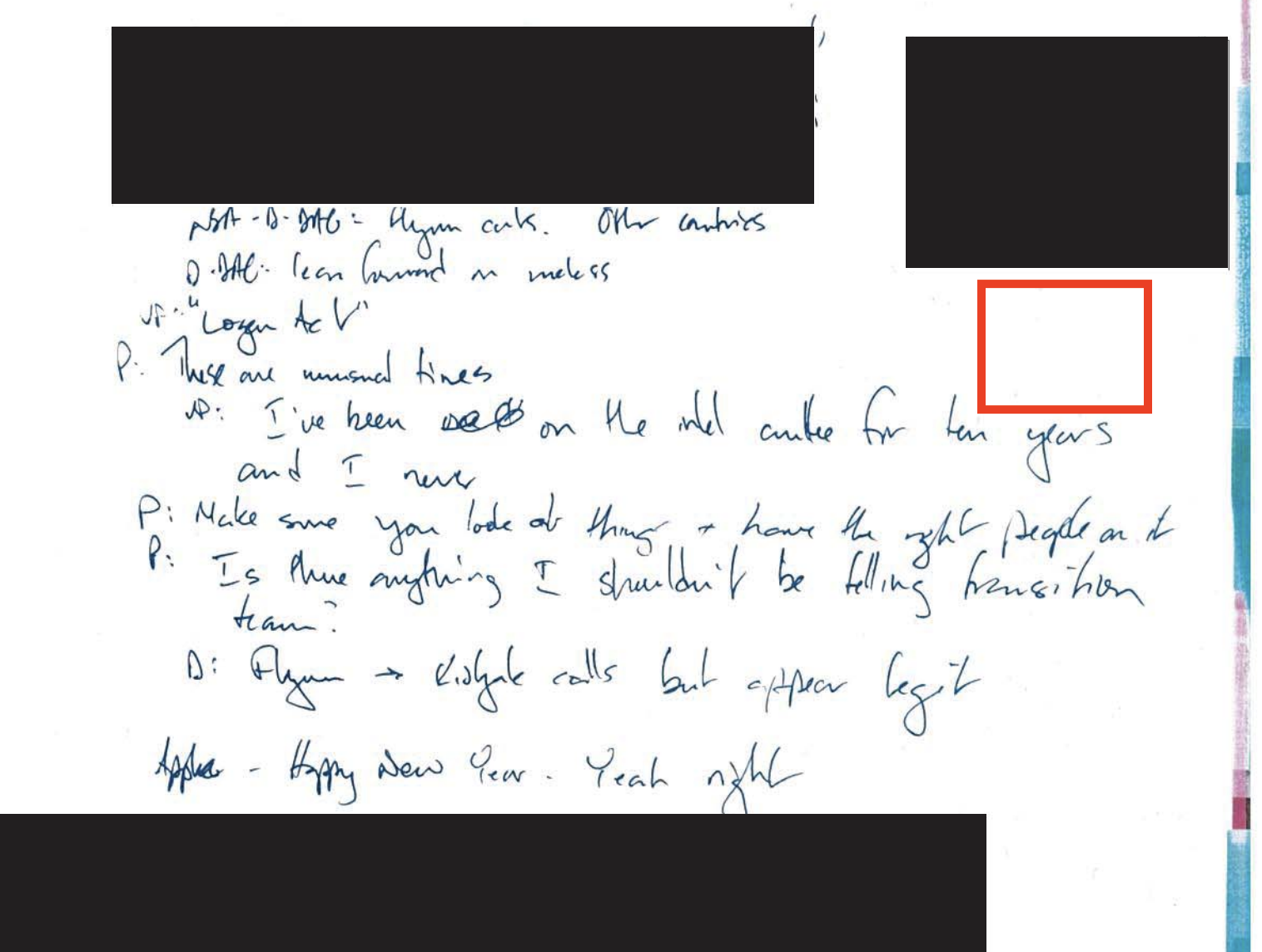
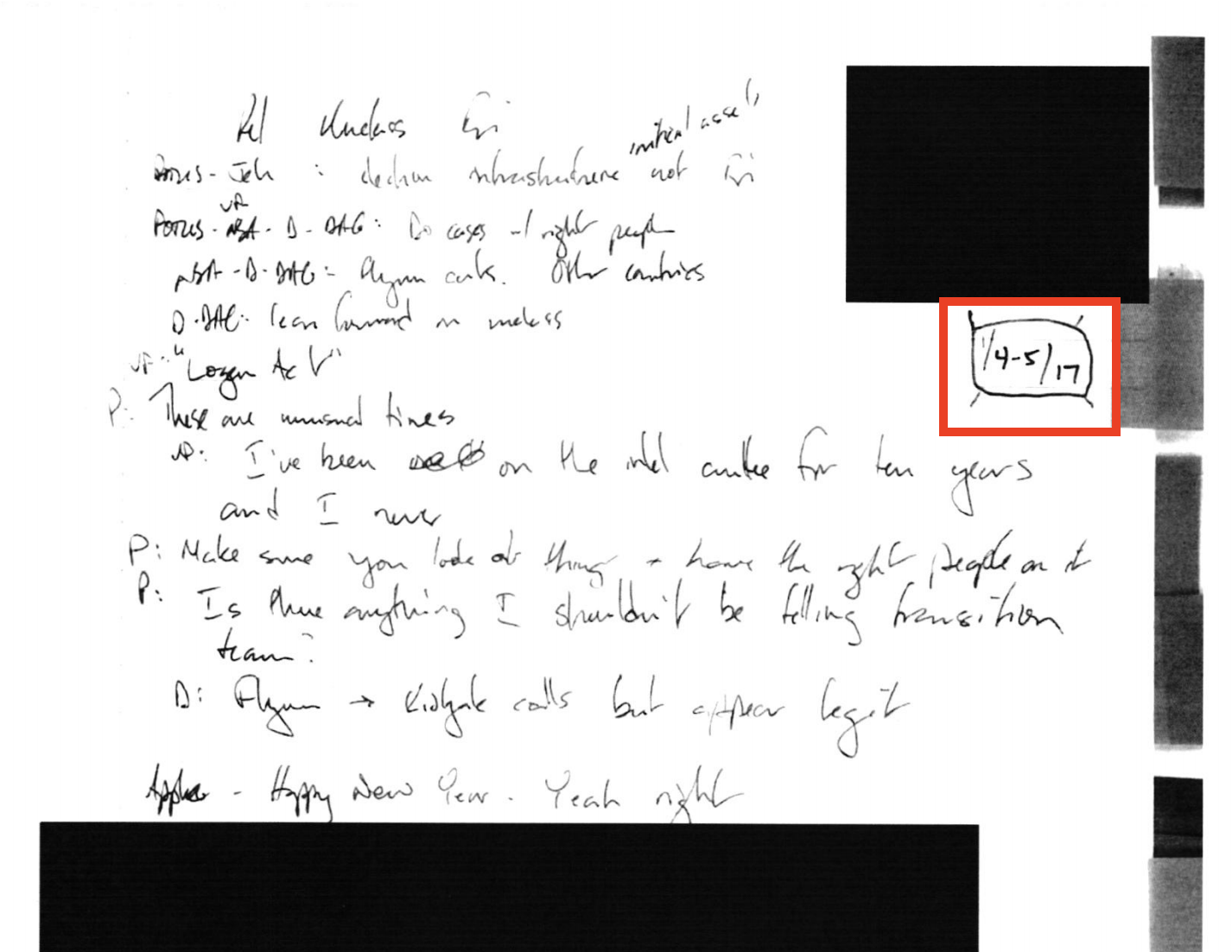
This set, shared on June 23 (the red rectangle is my annotation).

And this set, shared on September 23. Again, my red rectangle shows where DOJ added a date, January 4-5, 2017.

As Strzok’s lawyer, Aitan Goelman, explained that date is wrong.

On at least one occasion, the date added is wrong and could be read to suggest that a meeting at the White House happened before it actually did.

The correct date is January 5, 2017. The notes could not have been written on January 4 because they memorialize a meeting that happened on January 5.

As I demonstrated here, there was never a doubt about the date of the notes. They were written on January 5, 2017, after the meeting in question. The notes clearly match the known details — as laid out in this contemporaneous memo to the file by Susan Rice and elsewhere — of a meeting in the White House, attended by the President, Sally Yates, Joe Biden, Susan Rice, and Jim Comey, regarding what to do about the discovery that Mike Flynn had secretly called up the Russian Ambassador and undermined the sanctions President Obama imposed, in part, to punish the Russians for tampering in our election.

In spite of the fact that there was never a doubt that the notes were from January 5, 2017, when DOJ shared the notes with Powell, they claimed that DOJ was uncertain of their date, and claimed falsely they could have been from January 3, 4, or 5.

This page of notes was taken by former Deputy Assistant Director Peter Strzok. While the page itself is undated; we believe that the notes were taken in early January 2017, possibly between January 3 and January 5.

Then, having been told, falsely, that the date of the notes was uncertain, Sidney Powell claimed they had been written on January 4, and used that to falsely claim that the idea of investigating Mike Flynn under the Logan Act came from Joe Biden.

Strzok’s notes believed to be of January 4, 2017, reveal that former President Obama, James Comey, Sally Yates, Joe Biden, and apparently Susan Rice discussed the transcripts of Flynn’s calls and how to proceed against him. Mr. Obama himself directed that “the right people” investigate General Flynn. This caused former FBI Director Comey to acknowledge the obvious: General Flynn’s phone calls with Ambassador Kislyak “appear legit.” According to Strzok’s notes, it appears that Vice President Biden personally raised the idea of the Logan Act.

Thus far, all DOJ did was falsely claim not to know key details of this investigation, allowing Powell to set off a frenzy designed to impact the election.

But then DOJ [or Flynn’s team] submitted the second version of the notes and Powell submitted them again, claiming they pertained to a March 2017 meeting.

Now, had DOJ told Powell when they shared the altered notes and told Judge Sullivan, by association, when they filed the notice of discovery correspondence (belatedly) last night that these were annotated copies of Strzok’s notes, they would not be at risk of committing the crime of making false statements by altering a record (the same crime Kevin Clinesmith pled guilty to). Had they just explained, “these come from so-and-so’s investigative notebooks and they show that he, the investigator, [falsely] concluded that the notes could be from January 4, 2017 and that’s why poor Sidney Powell made a false, still-uncorrected attack on Joe Biden in a filing before this court,” then this wouldn’t be a problem. I mean, they’d still have to explain why they submitted an altered copy of the notes, rather than just correcting the record before Sullivan. But it would not amount to a false representation that these were — as Ballantine’s letter to Powell claimed they were — “handwritten notes of former Deputy Assistant Director Peter Strzok (23501 & 23503).”

But now it is the case that the record before Sullivan shows that DOJ [or Flynn’s team] submitted these altered notes while claiming that they were Strzok’s hand-written notes (having already submitted proof that the annotation is not part of the original).

It’s not just that — as Goelman explained — the notes, “could be read to suggest that a meeting at the White House happened before it actually did.”

It’s that DOJ already did read the notes to suggest a meeting happened before it actually did. DOJ, and by association, Flynn’s lawyer, already made that false claim. And they did so specifically to support an attack on Presidential candidate Joe Biden.

Update, 9/30: I’ve altered this to reflect that the alterations to the notes could have come from Flynn’s team, which might explain why Sidney Powell was so nasty about Strzok’s lawyer’s letter yesterday.

In Letter Confirming DOJ Altered Peter Strzok’s Notes, His Lawyer Identifies Additional Privacy Act Violations

Among a slew of last minute documents submitted in advance of today’s hearing in the Mike Flynn case, Peter Strzok’s lawyer, Aitan Goelman, confirmed what I laid out here and here: DOJ altered some of the exhibits submitted in their effort to blow up Flynn’s prosecution.

Some of Mr. Strzok’s notes included in this attachment appear to have been altered. On at least two occasions, there were handwritten additions, not written by Mr. Strzok, inserting dates, apparently designed to indicate the date or dates on which the notes were written. On at least one occasion, the date added is wrong and could be read to suggest that a meeting at the White House happened before it actually did.

Goelman included those both altered records pertaining to Strzok (there may be one related to Andrew McCabe as well), including the one that shows someone wanted to implicate Joe Biden in all this.

That may not be the most important thing Goelman established, however.

Among the things DOJ released the other night was yet another version of the Strzok and Lisa Page texts. When she sent them to Flynn’s lawyers, Jocelyn Ballantine admitted the relevant texts had been provided to Flynn in 2018, before he allocuted his guilty plea a second time.

We are also providing you with additional text messages between former DAD Strzok and Lisa Page (23516-23540). As you know, some of these messages were originally made available to Flynn’s former attorneys on March 13, 2018 through a publicly available link to a Senate webpage. On June 24, 2018, the government provided a link to a second website that contained additional text messages. In an abundance of caution, we are providing you additional text messages in this production; please note that purely personal messages have been deleted from this production.

DOJ seems to have re-released the texts in an effort knit together unrelated actions to suggest they all related to Mike Flynn. Among the texts included in this release, purportedly in support of blowing up Mike Flynn’s prosecution, I can identify texts pertaining to:

  • The investigation into Russia’s attack on the US
  • The Mid-Year Exam investigation into Hillary’s server
  • The general Crossfire Hurricane investigation
  • Extensive efforts to ensure the Crossfire Hurricane investigation remained secret
  • Efforts to ensure that Obama officials didn’t politicize the Mike Flynn intercepts
  • Specific Crossfire Hurricane sub-investigations, including substantial threads pertaining to Carter Page and George Papadopoulos
  • The opening of the Jeff Sessions false statements investigation
  • The bureaucratic set-up of the Mueller investigation
  • References to Kevin Clinesmith (and possibly some references to other Kevins)
  • Substantive critiques of Donald Trump (for example, pertaining to his desire to blow up NATO)
  • Discussions of Trump sharing highly classified Israeli intelligence with the Russians
  • Proactive ethical discussions about how to deal with the appointment of Rudolph Contreras, whom Strzok was friends with, to the FISA Court
  • Leak investigations, both into stories pertaining to Flynn or Trump and stories not related to Trump
  • Unrelated FISA applications
  • 702 reauthorization
  • Apparently unrelated cases, including things like CFIUS reviews

There are long swaths with half the side of the conversation left out, hiding what are clear changes of topic.

Then there are personal details, like talks about showers and anniversaries, as well as some emotional chatter and one declaration of love.

That makes Ballantine’s claim that, “purely personal messages have been deleted from this production,” utterly damning, particularly given the timing, September 23, and the fact that unlike past productions, this was not noticed to the docket in real time.

“Did your anniversary go ok? I don’t really want a lot of deta[]” is by any sane measure a purely personal message. It was not deleted or redacted from this production.

What DOJ decided to do, just days before a decision in the parallel lawsuits Strzok and Page have against DOJ alleging a violation of the Privacy Act for the release of personal information, was to release more personal information, information that had — in the past, under an earlier purported ethics review of what was releasable — been deemed personal information.

DOJ knit together a bunch of texts that DOJ admits were already public before Flynn allocuted his guilty plea a second time, but threw in yet more personal texts.

And then, on September 25, Amy Berman Jackson ruled that Page and Strzok should both get discovery to prove their Privacy Act (and in Strzok’s case, other claims) cases. That makes all of this — all the decisions that led up to to the release of these texts — discoverable in what I assume will be an expanded Privacy Act lawsuit.

It’s unclear what malicious thinking led DOJ to include more texts attempting to humiliate Strzok and Page (even while providing a slew of other information making it clear that Strzok did not have it in for Flynn). But they just likely made this entire process subject to discovery in a lawsuit overseen by Amy Berman Jackson.

Sidney Powell Accuses William Barnett of Committing “Outrageous, Deliberate Misconduct” and Kenneth Kohl Hides Evidence that Brandon Van Grack Did Not

I want to pause for a moment and look at the maneuvers that Billy Barr pulled last night to try to substantiate a reason to blow up the Mike Flynn case.

First, on Wednesday, the less crazy attorneys on Mike Flynn’s team, William Hodes and Lindsay McKesson, moved to withdraw. It’s an awfully weird time for lawyers to withdraw from a case, unless they’re trying to leave town before the shit starts hitting the fan.

Unless I’m missing something, Sullivan has not approved their motion.

Then, last night, Sidney Powell submitted a memo with a bunch of exhibits, every single one of which have Bates stamps reflecting these are SCO documents:

Exhibit A:

Exhibit B:

Exhibit C:

Exhibit D:

Exhibit E:

That means that Mueller team members involved in Flynn’s case would have had access to these documents.

In her memo, Powell argues that the exhibits “establish[] misconduct” and are proof of Brady violations. She emphasizes that these documents were “long concealed by the Special Counsel and FBI.”

On May 7, 2020, the Government moved to dismiss with prejudice the prosecution of General Flynn. ECF No. 198. Until this case is dismissed with prejudice, the Government has a continuing obligation to provide to the defense all evidence that is exculpatory of General Flynn, establishes misconduct by the Government in its many capacities that contributed to this wrongful prosecution, or otherwise is favorable to the defense. Brady v. Maryland, 373 U.S. 83 (1963). The defense has a continuing obligation to make a record that mandates this dismissal— especially in view of this court’s unprecedented procedures and position.

[snip]

These documents provide information long known to the agents and others at the highest levels of the Department of Justice and the FBI; information long concealed by the Special Counsel and FBI. This evidence shows outrageous, deliberate misconduct by FBI and DOJ—playing games with the life of a national hero.

Then, later in the night, DOJ released a 302 memorializing a recent interview with William Barnett which I showed  was a self-contradictory shitshow. In the accompanying memo, Kenneth Kohl, Acting Principal Assistant US Attorney in DC, noted that Barnett, “handled the counterintelligence investigation of Mr. Flynn, and was thereafter assigned to the Special Counsel’s Office.”

Pursuant to that continuing review, an interview was recently conducted of the former case agent, SA William Barnett, who handled the counterintelligence investigation of Mr. Flynn, and was thereafter assigned to the Special Counsel’s Office investigating Russian interference in the 2016 Presidential Election.

Which is to say that yesterday, Sidney Powell submitted a brief arguing that William Barnett — her new star witness — engaged in “outrageous, deliberate misconduct,” and then later in the day, DOJ submitted a contradiction-riddled interview with that Agent that Powell had earlier accused of engaging in “outrageous, deliberate misconduct.”

Things get stranger.

In her filing, Powell claims that she has included Exhibits D and C as proof that Flynn satisfied the registration obligation.

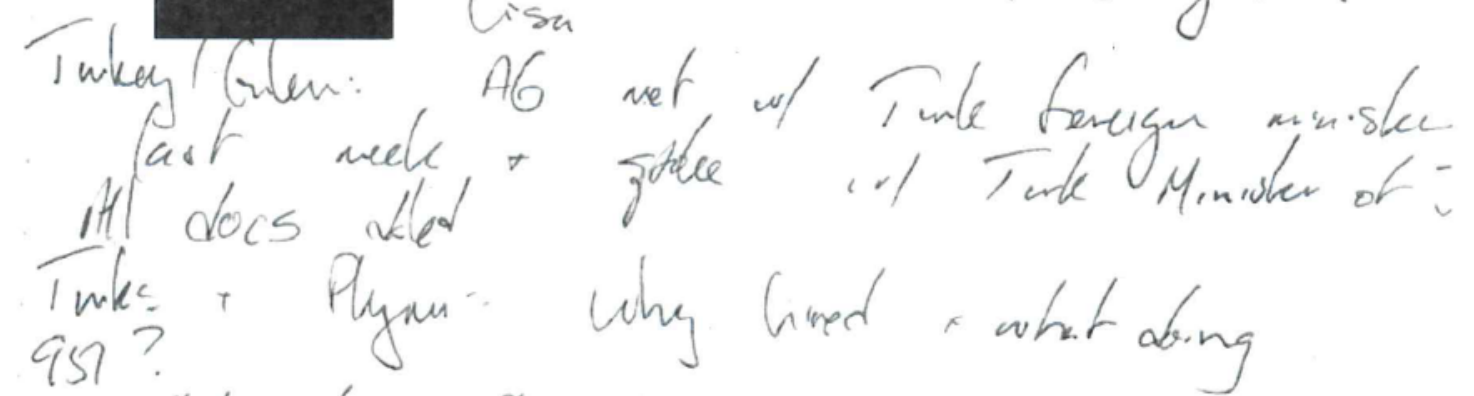
Newly produced notes of Peter Strzok show: Strzok met with Bruce Schwartz, Lisa, and George at DOJ on March 28, 2017, where he noted Flynn Intel Group “satisfied the registration obligation” and “no evidence of any willfulness.” Nonetheless, “Bruce” decided to issue subpoenas to Flynn Intel Group “and more.” Exhibits C, D.

Exhibit D seems to show something dramatically different. It seems to show that the AG (that is, Jeff Sessions) met with Turkish Ministers and tried to vouch for Flynn about the secret work that Turkey was doing.

It seems odd to go to the guys who were hoping to keep their relationship with Flynn secret to ask them whether it was secret. Moreover, if they’re the ones vouching for it — and not Flynn’s cut-out, Ekim Alptekin — it would seem to suggest Flynn was working for Turkey, which is what he testified to under oath but not what he wrote on his delayed FARA filing. If so, this doesn’t help Flynn at all. It only serves to hurt him.

Things get stranger still.

Contrary to Powell’s claim, Exhibit C has nothing to do with Turkey. Instead, it’s a set of Peter Strzok’s notes from Jim Comey’s debrief of a meeting at the White House on January 5, 2017.


We’ve seen these notes before. They are a copy of notes submitted in June (which also have a — different — SCO Bates stamp on them, indicating that Barnett, the man Powell has accused of “outrageous, deliberate misconduct,” had access to those too).


The primary difference, aside from DOJ’s decision to newly release notes indicating that President Obama said to put the right people on this, is that the version submitted last night, the version that Powell claims to be about a March 28, 2017 meeting on Turkey is dated, “1/4-5/17.”

When Powell submitted the notes in June, she said they were proof that Vice President Biden “personally raised the idea of the Logan Act.”

Strzok’s notes believed to be of January 4, 2017, reveal that former President Obama, James Comey, Sally Yates, Joe Biden, and apparently Susan Rice discussed the transcripts of Flynn’s calls and how to proceed against him. Mr. Obama himself directed that “the right people” investigate General Flynn. This caused former FBI Director Comey to acknowledge the obvious: General Flynn’s phone calls with Ambassador Kislyak “appear legit.” According to Strzok’s notes, it appears that Vice President Biden personally raised the idea of the Logan Act.

I noted then that there was no question about date the notes were written, because they obviously describe a meeting that multiple documents (including one that has been public since February 2018, long before Flynn allocuted his guilt a second time) make clear happened on January 5, 2017. Nevertheless, Powell claimed (and set off a predictable resulting frenzy, which was probably the point) that they were proof that Biden had it in for Mike Flynn.

Now, normally, when you make an accusation to a court that later gets debunked, you make a filing with the court admitting you were wrong. In this case, Powell would have also had to admit that anyone who believed these notes were from January 3 — as Jeffrey Jensen had suggested they might be — provably knew fuckall about what he was looking at.

But if Powell were to do that, she’d be admitting that Jensen doesn’t know fuckall about what he is investigating on the same day she accused Barnett to have engaged in “outrageous, deliberate misconduct.” So instead, Powell just slipped the exhibit in with her filing without calling attention to her prior false claims.

But wait. Things get still stranger.

Finally, Kohl submitted the 302 with redactions of the name of an “SCO Atty 1.” Now, it has been the standing rule in DOJ that the AUSAs who worked for Mueller are public. That way Trump can rant about their political leanings at rallies.

Last night, for the first time ever, DOJ has decided that these attorneys are not senior enough to have their names released.

Several of those redactions of “SCO Atty 1’s” name, however, make it clear that the person has a two part last name, one that wraps at the end of a line.

Just one of Mueller’s attorneys has such a name (Adam Jed is the only one whose last name is short enough to fit in the first part of those redactions). That attorney is Brandon Van Grack. Indeed, the 302 from an interview that Barnett discussed in his interview makes it clear that Van Grack was the one Barnett is working with. So along with submitting proof that Barnett engaged in “outrageous, deliberate misconduct” as well as providing proof that Jensen led others to make a material misrepresentation to Emmet Sullivan, Kohl just submitted proof that Van Grack routinely took the side of Barnett. And that he, Kohl, was hiding that.

Call me crazy, but John Gleeson can just look at yesterday’s filings to show that Sidney Powell and Kenneth Kohl are accusing each other and Jeffrey Jensen of misconduct, at the same time that they’re hiding evidence that Van Grack did not engage in misconduct. That’s the the kind of misconduct that Emmet Sullivan might use to justify refusing to dismiss the prosecution.

Update: It’s not really clear whether the Bates reflects documents obtained by SCO or those investigating SCO. If it’s the latter, it raises real questions about whether Strzok’s notes are one or two copies.