Posts

The Jerome Powell Clusterfuck Is a Clusterfuck of Pam Bondi’s Own Making

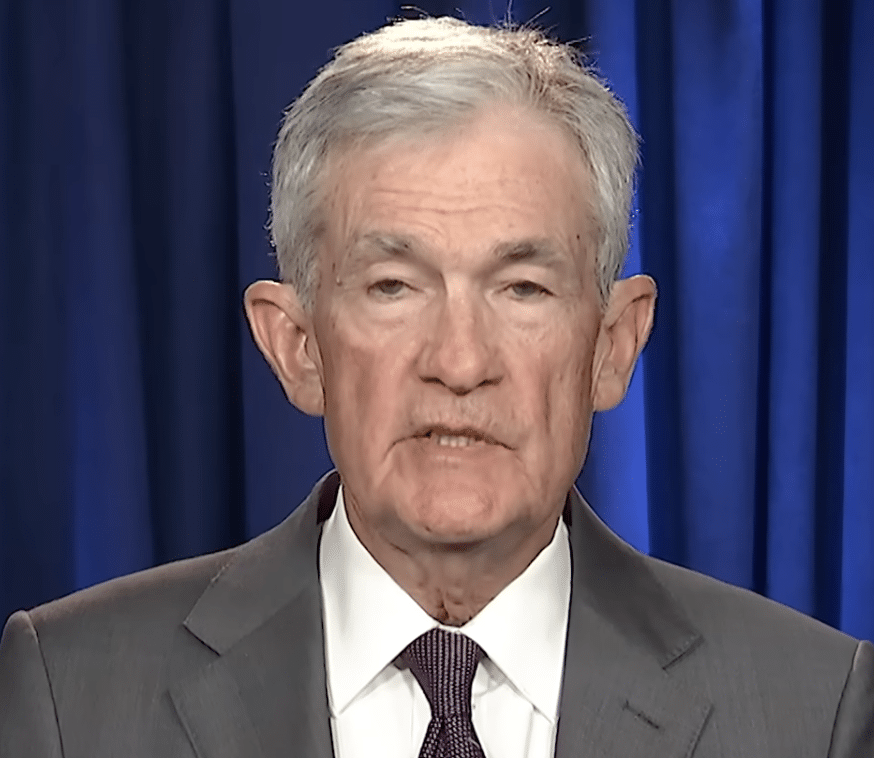
On Sunday, the politically astute Fed Chair Jerome Powell posted a video describing subpoenas he received on Friday, which he claimed (credibly) were part of an effort to attack the independence of the Fed.

This new threat is not about my testimony last June or about the renovation of the Federal Reserve buildings. It is not about Congress’s oversight role; the Fed through testimony and other public disclosures made every effort to keep Congress informed about the renovation project. Those are pretexts. The threat of criminal charges is a consequence of the Federal Reserve setting interest rates based on our best assessment of what will serve the public, rather than following the preferences of the President.

This is about whether the Fed will be able to continue to set interest rates based on evidence and economic conditions—or whether instead monetary policy will be directed by political pressure or intimidation.

The statement (and what has since been reported as a good deal of political maneuvering) set off a number of counterreactions that could prove really costly to Trump — and the United States as a whole.

While financial markets recovered from their initial shock by the end of the day (but not before gold hit a new record price), that may only continue as the political pushback continues.

Not all the markets were impervious to Powell’s harassment by DOJ goons. The dollar, which is down 8.3 percent over the past year—that is, more or less since Trump took office—dropped steeply Monday morning before rising a bit in the afternoon. The yield on 30-year Treasury bonds, which has been rising since October, spiked Monday morning. That’s a sign that fewer people wish to buy them. Why purchase dollars or Treasury bonds when the president is so determined to lower their value that he’s willing to throw the Fed chair, who’s been lowering interest rates lately but not fast enough to suit Trump, in jail? Over the course of the afternoon, however, bond yields fell, leaving them about where they closed Friday.

Gold, meanwhile, jumped nearly 3 percent. As I’ve explained previously, the rising price of gold is the surest sign that the United States economy is headed in a terrible direction. It’s a vote of no-confidence in the dollar. As I explained in October, investors call rising gold prices “debasement trade,” which means money is fleeing from assets in which the market is losing faith—in this case, the dollar and Treasury bonds. The higher the price of gold rises, the more debased our currency and our nation’s debt become.

More problematic for Trump, a number of Republican members of Congress — starting with some of the usual rebels, like Thom Tillis and Lisa Murkowski (who described in a Tweet that she had spoken with Powell)…

Sen. Thom Tillis, R-N.C., said Sunday he will block any Trump appointees to the central bank, including for the new chair, in light of revelations over the weekend that the Justice Department is investigating Powell for potential perjury charges.

“If there were any remaining doubt whether advisers within the Trump Administration are actively pushing to end the independence of the Federal Reserve, there should now be none. It is now the independence and credibility of the Department of Justice that are in question,” Tillis said in a statement.

“I will oppose the confirmation of any nominee for the Fed — including the upcoming Fed Chair vacancy — until this legal matter is fully resolved,” he added.

… But extending t0 loyalists like French Hill, John Thune, and John Kennedy — complained about the disruption caused by the news, including to a crypto bill Congress has long been chasing.

inancial Services Chair French Hill, who called Powell a “man of integrity” and said the investigation threatened “sound monetary policy decisions.” Senate Majority Leader John Thune, meanwhile, called for the probe to be “resolved quickly.”

“I want to see [the Fed] operate in an independent way free of politics,” he added.

[snip]

While Sen. Kevin Cramer (R-N.D.) called Powell a “bad” Fed chair, he added, “I do not believe, however, that he is a criminal.”

Sen. John Kennedy (R-La.), a Banking Committee member, said if administration officials thought Powell had committed perjury, then they needed to back up the accusations. He added, “I would be stunned if he had done anything wrong.”

“We need this like we need a hole to the head,” Kennedy said, warning of a possible spike in interest rates as markets lose faith in Fed independence.

Meanwhile, Scott Bessent — who has managed to stave off a great deal of stupidity worse than his own in the last year — worried not just about the effect this would have on the markets, but on his ability to stack the Fed with people who wouldn’t be independent.

A perturbed Treasury Secretary Scott Bessent told President Trump late Sunday that the federal investigation into the Federal Reserve chair “made a mess” and could be bad for financial markets, two sources familiar with the call told Axios.

Why it matters: Bessent’s worries about the financial fallout were somewhat realized Monday, when the dollar dropped as bond yields and the price of gold rose amid worries about political interference in the Fed.

“The secretary isn’t happy, and he let the president know,” one source familiar with Bessent’s call to Trump told Axios.

That is, Pirro’s investigation of Powell may threaten precisely the purpose that she — or whoever’s brilliant idea all this was — thought she’d serve, giving Trump more power over the Fed.

Meanwhile, bankers the world over are backing Powell.

As I keep saying, Donald J. Trump has done a piss-poor job in choosing his political martyrs this term.

And all that’s before you consider how Powell’s statement will add to Lisa Cook’s credibility before the Supreme Court next week, when she claims her purported firing was an attempt to destroy the independence of the Fed. The entire exception for the Fed SCOTUS created served to protect Powell, and now he’s under the same threat Cook is.

So everyone is denying all responsibility.

Privately, some White House officials see the episode as radioactive, with aides and allies eager to distance themselves from a probe they believe could do more damage to the White House than to Powell. One of the five people familiar said some inside and close to the White House are “freaked out” that a further threat to the Fed chief’s job security could spook the bond market.

How this happened deserves closer attention.

WaPo describes that Bill Pulte — who has had it in for Powell for months (in part because Pulte is not very good at his own job running FHFA, and so imagines low interest rates will make his own failures less acute) — wanted to precipitate such an investigation, but did not.

Housing finance regulator Bill Pulte met recently with President Donald Trump at Mar-a-Lago and shared a prop resembling a “wanted poster” he had made up featuring Federal Reserve Chair Jerome H. Powell, according to a person with knowledge of the meeting.

Pulte laid out scenarios that included investigating Powell and Trump liked the idea, the person said.

It’s not clear how the inquiry into Powell was approved, but an official with the Justice Department said it launched a criminal probe into Powell in November and Pulte was not a factor in the inquiry. The extraordinary investigation of a sitting Fed chairman was disclosed by Powell himself late Sunday.

[snip]

By the time Pulte met with Trump, the U.S. attorney’s office in D.C. had already launched an investigation, according to a person briefed on the situation.

Meanwhile, Anna Paulina Luna, who has been cozying up to one and another Russian handler of late, is claiming credit.
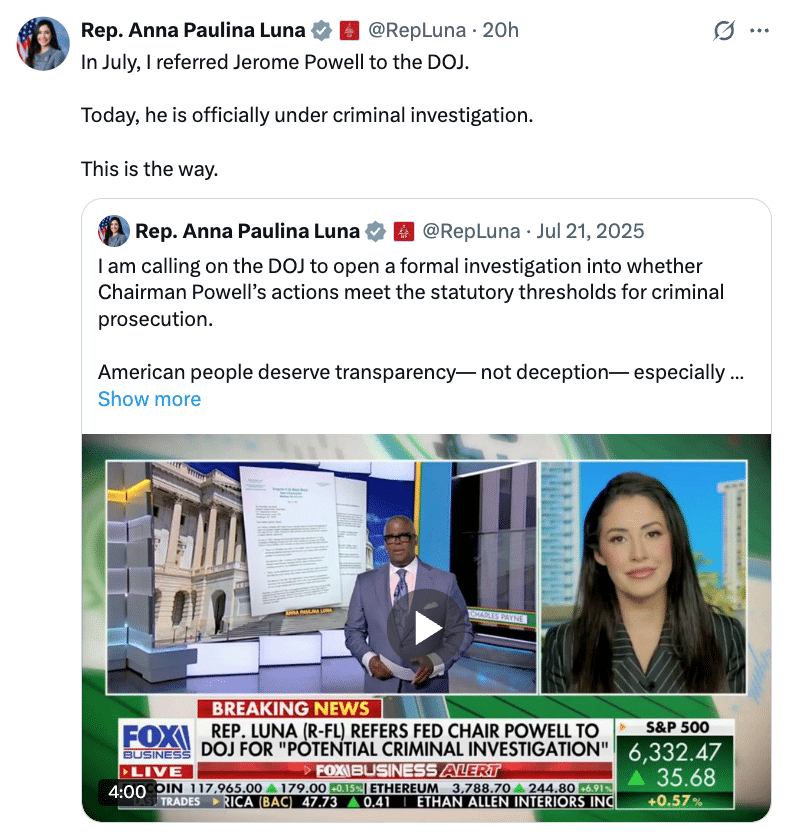
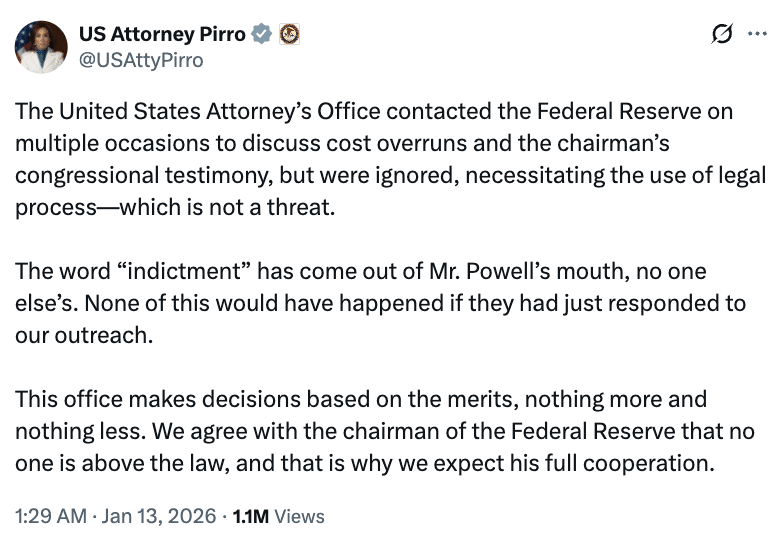
Jeanine Pirro posted a defensive tweet yesterday, attacking Powell because he didn’t respond to prosecutors’ bullshit questions without a subpoena, which is within his right.
Someone at DOJ threw Pirro under the bus to Marc Caputo.

U.S. Attorney Jeanine Pirro’s office in D.C. launched the probe without giving a heads-up to Treasury, top White House officials or the main Justice Department, sources told Axios.

[snip]

A DOJ spokesperson said the department doesn’t comment on investigations, but an administration source said Pirro “went rogue.”

The effort to blame Pirro for this tremendous own goal comes in the wake of a WSJ article describing that Trump is bitching about his Attorney General, though his complaints suggest he might well support the criminal investigation of Powell, especially given that he doubled down on his complaints against the Fed Chair yesteday.

President Trump has complained to aides repeatedly in recent weeks about Attorney General Pam Bondi, describing her as weak and an ineffective enforcer of his agenda, administration officials and other people familiar with his complaints said.

The criticisms appear to be part of an intense campaign by Trump to pressure the Justice Department to more aggressively pursue his priorities, some of the officials said. Trump has previously criticized Bondi at times but his vocal concerns about his attorney general have grown more frequent in recent months, officials said.

A clusterfuck, the White House needs someone to blame, and they’re pointing to DOJ.

And yet, this clusterfuck is a clusterfuck of Pam Bondi’s own making.

In a normal DOJ, there’s an established non-political body that would vet an investigation like this one, Public Integrity. At the very least they would ensure the integrity of the inquiry and flag the investigation for necessary approvals. If we can believe those accusing Pirro of free-lancing, that didn’t happen.

But Pam Bondi destroyed that function last May.

To protect against politically motivated abuses, the DOJ’s Justice Manual has long required prosecutors in local U.S. attorneys’ offices to consult with the Public Integrity Section on any “federal criminal matter that involves alleged or suspected violations of federal or state campaign financing laws, federal patronage crimes, or corruption of the election process.”

But Trump’s DOJ reversed that policy in June. “Department leadership is currently revising this section,” this part of the Justice Manual now says. “The consultation requirement is suspended while revisions are ongoing.”

Several former Justice Department employees expressed extreme concern that the change in the Justice Manual, coupled with the flattening of the Public Integrity Section, opens the door for the Trump administration to engage in partisan prosecutions of Democrats by assigning the job to prosecutors working for U.S. attorneys — political appointees nominated by the president.

[snip]

But with so few lawyers left to consult, former members of the team say those consultation requirements are essentially meaningless.

“In a stripped-down office, the consulting function becomes nominal, if it exists at all. It sort of exists on paper so the government can say it exists and claim to be complying with the law,” said Michael Romano, a former prosecutor on the team. “But if you want people to provide legitimate oversight, guidance and expertise, you can’t do that with a team of two. In reality, the advising function becomes a box-checking exercise.”

Sure, they destroyed PIN precisely so they could predicate investigations into Trump’s enemies more easily.

This was entirely the point.

And now the entire Trump Administration is panicking about the results.

Update: More Pirro underbussing from the NYT.

Ms. Pirro also did not share information with her bosses at the main headquarters of the Justice Department — including Attorney General Pam Bondi and her top deputy, Todd Blanche — citing the discretion granted local U.S. attorneys’ offices to investigate the head of the most powerful monetary policy body on earth, according to several officials with knowledge of her actions.

Senior officials at the department were stunned, and annoyed, that Ms. Pirro did not consult them on an investigation of such international importance, the officials with knowledge of her actions said.

The Diminishable Returns of MAGAt Mobs

Thom Tillis has made a lukewarm announcement making it clear he would not vote to confirm Eagle Ed Martin to be US Attorney for DC.

Sen. Thom Tillis (R-North Carolina) said he informed the White House that he opposed naming Trump’s interim appointee to a full four-year term.

“If Mr. Martin were being put forth as a U.S. attorney for any district except the district where Jan. 6 happened, the protest happened, I’d probably support him,” Tillis, who is up for reelection next year, told reporters. “But not in this district.”

[snip]

“We have to be very, very clear that what happened on January the 6th was wrong. It was not prompted or created by other people to put those people in trouble. They made a stupid decision, and they disgraced the United States by absolutely destroying the Capitol,” Tillis told reporters. “There were some people that were over-prosecuted, but there were some two or three hundred of them that should have never gotten a pardon, and he [Martin] agreed with that.”

There’s wiggle room here. Tillis suggested he would vote for Martin in some other district — perhaps his native Missouri (where Trump nominated a slate of nutjob judicial appointees yesterday). One of Martin’s little hobbies has been to pester medical journals at RFK Jr’s behest to suggest science is an impermissible bias, and there is no more jurisdiction in DC for such things than in Missouri.

And while Chuck Grassley has made it clear he won’t call Martin up for a vote unless he knows it’ll pass, he has also suggested the nomination might not be dead (Lisa Murkowski is a likely no vote; it’s unclear if there are four no votes if the full Senate got the nomination).

In response the MAGAt mob has done what the MAGAt mob does best: froth and threaten. Some have started conspiracy theories suggesting that Tillis’ opposition stems from something other than the insurrection, such as corrupt real estate deals. Others have called to replace Tillis on the Senate Judiciary Committee.

Perhaps the most interesting response is a call to have Lara Trump, who is originally from North Carolina, primary Tillis next year.

It’s never a good idea to underestimate the cowardice of elected Republicans. If Tillis holds out until May 20, thought, Trump either needs to replace Martin (some have suggested he should simply replace Martin with Matt Gaetz, which honestly wouldn’t be a horrible trade — that’s how shitty Martin is), or the judges in the DC District will name someone to serve in the interim.

But if Tillis does hold out, particularly if he holds out in the face of primary threats, it will neutralize a lot of the power of these mobs (some of which, led by Laura Loomer, are increasingly focused on internecine fights).

The MAGAt mob only has power so long as Trump can offer the target something of value. If the response here is to make reelection impossible (or to give Tillis the kind of distance from Trump that might be useful in a swing state), then the target in question would be liberated to act on conscience. For example, Tillis could start to honor the needs of the many service members in North Carolina rather than carry water for Trump’s disastrous Secretary of Defense.

It’s still far too early to declare Martin’s nomination to be dead. But one way or another, Tillis’ public opposition to Martin may create space in the Senate that thus far doesn’t exist.

Andrew McCabe Delays Testimony to SJC, Calling In-Person Testimony a “Grave Safety Risk”

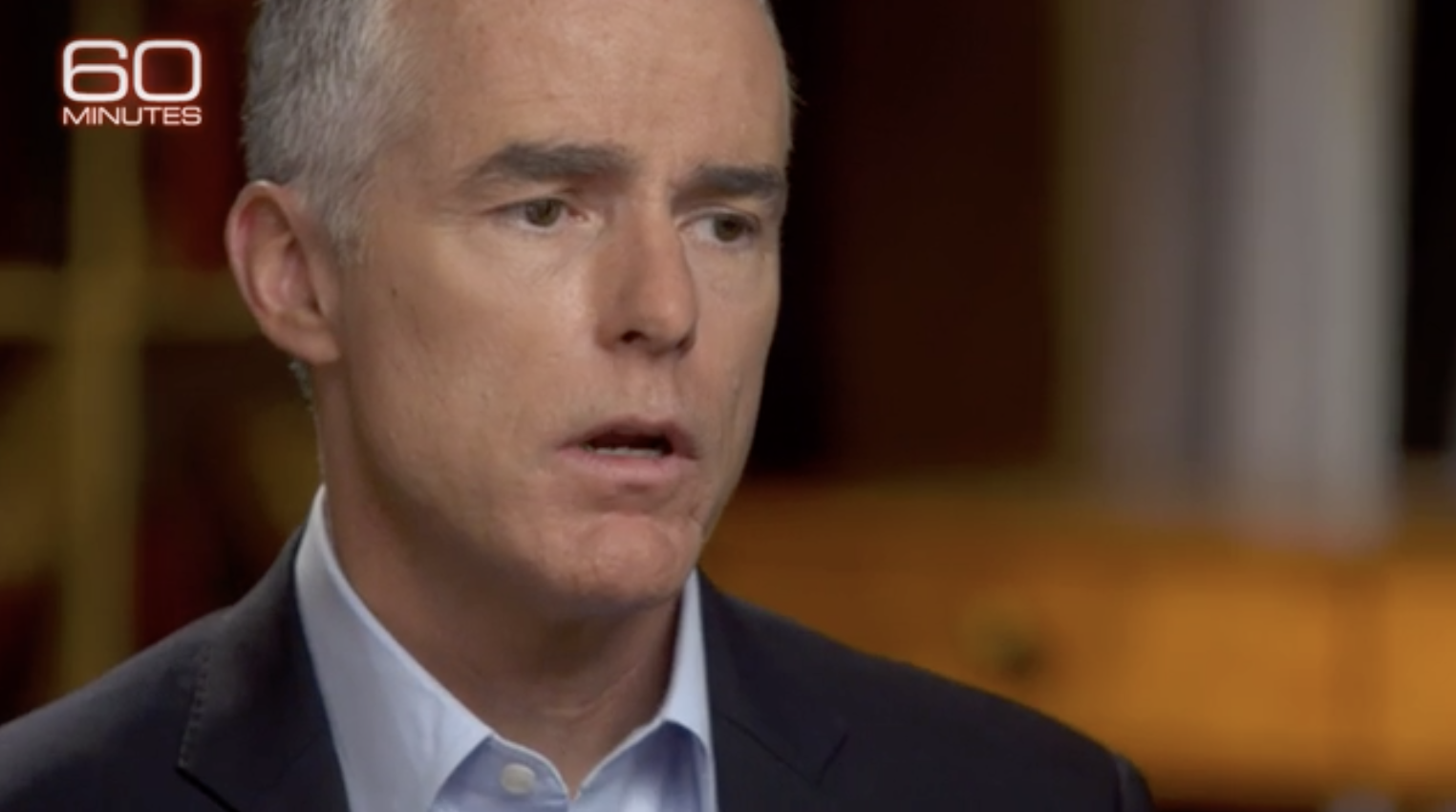
Virtually every book about the FBI or the Mueller investigation that has come out in recent years has described that Andrew McCabe is a superb briefer — meaning, in part, he can present complex issues to a hostile audience clearly. That’s why the reason his attorney, Michael Bromwich, gave for delaying testimony that was scheduled makes a lot of sense.

As a letter Bromwich sent to Lindsey Graham laid out, McCabe agreed to a voluntary interview in September, provided a series of conditions were met. One — that McCabe have access to his unclassified calendars and notes — has already been thwarted by DOJ, which refused to turn them over (as Bromwich laid out in a letter to Michael Horowitz last week, after inventing reasons not to share the materials that might make McCabe’s testimony more useful, FBI admitted they wouldn’t turn them over because of McCabe’s lawsuit against the Bureau).

But another of the conditions was that the testimony be in person. Bromwich noted that Republicans spoke over both Sally Yates and Jim Comey when they earlier testified remotely. “[A] witness answering questions remotely via videoconference is at a distinct disadvantage in answering those questions,” Bromwich wrote. “A fair and appropriate hearing of this kind – which is complex and contentious – simply cannot be conducted other than in person.”

But the COVID outbreak among those who attended the Federalist Society super-spreader event last weekend has made such in-person testimony too dangerous.

Mr. McCabe was still prepared to testify voluntarily and in person on October 6 as recently as the latter part of this past week. However, since that time, it has been reported that at least two members of your Committee – Senators Mike Lee and Thom Tillis – have tested positive for Covid-19, and it may well be that other members of the Committee and staff who plan to attend the hearing will test positive between now and then, or may have been exposed to the virus and may be a carrier. Under these circumstances, an in-person hearing carries grave safety risks to Mr. McCabe, me, and senators and staff who would attend.

McCabe is not wrong. There’s abundant reason to distrust Lindsey Graham’s claimed negative test. Mike Lee was haranguing publicly at several public events last week before he was diagnosed. And Chuck Grassley (who has far more mask discipline than his colleagues, but who was unmasked for part of the Comey hearing last week) refuses to be tested.

Still, it’s crazy that SJC has become too dangerous for a regular oversight hearing, but Lindsey still plans to push on with the Supreme Court confirmation process that caused that COVID outbreak.

Pat Cipollone Believes the Golden Rule Is for Chumps

The question and answer phrase of the Senate trial is far more interesting than the presentation of the cases. Both parties are obviously feeding their own side questions to rebut the other, or posing questions they think will make the other stumble (Chief Justice John Roberts has reportedly censored only one kind of question: any question that probes for the whistleblower’s name).

Later last night, the questioning became interesting for the whip count. There were a couple of questions posed by large numbers of Senators on record supporting Trump, including vulnerable swing state Senators like Martha McSally, Thom Tillis, and Cory Gardner, and it was interesting to see who else jumped on questions that obviously served only to suck up to Trump.

Over the course of several questions, there was a discussion on whether Roberts could rule on the appropriateness of witnesses or Executive Privilege. Pat Philbin argued that he could not, on EP (contrary to the rules), in response to which Schiff came back and said he could. Schiff argued that the Democrats would accept Roberts’ views without challenge. Jay Sekulow piped in to say Republicans would not. I keep thinking about how Roberts will be ruling on some of these issues on other appeals, and I think Schiff is playing to him on some questions as much as to the Senate.

Questions being asked by leaners (people like Lisa Murkowski and Susan Collins, who have asked a number together, though it seems like Mitt Romney went from leaning to supporting questions) are of particular interest. At one point, Collins asked why the House didn’t include bribery in its articles. Hakeem Jeffries gave an answer that Collins visibly responded to by saying, “he didn’t answer my question,” but Schiff came in shortly after and did answer it, pointing out that all the elements of bribery are included in the abuse of power article. Collins also asked the President’s lawyers what Trump had done on corruption in Ukraine prior to last year, which Philbin didn’t answer and then, when the question was re-asked by Democrats, said he couldn’t answer because it’s not in the record (though he has relied on non-public information elsewhere).

Then there are the alarming answers. Alan Dershowitz was asked, after he argued that if the President thought something that benefitted him personally was good for the country, whether that extended to nuking democratic states because he believed his reelection was good for the country and he agreed in theory.

Pat Philbin answered a question about whether it was okay to accept dirt to win an election. He said it was.

I was most interested, however, in a response Sekulow gave to a question offered by Marco Rubio and others, people who presumably were just feeding softballs to strengthen the President’s argument. They referenced a claimed principle espoused by Dersh and Sekulow, wherein you should always imagine how it would feel if the other party were impeaching a president of your party on the same fact set, which was originally a way to excuse Dersh’s flip-flop on abuse of power and impeachment. Rubio and others asked where the limiting factors on this would be — basically an invitation to repeat what Trump’s lawyers have said in the past, that you shouldn’t impeach within a year of an election or some such thing. Except Sekulow would not offer general principles. Instead of referencing the election — the right answer to the softball question — he focused on the claimed uniqueness of this impeachment (which is bullshit in any case). In other words, given an opportunity to answer a question about principles that would adhere beyond this impeachment, Sekulow answered that his Golden Rule only applies ot this impeachment.

The Arpaio Pardon — Don’t Obsess about the Russian Investigation

It seems there are two likely responses to the Arpaio pardon: to use it as a teaching opportunity about race, or to use it to panic about the Russian investigation.

I’m seeing far too many people choosing the latter option, focusing on what Trump’s pardon of Joe Arpaio might do for the Russian investigation. That, in spite of the fact that Trump has already spoken openly of pardoning Mike Flynn, just like he did of Arpaio, to say nothing of his spawn or the father of his grandchildren.

The targets of the Russian investigation already know Trump can and is considering pardoning them.

But a pardon of them — at least some of them — is a very different thing than an Arpaio pardon. That’s because, for some of the crimes in question, in case of a pardon, Robert Mueller could just share the evidence with a state (usually NY) or NYC prosecutor for prosecution. It’s possible that accepting a pardon for Trump or Kushner business related crimes could expose those businesses to lawsuit, and both family’s businesses are pretty heavily in debt now.

Most importantly, a Paul Manafort or Mike Flynn pardon would deprive them of their ability to invoke the Fifth Amendment, meaning they could more easily be forced to testify against Trump, including to Congress.

Presidents implicated in crimes have used a variety of means to silence witnesses who could implicate them, but Poppy Bush’s Cap Weinberger pardon — the most recent example of a President pardoning a witness who could incriminate him — was not the primary thing that protected Poppy and Reagan, Congress’ immunization of witnesses was. Thus far, most Republicans in Congress seem determined to avoid such assistance, and Trump’s attacks on Mitch McConnell and Thom Tillis for not sufficiently protecting him probably have only exacerbated the problem.

I wrote a piece explaining why (in my opinion) George W Bush commuted Scooter Libby’s sentence, but never pardoned him: it kept Libby silent without adding any personal risk. If Trump were competent, he’d be making similar calculations about how to keep witnesses out of prison without making it easier to incriminate him. But he’s usually not competent, and so may fuck this up royally.

In any case, given that some Republicans (including both Arizona’s Senators) have made lukewarm objections to the Arpaio pardon, I’d imagine any pardons of Russian witnesses would meet more opposition, particularly if those pardons came before the 2018 elections. Add in the fact that sleazeball Manafort has no purported service to point to to justify a pardon, as Trump cited with Arpaio (and would to justify a Flynn pardon). The backlash against Trump pardoning witnesses against him will likely be far worse than the already existing backlash here.

Pardoning Arpaio was easy. Pardoning Manafort and Flynn and Don Jr and Kushner and everyone else who can implicate the President will not be easy, neither legally nor politically. So don’t confuse the two.

Meanwhile, Trump has just pardoned a man whose quarter century of abuse targeting people of color has made him the poster child of abuse, not just from a moral perspective, but (given the huge fines Maricopa has had to pay) from a governance perspective.

Like it or not, a lot of white people have a hard time seeing unjustified killings of people of color as the gross civil rights abuse it is, because when cops cite fear or danger in individual cases, fearful white people — who themselves might shoot a black kid in haste in the name of self-defense — side when them. Those white people might easily treat Black Lives Matter as an annoyance blocking their commute on the freeway.

The same white people might find Joe Arpaio’s tortuous camps for people of color objectionable, because those camps make the systemic aspect far more apparent. They’re far more likely to do so, though, if this pardon is primarily seen as Trump’s endorsement of systematic white supremacy rather than a test run to protect himself.

Moreover, white supremacy is something that will remain and must be fought even if Robert Mueller indicts Trump tomorrow. It was a key, if not the key, factor in Trump’s win. We won’t beat the next demagogue following in Trump’s model if we don’t make progress against white supremacy.

You can’t do anything, personally, to help the Robert Mueller investigation. You can do something to fight white supremacy. And if that doesn’t happen, then we’ll face another Trump down the road, just as surely as Sarah Palin paved the way for Trump.

The Arpaio pardon is an abuse, horrifying, yet more evidence of how outrageous Trump is.

But it’s also a teaching opportunity about white supremacy. Better to use it as such rather than cause for panic about the Russia investigation.

Related posts

emptywheel, You’re not the audience for the Arpaio pardon, cops are

bmaz, Some thoughts on the Arpaio pardon


CIA or NSA Warrantlessly Accessed the Content of More than 300 US Persons (Probably More than 1,300) Who Aren’t Terror Suspects

Because Circa did a really sloppy report on the I Con the Record Transparency Report and Rand Paul quoted, there is a great deal of confusion about what back door searches are.

With the help of the NSA, the FBI collects information via traditional FISA orders. They got 1,559 of them last year, of which 1,477 were targeted at someone in the United States, and of which 336 were targeted at American citizens or permanent residents. All that data goes into a cloud server at the FBI and a separate one at NSA.

In addition, NSA collects information targeted at people overseas under Section 702. FBI can also ask NSA to collect on people they’ve come across in their investigations. Altogether, NSA collected on over 106,000 individual targets last year, via both upstream collection and by asking American providers (Google, Facebook, Yahoo, and the like) for any data they’ve got on those 106,000 targets. They’ll get both sides of targets’ conversations, stored documents and photos, calendar information, and other information.

After NSA gets that information, it will share the parts of that are most relevant to the CIA and the FBI’s missions with them, in raw form. At the FBI, that data is stuck on the same cloud server as the domestic-focused FISA data is in. It is understood that FBI receives any terrorism, counterproliferation, or spying data that has a domestic component (such as Russian spies or ISIS recruiters trying to recruit Americans).

All three agencies — NSA, CIA, and FBI — can then search their own collections of FISA information using the identifier of a US person (a citizen or permanent resident). At NSA and CIA, the analyst has to have a foreign intelligence purpose, such as they think Russians are trying to recruit Mike Flynn. At FBI, an agent has to be looking for criminal information, national security information, or even doing an assessment (such as to figure out whether Carter Page would make a good informant on what the Trump campaign is doing). FBI does so many of these searches they can’t count them.

If there are conversations involving these people in the relevant databases, it appears to the analyst or agent in unmasked form. Yes, if CIA and NSA want to write reports to the White House about what they found, then the name might be masked (but in the vast majority of reports based off 702 reports involving US persons — perhaps 74% — the US person identities eventually get unmasked), but the FBI may dump that data into investigative files.

To understand how and who this might impact in the United States, take this comment from Jim Comey the other day. When asked how many active terrorist investigations the FBI has, he said there were 1,000 investigations where the target was known to be talking to terrorist overseas, and 1,000 where the target embraced radicalism all by him or herself, without talking to an ISIS or any other overseas recruiter.

COMEY: Yes I do. If — we have about 1,000 home grown violent extremist investigations and we probably have another 1,000 or so that are — I should define my terms. Home grown violent extremists, we mean somebody — we have no indication that they’re in touch with any terrorists.

TILLIS: Any foreign touch. Right.

COMEY: Yes. Then we have another big group of people that we’re looking at who we see some contact with foreign terrorists. So you take that 2,000 plus cases, about 300 of them are people who came to the United States as refugees.

Let’s take the higher number, and say there are 2,000 people in the US the intelligence community thinks might be terrorists or susceptible to being convinced to become one.

Now let’s look at the back door search numbers. The NSA used the identifiers (say, their cell phone identifier or their email) of US persons and searched the metadata from their stash of 702 data 30,355 times last year. (The CIA and FBI refuse to count how many metadata searches they did.) That means that NSA tried to do a network analysis on over 28,000 Americans and permanent residents who are not the subject of investigations by the FBI for being terrorists.

Between CIA and FBI combined, they did 5,288 queries on US persons last year. Back in 2013, the CIA did far more searches than the NSA (on 1,400 selectors as compared to NSA’s 198); we don’t know how the split works now. But assume that at least one agency is doing at least 2,644 searches. At the NSA, all 336 traditional FISA targets can be (and I assume are) tasked for back door searches; presumably a chunk of the 336 people targeted under are being investigated for terrorism, though that would also include people like (allegedly) Carter Page, people the FBI has gotten the FISA court to believe are agents of foreign powers). But even if we assume none of the people targeted under FISA are terrorists and all domestic terrorists are being back door searched at NSA, that leaves over 300 people (2,644 – 1,000 – 1,000 – 336) who are having their content accessed without a warrant by the NSA (to say nothing of the FBI, which does it so often it can’t count it). The number is probably higher, though, given that 1,000 of those terrorist suspects aren’t conversing with foreigners. The NSA (or CIA) is only going to access content if they know it exists from metadata, and Comey comment suggests there’s no metadata indicating such conversations. And at least some of those 336 targeted US persons are terror suspects.

Which means one agency — NSA or CIA — is likely accessing the raw content of 1,300 people who aren’t terrorist suspects.

That’s fine. There are other things they might be: suspected weapons proliferators, suspected Russian or Chinese spies, people the government is worried are being recruited by spies, suspected hackers, suspected leakers, Americans who’ve been kidnapped.

But the numbers make clear that the presumption that all of this spying is targeted at terrorists is simply wrong. There are at least 300 people — and probably more like 1,300 people — who even the NSA is accessing the content of without a warrant who are not terrorist suspects.

And the number at FBI is so high it can’t count it.

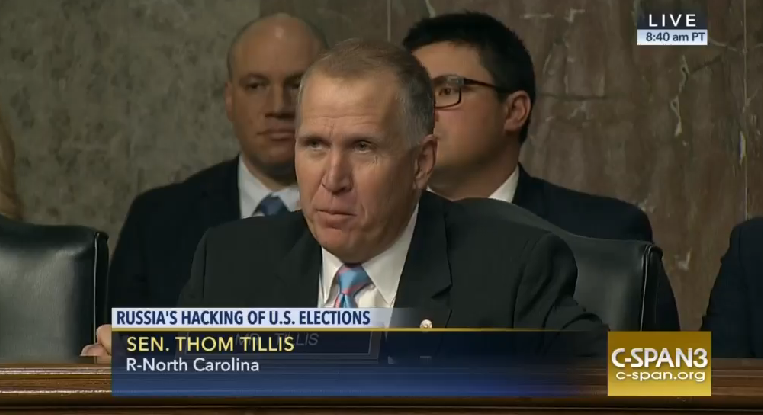
Thom Tillis Reminds James Clapper that the US Tampers in Elections, Too

Several times in today’s hearing on foreign cyberattacks on the US, James Clapper explained why he never favored big retaliation for China’s hack of OPM: because he considers it the kind of espionage we engage in too. “People who live in glass houses shouldn’t throw rocks.”

When North Carolina Republican Thom Tillis got his turn, he addressed Clapper’s comment, pointing out that on election-tampering, as with espionage, the US lives in a big glass house.

The glass house comment is something that I think is very important. There’s been research done by a professor up at Carnegie Mulligan that um Mellon that estimated that the United States has been involved in one way or another in 81 different elections since World War II. That doesn’t include coups or regime changes. Tangible evidence where we’ve tried to affect an outcome to our purpose. Russia’s done it some 36 times. In fact, when Russia apparently was trying to influence our election, we had the Israelis accusing us of trying to influence their election.

So I’m not here to talk about that. But I am here to say we live in a big glass house and there are a lot of rocks to throw and I think that that’s consistent with what you said on other matters.

With regards to comparative numbers on US and Russian intervention in elections, Tillis is discussing research published by Dov Levin last year (see WaPo version), who found that either the US or Russia intervened in 11.3% of all elections since World War II, with the US — indeed — intervening far more often (and more broadly) than Russia.

Overall, 117 partisan electoral interventions were made by the US and the USSR/Russia between 1 January 1946 and 31 December 2000. Eighty-one (or 69%) of these interventions were done by the US while the other 36 cases (or 31%) were conducted by the USSR/ Russia. To put this number in the proper perspective, during the same period 937 competitive national-level executive elections, or plausible targets for an electoral intervention, were conducted within independent countries.20 Accordingly, 11.3% of these elections, or about one of every nine competitive elections since the end of the Second World War, have been the targets of an electoral intervention.

With regards to tampering in the Israeli election, Tillis is probably referring to State Department support for an NGO that worked to oust Bibi Netanyahu.

Curiously, Tillis made no mention of his own state party’s rather spectacular tampering to suppress the votes of African Americans, though perhaps his local experience explains why he presents all this data about American hypocrisy on election tampering as a reality about elections rather than a cautionary tale to be avoided.

Still, even if he’s trying to whitewash Russia’s involvement to help Trump get elected, he does have a point: the US has done this to a lot of other countries.

As Chilean-American Ariel Dorfman put it in an op-ed last year, America’s own election-tampering doesn’t make Russia’s this year’s right, but it should elicit a determination that the US will never again do unto others what we have just had done to us.

The United States cannot in good faith decry what has been done to its decent citizens until it is ready to face what it did so often to the equally decent citizens of other nations. And it must firmly resolve never to engage in such imperious activities again.

If ever there was a time for America to look at itself in the mirror, if ever there was a time of reckoning and accountability, it is now.

By all means, let’s pursue Russia for its intervention in this year’s election. But let’s, at the same time, engage in some accountability for what the US has itself done.

“It’s Good to Be Back,” Petraeus Says before He Offers a Vague Apology and Oil Market Advice

Screen Shot 2015-09-22 at 1.24.13 PMJohn McCain has officially launched David Petraeus’ rehabilitation tour.

Petraeus testified today before the Senate Armed Services Committee on what to do in the Middle East. But you could tell how much this is about rehabilitation for the heartfelt thanks Petraeus offered McCain for bringing him in to testify. “It’s good to be back,” Petraeus said, before launching into the most hailed part of the hearing, this vague apology.

I think it is appropriate to begin my remarks this morning with an apology, one that I have offered before, but nonetheless one that I want to repeat to you and to the American public. Four years ago I made a serious mistake, one that brought discredit on me and pain closest–to those closest to me. It was a violation of the trust placed in me, and a breach of the values to which I had been committed throughout my life. There’s nothing I can do to undo what I did. I can only say again how sorry I am to thoseI let down and then strive to go forward with a greater sense of humility and purpose, and with gratitude to those who stood with me during a very difficult chapter in my life.

He didn’t actually say what part of the scandal he was apologizing for, though some of the press seemed to be certain that it was about one or another aspect of it. His invocation of the pain he caused those closest to him suggests it was the affair itself. The timing — just over four years ago, August 28, 2011, was the day he gave his black books full of code word intelligence to Paula Broadwell for several days — suggests it was about actually leaking intelligence.

If the acts he apologized for were four years ago, though, it means this apology doesn’t cover the lies he told the FBI on June 12, 2012 about sharing this intelligence. And it doesn’t cover keeping those books with code word intelligence in the top drawer of his unlocked desk until FBI found them on April 5, 2013, the act — mishandling classified information — that he technically pled guilty too.

Though I wouldn’t be surprised if the lawyer he shares with Hillary Clinton, David Kendall, advised him not to apologize for lying to the FBI, given that would involve admitting guilt for something he didn’t plead guilty for.

So having apparently apologized for a range of things that didn’t apparently include lying to the FBI, David Petraeus gave unsworn testimony to Congress.

The testimony was about what you’d expect. David Petraeus’ surge was, according to David Petraeus, a huge success. Petraeus told of some great things Nuri al-Maliki did even while explaining some great things Haider al-Abadi is doing. Petraeus envisioned the break up of Syria while insisting that the same couldn’t happen in Iraq (because the Sunnis in Iraq would have no oil revenues). All casualties in Syria were the fault of Bashar al-Assad, and not the US ally-backed forces Petraeus watched get armed while he was still CIA Director. Petraeus denied, without being asked, that the military had a policy of ignoring Afghan bacha bazi, as reported in NYT this week.

Not a word was mentioned about the chaos CIA-led intervention in Libya has caused, or what to do about it (Petraeus did mention Libya in a passing answer to a question), not even in discussions of why the Russians would never be willing to work under US command in countering ISIS, not even from the party that remains obsessed about Benghazi.

Nothing was mentioned about how all the men we’ve — Petraeus — has trained have been prone to flee.

The closest Petraeus came to discussing the support for Sunni extremism our allies — Qatar, Saudi Arabia, and Turkey — give (and therefore their role in the region’s instability) came when Petraeus discussed Turkey’s increasing targeting of PKK that happened at the same time Turkey agreed to let us use Incirlik Air Base, though Petraeus didn’t note any connection between those two things.

Perhaps the most interesting part of the hearing, though, came towards the end (after 2:11), when Thom Tillis asked a very reasonable question about how other countries (he didn’t say, but he probably had China in mind) reliance on Iran once they start selling oil will become important strategically.

After claiming Tillis’ break-even number for Iran’s budget (which accords with public reporting) was incorrect, Petraeus put on his private equity guy hat.

I’m the chairman of the KKR global institute and a partner in KKR, one of the global investment firms, uh [hand gesture showing breadth] big private equity firms in our country. And, first of all, by the way, the analysis on crude oil export shows that not only would the price of WTI, West Texas Intermediate go up slightly, so the producers would be better off, it would also have an impact on Brent Crude prices, which would come down, the global price, which is a lot of what we refine, and the price at the pump probably would go down. So it’s very interesting — if you look at, I think it’s the CBO that did the analysis of this. One of our analytical organizations here, I think, on Capitol Hill has looked at this. And it’s a very interesting dynamic.

[Tillis tries to interrupt, Petraeus keeps speaking.]

Beyond that, I don’t think we should get involved in markets as a country, unless we want to do something like sanctions. So again, you wouldn’t do it — if you want to use sanctions for economic tools as a weapon, gives thumbs up sign] fine, but otherwise I think you have to be very careful about intervention in the global markets.

Tillis tried again, restating his question about whether we should drill as much oil as we can to hedge against increased Iranian influence.

We ought to produce all the oil that we can, if we’re making a profit. If we can enable countries like Iraq to revive their oil industry as we did, it helps Iraq, it funds their gover–by the way they’re running into fiscal deficit now. But again, this is really about market forces I think, much more than getting involved in this as a country.

Not much of Petraeus’ answer made sense, but I can assure you, the head of KKR’s Global Institute is pretty excited about natural gas.

Sure, the expertise of a private equity guy might be worthwhile to Congress, though that affiliation was not listed on the SASC websiteScreen Shot 2015-09-22 at 12.46.32 PM

But it’s all the more absurd given the rest of Petraeus testimony, most notably his silence about Saudi Arabia’s destabilizing influence, given that we do play in global markets precisely through our unquestioningly loyalty to the Saudis.

I guess the Senate — which turned out in big numbers — finds this kind of analysis useful. But it is, once again, about David Petraeus more than it is about testimony that will help us adopt a sound policy in the Middle East.