Why Did DoD Wait Over Three Months to Issue Records Preservation Order After SIGAR Request?
The $34 million building without a use. (SIGAR photo)

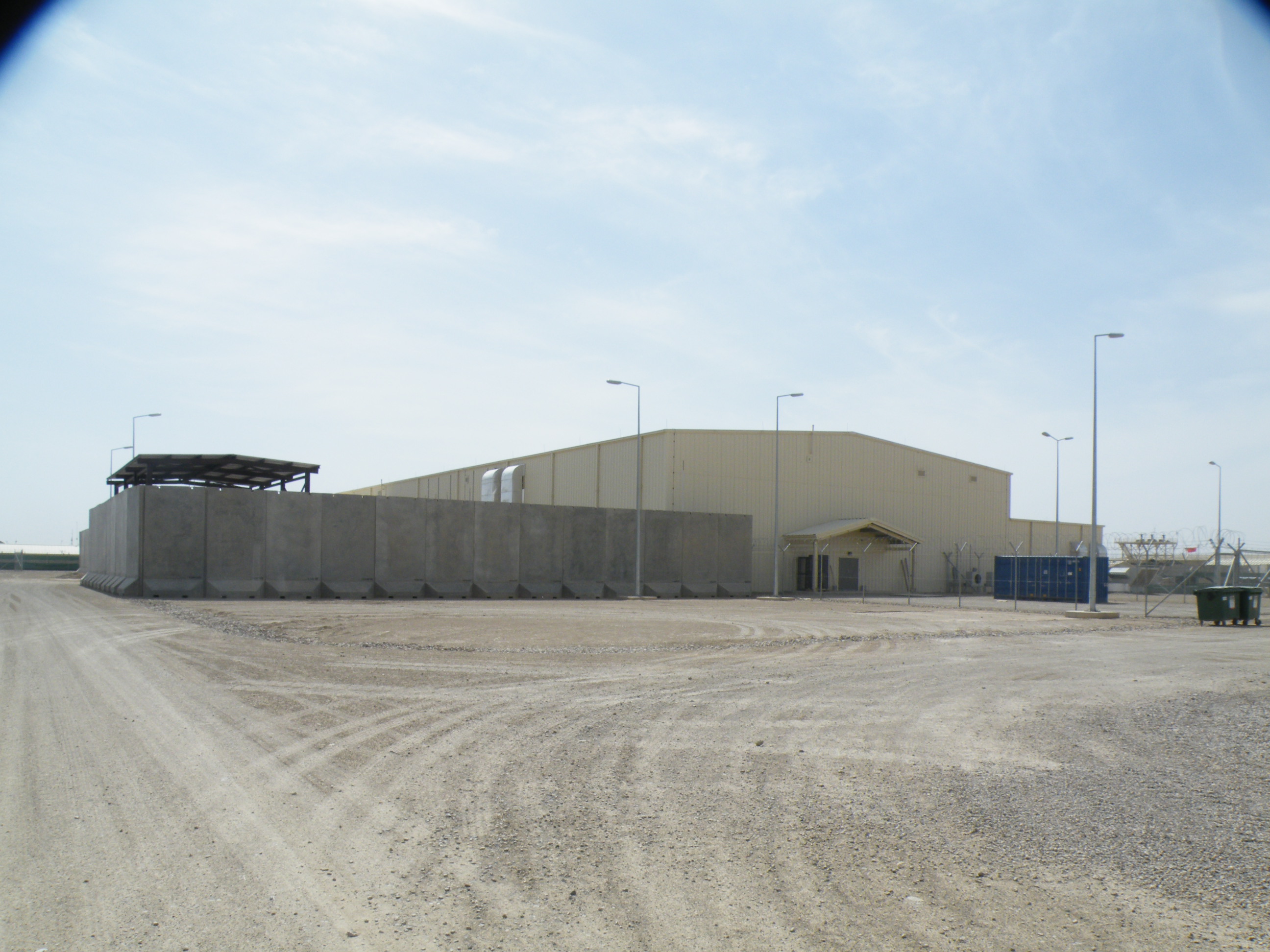
The $34 million building without a use. (SIGAR photo)

Back in July of last year, SIGAR issued an alert (pdf) regarding what SIGAR head John Sopko termed “a potentially troubling example of waste that requires your immediate attention”. That statement was in Sopko’s cover letter to Defense Secretary Chuck Hagel, Head of Central Command Lloyd Austin and ISAF Commander Joseph Dunford. It would appear that the folks in the Department of Defense missed that key word “immediate”, as the subsequent responses from the Defense Department have been both troubling and, at least on the most important move, slow.

First, to set the stage on the evidence of wasteful spending in constructing a building that had no use at Camp Leatherneck in Helmand province. From the alert letter linked above:

I was told by senior U.S. military officials that the recently completed Regional Command-Southwest (RC-SW) Command and Control Facility, a 64,000 square feet building and related infrastructure with a contract award value of $34 million that was meant to serve as a command headquarters in Helmand to support the surge, will not be occupied. Based on documents provided to SIGAR, it appears that military commanders in Afghanistan determined as early as May 2010 that there was no need for the facility, yet the military still moved ahead with the construction project and continued to purchase equipment and make various improvements to the building in early 2013. Based on these preliminary findings, I am deeply troubled that the military may have spent taxpayer funds on a construction project that should have been stopped.

In addition, I was told that U.S. military officials expect that the building will be either demolished or turned over to the Afghan government as our military presence in Afghanistan declines and Camp Leatherneck is reduced in size. Both alternatives for how to resolve this issue are troubling—destroying a never-occupied and never-used building or turning over what may be a “white elephant” to the Afghan government that it may not have the capacity to sustain. Determining all of the facts on how we reached this $34 million dilemma and what can be done to prevent it from happening again is the reason for sending this management alert letter to you.

Even though the Camp Leatherneck Commander determined in May, 2010 that the building was not needed, construction began anyhow after February of 2011. Ironically, Sopko notes in his letter that this may well be the best-constructed building he has toured in his many inspections in Afghanistan, even though it was known before construction began that there would be no use for the building.

Sopko’s letter continues, citing information collected that the building can accomodate 1200 to 1500 staff but that at the time of writing, only 450 people were available to use it. Furthermore, there was nobody on the base qualified to maintain the expensive HVAC system. But it gets even worse:

According to a senior U.S. military official, as the footprint of Camp Leatherneck decreases, the building could be outside the security perimeter, thereby making it unsafe for the U.S. military to occupy it. This leaves the military with two primary options—demolish the building or give it to the Afghan government.

However, to make it usable for the Afghan government, the building would require a major overhaul of existing systems, including the expensive heating, ventilation, and air conditioning systems. A high-ranking, senior U.S. military official also advised me that the facility was built to U.S. construction standards rather than Afghan standards. For example, the power runs at U.S. 60 cycles versus Afghan 50 cycles and U.S. 120 volts versus Afghan 220 volts. Therefore, it would not be easy to transfer the building to the Afghan government. These were some of the reasons why the U.S. military officials we spoke with believe the building will probably be demolished.

It appears that the Defense Department reacted to Sopko’s letter, because Sopko states in a subsequent letter that he was informed that an investigation was underway and that his questions would be answered. But that process seems to have directly contradicted earlier work from DoD. Sopko wrote a new letter (pdf) to the same recipients on November 27 of last year: Read more

Share this entry

Carlotta Gall: ISI Sheltered Bin Laden in Pakistan

The New York Times has just released an excerpt from Carlotta Gall’s upcoming book “The Wrong Enemy: America in Afghanistan, 2001-2014″. Recall that Gall lived in Afghanistan and covered Afghanistan and Pakistan for the Times from 2001-2013 (Declan Walsh also covered Pakistan from inside Pakistan until he was expelled just before the election in 2013). The biggest revelation in the excerpt is that Pakistan knew about, and Pakistan’s intelligence agency, the ISI, actively sheltered, Osama bin Laden when he was in hiding in Pakistan.

Gall claims that then-ISI head Ahmed Shuja Pasha had direct knowledge of bin Laden’s presence:

Soon after the Navy SEAL raid on Bin Laden’s house, a Pakistani official told me that the United States had direct evidence that the ISI chief, Lt. Gen. Ahmed Shuja Pasha, knew of Bin Laden’s presence in Abbottabad. The information came from a senior United States official, and I guessed that the Americans had intercepted a phone call of Pasha’s or one about him in the days after the raid. “He knew of Osama’s whereabouts, yes,” the Pakistani official told me. The official was surprised to learn this and said the Americans were even more so. Pasha had been an energetic opponent of the Taliban and an open and cooperative counterpart for the Americans at the ISI. “Pasha was always their blue-eyed boy,” the official said. But in the weeks and months after the raid, Pasha and the ISI press office strenuously denied that they had any knowledge of Bin Laden’s presence in Abbottabad.

Although Pasha knew, it appears that ISI compartmented the knowledge very carefully:

In trying to prove that the ISI knew of Bin Laden’s whereabouts and protected him, I struggled for more than two years to piece together something other than circumstantial evidence and suppositions from sources with no direct knowledge. Only one man, a former ISI chief and retired general, Ziauddin Butt, told me that he thought Musharraf had arranged to hide Bin Laden in Abbottabad. But he had no proof and, under pressure, claimed in the Pakistani press that he’d been misunderstood. Finally, on a winter evening in 2012, I got the confirmation I was looking for. According to one inside source, the ISI actually ran a special desk assigned to handle Bin Laden. It was operated independently, led by an officer who made his own decisions and did not report to a superior. He handled only one person: Bin Laden. I was sitting at an outdoor cafe when I learned this, and I remember gasping, though quietly so as not to draw attention. (Two former senior American officials later told me that the information was consistent with their own conclusions.) This was what Afghans knew, and Taliban fighters had told me, but finally someone on the inside was admitting it. The desk was wholly deniable by virtually everyone at the ISI — such is how supersecret intelligence units operate — but the top military bosses knew about it, I was told.

Gall’s reporting on Taliban factions and their madrassas came at great personal risk. This story picks up at a point where her Pakistani colleagues have been picked up by the ISI at the hotel where they were staying and she had been summoned to meet the ISI agents outside: Read more

Share this entry

Conspiracy Stories Surrounding Nils Horner Murder Hard to Dismiss Due to US Behavior

Today’s New York Times has a fascinating update on the investigation into the killing of Swedish reporter Nils Horner on March 11. Although there have been systematic attacks on journalists in the region for years, it appears that in the case of Horner, suggestions of the involvement of Western intelligence agencies are getting significant attention:

Now, some are saying Mr. Horner may have been killed as part of some shadowy intelligence war in Afghanistan waged by foreigners.

/snip/

The allegation first surfaced in a widely disputed claim of responsibility issued by a group calling itself Feday-e-Mahaz, and thought to be an offshoot of the Taliban.

/snip/

“This was certainly not the work of the Taliban,” Mr. Faizi said in an interview, adding that he did not believe there were any breakaway factions. “They are fictions.”

/snip/

Afghan officials linked Mr. Horner’s death to the attack on Taverna du Liban, a Lebanese restaurant popular with foreigners that suicide attackers struck in January, killing 21 people, most of them foreigners.

Though the Taliban took credit for that attack, Mr. Karzai has suggested that it may be linked to foreigners and not Afghan insurgents. Mr. Horner was shot as he tried to find and interview a chef who had escaped from that Lebanese restaurant, officials said.

“Perhaps there are some of those with fears about what he would find out,” one Afghan official said, speaking on the condition of anonymity because of the continuing investigation.

The official emphasized that he was speaking of the possibility that Westerners were responsible in both the restaurant attack and Mr. Horner’s shooting, and not Pakistanis, whom Afghan officials often blame after attacks because of what the official called Pakistan’s clandestine support of the Taliban.

But how on earth could such a ludicrous story get started? I mean, it’s not like the US meddles and tries to prevent the outbreak of peace talks or anything like that. Oh, wait.

Okay, but surely this meddling is recent. The history of our motives in the region must be pure. Just ask someone who has observed our actions over the years, like, say,  Khalid Sheikh Mohammed, (pdf):

But it was too late because some of the organizations had become a part of the Afghan
people. As for Afghanistan itself, the West did not support the Afghan organizations in
order to bring about peace, prosperity, and security in Afghanistan. The U.S. proxies in the
lSI under American control foiled every attempt to reconcile or integrate the various
Afghan organizations. Every time they saw a strong leader or an organization, they
supported him in order to split his organization off from the others. They split the group
Hezb Al-Islami Hekmatyar into two parties- one by the same name and one by the name
Hezb Al-Islami Younis Khalis and so on.

Well, yes, as Marcy notes, KSM is trolling, but there are bits that can’t be denied.

Oh, and don’t forget the use of a doctor in a vaccination ruse to obtain intelligence on the compound where Osama bin Laden was living prior to the attack that killed him. So why wouldn’t the West use a journalist? And look at Horner’s history:

Horner, 51, was an experienced Hong Kong-based reporter who had previously been in Afghanistan to witness the fall of the Taliban in 2001 and in Iraq during the war in 2003.

And just to make things juicier, even though Horner worked for Swedish radio, he held British citizenship. The Wall Street Journal article linked here notes that Horner covered Asia generally since 2001 and “had visited Kabul many times in the past”.

I’m not ready to embrace these conspiracies, but it sure is easy to see how the concept can take hold when we consider how the US has behaved in the region for decades.

Share this entry

SASC Hearing: Dunford Advocates for Forever War in Afghanistan

I was only able to monitor portions of yesterday’s Senate Armed Services Committee hearing in which Joseph Dunford provided an update on the situation in Afghanistan. Most of the hearing was the usual frustrating bunk, such as Roger Wicker whinging that we just don’t hear enough in the media about US successes in Afghanistan. John McCain actually was a bit more responsible than usual, showing a lot of doubt about the current set of plans and complaining that the small reserve force anticipated after 2014 is just not worth the risk to the troops if a BSA is eventually signed. Dunford’s opening statement as submitted can be found here (pdf) and the video of the entire hearing is here. What stood out at the hearing for me, though, was the entire exchange between Joe Manchin and Dunford. Here is the clip of that exchange:

In the middle of the exchange, Manchin brings up the issue of the “excess” Mine Resistant Ambush Protected Vehicles, or MRAP’s. This has been an issue I’ve followed closely, especially when I found that the US ordered nearly a billion dollars’ worth next generation vehicles while declaring a large number of usable vehicles unneeded.  Several months after writing that post, I happened to overhear a conversation on an airplane in which a person claimed to have just come from Kabul, where they witnessed brand new MRAP’s coming off planes being delivered, driving across the tarmac and then being cut up for scrap. I made a few inquiries on whether this was indeed occurring (the explanation from the person on the airplane was that the purchase contracts could not be rescinded and that delivery to Kabul was a part of the contract), so the bit where Manchin and Dunford discuss them perked up my ears. Note that Dunford claims he’s saving money by scrapping them, since it costs only $10,000 to cut one up but $50,000 to ship it home. Manchin rightfully then points out that building the replacement costs a million dollars if a new MRAP is needed. Dunford then offers that sufficient MRAP’s have been moved back to the US to cover any projected needs for the next conflict that breaks out. Significantly, he states that he has discontinued the practice of cutting them up for scrap. This is the first I’ve heard about discontinuing the practice and I have to wonder if DoD was beginning to feel pressure due to word getting out about scrapping such expensive equipment. The “donation” plan is doomed from the start, since any recipients have to arrange and pay for shipment. This might not be entirely bad, though, as it may prevent a rash of these ridiculous beasts showing up in the fleets of local law enforcement agencies.

The final bit of the exchange, though, is the most telling. In their coverage of the hearing, both the New York Times and Washington Post picked up “quotables” from Manchin in the lead-up to the final exchange, but stopped short of what I see as Dunford first denying and then going all in on the concept of a forever war in Afghanistan.

My transcript of the final exchange, after Dunford had claimed there would be a time when the US would leave:

Manchin: And I’m saying if thirteen years didn’t do the job, how many more years do you think it’ll take? That’s the question I cannot answer. You know, we’re just basically saying if you can’t do the job in ten, twelve, thriteen years, you’re just not going to get the job done.

Dunford: Well, Senator, I would assume because we have vital national interests in the region, that the United States would be engaged in the region for a long period of time to come. The nature of our engagement and the nature of our presence would of course change over time.

Manchin: Again, thank you so much for your service and I would just respectfully disagree.

So although Dunford first told Manchin that there would be a time when the US could leave Afghanistan (in contrast to Manchin’s example of South Korea), Dunford then failed to put any endpoint on what would be “a long period of time to come” when the US would have such a vital interest in Afghanistan that we need to keep troops there. I’m with Manchin on disagreeing, but I can’t get to the respectful part.

Share this entry

Starving, Displaced Civilians: Ongoing Tragedy of War in Syria

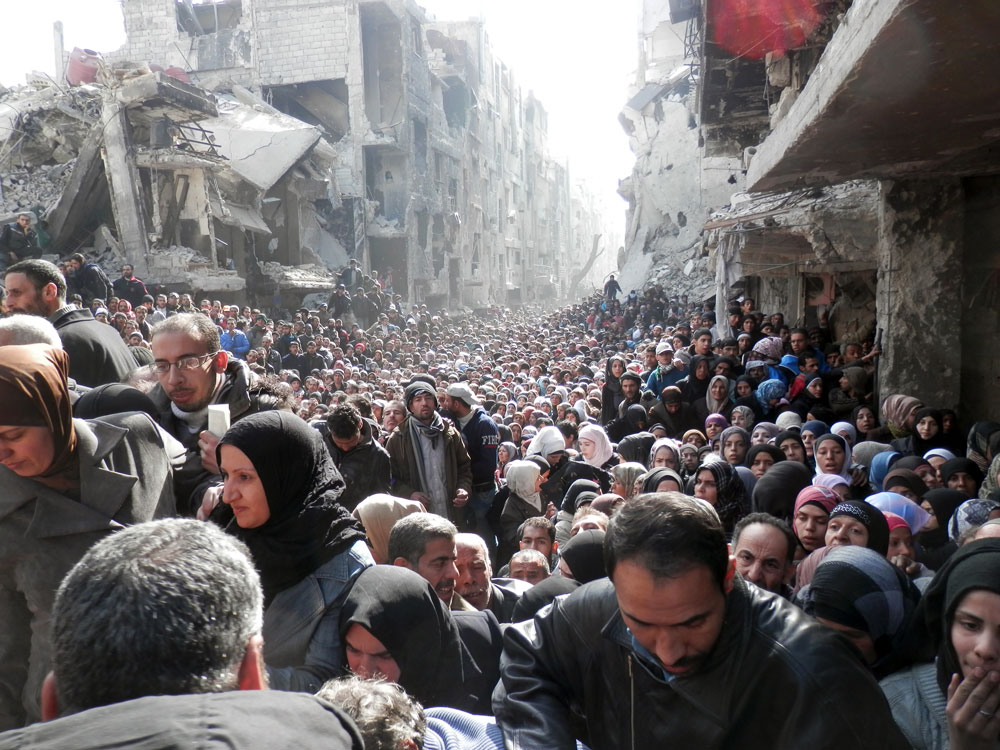
image_gallery_4065_11646_1393414133

The iconic photo above, provided by the UN and showing hungry refugees in Yarmouk Camp lining up to receive food, has helped to raise awareness of the plight of millions of displaced civilians from Syria who are now facing a fourth year of war. Despite the spate of publicity over the photo (and plans for even more exposure, see below), the UN is now warning that with the world’s focus possibly shifting to the Crimean situation, these starving refugees are at risk of being forgotten again:

The head of the United Nation’s refugee agency said on Tuesday it must be ready in case Ukraine’s crisis causes refugees to flee Crimea, but his biggest worry is that “a total disaster” could occur if the international community diverts its attention away from Syria’s conflict.

Antonio Guterres, the head of the U.N.’s High Commission for Refugees (UNHCR), said in an interview that little progress was being made in efforts by the United States and Russia, now at loggerheads over Ukraine, to bring Syria’s warring sides together after the collapse of talks in Geneva last month.

/snip/

With the Syrian conflict now heading toward a fourth year this week and more people fleeing the war, the UN has warned that Syrians are about to replace Afghans as the world’s largest refugee population.

There are currently more than 2.5 million Syrian registered by the U.N. in neighboring countries such as Lebanon, Turkey, Jordan and Iraq, but Guterres said it is believed more than 3 million have fled the conflict.

“It is absolutely essential that the international community mobilizes massively to support Lebanon, to support Jordan, to support all the other neighboring countries to make sure that they are able to cope with the challenge and to preserve the stability of the region,” he said.

The photo was taken in the Yarmouk refugee camp. From the United Nations Relief and Works Agency (UNRWA):

Our spokesperson Chris Gunness has the following to say on the situation in Yarmouk Camp

“UNRWA has received credible reports that clashes and shelling intensified in Yarmouk during the night of 9 March and continued throughout the day of 11 March. Ongoing hostilities have now prevented UNRWA from distributing humanitarian assistance in Yarmouk for eleven consecutive days.

UNRWA remains deeply concerned about the desperate humanitarian situation in Yarmouk and the fact that repeated resort to armed force has, over the previous eleven days, disrupted its efforts to alleviate the desperate plight of civilians. UNRWA reiterates its strong demands that all parties cease hostilities and seek to resolve their differences exclusively by peaceful means. UNRWA also urges all concerned parties to immediately allow and facilitate the resumption of food distribution to civilians inside Yarmouk.”

Think about that. The very site where this photo was taken has been shelled as recently as yesterday and no food supplies have reached the camp in eleven days. Sadly, even the photo itself has been subject to attack, with the New York Times today providing information from photography experts confirming its authenticity:

Digital photography experts said they believed that the image was real.

Hany Farid, a computer science professor at Dartmouth College who specializes in image forensics, said a relatively simple “clone test” — an examination to reveal whether individuals in the crowd looked alike and would thus be evidence of alteration — showed no such duplications.

He also said the consistency of light and shadow in the photograph would have been enormously difficult to fabricate. More persuasive, he said, was a video of the Yarmouk camp shot at the same time that corroborated the scene.

“There is no evidence that photo is fake,” Mr. Farid said in a telephone interview. “So now everybody should shut up about it.”

Here is the video Farid mentions, and the opening scenes do indeed match the photo in location and crowd size. Further, we get multiple vantage points in the video, making it quite clear the crowd was real: Read more

Share this entry

Pakistan Suddenly Receives Mysterious $1.5 Billion

Back in January, I mused on whether Pakistan was making a play for counterterrorism funds that were being freed up by the US cutting back on its funding plans for Afghanistan. It now appears that Pakistan is not only starting to receive renewed flows of US defense funding, but US development funding is flowing, as well. I probably shouldn’t be so surprised by this, since the article I cited on the US cutting back on Afghanistan funding mentioned both defense and development funds, but it still remains remarkable that those funds are being so clearly moved from Afghanistan to Pakistan.

It appears that Pakistan has had to quickly establish a new fund for accepting the newly designated development money, which totals a whopping $1.5 billion in only one month:

As the State Bank of Pakistan remains tightlipped over the source and purpose of funding, Pakistan received another tranche of $750 million in the newly-established Pakistan Development Fund (PDF), taking the total contribution to $1.5 billion so far.

Highly-placed sources told The Express Tribune that friendly countries have injected another sum of $750 million in the PDF – an account opened to channel money from abroad. The last tranche was received in February that stabilised the dwindling official foreign currency reserves.

It is the first time that any country has generously given $1.5-billion assistance to Pakistan within one month, as Islamabad never received such an amount as ‘upfront’ payments. The US, which remains the largest contributor, always gave amounts in tranches spreading over several years. Under its five-year, $7.5-billion Kerry Lugar aid package, Washington gave less than $2.5 billion in government-to-government assistance in over three years.

However, it was not clear whether the money received is a grant or depositary loans aimed at temporarily bailing out the country.

At the very end of the article, the Express Tribune notes that Pakistan is also asking the US to expedite payments under the Coalition Support Fund, which is the route through which Pakistan is reimbursed for its defense spending related to Afghanistan security. That is very interesting, since it was only a month ago that there was a major disbursement in the CSF:

United States has released second tranche of $352 million out of a total of $1.4 billion Coalition Support Funds (CSF) that Pakistan is budgeted to receive during the current fiscal year.

This was revealed by US Ambassador Richard Olson in a meeting with Finance Minister Ishaq Dar on Tuesday.

According to Finance Ministry, the ambassador assured the Financial Minister that the remaining amount will be disbursed as soon as possible,

Pakistan had hoped to receive the second tranche in December last year.

It certainly stands out that what changed between December and February was Pakistan’s new-found enthusiasm for military action against the Taliban. The article also notes that this payment was meant to cover Pakistan’s expenses incurred during January to March of 2013, so the payments are lagging spending by about a year. That would be why today’s news has Pakistan urging the US to shorten the time until reimbursement: Read more

Share this entry

Pause in Afghan Presidential Campaign With Death of Vice President; Taliban Vow to Disrupt

Afghanistan’s Vice President Muhammad Qasim Fahim died yesterday, in what the New York Times described as a heart attack. Fahim was a warlord with a checkered past and had ties, through a brother, to the looting and downfall of Kabul Bank. Because of his death, Afghanistan has declared a three day pause in campaigning for next month’s election to replace Hamid Karzai. The Taliban has taken advantage of this pause to warn Afghan citizens against voting and to threaten violence against those who do vote.

The Times brings us more of Fahim’s history:

Though Mr. Fahim was at the center of Mr. Karzai’s government, the two shared a tumultuous history. In the mid-1990s, when Mr. Fahim was in charge of the Afghan intelligence service after the fall of the Soviet-backed regime, he ordered the arrest of Mr. Karzai, then the deputy foreign minister, on suspicion of spying for a rival faction within the government. The future president managed to escape when a rocket hit the prison where he was being held.

Nearly a decade later, Mr. Fahim backed Mr. Karzai’s bid to lead Afghanistan after the Taliban’s fall, and in exchange was named defense minister. But within months, as Mr. Karzai began moving to sideline Mr. Fahim, American officials picked up intelligence that the defense minister was considering an attempt to assassinate the president, according to current and former Afghan and American officials with firsthand knowledge of the episode. To head off the threat, the Americans quickly replaced the Fahim loyalists who were guarding Mr. Karzai with United States Army Rangers.

But they did not replace Mr. Fahim, concluding that the young Afghan government was too weak to risk a confrontation with one of Afghanistan’s most powerful warlords. American and Afghan officials instead settled for vague statements that suggested Taliban threats had led to the bodyguard swap.

Reuters brings us the threat to the election issued by the Taliban:

The Afghan Taliban said on Monday next month’s presidential election was being manipulated by the United States, which had already chosen the winner, and threatened to use “full force” in attacking anyone taking part.

Two campaign workers have already been killed and at least one presidential candidate has been assaulted during campaigning for the April 5 poll, the first democratic transition of power in the country’s history.

The Taliban said the proceedings were being stage-managed by the United States.

“The people should realize that the election will bear no result because the real elections have taken place in CIA and Pentagon offices and their favorite candidate has already been chosen,” the Taliban said in a statement.

“…All fighters are given orders to disrupt this sham elections by full force and bring under attacks election workers, activists, volunteers and those providing security everywhere. If someone takes part in this (election), they will be responsible for the bad consequences themselves.”

What stands out to me in this statement from the Taliban is that they claim the US (through the CIA) has already chosen the winner of the election, but they don’t say which candidate has been chosen. Just last week, Hamid Karzai’s brother withdrew from the campaign and threw his support to the candidate Karzai is said to favor. But this article on that development from The Guardian shows that there is no clear frontrunner and that the Karzais’ chosen candidate has little current backing: Read more

Share this entry

US Strike Kills Five Afghan Soldiers in Charkh District

In what is virtually certain to be a new example of why he continues not to sign the Bilateral Security Agreement, Afghan President Hamid Karzai is expected to react with anger toward the US strike this morning that killed five Afghan soldiers in an outpost in the Charkh District of Logar Province. Already, it is being pointed out that the US had to know about the location of the outpost. From the Washington Post:

“The coalition knows the location of every Afghan outpost,” said Abdul Wali, the head of the Logar Provincial Council. “How can such incidents happen?”

But BBC points out that it is even worse than that:

District governor Khalilullah Kamal, who has visited the scene, said the strike was carried out by a US drone.

“The post is totally destroyed,” he told the AFP news agency. “The Americans used to be in that post, but since they left the ANA [Afghan National Army] took over.”

Recall that in the incident where the US killed 24 Pakistani soldiers at a border checkpoint in 2011, at least parts of the facility that was attacked appeared to be makeshift structures that easily could have been mistaken for insurgent encampments. That clearly is not the case in the current situation, since the facility was built by and previously manned by the US. It seems to me that there is a good chance that the mistake in this case may have been that the US believed the post to have been taken over by the Taliban when it in fact was still manned by the ANA. Given the multiple reports that drones are often spotted in the area, we are left to wonder if the drones spotted a pattern of activity that prompted the airstrike. Otherwise, since the Afghans claim they did not call in a strike, we are left to wonder just why the strike was carried out and what the mission was believed to be.

Details are still coming out on the incident, with some stories claiming the attack came from a drone and others saying it was an airstrike by manned aircraft. The New York Times contributes this on the question:

A spokesman for the American military said that the incident did not involve a drone, but rather manned aircraft. He did not provide further details.

Even though he says in his statement that the strike was carried out by a drone, the information quoted above from the district governor about the post being “totally destroyed” sounds to me more like the damage that would come from multiple manned aircraft equipped with multiple rockets and bombs, especially if the post consisted of multiple buildings.

I have seen no statements on the incident attributed to Karzai yet. ISAF already issued this embarrassed acknowledgement:

We can confirm that at least five Afghan National Army personnel were accidentally killed this morning during an operation in eastern Afghanistan.

An investigation is being conducted at this time to determine the circumstances that led to this unfortunate incident.

Our condolences go out to the families of the ANA soldiers who lost their lives and were wounded.

We value the strong relationship with our Afghan partners, and we will determine what actions will be taken to ensure incidents like this do not happen again.

Karzai spokesman Aimal Faizi is quoted by Reuters:

“We condemn the attack on the Afghan National Army in Logar,” said Aimal Faizi, a spokesman for Karzai. “The president has ordered an investigation.”

But in that Reuters article, Kamal, the district governor, seems to contradict some of the information he gave to BBC:

“Right now a discussion in the province is going on between Afghan officials and foreign forces to find out the reason for this attack,” he said, describing the attack as having targeted a new outpost of the Afghan army.

Is Kamal claiming the outpost is new to the ANA since they just took it over from ISAF, or is he saying it is a new one they established and not one previously manned by the US, as he said to BBC? If it is the latter, then it will be necessary to review whether and how the ANA informed the US of the location of the facility.

It is very interesting that the US would move so quickly to claim an airstrike instead of a drone in the statement to the Times. Given Karzai’s previous reactions to US airstrikes that have killed civilians, it is virtually guaranteed that he will reach a new high of outrage over this incident. There was a surge of nationalism over the incident where 21 troops were killed by the Taliban recently in Kunar (see the state funeral footage in this post), so look for Karzai to play off those sentiments in turning that anger now toward the US rather than the Taliban.

Share this entry

Syria On Track For Destruction of All Chemical Weapon Related Materials by July

Back at the end of January, I noted that Syria was being castigated for delays in removing its chemical weapon precursors when the US had not been blamed for delays in making the Cape Ray available for destruction of the chemicals to proceed. Although there were still slight delays after the Cape Ray appeared in the region, we are now seeing from the Organization for the Prohibition of Chemical Weapons that the original deadline of all the chemicals being destroyed by the end of June can still be met. Even more encouraging, the pace of removal of chemicals from Syria has picked up significantly and now more than a third of the material will have been removed by the end of this week.

From a press release today by OPCW:

The Syrian Arab Republic has submitted to the OPCW a revised proposal that aims to complete the removal of all chemicals from Syria before the end of April 2014.

The OPCW-UN Joint Mission also verified that two more consignments of chemicals have left the port of Latakia, including a quantity of mustard gas – a Priority 1 chemical – which was previously reported last Wednesday. Another movement, a significant consignment of other Priority 1 chemicals, is scheduled to arrive in Latakia during this week, which will bring the total number of movements thus far to six.

The six movements represent more than 35% of all chemicals that must be removed from Syria for destruction, including 23% of Priority 1 chemicals and 63% of Priority 2 chemicals. In addition, the OPCW has verified that Syria has destroyed in situ more than 93% of its stock of isopropanol.

It would have been a bit more encouraging if all of the Priority 1 materials were removed first, since they present the biggest risk. It is not clear whether the shipment of a higher percentage of the Priority 2 material than Priority 1 was due to Syria withholding more dangerous material intentionally or if it was a result of logistics being dictated by where the materials were stored relative to where fighting in the ongoing civil war was taking place. In that regard, it is worth noting that Syria reported last week that there were two attempted attacks on convoys transporting the materials in late January. Although the Reuters report does not expressly state as much, we are left to assume that the attacks were unsuccessful since they were reported as merely being attempted. This same report also noted that two staging sites for the chemicals could not be accessed during the reporting period due to fighting in the area.

Returning to the OPCW press release from today, this bit at the end cannot be emphasized enough: Read more

Share this entry

Rapid Developments in Pakistan: TTP Ceasefire, Halt to Air Strikes, Suicide Bombs in Islamabad

In recent posts, I’ve been wondering just how Pakistan’s new security policy will be implemented. Late last week, it appeared as though Pakistan was determined to carry out a sustained military intervention in the Federally Administered Tribal Areas. The big question to me was whether this action would be taken against only the TTP or if Pakistan would also be attacking groups such as the Haqqani network, which the US accuses Pakistan of supporting while they carry out attacks against US troops in Afghanistan. If Pakistan were to attack the Haqqani network, I predicted that the US will provide a major increase in counterterrorism funding to Pakistan.

There have been multiple major developments since my post on Friday, with the Taliban suddenly announcing a ceasefire and Pakistan’s government responding favorably by stating that air raids in FATA will end during the ceasefire. These peaceful responses were shattered early today, though, with a major terror attack in Islamabad resulting in at least 11 dead and 25 wounded when a court area was attacked with guns and suicide bombs.

It appears that the committee of government representatives and Taliban representatives that had been appointed to get the peace talks re-started was responsible for getting the ceasefire put into place:

After the Taliban issued a call for ceasefire on Saturday, members of the government-nominated peace committee welcomed the call, terming it a major breakthrough and an opportunity to hold direct talks between the two sides.

Major (retd) Mohammad Aamir, part of the government’s peace committee negotiating with the Taliban, suggested that direct talks should now take place between the government and the Taliban as it is high “time for taking and making important decisions.”

“I do not see any relevance now for the government committee as we have succeeded to convince the Taliban to come to the negotiation table and declare ceasefire,” Aamir told The Express Tribune in an interview.

He disclosed that the “backdoor efforts” carried out by him and the Jamiat Ulema Islam -Samiul Haq Group leader Yousaf Shah resulted in the Taliban-declared ceasefire.

The government responded positively and quickly to the ceasefire announcement:

The Pakistani government on Sunday suspended its airstrike campaign against militants in the country’s northwestern tribal regions in response to a Taliban cease-fire, raising the prospect that peace talks between the two sides will be revived.

The announcement of the suspension was made by the Pakistani interior minister, Nisar Ali Khan, on Sunday evening, and came hours after military gunships targeted militant positions in the northwestern Khyber tribal area in retaliation for an attack on health workers trying to vaccinate Pakistanis against polio. Officials said that notwithstanding the suspension, they would continue to respond to provocations by militants.

Tragically, the attack on the polio workers was especially deadly, with a death toll of 13. Khan also issued a warning along with his announcement of the halt to the air strikes:

“The government and the Armed Forces of Pakistan reserve the right to effectively respond to acts of violence,” the interior minister warned in a statement.

That warning is being put to test immediately, with today’s attack in Islamabad: Read more

Share this entry