Some of George Santos’ Alleged Crimes Resemble Trump’s Suspected Crimes

DOJ has released the indictment against George Santos.

The charges are:

1-5: Fraudulent political contribution scheme

6-8: Money laundering of false donations

9: Theft of public money

10-11: Wire fraud tied to unemployment payments

12-13: False statements in Congressional disclosure report

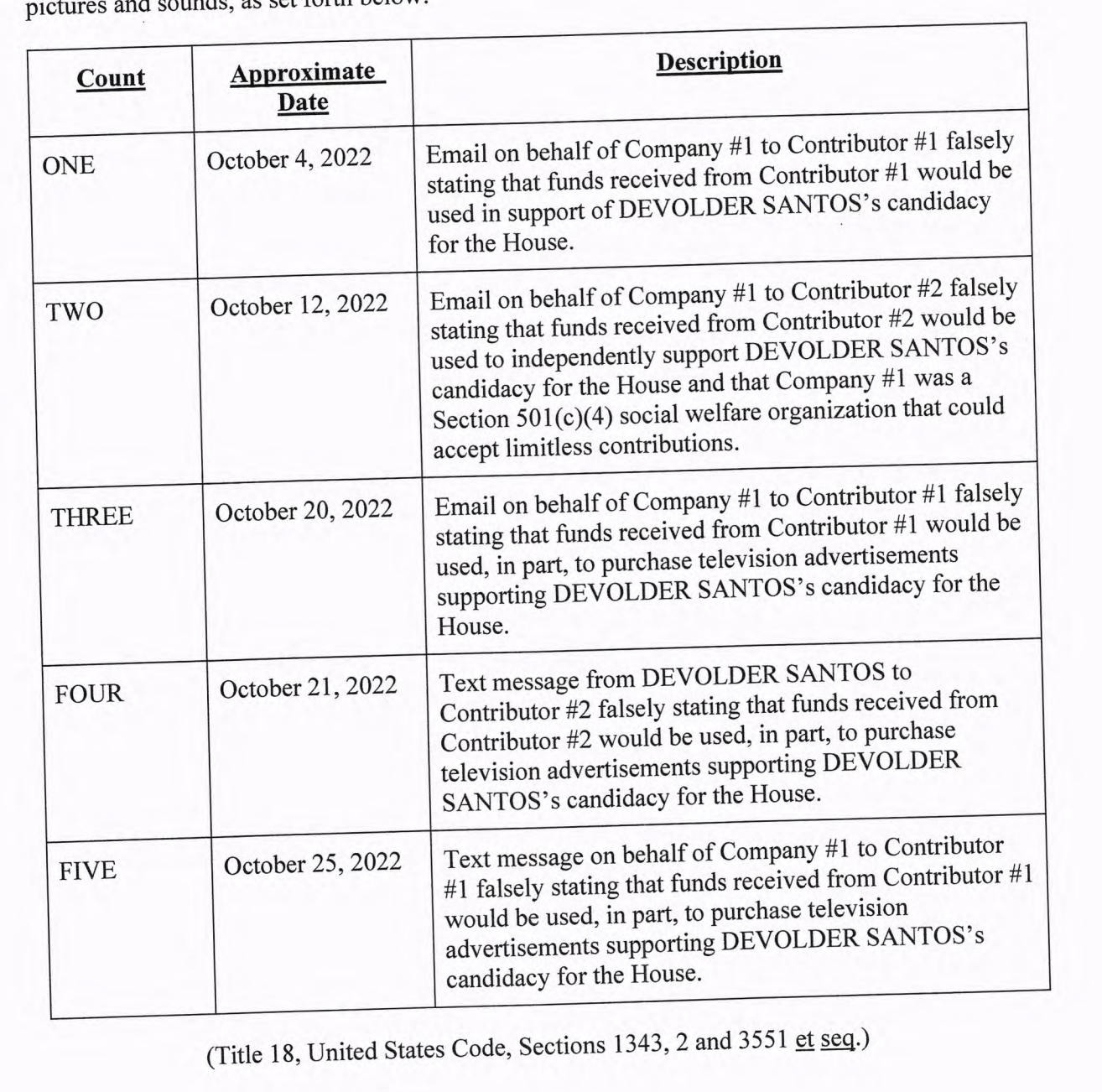
The most interesting charges are 1-5:

Effectively, DOJ accuses Santos of telling two donors their money would support his candidacy when instead he was pocketing the money.

This is the same theory behind the Build the Wall fraud, where Bannon et al raised money promising to build a wall and instead spent it on their own personal expenses. Bannon et al were charged with conspiracy to violate 18 USC 1343, whereas Santos was charged with 1343 himself. And Santos was charged on a different money laundering statute (18 USC 1957(a) and (b) versus 1956). But the theory is the same.

The scam — directing political donations to a private company — is the same scam that Daily Beast recently reported Herschel Walker to have engaged in.

More interesting, though, given the speed with which some Republicans have denounced Santos, this is close to the same theory behind the financial part of the investigation into Trump. He is suspected of soliciting funds for use on voter security and instead spent it on his legal fees and other expenses.

There’s at least one obvious difference though: Santos falsely claimed that “Company #1” was a 501(c)(4). It was no such thing. There’s no reason to doubt that Trump’s PACs are what they say they are.

But for that significant difference, a bunch of Republicans are condemning the same kind of solicitation fraud for which Trump is currently being investigated.

Share this entry

THE RINGLEADER’S LAST(?) CIRCUS: Observations from inside the Proud Boys Seditious Conspiracy Trial

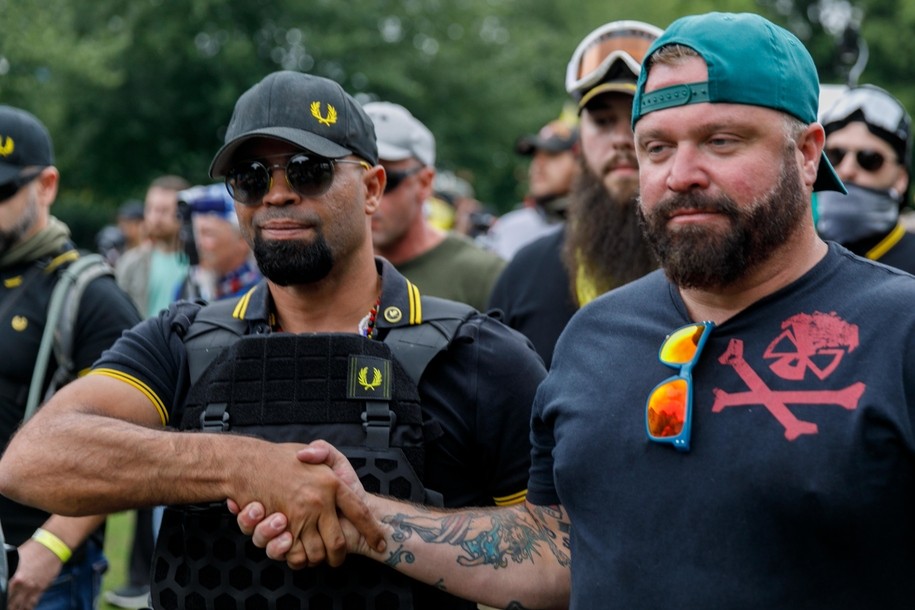
There was an occasion when I sat inside the courtroom for the Proud Boys seditious conspiracy trial where I caught Proud Boys ringleader Henry “Enrique” Tarrio’s eye.

Most days, due to rules at the Prettyman courthouse prohibiting recording devices and electronics in the courtroom itself, I reported from the media room with the rest of the press where I could watch proceedings on a closed circuit feed as I tweeted them out in real-time. 

But a few times, so I could put eyes on the jury or the defendants, I would leave the windowless room to sit in the thick of it and take notes the old-fashioned way in court with my notebook balancing on my crossed knee.  

We didn’t look at each other for very long. 

Tarrio looked into my face and I into his. His eyes went slightly wide and searching for a moment as he, I suspect, worked out that I was press in short order. Not many reporters were covering the trial to begin with and it was very sparsely attended by the public so a new face was likely to stand out. And of course, I always come into a courtroom bearing a notebook and pen, so the dots, I presume, were pretty easy to connect. 

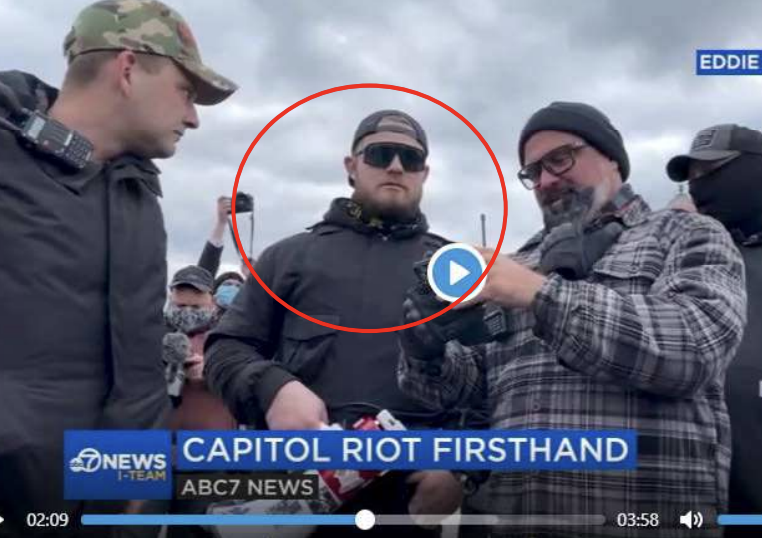
But the look on his face that day is something I’ve thought a lot about recently and in particular, since he and fellow Proud Boys Joseph Biggs, Ethan Nordean, and Zachary Rehl were convicted of seditious conspiracy and a multitude of other charges for their roles in Jan. 6.

It was roughly midway through the four-month-long trial. The prosecution’s daily pace was stilted with defense objections on a near-constant basis. It seemed proceedings were getting terribly bogged down and I wondered how much of a witness’s testimony the jury could actually remember at the end of every day given the incessant interruptions and sidebars. Turns out they did just fine. 

At this point, Tarrio’s co-defendants Zachary Rehl and Dominic Pezzola had not yet testified. It wasn’t clear at the time if they would. But it seemed nonetheless the defense was intent on putting up a fight every step of the way on grounds meritorious or not. With the defense willing to swing so big, I imagined, if I were a defendant in this trial, and swinging for the fences is pretty much all I’ve got, I’d suppose I would be happy to see my lawyers do it. 

And considering all of this, when his eyes met mine that first time, there wasn’t a trace of anxiety on Tarrio’s face. In fact, it was the easiness in it that struck me. There’s an assertiveness that shades a person’s face when they have experience dealing with “delicate” situations but this was not just the look of experience with tough times writ large on his face. 

There was pride. The look struck me as ego. It was confidence, baldly. I wished everyone paying attention to the trial could have seen his face in that moment so they could understand exactly what I mean. 

I’ve been racking my brain as to where and when I’ve seen this look specifically before and what it reminded me of. 

And then it came to me. 

Tarrio looked at me that day in the same way I had seen politicians look when I covered Congress: It is the look of a person who knows they are selling something or they really want to sell something and there’s a lot of pressure behind their eyes for me to buy it or believe it. 

Tarrio had nothing to say to the jury at trial, as is his right. And he decided that before Rehl or Pezzola would make their (ultimately tortured) appearances. But ahead of the jury’s deliberations, and without a federal prosecutor to face, Tarrio had plenty to say during a “Spaces” event held on Twitter and hosted by the right-wing Jan. 6 conspiracy theory peddling Gateway Pundit. 

In so many words, Tarrio defended his decision against testifying and it largely sounded like he was griping about the strength of the government’s case against him. More directly, he claimed prosecutors would misconstrue his words or bring out old statements unrelated to Jan. 6 to hurt him if he took the stand.

Before the verdict came down, Tarrio said he would respect the jury’s decision and that he felt he and his co-defendants were “in a good place.” 

And that’s the tricky thing with someone like Tarrio. If your public persona has largely revolved around attempting to manipulate the press for your benefit, what is said or done in the press sort of rings hollow once you know what his game is.

Now all things being fair, perhaps he really believes he’s innocent. Or perhaps he knows he is guilty in his bones. I ask, even if Tarrio himself stated these positions publicly, how does one trust him? 

Perhaps for his supplicants, friends, lovers, foot soldiers and the lawyers paid to serve him, it is easier.

But for the rest? For the rest of America that believes the jury rendered a fair verdict and found him guilty of orchestrating a seditious conspiracy—what basis do they have to trust a word Tarrio or his ilk utter about Jan. 6 ever again? 

He’s not playing to the American public at large. He knows his audience. But I write this piece offering a window into a person I observed for 60 days because I realize most Americans don’t know who Tarrio is at all. That seems imbalanced to me given the liberties Tarrio and his co-defendants attempted to forcibly take with their fellow American’s votes in a presidential election.

(I wish more people could have seen the trial in action but even I, who champion transparency, go back and forth on whether cameras in every courtroom would be truly beneficial or if it would turn every defendant into an aspiring reality-tv star.)

At trial, Tarrio was closely focused, regularly taking or passing notes, especially during witness testimony. He didn’t slouch moodily in his chair or seem out of sorts when tensions ran high between U.S. District Judge Tim Kelly and his co-defendants’ attorneys.

I watched him whisper to people at a crowded table populated by his co-defendants and their attorneys. The stakes so high, he was an ever-active party to his own case. 

Rehl sat to Tarrio’s left. Ethan Nordean to his right. They were nearly shoulder to shoulder. Joseph Biggs and Pezzola sat furthest away from Tarrio though along the same side of the table. Many defense attorneys were squeezed onto the opposite side or at the ends of the table though Tarrio’s attorneys often sat at another long one just adjacent to him. He was most talkative outside of the jury’s presence though their presence didn’t stop him, really. 

He was always “on” it seemed. I watched him exchange what looked like very friendly words with a young female paralegal sitting just across from him on occasion. I watched him pour her a glass of water and another time, I watched as he accepted a piece of gum or a mint she offered with her smile broad and eyes tender. He mouthed ‘thank you’ at her, grinning back as he did before passing another sticky note to a lawyer at the table. 

Tarrio’s confidence may have also come from knowing that he had at least one person watching in the pews from time to time who wrote for the Gateway Pundit. This individual once professed to me in the hallways of Prettyman that she was a “friend of the defendants.” She also said she respected how I covered the trial even if she disagreed with me politically. The truth is, she doesn’t know my politics beyond what she presumes of course, and more importantly and this may be a concept unfamiliar to some, but my politics don’t determine my reportage. The point wasn’t one I felt like making so I thanked her politely and went about my work. 

Meanwhile, I spent weeks watching Tarrio elicit more than one or two laughs or smiles from U.S. marshals when they would engage him in passing chit-chat on breaks or at the start of a trial day.

A real charmer that Tarrio fancies himself, I would think to myself as I watched him in court whether in person or from the media room. 

Tarrio’s smiles came easily in that courtroom. 

Though I welcome levity in its various forms, even yes, in a federal courtroom, his consistent lightness stood out in such stark contrast to the moment. To the grueling pace of the trial. For someone potentially facing 20 years in prison plus and squaring off with federal prosecutors that had been building a case again him for over a year, Tarrio exuded what seemed like an unfounded optimism in the eventual outcome. Online since the trial, he’s expressed his frustration of being kept in isolation in detention for 23 of 24 hours a day. He has lamented a weaponized Justice Department. It’s the same song jurors heard in the Oath Keepers case to some degree or another. It’s the core argument by J6ers to fundraise. 

Back on April 26, before jurors went into deliberations, Tarrio said: “I’m going to be dead honest: If you walked in the building, you know, I agree, maybe you should get hit with trespass. If you assaulted a police officer, fine, get hit with assault on a police officer. If you broke something, if you stole something, get charged that way…What we’re seeing here with a lot of these cases is they’re overcharging these cases, they want to give multiple years, decades, in some of these cases.”

But I ask, again, who can trust Tarrio’s assessment? The jury couldn’t. Not on the topmost charge anyway. Yet Tarrio said before the conviction, he got a fair trial. Yet later, another message that appears as “forwarded to the Proud Boys,” from Tarrio’s Telegram account stated: “The fight isn’t over. This is just the beginning.” 

On the day I looked into his face, that was the face of Henry “Make it a Spectacle” Tarrio. 

I think back to what his own lawyer Nayib Hassan, asked of one Proud Boy witness at trial, George Meza aka Ash Barkoziba. Did Meza understand Tarrio liked to “razzle-dazzle” people and the media? Did he understand Tarrio was more a “showboater” than a “showman?” Whatever difference between those two labels Hassan was trying to make was unclear and an objection to relevance on the question was sustained by Judge Kelly. Hassan left it alone. And I suppose for good reason—is Tarrio about spectacle or is Tarrio leadership? Does he, in fact, believe he is leading a (fascist) movement? An answer to either one of those questions in a courtroom could be damaging because it begs another: so, does Tarrio engage in criminal conduct because it’s fun and he is an agent of chaos or does he genuinely believe it is his imperative to “save” America, the rest of his fellow Americans views on that be damned. 

After the verdict dropped, Tarrio went on Telegram and shared a 2001 quote from Nelson Mandela: “It always seems impossible until it is done.”

Drawing on Nelson Mandela for inspiration is understandable but let’s be clear: Tarrio is no Mandela. 

Where Mandela helped lead a nation out of apartheid at great personal sacrifice and imprisonment and helped create a multi-racial democracy, Tarrio, a jury of his peers has decided, conspired with a group of men to stop a democratic process by brute force. 

And Tarrio did that by overseeing a network of men who spoke of “fash[ing] out,” as they espoused bigoted and racist views that allowed their anger or bloodlust or some combination of both to remain at a constant simmer.  And unlike Mandela, who condemned prejudice and hatred, no evidence emerged at trial of Tarrio condemning violence or hatred. No, in fact, and instead, Tarrio’s lawyers worked overtime to keep out details that could have revealed Tarrio’s true colors, like when he burned a Black Lives Matter flag outside of a historic Black church in December 2020.

Mandela and Tarrio really only share one quality and it is in a very general sense. They were both leaders of other people in the typical understanding of the word. But that’s it. As a leader, Mandela pursued peace and equality for subjugated human beings. Tarrio pursued a narrow, deeply selfish vision of a country subjugated by views held by the Proud Boys and their supporters. 

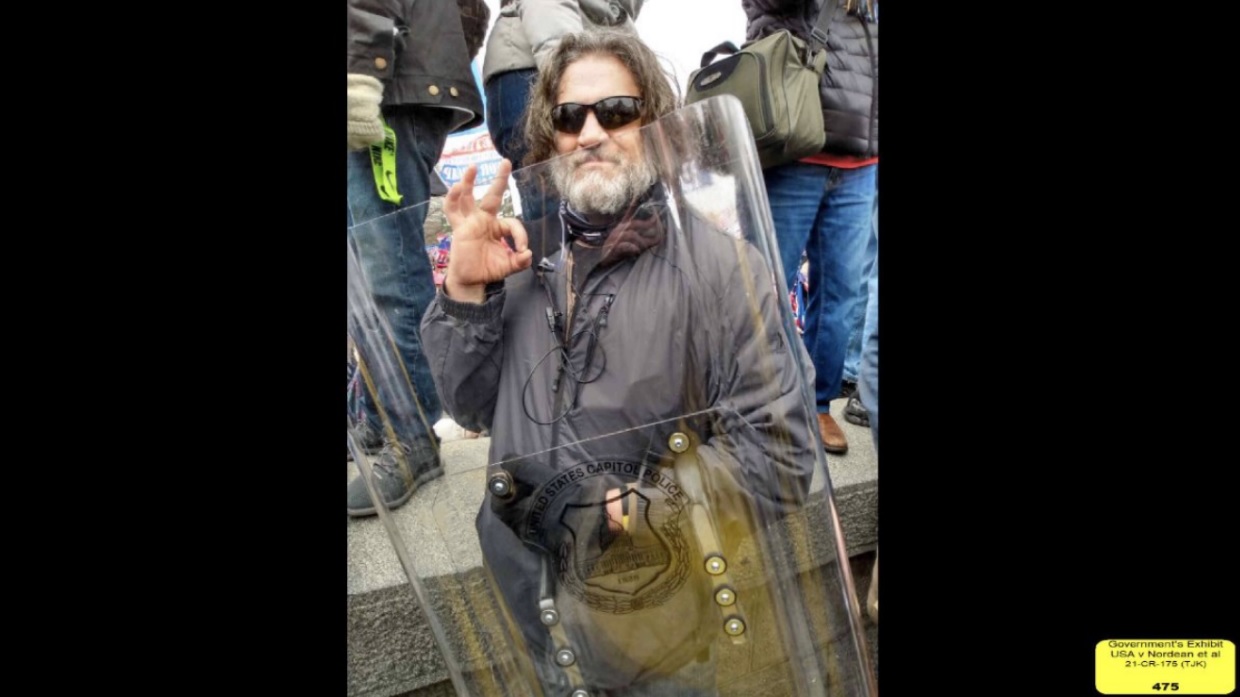
After considering the overwhelming evidence and testimony of fellow Proud Boys both for and against the defense, the jury convicted Tarrio, Nordean, Rehl, and Biggs of seditious conspiracy as well as conspiracy to obstruct an official proceeding, and obstruction of an official proceeding. Only Pezzola, who wrestled a police riot shield away from an officer before using it to bash open a window and let rioters stream inside the Capitol, was deemed “too stupid,” by the jury to commit seditious conspiracy.

The charges start to lose some of their everyday meaning when you read them enough times in their cloying legalese. But stripped down, it is vital to understand the simple concept here. A jury found, save for one man of five, that the Proud Boys on Jan. 6, led by Henry “Enrique” Tarrio, decided their will should overtake the free will of millions of Americans who already cast their ballot against a candidate that Proud Boys preferred. 

At trial, jurors heard testimony and reviewed evidence showing how many Proud Boys believed the election was stolen. Many of them bought into the bogus lie that Trump and his sycophants in Congress and in the right-wing mediasphere repeated for months. 

And yet, it was never made perfectly clear: did Tarrio believe Trump’s Big Lie or was he too in on Trump’s grift? 

Proud Boys didn’t come to D.C. to merely protest, a jury has agreed. They came to DC to commit acts of violence against the U.S. government and law enforcement. Proud Boys intended to stop Congress from doing its work so they might have another shot, even though it was far too late, to install their loser of the 2020 election into the White House. 

Tarrio’s recent reference to Mandela reminds me of one of my own favorites: “For to be free is not merely to cast off one’s chains, but to live in a way that respects and enhances the freedom of others.”

Tarrio respected and enhanced no one’s freedom on Jan. 6, least of all and perhaps most ironically, his own.

When Oath Keeper founder Stewart Rhodes was on trial for seditious conspiracy last year, he appeared on InfoWars and referenced Nelson Mandela too in the sort of self-aggrandizing way he did with much else when he—unlike Tarrio—testified at his own trial. 

On InfoWars Rhodes said, before jurors had deliberated: “You need to be willing to go to jail. I think Americans need to lose their fear of being indicted or put in prison. When you have a dictatorship you’re going to have dissidents. And if you’re going to have anybody standing up for freedom, some of you are going to go to jail and some of you are going to go to prison. But just like Nelson Mandela was willing to go to jail for life, he did 20 years, you have to be willing to do that. You have to be willing to take the hit if you’re a person who’s a freedom fighter and is standing up for rights. Because if you don’t, then what you become is a slave.” 

It was evocative of the end-all-be-all, good vs. evil talk that he invoked in his draft letters to Trump beseeching him to invoke the Insurrection Act, raise Oath Keepers to aid him, and if necessary, help overturn the 2020 election results since they both knew they were “fraudulent.” 

That both Tarrio and Rhodes cite Nelson Mandela would seem to speak volumes about how they internalize their conduct and their crimes. Or maybe just perhaps how they propagandize them.

In the past, I covered a trial involving an American terrorist sympathizer who provided material support to ISIS: Mohammed Khweis, the first American convicted by a U.S. jury of joining the Islamic State. 

I watched Khweis deny strongly supported allegations against him on direct and I watched him crumble under cross. I watched him lie on the witness stand when his family was watching from the pews, some unable to hold back tears. I watched him nearly burst into tears himself when it was clear prosecutors had him in a lie. I recall, outside of the jury’s presence, a defense attorney asking the presiding judge if it may be a good idea to pull his family member out of the courtroom so Khweis would answer more freely.

After his trial, Khweis was sentenced to 20 years for providing material support to terrorists and for a weapons charge. Last year, after a successful appeal, he had his sentence reduced to 14 years after the weapons charge was dropped.

In an interview in 2022, Khweis said: “It’s still mind-boggling to me that I made this terrible decision.” After watching him in court in 2017 absolutely beside himself with anxiety, here in 2023 I would wager a guess that he probably means that. 

To compare, Tarrio has expressed no such remorse to date. He’s offered a lot of thin excuses for his conduct, little real apology. Before jurors, his team painted him as a scapegoat for Donald Trump, blamed for Jan. 6  because Trump could not possibly be held to account. Before the jury began deliberating, Tarrio went on social media and called himself a “stepping stone” on a road that effectively ends with the death of the First Amendment. 

The racist, misogynist, virulent, anti-Semitic, and anti-democratic rhetoric (and actions) expressed by Proud Boys were always defended at trial as “locker room talk” or part and parcel of their rollicking discussions about “self-defense” against leftists, antifa, and supporters of the Black Lives Matter movement. 

It was just talk! It was always in good fun! How dare the government criminalize free speech!

This was, boiled down, the argument often delivered unsuccessfully at trial by Norm Pattis, a defense attorney for Joe Biggs. Pattis also represents Alex Jones. Maybe Pattis was at his wit’s end on the long side of a four-month trial or maybe it was an inside joke or maybe he did it to “taunt” the press he knows watches from the media room, but one day after returning from a break and before jurors had reentered chambers, Pattis took a moment to ham it up and perhaps unwittingly encapsulate just how unserious the defense thinks their clients conduct was on Jan. 6. I don’t know. But he leaned into a microphone and offered a short, guttural, “uhuru,” the Proud Boys mantra/chant invoked at their rallies, sometimes as a type of call and response. 

He chuckled as he took his seat.

Tarrio had called the violent language of the Proud Boys “simple fun” in his media spot late last month. He even teased Lawfare reporter Roger Parloff, who, like me, covered the trial gavel-to-gavel, when Parloff recently mentioned Tarrio’s suit choice. 

Ever the jokester, that Tarrio. A real laugh-riot. 

Whoever Tarrio is or isn’t, whoever he speaks for, or proposes to speak for, this most immediate chapter in his life is now written thanks to a jury of his peers who represent checks in a greater system that he sought to tear asunder. Now, he and his co-defendants face what could be very lengthy prison sentences.

Tarrio has said his “fight isn’t over.”

Neither is the Justice Department’s.

 

Share this entry

DOJ Subpoenaed Over Five Months of Mar-a-Lago Surveillance Video

There’s a detail that may provide important context to new reporting from CNN and NYT about Jack Smith’s pursuit of more information about the surveillance video obtained from Mar-a-Lago. Both pieces report that Smith recently obtained the testimony of Mathew Calamari Jr., the head of security for Trump Org , and Sr., the Chief Operating Officer for Trump’s company (the latter of whom was included in Alvin Bragg’s investigation of the company).

Both outlets describe how that testimony is linked to an investigation into Walt Nauta, whom (per NYT) DOJ chose to investigate rather than seek further cooperation after he gave incomplete testimony last summer and fall. Both describe those subpoenas in the context of a larger effort, absent cooperation from Nauta, to understand the surveillance footage obtained in response to a June 24, 2022 subpoena. From NYT:

[P]rosecutors appear to be trying to fill in some gaps in their knowledge about the movement of the boxes, created in part by their handling of another potentially key witness, Mr. Trump’s valet, Walt Nauta. Prosecutors believe Mr. Nauta has failed to provide them with a full and accurate account of his role in any movement of boxes containing the classified documents.

[snip]

Prosecutors have also issued several subpoenas to Mr. Trump’s company, the Trump Organization, seeking additional surveillance footage from Mar-a-Lago, his residence and private club in Florida, people with knowledge of the matter said. While the footage could shed light on the movement of the boxes, prosecutors have questioned a number of witnesses about gaps in the footage, one of the people said.

But hoping to understand why some of the footage from the storage camera appears to be missing or unavailable — and whether that was a technological issue or something else — the prosecutors subpoenaed the software company that handles all of the surveillance footage for the Trump Organization, including at Mar-a-Lago.

Remember that Trump originally claimed he was subpoenaed on June 22, only to have Beryl Howell correct that claim. Such inconsistencies — such as whether Jay Bratt sent Evan Corcoran a note asking him to put a lock on the storage room, or informing it that it did not comply with CFR requirements for storing classified materials — have often reflected a stupid Trump cover story.

Among the things under investigation, per CNN, is a text message Nauta sent Calamari Sr. after DOJ first subpoenaed surveillance footage from Trump Organization.

The Calamaris are among several witnesses expected to testify in Smith’s investigation on Thursday, sources said. Prosecutors have previously brought in lower-level Trump employees for questioning about the surveillance footage, including how it may have been handled in response to the subpoena for it and if it could have been tampered with, two sources told CNN this week.

Investigators also have previously asked about a text message from Nauta to Calamari Sr. and subsequent conversations about the surveillance footage, according to two of the sources. The Justice Department questioned Nauta months ago about the handling of the boxes, and he told the FBI about being directed by Trump, CNN previously reported.

[Update] The Guardian reports that Nauta asked Calamari Sr. to call him about the DOJ subpoena.

Both Calamaris testified to the federal grand jury in Washington on Thursday, and were questioned in part on a text message that Trump’s valet, Walt Nauta, had sent them around the time that the justice department last year asked for the surveillance footage, one of the people said.

The text message is understood to involve Nauta asking Matthew Calamari Sr to call him back about the justice department’s request, one of the people said – initially a point of confusion for the justice department, which appears to have thought the text was to Calamari Jr.

DOJ likely would never have learned of this text message if Nauta had fully cooperated last summer. But they learned about it, and partly as a result, men who know Trump’s most cherished secrets had to testify before a grand jury.

Trump was at his Irish property this week, tentatively scheduled to stay overnight last night, but he left Ireland yesterday, around 12:30 ET, falsely claiming he was doing so to testify in his rape trial. Learning details of the testimony from the Calamaris is a more likely explanation than the rape trial, but with as many investigations as there are into Trump, it could be anything.

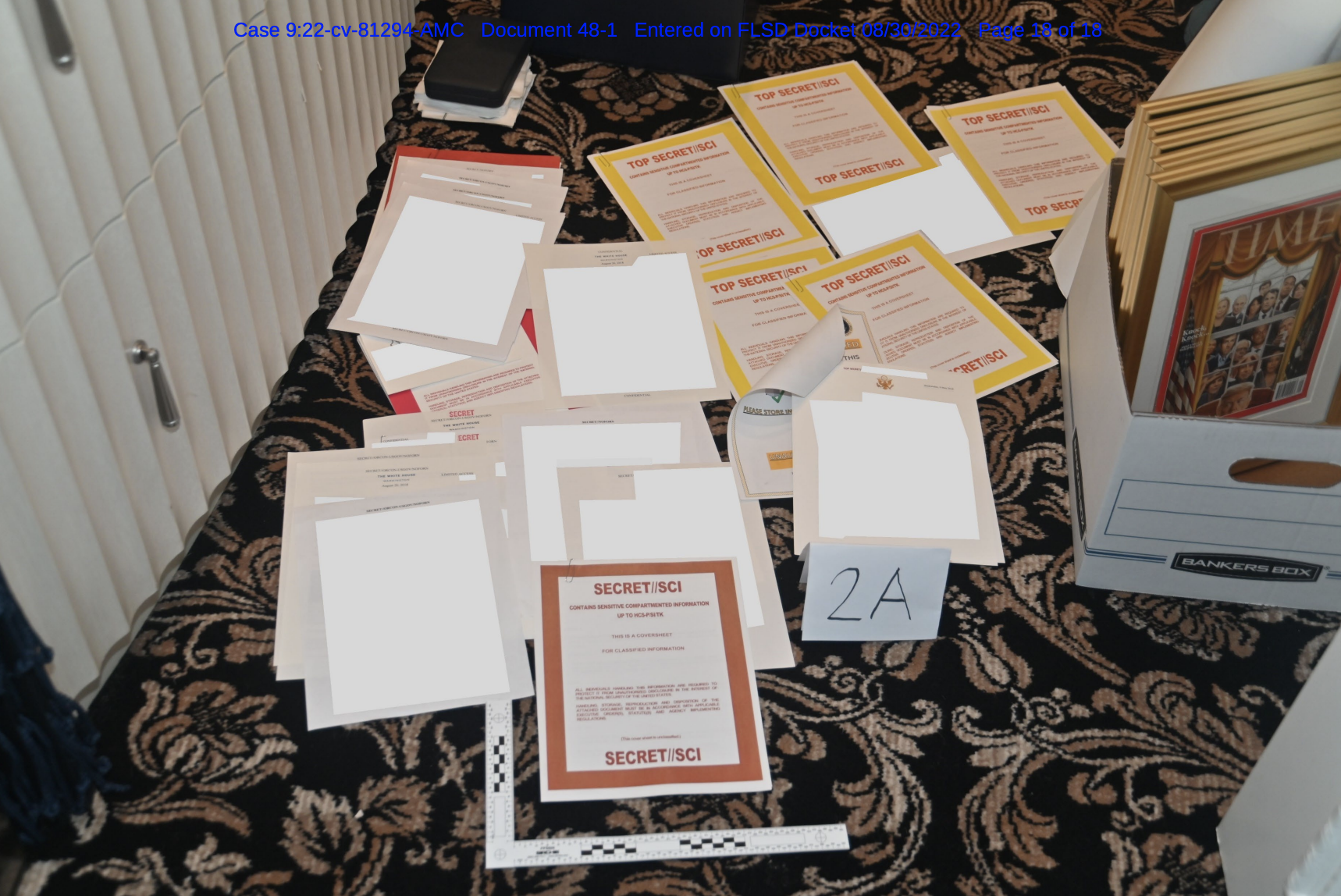
One thing coverage of the stolen documents investigation doesn’t emphasize enough, though, is that 18 USC 793 has a conspiracy clause. Anyone — like Nauta, and potentially even the Calamaris — who conspires with someone else to hoard classified documents is exposed to the same punishment — ten years per document — as the guy refusing to give those documents back.

Plopped in the middle of the NYT story, with little explanation, is a reference to the Trump Org’s ties to the Saudi LIV golf tournament.

One of the previously unreported subpoenas to the Trump Organization sought records pertaining to Mr. Trump’s dealings with a Saudi-backed professional golf venture known as LIV Golf, which is holding tournaments at some of Mr. Trump’s golf resorts.

It is unclear what bearing Mr. Trump’s relationship with LIV Golf has on the broader investigation, but it suggests that the prosecutors are examining certain elements of Mr. Trump’s family business.

Back to inconsistencies between the DOJ and Trump story: Another discrepancy in the stories DOJ and Trump have told is whether or not Trump greeted Jay Bratt on June 3 at Mar-a-Lago. But no one contests that Trump went from there — that very same day! — to Bedminster, where he was hosting the Saudis, who not only are paying him an undisclosed amount for the golf tournaments, but who have funded a project in Oman and gave Trump’s son-in-law $2 billion to mismanage. When investigators directed by Tim Parlatore searched Bedminster for documents last year, they found none.

When I think about the way Trump went from that subpoena response stunt to Bedminster, I can’t help but think of the way the Biden Administration was blindsided by Saudi involvement in China’s effort to normalize relations between the Kingdom and Iran. That’s the kind of surprise that might reflect some surveillance had gone dark.

Here’s something to remember about the video, though. DOJ asked for over five months of surveillance footage, starting on January 10, 2022.

The subpoena was served on counsel on June 24 2022 directed to the Custodian of Records for the Trump Organization, and sought:

Any and all surveillance records videos images, photographs, and/or CCTV from internal cameras located on ground floor (basement) [redacted second location] on the Mar-a-Lago property located at 1100 S Ocean Blvd. Palm Beach, FL 33480 from the time period of January 10, 2022 to present.

And DOJ seems to have asked for surveillance video from two locations: outside the storage room, and somewhere else.  That second location might explain the redacted parts of the search warrant affidavit that provided explanations for why DOJ thought Trump might have documents stored in his residence or his office.

More importantly, the subpoena starts eight days before NARA took possession of 15 boxes of documents and covers over five months. That is, if Trump Org had fully complied (and not everyone keeps surveillance footage that long), DOJ would have surveillance footage covering at least two curation processes: the one in January that resulted in Trump only returning 15 boxes of documents, and the one in June, deciding which 38 documents to return and which to retain.

But absent gaps, that surveillance footage would also show something else: any other people, besides Walt Nauta and the maintenance guy who helped him move boxes, walking in and out of that storage room.

As both CNN and NYT report, there are gaps.

DOJ got enough information from those videos to know that, sometime after DOJ sent a subpoena on May 11, Nauta moved boxes out of the storage room. They may have video showing him moving the boxes back sometime after June 3. That’s what they used to get the August search warrant in the first place. But as noted, DOJ provided some reason to believe that documents might be found in Trump’s office or residence, which might reflect a second surveillance angle.

All of which leaves open the possibility that DOJ thinks something else may have happened during those surveillance footage gaps, other than Nauta walking in and out of the storage room.

Share this entry

How the Proud Boy Conspiracy Might Network Out in the Wake of the Seditious Conspiracy Verdict

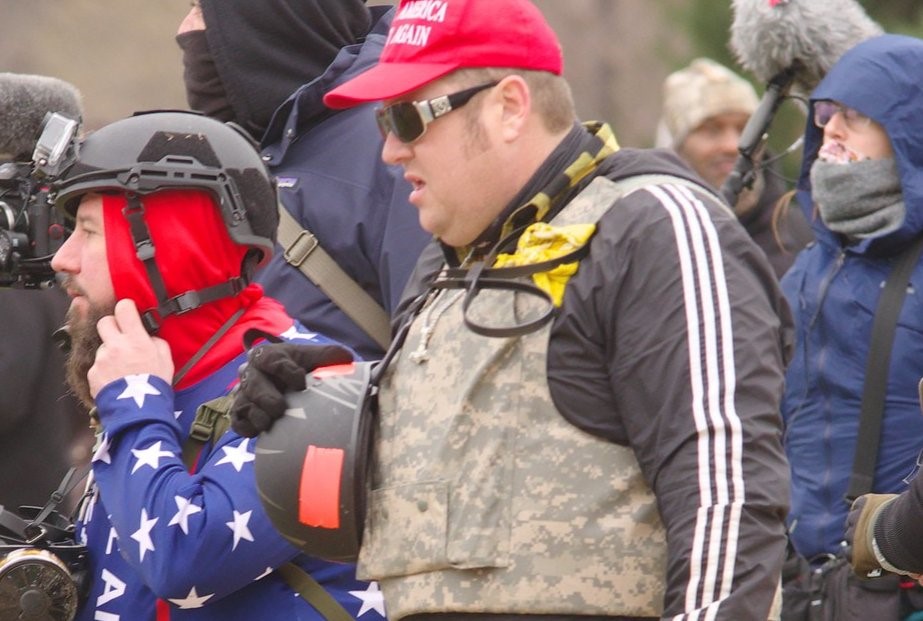
Since at least August 2021, I have emphasized the import of the Proud Boys conspiracy because of the way Joe Biggs (and, I’d add, Enrique Tarrio) served as a nexus between the attack on the Capitol and the people who orchestrated the attack on the Capitol.

Because of Joe Biggs’ role at the nexus between the mob that attacked Congress and those that orchestrated the mob, his prosecution is the most important case in the entire January 6 investigation. If you prosecute him and his alleged co-conspirators successfully, you might also succeed in holding those who incited the attack on the Capitol accountable. If you botch the Biggs prosecution, then all the most important people will go free.

The point was echoed by Tarrio in a Gateway Pundit appearance after closing arguments, in which he called himself, “the next stepping stone.” And in a comment during closing arguments for which prosecutors got a curative instruction, Norm Pattis (the lawyer Biggs shares with Alex Jones) said, “this case will have impact on [the government’s] charging decisions in other cases.”

This post will explain how the Proud Boys seditious conspiracy verdict might network out, to other Proud Boys, in the weeks ahead. A follow-up will explain how it might network up.

The split verdict

Yesterday, a jury found Biggs and Tarrio guilty of all charges against them save two assaults charged under a co-conspirator liability theory: the one Dominic Pezzola committed in stealing the riot shield that he would then use to make the first breach of the building, and the one for throwing a water bottle for which Charles Donohoe, whose absence from the trial seems to have befuddled the jury, already pled guilty.

The sedition verdicts against Biggs, Tarrio, Ethan Nordean and Zach Rehl are the showy news result, but Pezzola’s fate may prove just as instructive for what this verdict means for others. In addition to charges for assaulting that cop, robbing his shield, and breaking the window, Pezzola was found guilty of obstructing the vote certification, but not conspiring with the others to do that (on which the jury hung) or to seditiously attack the government (on which the jury came back with a not guilty verdict).

Pezzola was found guilty of conspiring with the others to impede either cops or members of Congress from doing their duty, a conspiracy that carries a six year sentence rather than the twenty year max sentences the two other conspiracies carry. The government used that 18 USC 372 charge in this case and in the Oath Keepers’ case. As I’ve noted, it was only otherwise used to charge the men who attacked Brian Sicknick, though the conspiracy charge was ultimately dropped in guilty pleas. Using a slightly different description of the object of the conspiracy, all four members of the second Oath Keeper sedition group were found guilty of it (but then, they were found guilty of pretty much everything), three members of Rhodes sedition group were convicted of it (but not Rhodes or Thomas Caldwell), and four of six defendants in the lesser Oath Keeper conspiracy were convicted of it.

The Pezzola verdict may reflect his own testimony: He took the stand and claimed credit for his own assault, which he said had nothing to do with the other defendants, but tried to claim self-defense. (Here’s Brandi’s post on his testimony.) The jury seems to have believed that he had not agreed to enter into the two conspiracies — sedition and obstruction — that largely took form on Telegram threads he was not yet on, but their 372 verdict suggests they found he did agree on the day of the attack to work with the Proud Boys to chase Congress away from their job. I suspect that outcome may have relied on his willingness to take the stand.

In this split verdict, Pezzola’s outcome is pretty similar to that of Oath Keeper Kenneth Harrelson, who was convicted of the 372  conspiracy but not the sedition or obstruction conspiracies. Like Pezzola, he was convicted of obstruction individually.

In other words, most members of both militias were found guilty, not just of obstructing the vote certification, but of doing things to chase Congress out of their chambers, thereby preventing from doing their job. On that latter act — impeding Congress from doing their job — four separate juries have found more evidence to support a conspiracy than on obstruction.

The government may use these collective results to — as Tarrio and Pattis predicted — make further prosecutorial decisions.

The Proud Boy tools

As Brandi and I have both explained, prosecutors won a guilty verdict in this case by arguing that the Proud Boy leaders used others as “tools” of their conspiracy.

In response to a series of rulings, the theory evolved into a co-conspirator liability, with each “tool” presented at trial first premised — as Tim Kelly described in an order he released just before the initial  verdict — on the government’s proffer of their involvement based on some combination of a prior tie to the Proud Boys, participation on the chats in advance, and marching with the Proud Boys from the start on January 6. Judge Kelly did exclude some of the people the government had asked to include, marked by cross-outs below:

William Pepe; Christopher Worrell; Barry Ramey; Daniel Lyons Scott; Trevor McDonald; Marc Bru; Gilbert Fonticoba; Ronald Loehrke and James Haffner; Nicholas Ochs; Gabriel Garcia; Paul Rae; Barton Shively; a group that included A.J. Fischer, Dion Rajewski, Zach Johnson, Brian Boele, and James Brett; and another group that included Arthur Jackman, Nate and Kevin Tuck, and Eddie George.

But for the rest, Kelly issued a ruling finding the men participated in the attack launched on the Capitol as Proud Boys. It’s an important ruling not just because it helped prosecutors to prove the Proud Boy Leaders used force even without, themselves, having assaulted anyone, but because it used participation in the Proud Boys attack as an element of conspiracy in a way that does not depend on First Amendment protected membership in the militia. They were found to be tools of this conspiracy not because they were Proud Boys, but because of things they did as Proud Boys.

It is probably not a coincidence that the cases against many of these men have been languishing as prosecutors focused on the Leader conspiracy. The current status of the prosecution of those Kelly did include is as follows:

Nicholas Ochs (who did not march with the Proud Boys on January 6): Currently serving a four-year sentence for obstruction.

Dan Scott: Awaiting sentencing on obstruction and assault charges.

Christopher Worrell: Bench Trial for obstruction, civil disorder, and assault paused; due to resume May 11.

Gabriel Garcia: After Garcia got caught hob-nobbing with Matt Gaetz and Ivan Raiklin in violation of pretrial release, his then lawyer parted ways with him. He is scheduled to face trial on obstruction, civil disorder, and trespassing charges in August.

William Pepe: Currently the sole remaining defendant on a conspiracy, obstruction, and civil disorder indictment in which Pezzola and cooperating witness Matthew Greene were originally charged. His attorney, William Shipley, is trying to delay trial until the fall; he has a status conference before Judge Kelly today. Update: They extended this case to July 11 today.

Trevor McDonald: Trevor McDonald has not been publicly charged.

Marc Bru: Bru is scheduled for a Bench Trial on obstruction and civil disorder charges in July.

Gilbert Fonticoba: Fonticoba faces trial on obstruction and civil disorder charges in October.

Ronald Loehrke and James Haffner: Loehrke and Haffner remain charged by complaint, facing civil disorder and trespass charges, with an assault charge against Haffner. They have a status hearing scheduled May 9.

Paul Rae, Arthur Jackman, Nate and Kevin Tuck, and Eddie George: Joe Biggs’ co-travelers currently face charges including obstruction and — for some — civil disorder, assault, and theft. This case has been dawdling over conflict proceedings involving John Pierce. Two long-term loaner AUSAs, Christopher Veatch and Nadia Moore (the latter of whom delivered the rebuttal argument in the Proud Boy leader trial), dropped off the case after closing arguments in the Proud Boy Leaders trial, perhaps freeing them to return to their homes after two years of work. This case is bound to take on new form in the status hearing before Tim Kelly scheduled today. Update: In the status conference, they continued this case to July 11. This morning, Proud Boy Leader prosecutor Jason McCullough filed his appearance.

AJ Fischer and Zach Johnson: Fischer and Johnson are charged along with non-Proud Boys who were part of the Tunnel assault with civil disorder and, for the two Proud Boys, assault. The indictment was charged under the Major Conspiracy section and may reflect cooperation between militias. The defendants have a July status hearing. As she did in the Biggs co-traveler case, Moore dropped off this case after delivering closing arguments.

For all the named “tools,” a judge has found that they followed Biggs and Nordean on the day of the attack. Like Pezzola, it would not be a stretch to argue they entered into a conspiracy to impede the cops and members of Congress. For all but Ochs, Scott, and Worrell, the government could supersede the charges against the men to incorporate evidence presented in the Proud Boy Leaders trial.

Two other Proud Boy groups may be affected by this trial.

Rehl’s co-travelers: Three of the guys that Rehl recruited to join the Proud Boys on January 6 were charged in December 2021: Isaiah Giddings, Brian Healion, and Freedom Vy. Giddings pled guilty to the more serious trespassing charge in January, but his statement of offense was somewhat discredited by belatedly-discovered evidence presented at trial that Rehl had not just wanted to get a can of pepper spray to use on cops on January 6, but had done so. Healion and Vy are still awaiting indictment. Rehl’s testimony at trial — particularly the evidence that he may have assaulted a cop — may make it easier to charge them with felonies.

The KC cell: Like many other Proud Boy cases, the prosecution of the Kansas City cell — one of the few others charged as conspiracy from the start — has been languishing during the Proud Boy leaders trial, even in spite of the fact that there is a cooperating witness, Enrique Colon, and one who proffered but was unwilling to testify against his co-conspirators, Ryan Ashlock. There’s a likely additional reason this case has languished, to say nothing of the fact that prosecutors didn’t include this cell — not even cell leader Billy Chrestman — in their tools theory: the participation of an FBI informant, who testified under the name “Ehren,” in their cell, setting up the possibility that those defendants could claim their actions were incited by the government. More than any other set of Proud Boy defendants, however, the Leader trial likely harmed this group, because during “Ehren’s” testimony, he made it clear that he did what he did that day — including helping to prevent the police from closing the gates to the tunnels — of his own accord. Here’s how Brandi described it:

Following suboptimal testimony from Tarrio’s witnesses this week, defendant Ethan Nordean squeezed in witness testimony from an FBI confidential human source and Proud Boy who appeared in court using only his middle name, “Ehren.”

Unfortunately for the defense, “Ehren,” testified under cross-examination that he was not at the Capitol on Jan. 6 as an FBI informant in any meaningful sense. He was there, he affirmed, as a member of the Proud Boys. Though the spelling of his name was not reported into the record, “Ehren” would appear to be the individual that Jan. 6 internet sleuths have identified as “TrackSuitPB.”

In video footage, jurors could see how “Ehren” entered the Capitol carrying zip tie cuffs he said he acquired incidentally as a memento of sorts. At another point, he appears in capitol CCTV  footage flanked by Kansas City Proud Boys like William “Billy” Chrestman, Chris Kuehne, and others, as he helps place a podium under an interior electric gate to keep it from closing while others set chairs in the way. Police are seen working over and over to drop the barrier as rioters advanced.

Poking holes in the defense’s direct and indirect suggestions over these many weeks of trial that the FBI was responsible for guiding the violence of Jan. 6, “Ehren” admitted he wasn’t instructed by the bureau to obstruct the gate. Or enter the Capitol. Or impede police. In hindsight, he admitted, he shouldn’t have helped prop open gates police were trying to lower at all.

While he testified, evidence was also presented to strongly support the government’s claim that he was playing up the “informing” he offered to the FBI.

“Ehren” texted his handler on Jan. 6 at 1:02 p.m. ET just as barriers were overrun: “Pb did not do it, nor inspire. The crowd did as a herd mentality. Not organized. Barriers down at capital [sic] building crowd surged forward, almost to the building now.”

During his interviews with the FBI in the summer of 2021, he claimed he was standing 100 people back from the front of the first breach. In court, however, footage showed him more like 20 or 30 people back. He was also close to defendant Zachary Rehl at one point as Rehl filmed from the fore of the crowd.

Note that Ethan Nordean’s attorney, Nick Smith, called Ehren to give this fairly counterproductive testimony. Smith also represents two of the defendants in the KC Cell, siblings Corey and Felicia. They have a status hearing scheduled before Tim Kelly on May 16. As he did on the Biggs’ co-traveler case, Veatch dropped off this case after the Leaders closing arguments.

Altogether, there are 19 people already charged (the 17 tools less Ochs, Scott, Worrell, and McDonald, plus two Rehl co-travelers and the four remaining KC defendants), plus McDonald and a few others otherwise treated as co-conspirators, who might face superseding charges or — at the very least — a more damning set of evidence based on trial testimony presented at the Proud Boy Leader case. Prosecutors may take the Pezzola verdict as a gauge of what a jury will find convincing, including that the larger Proud Boys group conspired to impede the police and Congress on January 6. That may not only expose some of these defendants to one or more additional felonies, but lay out how a networked conspiracy worked to assault the Capitol on January 6.

Update: According to this Vice News interview with one of the jurors, one reason they didn’t convict Pezz on sedition is bc he “may not have been bright enough to really know about the plan.”

Dominic Pezzola, “Spazzo”, was acquitted on seditious conspiracy. What was the difference there? Why was he acquitted when the others were found guilty? 

Well, he wasn’t in leadership for one. And he only joined the Proud Boys in November or December of 2020.  So he didn’t have a whole lot of time before Jan. 6. They have the different tiers you know, level 1 to level 4. Spazz was a 2 or 3 and on a fast track because he was so expressive of being a bad boy. We actually deadlocked on Spazz at first. But we got through that and said not guilty. Another factor was just that he wasn’t the brightest bulb on the porch. And may not have been bright enough to really know about the plan. So I said, well, poor guy.  He should’ve listened to his father-in-law, who told him “don’t go.”

The juror’s testimony about the demeanor of Pezzola and Rehl in their testimony closely matches what Brandi found.

Share this entry

Stand Back and Stand By: Proud Boys Enrique Tarrio, Joe Biggs, Ethan Nordean, and Zach Rehl Guilty of Sedition

The verdict is just coming in from the Proud Boys trial.

Update: The jury came back with a not guilty verdict for Pezzola on seditious conspiracy, and Judge Tim Kelly ruled them hung on everything else.

It’s finally over.

Count One: Seditious Conspiracy (18 USC 2384)

Tarrio: Guilty

Biggs: Guilty

Nordean: Guilty

Rehl: Guilty

Pezzola: Not Guilty

Count Two: Conspiracy to Obstruct an Official Proceeding (18 USC 1512(k))

Tarrio: Guilty

Biggs: Guilty

Nordean: Guilty

Rehl: Guilty

Pezzola: Hung

Count Three: Obstruction of an Official Proceeding (18 USC 1512(c)(2))

Tarrio: Guilty

Biggs: Guilty

Nordean: Guilty

Rehl: Guilty

Pezzola: Guilty

Count Four: Conspiracy to Impede an Officer (18 USC 372)

Tarrio: Guilty

Biggs: Guilty

Nordean: Guilty

Rehl: Guilty

Pezzola: Guilty

Count Five: Civil Disorder (18 USC 231)

Tarrio: Guilty

Biggs: Guilty

Nordean: Guilty

Rehl: Guilty

Pezzola: Guilty

Count Six: Deprecation of Government Property (metal barrier) (18 USC 1361)

Tarrio: Guilty

Biggs: Guilty

Nordean: Guilty

Rehl: Guilty

Pezzola: Guilty

Count Seven: Deprecation of Government Property (front door) (18 USC 1361)

Tarrio: Hung

Biggs: Hung

Nordean: Hung

Rehl: Hung

Pezzola: Guilty

Count Eight: Assault (throwing water bottle) (18 USC 111)

Tarrio: No verdict

Biggs: No verdict

Nordean: No verdict

Rehl: No verdict

Pezzola: No verdict

Count Nine: Assault (fighting with cop) (18 USC 111)

Tarrio: Not guilty

Biggs: Not guilty

Nordean: Not guilty

Rehl: Not guilty

Pezzola: Guilty

Count Ten: Robbery (stealing shield)

Pezzola: Guilty

Update, May 8: Corrected Tim Kelly’s last name.

Share this entry

The “Diligent” Proud Boys Jury: “Can we also get a stapler, please?”

Yesterday, there were several interesting notes in the Proud Boys jury, including one — identifying a seeming discrepancy in their instructions — which led Judge Tim Kelly to note how diligent they were.

My favorite note, as I wrote at the time, asked for a stapler (I used to take off a point when students turned in papers using paperclips or dogeared pages rather than a staple).

I’d like to explain a different note, which may suggest where this jury is heading (and heading, it seems, in the reasonably near future). It asks:

  1. For counts 1 + 4, the conspiracy charges that have more than one goal listed, can one agreed upon objective of the conspiracy simultaneously satisfy both goals?
  2. We did not receive instructions on what to do if the jury does not reach unanimity on a charge. How should we proceed in this scenario?

The two counts in question were the seditious conspiracy charge, which the jury instructions describe this way:

Count One of the indictment charges that from in and around December 19, 2020, through in and around January 2021, the defendants participated in a conspiracy to do at least one of two things: (1) to oppose by force the authority of the Government of the United States, or (2) to prevent, hinder, or delay the execution of any law of the United States by force.

And the instructions describe the fourth, interfering with a government agent, this way:

Count Four of the indictment charges that from in and around December 19, 2020, through in and around January 2021, the defendants participated in a conspiracy to prevent Members of Congress and law enforcement officers from discharging their duties, which is a violation of the law.

[snip]

First, that the defendant agreed with at least one other person to, by force, intimidation, or threat, (a) prevent a Member of Congress or a federal law enforcement officer from discharging a duty, or (b) induce a Member of Congress or federal law enforcement officer to leave the place where that person’s duties are required to be performed.

One scenario where the jury might pose this question is if they believed some or all of the Proud Boys had agreed to and succeeded in obstructing the certification of the vote (the 1512 conspiracy), which is pretty close to Count One(2) and Count Four(b), but didn’t believe some or all had taken up force against the government (which was a stretch in this case since the violence exercised here was via “tools” who attacked the cops).

The inclusion of the question about not reaching unanimity suggests the possibility of a hung count on these or another charge. That happened, for example, in the lesser Oath Keepers case, but the hung count could just pertain to one of the defendants (perhaps Zach Rehl, who said the least inflammatory things in advance of the attack, or Dominic Pezzola, who only joined the conspiracy at a late moment, or Henry Tarrio, who wasn’t present).

One way or another they were down to the nitty gritty questions when they sent this note at 10:47AM yesterday. The response could make or break the sedition charge, too. So the lawyers discussed it for hours.

While they were waiting for their answer to that, they asked the “diligent” question, what to do about a charge invoking Charles Donohoe’s role in throwing a water bottle, given that a different instruction told them not to make any inferences about why people weren’t charged (Donohoe pled guilty last summer). At 3:19PM on Monday, they had asked for the exhibit numbers pertaining to that charge, so they seem to be a bit perplexed by Count Eight, which charges aid and abet liability in an assault for throwing a water bottle.

Per Roger Parloff, it took the lawyers and Judge Kelly more than three hours before they sent back a response to the 10:47 AM note. So they likely got significantly further in their deliberations before they got those two answers.

Here are the jury notes and responses:

  1. Please provide exhibit numbers for Rehl’s phone crossing the barricade and Biggs suggesting they pull their masks up. Response
  2. Please provide the following exhibits: police shield, megaphone, org chart. Response
  3. Please provide a stapler (and exhibit 490A). Response
  4. Upcoming appointments (in response to a question from the Courtroom Deputy)
  5. Please provide exhibit numbers for the Donohoe water bottle throwing examples. Response
  6. Clarification on multi-purpose conspiracies and non-unanimity on a charge. Response
  7. Clarification on persons not present. Response

Update: Now the “diligent” jury is asking the Court to fix the typo in their verdict form.

Share this entry

Where the Trump Investigations Stand: The January 6 Conspiracies

As noted in this post, I started to write short summaries of where the three main investigations into Trump stand, but they turned into posts. So I’m posting them serially. I wrote about the Georgia investigation here and the stolen documents investigation here.

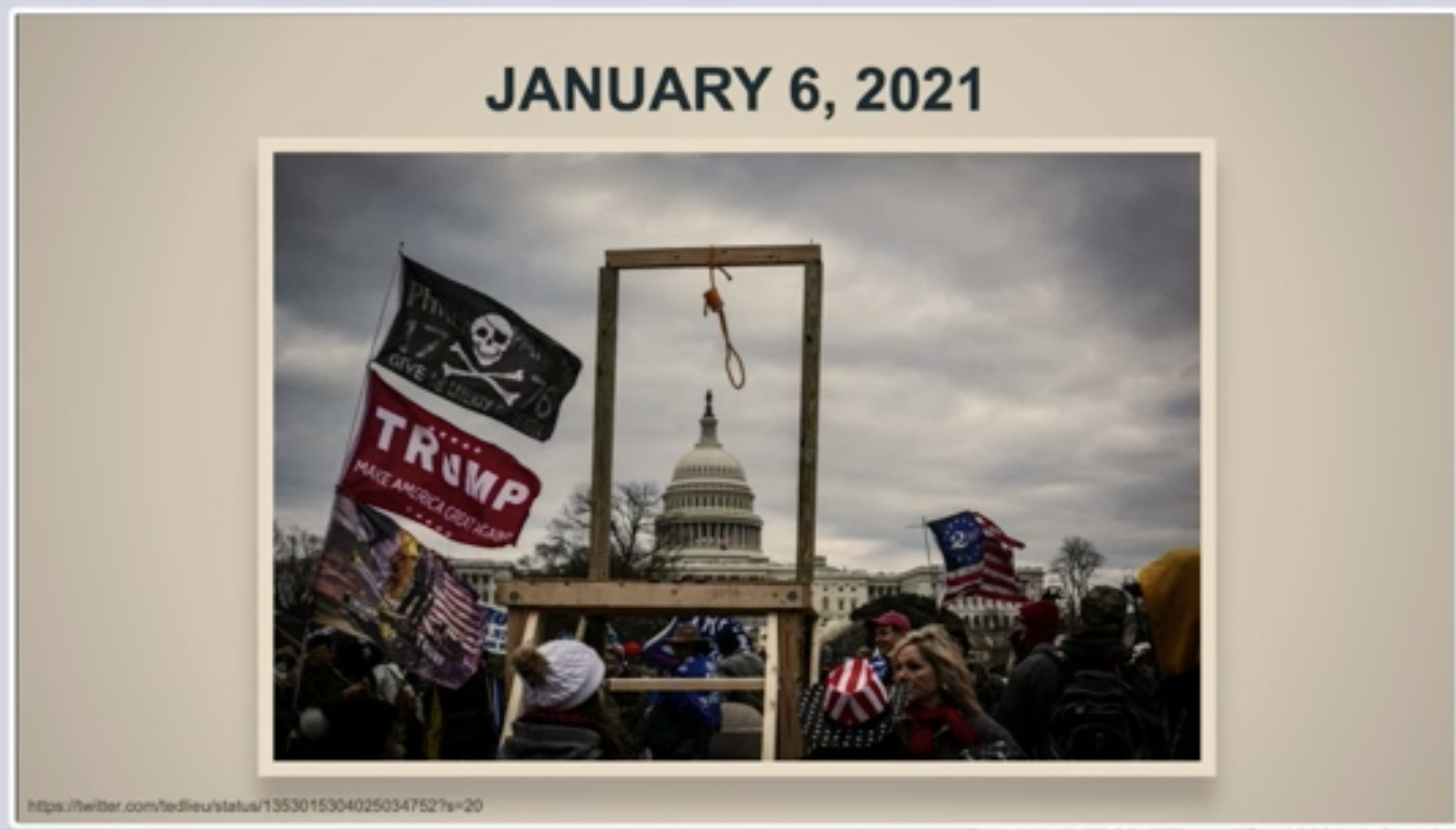
On Thursday, Mike Pence testified to the January 6 grand jury for over five hours. Many commentators have suggested — and I agree — that was one of the last major testimonial steps Jack Smith would need to take before deciding whether and if so how to charge Trump for inciting a mob to threaten to assassinate his Vice President.

But — in addition to Smith’s efforts to obtain recordings from Rudy Giuliani and others that former Fox producer Abby Grossberg has in her possession (which are going to make great evidence at trial) — there are still a few pieces that Smith’s prosecutors seem to be working on.

The most important of those may be continued appellate uncertainty regarding the law that Smith is likely to use to charge Trump and others in conjunction with January 6, obstruction of the vote certification, 18 USC 1512(c)(2), a charge successfully used against dozens of other January 6 defendants already. The DC Circuit will have a hearing on that, in an appeal former Virginia cop Thomas Robertson made of his obstruction conviction, on May 11.

To understand its import, let me explain how I think the various things Smith is investigating fit together. I think it likely that, in addition to some charges relating to the obstruction of this or the January 6 Committee’s investigation, Smith’s team is pursuing:

  • Conspiracy to defraud the United States for submitting fake elector certificates to the Archives (18 USC 371)
  • Obstruction of the vote certification and conspiracy to obstruct (18 USC 1512(c)(2) and (k))
  • Conspiracy to commit wire fraud (18 USC 1343; 1349)
  • Aiding and abetting assault (18 USC 111(b) and 2)

This differs from the January 6 Committee’s referrals in that I’ve included wire fraud, for which they provided abundant evidence, in an appendix, but did not include in their referrals. Also, I believe Smith would charge conspiracy tied to January 6 under 1512(k) rather than 371, as DOJ has been doing for over a year, not least because it provides stiffer sentences and more flexibility at sentencing. And I’ve suggested DOJ might use aiding and abetting of Michael Fanone’s assault based off Amit Mehta’s ruling addressing it and the evidence DOJ used in the Ed Badalian trial. I think that’s more likely than a charge for incitement of insurrection (18 USC 2383) unless DOJ built upwards off of still-hypothetical guilty verdicts in the Proud Boys case, but it might take time. I frankly think adding seditious conspiracy charges would be more likely than incitement of insurrection, if one spent the time to build up the intervening case, but that’s highly unlikely for constitutional reasons.

The way these three main charges — conspiracy to defraud tied to the fake elector certificates, conspiracy to obstruct the vote certification, and wire fraud — intersect likely provide some prosecutorial tools for the same reason that some Georgia Republicans are now turning on other ones.

While the fake electors case may seem like a slam dunk, the criminal exposure it presents is quite uneven.

Part of that stems from the fact that the extent to which a fake certificate was fraudulent is tied to state law about the requirements for elector ascertainment. On December 9, 2020, campaign lawyer Kenneth Cheesebro wrote down (!!) where such efforts would be less and more problematic.

Many of the States contested by the Trump team had laws that specified requirements for electors to validly cast and transmit their votes—and the December 9, 2020, memo recognized that some of these criteria would be difficult, if not impossible, for the fake electors to fulfill. (As described later, most were not fulfilled.) For example, Nevada State law required that the secretary of state preside when Presidential electors meet,16 and Nevada Secretary of State Barbara Cegavske, a Republican, had already signed a certificate ascertaining the Biden/Harris electors as the authorized, winning slate.17 Several States also had rules requiring electors to cast their votes in the State capitol building, or rules governing the process for approving substitutes if any original proposed electors from the November ballot were unavailable. As a result, Chesebro’s December 9, 2020, memo advised the Trump Campaign to abide by such rules, when possible, but also recognized that these slates could be “slightly problematic in Michigan,” “somewhat dicey in Georgia and Pennsylvania,” and “very problematic in Nevada.”18

That memo marks the moment when Trump’s official campaign lawyers like Justin Clark and Matt Morgan started to distance themselves from the campaign efforts, to be replaced by Rudy Giuliani and his band of merry warriors.

Something similar happened at the states, as smarter people insulated themselves from this stupid legal move. The fake electors in New Mexico and Pennsylvania included caveats that likely protects them from legal exposure; in other states (notably, Wisconsin) the fake electors credibly believed that the certificates would only be used if a court ruled that there was some remaining legal dispute. Fourteen fake electors refused to participate, several of whom had very useful things to say about its dubious legality even to the January 6 Committee.

While there’s lots of documentary record reflecting that Trump approved the plan, proving his knowledge of the legal problems with the fake certificates themselves would likely require witnesses who saw him do so after having been advised of the legal sketchiness of it all (that may have been among the things the two Pats, Philbin and Cipollone, were asked about in their grand jury testimony in December). To include Trump in these charges, you need witnesses. His call to Brad Raffensberger and his assent to a lawsuit using numbers known to be dodgy are related; his pressure on electors to participate is part of the same conspiracy; but to charge him with the conspiracy itself you need those direct witnesses (in addition to the two Pats, Jason Miller, Rudy, Mark Meadows, Epshteyn, and John Eastman are likely those witnesses).

By last June, the subpoenas DOJ sent out asking for communications with those deeply implicated reflected this differential exposure. So do the phone seizures of Mike Roman and Epshteyn in September, both of whom were key gatekeepers of this process. This post shows how the investigation proceeded from there. In other words, the parts of the fake elector investigation we can see reflect awareness from before the first J6C hearing that the scam implicated differential legal exposure.

That kind of differential exposure is the same thing that Fani Willis is using to secure cooperating witnesses in Georgia.

While I’ll come back to it, the same kind of differential exposure exists with the wire fraud case. Just as one example, while Justin Clark claims to have distanced himself from the obviously illegal fake elector scam, he remained in Trump’s employ as he spent the money earned from making false claims about voter fraud between November and January. He already would have had an incentive to provide evidence to prosecutors that he had no part of the fake electors scheme. His incentive to do so increases to the extent that he benefitted from fraudulent fundraising and spending.

But first I want to explain one thing Smith may be waiting on: A clear sense of how the DC Circuit will define “corrupt purpose” under 18 USC 1512(c)(2).

If he charges it, Smith will likely prove that Trump obstructed the vote certification by:

  • Asking Mike Pence to take action to delay the certification that Trump had been told was illegal (Greg Jacob, Mark Short, the two Pats, and Pence are witnesses to this, all of whom have now made Executive Privilege-waived grand jury appearances)
  • Falsely leading the mob to believe that Pence could take that action (changes Trump made to his speech, about which Stephen Miller was likely asked by the grand jury this month, and his tweets are evidence of this)
  • After Pence refused to take that action, using the mob to try to pressure him to take it anyway or to otherwise disrupt the certification (DOJ has spent two years obtaining evidence that this was, in fact, why many people rioted, with specific evidence tied to Danny Rodriguez)

Contrary to what a million TV lawyers have told you, to prove obstruction, Smith won’t have to prove Trump knew he lost. DOJ has repeatedly won convictions of other January 6 defendants who tried to use that as a defense.

DOJ will need to prove he had corrupt purpose in attempting to obstruct the vote certification. And what that means in the DC Circuit won’t be decided until after May 11.

This post provides both a summary of the debate as it existed in January. This post describes how a DC Circuit panel of Florence Pan, Justin Walker, and Greg Katsas ruled that 1512(c)(2) does apply to the vote certification and that obstruction can extend beyond documentary obstruction. It also explains how none of the three of them could agree on what “corrupt purpose” means, from which some January 6 defendants have tried to argue (unsuccessfully in at least two cases) that Walker’s preferred meaning should apply.

Wildly simplified, the three main definitions of what corrupt purpose might mean are:

  • Corrupt benefit
  • Using otherwise illegal means, which in the case of other January 6 defendants has meant trespass or assault
  • Aiming to obtain an unlawful benefit

On May 11, a DC Circuit panel including Pan, Poppy Bush appointee Karen Henderson, and Obama appointee Cornelia Pillard will consider whether former Virginia cop Thomas Robertson had the corrupt purpose required to be convicted of obstruction. As part of that, they’ll decide whether the earlier ruling decided the issue of what corrupt purpose is, and if not, what it is.

As I wrote, to the extent that Smith has proof Trump knew the fake elector certificates were fraudulent, 1512 should apply to Trump in every imaginable case, far more easily than it does with rioters. The attempted delivery of the fake elector certificates to Pence constitutes a documentary attempt to obstruct the vote certification. Trump’s illegal request to Pence, as well as the knowingly fraudulent lawsuit in Georgia and the effort to pressure Raffensperger, to say nothing of any incitement or aid-and-abet liability in the assaults, are illegal means he used to stop the vote certification. And Trump, more than anyone else involved in efforts to obstruct the vote certification on January 6 was seeking an unlawful personal benefit, the ability to remain in power for another term. Mitch McConnell protégé Walker clearly laid out that basis for that case in his concurring opinion in Fischer.

But former Trump White House counsel Katsas didn’t necessarily view the continued election of Donald Trump to be such an advantage, at least not for those accused of assault before him. He sought a stricter definition of “financial, exculpatory, or professional” gain.

Which brings me (back) to the wire fraud investigation, something that DOJ has been investigating since at least September and in which CNN reported DOJ got cooperators after January 6.

[T]he financial investigation has sought information about Trump’s post-election Save America PAC and other funding of people who assisted Trump, according to subpoenas viewed by CNN. The financial investigation picked up steam as DOJ investigators enlisted cooperators months after the 2021 riot, one of the sources said.

Wire fraud charges would closely resemble the successful Build the Wall prosecution for which Steve Bannon’s co-conspirators just got four year sentences (he was pardoned in for it in one of Trump’s last pardons but faces trial for the same scam in New York State in November). It would follow a similar wire fraud investigation of Sidney Powell that dates back to before September 2021.

If you think of these three prongs of the investigation, the wire fraud prong serves two purposes. First, many of the people who were witnesses but not subjects of the events leading up to January 6 might be subjects of the wire fraud investigation. As I noted, it may provide a tool to get cooperators.

Just as importantly, even under the most constrained definition of corrupt purpose for obstruction, grifting off false claims of election fraud would qualify.

That is, for Trump, a prosecutor should be able to prove corrupt purpose regardless of any conceivable standard that the DC Circuit or even a conservative SCOTUS would adopt, because he attempted to obstruct the vote certification so that he could remain President after losing the election.

But even if you don’t believe getting Trump elected provides an unlawful benefit to his supporters (or, to put it another way, disqualifying the votes of 81 million other Americans so yours counts more), disseminating false claims about voter fraud to get rich and then cashing in on that Big Lie for years afterwards is a different kind of corrupt purpose, the kind of financial corrupt purpose that Katsas is looking for.

If you riled up tens of thousands of Trump supporters who went on to attack the Capitol just so you could benefit financially, you’ve realized the kind of corrupt financial benefit from the riot that would seem to meet Katsas’ most constrained definition of corrupt purpose.

So it’s not just that the wire fraud part of the investigation is a crime that should, like all the other ways Trump and his flunkies have exploited his credulous followers, be prosecuted. It’s a important complement to the two other conspiracies, both because it’s likely to motivate more cooperators, but also because it helps to prove corrupt purpose for all the people who profited off the fraud.

And that may have an impact on the timing.

As I’ve noted, Trump should qualify under the definition of corrupt purpose no matter what the DC Circuit decides, though some of his flunkies might not. And so on top of whatever continued investigation Smith has to do on the wire fraud prong, he may want to wait until at least after that hearing before he makes final charging decisions.

Lots of people are impatient that neither Trump nor his flunkies have been charged thirty months after their crimes. But the likely charge hasn’t even been defined yet.

Links

Where the Trump Investigations Stand: Georgia

Where the Trump Investigations Stand: Stolen Documents

Where the Trump Investigations Stand: The January 6 Conspiracies

Share this entry

Where the Trump Investigations Stand: Stolen Documents

As noted in this post, I started to write short summaries of where the three main investigations into Trump stand, but they turned into posts. So I’m posting them serially.

In my post on the Georgia investigation, I noted that, as charging decisions have drawn near, Republicans in Georgia have started turning on each other. That’s worthwhile background for Jack Smith’s twin investigations.

That’s particularly true given the report that Boris Epshteyn met for two days with January 6 prosecutors on April 20 and 21, a report that has not yet been followed by any readout of what transpired, as well as the April 4 DC Circuit decision not to stay January 6 testimony from Mark Meadows and others, which similarly has not been matched by any report that Trump’s Chief of Staff has testified.

I’m not saying either man — both of whom are key players in both Jack Smith investigations — flipped. Both are dumbly loyal.

I’m saying that Smith is likely at the same point Willis is: trying to secure key witnesses for an eventual prosecution. Witnesses in a federal investigation might bank on Trump’s ability to beat Biden in 2024 and start pardoning people before they do serious prison time. If not, they might start seeking a deal. The single most useful thing about putting both Trump investigations under Smith is that he can leverage someone’s legal exposure in one part of the investigation to coerce their cooperation in another part where they’re crucial witnesses.

Epshteyn, for example, was the gatekeeper for the obstruction under investigation in the stolen documents case, as well as lawyers like Alina Habba who inexplicably testified in the documents case. But he’s also significantly exposed in the January 6 conspiracy. Plus, DOJ is currently investigating the cryptocurrency scam he and Steve Bannon used to dupe Trump supporters. He’s dumbly loyal. He’s also got a whole lot of criminal exposure.

From what we know of the stolen documents investigation, Smith has focused on three of the main questions he needs to answer for a charging decision:

  • Obstruction (18 USC 1519): What happened in advance and after June 3, 2022 that resulted in Trump’s non-compliance with the May 11 subpoena. Who ordered and who knew about it?
  • Espionage Act (18 USC 793): Are there classified documents that Trump deliberately hoarded about which prosecutors could tell compelling stories that would not, also, result in more damage to national security if declassified for trial?
  • Deliberate removal (18 USC 2071): To what degree did Trump deliberately curate classified documents he wanted to take? Were there documents that his advisors persuaded him should not be declassified that he took when he left anyway? I think this is the least likely charge, unless there’s evidence that Trump stole stuff he had not managed to convince others to release publicly while President.

But there’s another question that may be just as important as the evidence to support the charges, and may elicit quite a debate within DOJ: venue. The easiest way to overcome all the difficulties with charging a former President with 793 would be to charge his retention of documents after the time when:

  1. The Archives had explained that retaining them was unlawful under the Presidential Records Act
  2. Both the Archives and DOJ had asked for them back
  3. Jay Bratt had informed him (through Evan Corcoran) that they were being stored improperly

That is, if he were to charge 793, Smith would likely charge for actions trump took between May and August of last year, at Mar-a-Lago. So (while some smart lawyers disagree) there would be at least a fair argument that it would have to be charged in SDFL.

Ideally any charges against a former President would be strong enough to convince a South Florida jury, but the possibility of Aileen Cannon presiding over such a trial would be daunting. Plus, judges in DC have far more experience dealing with cases involving classified information than most other districts other than EDVA.

Whereas, if Smith were to charge only obstruction, venue in DC is not a stretch at all.

The letter Trump’s lawyers sent to Mike Turner makes clear they believe (or hope) Trump will be charged only with obstruction. Their defense right now is that the Archives never should have referred the 15 boxes of classified records to the FBI (never mind that NARA did the same with Joe Biden), and therefore DOJ should never have issued the subpoena he blew off.

This defense has the advantage of playing to Republican voters who can easily be persuaded that Biden is being treated differently than Trump. That Trump’s lawyers have adopted it may suggest they believe that a President’s unfettered ability to declassify secrets would make 793 charges more difficult.

It would, normally! But DOJ has, at least, laid the groundwork to do just that. Much of what has been perceived as delay really consists of the Archives and DOJ working through each of the reasonable approaches past Presidents, as well as Biden and Mike Pence have adopted to classified documents. But ultimately the subpoena created the conditions in which prosecutors could easily prove the elements of the offense of a 793 charge: that he (1a) refused to give back (2) national defense information (3) in unsecure conditions (1b) after someone asked him to give it back.

Not only are Trump’s attorneys wildly ill-suited to an Espionage case, but as they admit in the letter, they haven’t reviewed the classified documents Trump retained. If, as some of the questions reportedly asked of witnesses seems to have suggested, Trump tried to curate classified documents for his own personal revenge, then it may make 793 charges more compelling.

And some of the last witnesses Smith brought in on this case, even after Evan Corcoran seemingly finalized evidentiary testimony on April 4, were the men who had declassified — but also, in some cases, declined to declassify — documents of unprecedented sensitivity for Trump, often in pursuit of revenge.

There’s one other matter that likely poses a challenge as Smith decides whether to charge this case: the challenge of getting any remaining documents back. Beryl Howell never gave DOJ the contempt ruling they wanted to use to compel Trump’s lawyers to retrieve remaining documents. Another way of doing so would be to conduct a coordinated search at the moment of a defendant’s arrest. But that would require a dramatically different kind of arrest than we expect to see.

Note that Trump has plans to visit his Irish golf resort this week.

Links

Where the Trump Investigations Stand: Georgia

Where the Trump Investigations Stand: Stolen Documents

Where the Trump Investigations Stand: The January 6 Conspiracies

Share this entry

Where the Trump Investigations Stand: Georgia

For something else entirely, I started writing what I thought was going to be a short summary of where the three major investigations into Trump stand. But those summaries ended up getting long, so I’m going to publish them serially, starting with Fani Willis’ Georgia investigation.

This post relies on the work of others following the investigation far more closely, especially Lawfare’s Anna Bower and GPB’s Stephen Fowler. But the following two posts, on the stolen documents investigation and Jack Smith’s January 6 investigation, will build off this.

In a bid to keep the Special Grand Jury’s recommendations secret in January, Fani Willis said the charging decisions were “imminent.” Since then, however, the regular Fulton County grand juries that would have to charge Trump and others have been churning out indictments for more ordinary crimes. According to Andrew Fleischman, there are 18,000 pending felony cases in Fulton County, many of them being held pre-indictment. Like some of the delays in the January 6 investigation, this backlog stems in part from COVID restrictions.

But it wasn’t just that backlog that has delayed charges against Trump. In March, Willis asked Christina Bobb for an interview (who refused). It may be that, after reading Bobb’s January 6 Committee testimony (transcripts of which were only released after the Fulton Special Grand Jury expired), Willis discovered that, while Bobb claimed to have been uninvolved in the crimes in Georgia, she testified that she and, “at least two dozen others,”  over at least two rooms, sat in on Trump’s call to Brad Raffensperger, and “we all thought … it was totally fine.” On top of discovering that there were up to 24 witnesses who might be willing to misrepresent the call at trial, this may have caught Rudy Giuliani in a lie. After it became public, Rudy amended his interrogatories in Ruby Freeman’s lawsuit to reflect some involvement in the call as well. Someone recently claimed to me that Willis’ case is “open and shut.” But it’s not “open and shut” if there were 24 unknown witnesses involved.

More famously, according to a letter seeking to disqualify an attorney representing most of the fake electors, Willis has been spending recent weeks interviewing fake electors and telling them, allegedly for the first time, that they could get immunity deals if they testified against other Republicans. Friday, one of the fake electors who also accessed voting machine data on January 7, joined Trump’s effort to undercut Willis’ authority, represented by a new attorney. All of which suggests that Willis is spending time not just making charging decisions, but making sure she can win the case.

On Monday, Willis informed the Fulton County Sheriff that she will be announcing charges in the investigation during the summer grand jury session that goes from July 11 to September 1, and requested he prepare for increased security accordingly. She wouldn’t ask for such measures if she hadn’t decided to charge the kind of people who incite riots. So there’s a very good chance she will charge Trump and his flunkies, and we have a pretty good idea when it will happen.

Links

Where the Trump Investigations Stand: Georgia

Where the Trump Investigations Stand: Stolen Documents

Where the Trump Investigations Stand: The January 6 Conspiracies

Share this entry

Where Is The Proud Boys Verdict?

Friday has come and gone without a jury verdict in the Proud Boys case in front of Tim Kelly in DC District Court.

Couple of days ago, somebody asked me when I expected a verdict. That is fools’ play, but I said probably Friday because juries want to get on with their lives, and not come back, yet again, the next week.

Apparently I got that all wrong. Go figure.

So why did the PB jury blow past an obvious chance to be done? I do not know that either, but there is a fair chance it is not about ultimate guilt or innocence, but about multiple defendants and the complexity of the seditious conspiracy charge so many people (even here) have long clamored for.

Sometimes you get what you asked for, and that may be the case here. Counts, charges and jury instructions matter. I hope that is not the holdup here, but very much fear it could be. And that is what happens when you do not keep things narrow and strong.

We shall see.

Share this entry