Pence’s Previously Redacted Documents and The Corcoran Scapegoating

Time for another update on the various investigations into stolen and mishandled documents.

Start with Mike Pence, who thus far, the press has assumed, is the safest among the three men being investigated from legal exposure.

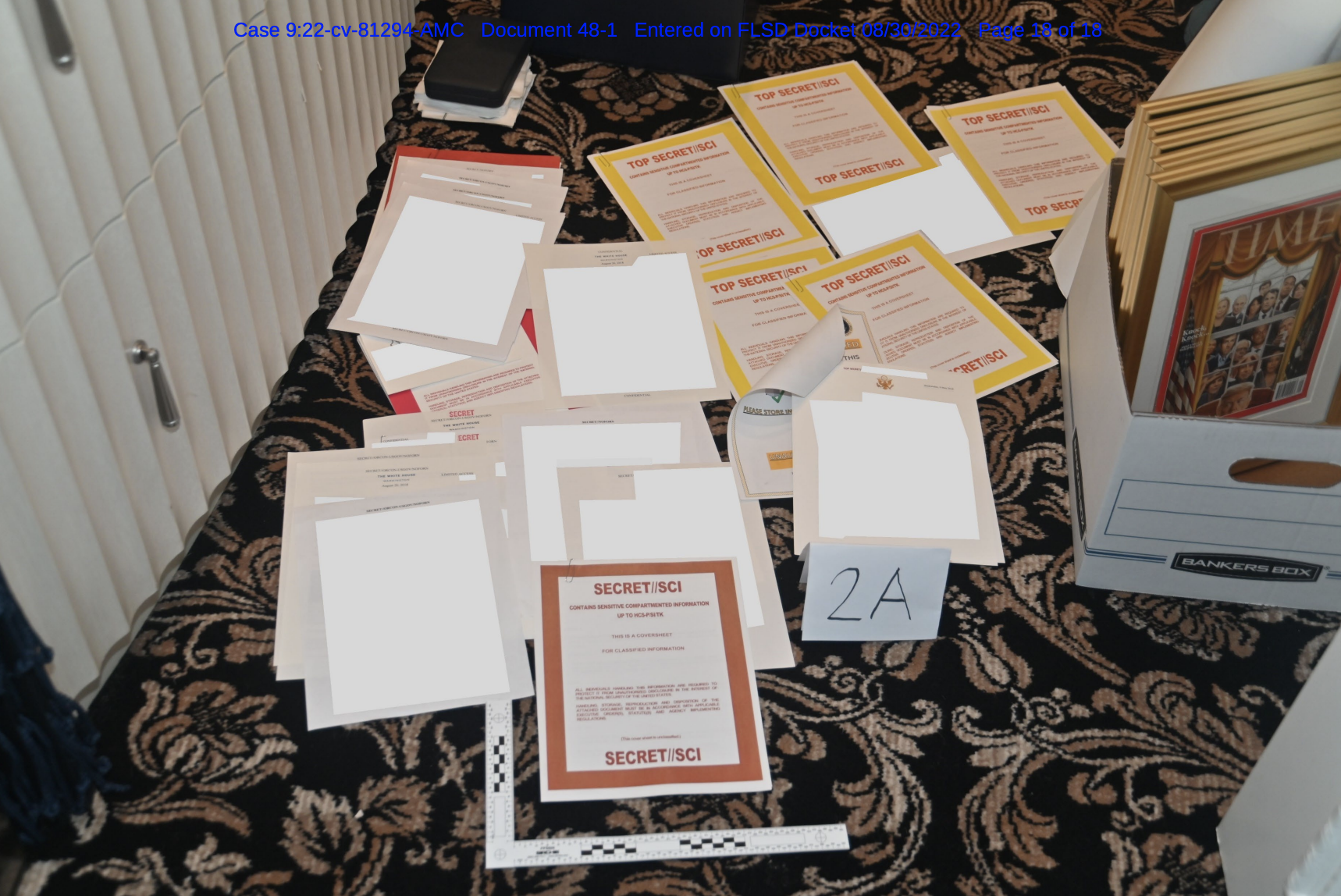
The Friday before a holiday weekend, Pence’s team revealed FBI searched Pence’s office. The topline result was that they didn’t find any documents with classification markings, but the FBI did seize three “previously redacted documents.”

Federal agents removed three “previously redacted documents” — but none with classified markings — during an hours-long search of the office of former Vice President Mike Pence’s public policy organization Friday, Advancing American Freedom, according to a Pence spokesman.

That detail raises more questions than answers: It’s hard to understand why, even under the Presidential Records Act, FBI would seize previously redacted documents.

Further in, the same story hinted at one possible reason: if certain no-longer classified documents reveal the import of other documents marked as classified. For example, consider the possibility of a tie between the debate prep materials from Pence’s office and the package of documents seized from Pence’s home.

The documents taken Friday are believed to be materials used for 2020 debate preparation, a person familiar with the matter said.

Last week, the FBI removed one classified document and six other documents during a voluntary search of Pence’s Indiana home. A person familiar with the search told NBC News earlier this week that at least one other item was taken at that time because the relevant materials “were kept in a place that required the FBI to take more than just the documents.”

Such a tie might be exculpatory, for example: it might suggest that documents with classification markings had already been declassified in advance of some prepared debate line. Much of the debate between Pence and Kamala Harris focused on COVID response and China. It would be unsurprising for Trump to declassify information on China’s role in COVID in advance of that debate; nor would it be surprising to find such papers at Pence’s home, given his role in COVID response.

Two other topics from the debate potentially implicating classified materials might be resonate with the Trump investigation, though. To defend Trump’s national security record, for example, Pence raised the execution of Qasim Soleimani, claiming Trump ordered the attack, “when Qasim Soleimani was traveling to Baghdad, to harm two Americans.” Given the visible dates of the highly classified documents at Trump’s home, it would be unsurprising if one or several of those documents related to this decision, stolen as trophies of Trump’s most self-satisfying order as President.

Also in the debate, as part of a false claim that he and Trump had been spied on by the FBI, Pence raised a CIA document unsealed and submitted to the Mike Flynn docket days earlier.

[T]he FBI actually spied on President Trump and my campaign. I mean there were documents released this week that the CIA actually made a referral to the FBI documenting that those allegations were coming from the Hillary Clinton campaign

If these were among the previously redacted documents at Pence’s home, it would suggest that Trump’s obsession with stealing documents pertaining to the Russian investigation had spilled (heh) over into documents in Pence’s possession.

This is all speculative. But the report that FBI took documents that would not obviously substantiate either the mishandling of classified documents or a violation of the Presidential Records Act for the first time suggests that FBI may be pursuing some more interesting explanation for the classified documents at Pence’s home.

Things get more interesting when you turn to Mar-a-Lago.

Also on Friday, Rolling Stone told a tale that suggests Trump is being advised to ditch Evan Corcoran as a lawyer because he’ll soon be charged. To be clear: neither Rolling Stone nor I are claiming Corcoran will be charged.

The story, by Asawin Suebsaeng and Adam Rawnsley, is likely legal nonsense. But the two have reported a series of insider stories on Trump world that capture — perhaps more than any other journalistic team — the batshittery going on close to the former President. This is not bad reporting. Rather, it seems to be accurate reporting that captures the batshittery and bullshit of Trump’s inner circle. One story that is a close analogue of this one described how Trump wanted to expose the IDs of people involved in the Russian investigation, on that piggybacked off a NYT story that served as cover for the centrality of Russian documents in Trump’s obsession with stealing documents.

Anyway, this story may be explained by two earlier reports.

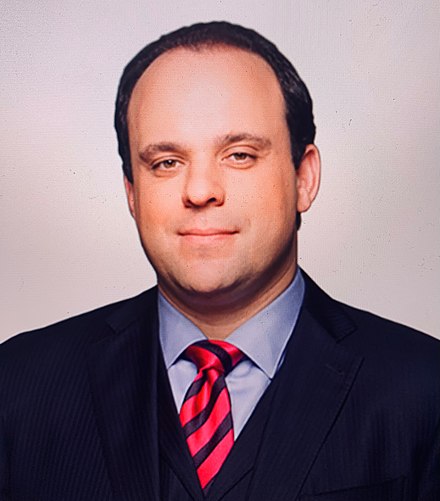
On February 14, the NYT version of the story that DOJ was seeking a crime-fraud waiver for Corcoran’s testimony included the detail — amid reports that multiple witnesses have been asked about Boris Epshteyn’s role in withholding the stolen documents — that Epshteyn once sought to establish a joint representation.

Prosecutors overseeing the documents investigation have also been asking witnesses questions about Boris Epshteyn, who has played a central role in coordinating lawyers on several of the investigations involving Mr. Trump, according to multiple people briefed on the matter. It was Mr. Epshteyn who first brought Mr. Corcoran into Mr. Trump’s orbit.

At least three lawyers have sat for interviews with the Justice Department during which questions about Mr. Epshteyn were asked — among them Ms. Bobb and, more recently, Alina Habba, people with knowledge of the matter said. A third lawyer close to Mr. Trump, Jesse Binnall, has also spoken with prosecutors about Mr. Epshteyn, the people said.

One person briefed on the interviews said that investigators were interested in discussions between Mr. Epshteyn and others about establishing a possible common-interest privilege in the documents case. A common-interest privilege creates a kind of umbrella privilege allowing groups of lawyers and clients to communicate with each other confidentially.

Such common-interest agreements are frequently used in cases with multiple lawyers and multiple witnesses. But prosecutors are asking questions indicating they’re interested in whether Mr. Epshteyn was trying to improperly influence witness testimony, the person briefed on the interviews said.

The NYT story bears the same markers of MAL bullshit that some others on this story do, notably, claiming that Beryl Howell has always ruled against Trump when (among other things) she has deferred certain decisions, like holding Trump in contempt, forcing DOJ to do more work. There’s good reason to believe the claim is just the regurgitated bullshit claims made by Trump’s lawyers.

On February 17, Reuters reported (and thus far, they appear to be alone with this scoop) that Corcoran’s firm hired an attorney to represent him.

A lawyer for former President Donald Trump retained an attorney to represent himself as prosecutors step up their inquiry into the handling of sensitive documents at Trump’s Florida residence, two people familiar with the matter told Reuters on Thursday.

Evan Corcoran, who has represented Trump in interactions with the government over presidential records taken to his Mar-a-Lago resort, has turned to Michael Levy, a prominent white-collar lawyer in Washington, according to people familiar with the matter.

Levy was hired by Corcoran’s law firm, Silverman Thompson Slutkin & White, to represent Corcoran in the probe, according to one of the people.

This is not surprising. It’s grown up lawyering. But it provides important context of Epshteyn’s call to adopt a joint defense, in part because it explains with whom Epshteyn might want to form a mutual defense, in addition to the lawyer representing Christina Bobb and Alina Habba.

With that background in mind, take a look at the Rolling Stone piece. It describes not that Corcoran will be charged, but that Trump is being advised he will be.

In at least three meetings this year, according to two sources familiar with the matter, legal and political counselors to Trump have urged him to dump Evan Corcoran, one of the ex-president’s top attorneys in the federal probe into Trump’s handling of classified documents.

Some of the former president’s lawyers have explicitly told Trump that, based on information they have privately reviewed, they believe the Department of Justice has a strong case against Corcoran, arguing charges — including potentially for obstruction of justice — are “very likely,” the sources said. These advisers have argued that if the Justice Department indeed does come for Corcoran, it’s imperative for Trump to distance himself to avoid being dragged into possible further legal jeopardy by his own attorney.

Trump, the sources say, sounded “receptive” to their perspective. However, as of mid-February, it appears he wasn’t as receptive as they had hoped: Corcoran is still on Trump’s legal team.

As RS describes it, this is explicitly an attempt to pin the blame for what happened last summer on Corcoran.

Several of Trump’s close advisers who’ve recently spoken to him about this have argued to the ex-president that any potential wrongdoing on this matter could, somehow, be pinned entirely on Corcoran, and not Trump himself.

Even better, it includes this claim — that excludes Epshteyn from the list of lawyers whom DOJ might be targeting.

“These types of motions [requesting that a judge nullify attorney-client privilege based on the crime-fraud exception] would only be served upon the attorneys who’ve appeared in the case: Jim Trusty, John Rowley, Evan Corcoran, Tim Parlatore, and Lindsey Halligan; the five of them would be the only people who have access to these documents,” says a person familiar with the internal proceedings of Trump’s legal team. “Any source other than that would not be speaking from a position of access and would likely be speaking based on their own personal agenda, rather than actual facts. [Furthermore], when DOJ targets lawyers, it is often being done from a position of weakness in their underlying case, as a method of undermining the integrity of the defense legal team. Removal of Evan Corcoran … would serve the purpose of giving DOJ exactly what it wanted.” [bracket original]

Epshteyn has been at the center of these discussions from the start — he’s the guy who brought in Corcoran, he’s the guy who called up Christina Bobb and had her show up to be a fallgal for a misleading declaration on June 3. To exclude him from this comment — either because he’s the one you’re talking to or because someone is trying to obscure his centrality in all of it — is telling.

Trump’s lawyers believe that they can wait out the end of Beryl Howell’s term and they’ll be the ones who decide whether DOJ can get a crime-fraud exception for Corcoran’s testimony. That may not even be the case if Corcoran plays along. But if he doesn’t — if his own lawyer advises him that fighting a crime-fraud determination puts him in legal risk he’s not currently in — then it may explain why people at MAL are trying to preemptively claim Corcoran was behind a lot of epically shitty legal advice last summer and not Epshteyn.

Share this entry

Kevin McCarthy Makes Sensitive Security Footage Available to the Insurrectionists’ Propagandist

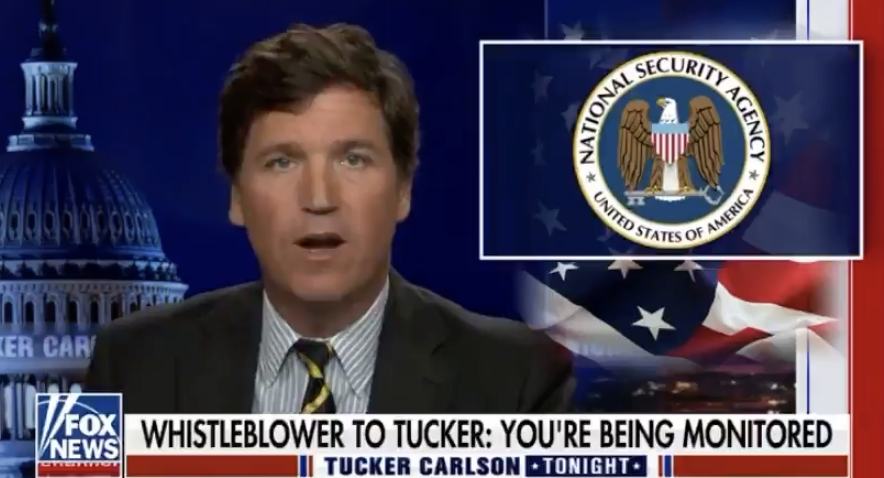
Yesterday, Mike Allen revealed that Kevin McCarthy had made all the security footage from January 6 available to Tucker Carlson.

House Speaker Kevin McCarthy has given Fox News’ Tucker Carlson exclusive access to 41,000 hours of Capitol surveillance footage from the Jan. 6 riot, McCarthy sources tell me.

  • Carlson TV producers were on Capitol Hill last week to begin digging through the trove, which includes multiple camera angles from all over Capitol grounds. Excerpts will begin airing in the coming weeks.

Why it matters: Carlson has repeatedly questioned official accounts of 1/6, downplaying the insurrection as “vandalism.”

That he did this is not a surprise. As Allen himself writes, McCarthy has been working on this since early February. And the extremists who used McCarthy’s Speakership to demand concessions have been calling for this almost from the start.

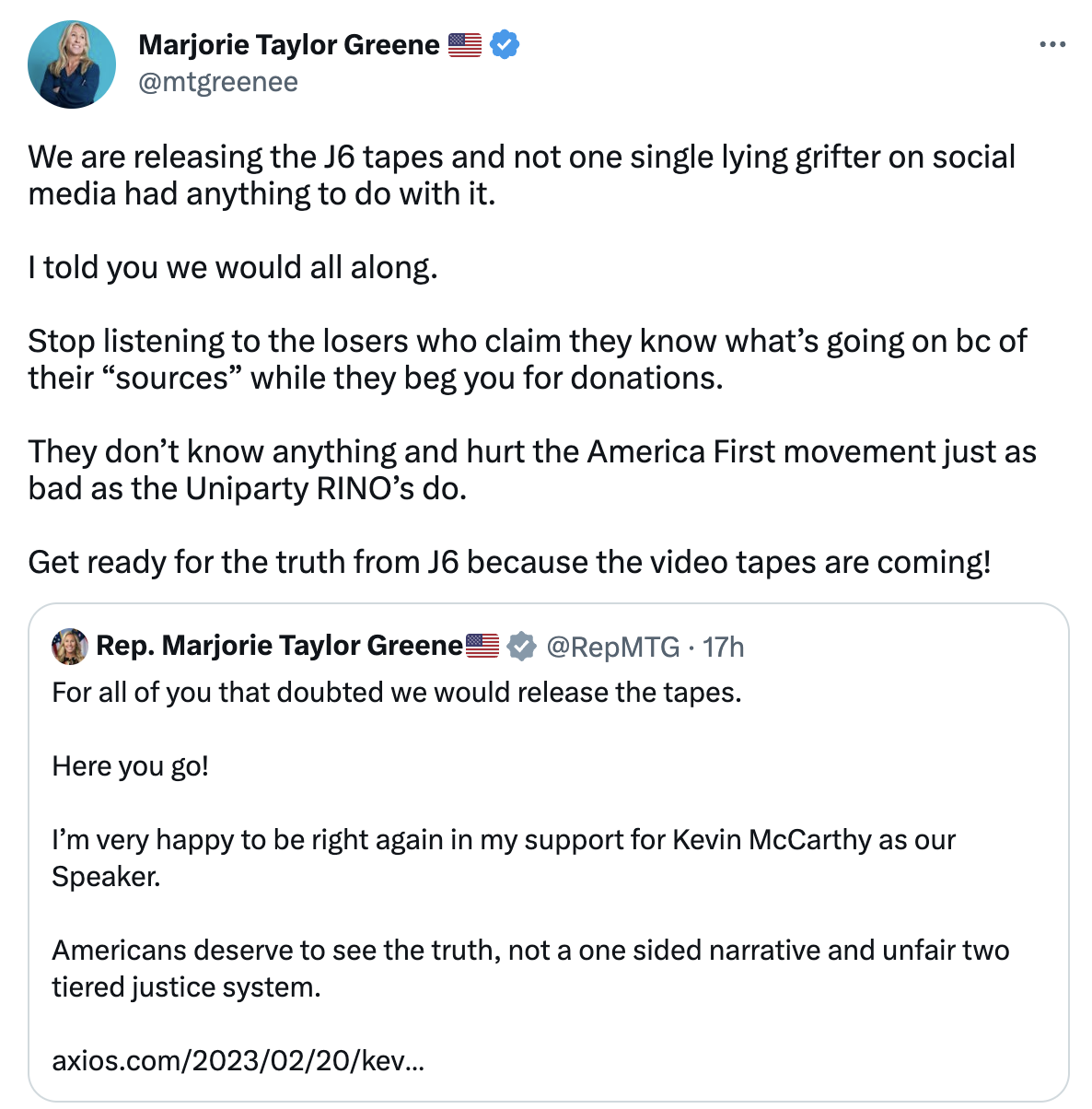
Of particular note, Marjorie Taylor Greene, who spent part of the day yesterday calling for the red states (which may no longer include Georgia) to secede, again, like the last time white supremacists grew impatient with living in an aspiring democracy, spent much of the rest of her day taking credit for the release, tying it directly to her support for McCarthy as Speaker.

Let me repeat that: The person who took credit for this release was, just two hours earlier, calling for Civil War.

And McCarthy provided access to this video to the biggest propagandist for those who attacked the Capitol. Starting almost immediately after  some of his viewers attacked the the Capitol, Tucker has been running insanely stupid conspiracy theories, claiming the attack was launched by the Deep State rather than his own viewers and allies. Tucker eventually packaged the propaganda into such a slick propaganda film, it led conservative journalists to leave.

This time around, Tucker might opt for instructing his viewers how to succeed with the next attack rather than lying about the last one.

Depending on the terms via which McCarthy made this footage available, it could also be shared with foreign adversaries. Tucker has long been chummy with Viktor Orbán, and he himself revealed he had been picked up on intercepts seeking a back channel with Russia.

The outcome of this release is hard to measure at this point.

While defendants already have access to any video to their case, when stuff gets released via an alternate channel like this, they often use it to launch new legal challenges and claims of discovery violations. At the very least, this will create new delays and headaches for already overburdened prosecutors.

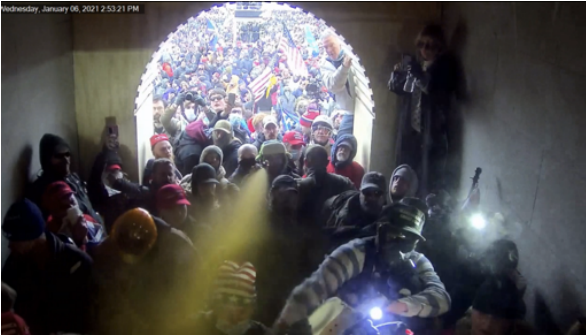
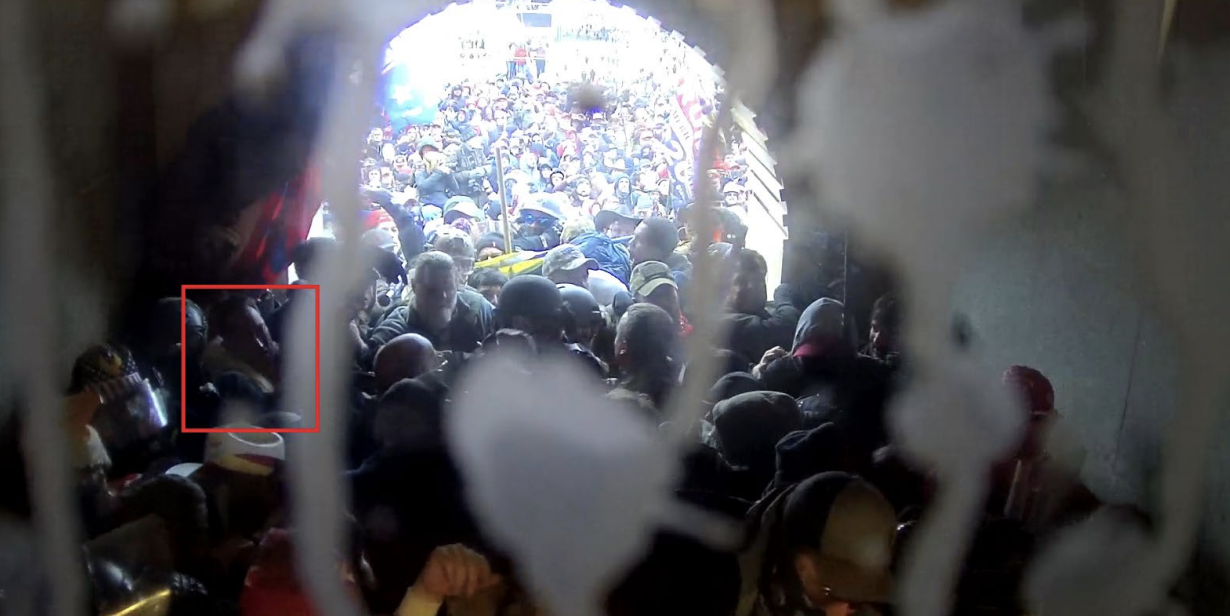
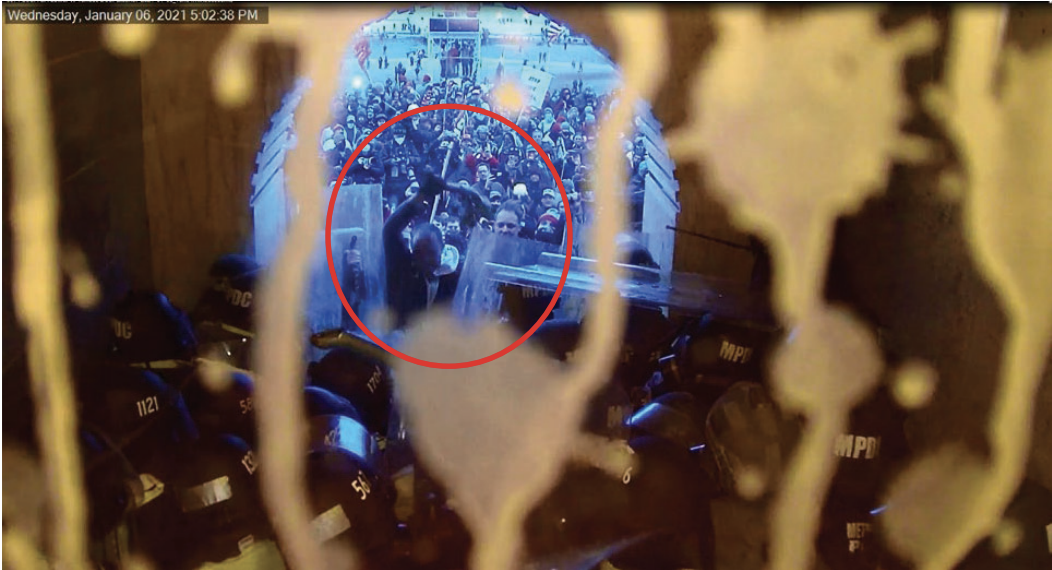
The security implications, however, are more serious. I did a post in December 2021 showing how video from just one camera over the course of the day — in this case, from the Tunnel through which Joe Biden would walk to be inaugurated weeks later — would reveal where key security cameras were and how to disable them.

It’s likely that the Capitol police has replaced some of these cameras in the interim because the process of prosecuting all those who attacked the Capitol has already compromised their effectiveness.

The other thing making all the video available at once will do is identify where there aren’t (or weren’t) security cameras.

One of those places is McCarthy’s own office.

It’s bad enough that McCarthy made the unilateral decision to release these. It’s bad enough that he decided to release these to someone who, the Dominion lawsuit just revealed, was willing to undermine the democratically elected government of the country for partisan gain.

But McCarthy released them exclusively to Tucker Carlson, meaning they won’t be used to crowdsource more identifications, but will instead be used solely for the purpose of propaganda.

We have yet to get a full accounting for all the commitments McCarthy made to be elected Speaker. But this decision makes clear that he was willing to sell out the country to get the position.

Update: WaPo has a really helpful story on what this means.

The decision by McCarthy to provide the video to Carlson raised serious questions about whether the release of the footage would force U.S. Capitol Police to change the location of security cameras and why the speaker would give the material to a Fox News host who has peddled conspiracy theories about the attack and not share it with other news organizations.

McCarthy, who made numerous concessions to the far-right flank in his GOP conference to win enough votes to become speaker, has said that Republicans would investigate the work of the bipartisan Jan. 6 committee. McCarthy also vowed that Republicans would launch their own inquiry into “why the Capitol complex was not secure” on the day.

[snip]

People familiar with the video footage say that the committee investigating the Jan. 6 insurrection had access to a special dedicated terminal installed in the committee office that had password- protected access to the volume of footage. The committee asked for permission from U.S. Capitol police before they used any of the footage in public hearings, these people said, as they did not want to publicly disclose the location of security cameras in the building.

The committee cut and minimized use of the footage accordingly, these people added.

“We used the material that we thought was most important in demonstrating findings, and we were extremely cautious in what we chose to use,” said a former committee staffer who expressed concerns about the security risks posed by Carlson’s access to the entire trove of surveillance footage. The individual spoke on the condition of anonymity to talk freely about the internal work of the panel.

Share this entry

James Comer’s Twitter Hearing Confirmed Donald Trump’s Censorship Attempt and Matt Taibbi’s “Censorship” about It

“When did these guys drink the Kool-Aid, and who served it to them?” the NYT quoted Bob Luskin as saying of John Durham and Bill Barr in last month’s blockbuster, revealing scandalous new details about the Durham investigation.

The answer is clear: both men had pickled in conspiracy theories floated on Fox News, and several specific investigative prongs were laundered through a Mark Meadows House “investigation” and a Lindsey Graham Senate one, to be picked up by Durham as if formally referred.

One of the most alarming disclosures in the NYT blockbuster on the Durham investigation, for example, was that after the Italians provided a tip about Trump’s criminal exposure on a junket that Barr and Durham took together in 2019, someone leaked to the press that a criminal investigation into others, not Trump, had been opened.

The trip to Italy about came after George Papadopoulous aired conspiracy theories — suspicions he explicitly attributed to right wing outlets, not his own personal knowledge — in a House Oversight hearing.

[T]he belief that got Bill Barr to fly to Italy — that Mifsud actually works for Western, not Russian, intelligence — Papadopoulos cited to a Daily Caller article which itself relayed claims Mifsud’s Russian-backed lawyer made he had read the day before.

Q Okay. So, and Mifsud, he presented himself as what? Who did he tell you he was?

A So looking back in my memory of this person, this is a mid-50’s person, describes himself as a former diplomat who is connected to the world, essentially. I remember he was even telling me that, you know, the Vietnamese prime minister is a good friend of mine. I mean, you have to understand this is the type of personality he was portraying himself as.

And, you know, I guess I took the bait because, you know, usually somebody who — at least in Washington, when somebody portrays themselves in a specific way and has credentials to back it, you believe them. But that’s how he portrayed himself. And then I can’t remember exactly the next thing that happened until he decided to introduce me to Putin’s fake niece in London, which we later found out is some sort of student. But I could get into those details of how that all started.

Q And what’s your — just to kind of jump way ahead, what’s your current understanding of who Mifsud is?

A My current understanding?

Q Yeah. A You know, I don’t want to espouse conspiracy theories because, you know, it’s horrifying to really think that they might be true, but just yesterday, there was a report in the Daily Caller from his own lawyer that he was working with the FBI when he approached me. And when he was working me, I guess — I don’t know if that’s a fact, and I’m not saying it’s a fact — I’m just relaying what the Daily Caller reported yesterday, with Chuck Ross, and it stated in a categorical fashion that Stephan Roh, who is Joseph Mifsud’s, I believe his President’s counsel, or PR person, said that Mifsud was never a Russian agent.

In fact, he’s a tremendous friend of western intelligence, which makes sense considering I met him at a western spying school in Rome. And all his interactions — this is just me trying to repeat the report, these are not my words — and when he met with me, he was working as some sort of asset of the FBI. I don’t know if that’s true or not. I’m just reporting what my current understanding is of this individual based on reports from journalists.

[snip]

Q And then at what point did you learn that, you know, he’s not who he said he was?

A Like I said, I don’t have the concrete proof of who this person is. I’m just going with reports. And all I can say is that I believe the day I was, my name was publicly released and Papadopoulos became this person that everyone now knows, Mifsud gave an interview to an Italian newspaper. And in this newspaper, he basically said, I’m not a Russian agent. I’m a Clinton supporter. I’m a Clinton Foundation donor, and that — something along those lines. I mean, don’t quote me exactly, you could look up the article yourself. It is in La Republica. And then all of a sudden, after that, he disappears off the face of the planet, which I always found as odd.

[snip]

I guess the overwhelming evidence, from what I’ve read, just in reports, nothing classified, of course, because I’m not privy to anything like that, and considering his own lawyer is saying it, Stephan Roh, that Mifsud is a western intelligence source. And, I guess, according to reports yesterday, he was working with the FBI

Less than a year after this testimony, Barr and Durham were flying off to Italy together to chase down Papadopoulos’ feverish imaginings.

It’s not that Barr and Durham believed Papadopoulos to be credible; Durham never interviewed the Coffee Boy, not even to assess Sergei Millian’s credibility before indicting Igor Danchenko based on Millian’s hearsay claims. But they nevertheless chased that clear conspiracy theory all the way to Italy together.

The Congressional hearing — a hearing that didn’t even incorporate Papadopolous’ own emails, which would have made it harder for the convicted liar to sustain a number of the claims he made — served as a way to legitimize what were obviously rewarmed frothy rants. The hearing was a messaging vehicle that served to legitimize garbage claims. Had the press called this out as a circus in real time, it might have forestalled some of Barr and Durham’s own stunts.

The same is happening again, with the multiple “investigations” pitched by the new GOP-led House. And much of the press is playing along again, treating the hearings as both-sides disputes about the truth, rather than clear efforts to mainstream conspiracy theories that supplant any hold on the truth.

Consider James Comer’s hearing with former Twitter executives (video, transcript), a hearing called in response to Matt Taibbi’s sloppy rants about files selectively released by Elon Musk, the same kind of conspiracy theories floated during the Russian investigation by right wing outlets and then legitimized by Congressional hearings.

The finding of Comer’s hearing is clear: the witnesses all rebutted any claim that government influence drove the decision to throttle the NYPost report on a laptop that Rudy Giuliani claimed belonged to Hunter Biden. The hearing exposed that the claimed basis for legislative interest in Twitter’s actions was baseless. That should been the headline: James Comer’s conspiracy theory flopped. James Comer exposed, wasting taxpayer dollars.

Worse still for the Congressman from Kentucky, witness testimony revealed just one instance of the federal government affirmatively asking that content be taken down, just one instance of censorship. That demand came from Donald Trump.

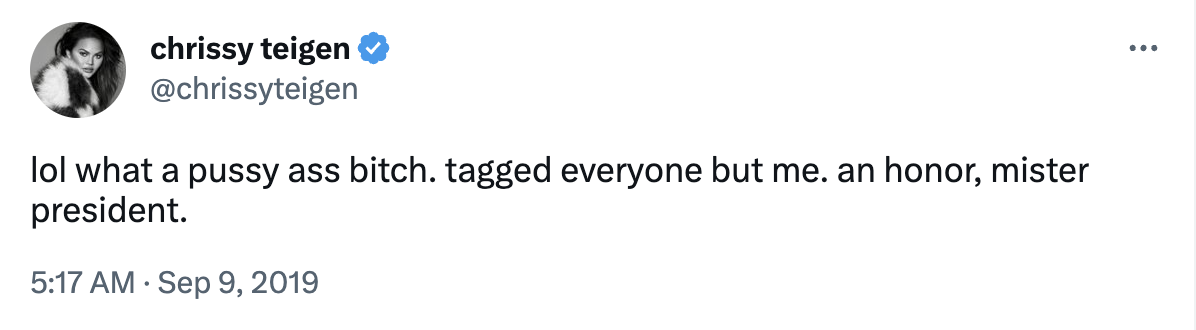
As Twitter whistleblower Anika Navaroli explained in response to a Gerry Conolly question, when Chrissy Teigen responded to a Trump  attack on her by calling him a, “pussy ass bitch,” the White House asked Twitter to take the tweet down.

Rep. Gerry Connolly (D-VA):

Okay. On September 8th, 2019 at 11:11 PM Donald Trump heckled two celebrities on Twitter. John Legend and his wife, Chrissy Teigen, and referred to them as the musician, John Legend and his filthy mouthed wife, Ms. Teigen responded to that email at 12:17 AM and according to notes from a conversation with you, Ms. Navaroli’s counsel, your counsel, the White House almost immediately thereafter contacted Twitter to demand the tweet be taken down. Is that accurate?

Anika Collier Navaroli:

Thank you for the question. In my role, I was not responsible for receiving any sort of request from the government. However, what I was privy to was my supervisors letting us know that we had received something along those lines or something of a request. In that particular instance, I do remember hearing that we had a request from the White House to make sure that we evaluated this tweet and that they wanted it to come down because it was a derogatory statement directly towards the President.

Rep. Gerry Connolly (D-VA):

They wanted it to come down. They made that request.

Anika Collier Navaroli:

To my recollection, yes.

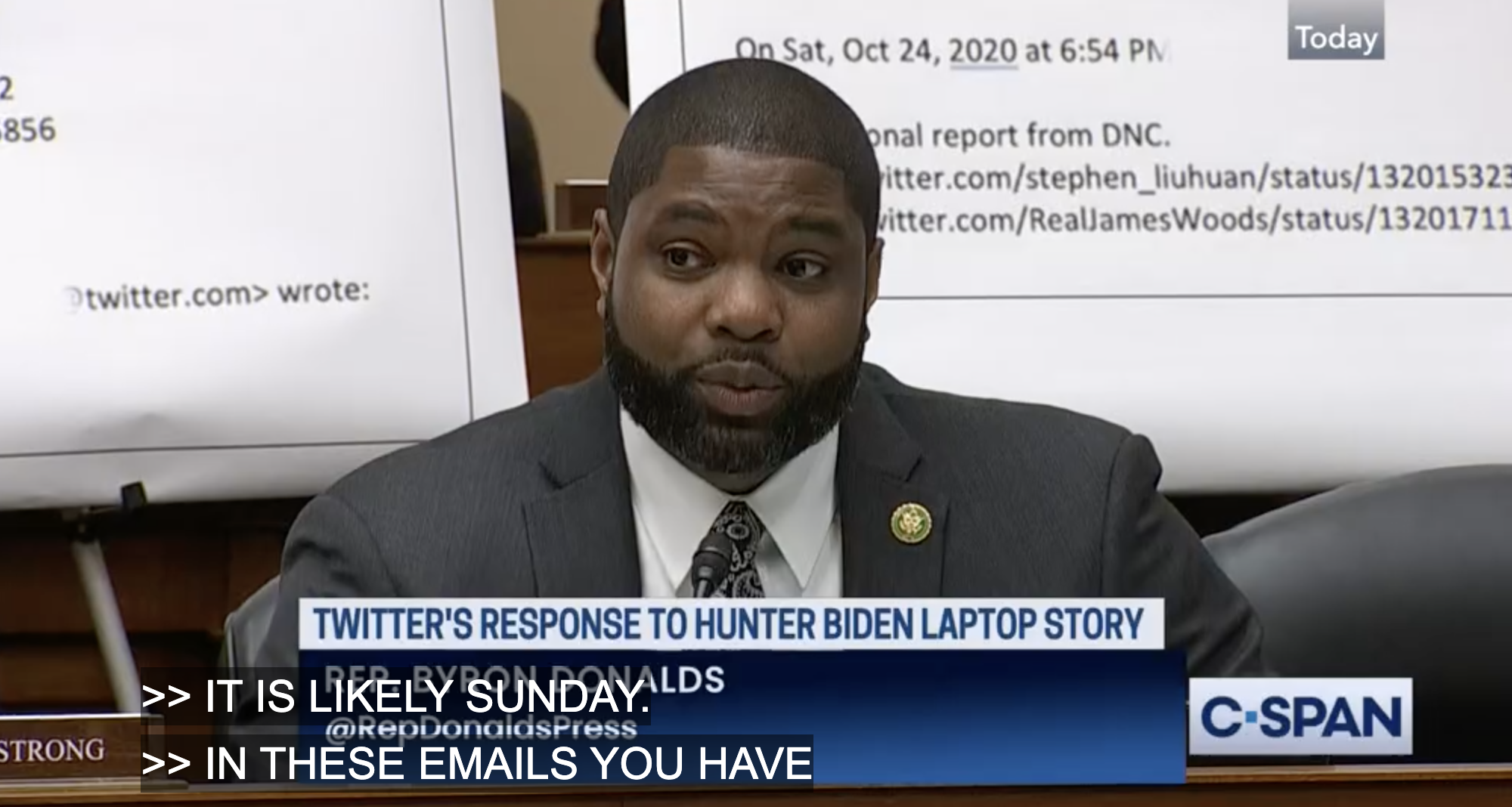
Daily Beast was one of the few outlets that reported, accurately, that the hearing showed the opposite of what Republicans claimed: in fact, Trump had been the one to use government power to attempt to silence speech on Twitter. Rolling Stone reported on another pathetic detail from Comer’s hearing, when Byron Donalds got Yoel Roth to explain what was implicit in all of Chairman Comer’s discussions of the scope of the hearing: Republicans were complaining that Twitter took down nonconsensual dick pics of Hunter Biden, some posted as part of a campaign by Steve Bannon associate Guo Wengui.

Comer’s premise was shattered by a “pussy ass bitch” retort and dick pics. That’s the weight of James Comer’s chairmanship. And with it should go the credibility of Taibbi’s consistently shoddy rants.

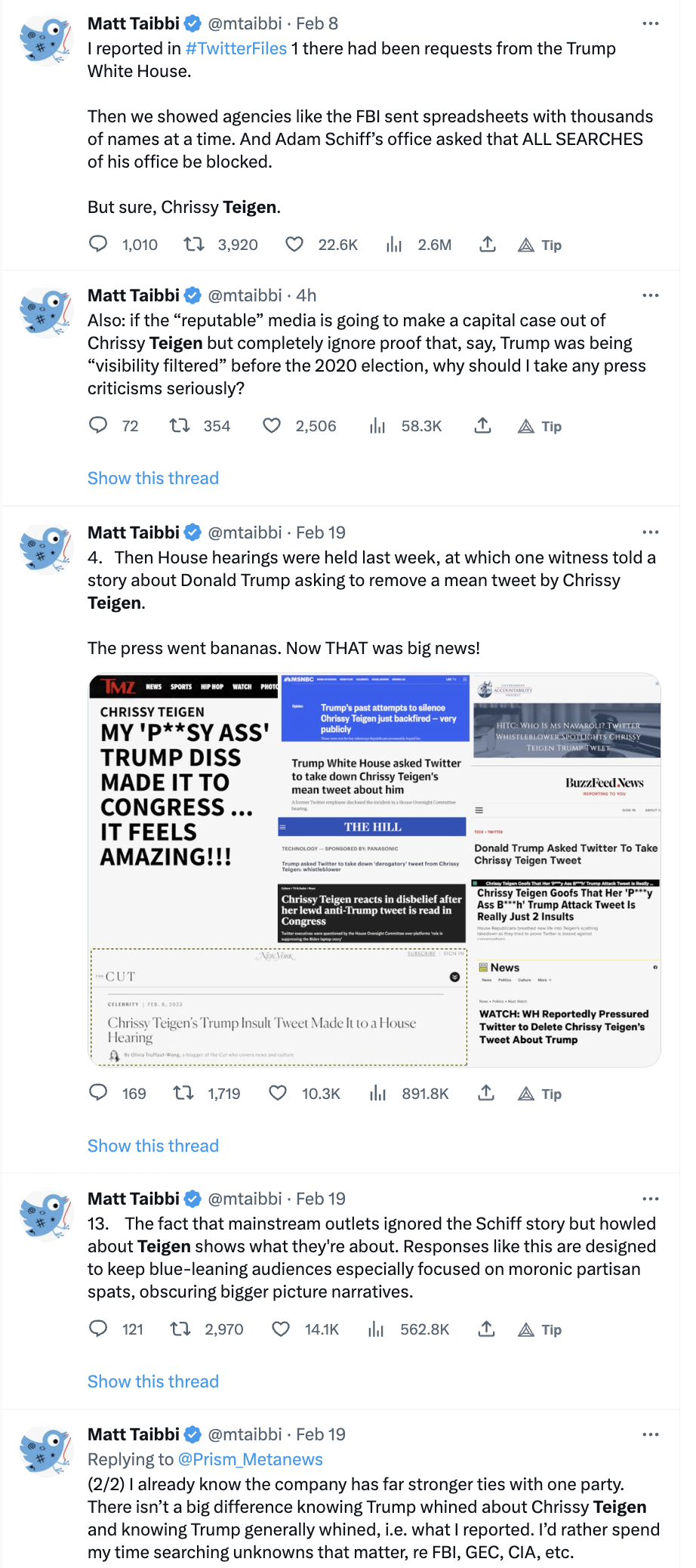
Five times since then, Taibbi has complained that his own silence about Twitter’s coddling of Trump was exposed in the hearing. In none of those complaints did he issue a correction.

Indeed, in his responses, Taibbi repeated several of his lies, obscuring that those FBI spreadsheets he complained about were part of an FBI effort to protect voting rights or that a request that a CIA colleague get an invite to a publicly listed meeting is some sign of the deep state. Taibbi just keeps repeating claims that have long been exposed as garbage.

Taibbi was exposed as a partisan fraud in the hearing, and that should be one of the takeaways.

Yet much of the rest of the coverage of the hearing was like AP’s, which treated the entire premise as if it were serious, dedicating the first four paragraphs to a (false) claim that this was the first that any of them had admitted throttling the NYP story was a mistake (as the hearing reviewed repeatedly, Roth had already given a deposition on the subject, and while the story quotes Jack Dorsey, it doesn’t mention that he has testified to Congress as well). Nowhere in the AP story does it reveal that Comer’s entire premise was debunked by the hearing. It’s not until paragraphs 18 and 19 that AP mentions that the Twitter files presented no evidence for Comer’s claim.

The issue was also reignited recently after Musk took over Twitter as CEO and began to release a slew of company information to independent journalists, what he has called the “Twitter Files.”

The documents and data largely show internal debates among employees over the decision to temporarily censor links to the Hunter Biden story. The tweet threads lacked substantial evidence of a targeted influence campaign from Democrats or the FBI, which has denied any involvement in Twitter’s decision-making.

Nowhere did AP reveal that Donald Trump was the only one guilty of the crime that Comer wants to pursue. Nowhere did AP reveal other instances where Twitter coddled Trump, as when they rewrote their content moderation standards on attacks on immigrants, which previously had banned the use of the term, “Go back to where you came from,” to retroactively excuse their approval of a Trump attack on AOC and others.

Worse still, AP was silent about the degree to which members like Clay Higgins started baselessly calling for the arrest of witnesses not accused, much less credibly, of a crime.

In other words, AP let James Comer dictate the terms of their story even after the premise of it had been debunked.

That’s not journalism.

And there’s one more reason why the press needs to treat these hearings not as a both-sides affair but as an effort to flip truth upside-down.

While neither have said this outright, both Comer’s hearing and the first hearing of Jim Jordan’s insurrection protection committee attacked the nation’s ability to push back against disinformation, including, but not limited to, Russian disinformation.

And as Roth explained in the Twitter hearing, for example, Republican attacks on Twitter were an attack on efforts that came out of a bipartisan response to Russia’s interference in the 2016 election.

Shontel Brown:

Mr. Roth, in a recent interview you stated, and I quote, beginning in 2017, every platform Twitter included, started to invest really heavily in building out an election integrity function. So I ask, were those investments driven in part by bipartisan concerns raised by Congress and the US government after the Russian influence operation in the 2016 presidential election?

Yoel Roth:

Thank you for the question. Yes. Those concerns were fundamentally bipartisan. The Senate’s investigation of Russian active measures was a bipartisan effort. The report was bipartisan, and I think we all share concerns with what Russia is doing to meddle in our elections.

This is what both hearings explicitly sought to roll back, those bipartisan efforts to protect American democracy.

Comer engaged in his own disinformation as part of the process. He falsely claimed that a letter from 50 former spooks said “Hunter Biden’s laptop was Russian disinformation,” rather than that it bore the hallmarks of disinformation. Jim Jordan and HPSCI Chair Mike Turner are now ratcheting up threats against those spooks for speech they engaged in as private citizens, precisely the thing that Jordan purports to be fighting.

In Jordan’s insurrection protection hearing, he presented three witnesses purporting to talk about the weaponization of government. One, Tulsi Gabbard, presented as evidence of weaponizing government that private citizen Hillary Clinton claimed she was being “groomed” by Russia, something that had nothing to do with weaponizing government and everything to do with the free speech Tulsi purported to be defending. The two others, Chuck Grassley and Ron Johnson, complained that the FBI warned them their own investigation into private citizen Hunter Biden parroted an organized Russian campaign.

Taken together, these efforts are fairly unashamedly complaining that private entities — whether Twitter, Hillary, or former spooks — are exercizing their own right to speak up against Russian disinformation. That is, all three efforts use government resources against those speaking up against Russia.

And against the background of the Durham investigation — which investigated Hillary’s campaign because of the way she responded to being victimized by a Russian attack — this effort continues a GOP-led effort to criminalize opposition to Russian disinformation.

There’s no reason, journalistically, to treat this as a serious pursuit. Particularly not given the abundant evidence that these efforts are premised on false claims and easily debunked propaganda, and are an attempt to legitimize that propaganda to serve as the basis for criminal investigations.

If James Comer and Jim Jordan want to squander their majority by building hearings and investigations around lies, the press should call them on that, not reward it. If they don’t, we’re headed down an increasingly ugly cycle.

Share this entry

Where Alina Habba Didn’t Personally Search

Given the news that Alina Habba appeared before the grand jury investigating Trump’s stolen documents, I wanted to go back to the declaration she submitted in the NY State investigation pertaining to diligent searches for documents in that investigation back in May 2022.

Politico reported on it before the public release about details of the stolen classified documents, and as such was taken as a claim that Habba conducted a search of the locations where documents were known to have been stored.

But it wasn’t.

Obviously, that’s true because (as Habba made a big deal of pointing out just after the original Politico report) the May 2022 searches were just for documents responsive to Tish James’ subpoena focused on the valuation of various properties, not for classified records.

But that’s also true because Habba did not search all the locations known to have stored Trump’s stolen documents.

The certifications involved include a nested certification, on Trump’s behalf, to the diligence of the search. Trump personally signed an affidavit, but he relied on the diligence of searches done by others, including the physical searches of three properties by lawyers.

5. Nevertheless, in an abundance of caution and in accordance with the Order, I authorized the additional, follow-up searches to be performed on my private residences:

a. On May 4, 2022, I authorized my attorney, Alina Habba, to search my private residence and personal office located at Trump National Golf Club in Bedminster, New Jersey for any and all documents responsive to the Subpoena.

b. On May 5, 2022, I authorized Alina Habba to search my private residence and personal office located at The Mar-a-Lago Club in Palm Beach, Florida for any and all documents responsive to the Subpoena.

c. On May 5, 2022, I authorized Alan Garten, General Counsel for the Trump Organization, to search my private apartment located in Trump Tower in New York, New York for any and all documents responsive to the Subpoena

[snip]

It is my understanding that searches of the above-listed locations have been performed by my attorneys, the Trump Organization Legal Department, the Trump Organization IT Department, and others.

Habba was not involved in the searches of business locations in Trump Tower or Trump’s residence there. Alan Garten was.

Garten was similarly responsible for compliance with subpoenas in conjunction with the various Russian investigations, and there are what SSCI called, “known deficiencies in the Trump Organization’s document responses,” including the email between Michael Cohen and Dmitri Peskov’s assistant, among others.

Garten did not submit a declaration in this package. Instead, Habba vouched for the diligence of Garten’s search.

f. On May 5, 2022, I coordinated and communicated with Alan Garten via telephone with regard to his search of Respondent’s private residence in Trump Tower including all desks, drawers, file cabinets, and similar locations likely to house files or documents. The search did not identify any documents responsive to the Subpoena.

So in this filing, Trump relied on the searches done by Habba and Garten, but Garten relied on Habba to attest to the diligence of the search.

And no one searched the storage facility in Florida at which some of Trump’s White House papers were stored, where two classified documents were discovered in follow-up searches by Trump’s lawyers in November.

But even the two properties Habba did search include gaps.

b. On May 4, 2022, I diligently searched each and every room of Respondent’s private residence located at Trump National Golf Club Bedminster, including all desks, drawers, nightstands, dressers, closets, etc. I was unable to locate any documents responsive to the Subpoena that have not already been produced to the OAG by the Trump Organization.

c. On May 4, 2022, I diligently searched Respondent’s personal office located at Trump National Golf Club Bedminster, including all desks, drawers, file cabinets, etc. I was unable to locate any documents responsive to the Subpoena that have not already been produced to the OAG by the Trump Organization.

d. On May 5, 2022, I diligently searched each and every room of Respondent’s private residence located at Mar-a-Lago, including all desks, drawers, nightstands, dressers, closets, etc. I was unable to locate any documents responsive to the Subpoena that have not already been produced to the OAG by the Trump Organization.

e. On May 5, 2022, I diligently searched Respondent’s personal office located at Mara-Lago, including all desks, drawers, file cabinets, etc. I was unable to locate any documents responsive to the Subpoena that have not already been produced to the OAG by the Trump Organization.

It’s hard to see how a one day search of these facilities, May 4 at Bedminster and then May 5 at Mar-a-Lago, could be that thorough, in any case.

But on May 5, when Habba was searching MAL, the bulk of the documents that were later seized were probably still in the storage closet from which they were moved in advance of Evan Corcoran’s search leading up to June 3. That’s neither the residence nor Trump’s office.

While there were likely classified documents in the drawers she searched at the time she searched them — a Secret document attached to Roger Stone clemency paperwork, and a Secret and a Confidential document attached to post-Administration messages from others — it’s not clear where the leatherbound box that held the most sensitive documents would have been stored in May 2022 (which was ultimately found in the office). And it’s still not clear where the classified documents in a box with Trump’s White House schedules was when the FBI conducted its search in August.

But there’s no way Habba would have found most documents, because most documents were still in that storage room.

They are understood to have been moved out of the storage room into the residence after the May 11 subpoena, days after Habba’s search.

Habba’s testimony would have been useful for showing that when asked to do a diligent search, Trump specifically hid from her one of the locations where he stored documents. She also would have added testimony about the absence of boxes in the residence when she searched it.

Share this entry

“A Demonic Force:” Dominion Just Gave Jack Smith Useful Evidence

As you read through Dominion’s motion for summary judgment against Fox News — and trust me, you should read it! — keep in mind not just how it proves Fox to be nothing but a propaganda platform aiming to help the Republican Party, but also the evidence it makes available to Jack Smith as he considers charges against those who used false claims about voting fraud to gin up a coup attempt.

Just as one example, Sean Hannity has played a role in every Trump legal scandal — serving as a back channel to Trump for Paul Manafort, participating in Rudy Giuliani’s attempts to gin up dirt on Hunter Biden as the first impeachment unfolded, and helping White House officials stave off the resignations of Trump’s White House Counsels in advance of January 6. But in each case, investigators only got his communications via other subjects of the investigation, as when DOJ found Manafort’s WhatsApp texts to Hannity saved in Manafort’s iCloud account or when the January 6 Committee got Signal texts Hannity exchanged with Mark Meadows from the former Chief of Staff’s production. Republicans chose not to call Hannity as a pro-Trump witness in the Ukraine impeachment.

With its filing, Dominion has given a snapshot of the ways and whys in which Fox News helped magnify false voter fraud claims, especially (though not exclusively) those of Sidney Powell.

It all takes place against the backdrop of a huge backlash against Fox after it called AZ for Joe Biden. When Fox presented the truth about the election, viewers started fleeing to Newsmax, with Trump’s encouragement. The filing describes the panic that ensued.

[O]n November 9, the impact of Fox’s Arizona call became more evident to Fox executives. Carlson told [Fox News CEO Suzanne] Scott directly: “I’ve never seen a reaction like this, to any media company. Kills me to watch it.” Ex.211. Scott immediately relayed the email to Lachlan Murdoch. Ex.212 . She told Briganti that Sammon “did not understand the impact to the brand and the arrogance in calling AZ,” which she found “astonishing” given that as a “top executive” it was Sammon’s job “to protect the brand.” Ex.213. And on that day–“day one,” as Scott termed it, Fox executives made an explicit decision to push narratives to entice their audience back. Ex.214 at FoxCorp00056542. Scott and Lachlan Murdoch exchanged texts about the plan going forward: “Viewers going through the 5 stages of grief. It’s a question of trust the AZ [call] was damaging but we will highlight our stars and plant flags letting the viewers know we hear them and respect them . at FoxCorp00056541 . Murdoch: “Yes. But needs constant rebuilding without any missteps. Id. Scott Yes today is day one and it’s a process.” [Dominion’s emphasis removed]

Hannity described how much reporting the truth (and Chris Wallace serving as a competent moderator for a Presidential debate) had undermined Fox’s brand.

Hannity told Carlson and Ingraham on November 12: “In one week and one debate they destroyed a brand that took 25 years to build and the damage is incalculable.”

The response to Jacqui Heinrich’s fact check of a Trump tweet is particularly stunning, as Carlson immediately called to have her fired for uttering the truth.

Meanwhile, later that night of November 12, Ingraham was still texting with Hannity and Carlson. In their group text thread, Carlson pointed Hannity to a tweet by Fox reporter Jacqui Heinrich. Ex.230 at FNN035_03890511 . Heinrich was “fact checking” a tweet by Trump that mentioned Dominion–and specifically mentioned Hannity’s and Dobbs’ broadcasts that evening discussing Dominion. Ex.232; Ex.231. Heinrich correctly fact-checked the tweet, pointing out that top election infrastructure officials said that, “‘There is no evidence that any voting system deleted or lost votes ,changed votes ,or was in any way compromised'” Id Ex.232.

Carlson told Hannity: Please get her fired. Seriously …. What the fuck? I’m actually shocked…It needs to stop immediately, like tonight. It’s measurably hurting the company. The stock price is down. Not a joke.” Ex.230 at FNN035_03890511. Tucker added: “I just went crazy on Meade over it.” Id. at FNN035_03890512 . Hannity said he had “already sent to Suzanne with a really?” He then added: “I’m 3 strikes . Wallace shit debate [] Election night a disaster [.] Now this BS? Nope. Not gonna fly. Did I mention Cavuto?”

The filing describes how after Hannity “dropped a bomb” about Heinrich’s fact check with Scott, Heinrich deleted her tweet.

Hannity indeed had discussed with Scott. Hannity texted his team: “I just dropped a bomb.” Ex.292 at FNN055_04455643. Suzanne Scott received the message. She told Jay Wallace and Fox News SVP for Corporate Communications Irena Briganti: “Sean texted me–he’s standing down on responding but not happy about this and doesn’t understand how this is allowed to happen from anyone in news. She [Heinrich] has serious nerve doing this and if this gets picked up, viewers are going to be further disgusted.” Ex.233 . By the next morning, Heinrich had deleted her fact-checking tweet. Ex.283.

For over two years, the right wing has squealed about a media outlet prohibiting the dissemination of dodgy claims from a Murdoch outlet. It turns out that Murdoch was, in that same time period, “censoring” true facts about Trump’s dodgy claims.

I wait with bated breath for James Comer to scheduled a hearing on the “censorship.”

Tucker Carlson, especially, recognized Trump’s role in this. He warned that Trump “could easily destroy us if we play it wrong.

“What [Trump]’s good at is destroying things. He’s the undisputed world champion of that. He could easily destroy us if we play it wrong.”

After January 6, Tucker called Trump,”a demonic force, a destroyer.”

Fox appears to have perceived that they had to play along with Trump’s false claims or risk permanent damage to their brand.

As noted, this lawsuit focuses closely, though not exclusively, on Sidney Powell’s false claims, from which even Trump publicly dissociated on and off. As such, much of this evidence may be more useful to DOJ in any ongoing investigation (if there still is one) of Powell’s monetization of claims she knew to be false. But even there, the evidence is key for Smith’s lawyer inquiry into Trump’s lies.

In an effort to rebut any Fox claim that it was simply reporting on lawsuits, Dominion lays out how the lawsuits filed served only as a vehicle to make false claims publicly.

Infact, none ofthe accused statements even meets the basic requirement that it report on a pending proceeding. As the Court recognized in its prior ruling, any statement made in a broadcast that occurred before November 25, 2020 could not possibly satisfy the “of … proceedings” requirement because the lawsuits filed by Sidney Powell–the only Fox guest who actually filed a lawsuit containing the defamatory allegations about Dominion–had not been filed by that date. See FNN MTD Order, p.46. And even after that date, the broadcasts in question hardly mentioned the existence of legal proceedings concerning Dominion, let alone purported to be a substantially accurate report ofthose proceedings. “[A]t no point did Dobbs or Powell attribute the statements … to an official investigation or a judicial proceeding. A reasonable observer would have no grounds to believe that her statements constituted a report of an official proceeding.” Khalil, 2022 WL 4467622 at 6.

Fox wasn’t covering lawsuits. It was magnifying false claims, and doing so because it knew that’s what its viewers, and Trump, demanded.

One accused false claim is of particular import, given the bases Powell and others used to pursue outrageous actions: A December 10 Lou Dobbs broadcast on which Sidney Powell claimed there had been a Cyber Pearl Harbor.

Nonetheless, on the next day, December 10, Dobbs had Powell on again, where she repeated the false (and repeatedly debunked) story about the Smartmatic and Dominion machines being designed to flip votes to rig elections for Hugo Chavez,and allowing people to login and manipulate votes . See ¶179(q );Appendix D. But rather than questioning Powell’s claims, Dobbs attacked Attorney General Barr for saying he’d seen no sign of any significant fraud that would overturn the election and told Powell “We will gladly put forward your evidence that supports your claim that this was a Cyber Pearl Harbor,” noting “we have tremendous evidence already,” id. which he now admits was not true. See Ex.111,Dobbs 46:25-47:10,86:20-24 . Dobbs had seen no evidence from Powell, nor has he since. Id.

Powell had sent her claims about a “Cyber Pearl Harbor” to Dobbs (who forwarded to his team) in advance of the show. Ex.450;Ex.451. Prior to the show, Dobbs published a tweet to the @loudobbs Twitter account with the claim that “The 2020 Election is a cyber Pearl Harbor,” and embedding the very document Powell had sent to him just hours before which stated that Dominion was one off our entities that had “executed an electoral 9-11 against the United States” and “a cyber Pearl Harbor,” that “there is an embedded controller in every Dominion machine,” and that they had “contracts ,program details, incriminating information ,and history” proving these claims.¶179(p); Appendix D.

Later the same day, after Powell appeared on the 5pm broadcast and before the 7pm unedited rebroadcast of the show, Dobbs again tweeted “Cyber Pearl Harbor @SidneyPowell reveals groundbreaking new evidence indicating our Presidential election came under massive cyber-attack orchestrated with the help of Dominion, Smartmatic, and foreign adversaries.” ¶179(r); Appendix D. Dobbs conceded at his deposition that this tweet was false Powell had not presented any such evidence on his program that day. Ex.111,Dobbs 269 :2-271:5.

People have long used Trump’s favored Fox programs to lobby Trump (for example, Roger Stone did so spectacularly well to get a pardon). And this story appeared on one of Trump’s favorite shows just over a week before Powell and Patrick Byrne would use the Solar Winds hack (which would be exposed in the interim week, starting on December 14) as their excuse to get Trump to use a claim of foreign election interference to seize the voting machines. In other words, this was the national security excuse Powell and Byrne were seeking to give Trump an excuse to assert Executive authority to seize the voting machines.

Worse still, as Dominion notes, Fox did all this not just knowing that it would harm Dominion. They did this knowing the intent was to harm the United States.

On November 10, Steve Bannon told Maria Bartiromo, straight out, that THE PLAN was to delegitimize Joe Biden.

“71 million voters will never accept Biden. This process is to destroy his presidency before it even starts; IF it even starts … We either close on Trumps victory or del[e]gitimize Biden … THE PLAN.” Steve Bannon to Maria Bartiromo, November 10, 2020 (Ex. 157)

Carlson, too, knew what he was doing.

On November 18, [Tucker producer Alex] Pfeiffer texted Carlson that powerful election fraud allegations like Powell’s “need to be backed up” and could lead to undermining an elected president if Biden’s confirmed,to which Carlson responded, “Yep. It’s bad.”

“It’s bad,” Tucker recognized from the start. But that didn’t stop him from participating in efforts to undermining the duly elected President.

We’ve long known that Fox was better understood as a wing of the Republican party than as a news organization (indeed, the filing describes Rupert Murdoch looking for ways to “help[] any way we can” in Georgia).

But this filing makes it clear that in a bid to cater to viewers who were fed false claims by Trump, Fox played right along with the false claims that would lead to insurrection. Jack Smith is already examining multiple parts of this effort. This filing makes evidence that would otherwise be unavailable accessible to prosecutors.

Fox News knew their platforming of Trump’s false claims was doing damage to the country. And they did it anyway.

Update: Corrected that Tucker, not Hannity, is the one who immediately said Heinrich should be fired for speaking the truth.

Share this entry

The “Escalating,” “Aggressive,” “Intensifying” Step of Subpoenaing Key Witness Mark Meadows

CNN and WSJ have reported, using all the typical hype words (see this thread for a collection of similar bullshit language), that Jack Smith’s team has subpoenaed Mark Meadows. But neither has included the most important information about the subpoena: what they’re really looking for.

They report only that Smith wants documents and testimony pertaining to January 6.

Special counsel Jack Smith’s office is seeking documents and testimony related to January 6, and Meadows received the subpoena sometime in January, the source said.

Neither Meadows’ attorney, the very good George Terwilliger, nor DOJ commented on this news, meaning it almost certainly came from one of the Trump lawyers who feeds all these stories, possibly even with the inflammatory adjectives.

It is not “aggressive” to subpoena one of the centrally important witnesses. It was not “aggressive” for the January 6 Committee to subpoena Meadows among their first investigative steps. It was not “aggressive” for Fani Willis to subpoena Meadows.

What is unusual is subpoenaing someone who is likely a key subject if not a target of the investigation, two years into the investigation, especially after he spent at least nine months trying to retroactively comply with the Presidential Records Act by providing the Archives communications he should have preserved in the first place, after which prosecutors obtained the communications from the Archives directly.

Indeed, DOJ’s Justice Manual requires specific approvals before subpoenaing someone if the person is a target.

If a voluntary appearance cannot be obtained, the target should be subpoenaed only after the United States Attorney or the responsible Assistant Attorney General have approved the subpoena. In determining whether to approve a subpoena for a “target,” careful attention will be paid to the following considerations:

  • The importance to the successful conduct of the grand jury’s investigation of the testimony or other information sought;
  • Whether the substance of the testimony or other information sought could be provided by other witnesses; and
  • Whether the questions the prosecutor and the grand jurors intend to ask or the other information sought would be protected by a valid claim of privilege.

Mind you, DOJ’s investigation, going back long before Smith joined it, has had to reach this bar on the testimony or legal process covering others by dint of various privileges, including attorney-client, executive, and speech and debate. But thus far, DOJ has usually used warrants, not subpoenas, with people who might be subjects or targets of the investigation.

There’s one known exception, of a person at the center of suspected crimes who nevertheless received a subpoena: Rudy Giuliani, in November (the CNN report on the subpoena emphasized the request for documents, but Reuters’ coverage said the subpoena asked for testimony as well). Notably, though, given how centrally involved Rudy was in suspected crimes leading up to the coup attempt, that subpoena asked for documents pertaining to the potential criminal behavior — the misspending of money raised by Save America PAC — of others. Indeed, DOJ seems to be treating subpoenas about discreet topics individually, meaning a witness who might have a good deal of exposure in one area may nevertheless be asked to testify about another area.

Something similar could be true here.

Trump’s PAC gave Meadows’ NGO, Conservative Partnership Institute, $1 million long after January 6, and CPI received the bulk of the money spent by the PAC.

Trump’s Save America PAC on July 26 gave $1 million to the Conservative Partnership Institute, the group where Meadows is a senior partner.

The donation came less than four weeks after the House voted to establish a select committee to investigate the January 6, 2021, insurrection at the US Capitol. In December, the House voted to recommend that the Department of Justice pursue criminal charges against Meadows for refusing to cooperate with the committee’s probe.

Trump’s political organization has amassed $122 million in cash reserves, his team announced Monday.

The $1 million to Meadows’ non-profit made up most of the $1.35 million in donations that Trump’s PAC disbursed to political organizations and candidates in the second half of 2021.

Since then, the organization has been described as the “insurrectionists’s clubhouse,” the key player in efforts to push the Republican Party even further right, including during Kevin McCarthy’s fight to be Speaker.  The policies pursued by Meadows’ organization are not, on their face at least, criminal; they would be protected by the First Amendment. But Trump’s decision to fund it using funds raised promising the money would be used for something else might be.

Who knows? Maybe the subpoena seeks information more central to the events leading up to January 6. Perhaps it’s an effort to obtain Signal texts that Meadows didn’t otherwise turn over to the Archives. Perhaps Terwilliger is just that good, and Meadows is out of legal danger for his role in stoking a coup attempt.

But the most interesting detail of this subpoena is not that DOJ sent it, but that someone so obviously exposed himself would get one.

Update: Roger Sollenberger, one of the best campaign finance reporters, has a long discussion of how Trump laundered money from the Save America PAC through other entities, including CPI.

Share this entry

Judge Kelly’s Basis for His “Tools” Determinations

Since the beginning of the Proud Boys case, there has been an ongoing dispute about the government’s “tools” theory of the conspiracy, which argued that there were a bunch of people (which was trimmed after pre-trial hearings) whom Proud Boy leaders used to execute their conspiracy. This post explains that dispute.

These people are not accused or alleged to be part of one of the parallel conspiracies charged against the Leaders, and so normal hearsay rules will not apply as normal. But they are people who, the government alleges, the Leaders pulled together as recruits to make the attack happen.

Part of this dispute pertains to whose actions at the Capitol can be shown, as video evidence, to the jury in association with the Proud Boy Leaders. I think the case presents what I call a “view-say” exception, in which assaults committed by associates in places at the Capitol where no Leader was present, may or may not be shown to the jury. On the first day of trial, for example, Judge Kelly deferred on whether assaults that took place in the Tunnel should be shown, since no Leader was present.

But a big part of the debate pertains to how many of the communications on one or another of the Telegram threads the Leaders used to organize the Proud Boys can be introduced as evidence.

Last Friday, Judge Kelly issued his order on the issue verbally in what takes up about 80 pages of transcript. I wanted to lay out his logic here, so it is broadly accessible.

First, let me clarify an issue that came up on Monday, as we argued this, about who might count as a tool. On the one hand — it seems to me that the tools fall into two buckets for purposes of this case generally, as the Government has argued it. On the one hand, you have people whom the defendants or their cooperator — or their co-conspirators marched toward the Capitol on January 6th to whom they had some alleged nexus or relationship in the, sort of, physical effort of what happened that day on January 6th. And in — separately, you have the group we’re dealing with here, which is Proud Boys whom the defendants and their co-conspirators hand-selected to join the MOSD. Of course, there’s some overlap between these two groups of people. But I certainly don’t think, over the argument of some defendants, that someone ultimately had to be in one group for their statement to — or their conduct to be relevant for the — to this case. In other words, to be a tool, you didn’t have to necessarily believe — belong to both of those, sort of, groups.

I’ll next note that, again, by and large with regard to the tools evidence, I didn’t see any true hearsay issues there. It’s clear to me that the bulk of these statements, at least, were not offered as assertions but rather as circumstantial evidence of the tools’ motive and intent in the days leading up to January 6th. And to the extent they are assertions of the tools, they would fall under Rule 803(3) which allows statements expressing the declarant’s motive, intent, or plan to be admitted for the truth of the matter asserted.

But, of course, after clearing the hearsay bar, statements must still be relevant and satisfy Rule 403 balancing. So here’s the line I drew on that front. Where a purported MOSD tool’s statement expressed a more specific, concrete intent to use force or to act unlawfully on January 6th, I admitted them. But — or at least where the statement could — where you could infer that. But where, in my view, a statement was less specific, or tended to be more — a general reference to violence or perhaps even to a joke, I excluded them.

For — as for those I admitted, I think the statements are relevant/admissible because they do shed light on what the purpose of the MOSD was, which is a central issue in the trial. As I mentioned, the defendants have consistently argued — and even opened on the idea — that the MOSD was intended to create more of an organizational structure and a hierarchy at rallies for defensive purposes. And in short, the Government’s theory is that, at least with regard to January 6th, it was intended for an offensive purpose.

Thus, I think that the state of mind, in the days leading up to January 6th, of those that the co-conspirators and the defendants in this case vetted to be in the MOSD is relevant. And it’s an important factor supporting — and it is an important factor that, sort of, reinforces their relevance that the evidence shows that the defendants and their co-conspirators did select them. In fact, as Mr. Rehl says in Exhibit 503-10, everyone in the group was, quote, Represented by someone who trusted them to be there. That’s a little bit of a butchering of that quote, but I think that’s the essence of it.

The relevance of these exhibits is further buttressed by the fact that these statements were not rebuked by any of the defendants or their co-conspirators that were present in these chats as MOSD organizers. Now, we’ve talked about this a lot. I think, ordinarily, the idea that a single individual’s failure to respond to a comment in a chat — the idea that that can be relevant or some kind of adoptive admission in some way is a stretch in general, and it’s probably not a theory that would fly in a typical situation. Certainly, the bigger the chat that there is, the more public it is, and all the rest. But I think, here, that the failure to do so — not of one person, but collectively of all the people at issue, the four defendants here who were in those chats, plus their alleged co-conspirators — all those people’s non-responsiveness to some of these things is relevant, and it bolsters the overall relevance of the exhibits I decided to admit, especially because it’s clear that at least some of the defendants — again, there is evidence here — some of the defendants were monitoring the MOSD chats to ensure they stayed on topic.

Indeed, the stated rules of the MOSD chat made clear that the members had to stay on topic, and on a couple of occasions to which the Government has directed me, defendants or co-conspirators did, either in the group or amongst themselves, rebuke members’ suggestions that they viewed as outside the MOSD’s parameters. For example, in Exhibits 505-20 and 505-21, Mr. Stewart, Mr. Bertino, and Mr. Tarrio criticize an MOSD member in the MOSD Op group for suggesting that the group discuss what to do about, quote, Unaffiliated Proud Boys wearing colors, closed quote. Stewart admonished that there was nothing to talk about because the MOSD has a mission; either get with it or eff off, and that they were there for a reason. And Mr. Tarrio followed up by instructing everyone to focus. Mr. Bertino stepped in to emphasize that the member’s comment was not appropriate in the MOSD chat because the group had a mission and they didn’t want to be distracted from it. And in Exhibit-525-7, Defendant Biggs messaged Defendant Tarrio expressing in the — that the MOSD chat had already become annoying because members were talking about other events.

So importantly, in weighing whether to admit certain tools exhibits and drawing the line I did, I admitted only those exhibits where I thought there was a stronger inference that the comment would have drawn a rebuke from one of the defendants or one of their co-conspirators if the mission of the MOSD had truly only been defensive in nature.

So for all those reasons, I found the handful of the exhibits I admitted on this theory — the tools theory — were relevant, and also, satisfied Rule 403.

Before I move on to the categories of the documents, as one more offshoot of the tools issue — it doesn’t go to the admissibility of these documents, but it goes to the grounds for admissibility of statements made to — by other people, including the defendants, to the tools — I want to address one additional point that came up on Monday. Counsel for Mr. Nordean argued to me that several exhibits that the Government offered as co-conspirator statements could not have been in furtherance of the conspiracy simply because the statements at issue were made to non-co-conspirators, including tools. But in the United States v. Tarantino, the D.C. Circuit explained that if a statement, quote, Can reasonably be interpreted as encouraging a co-conspirator or another person to advance the conspiracy, or as enhancing a co-conspirator or another — or other person’s usefulness to the conspiracy, then the statement is in furtherance of the conspiracy and may be admitted. That case is 846 F.2d 1384 at 1412, a D.C. Circuit case from 1988. So to the extent that Mr. Nordean objected on that basis to several of the exhibits I’m about to discuss, particularly those involving the defendants’ or the co-conspirators’ statements to tools, that argument is foreclosed by Circuit precedent.

Share this entry

Trump’s National Security Adviser Responded to an Attack on the Capitol by Sending Personal Tweets

As former National Security Adviser Robert O’Brien tells it — or told it, in his August 2022 interview with the January 6 Committee — he responded to an attack on the Capitol by sending personal tweets.

CNN reported last week that O’Brien will soon have the opportunity to tell a more credible story to both of Special Counsel Jack Smith’s grand juries, which is why I decided to read the transcript of O’Brien’s interview with the January 6 Committee.

Presumably, Smith wants to ask O’Brien about Trump’s firing of people who questioned his authority to invoke the Insurrection Act, a topic that like recent witness Johnny McEntee, O’Brien addressed in his January 6 interview. Perhaps Smith wants him to explain the plot to seize voting machines and other details surrounding the December 18 meeting, which recent witness Ken Cuccinelli addressed. O’Brien may be asked about his challenge to Cassidy Hutchinson’s credibility in his own January 6 testimony, perhaps the only person who has questioned her testimony who hasn’t since been discredited.

Given the CNN report that he would testify before both the January 6 and the stolen document grand juries, he may be asked about his knowledge of plans to take documents pertaining to topics Trump obsessed about, not just the Russian investigation (which O’Brien calls, “Russiagate hoax documents”), but also specific intelligence about Venezuela; O’Brien claims not to remember anything about the efforts to declassify documents to take.

But the most striking aspect of O’Brien’s transcript was his admitted failure to do much of anything as the Capitol was attacked.

To be fair, the appearance of O’Brien’s almost complete inaction as the Capitol was attacked stems, in part, from his own forgetfulness. He claims to remember only one interagency planning meeting in advance of January 6, even though other witnesses testified to several. He only recalls a concern about threats to the White House in advance, not the Capitol. He doesn’t recall briefing the President, the Chief of Staff, or the White House Counsel of intelligence in advance of the attack. He doesn’t recall any talk of Trump marching to the Capitol.

He recalls speaking to Mike Pence during the attack, but can’t recall most details about the conversation.

He recalls speaking to Biden National Security Adviser Jake Sullivan, who would not assume power for another two weeks. But he can’t recall whether he spoke to Chief of Staff Mark Meadows during the attack.

He recalls that his Deputy Matthew Pottinger called him and told him he had to resign, but can’t recall that he did so specifically in response to Trump’s text targeting Mike Pence.

He’s certain he made no effort to speak to the President as a mob of his supporters attacked a co-equal branch of government. He did not do so, he explained, because he was in Miami and wanted to speak to the President in person.

The story O’Brien told of his actions leading up to and on January 6 was of breath-taking dereliction of duty.

When asked specifically how he responded to learning that the President’s supporters were attacking the Capitol, he explained he sent some personal Tweets.

Q Okay. All right. So let’s talk about then what you did after receiving that information. What steps did you take now that you’re aware of this violence at the Capitol and had this conversation with the [Vice, sic] President? What did you do next?

A So I did a couple of things. I’m not sure the exact order in which I did them.

Q Okay.

A One is I put out a series of tweets on my personal Twitter account.

[snip]

Q Okay. All right. So, again, you didn’t take any action in particular response to this [Trump’s tweet].

Your tweets don’t start until a bit later, your personal tweets that you sent out.

A Yeah, I’m not sure what time my tweets came out, but I wouldn’t say it’s in direct response to this, but I did tweet that I thought the Vice President was courageous.

Q Yeah, you did.

[snip]

All right. The next one up says, “My first experience in government was serving as an intern for Senator Hayakawa of California. What the mob did to our Senate chamber today was an utter disgrace.”

Again, what motivated you to put that out? And do you remember roughly when that was?

A So, again, I don’t recall — and I don’t have a time or a date stamp on this. I think that was the first tweet that I put out on my personal account.

Q I think this is — you’re right — from your personal account, not the official NSA account.

A Correct. And I wanted to get some tweets out on my personal account because I didn’t have to go through a White House clearance process or get others involved. I wanted to try and act, you know, somewhat quickly and make sure the people that — to the extent anyone followed it or was interested, that was my view.

There were some other calls — to Mike Lee and Mitt Romney, for example. But seemingly no coordination of any response. Just tweets about the internship he had when he was 14.

There are certainly reasons to doubt his forgetfulness. At other times, he uses other tactics to avoid discussing whether he had direct contacts with Trump or anyone else of substance, like invoke Executive Privilege over his own feelings.

Q Were you frustrated, Ambassador O’Brien, with the President’s conduct on January 6th?

Mr. Larson. I think this starts to get into — invariably gets into communications with the President and impressions of the President and all that. So I’m going to assert executive privilege here.

And there’s good question of how diligently O’Brien searched for communications relevant to his testimony.

For example, there was a damning document: a draft concession speech that O’Brien wrote for Trump on December 21. O’Brien sent it from his home email account to his White House email account — because maybe his printer was out of paper, he mused.

Q 9 o’clock at night on the 21st.

A Yeah. So I was obviously at home. I probably sent it because I didn’t have a printer. I probably didn’t want to print it or didn’t have a printer at home or it may have been out of paper or something.

And this is something I did on what I considered was my own time. I thought it was — I think by this time the electoral college had already voted, and I think that the primary lawsuits that the President’s legal team had brought had been decided. You know, I can’t be certain, but I’d probably seen that on the news.

And I thought it would be — I thought I’d draft up what was in essence a concession speech, but put it in language that might appeal to the President and I thought might be something that the President could — the type of speech that the President would feel comfortable giving, but at the same time would convey the message that he conceded the election. And I thought it would be good for him and for the country.

O’Brien claims the only one he shared it with at the White House was his own Chief of Staff, not Trump’s or not Trump himself.

Q Did you share this with anyone after you sent it to your own official White House account?

A Yes.

Q With whom?

A I believe I shared it with Alex Gray, my chief of staff.

Q Your chief of staff. I see.

A Right.

Q How about Mark Meadows or the President himself?

A No. I don’t believe I did.

What’s interesting is not just that O’Brien sent it, but that he didn’t turn over an email sent from his own account in his production to the committee. The document should have been turned over to the committee by both O’Brien himself and the Archives. The committee only got the Archives copy

Q Okay. Let me show you another exhibit, this is No. 9, that is an email from your personal account to your official account. I don’t recall if this came from your production or from the Archives.

A I think this came from your production.

Q Yeah. I think that’s right. This is a record produced by the National Archives.

O’Brien wasn’t giving anything up.

And that’s why I find this exchange showing the National Security Adviser — the National Security Adviser!!! — explaining how he was doing business on Signal and WhatsApp and no, he’s not entirely sure whether all his texts got archived properly so suspect.

Q Ambassador O’Brien, how about any other messaging applications, like Signal or Telegram or WhatsApp? Did you use any of those platforms to conduct any official business when you were National Security Advisor?

A I did.

Q Okay. Which of those platforms did you use?

A I think I received some messages from people on WhatsApp and on Signal.

Q All right. And again, tell us what the circumstances would be that would trigger the use of those platforms versus the White House email account or your official device.

A So on the official devices, there was no ability, I don’t think, to put on Signal or any of the other applications.

There were some foreign ambassadors or foreign ministers that would want to get in touch with you and they tended to us Signal or WhatsApp.

[snip]

Q  I’m just wondering sort of the general circumstances that would cause you to go to WhatsApp or Signal. Was it just, hey, it’s a foreign leader, so that’s the platform that he or she uses? Or would you, beyond that, use it for other reasons as well?

A Yeah. So I’m not a consumer of social media or those sorts of applications for the most part. There were some foreign leaders that asked for my cell phone number so that they could connect via Signal, because I think some foreign leaders from time to time would reach out and they were concerned about intercept and they felt there was some safety — that was their opinion — there was some safety. My opinion was different. But they wanted to communicate by Signal or WhatsApp, but it was on rare occasions.

Q I see. Okay. And beyond that, Ambassador O’Brien, would you use WhatsApp or Signal to talk to someone on a personal matter or campaign related or things that you wanted to ensure were kept off of the official government channel?

A Yeah, not that I recall. That was not my practice.

Given how little else he recalls about his job, suffice it to say this “do not recall” whether he used Signal or WhatsApp for other purposes deserves some skepticism, particularly given that everywhere he relies on the committee to pull up call records. Especially given his lackadaisical attitude about preserving whatever Signal texts he sent, at least with foreign ambassadors.

Q Got it. All right. Now, on the subject of these personal devices or accounts, did you provide all [inaudible] with the official communications from these personal accounts to the National Archives when you completed your tenure as National Security Advisor?

A So I don’t know if I had any information on those devices. I do know that when I left the job at the State Department there were some conversations I took screenshots of and I left those behind for the State Department for my files. So that was my practice there.

When it comes to the leaving as NSA, I may have had — you know, I don’t recall, I don’t recall if I screenshotted. I know I screenshotted a few things. I don’t know if they were left behind for the Archives. That would have been my practice. But again, I can’t recall.

It is undeniably true that Robert O’Brien responded to an attack on the Capitol by Tweeting, on his personal account, that Mike Pence was courageous.

But it is also the case that there’s a whole lot of forgetting going on here that looks more like a gap in communications records than anything else.

Which may be on of the biggest things for which Jack Smith would like to get O’Brien on the record.

Share this entry

Some People Have Sex Toys; Trump [Claims He] Has Empty Classified Evening Briefing Folders

I’d like to situate the details about an empty folder marked, “Classified Evening Briefing,” from this Guardian story into what we know about the searches of Mar-a-Lago. It describes that the folder was first observed, in Trump’s residence, and recorded in a report shared with DOJ by the investigators who did the search of Trump’s properties. But Trump didn’t return the folder because it, itself, was not classified information.

The folder was seen in Trump’s residence by a team of investigators he hired to search his properties last year for any remaining documents marked as classified. The team transparently included the observation in an inventory of Mar-a-Lago and Trump properties in Florida, New Jersey and New York.

[snip]

The folder is understood to have not been initially returned because the lawyers thought “Classified Evening Briefing” did not make it classified, nor is it a formal classification marking.

“Weeks after” DOJ got the report on Trump’s properties in December, DOJ subpoenaed the folder in January.

Donald Trump’s lawyers turned over an empty manilla folder marked “Classified Evening Briefing” after the US justice department issued a subpoena for its surrender once prosecutors became aware that it was located inside the residential area of the former president’s Mar-a-Lago resort, two sources familiar with the matter said.

The previously unreported subpoena was issued last month, the sources said, as the recently appointed special counsel escalates the inquiry into Trump’s possible unauthorized retention of national security materials and obstruction of justice.

[snip]

Weeks after the report was sent to the justice department, the sources said, federal prosecutors subpoenaed the folder.

Here’s the story Trump told to DOJ about the empty classified folder:

The backstory the justice department was told about the folder was that Trump would sometimes ask to keep the envelopes, featuring only the “Classified Evening Briefings” in red lettering, as keepsakes after briefings were delivered, one of the sources said.

It’s just some kink that Trump has, his lawyers want DOJ to believe, that he wants to have “Classified Evening Briefing” folders strewn around his personal residence.

It’s not entirely ridiculous. After all, just two days after the search of Mar-a-Lago, reporters found a folder just like that one at a shrine to the Donald in Trump’s Wine and Whiskey Bar in Manhattan.

There are several problems with this story, though.

Let’s review some chronology of Trump’s stolen document scandal. In May, Trump’s lawyer Evan Corcoran accepted a subpoena for all documents with classified markings at any Trump property. Trump stalled for almost a month, but then the day before Trump was set to leave for Bedminster, Corcoran told the FBI to come to Mar-a-Lago the next day to retrieve documents. On June 3, Jay Bratt showed up with some FBI agents, and Corcoran handed over a folder of documents — certified by Christina Bobb, not himself — and also showed the people from DOJ the storage room where many, but not all, of Trump’s presidential records were stored. Trump’s story does not match DOJ’s story about whether Trump interacted with Jay Bratt when the senior DOJ official was at Mar-a-Lago.

On June 24, DOJ subpoenaed surveillance footage that, subsequent reporting has made clear, showed Walt Nauta moving boxes out of the storage facility, thereby preventing Corcoran from finding the documents inside in the search he did in advance of June 3. Prior to obtaining the video, Nauta had testified that he didn’t move any documents; afterwards, he testified he had moved boxes to Trump’s residence.

Then, on August 5, DOJ obtained a warrant to search Mar-a-Lago. The affidavit for the search specifically mentioned Trump’s residence, “Pine Hall.” And the search warrant authorized the search of “the ’45 Office,’ all storage rooms, and all other rooms or areas within the premises used or available to be used by FPOTUS and his staff and in which boxes or documents could be stored,” which particularly given DOJ’s knowledge that Trump already had hidden stolen documents in his residence, surely would include the residence. In the weeks after the search, Trump claimed publicly that the FBI had searched Melania’s closet, implying that the FBI did search the residence. But the only way Trump would know what the FBI searched or not would be if those rooms were covered by his own surveillance camera.

Let’s assume, however, that the FBI did at least go through the residence closely enough to ensure no documents remained there after Nauta had stashed them there while Corcoran conducted a search.

The FBI seized no documents from the residence on August 8. Documents were seized from just the storage room (those marked with an “A-” preface on the search warrant return) and Trump’s office (those without).

One thing supports Trump’s claim that he took this — and all the other — empty classified folders, as well as 42 empty aide folders, as trophies. There were 43 empty classified folders and 28 empty aide folders in his leatherbound box, which also had the most sensitive documents. Particularly given the appearance of those documents in the photo the FBI released, it is not inconceivable that Trump stole them as trophies of some events he think reflect well on his presidency, just like he stole the Kim Jong Un letters.

Plus, by appearances, Trump stored those super secret documents right next to his Time Magazine covers. All of which supports his claim that he stole these items as trophies of his time as President.

But that’s not the only place the FBI found empty folders in their August 8 search. They also found them in five other boxes, all stored in the storage room.

With one exception — box A-33 — all the boxes with empty folders also had classified records, though mostly just one or two classified documents.

In other words, even indulging Trump’s excuse — that he stole these empty classified folders as keepsakes — that only explains one of the motives and means by which he stole them. It only explains the folders stored with his other trophies, in the leatherbound box. It doesn’t account for the fact that Trump also stole files that weren’t keepsakes per se, but were boxes of other records, among which some classified records remained. It doesn’t account for the fact that hoarding large amounts of documents, as Trump did, along with sloppy treatment of classified documents while in the White House, will result in the theft of classified documents. Along with some empty classified folders.

More importantly, the discovery of an empty classified briefing folder in his residence, which was not found during the no-notice search on August 8, but was found during the search for which Trump would have had advance notice, could not readily be explained by the kink trophy explanation.

Which is why this currently operative story — and the fact that Trump’s lawyers have decided to share it publicly now — should focus on the other investigative steps that took place in the same time.

Back in October, before Attorney General Garland appointed Jack Smith, Trump was reportedly still considering letting the FBI do a further search of his property, like Joe Biden and Mike Pence have since done. But then, probably after the appointment of Smith and the 11th Circuit ruling overturning the Special Master, Trump decided to have a private firm do the search instead. After the search of (some of) Trump’s properties — this probably happened at the end of November and beginning of December — the contractors provided an inventory to DOJ, which is how DOJ learned of the empty folder. Because Trump’s lawyers refused to certify the searches themselves, DOJ immediately tried to hold Trump in contempt for violating the May 11 subpoena. That request — to hold Trump’s lawyers in contempt — happened at the same time (around December 6) as a bunch of inconsistent stories serially revealed the search of four of Trump’s properties and, the stories claimed, the discovery of just two more classified documents.

We now know those stories were false, classic Trump limited hangout. Yesterday’s stories reveal that when Trump’s lawyers told journalists the search firm had only found two documents marked as classified in December, they were hiding the Trump calendars and the classified folder. They were lying to hide the stuff just revealed yesterday.

Beryl Howell did not make a final decision on contempt, though the same Trump lawyers also falsely told journalists she had made a final decision.

Then, after some back in forth, early in January, DOJ got Beryl Howell to require Trump to turn over the names of the people who did the search. That’s the first we learned that, contrary to the headlines you’d read based on the December 2022 stories, Howell had not made a final decision on contempt.

That’s all background to the mad set of stories yesterday, announced even as Pence admitted FBI found one more classified document at his house. It should tell you something that the leaks yesterday resemble the ones from December 7, when Trump’s lawyers told two lies: That Howell had already decided not to hold them in contempt, and that the search firm had found only two more classified documents. Based on past experience, we should assume yesterday’s stories, like the ones in December, had as their primary goal to tell a false story.

What we know, though, is that after attempting to hold Trump’s lawyers in contempt in early December, DOJ took steps that would be necessary preparation for interviewing the people who did the search. First, forcing Trump to share the names. Then, interviewing two of three lawyers involved in Trump’s obstruction last June, Evan Corcoran and Christina Bobb. And then, obtaining the things found in the search that weren’t immediately turned over as positive search results, which would be necessary preparation to interviewing those who did the search.

Trump told DOJ in December that this empty folder, which the FBI didn’t find when they showed up to MAL unannounced on August 8, 2022, had found its way to Trump’s residence in time for the contracted search, because he has an empty folder fetish.

He certainly does appear to have an empty folder fetish.

But that cannot explain why the folder — full or empty — was not found in August but was found in December.

I’ve updated my resource page on Trump’s stolen documents here.

Timeline

May 11, 2022: Subpoena for all documents bearing classification marks

June 3: Corcoran hands over folder with 38 classified records

June 24: DOJ serves a subpoena for surveillance footage

July 6: Trump provides surveillance footage

October 19: Trump still considering letting FBI search his properties for further classified documents

November 18: Merrick Garland appoints Jack Smith Special Counsel

December 7: A series of inconsistent stories reveal, serially, the search of four properties and the discovery of just two more classified documents

Late 2022: DOJ reaches out to Alina Habba, who last summer claimed to have done a thorough search of Trump’s properties

December: Trump returns box of presidential schedules, which includes classified information

January 4, 2023: Beryl Howell orders Trump to turn over names of investigators to DOJ

Early January: Trump turns over aide’s laptop and DOJ subpoenas both empty folder and

Early January: Evan Corcoran and Christina Bobb appear before the grand jury

February 2: Tom Fitton appears before grand jury

February: Robert O’Brien subpoenaed for both stolen documents and attempted stolen election investigations

Share this entry

A Book Author, A Religious Leader, and A Pollster Walk into Trump’s Classified Document Bar

As noted, yesterday Trump took the opportunity created by news of an additional document with classification marks at Mike Pence’s house to make a series of disclosures. Lawyers found another empty classified document folder, marked Classified Evening Briefing, as well as a laptop and a thumb drive with a classified document on it. The latter, described here by CNN, has generated a really inflammatory response.

Former President Donald Trump’s legal team turned over more materials with classified markings and a laptop belonging to an aide to federal prosecutors in recent months, multiple sources familiar with the investigation told CNN.

The Trump attorneys also handed over an empty folder marked “Classified Evening Briefing,” sources said.

The previously undisclosed handovers – from December and January – suggest the protracted effort by the Justice Department to repossess records from Trump’s presidency may not be done.

The Trump attorneys discovered pages with classified markings in December, while searching through boxes at the former president’s Mar-a-Lago residence. The lawyers subsequently handed the materials over to the Justice Department.

A Trump aide had previously copied those same pages onto a thumb drive and laptop, not realizing they were classified, sources said. The laptop, which belonged to an aide, who works for Save America PAC, and the thumb drive were also given to investigators in January.

Pete Strzok, popularizing my nifty (and now outdated) table, raised a lot of predictable questions about the thumb drive and laptop.

He’s not wrong that these are the kinds of questions FBI will now be asking. All the more so given the ABC report that the laptop, at least, was not found at Mar-a-Lago.

ABC News has also learned that after the information was recovered, federal agents retrieved the laptop from the aide. The laptop was not retrieved on the Mar-a-Lago grounds, the sources said.

But the answers may be somewhat simpler, particularly if — as I suspect — Trump’s lawyers went and found this laptop as a response to one of the other most-pressing questions about Trump’s stolen documents.

After all, there must be some reason why Trump’s lawyers went to look for this document, after having investigators search Mar-a-Lago already. There must be a specific reason they were looking for these documents, given that investigators had done a seemingly thorough search of everything.

And Trump’s lawyers have no doubt been scrambling to answer one of the most important questions revealed in the Special Master review: who had compiled a document — after Trump left the White House — with a Secret and a Confidential document. That document was described in one of the last Special Master filings. It’s a document that includes messages from a book author, a religious leader, and a pollster, probably something from a lawyer, and what were upon seizure a Secret and a Confidential document.

One potentially privileged document that had been scanned was removed from the database (SM_MAL_00001185 to SM_MAL_00001195). That document – excluding the one potentially privileged page (SM_MAL_00001190) – is discussed in the next section about the Filter Materials Log. The potentially privileged page is the subject of a separate letter from the Filter Team to Your Honor, which is sent today.

[snip]

This document is a compilation that includes three documents that post-date Plaintiff’s term in office and two classified cover sheets, one SECRET and the other CONFIDENTIAL. Because Plaintiff can only have received the documents bearing classification markings in his capacity as President, the entire mixed document is a Presidential record.

Besides the classified cover sheets, which were inserted by the FBI in lieu of the actual documents, none of the remaining communications in the document are confidential presidential communications that might be subject to a claim of executive privilege. Three communications are from a book author, a religious leader, and a pollster. The first two cannot be characterized as presidential advisers and all three are either dated or by content occurred after Plaintiff’s administration ended. [my emphasis]

It was, as I’ve been describing, a mini-smoking gun: Two classified documents “compiled” with a bunch of documents that post-date Trump’s Administration, seeming proof that someone accessed classified documents after they were removed from the White House.

The mini-smoking gun is a political document: it includes a message from a pollster. But what FBI meant by a “compilation” was never clear: Was it just two classified documents paper clipped onto messages from a pollster, a religious leader, and a book author? Was this digitally compiled, in which case it might appear to be one 11-page document with passages that were classified?

What would have happened after DOJ and Trump’s lawyers agreed that the messages post-dated Trump’s presidency is that Trump’s lawyers would have scrambled to come up with a non-criminal explanation for the document.

And one possible story to explain it is the one Trump is now offering: an entire box of documents were scanned, and an aide  — CNN appears to know who she is — took copies, not knowing they were classified. And then the aide used the classified documents in her job at Trump’s PAC.

Both the removal of the document, including some classified documents, and this aide’s integration of the documents into some kind of political document, could both be unwitting, and therefore not a crime. Particularly if she were represented by lawyers paid for by Trump, as is his habit.

Given that FBI only found one document like this, the story is not implausible.

And it would answer the really pressing question of the “compiled” classified document (which Trump lawyers have undoubtedly treated as a very pressing question, given that this is a mini-smoking gun). And it would answer the question of why they were searching an aide’s laptop and thumb drive.

Only, if that’s Trump’s final answer — and it may well be! — then it will raise other questions. Such as why Trump had Presidential Records Act documents that he would go on to use for his PAC in the first place.

Particularly at a time when his fundraising is under scrutiny for the other criminal investigation of Donald Trump, the answer to that question might get awkward quickly.

Update: Here is the Guardian’s explanation for the aide and the laptop (none of which makes sense):

[A]t Mar-a-Lago in December, the contractors found a box that mainly contained presidential schedules, in which they found a couple of classified-marked documents to also be present and alerted the legal team to return the materials to the justice department, the sources said.

The exact nature of the classified-marked documents remains unclear, but a person with knowledge of the search likened their sensitivity to schedules for presidential movements – for instance, presidential travel to Afghanistan – that are considered sensitive until they have taken place.

After the Trump legal team turned over the box of schedules, the sources said, they learned that a junior Trump aide – employed by Trump’s Save America political action committee who acted as an assistant in Trump’s political “45 Office” – last year scanned and uploaded the contents of the box to a laptop.

The junior Trump aide, according to what one of the sources said, was apparently instructed to upload the documents by top Trump aide Molly Michael to create a repository of what Trump was doing while in office and was apparently careless in scanning them on to her work laptop.

When the Trump legal team told the justice department about the uploads, federal prosecutors demanded the laptop and its password, warning that they would otherwise move to obtain a grand jury subpoena summoning the junior aide to Washington to grant them access to the computer.

To avoid a subpoena, the Trump legal team agreed to turn over the laptop in its entirety last month, though they did not allow federal prosecutors to collect it from Mar-a-Lago.


Share this entry