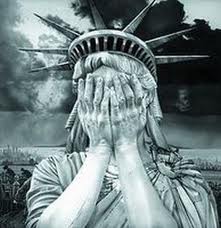
“Liberal” 9th Circuit Deals Death Blow To Al-Haramain Illegal Wiretapping Accountability Case

There is only one substantive case left in litigation with the ability to bring tangible accountability for the illegal and unconstitutional acts of the Bush/Cheney Administration’s warrantless wiretapping and surveillance program. That case is Al-Haramain v. Bush/Obama. Yes, there is still Clapper v. Amnesty International, but that is a prospective case of a different nature, and was never designed to attack the substantive crimes of the previous Administration.

A little over a couple of hours ago, late morning here in the 9th, the vaunted “most liberal of all Circuit Courts of Appeal”, the Ninth Circuit, drove what may be the final stake in the heart of Al-Haramain by declining to conduct an en banc review of its August 7, 2012 opinion. The notice from the court today is brief:

The opinion filed on August 7, 2012, and appearing at 690 F.3d 1089, is hereby amended. An amended opinion is filed concurrently with this order.

With these amendments, the panel has voted to deny the petition for panel rehearing and the petition for rehearing en banc.

The full court has been advised of the petition for rehearing and rehearing en banc and no judge has requested a vote on whether to rehear the matter en banc. Fed. R. App. P. 35.

The petition for panel rehearing and petition for rehearing en banc are DENIED. No further petitions for en banc or panel rehearing shall be permitted.

Before going further with analysis, a word about the “amendments” to the opinion. The “Amended Opinion” is here. You can compare for yourself to the August 7 original opinion linked above, but the difference is pretty slight.

It appears all the court did is delete a few sentences here and there about 18 USC 2712(b). The court did not address, nor change, their erroneous assertion that plaintiffs’ Al-Haramain could have sued under 1806(a), or restore the misleadingly-omitted (by elipsis) language from 1806(a). Nor did the Continue reading


Drone War Secrecy and Kill or Capture

As we stand on the doorstep of President Obama signing into law the new NDAA and its dreaded controversial provisions, there are two new articles out of interest this morning. The first is an incredibly useful, and pretty thorough, synopsis at Lawfare of the new NDAA entitled “NDAA FAQ: A Guide for the Perplexed”. It is co-written by Ben Wittes and Bobby Chesney and, though I may differ slightly in a couple of areas, it is not by much and their primer is extremely useful. I suggest it highly, and it has condensed a lot of material into an easily digestible blog length post.

The second is a long read from the Washington Post on how secrecy defines Obama’s drone wars:

The administration has said that its covert, targeted killings with remote-controlled aircraft in Pakistan, Yemen, Somalia and potentially beyond are proper under both domestic and international law. It has said that the targets are chosen under strict criteria, with rigorous internal oversight.
….
“They’ve based it on the personal legitimacy of [President] Obama — the ‘trust me’ concept,” Anderson said. “That’s not a viable concept for a president going forward.”

The article goes on to state how the CIA, and the majority of voices in the White House, are fighting tooth and nail for continued utmost secrecy lest any of our enemies somehow discover we are blowing them to bits with our drones. This is, of course, entirely predictable, especially now that the former head of the CIA leads the military and the former military chief for the greater Af/Pak theater which has long been ground zero for the drone kill program, Petraeus, is the head of the CIA.

But then the Post piece brings up our old friend, the OLC:

The Justice Department’s Office of Legal Counsel has opposed the declassification of any portion of its opinion justifying the targeted killing of U.S. citizen Anwar al-Awlaki in Yemen this year. Awlaki, a propagandist for the Yemen-based al-Qaeda affiliate whom Obama identified as its “external operations” chief, was the first American known to have been the main target of a drone strike. While officials say they did not require special permission to kill him, the administration apparently felt it would be prudent to spell out its legal rationale.
….
Under domestic law, the administration considers all three to be covered by the Authorization for Use of Military Force that Congress passed days after the Sept. 11, 2001, attacks. In two key sentences that have no expiration date, the AUMF gives the president sole power to use “all necessary and appropriate force” against nations, groups or persons who committed or aided the attacks, and to prevent future attacks.

The CIA has separate legal authority to conduct counterterrorism operations under a secret presidential order, or finding, first signed by President Ronald Reagan more than two decades ago. In 1998, President Bill Clinton signed an amendment, called a Memorandum of Notification, overriding a long-standing ban on CIA assassinations overseas and allowing “lethal” counterterrorism actions against a short list of named targets, including Osama bin Laden and his top lieutenants. Killing was approved only if capture was not deemed “feasible.”

A week after the Sept. 11 attacks, the Bush administration amended the finding again, dropping the list of named targets and the caveat on “feasible” capture.

“All of that conditional language was not included,” said a former Bush administration official involved in those decisions. “This was straight-out legal authority. . . . By design, it was written as broadly as possible.”

This brings us back to the notable October 8, 2011 article by the New York Times’ Charlie Savage on his viewing of the Awlaki targeting memo relied on by the Obama White House for the extrajudicial execution of Anwar al-Awlaki. Marcy, at the time discussed the incongruity of the collateral damage issue and the fact Samir Khan was also a kill in the targeted Awlaki strike.

I would like to delve into a second, and equally misleading, meme that has been created by the self serving and inconsistent secret law Obama has geometrically expanded from the already deplorable Bush/Cheney policy set: the false dichotomy in the kill or capture element of the Continue reading


All Sides Agree There Is Excessive Secrecy Surrounding Targeting Of US Citizens

The targeted execution of Anwar al-Awlaki struck different people along the political spectrum in the United States in many different ways, but it has been heartening most all have recognized it as a seminal moment worthy of dissection and contemplation. Despite all the discussion afforded the execution of Awlaki in the last few days, it cannot be emphasized enough how impossible it is to have a completely meaningful discussion on the topic due to the relentless blanket of secrecy imposed by the United States government. Before I get into the substantive policy and legal issues surrounding the targeting and assassination of American citizens, which I will come back to in a separate post, a few words about said secrecy are in order.

The first to note, and complain of, the strange secrecy surrounding not just the kill listing of Awlaki, but the entire drone assassination program, was Marcy right here in Emptywheel. Within a couple of hours of the news of the Awlaki strike, she called for the release of the evidence and information serving as the Administration’s foundation for the extrajudicial execution of an American citizen and within a couple of hours of that, noted the ironic inanity of the pattern and practice of the one hand of the Obama Administration, through such officials as Bob Gates, James Clapper and Panetta trotting out “state secrets” to claim drone actions cannot even be mentioned while the other hand, through mouthpieces such as John Brennan are out blabbing all kinds of details in order to buck up Administration policy.

Now, you would expect us here at Emptywheel to vociferously complain about the rampant secrecy and hypocritical application of it by the Executive Branch, what has been refreshing, however, is how broad the spectrum of commentators voicing the same concerns has been. Glenn Greenwald was, as expected, on the cause from the start, but so too have voices on the other side of the traditional spectrum such as the Brookings Institute’s Benjamin Wittes, to former Gang of Eight member and noted hawk Jane Harman, and current Senate Armed Services Chairman Carl Levin and Daphne Eviatar of Human Rights First.

But if there were any doubt that it was just left leaning voices calling for release of targeting and legal foundation information, or only sources such as Emptywheel or the New York Times pointing out the hypocrisy and duplicity with which the Administration handles their precious “state secret”, then take a gander at what former Bush OLC chief Jack Goldsmith had to say Monday, after a weekend of contemplation of the issues surrounding the take out of Awlaki:

I agree that the administration should release a redacted version of the opinion, or should extract the legal analysis and place it in another document that can be released consistent with restrictions on classified information.

I have no doubt that Obama administration lawyers did a thorough and careful job of analyzing the legal issues surrounding the al-Aulaqi killing. The case for disclosing the analysis is easy. The killing of a U.S. citizen in this context is unusual and in some quarters controversial. A thorough public explanation of the legal basis for the killing (and for targeted killings generally) would allow experts in the press, the academy, and Congress to scrutinize and criticize it, and would, as Harman says, permit a much more informed public debate. Such public scrutiny is especially appropriate since, as Judge Bates’s ruling last year shows, courts are unlikely to review executive action in this context. In a real sense, legal accountability for the practice of targeted killings depends on a thorough public legal explanation by the administration.

Jack has hit the nail precisely on the head here, the courts to date have found no avenue of interjection, and even should they in the future, the matter is almost surely to be one of political nature. And accountability of our politicians depends on the public havin sufficient knowledge and information with which to make at least the basic fundamental decisions on propriety and scope. But Mr. Goldsmith, admirably, did not stop there and continued on to note the very hypocrisy and duplicity Marcy did last Friday:

We know the government can provide a public legal analysis of this sort because presidential counterterrorism advisor John Brennan and State Department Legal Advisor Harold Koh have given such legal explanations in speeches, albeit in limited and conclusory terms. These speeches show that there is no bar in principle to a public disclosure of a more robust legal analysis of targeted killings like al-Aulaqi’s. So too do the administration’s many leaks of legal conclusions (and operational details) about the al-Aulaqi killing.

A full legal analysis, as opposed to conclusory explanations in government speeches and leaks, would permit a robust debate about targeted killings – especially of U.S. citizens – that is troubling to many people. Such an analysis could explain, for example, whether the government believed that al-Aulaqi possessed constitutional rights under the First, Fourth, Fifth or other amendments, and (assuming the government concluded that he possessed some such rights) why the rights were not implicated by the strike. It could also describe the limits of presidential power in this context.

The Obama administration frequently trumpets its commitment to transparency and the rule of law. The President and many of his subordinates were critical of what they deemed to be unnecessarily secretive Bush administration legal opinions, and they disclosed an unprecedented number of them, including many classified ones. Now is the time for the administration to apply to itself a principle that it applied to its predecessor.

Again, exactly right. From Marcy Wheeler, to Gang of Eight members, to Jack Goldsmith, the voice is both clear and consistent: The Obama Administration needs to come clean with as much of the legal and factual underpinnings as humanly possible short of compromising “means and methods” that truly are still secret. That would be, by almost any account, a lot of information and law with which the American public, indeed the world, could not only know and understand, but use to gauge their votes and opinions on. Doing so would make the United States, and its actions, stronger and more sound.

In the second part of this series, which I should have done by tomorrow morning sometime, I will discuss what we know, and what we don’t know, about the legal and factual underpinnings for targeted killing of US citizens, and sort through possible protocols that may be appropriate for placement of a citizen target and subsequent killing.

UPDATE: As MadDog noted in comments, Jack Goldsmith has penned a followup piece at Lawfare expounding on the need for release of the foundational underpinnings of how an American citizen such as Alawki came to be so targeted. Once again, it is spot on:

First, it is wrong, as Ben notes, for the government to maintain technical covertness but then engage in continuous leaks, attributed to government officials, of many (self-serving) details about the covert operations and their legal justifications. It is wrong because it is illegal. It is wrong because it damages (though perhaps not destroys) the diplomatic and related goals of covertness. And it is wrong because the Executive branch seems to be trying to have its cake (not talking about the program openly in order to serve diplomatic interests and perhaps deflect scrutiny) and eat it too (leaking promiscuously to get credit for the operation and to portray it as lawful). I do not know if the leaks are authorized in some sense or not, or where in the executive branch they come from, or what if anything the government might be doing to try to stop them. But of course the president is ultimately responsible for the leaks. One might think – I am not there yet, but I understand why someone might be – that the double standard on discussing covert actions disqualifies the government from invoking technical covertness to avoid scrutiny.

Second, there is no bar grounded in technical covertness, or in concerns about revealing means and methods of intelligence gathering, to revealing (either in a redacted opinion or in a separate document) the legal reasoning supporting a deadly strike on a U.S. citizen. John Brennan and Harold Koh have already talked about the legality of strikes outside Afghanistan in abstract terms, mostly focusing on international law. I don’t think much more detail on the international law basis is necessary; nor do I think that more disclosure on international law would do much to change the minds of critics who believe the strikes violate international law. But there has been practically nothing said officially (as opposed through leaks and gestures and what is revealed in between the lines in briefs) about the executive branch processes that lie behind a strike on a U.S. citizen, or about what constitutional rights the U.S. citizen target possesses, or about the limitations and conditions on the president’s power to target and kill a U.S. citizen. This information would, I think, matter to American audiences that generally support the president on the al-Aulaqi strike but want to be assured that it was done lawfully and with care. The government could easily reveal this more detailed legal basis for a strike on a U.S. citizen without reference to particular operations, or targets, or means of fire, or countries.

Listen, we may not always agree with Jack here, and both Marcy and I have laid into him plenty over the years where appropriate; but credit should be given where and when due. It is here. And, while I am at it, I would like to recommend people read the Lawfare blog. All three principals there, Ben Wittes, Goldsmith and Bobby Chesney write intelligent and thoughtful pieces on national security and law of war issues. No, you will not always agree with them, nor they with you necessarily; that is okay, it is still informative and educational. If nothing else, you always want to know what the smart people on the other side are saying.

[Incredibly awesome graphic by the one and only Darkblack. If you are not familiar with his work, or have not seen it lately, please go peruse the masterpieces at his homebase. Seriously good artwork and incredible music there.]


Is Anwar al-Awlaki The Unnamed “National of the United States” In Warsame Indictment?

As Marcy noted Tuesday afternoon, and has been large in the news the last two days, there is a new terrorism prosecution announced by Eric Holder and the Obama DOJ. The case concerns Ahmed Abdulkadir Warsame, and is interesting in that Warsame is alleged to be a member/leader of al-Shabaab, and none of the allegations involve acts of plots against the US or its citizens directly.

In fact, the only significant nexus to the United States contained within the indictment unsealed against Warsame is that he:

…conspires with a national of the United States…

This is unusual as to the complete lack of description and details about the “national of the United States” and the complete absence of any information indicating the nature of conspiracy and/or contact with the “national of the United States. To be fair, a charging document is not legally required to be a “speaking indictment” that fully lays out every minute detail of the jurisdiction, venue and facts; although this one is one of the more silent ones I have seen in a long time from the DOJ.

But, what is really fascinating is this today from Charlie Savage at the New York Times:

Meanwhile, new details emerged about Mr. Warsame’s detention on a Navy ship after his capture in April aboard a fishing skiff between Yemen and Somalia, and about internal administration deliberations on legal policy questions that could have implications for the evolving conflict against Al Qaeda and its affiliates.

A senior counterterrorism official said Wednesday that Mr. Warsame had recently met with Anwar al-Awlaki, the American-born radical cleric now hiding in Yemen. After his capture, he was taken to the Boxer, an amphibious assault ship that was steaming in the region and has a brig, a senior military official said.

While Mr. Warsame is accused of being a member of the Shabab, which is focused on a parochial insurgency in Somalia, the administration decided he could be lawfully detained as a wartime prisoner under Congress’s authorization to use military force against the perpetrators of the Sept. 11, 2001, attacks, according to several officials who spoke on the condition of anonymity to discuss security matters. (emphasis added)

So, we have Warsame allegedly “conspiring” with a “national of the United States” in the indictment with the identity and circumstances being unusually and ridiculously guarded and vague; and now we have Warsame having had contact with Awlaki.

Gee, I wonder what the odds are they are one in the same person???

Because, as you may remember, Awlaki is so secret that the US government saw fit to declare state secrets rather than explain to Awlaki’s parents why they feel justified to violently assassinate their son, a US citizen, without so much as a speck of due process. Now, I guess a guy that secret is someone the government might just be really vague about in an indictment of some tangential corollary person, say Warsame, for instance.

So, is it truly the case that Awlaki is indeed the unnamed “national of the United States” here in the Warsame indictment? I don’t know for certain, but it sure as heck fits the facts as we know them and the depraved refusal of the American government to talk about or let the public know its basis for impunity in marking an American citizen for extrajudicial termination with prejudice.

Now, back to the Warsame indictment for one last thought. While I agree with Marcy, Ben Wizner of ACLU and Adam Serwer that the Obama Administration decision to bring Warsame in front of an Article III court for trial was a brave one in relation to establishing credibility of traditional terrorism prosecutions, I wonder if Warsame is really the right case to do that with?

In Warsame, all the overt acts, heck all the acts period, took place outside of the US, and none of them, none, were particularly directed at all, much less with malice, at the US or US citizens. al Shabaab is a nasty group of terrorists to be sure, but is this really the use we want to make of US Article III courts? Shouldn’t the prosecutions the Administration uses to establish credibility have some, even minimal, overt act nexus to the United States and the Southern District of New York?


Vaughn Walker Issues Final al-Haramain Opinion on Damages and Attorney Fees

As you may recall, Chief Judge Vaughn Walker of the Northern District of California (NDCA), who has handled two of the most critical and transcendent litigations of the last decade, Perry v. Schwarzenegger and al-Haramain v. Bush/Obama, is retiring. Today, he has issued his last big opinion left on his table pre-retirement, the ruling on damages to be awarded Plaintiff in al-Haramain, assignment of attorney fees to Plaintiffs, and whether or not to impose punitive damages against the government for their offending illegal conduct.

The government, in its brief objecting to the Plaintiffs’ proposed form of judgment, basically poked the court in the eye with a stick by continuing their obstreperous refusal to accept the court’s jurisdiction over their assertion of state secrets, continued to argue there were no facts competently of record despite Walker’s crystal clear determinations to the contrary, and denied that Plaintiffs were entitled to attorney fees or punitive damages. They just say NO. The Plaintiffs went on to properly lodge their calculation of damages, detailed request for attorney fees and affidavit in support thereof. Plaintiffs al-Haramain, separately, filed a very compelling brief on why the court should award them punitive damages against the government. The government, of course, objected some more.

As lead Plaintiffs counsel Jon Eisenberg stated in the punitive damages brief:

Defendants abused the extraordinary power of the Executive Branch by committing unlawful electronic surveillance of the plaintiffs with full knowledge of, and in flagrant disregard for, determinations by top officials in the Department of Justice (DOJ) that the surveillance lacked constitutional or other legal support. Defendants sought to put themselves above the law, in the manner of a monarch. That is a profound abuse of America’s trust. It calls for strong medicine.

And thus it all comes down to today’s decision by Judge Walker, and here is the full text of his 47 page order.

In short, Walker has ordered that Plaintiffs Wendell Belew and Asim Ghafoor (a-Haramain’s attorneys wrongfully surveilled) receive $20,400.00 each in liquidated damages. Walker denied damages to al-Haramain itself. In regards to punitive damages, Judge Walker has denied in full Plaintiffs’ request. As to attorney fees, the court grants the motion as to Plaintiffs Ghafoor and Belew only (again, not as to al-Haramain itself, and awards attorney fees and expenses in the amount of $2,537,399.45.

There is a lot to chew on in this order, and both Marcy and I will be coming back to do just that after chewing and digesting it further. But so far, it is clear that the court sided completely with the plaintiffs on compensatory/liquidated damages, giving Belew and Ghafoor every penny they asked for and finding the government’s opposition meritless. This passage by the court is telling: Continue reading


ACLU Appeals 9th Circuit Jeppesen Decision to SCOTUS

When the original three member panel opinion in Mohamed v. Jeppesen Dataplan, Inc. was issued by the 9th Circuit in late April of 2009, it was a breath of fresh air. Judge Michael Hawkins authored a thoughtful, well reasoned and heartening opinion placing appropriate curbs on the ability of the Executive Branch to silence wronged plaintiffs via the interjection of state secrets. Civil liberties scholars stood up and cheered. Unfortunately, it did not last and thanks to a very unfortunate panel assignment for the en banc review in the 9th, Hawkins was reversed and an erratic and contorted decision put in its stead by Judge Raymond Fisher handing the President and Executive Branch carte blanche to assert state secrets at will, effectively even to hide government illegality and misconduct. Civil liberties adherents jeered.

Now the ACLU, who represents the plaintiffs in Mohamed v. Jeppesen, has appealed from the 9th Circuit en banc decision by petitioning the Supreme Court for certiorari. The ACLU’s full petition is here. The ACLU press release reads, in pertinent part:

The American Civil Liberties Union late last night asked the U.S. Supreme Court to review a lower court decision dismissing its lawsuit against a Boeing subsidiary, Jeppesen DataPlan, Inc., for the company’s role in the Bush administration’s extraordinary rendition program. The ACLU and the ACLU of Northern California filed the lawsuit in May 2007 on behalf of five men who were kidnapped by the CIA, forcibly disappeared to U.S.-run prisons overseas and tortured. Although the federal government was not initially named in the lawsuit, it intervened for the sole purpose of arguing that the case should be dismissed based on the “state secrets” privilege.

“To date, not a single victim of the Bush administration’s torture program has had his day in a U.S. court,” said Ben Wizner, Litigation Director of the ACLU National Security Project. “The government has misused the ‘state secrets’ privilege to deny justice to torture victims and to shield their torturers from liability. The Supreme Court should reaffirm our nation’s historic commitment to human rights and the rule of law by allowing this case to go forward.”

In April 2009, a three-judge panel of the U.S. Court of Appeals for the Ninth Circuit ruled that the government could not invoke the state secrets privilege over the Continue reading


State Secrets Non-Compromise Compromise Architect to Replace Kagan

The great news just keeps coming.

Remember the “new” state secrets policy DOJ announced last year? It basically amounted to a promise that the Attorney General would review any invocation of state secrets to make sure such an invocation was really really secret rather than just sort of secret but really embarrassing, along with a promise that an Inspector General (but not a court) would investigate in case of wrong-doing (at the time, some of the existing state secrets invocations had already been investigated by IGs). Here’s how I described the “new” policy when it was announced.

What the “new” state secrets policy appears designed to do is buy time and limit the legal battlefields on which the Administration tries to stave off a CIPA-like process.

Legislatively, it appears the “new” policy (and presumably some pressure on Leahy directly) has convinced Leahy, at least, to hold off on moving his legislation forward. He seems to be content to wait and see how this new policy plays out. Nadler, on the other hand, seems to want to push forward with legislation (so is Russ Feingold, but he’s not in the same position to push forward Senate legislation as Nadler is). So at the very least, Holder’s “new” policy will buy the Administration time before Congress tries to reel in executive power.

Then there’s Horn. Word is that Holder will use the “new” policy to withdraw the state secrets claim in one case, and by all appearances that one case will be Horn (I don’t know whether that means they will try to settle Horn, or whether they’ll just move forward with what amounts to a CIPA-like process without a state secrets claim behind it.)

Now of the three cases in question (Horn, al-Haramain, and Jeppesen), Horn is the one that was the biggest slam dunk legally to support a CIPA-like process (because of the fraud involved and the Circuit Court’s earlier limitation on the state secrets claim). It’s the one in which the Bush Administration’s claim to state secrets was most bogus. And it’s the least risky one to settle or litigate.

By withdrawing the claim of state secrets in Horn (if that is indeed what will happen), the Administration will avoid having the DC Circuit joining the 9th in supporting some kind of CIPA-process in state secrets, while still giving the Administration hopes of dismissing Jeppesen and al-Haramain based on state secrets.

In other words, this is all a big bureaucratic ploy to try to keep the Bush Administration’s illegal actions on extraordinary rendition and warrantless wiretapping secret.

Well, the guy Obama plans to replace Kagan with is the architect of this “smoke and mirrors” policy.

The White House is poised to name Don Verrilli, an associate White House counsel, as solicitor general after Elena Kagan is confirmed to the Supreme Court. Verrilli joined the Obama administration as an associate deputy attorney general, where he helped his close friend, Attorney General Eric Holder, craft the Justice Department’s new state secrets doctrine guidelines.

[snip]

Verrillii’s trial balloon appointment as SG will be viewed suspiciously by civil libertarians for his authorial role in the state secrets drama and for his record of fighting on behalf of industry against tech entrepreneurs.  But he’s got the trust of Holder, Bauer, and President Obama.

I can’t wait to see what Obama has in store next to whittle away at the rule of law.


The Brits Refuse Secret Trials Even as Obama Doubles Down

As bmaz reported last night, the Obama Administration has refused to accept Vaughn Walker’s ruling in al-Haramain–in fairly spectacular fashion (and yes, bmaz, Mary, MadDog and others did tell me this was going to happen).

Meanwhile, across the pond, the folks from whom we got our legal system are refusing the very concept that the government could avoid its legal liability by claiming its crimes were all a secret. The British Court of Appeals refused the British government’s attempt to respond to a suit from Binyam Mohamed and other former Gitmo detainees by claiming only the government and the judge could see the evidence–effectively the stance the Obama Administration has now doubled down on.

British residents held at Guantánamo Bay could be offered millions of pounds in compensation for wrongful imprisonment and abuse after the court of appeal today dismissed an attempt by MI5 and MI6 to suppress evidence of alleged complicity in torture.

The judges ruled that the unprecedented legal move by Britain’s security and intelligence agencies – which the attorney general and senior Whitehall officials backed – to suppress evidence in a civil trial undermined the principles of common law and open justice.

[snip]

In the appeal court ruling, Lord Neuberger, master of the rolls, Lord Justice Maurice Kay and Lord Justice Sullivan said that accepting the argument of the security and intelligence agencies would amount to “undermining one of [the common law's] most fundamental principles”. One of those principles was that “trials should be conducted in public, and the judgments should be given in public”.

The judges gave the attorney general, MI5 and MI6 28 days to appeal to the supreme court. But government officials have told the Guardian that the former detainees are now likely to be offered compensation of millions of pounds in out-of-court settlements as that would be preferable to having embarrassing evidence of the security and intelligence agencies’ complicity in abuse being exposed.

In other words, if the government refuses to share evidence of its own involvement in the torture of British residents and citizens, then they are going to have to settle with those men, rather than just dismissing the suit altogether by saying the plaintiffs can’t see the most crucial evidence in question. Had the government accepted Walker’s judgment in al-Haramain, they would have paid millions, but would have managed to keep evidence of their precious illegal wiretap program (a program both Obama and Holder have said was illegal) secret. (The Times has more, including some excellent quotes from the plaintiffs’ lawyer.)

How quaint the old country looks from this distance!


DOJ Circumvents Judge Walker; Attempts To Further Correct Previous Falsities

In what can only be described as a curious filing, the US Government, through the DOJ has submitted a pleading to the 9th Circuit Court of Appeals in the previously terminated al-Haramain appeal originally filed in 2006. In this appeal, on November 16, 2007, the 9th generally upheld the government’s state secrets assertion, but remanded the case to Judge Walker “to consider whether FISA preempts the state secrets privilege and for any proceedings collateral to that determination.” (Walker has so ruled and those proceedings are indeed ongoing and awaiting the Court’s decision of Plaintiffs’ Motion For Summary Judgment). The 9th Circuit’s mandate issued on January 16, 2008.

The new submission filed in the 9th Circuit is nothing short of a brazen attempt to subvert Judge Walker’s trial court authority and jurisdiction by an end run, and is entitled “NOTICE OF LODGING OF IN CAMERA, EX PARTE DECLARATION OF DIRECTOR OF NATIONAL INTELLIGENCE”

The Government hereby respectfully notifies the Court and counsel that it is lodging today with the Court Security Officer copies of an in camera, ex parte classified declaration, dated November 8, 2009, of the Director of National Intelligence, Dennis C. Blair.

We are making the lodging because an issue arose regarding an inaccuracy in an earlier Government submission in the district court that was part of the record before this Court in an interlocutory appeal in this matter bearing the above caption. The case has been remanded to the district court and an appeal is no longer pending before this Court. The lodging does not call for any action by this Court but is intended to ensure that this Court is informed of the earlier inaccuracy and has available to it classified details with respect to the issue. The Government has informed the district court of the issue, has offered to make available to that court additional classified details in camera, ex parte, and is informing that court that the Government is making the lodging in this Court.

Here is the document. Now the government had just submitted an unclassified declaration of ODNI Blair to the trial court in September, and references said declaration in their new little filing, but does not seem to attach it. Instead, they submit a new classified ex parte declaration from Blair.

Because the inaccuracy was in an earlier Government submission that was part of the record when the case came before this Court on interlocutory appeal, we are today lodging with the Court Security Officer copies of an in camera, ex parte classified declaration, dated November 8, 2009, of Director of National Intelligence Blair. That declaration provides additional classified information regarding the matter. As noted, the lodging ensures that this Court is informed of the issue and has available to it classified details concerning the issue.

Well now, it would seem that Jon Eisenberg has struck a raw nerve with his putative entry into the Horn v. Huddle case as an amicicus urging Royce Lamberth to leave his opinions in place and in force. After having been blistered by Continue reading


Obama DOJ Continues To FlimFlam Judge Lamberth On State Secrets

The state secrets doctrine was born on the wings of fraud and lies by the US government in the case of US v. Reynolds in 1953. As Congress struggles to rein in the unbridled use of the doctrine to cover up illegality by the Executive Branch (see here, here and here), it is a good idea to keep focus on just how addicted the Executive Branch has become to this unitary ability to quash inquiry into their malfeasance.

It took over four decades for the outright lie in Reynolds to surface and be exposed. The government was well on their way to covering up their similar dishonesty in Horn v. Huddle for decades, if not eternity, when a relentless plaintiff was finally able to demonstrate to Judge Royce Lamberth the fraud being perpetrated upon the court, nearly a decade after the original state secrets assertion. After giving the government multiple opportunities to come clean, Judge Lamberth blistered the DOJ with an opinion literally finding their acts a fraud upon the court.

After being exposed on the record by Judge Lamberth, the government suddenly decided to settle with the plaintiff, with a non-disclosure and no admission of wrongdoing agreement of course, and then moved the court to vacate its rulings against them. The DOJ literally wants to erase the record of their fraud.

But not everybody is quite so excited about the thought of the DOJ wiping the record of their time worn proclivity to dishonesty in state secrets assertions. It important for there to be such a record, with written opinions of the court behind it, because the government is still out there seeking to shirk accountability for illegality and Constitutional malfeasance in critically important cases such as al-Haramain and Jeppesen.

In this regard, the attorney for al-Haramain, Jon Eisenberg, has just taken the extraordinary step of seeking leave to file an amicus brief to Judge Lamberth in the Horn v. Huddle case objecting to the government’s attempt to vacate the court’s opinions. The amicus filing by Eisenberg is brief, but a thing of beauty. And he nails the government for continuing dishonesty with the court by pointing out Continue reading