Aileen Cannon Orders Government to Share Classified Information with Trump’s Counsel

I’ll have a lot more to say about Judge Aileen Cannon’s order blowing off National Security in favor of Trump’s half-assed claims of being a victim. Her order is a radical assault on national security and rule of law.

But for the moment, I want to look at this part of her work flow order.

Make available for inspection by Plaintiff’s counsel, with controlled access conditions (including necessary clearance requirements) and under the supervision of the Special Master, the documents marked as classified and the papers attached to such documents; and

It orders the government to make the classified documents stolen by Trump available to his attorneys, including Evan Corcoran, who is either a witness or a subject of this investigation. None are known to be cleared. Aside from Jim Trusty, it’s not clear how quickly any of them can be cleared.

In her order, she claims this involves sharing only with the Special Master, Raymond Dearie.

The Government also presents the argument, in passing, that making the full scope of the seized materials available to the Special Master would itself create irreparable harm [ECF No. 69 p. 18]. Insofar as the Government argues that disclosure to a Special Master of documents marked as classified necessarily creates an irreparable injury because the special master process in this case is unnecessary, the Court disagrees for the reasons previously stated. Separately, to the extent the Government appears to suggest that it would suffer independent irreparable harm from review of the documents by the Court’s designee with appropriate clearances and controlled access, that argument is meritless

But these are completely contradictory. One document says the government must share classified information with Trump’s people. The other document says, “it’s only Raymond Dearie, don’t worry your little heads.”

And she just waves her hands and says the government must share this stuff, “including necessary clearance requirements,” without acknowledging that she doesn’t get to decide that. If the government says that none of Trump’s lawyers can be cleared, they get to say that (again, I expect fewer concerns about Trusty, but major concerns about Corcoran).

That’s par for the course of this order.

Go to emptywheel resource page on Trump Espionage Investigation.

Share this entry

Evan Corcoran’s Two May 25 Stall Letters

A number of people have observed that the language in the newly unsealed parts of the Trump search warrant about what Evan Corcoran told Jay Bratt and others on June 3 emphasizes that “he was advised” certain things that (we now know) turned out to be false.

During receipt of the production, FPOTUS COUNSEL 1 stated he was advised all the records that came from the White House were stored in one location within Mar-a-Lago, the STORAGE ROOM, and the boxes of records in the STORAGE ROOM were “the remaining repository” of records from the White House. FPOTUS COUNSEL 1 further stated he was not advised there were any records in any private office space or other location in Mar-a-Lago. The agents and DOJ COUNSEL were permitted to see the STORAGE ROOM and observed that approximately fifty to fifty-five boxes remained in the STORAGE ROOM. [5 lines redacted] Other items were also present in the STORAGE ROOM, including a coat rack with suit jackets, as well as interior decor items such as wall art and frames. [my emphasis]

For comparison, here’s how that exchange was described in DOJ’s response to Trump’s motion for a stay.

After producing the Redweld, counsel for the former President represented that all the records that had come from the White House were stored in one location—a storage room at the Premises (hereinafter, the “Storage Room”), and the boxes of records in the Storage Room were “the remaining repository” of records from the White House. Counsel further represented that there were no other records stored in any private office space or other location at the Premises and that all available boxes were searched. As the former President’s filing indicates, the FBI agents and DOJ attorney were permitted to visit the storage room. See D.E. 1 at 5-6. Critically, however, the former President’s counsel explicitly prohibited government personnel from opening or looking inside any of the boxes that remained in the storage room, giving no opportunity for the government to confirm that no documents with classification markings remained. [my emphasis]

On August 8, FBI emphasized that Corcoran was simply describing what “he was advised.” By August 30, DOJ summarized what Trump, in the person of his attorney, “represented.”

The earlier emphasis on what Corcoran was told lends weight to the interpretation that DOJ believes he is a witness, not a subject, to an obstruction investigation. Yes, if he genuinely was lied to, then he’s probably safe from any criminal exposure himself, but will likely, eventually, have to explain that to investigators.

But that’s not the only thing notable about the newly unsealed sections, as pertains to Corcoran.

For example, his prohibition on searching boxes was not unsealed. Neither in that passage nor in any other place in the unsealed affidavit does the description of how Corcoran refused to let Bratt and the three FBI agents open any boxes appear (I’ve bolded how it appeared in DOJ’s response). Some of the five redacted lines of the paragraph describing the storage room likely describe all the reasons why the storage room doesn’t comply with the CFR on storing classified documents. The coat rack and the wall art are likely included as evidence that the storage room was not exclusively available to those with a Need to Know the classified information Trump was storing in the room. But somewhere, in that paragraph or in another one, the affidavit almost certainly describes that Corcoran prohibited the FBI from opening the boxes. It would be pertinent to FBI’s request to search what was really in those boxes. So a description that Corcoran prohibited the FBI from looking is almost certainly in the affidavit, but remains redacted, even though DOJ’s claim that Corcoran prohibited the FBI from looking inside the boxes was made public in DOJ’s response.

If that’s right, it suggests the FBI must still consider that refusal to be of investigative interest, and so redacted it.

It’s a third reference to Corcoran, though, where the newly unsealed language provides most interesting new context.

51. DOJ has advised me that, on May 11, 2022 an attorney representing FPOTUS, “FPOTUS COUNSEL 1,” agreed to accept service of a grand jury subpoena from a grand jury sitting in the District of Columbia sent to him via email by one of the prosecutors handling this matter for DOJ “DOJ COUNSEL.” The subpoena was directed to the custodian of records for the Office of Donald J. Trump and it requested the following materials:

Any and all documents or writings in the custody or control of Donald J. Trump and/or the Office of Donald J. Trump bearing classification markings including but not limited to the following: Top Secret Secret Confidential Top Secret/SIG/NOFORN/ORCON Top Secret/SI-G/NOFORN Top Secret/HCSO/NOFORN/ORCON Top Secret/HCS-O/NOFORN Top Secret/HCSP/NOFORN/ORCON, Top Secret/HCS-P/NOFORN Top Secret/TK/NOFORN/ORCON Top Secret/TK/NOFORN, Secret/NOFORN, Confidential/NOFORN TS TS/SAP TS/SI-G/NF/OC TS/SI-G/NF TS/HCSO/NF/OC TS/HCS-O/NF TS/HCS-P/NF/OC TS/HCS-P/NF, TS/HCS-P/SI-G TS/HCS-P/SI/TK TS/TKINF/OC, TS/TK/NF S/NF, S/FRD S/NATO S/SI, C, and C/NF.

The return date of the subpoena was May 24, 2022. DOJ COUNSEL also sent FPOTUS COUNSEL 1 a letter that permitted alternative compliance with the subpoena by “providing any responsive documents to the FBI at the place of their location” and by providing from the custodian a “sworn certification that the documents represent all responsive records. ” The letter further stated that if no responsive documents existed, the custodian should provide a sworn certification to that effect.

52. On May 25, 2022, while negotiating for an extension of the subpoena, FPOTUS COUNSEL 1 sent two letters to DOJ COUNSEL. In the second such letter, which is attached as Exhibit 1, FPOTUS COUNSEL 1 asked DOJ to consider a few “principles,” which include FPOTUS COUNSEL 1 ‘s claim that a President has absolute authority to declassify documents. In this letter, FPOTUS COUNSEL 1 requested, among other things, that “DOJ provide this letter to any judicial officer who is asked to rule on any motion pertaining to this investigation, or on any application made in connection with any investigative request concerning this investigation.” [my emphasis]

The description of the May 11 subpoena and Jay Bratt letter accompanying it got unsealed with this release. None of that description is new, though the fact that this is the first mention of both Bratt and Corcoran in the affidavit means the following earlier discussions, including an April 29 explanation from NSD — probably Bratt — about the national security urgency of reviewing the documents returned in January would not have appeared before that in the affidavit (though could later in it).

April 11, 2022: FBI letterhead memorandum asks NARA for access to Trump documents

April 12, 2022: NARA informs Trump of access request

April 29, 2022: NSD to Evan Corcoran letter laying out NatSec urgency (not public)

April 29, 2022: Evan Corcoran letter to NARA asking for further delay (not public)

May 1, 2022: Evan Corcoran letter to NARA asking for further delay (not public)

May 5, 2022: Evan Corcoran asks for access to the Trump records for representatives (not public)

May 10, 2022: Steidel Wall to Corcoran advising him she would give FBI access starting May 12

The May 10 letter from Steidel Wall to Corcoran was included in the government’s response to Trump’s Special Master request but not among the items that DOJ asked Chief Judge Beryl Howell to unseal as grand jury material. It appears that it has become a focus of the public discussion because John Solomon made it one.

The passage above also unsealed the first sentence of paragraph 25 (the rest of that paragraph was unsealed in the first release). We already knew about one May 25 letter from Corcoran — DOJ diligently included it with the affidavit, as instructed by Corcoran, and so it was unsealed in the first unsealing.

That Corcoran actually sent two letters that day was already made public in this letter to Beryl Howell, though probably few other people noticed. This is probably the first that most people will realize Corcoran sent two letters that day. More importantly, the newly unsealed sentence makes its relation to the subpoena more obvious.

The subpoena deadline was May 24. By that day, document custodians from all of Trump’s properties should have shown up at their local FBI office with the remaining classified documents Trump retained. If they had, we might never have heard of all this. But on May 25 — the day after the subpoena deadline — Corcoran, after having stalled the FBI’s access to the 15 boxes for a month, was still asking for more time to respond to the subpoena issued two weeks earlier. All the while he was making false claims that this aspect of the investigation had leaked.

It’s against that background that Corcoran sent not one but two letters. This one is the second he sent that day. It doesn’t mention the pending subpoena, at all. Rather, it did the following:

  • Argue that because public trust is low (thanks to Donald Trump) any actions by DOJ must not involve politics
  • Complain that the news of the NARA referral (which NARA shared with Congress after warning Trump for months they might resort to doing so) was publicly reported
  • Claim falsely there were, “Leaks about an investigation that involve the residence of a former President”
  • Assert that the President has absolute authority to declassify things (without claiming that Trump had declassified things)
  • Lay out the (IMO) most catastrophically shitty legal advice made public this year, that Corcoran believed only 18 USC 1924 was implicated in this investigation
  • Cite an IG Report stating that DOJ has to remain free of political influence
  • Include two paragraphs that, Corcoran requested, be shared with any judge ruling on a motion or application in connection with this investigation.

Here’s what those paragraphs say:

Long-standing DOJ policy requires that DOJ attorneys be candid in representations made to judges. Pursuant to those policies, we request that DOJ provide this letter to any judicial officer who is asked to rule on any motion pertaining to this investigation, or on any application made in connection with any investigative request concerning this investigation.

The official policy ofDOJ further requires that prosecutors present exculpatory evidence to a grand jury. Pursuant to that policy, we request that DOJ provide this letter to any grand jury considering evidence in connection with this matter, or any grand jury asked to issue a subpoena for testimony or documents in connection with this matter. [my emphasis]

Effectively, the entire letter — written at a time when Corcoran was trying to negotiate a delayed response to a subpoena — was a pitch to a judge that there could be no probable cause that Trump had committed a crime, because 18 USC 1924 didn’t apply to him (remember, this is the statute Trump made a felony in response to Hillary’s home server) and because he hypothetically could have declassified all the most sensitive secrets.

The reference to Kash Patel, immediately following the mention of this letter, makes more sense now; it might explain that when Debra Steidel Wall told Corcoran on May 10 that no one could review Trump’s papers without proper clearance, he acceded to that.

What’s interesting about this letter (aside from how catastrophically bad that 1924 advice was) is its audience. Corcoran would have known that a judge was already involved; Beryl Howell oversees grand juries in DC, including the one that issued a subpoena to the former President. But he didn’t ask that the letter be shared with any judges who already reviewed subpoenas. Rather, he was asking that it be shared in case of some motion or application.

Corcoran envisioned — at a time he was stalling on compliance with a subpoena — that DOJ might soon go before a judge with some kind of application, something like a search warrant, in hand.

They were playing a game of chicken.

That suggests that DOJ was already threatening to come get the stolen classified documents they knew to remain at Mar-a-Lago. It suggests that this letter, with its catastrophically bad 1924 advice, was an attempt to stave off that, when in fact it instead ensured that DOJ would include a footnote explaining that the Espionage Act (unlike 1924) pertained to National Defense Information, not classified information, which would also make Corcoran’s nod to Trump’s unlimited declassification powers pointless as well.

I continue to get some satisfaction that during the period Corcoran was giving Trump such catastrophically bad legal advice pertaining to stolen classified documents, he was helping write 30-page filings in the Bannon misdemeanor case that also didn’t work, not even with Carl Nichols. But I’m perverse like that.

Anyway, that detail — that Corcoran wrote a letter to a hypothetical judge reviewing a warrant application even while he was negotiating an extension to the already passed subpoena deadline — is important background to whatever search Corcoran did and whatever representations he made on June 3, all a stunt that (he probably assumed) would stave off any search, including his refusal to let the FBI look in the boxes that he claimed to have searched.

I have no idea what Corcoran knew on May 25 and what he knew on June 3. But the fact he sent a letter envisioning a hypothetical judicial review of a search warrant application suggests he knew that he had to stave off a search even before the FBI showed up on June 3, when he refused to permit a consensual search.

Go to emptywheel resource page on Trump Espionage Investigation.

Share this entry

Yes, Trump Was Making Notes on Classified Documents

When the Trump search warrant was initially unsealed, many commentators focused on the description of documents bearing Trump’s notes.

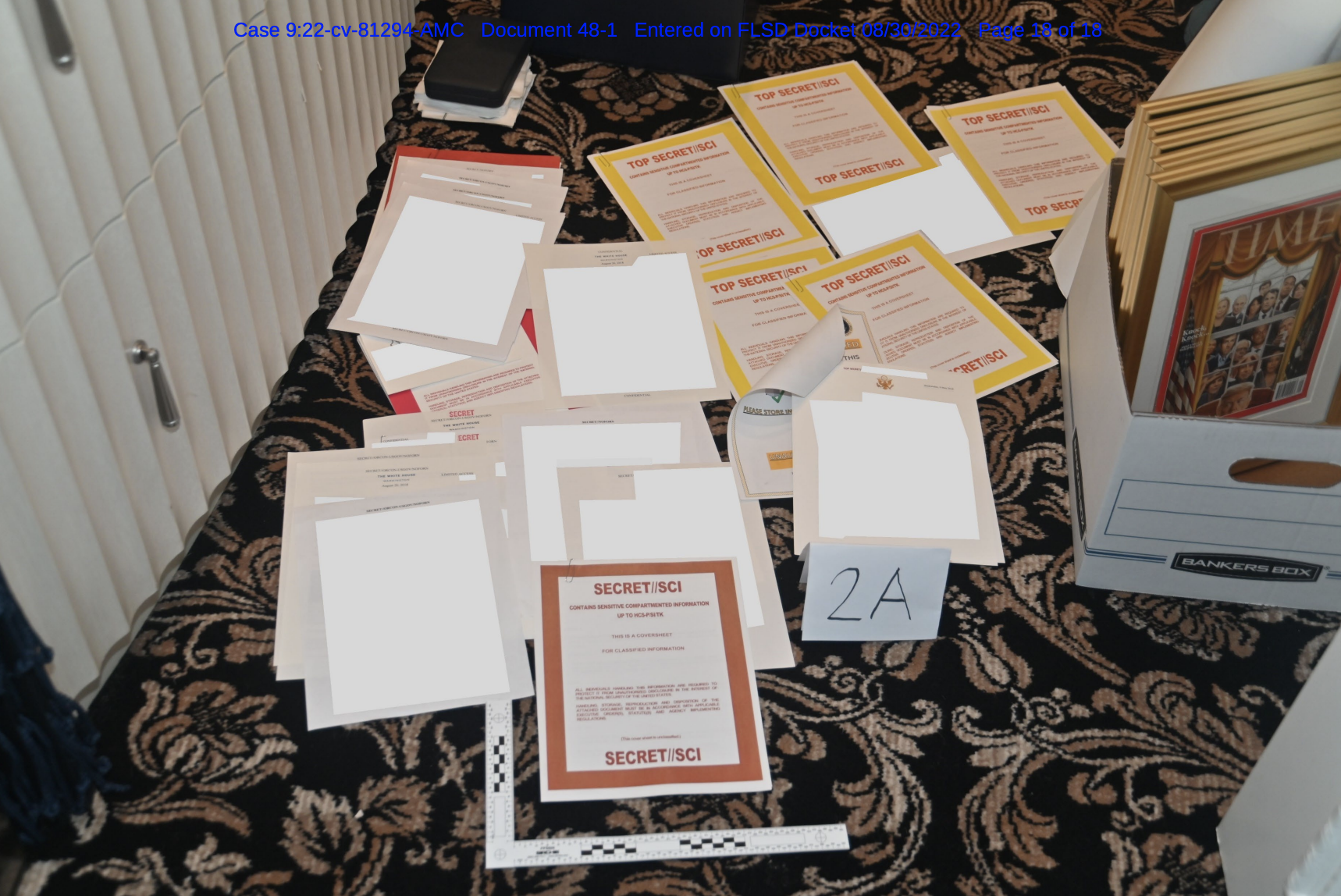
From May 16-18, 2022, FBI agents conducted a preliminary review of the FIFTEEN BOXES provided to NARA and identified documents with classification markings in fourteen of the FIFTEEN BOXES. A preliminary triage of the documents with classification markings revealed the following approximate numbers: 184 unique documents bearing classification markings, including 67 documents marked as CONFIDENTIAL, 92 documents marked as SECRET, and 25 documents marked as TOP SECRET. Further, the FBI agents observed markings reflecting the following compartments/dissemination controls: HCS, FISA, ORCON, NOFORN, and SI. Based on my training and experience, I know that documents classified at these levels typically contain NDI. Several of the documents also contained what appears to be FPOTUS ‘s handwritten notes. [my emphasis]

At the time, I thought that was an overreading of the passage. After all, that paragraph is a description of the contents of fifteen boxes, of which just 184 documents have classification markings. Given the context, I believed it was possible this described other documents in the boxes, hand-written documents that also might also contain classified information. Trump’s notes from calls with foreign leaders, for example, might include classified information or be otherwise particularly sensitive.

But one of the newly unsealed passages from the affidavit released yesterday describes Trump’s handwritten notes on the documents on June 3, as well. (As noted, this passage also revealed that at least one of the documents bore a FISA marking, as the first did.)

A preliminary review of the documents contained in the Redweld envelope produced pursuant to the grand jury subpoena revealed the following approximate numbers: 38 unique documents bearing classification markings, including 5 documents marked as CONFIDENTIAL, 16 documents marked as SECRET, and 17 documents marked as TOP SECRET. Further, the FBI agents observed markings reflecting the following caveats/compartments, among others: HCS, SI, and FISA. [redacted] Multiple documents also contained what appears to be FPOTUS’s handwritten notes. [my emphasis]

In this case, there cannot be any doubt: the notes are on documents bearing classification marks. That’s because the only things Evan Corcoran handed over on June 3 were documents bearing classified markings.

In fact, of all the sets of documents turned over or seized, that set includes the highest concentration of Top Secret documents. Almost half those documents turned over were marked Top Secret.

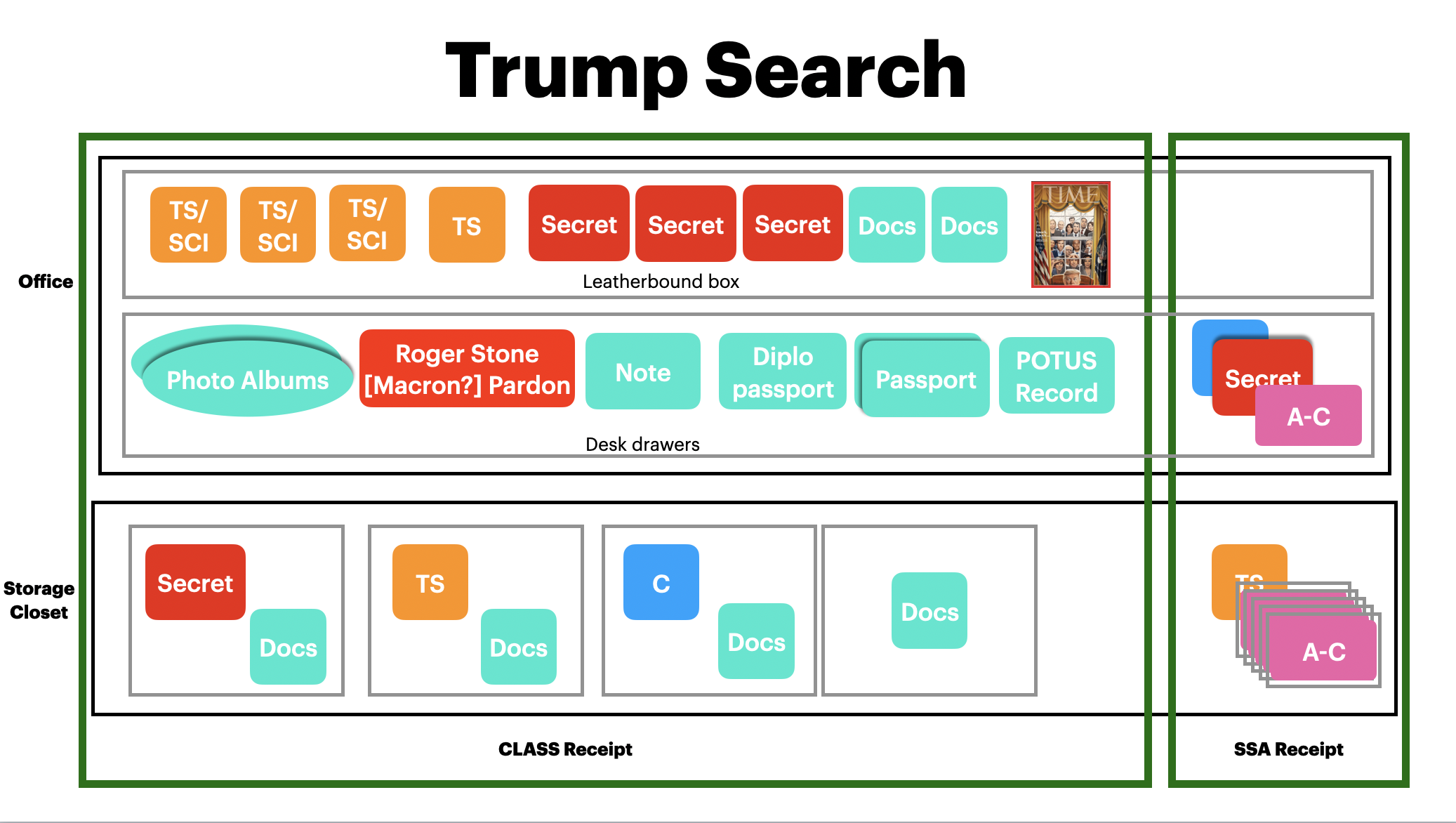
(This table includes the contents of the leatherbound box in the total of classified documents seized on August 8, but also breaks it out, which shows the leatherbound box stored the second highest concentration of Top Secret documents.)

So, yeah, at least some of these documents — multiple, not just several — reflect Trump writing on classified documents.

We don’t yet know what that means. Nor is it clear when he wrote those notes. In fact, FBI might be able to use those notes to prove that Trump has gone back and referred to (and written on) these documents since he left the White House, after such time as the current President decided that the former President no longer had a need to know America’s most sensitive secrets.

The confirmation that Trump took notes on documents bearing classification markings is important background to Trump’s attempt to claim that documents marked classified might be his own personal documents, as he made hints of doing in these passages of his response to the government’s motion for a stay.

Yet, the Government apparently contends that President Trump, who had full authority to declassify documents, “willfully” retained classified information in violation of the law. See 18 U.S.C. § 793(e); [ECF No. 69 at 9].7

7 Of course, classified or declassified, the documents remain either Presidential records or personal records under the PRA.

[snip]

To the extent President Trump may have categorized certain of the seized materials as personal during his presidency, any disagreement as to that categorization is to be resolved under the PRA and cannot possibly form the basis for any criminal prosecution. [my emphasis]

That is, in an attempt to forestall an Espionage Act prosecution (the only time Trump has named the statute), he seems to be entertaining a claim that he first declassified these documents and then, by dint of writing on them, made them his own personal property.

Such an argument raises the stakes on the timing of his notes. If he only wrote on these documents after he left the White House, they would have been declassified government (often, Agency) documents on January 20, 2021, not personal documents. But if he wrote on these as President, then his notations would have been made, “in the course of conducting activities which relate to or have an effect upon the carrying out of the constitutional, statutory, or other official or ceremonial duties of the President,” clearly making them Presidential Records under the Act. Either way, the documents belong in government custody.

The government scoffed at the possibility that Trump could have made classified documents personal records (it does not raise his notes on them).

Plaintiff’s suggestion that he “may have categorized certain of the seized materials as personal [records] during his presidency” pursuant to the PRA, D.E. 84 at 15, if true, would only supply another reason that he cannot assert executive privilege with regard to those records. If Plaintiff truly means to suggest that, while President, he chose to categorize records with markings such as “SECRET” and “TOP SECRET” as his personal records for purposes of the PRA, then he cannot assert that the very same records are protected by executive privilege—i.e., that they are “Presidential communications” made in furtherance of the “performance of his official duties.” Nixon v. GSA, 433 U.S. at 447, 456; see 44 U.S.C. § 2201(3) (defining “personal records” as records “of a purely private or nonpublic character which do not relate to or have an effect upon the carrying out of the constitutional, statutory, or other official or ceremonial duties of the President”). In any event, whether Plaintiff declared documents with classification markings to be his “personal” records for purposes of the PRA has no bearing on the government’s compelling need to review them, both for national security purposes and as part of its investigation into the potentially unlawful retention of national defense information.2

2 Plaintiff’s characterization of the discretion the PRA provides the President to categorize records as “Presidential” or “personal,” D.E. 84 at 14-15 (citing Judicial Watch v. National Archives and Records Administration, 845 F. Supp. 2d 288 (D.D.C. 2012)), is thus irrelevant here. In any event, the district court decision on which Plaintiff relies did not concern classified records and does not support his assertion that a court must accept a former President’s claim that records that indisputably qualify as Presidential records under the PRA are instead personal records. Instead, the court in Judicial Watch concluded that it could not compel the National Archives and Records Administration to revisit a President’s decision about such a categorization. 845 F. Supp. 2d at 300-301. More fundamentally, the district court’s analysis in Judicial Watch has no bearing on the application of criminal law regarding unauthorized retention of national defense information, unauthorized removal of government documents, or obstruction of justice. 18 U.S.C. §§ 793, 2071, 1519.

If Trump claims to have made these classified documents his own personal documents while President (by writing on them), it would more clearly amount to theft, because otherwise any notes he wrote would be part of his official business, as noted above. But that’s currently what Trump is offering up as his defense.

Because he is suggesting that classified documents were declassified and made personal, the notes make it more likely that Trump used America’s secrets for his own private gain either during or after he left the Presidency. In fact, that appears to be the argument he’s offering in his defense!

Update: Tried to clarify my logic in the final two paragraphs per observations from Ariel817.

Go to emptywheel resource page on Trump Espionage Investigation.
Share this entry

“A Coat Rack with Suit Jackets, as Well as Interior Décor Items Such as Wall Art and Frames”

As expected, MJ Bruce Reinhart has released a less redacted version of the Trump search warrant affidavit.

The newly unsealed information pertains to the two grand jury subpoenas — the May 11 and the June 24 one. The description of the second one confirms what I’ve been noting: that the video surveillance subpoena was dated June 24, not June 22 as Trump’s people have been saying.

It requested video going back to January 10. Trump’s camp had said they only turned over two months of video (which may be true — they may simply not archive more than two months of video). But DOJ attempted to get video from before Trump packed up the first set of boxes returned to NARA, suggesting they’ve known all along how he was sorting this.

Trump provided DOJ with the video on July 6, just about the date I guessed they would have gotten it. That means DOJ only took a month to write the affidavit to search Trump’s home.

There’s a slightly different description of the classifications of the documents that Evan Corcoran turned over. It reveals that at least one of those documents was marked FISA, as was true of the first batch.

The newly unsealed passages also reveal that along with all his stolen documents, Trump had, “a coat rack with suit jackets, as well as interior decor items such as wall art and frames.”

Finally, it appears that Jay Bratt or the FBI specifically asked Corcoran if he knew of documents stored “in any private office space.” He said no.

Update: Here’s the government reply on their motion for a stay. My favorite sentence is where DOJ has to point out to Judge Cannon that she can’t invoke Executive Privilege for Trump, nor can a Special Master.

In any event, it is Plaintiff—not the Court and not a special master—who would need to make an assertion of executive privilege and supply reasons supporting that assertion. He has provided none.

And then they spend a whole paragraph describing how, if Trump is really trying to assert ownership over classified documents via a claim he both declassified and designated them privileged, then he can’t withhold via an Executive Privilege claim from an investigation into 18 USC 793.

Plaintiff’s suggestion that he “may have categorized certain of the seized materials as personal [records] during his presidency” pursuant to the PRA, D.E. 84 at 15, if true, would only supply another reason that he cannot assert executive privilege with regard to those records. If Plaintiff truly means to suggest that, while President, he chose to categorize records with markings such as “SECRET” and “TOP SECRET” as his personal records for purposes of the PRA, then he cannot assert that the very same records are protected by executive privilege—i.e., that they are “Presidential communications” made in furtherance of the “performance of his official duties.” Nixon v. GSA, 433 U.S. at 447, 456; see 44 U.S.C. § 2201(3) (defining “personal records” as records “of a purely private or nonpublic character which do not relate to or have an effect upon the carrying out of the constitutional, statutory, or other official or ceremonial duties of the President”). In any event, whether Plaintiff declared documents with classification markings to be his “personal” records for purposes of the PRA has no bearing on the government’s compelling need to review them, both for national security purposes and as part of its investigation into the potentially unlawful retention of national defense information.


Share this entry

Carolyn Maloney Provides NARA Cause to Assert Standing

Carolyn Maloney, fresh off losing her primary, sent a letter to Acting Archivist Debra Steidel Wall as part of a pre-existing inquiry into Trump’s stolen documents.

Noting that, “NARA’s staff recently informed the Committee that the agency is not certain whether all presidential records are in its custody,” she asked for two things from Steidel Wall: To ask Trump to issue a declaration stating that he has returned everything and to provide the Oversight Committee a review of whether the government has gotten everything back.

I urge NARA to seek a personal certification from Donald Trump that he has surrendered all presidential records that he illegally removed from the White House after leaving office. I also ask that the agency conduct an urgent review of presidential records recovered from the Trump White House to assess whether presidential records remain unaccounted for and potentially in the possession of the former president.

[snip]

[T]he Committee requests that NARA conduct an urgent review of presidential records from the Trump Administration to identify any presidential records or categories of presidential records, whether textual or electronic, that NARA has reason to believe may still be outside of the agency’s custody and control. Please also assess any other limitations on the completeness, accuracy, and accessibility of presidential records provided to NARA by the Trump Administration. Please provide the Committee an initial assessment of NARA’s findings from this review by September 27, 2022.

In addition, I urge NARA to seek from former President Trump a written certification that he has surrendered all presidential records or classified materials, has not made any copies or reproductions of such materials, and has not transferred any records or government documents to any party other than NARA or DOJ since his term ended.22 Although the President is not required under current law to provide such a certification, I believe that the exceptional circumstances in this case warrant that Mr. Trump do the same so Congress and the American people can fully understand the impact of his actions on our nation’s security, take mitigating action, and consider legislative reforms. [my emphasis]

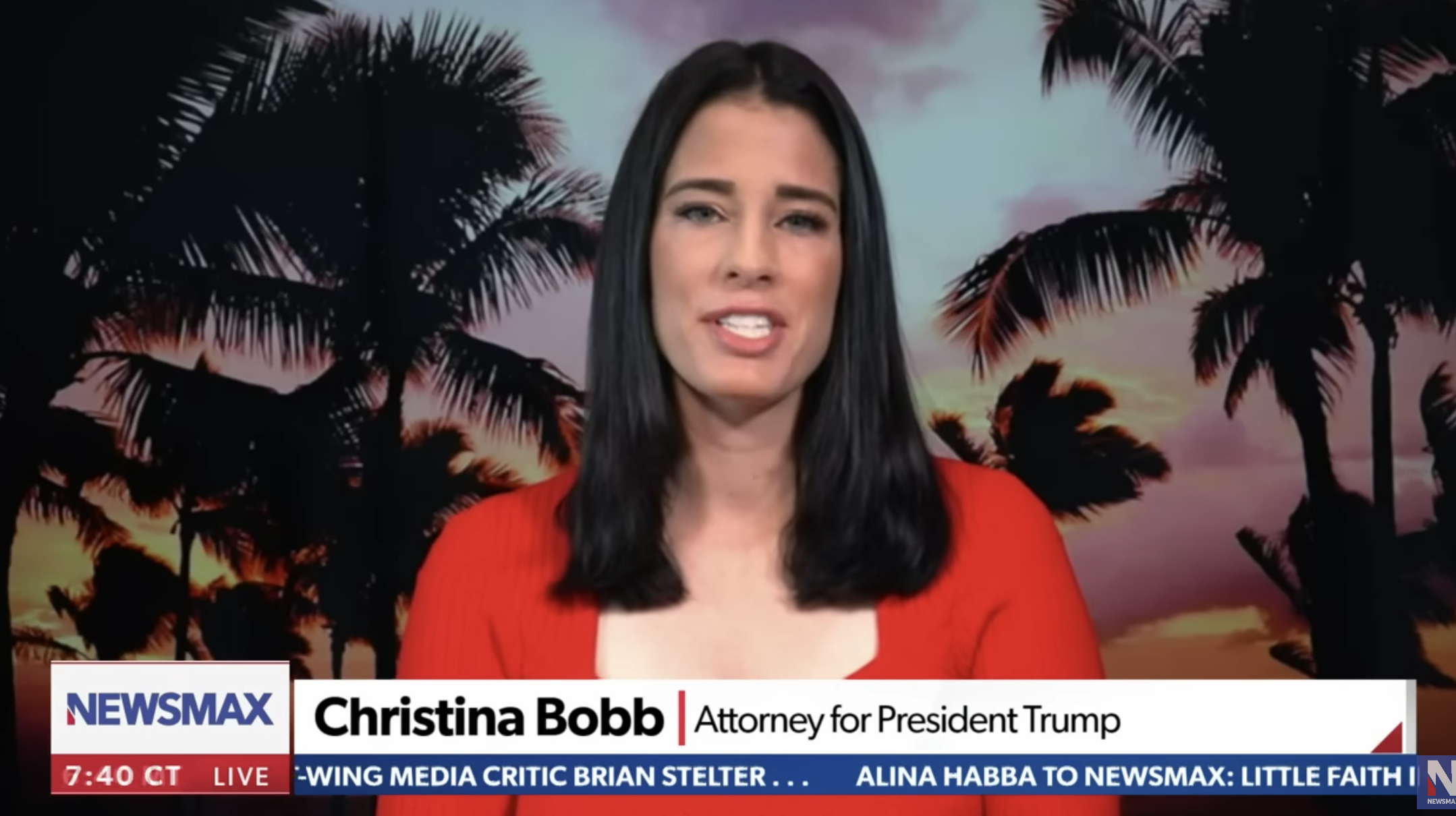
Steidel Wall will never get Trump to issue such a declaration. But it will highlight the important question — particularly given the caveat that Christina Bobb added into her own declaration — about whether Trump shared or disseminated these records.

The rumors that he did are so abundant I’m hearing them an ocean away.

Maloney might have more success with her request for a report on whether NARA got everything back. There’s just one problem.

NARA doesn’t have the documents. The FBI does. But the FBI isn’t allowed to do anything with them, under Judge Aileen Cannon’s injunction.

This request from Maloney gives Steidel Wall cause to intervene and to do so on fairly urgent timeline. She has a legitimate request from Congress, after all!

Mind you, the place where Steidel Wall would be required to intervene is in DC, not in Florida.

Which may be the entire point of Maloney’s letter.

Go to emptywheel resource page on Trump Espionage Investigation.

Share this entry

DOJ Prepares to Pull Multiple January 6 Threads Together

After Steve Bannon got indicted for defrauding thousands of Trump supporters, he complained to Charlie Kirk that 35 Trump associates had been raided the day before.

Bannon, unsurprisingly, was calling a legal request to provide information and testify truthfully, a raid.

But he appears to be right about the numbers. Over the last five days, multiple outlets have cobbled together the numbers that Bannon had ready at hand. Here are key reports:

  • NYT1, first reporting the focus on Trump’s PAC
  • NYT2, reporting 40 subpoenas and warrants for Boris Epshteyn and Mike Roman’s phones
  • CNN, reporting 30 subpoenas
  • CNN, story on scope of subpoenas
  • CNN, story on Mark Meadows
  • CBS, reporting 30 subpoenas
  • ABC, reporting 40 subpoenas

Between those reports, they describe the following having received legal process:

  • Boris Epshteyn, a key Willard participant (the NYT claims he served as an attorney)
  • Mike Roman, who played a key role in ferrying fake elector materials
  • William B. Harrison, an aide to Mr. Trump in the White House and after his presidency
  • William S. Russell, who served in the West Wing and now works for Mr. Trump’s personal office
  • Julie Radford, Ivanka’s Chief of Staff
  • Nick Luna, Trump’s body man
  • Sean Dollman, who was chief financial officer of Mr. Trump’s 2020 campaign
  • Dan Scavino, Trump’s online brain
  • Bernie Kerik, who worked closely with Rudy on coup plans
  • Bill Stepien, Trump’s campaign manager
  • Brian Jack, WH political director
  • Amy Kremer, head of Women for America First
  • Kylie Kremer, in charge of the Ellipse rally
  • Stephen Miller, Trump’s fearmongerer around race
  • Mark Meadows
  • Ben Williamson, Meadows’ aide
  • Poll watchers

In a potentially related development, the government moved to be able to share Brandon Straka’s sentencing papers with him and his lawyers. He avoided jail time by providing leads about some of the people subpoenaed, but likely wasn’t forthcoming about pre-January activities and aimed to limit visibility into his own finances, which (according to CNN) are included in the scope of this latest round of subpoenas.

There are several important takeaways from this news.

First, DOJ’s scope is broader than the fake electors, broader even then the financing of the coup attempt (which, remember, Merrick Garland said was under investigation as early as January 5). As CBS describes, some of these subpoenas cover events that have long been part of the investigation for rioters: how they networked at state riots and earlier MAGA rallies, and how they responded to Trump’s call for Stop the Steal in December 2020. Only, this time it asks for evidence about those who organized those events.

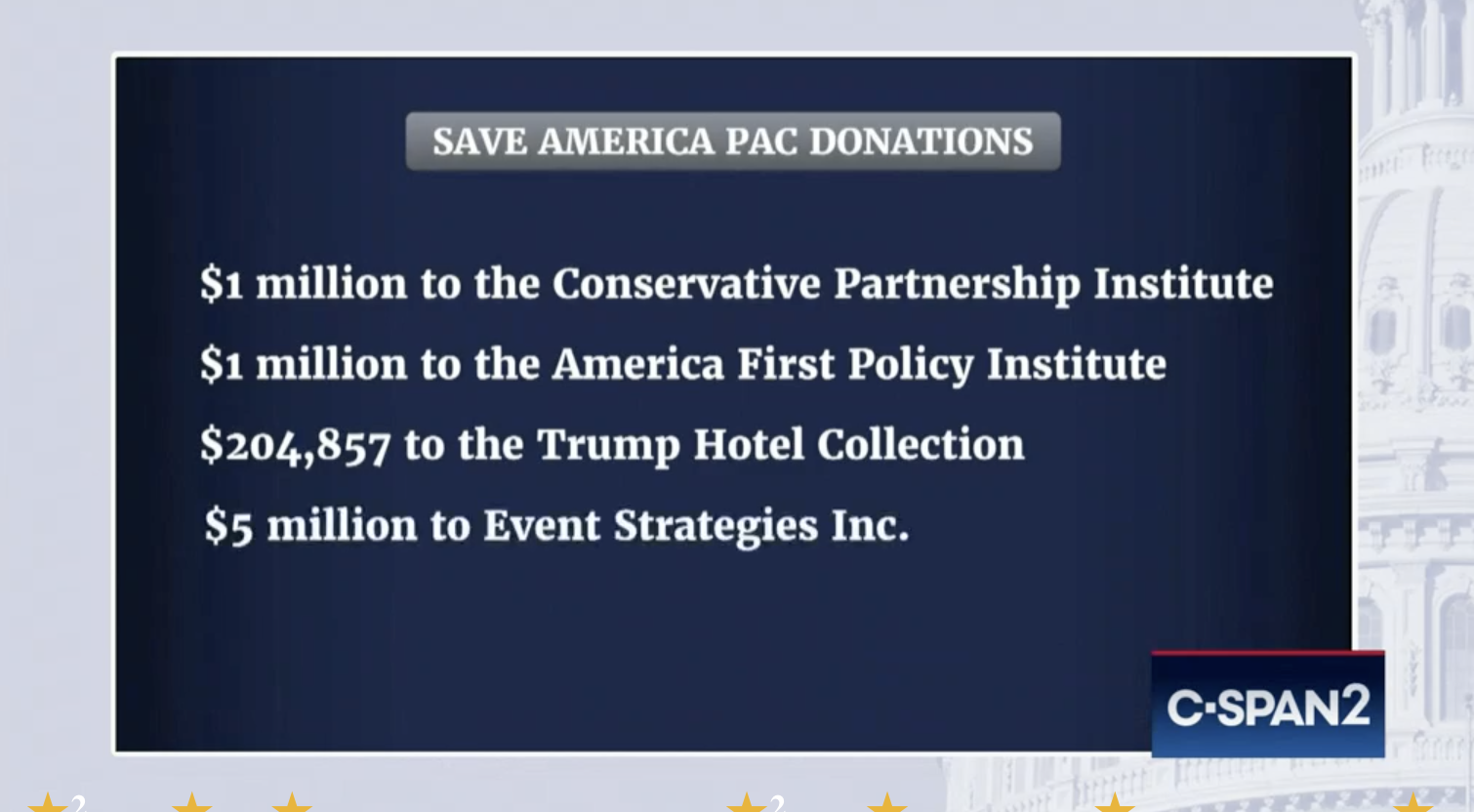
Virginia-based attorney David A. Warrington, who said he represents approximately a dozen clients who have been issued subpoenas, said the FBI was “very professional” when serving his clients. He added that the subpoenas his clients received are nearly identical, describing them as lengthy documents divided into sections and subsections. They cover issues related to “alternate” electors and election certification deadlines on December 14 and January 6, fundraising by the Save America PAC and the January 6 “Stop the Steal” rally — but not the ensuing riot.

The subpoenas require individuals provide documents and any communication between themselves and Trump allies like Rudy Giuliani, John Eastman, Sidney Powell and Bernie Kerik, Warrington said. The subpoenas also demand recipients to provide any communication with dozens of individuals who appeared on slates of fake electors.

At least some of the subpoenas compel recipients to appear before a grand jury on September 23 at the Washington, D.C., district courthouse, Warrington said.

Mother and daughter Amy and Kylie Kremer were served subpoenas last week, according to Warrington. They are listed as “host(s)” on the National Park Service permit for the Ellipse rally on January 6, 2021.

As NYT describes, they also focused on speakers and security for the Ellipse rally and members of the legislative branch who were part of the planning.

According to one subpoena obtained by The New York Times, they asked for any records or communications from people who organized, spoke at or provided security for Mr. Trump’s rally at the Ellipse. They also requested information about any members of the executive and legislative branches who may have taken part in planning or executing the rally, or tried to “obstruct, influence, impede or delay” the certification of the presidential election.

As CNN notes, it also covers compensation and communications with DOJ.

Some of the subpoenas, including one reviewed by CNN, were broad in scope, seeking information on a range of issues, including the fake elector scheme, Trump’s primary fundraising and political vehicle, Save America PAC, the organizing of the Trump rally on January 6, and any communications with a broad list of people who worked to overturn the 2020 election results.

The subpoena reviewed by CNN seeks records related to compensation provided to or received from a list of people that included Trump lawyers and campaign staffers through January 20, 2021.

It also asks for communications with anyone in the Justice Department.

Many of these people have communications with members of Congress and as such will prepare DOJ to surpass Speech and Debate protections for relevant figures.

But there are ways that last week’s actions are still broader.

I assume that the probable cause that DOJ showed to seize Epshteyn and Roman’s phones tied to the fake elector plot. Ephsteyn was the focus of DOJ’s activities for some time and Roman played a key role ferrying materials between the players.

But it has become clear that DOJ is what I’ll call sheep-dipping phones: seizing them for one purpose and then getting separate warrants to obtain the same content for other investigations. That fairly clearly is what happened with John Eastman and Scott Perry, where DOJ IG seized their phones but (in Eastman’s case) Thomas Windom quickly got involved. The late date and the sustained focus on Victoria Toensing, whom Congress has never mentioned, suggests I was right when I argued that DOJ could use the seized material from Rudy’s phones for the January 6 investigation.

And in Epshteyn’s case, he has been centrally involved in another of Trump’s schemes for which DOJ has already shown probable cause: He has been centrally involved in Trump’s response to the investigation into stolen classified documents.

As a number of outlets have noted, this subpoena bonanza took place just before the 60-day period when DOJ will have to avoid any big public steps in its investigations. But they’ve just arranged to obtain plenty to keep them busy — and quite possibly, enough to emerge on the other side with the ability to start putting all these parts together: a scheme to attack our democracy and get rich while doing it.

Update: In a second CNN story on the subpoena bonanza, they describe that those who blew off the January 6 Committee are being instructed to turn over what the committee asked for.

The subpoenas also ask for the recipients to identify all methods of communication they’ve used since fall 2020 and to turn over to DOJ anything the House select committee investigating January 6, 2021, has demanded – whether they cooperated with the House panel or not.

I’ve been anticipating that (and DOJ will have seized the phone records people sued to keep away from J6C long ago).

Update: Added a third CNN story.

Share this entry

Donald Trump Agrees He Is Living By Barack Obama’s Rules

I’ve been waiting for something like this: the moment where Donald Trump concedes that Barack Obama — Hawaiian birth certificate and all — will play a key role in decisions about his ridiculous claims about hoarding classified documents.

Midway through Trump’s bid to convince Aileen Cannon to reject DOJ’s motion for a stay of her injunction against using the documents marked with classification marks seized from Trump’s beach resort, he notes that the only power he ever had to classify and declassify documents was governed by an Executive Order signed by Barack Obama on December 29, 2009.

The Government does not contest—indeed, it concedes—that the President has broad authority governing classification of, and access to, classified documents. [ECF No. 69 at 10, 18 (quoting Dep’t of Navy v. Egan, 484 U.S. 518, 529 (1988))]. In fact, the Government advocates that “the protection of classified information must be committed to the broad discretion of the agency responsible, and this must include broad discretion to determine who may have access to it.” [ECF No. 69 at 18 (quoting Egan, 484 U.S. at 529)]. Congress provided certain parameters for controlling classified information but primarily delegated to the President how to regulate classified information. 50 U.S.C. § 3161. At the same time, Congress exempted the President from complying with such requirements. See id. § 3163 (“Except as otherwise specifically provided, the provisions of this subchapter shall not apply to the President . . .”).

President Obama enacted the current Executive Order prescribing the parameters for controlling classified information in 2009. See Exec. Order 13526 (Dec. 29, 2009). That Executive Order, which controlled during President Trump’s term in office, designates the President as an original classification authority. See id. § 1.3(a)(1). In turn, the Executive Order grants authority to declassify information to either the official who originally classified the information or that individual’s supervisors—necessarily including the President. § 3.1(b)(1), (3). Thus, assuming the Executive Order could even apply to constrain a President, cf. 50 U.S.C. § 3163, the President enjoys absolute authority under the Executive Order to declassify any information. There is no legitimate contention that the Chief Executive’s declassification of documents requires approval of bureaucratic components of the executive branch. Yet, the Government apparently contends that President Trump, who had full authority to declassify documents, “willfully” retained classified information in violation of the law. See 18 U.S.C. § 793(e); [ECF No. 69 at 9].7 Moreover, the Government seeks to preclude any opportunity for consideration of this issue.

7 Of course, classified or declassified, the documents remain either Presidential records or personal records under the PRA. [ed: See this post for how Trump debunked this claim. My emphasis]

Donald Trump concedes that Executive Order 13526 governed the classification and declassification of information on December 29, 2009. It continued to govern the classification and declassification of information on January 20, 2017. It continued to govern the classification and declassification of information on January 20, 2021. It continues to govern the classification and declassification of information today.

Donald Trump agrees that he never altered this EO. He agrees that he is bound by it still, unless the lawful President, a guy named Joe Biden, decides to change it.

This is a virtual capitulation to the arguments DOJ is making, including that the classification review of the documents he stole, the review ongoing as we speak, will be determinative of the classification status of those documents.

But it’s also a concession that he is bound by everything in the EO. There’s a whole bunch of things Trump concedes when he concedes that point (including that classified information must be kept secure).

One of those things, however, is that former Presidents — and the propagandists who work for them — still must get waivers to bypass Need to Know restrictions on classified information.

Sec. 4.4. Access by Historical Researchers and Certain Former Government Personnel.

(a) The requirement in section 4.1(a)(3) of this order that access to classified information may be granted only to individuals who have a need to-know the information may be waived for persons who:

(1) are engaged in historical research projects;

(2) previously have occupied senior policy-making positions to which they were appointed or designated by the President or the Vice President; or

(3) served as President or Vice President.

(b) Waivers under this section may be granted only if the agency head or senior agency official of the originating agency:

(1) determines in writing that access is consistent with the interest of the national security;

(2) takes appropriate steps to protect classified information from unauthorized disclosure or compromise, and ensures that the information is safeguarded in a manner consistent with this order; and

(3) limits the access granted to former Presidential appointees or designees and Vice Presidential appointees or designees to items that the person originated, reviewed, signed, or received while serving as a Presidential or Vice Presidential appointee or designee. [my emphasis]

This part of the EO — an EO that Trump, who served but no longer serves as President, agreed he is bound by — does not say that such access must be waived. It says it may be.

May. Not must.

Moreover, this waiver requires that before waiving the Need to Know rule, agency heads first determine, in writing, that giving former Presidents and their propagandists access to classified information, “is consistent with the interest of national security.”

Right there, in the middle of his filing arguing that maybe the classification decisions Joe Biden’s Administration is making right now can be overridden by a Special Master, Donald Trump agrees that the Barack Obama order he says he is bound by means not even he gets access to this information without a waiver, and even then, only if the agency heads that own the information say it won’t make the country less safe.

In his bid to claw back classified information he stole, Donald Trump admits he’s still living by Barack Obama’s rules. And those rules, the rules Trump admits he is bound by, say he can only even access this information if Avril Haines and Paul Nakasone and William Burns and Chris Wray say he can.

Go to emptywheel resource page on Trump Espionage Investigation.

Share this entry
[Photo: National Security Agency, Ft. Meade, MD via Wikimedia]

The Full-Fitton: Trump’s Funny Math with the Federal Records Act

As I laid out here, you really don’t need to get further than the second paragraph of Trump’s response to DOJ’s bid for a stay on Judge Aileen Cannon’s injunction against using seized evidence of obstruction and Espionage Act violations to find evidence of a crime. In that paragraph, Trump confesses that the FBI did seize documents marked as classified — and therefore documents responsive to a May 11 subpoena — from Mar-a-Lago on August 8; that’s tantamount to a confession to obstruction.

I want to look at another funny thing he does, before I move to the subject of his gaslighting (whether these documents are genuinely classified or not, which is irrelevant to the crimes under investigation).

Trump is trying to stall the Espionage and obstruction investigation into him. But he’s also attempting to either claw back documents into his own possession, or to bottle them up at the Archives under separate legal challenges. As such, he’s adopting Tom Fitton’s argument — based on a very different set of Bill Clinton records that weren’t seized from his home via a lawful warrant but were instead FOIAed — that he designated many of these documents as personal records while still President, so they don’t even have to be in the Archives.

Critical to that argument is that documents are either Presidential Records or personal records, and the latter don’t have to be in the Archives, and so (he makes several huge logical jumps) they can’t be used in a criminal prosecution against him.

The PRA further distinguishes records as either Presidential or personal. 44 U.S.C. § 2201. Presidential records are defined as: documentary materials, or any reasonably segregable portion thereof, created or received by the President, the President’s immediate staff, or a unit or individual of the Executive Office of the President whose function is to advise or assist the President, in the course of conducting activities which relate to or have an effect upon the carrying out of the constitutional, statutory, or other official or ceremonial duties of the President. 44 U.S.C. § 2201(2).

The PRA expressly excludes personal records from the definition of Presidential records. See id. § 2201(2)(B). Personal records are defined as “documentary materials, or any reasonably segregable portion therof, [sic] of a purely private or nonpublic character which do not relate to or have an effect upon the carrying out of the constitutional, statutory, or other official or ceremonial duties of the President.” Id. § 2201(3). The PRA thus “distinguishes Presidential records from ‘personal records’” and “requires that all materials produced or received by the President, ‘to the extent practicable, be categorized as Presidential records or personal records upon their creation or receipt and be filed separately.’” Jud. Watch, Inc. v. Nat’l Archives & Recs. Admin., 845 F. Supp. 2d 288, 291 (D.D.C. 2012) (quoting 44 U.S.C. § § 2203(b)). “The categorization of the records during the Presidency controls what happens next . . . . The statute assigns the Archivist no role with respect to personal records once the Presidency concludes.” Id. (emphasis added). “The PRA contains no provision obligating or even permitting the Archivist to assume control over records that the President ‘categorized’ and ‘filed separately’ as personal records. At the conclusion of the President’s term, the Archivist only ‘assumes responsibility for the Presidential records.” Id. (quoting 44 U.S.C. § 2203(f)(1)). “[T]he PRA does not confer any mandatory or even discretionary authority on the Archivist to classify records. Under the statute, this responsibility is left solely to the President.” Id. at 301 (describing categorization decision by former President Clinton as not within the discretion of the Archivist as the subject materials “were not provided to the Archives at” the end of the Clinton presidency).

Critically, the former President has sole discretion to classify a record as personal or Presidential. See Jud. Watch, Inc., 845 F. Supp. 2d at 301 (“Under the statute, this responsibility is left solely to the President.”). The power of the Archivist is not greater than that of the President. Specifically, the PRA states “the Archivist of the United States shall assume responsibility for the custody, control, and preservation of, and access to, the Presidential records of that President.” 44 U.S.C. § 2203(f)(1). This section should not be interpreted as weakening a President’s authority under the Act. See Jud. Watch, Inc., 845 F. Supp. 2d at 300 (“[T]he plain language of section 2203(f) of the PRA does not say . . . that the Archivist must assume custody and control of all materials that fall within the definition of Presidential records.”).

Accordingly, all of the records at issue in the Government’s motion fall into two categories: (1) Presidential records, governed exclusively by the Presidential Records Act; and (2) personal records, the determination of which was in President Trump’s discretion. See id. To the extent President Trump may have categorized certain of the seized materials as personal during his presidency, any disagreement as to that categorization is to be resolved under the PRA and cannot possibly form the basis for any criminal prosecution. [my emphasis]

He’s not wrong about the Presidential Records Act reserving personal records. The category of personal records might even exempt documents pertaining to his coup attempt from storage at the Archives (though if Trump had made that designation, then he could not exempt them from subpoena under a claim of Executive Privilege, nor could he later claim those records memorialized his official acts).

(3) The term “personal records” means all documentary materials, or any reasonably segregable portion therof,2 of a purely private or nonpublic character which do not relate to or have an effect upon the carrying out of the constitutional, statutory, or other official or ceremonial duties of the President. Such term includes—

(A) diaries, journals, or other personal notes serving as the functional equivalent of a diary or journal which are not prepared or utilized for, or circulated or communicated in the course of, transacting Government business;

(B) materials relating to private political associations, and having no relation to or direct effect upon the carrying out of constitutional, statutory, or other official or ceremonial duties of the President; and

(C) materials relating exclusively to the President’s own election to the office of the Presidency; and materials directly relating to the election of a particular individual or individuals to Federal, State, or local office, which have no relation to or direct effect upon the carrying out of constitutional, statutory, or other official or ceremonial duties of the President.

If these documents hadn’t been seized via a lawful warrant authorizing the seizure of everything stored with documents bearing classification marks, the government might have a tough fight to get them.

This is also the reason why Trump wants the Archivist excluded from any Special Master proceeding — so Trump can persuade someone, in secret, that he actually designated such records personal and such a claim would stand up under the PRA, without leaving a record for such time as FBI subpoenaed the very same documents as personal documents.

But Trump chose to hoard classified records and as a result, the FBI was forced to get a warrant and seize records more broadly.

Still, as far as it goes, the Fitton argument is that everything is either a Presidential Record or a personal record, and the latter don’t belong in the Archives, and that should trump (heh) their seizure with a lawful warrant that authorized the seizure of everything stored with or in the same place as documents marked as classified.

Except in the paragraph immediately before the Fitton argument, Trump concedes that’s not right. Before you split things into Presidential and personal records, you need to split them into Presidential and Federal Records.

All government records (classified or otherwise) fall into two basic categories, either under the PRA or the Federal Records Act (“FRA”). “The FRA defines a class of materials that are federal records subject to its provisions, and the PRA describes another, mutually exclusive set of materials that are subject to a different, less rigorous regime. In other words, no individual record can be subject to both statutes because their provisions are inconsistent.” Armstrong v. Exec. Office of the President, 1 F. 3d 1274, 1293 (D.C. Cir. 1993).

That is, he admits his two-category sorting is false.

And then he just drops the FRA, never to mention it again.

Even setting aside the example of Mike Ellis — who on January 8, 2021, was discovered to have brought a compartmented NSA document to the White House and, at first, “refused to return the document, retained it for the White House archives, and, based on what the NSA employee saw, placed the document in a container that did not meet the security storage requirements for such a sensitive program” — there would be a number of other documents, classified and not, that were brought to the White House but which remained agency records. Another category of agency documents, for example, are those pertaining to the Russian investigation, which should never have been at the White House in the first place, but which Trump wants to own for all time by simultaneously claiming he declassified and then made personal records of them.

None of those records would fit into Trump’s neat binary.

So he just ignores that and goes full-Fitton and hopes Aileen Cannon will ignore that bit.

Go to emptywheel resource page on Trump Espionage Investigation.
Share this entry

In Bid to Keep Executive from Accessing Executive Branch Documents, Trump Confesses to Obstruction

In his 21-page response to Judge Aileen Cannon informing her they want her to reject the government’s request for a stay of her injunction prohibiting the government taking investigative steps using 103 documents marked classified, Trump confesses to obstruction of justice.

Trump admits, over and over, that when the FBI showed up with a warrant authorizing the seizure (in part) of any documents with classification markings, it found such documents on the premises.

[I]t appears such “classified records,” along with the other seized materials, were principally located in storage boxes in a locked room at Mar-a-Lago, a secure, controlled access compound utilized regularly to conduct the official business of the United States during the Trump Presidency, which to this day is monitored by the United States Secret Service.

Mind you, there’s a lie here, as there is in the passage where Trump describes “complying with a subpoena” as “voluntary” production.

Likewise, there was no similar sense of urgency or imminent threat associated with the “classified records” President Trump’s counsel voluntarily turned over on June 3, 2022.

The lie is that these documents weren’t all stored in storage boxes in a room that didn’t comply with the rules set by the Executive Order that still governs classified records. The most sensitive documents — along with most of the empty classification cover folders — were in Trump’s office, an office in which he routinely entertained people (including foreign citizens) not cleared to view classified records.

But even when Trump introduces the crux of his argument that the Presidential Records Act would guarantee him access to documents that are actually found to be Presidential (as opposed to Federal) Records, he doesn’t contest that the government seized documents marked as classified at his property.

Moreover, the ultimate disposition of all the “classified records,” and likely most of the seized materials, is indisputably governed exclusively by the provisions of the Presidential Records Act (“PRA”). See 44 U.S.C. §§ 2201, et seq. The PRA accords any President extraordinary discretion to categorize all his or her records as either Presidential or personal records, and established case law provides for very limited judicial oversight over such categorization. The PRA further contains no provision authorizing or allowing for any criminal enforcement. Rather, disputes regarding the disposition of any Presidential record are to be resolved between such President and the National Archives and Records Administration (“NARA”). Thus, at best, the Government might ultimately be able to establish certain Presidential records should be returned to NARA. What is clear regarding all of the seized materials is that they belong with either President Trump (as his personal property to be returned pursuant to Rule 41(g)) or with NARA, but not with the Department of Justice.

The likely reason why Trump lies about Evan Corcoran responding to a subpoena is because absent that lie, Trump would have to explain to Judge Cannon that every single one of those 103 documents with classification marks was proof that Trump had refused to comply with a subpoena and — via his lawyers, including one who signed this filing — lied to do so.

Nevertheless, the entire 21-page argument about classification (which also concedes that neither he nor Judge Cannon has any authority to review these documents for classification status) is not just gaslighting, but also a serial confession that, Yes, Donald Trump obstructed this investigation.

And that confession is — irrespective of the actual classification status of those documents — an admission that because each of those 103 documents is evidence that Trump obstructed an investigation, they belong in the hands of the FBI to continue their investigation of why Trump obstructed their investigation.

Go to emptywheel resource page on Trump Espionage Investigation.
Share this entry

18 USC 793(g): Aileen Cannon’s Order Would Not Forestall Flipping Trump’s Custodian of Records

Donald Trump’s lawyers (including the one who failed to understand Trump was exposed to 18 USC 793 and who subsequently made himself a witness in the investigation) are cultivating the belief that they’ve succeeded in stalling the investigation into their client’s efforts to keep highly classified documents in his office and storage closet.

Perhaps they have. I don’t know what will happen. Though I know their track record of predicting what DOJ will do, thus far, has been piss-poor.

What I do know is that nothing would prevent DOJ from interviewing — or even flipping — the Custodian of Records who used to be one of Trump’s lawyers in this matter.

DOJ’s motion for a stay explicitly states that Judge Aileen Cannon’s injunction against using the classified documents seized from Donald Trump for investigative purposes would not shut down the investigation. It lays out several things her injunction would not prohibit.

To be sure, the Court did not enjoin the criminal investigation altogether. For example, the government does not understand the Court’s injunction against the government’s review and use of seized materials for criminal investigative purposes to prevent it from questioning witnesses and obtaining evidence about issues such as how classified records in general were moved from the White House, how they were subsequently stored, and what steps Plaintiff and his representatives took in response to the May 11, 2022 grand jury subpoena. The government also does not understand the Order to bar it from asking witnesses about any recollections they may have of classified records, so long as the government does not use the content of seized classified records to question witnesses (which the Order appears to prohibit).

DOJ maintains that Cannon’s order does not prevent them from questioning witnesses or otherwise obtaining evidence about:

  • How classified records were moved from the White House to Trump properties
  • How classified records were stored after they were removed from the White House
  • What steps Trump and others took in response to the May 11, 2022 grand jury subpoena
  • Recollections about classified records not relying on those seized on August 8

One person who would know a good deal about these matters, and might have an interest in being rather forthcoming about them if she were interested in minimizing her potential legal exposure, is Trump’s Custodian of Records.

By title, at least, that person would know how classified documents were stored — in Mar-a-Lago and any other Trump properties — after they were removed from the White House. And few people would know more about what steps Trump “and his representatives took in response to the May 11, 2022 grand jury subpoena” than one of those two representatives, the one who signed a declaration certifying that:

Based upon the information that has been provided to me, I am authorized to certify, on behalf of the Office of Donald J. Trump, the following:

a. A diligent search was conducted of the boxes that were moved from the White House to Florida;

b. This search was conducted after receipt of the subpoena, in order to locate any and all documents that are responsive to the subpoena;

c. Any and all responsive documents accompany this certification; and

d. No copy, written notation, or reproduction of any kind was retained as to any responsive document.

I swear or affirm that the above statements are true and correct to the best of my knowledge.

In fact, that Custodian of Records might have real concern she faced legal exposure for one or more crime tied to lying to the FBI:

And all that’s assuming the Custodian of Records isn’t one of the people who shows up on video surveillance moving boxes in and out of the storage room before the “diligent search was conducted” of those boxes.

If the Custodian of Records does show up on that video surveillance, than she might face legal exposure to:

If the Custodian of Records conspired to withhold 103 classified documents, of which 18 were classified Top Secret or above, that Custodian of Records might decide she really wanted to limit her liability in that potentially draconian obstruction-plus-Espionage legal exposure.

All the more so if the Custodian of Records believed she might also have exposure to charges under 18 USC 1512(c)(2) and 18 USC 1512(k) — each of which carries up to a twenty year sentence — for involvement in an attempt to prevent the January 6 2021 vote certification and recognized that information about such activities was of value to other ongoing criminal investigations.

NYT, in an otherwise bizarre story claiming the following in its lead paragraph…

A dark joke has begun circulating among lawyers following the many legal travails of former President Donald J. Trump: MAGA actually stands for “making attorneys get attorneys.”

… revealed this piece of news:

Ms. [Christina] Bobb recently retained a lawyer, according to a person familiar with the situation.

Being Trump’s lawyer — being Trump’s associate generally — seems to be a non-stop game of prisoner’s dilemma, a constant weighing of whether he’ll sell you out or provide means to loot the country with impunity.

Years ago, when Trump was President, that prisoner’s dilemma turned out to be pretty easy. He would pardon anyone who lied to keep him out of trouble. So no matter how grave your legal exposure, your real criminal exposure was just a few years (and that’s before Billy Barr started selectively freeing Trump associates under COVID release programs).

But Trump is not President anymore, and short of successful civil war, even in the rosiest possible scenario would not become President again until 2025. In fact, Trump’s own legal problems and his success shutting down women’s access to abortion even makes more immediate potential relief — in the form of a House majority that could undermine DOJ’s ongoing investigations — far less of a sure thing.

Trump’s success at stalling access to classified documents seized on August 8 — and his current lawyers’ rosy prediction they’ve delayed such access until Republicans might win one house of Congress — certainly would be part of that prisoner’s dilemma. After all, until such time as DOJ were able to use 18 Top Secret documents in an Espionage Act indictment, the Custodian of Records probably couldn’t be charged for 18 USC 793(g).

But as I’ve noted before, the Espionage Act was written to dramatically alter these kinds of prisoner’s dilemmas, both because affirmative knowledge of stolen classified documents is enough to reach criminal exposure, and because the conspiracy prong of the statute exposes co-conspirators — even ones who don’t share the same motive as the person who actually possesses a cache of stolen classified documents — to the same stiff punishment as the people who actually possess those documents.

So a smart student of prisoner’s dilemmas might understand that it doesn’t pay to wait to see how Trump’s current efforts at delay work out.

One thing’s clear though: DOJ doesn’t intend to entirely halt the investigation into violations of the Espionage Act and obstruction. Indeed, they have a fair amount of leeway to pursue obstruction charges while Aileen Cannon delays the other part of the investigation. And they have described next steps to include obtaining information uniquely available to Trump’s Custodian of Records.

Go here for emptywheel’s other coverage of Trump’s stolen documents and related resources. 

Share this entry