
The Problem with Equating Travel Routes and Terrorism: 34 Dead Civilians

A few weeks back, Seton Hall published a report showing that since the DC Circuit reversed the habeas petition of Mohammed al-Adahi, “the practice of careful judicial fact-finding was replaced by judicial deference to the government’s allegations. Now the government wins every petition.” The report traced a number of factors that, before al-Adahi, judges examined with some skepticism, but after, fairly regularly accepted as evidence that a detainee was a member of al Qaeda.

Among those factors were staying in certain guest houses and traveling a particular route that–the government effectively claimed–meant you were a terrorist. Thus, it no longer mattered whether you had fought for al Qaeda. In the absence of more direct evidence, the government argued that where you traveled was one piece of evidence that you should be detained as a terrorist.

Tellingly, while the government has a declaration they routinely submit in Gitmo cases on the significance of guest houses to al Qaeda, they have not (as far as I know) ever submitted a similar declaration providing evidence for a tie between travel routes and al Qaeda membership (the closest they have is a report on Tora Bora which seems to argue “if you were in this vicinity you must have been in Tora Bora and, Osama bin Laden!”). In fact, that’s part of what infuriated David Tatel in the Latif case–the way the majority opinion simply accepted the government’s evidence about Latif’s travel back to Pakistan–where hundreds of innocent of Arabs were picked up at the time–as corroboration for the error-ridden report the government submitted as its main proof that Latif could be detained.

Latif left Kabul in November 2001 and then traveled through Jalalabad before eventually arriving at the Pakistani border where Pakistani authorities detained him. According to the government, this path mirrors that of Taliban soldiers retreating from Kabul. Although not contending that this evidence is dispositive, the government argues that because Latif’s admitted route is consistent with that of Taliban soldiers and with information in the Report, it is a helpful piece in the puzzle, bolstering its claim that the Report’s inculpatory statements are accurate.

Fair enough, but how helpful? If this route is commonly used by innocent civilians, then the evidence is not that helpful at all. To understand why, consider a simple hypothetical. Suppose the government were to argue in a drug case that the defendant drove north from Miami along I-95, “a known drug route.” Familiar with I-95, we would surely respond that many thousands of non-drug traffickers take that route as well. Given what we know about our own society, the I-95 inference would be too weak even to mention. Cf Almerfedi, 2011 WL 2277607, at *4 n.7 (noting that some conduct such as possessing an AK-47 is so “commonplace in Afghanistan [that it] does not meaningfully distinguish an al Qaeda associate from an innocent civilian”). On the other hand, if the alleged drug trafficker had driven along an infrequently traveled country road, then a contention that that road was “a known drug route” would carry more weight. The burden of proof is on the government to demonstrate whether travel on a particular route to the Pakistani border, when considered in context, is mqre like the lonely country road and thus worthy of consideration when it comes to distinguishing between enemy combatants and innocent civilians.

I raise all this not just to point you to the Seton Hall report, which is well worth your time. But because today, SCOTUS will decide whether or not to accept two cases–Latif and Uthman–in which these issues are central (we won’t find out whether they’ll take the cases until Monday).

And because of this WSJ report, showing the tragic result of assuming that travel patterns must be indicative of terror ties: 34 dead civilians, targeted by Turkish warplanes after a US drone spotted a caravan of Kurdish smugglers using a route frequented by PKK guerrillas.

Above and out of sight, a U.S. Predator drone loitered. It was on a routine patrol when U.S. personnel monitoring its video feeds spotted the caravan just inside Iraq and moving toward the Turkish border, according to U.S. officials and the Pentagon’s assessment of the fatal strike.

U.S. military officers at the Fusion Cell in Ankara couldn’t tell whether the men, bundled in heavy jackets, were civilians or guerrilla fighters. But their location in an area frequented by guerrilla fighters raised suspicions. The Americans alerted their Turkish counterparts.

[snip]

Then Turkish warplanes appeared. “It was like a lightning bolt,” Mr. Encu said. “I saw a bright light and the force of the explosion threw me to the ground…When I turned my head I could see bodies on fire and some were missing their heads.”
Read more

Share this entry

Judge Forrest’s Invitation to Congress: Pass the Smith-Amash Amendment

As I noted yesterday, Judge Katherine Forrest stopped the government from enforcing Section 1021 of last year’s NDAA, because it is having a chilling effect on the First Amendment protected activities of plaintiff’s including Chris Hedges.

There’s an aspect of her ruling that was rather auspiciously timed. Because in addition to enjoining 1021, she invited Congress to fix it.

Accordingly, this Court preliminarily enjoins enforcement of §1021 pending further proceedings in this Court or remedial action by Congress mooting the need for such further proceedings.

As luck would have it, the House is poised to vote today on the Smith-Amash amendment to next year’s NDAA. Their amendment would largely–though perhaps not entirely–“moot the need” for any further proceedings in the Hedges case, because it would eliminate indefinite military detention for those captured in the US.

Reps. Adam Smith (D-Wash.) and Justin Amash [my Rep] are planning to offer an amendment to this year’s defense authorization bill that would guarantee that no one—citizen or otherwise—could be denied a fair trial if captured in the United States. Smith, who is the ranking member of the House Armed Services Committee, will introduce the bill during a hearing Wednesday. Amash has agreed to support it once the defense bill comes to the floor next week, possibly bringing along enough Republican support to ensure its passage in the House.

“The amendment is drafted to prevent the president from indefinitely detaining persons captured on US soil without charge or trial,” said Will Adams, a spokesperson for Amash.

I spoke to Adams last night, and the Amendment is within striking distance of having enough votes to pass–though the House leadership is trying a bunch of stunts to avoid that outcome.

I said passing this Amendment would mostly moot further proceedings. That’s because Forrest issued her injunction covering all the plaintiffs, including people like Brigitta Jonsdottir, who is an Icelandic citizen and has sworn off from traveling to the US because of the NDAA and other Wikileaks related prosecution. Whereas the Smith-Amash amendment would apply to Jonsdottir only if she were in the US; it doesn’t offer any protection to non-citizens outside of the US.

Which means, with her ruling, Forrest has made the Smith-Amash amendment the sensible middle ground (really, it ought to be considered the bare minimum, but even still, before last night it didn’t stand a chance in hell of passing the Senate). That is, it does what most Americans seem to want done to the NDAA, to limit it so it doesn’t apply to them.

In her ruling, Forrest made it clear she tried to offer the government an easy way to help her avoid enjoining this section.

The Court’s attempt to avoid having to deal with the Constitutional aspects of the challenge was by providing the Government with prompt notice in the form of declarations and depositions of the precise conduct in which plaintiffs are involved and which they claim places them in fear of military detention. To put it bluntly, eliminating these plaintiffs’ standing simply by representing that their conduct does not fall within the scope of § 1021 would have been simple. The Government chose not to do so–thereby ensuring standing and requiring this Court to reach the merits of the instant motion.

She also made it clear she’d welcome Congress fixing the problem. Let’s see if they do so today.

Share this entry

Judge Enjoins NDAA Section 1021 because Government Implies Speech May Equal Terrorism

The Court then asked: Give me an example. Tell me what it means to substantially support associated forces.

Government: I’m not in a position to give specific examples.

Court: Give me one.

Government: I’m not in a position to give one specific example.

When Judge Katherine Forrest asked the government, repeatedly, for both generalized clarification and descriptions specific to plaintiffs like Chris Hedges and Brigitta Jonsdottir explaining the scope of Section 1021 of the NDAA, the government refused to give it. Not only was the government unwilling to reassure that even a Pulitzer Prize winning journalist like Hedges would not be indefinitely detained as “a person who was part of or substantially supported al-Qaeda, the Taliban, or associated forces” if he reported on any number of terrorist groups, but it also refused to explain the meaning of the section generally.

Which is the core reason why Forrest not only ruled that the plaintiffs have standing and the case should go forward, but also enjoined any enforcement of Section 1021. In explaining this, she noted that she was forced by the government’s refusal to give clarification to assume that the government believes First Amendment speech is included in the orbit of “substantially supported” that might be indefinitely held under 1021.

It must be said that it would have been a rather simple matter for the Government to have stated that as to these plaintiffs and the conduct as to which they would testify, that § 1021 did not and would not apply, if indeed it did or would not. That could have eliminated the standing of these plaintiffs and their claims of irreparable harm. Failure to be able to make such a representation given the prior notice of the activities at issue requires this Court to assume that, in fact, the Government takes the position that a wide swath of expressive and associational conduct is in fact encompassed by § 1021.

[snip]

This Court is left then, with the following conundrum: plaintiffs have put forward evidence that § 1021 has in fact chilled their expressive and associational activities; the Government will not represent that such activities are not covered by § 1021; plaintiffs’ activities are constitutionally protected. Given that record and the protections afforded by the First Amendment, this Court finds that plaintiffs have shown a likelihood of succeeding on the merits of a facial challenge to § 1021.

I spent much of the day explaining to people why Obama’s Yemen EO is so troubling. I’ve had to describe all the things that have transpired that have criminalized speech since Obama issued a similar EO in 2010–the decision in Holder v. Humanitarian Law Project, the conviction of Tarek Mehanna, and the charging of Bradley Manning with aiding the enemy.

Now I can point to Forrest’s opinion to show that the proposition that journalists might be prosecuted for material support of terrorism for their First Amendment speech–to the extent it’s an extreme proposition–it is the government’s extreme proposition.

Forrest used the government’s stubbornness against it in one other way, too–to get past the rather high bar on whether to issue a preliminary injunction or not. The decision on whether to issue an injunction or not depends on a lot of things. But ultimately, it requires a balancing test between the hardships imposed on the plaintiff and the defense. And since–Forrest explained–the government repeatedly insisted that Section 1021 does no more or less than what the AUMF already does, then enjoining the enforcement of 1021 would not harm the government at all.

In considering whether to issue a preliminary injunction, the Court must consider, as noted above, “the balance of the hardships between the plaintiff and defendant and issue the injunction only if the balance of the hardships tips in the plaintiff’s favor.” Salinger, 607 F.3d at 80.

The Government’s primary argument in opposition to this motion is that § 1021 is simply an affirmation of the AUMF; that it goes no further, it does nothing more. As is clear from this Opinion, this Court disagrees that that is the effect of § 1021 as currently drafted. However, if the Government’s argument is to be credited in terms of its belief as to the impact of the legislation–which is nil–then the issuance of an injunction should have absolutely no impact on any Governmental activities at all. The AUMF does not have a “sunset” provision: it is still in force and effect. Thus, to the extent the Government believes that the two provisions are co-extensive, enjoining any action under § 1021 should not have any impact on the Government.

While most of Forrest’s ruling involved hoisting the government on its own obstinate petard, she also left a goodie in her ruling for the higher courts that will surely review her decision after the government surely appeals (unless Congress passes a fix to the NDAA tomorrow, as they might). Forrest established the importance of speech by pointing to … Anthony Kennedy’s opinion in Citizens United.

In Citizens United v. Federal Election Commission, 130 S. Ct. 876 (2010), Justice Kennedy wrote that “[s]peech is an essential mechanism of democracy, for it is the means that hold officials accountable to the people . . . . The right of citizens to inquire, to hear, to speak, and to use information to reach consensus is a pre-condition to enlightened self-government.” Id. at 899. Laws that burden political speech are therefore subject to strict scrutiny. Id. at 898. “The First Amendment protects speech and speaker, and the ideas that flow from each.” Id. at 899.

If corporations can avail themselves of unlimited campaign speech, then mere journalists and activists ought to be able to engage in political speech without being indefinitely detained.

And yet, it took a judge to make that argument to the government.

Share this entry

Obama’s Yemen EO Still Lets Our Spooks Pay the Targets of the EO

As I noted earlier, Obama just signed an Executive Order ostensibly targeting the US assets of those who undermine Yemen’s stability, potentially including US citizens who do so. I’ve been comparing this EO to one of the analogous ones pointed out in Karen DeYoung’s article on the EO: one issued against Somalia in 2010 (h/t to Daveed Gartenstein-Ross for the link).

The EOs are very similar, including the language potentially targeting US citizens. But there are some interesting differences.

As DeYoung pointed out, the Yemeni EO, unlike the Somlia one, does not include an annex with named targets, even though the EO itself speaks of “certain members of the Government of Yemen.” As such, this EO seems to be a threat with consequences, not an immediate sanction.

The Yemen EO also uses slightly different language in the clause targeting those who materially support those destabilizing the country. Whereas the Somalia EO includes those who provide “logistical” or “technical” support, the Yemen EO includes those who provide “technological” support. So make sure you don’t serve as webmaster for someone Hillary Clinton thinks is destabilizing Yemen.

The most interesting difference, IMO, is this clause, which appears in the Yemen EO but does not in the Somalia one.

Sec. 5. Nothing in section 1 of this order shall prohibit transactions for the conduct of the official business of the United States Government by employees, grantees, or contractors thereof.

In other words, while Obama doesn’t want you, or Ali Abdullah Saleh’s leave-behinds, or the AP to destabilize Yemen, he reserves the right for US government employees, grantees, or contractors to do so. Which presumably means, as happened in Afghanistan, we are and plan to continue paying some of the people who are in violation of this EO.

I wonder. Among all the adjectives we might use to describe the Saudis, do we use “grantee” among them?

Share this entry

The Jeremy Scahill Yemen Executive Order

For the record, I don’t think the Obama Administration would be so brazen as to freeze Jeremy Scahill’s assets because he reported critically on Obama’s Yemen policy. But the Executive Order they’re rolling out today is reportedly written so broadly so as to make something like that possible.

The unusual order, which administration officials said also targets U.S. citizens who engage in activity deemed to threaten Yemen’s security or political stability, is the first issued for Yemen that does not directly relate to counterterrorism.

Unlike similar measures authorizing terrorist designations and sanctions, the new order does not include a list of names or organizations already determined to be in violation. Instead, one official said, it is designed as a “deterrent” to “make clear to those who are even thinking of spoiling the transition” to think again.

[snip]

The order provides criteria to take action against people who the Treasury secretary, in consultation with the secretary of state, determines have “engaged in acts that directly or indirectly threaten the peace, security or stability of Yemen, such as acts that obstruct the implementation of the Nov. 23, 2011, agreement between the Government of Yemen and those in opposition to it, which provides for a peaceful transition of power . . . or that obstruct the political process in Yemen.”

It covers those who “have materially assisted, sponsored or provided financial, material or technological support” for the acts described or any person whose property has already been blocked, as well as those who have acted on behalf of such people.

The explanation this anonymous official seems to have given Karen DeYoung is that the order is a way to make sure Ali Abdullah Saleh’s family butts out of affairs in Yemen (which would work, given that he presumably does have significant assets in the US). Using Saleh’s wealth as a way to try to keep him out of Yemeni politics is a nice idea (though the agreement itself could have done more to enforce this).

But Saleh’s not a US citizen. So why explicitly include US citizens in the order?

Moreover, since the language borrows material support language from terrorist sanctions, and since terrorist material support extends to First Amendment protected activities (as Tarek Mehanna knows well), and since Obama has already made sure a journalist remains jailed in Yemen, then what protection is there for people who say that using signature strikes in Yemen is boneheaded, or suggesting that investing all our energies in Saleh’s Vice President doesn’t really constitute a meaningful solution in Yemen?

And to make things worse, the anonymous official tries to tell DeYoung that this sanction is not the first of its kind. It was used twice before: in 2006 in Cote d’Ivoire and in 2009 in Somalia. That is, precisely this kind of sanction has been used twice–and has twice failed to do anything to bring about meaningful stability.

But the single most troubling aspect of this EO is that is guaranteed to be selectively enforced. After all, the Saudis aren’t exactly great friends of “political processes” anywhere, particularly in their backyard, and surely they’re waiting to bomb more Houthis. Yet what are the chances that any Administration would freeze the very significant assets of Saudi citizens in the US–even those operating outside official channels?

Read more

Share this entry

MEK to Be Delisted as Terrorists in Reward for Engaging in Terrorism

The Foreign Terrorism Organization list really doesn’t mean much if the way to get off it is by killing Iranian scientists at the behest of the US and Israel.

The Obama administration is moving to remove an Iranian opposition group from the State Department’s terrorism list, say officials briefed on the talks, in an action that could further poison Washington’s relations with Tehran at a time of renewed diplomatic efforts to curtail Iran’s nuclear program.

The exile organization, the Mujahedin-e Khalq, or MeK, was originally named as a terrorist entity 15 years ago for its alleged role in assassinating U.S. citizens in the years before the 1979 Islamic revolution in Iran and for allying with Iraqi strongman Saddam Hussein against Tehran.

The MeK has engaged in an aggressive legal and lobbying campaign in Washington over the past two years to win its removal from the State Department’s list. The terrorism designation, which has been in place since 1997, freezes the MeK’s assets inside the U.S. and prevents the exile group from fundraising.

Oddly, the entire article makes no mention of allegations that MEK trained at a US Special Forces camp in the NV desert and/or killed a bunch of Iranian civilians with magnet bombs.

Though its last paragraph amounts to as much.

“If there’s a coalition against the mullahs, then we should fund that coalition, and the MeK should be a part of it,” said Rep. Dana Rohrabacher (R., Calif.). He cautioned that for now, he wasn’t advocating directly funding MeK. “The MeK has the resources to resist and fight the mullah dictatorship. They don’t need our money, they just need us to get out of the way and take the shackles off.”

Jim? I believe this is your department.

Though maybe it’s not all the dead scientists that made the difference here. Maybe it’s the art project that significantly resembles the INC’s finger painting projects leading up to the Iraq War. America. Big fans of primitive art.

We demand our terrorists to be able to both kill civilian scientists and draw crude pictures, you know.

Update: In potentially related news,

Iran has hanged a man it said was an agent for Israeli intelligence agency Mossad whom it convicted of killing one of its nuclear scientists in 2010, Iranian state media reported on Tuesday.


Share this entry

Son Of “Dumbest Fucking Guy On The Planet” Shills For More War In Afghanistan And Elsewhere

Old craven chickenhawks don’t die, they just breed chickenshit progeny. And so it is with Douglas Feith, famously, and arguably correctly at the time, labeled “the dumbest fucking guy on the planet” by no less than real military man General Tommy Franks. A dilettante son of a “Revisionist Zionist”, Doug Feith went to Harvard and Georgetown Law instead of war when his country actually was at war. Now, granted, I didn’t fight in Vietnam either, thankfully; however, unlike Doug Feith, I did not carve out a career of belligerently advocating for wars of aggression for the sons and daughters of my generation to kill and die in. Feith’s record on hawking the Iraq war, and other neo-con aggressive military action, is legend, and it is exactly what earned him his enduring moniker from Gen. Tommy Franks.

Which brings us to the chickenhawk’s chickenshit progeny. That would be David Feith, the “assistant editorial features editor” at the Wall Street Journal. Feith the younger took today to the pages of the Wall Street Journal to shill for once and future hawkish US warmaking and the proposition that “victory” can be had in Afghanistan if we just keep on killing and dying. David Feith’s vehicle for this attempt is surgemeister Gen. H.R. McMaster:

The political and psychological dimensions of warfare have long fascinated the general, who first became famous in the Army when he led his vastly outnumbered tank regiment to victory at the Battle of 73 Easting in the first Gulf War. Six years later, he published “Dereliction of Duty,” based on his Ph.D. thesis indicting the Vietnam-era military leadership for failing to push back against a commander in chief, Lyndon Johnson, who was more interested in securing his Great Society domestic agenda than in doing what was necessary—militarily and politically—to prevail in Southeast Asia. For 15 years it’s been considered must-reading at the Pentagon.

But Gen. McMaster really earned his renown applying the tenets of counterinsurgency strategy, or COIN, during the war in Iraq. As a colonel in 2005, he took responsibility for a place called Tal Afar. In that city of 200,000 people, the insurgents’ “savagery reached such a level that they stuffed the corpses of children with explosives and tossed them into the streets in order to kill grieving parents attempting to retrieve the bodies of their young,” wrote Tal Afar’s mayor in 2006. “This was the situation of our city until God prepared and delivered unto them the courageous soldiers of the 3d Armored Cavalry Regiment.”

What is most interesting about David Feith’s interview with the once and future hawk H.R. McMaster is that it seems to be Feith, not McMaster, that longs for the US to keep going for “the win” in Afghanistan and parlay into future war. McMaster talks in terms of the Afghanis curing their corrupt society, and of the US additions to the inherent problems in the Afghan culture:

“We did exacerbate the problem with lack of transparency and accountability built into the large influx of international assistance that came into a government that lacked mature institutions.”

McMaster also talks of the desires and powers growing in the Afghan nation to right their own ship. In fact, if you separate McMaster out from Feith, you actually get some semi-intelligent perspective.

But not from Feith. Oh no. Instead, Feith tries to lead McMaster by the bit right back to more US warmaking:

Near the end of our interview, we turn to the future of American warfare. U.S. troops are scheduled to end combat operations in Afghanistan in 2014, perhaps sooner. Focus is turning from the Middle East to East Asia, and to the air and sea power required in the Pacific.

McMaster refuses to bite on Feith’s apple, in spite of Feith’s determination to hold it out. Neo-con apples fall not far from the tree, and David Feith dropped particularly close to “the dumbest fucking guy on the planet”.

Share this entry

Cluster Bombs on the Head of a Saudi Pinpoint

Congratulations to the NYT, which offers the superlative version of a story everyone seems to be writing today. It describes a whole host of reasons why we should not trust the Saudis.

That collaboration appears to have intensified over the past two years, despite a long history of mistrust rooted in the role of Saudi hijackers in the attacks of Sept. 11, 2001. The relationship was tested again last year when Saudi leaders responded furiously to American endorsement of the revolt that ousted a Saudi ally, President Hosni Mubarak of Egypt. American diplomats were surprised and angered in turn soon afterward when Saudi Arabia sent troops to help put down unrest in neighboring Bahrain.

[snip]

The counterterrorism cooperation has not been without bumps, officials from both countries acknowledge.

In 2007, the Federal Bureau of Investigation quietly sent a handful of agents to Saudi Arabia to work with officials there on a classified counterterrorism strategy, according to a senior American official who was briefed on the program. After several months, however, the two sides disagreed on a common strategy, and the F.B.I. agents went home.

Internal State Department cables obtained by WikiLeaks and made available to several news organizations revealed American frustration with Saudi Arabia in curtailing financial supporters of many extremist activities.

“It has been an ongoing challenge to persuade Saudi officials to treat terrorist financing emanating from Saudi Arabia as a strategic priority,” said a classified cable sent by Secretary of State Hillary Rodham Clinton in December 2009, concluding that “donors in Saudi Arabia constitute the most significant source of funding to Sunni terrorist groups worldwide.”

But ultimately concludes that in spite of all this evidence, our partnership with the Saudis is working just great.

But when it comes to counterterrorism, the Saudis have been crucial partners, not only for the United States but also for an array of other Western powers.

[snip]

Under pressure from the United States, American officials now say, Saudi Arabia is taking the threat more seriously, holding financiers accountable through prosecutions and making terrorist financing a higher priority.

Like many of these stories, the NYT quotes Mustafa Alani, a counterterrorism analyst at the Gulf Research Center with close ties to the Saudi intelligence establishment, describing the division of labor on counterterrorism: the US conducts electronic surveillance, the Saudis provide HUMINT. And while the NYT gets the prize for the most self-contradictory celebration of US-Saudi counterrorism “cooperation,” my favorite quote from Alani is this one, in the WaPo’s version of the story.

“Even with the drone strikes, the air raids, the Americans need someone on the ground,” Alani said. “The Saudis are the ones who can pinpoint targets for the Americans.”

The Saudis, Alani brags, are responsible for our pinpointed targeting in Yemen. You know? The kind that manages to kill an American teenager but fails to hit its intended target. Or the kind that will become even less pinpointed now that the Saudis have delivered up a bomb plot to convince the President that AQAP is still targeting the US (this CNN story confirms that the bomb plot was delivered up before Obama’s signature strike okay was reported) and therefore needs to be targeted with signature strikes.

But since we’re discussing Saudi pinpointed targeting, let’s look more closely at two other Saudi pinpoints. First, there’s the Saudi strike on a Houthi medical clinic in 2009-2010, which they used to ask for Predator drones. Almost the whole cable is worth reading to see the multiple ways in which Saudi Prince Khaled bin Sultan manipulated us.

USG CONCERNS ABOUT POSSIBLE STRIKES ON CIVILIAN TARGETS

——————————————————-

¶2. (S/NF) Ambassador Smith delivered points in reftel to Prince Khaled on February 6, 2010. The Ambassador highlighted USG concerns about providing Saudi Arabia with satellite imagery of the Yemen border area absent greater certainty that Saudi Arabia was and would remain fully in compliance with the laws of armed conflict during the conduct of military operations, particularly regarding attacks on civilian targets. The Ambassador noted the USG’s specific concern about an apparent Saudi air strike on a building that the U.S. believed to be a Yemeni medical clinic. The Ambassador showed Prince Khaled a satellite image of the bomb-damaged building in question.


IF WE HAD THE PREDATOR, THIS MIGHT NOT HAVE HAPPENED

—————————————————-

¶3. (S/NF) Upon seeing the photograph, Prince Khalid remarked, “This looks familiar,” and added, “if we had the Predator, maybe we would not have this problem.” Read more

Share this entry

Terrorist Training Camp Busted in Central Florida

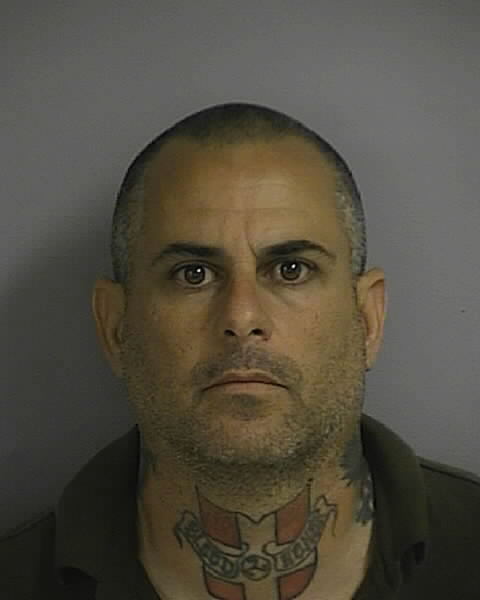
Osceola County mugshot of Marcus Faella

In a series of arrests that began over the weekend, authorities in Central Florida have now arrested ten individuals tied to the racist skinhead organization American Front. Initial arrests included two on Friday and five more on Sunday. While the first two arrested have already been released on bail, there were three more arrests announced this morning.

From the AP report in the Miami Herald:

Seven people with ties to what Florida law enforcement officials called a white supremacist and known domestic terrorist organization were arrested this past weekend on felony conspiracy and hate crime charges in a FBI Joint Terrorism Task Force operation.

Authorities arrested 39-year-old Marcus Faella, and wife 36-year-old Patricia Faella, on Friday, along with 29-year-old Mark McGowan and his wife 25-year-old Jennifer McGowan. Others arrested and taken to Osceola County Jail were 28-year-old Diane Stevens, 25-year-old Paul Jackson and 22-year-old Kent McLellan.

Each was charged with paramilitary training, attempt to shoot into an occupied dwelling and evidence of prejudices while committing offense, a first-degree felony.

It is a felony in Florida to participate in paramilitary training for use “in furtherance of, a civil disorder within the United States.” The “prejudices” charge falls under Florida’s hate crimes law.

Florida Ninth Circuit State Attorney Lawson Lamar said in a statement that his office will review the investigation and “will file the appropriate criminal charges.”

The article goes on to identify those arrested as belonging to the hate group American Front. A partially outdated description of the group can be found here on the Southern Poverty Law Center’s website. The ADL’s concise description of the group:

The American Front is a racist skinhead group that is active in several states around the country. The group espouses an anti-Semitic, white supremacist ideology and disseminates its message in public events that demonize Jews, immigrants, and other minorities. Before the current leader took the helm of the group in 2002, American Front was unusual in that it espoused “Third Positionist” beliefs, a peculiar blend of right-wing extremism that rejects both capitalism and communism in favor of an ill-defined “third way.”

Although American Front is not particularly large, it is one of the oldest continuously active racist skinhead groups in the United States. However, few original members are still with the group; most of the current membership is new. American Front has a legacy of criminal activity that ranges from brutal hate crimes to acts of terrorism.

We learn more about the group in the SPLC’s blog post on the initial arrests: Read more

Share this entry

NYT Covers the War on Terror Drugs with No Mention of Larger Context

This NYT article, which describes how the US has adopted the Special Forces approaches used in Iraq and Afghanistan to fight the drug trade in Central America, rather bizarrely makes no mention of the larger context–growing opposition in Latin America to the War on Drugs as such. On the contrary, the NYT suggests there is consensus about drugs unlike the Cold War disagreements that existed when Oliver North built similar bases in Honduras to fight the Contras.

Narcotics cartels, transnational organized crime and gang violence are designated as threats by the United States and Central American governments, with a broader consensus than when that base was built — in an era when the region was viewed through a narrow prism of communism and anticommunism.

“The drug demand in the United States certainly exacerbates challenges placed upon our neighboring countries fighting against these organizations — and why it is so important that we partner with them in their countering efforts,” said Vice Adm. Joseph D. Kernan, the No. 2 officer at Southern Command, which is responsible for military activities in Central and South America.

Compare that formula–US demand creates the need for us to set up Forward Operating Bases out of which our Special Forces can operate–with that offered by Guatemala’s right wing President, Otto Pérez Molina, in his calls to legalize drugs. [This is my very rough translation.]

In part, we have seen an unequal struggle [against drugs] because America is not cooperating with Central America as it should on this problem.

[The fight against drugs] is a shared responsibility that has different levels and degrees that each country must take.

The US is the largest consumer and the final destination of all the drugs passing through Central America and therefore it has the greatest responsibility.

Read more

Share this entry