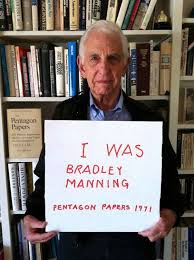
Kevin Gosztola reports that the government plans to use a document Bradley Manning is alleged to have accessed as part of its proof that he knew he’d be leaking any further information to al Qaeda and other enemies by leaking it to WikiLeaks.
Morrow revealed a new aspect of the case against Manning, namely that they believed because Manning had accessed an Army intelligence report on the “threat” posed by WikiLeaks he would have known that WikiLeaks was valuable to the nation’s enemies. It is an argument that essentially uses his decision to access the report against him.(Keep in mind the government maintains he should never have read this report.)
The report itself is actually ambiguous about whether or not our adversaries were using WikiLeaked data. It both presents it as a possibility that we didn’t currently have intelligence on, then presumes it.
(S//NF) Will the Wikileaks.org Web site be used by FISS, foreign military services, foreign insurgents, or terrorist groups to collect sensitive or classified US Army information posted to the Wikileaks.org Web site?
(S//NF) Will the Wikileaks.org Web site be used by FISS, foreign military services, or foreign terrorist groups to spread propaganda, misinformation, or disinformation or to conduct perception or influence operations to discredit the US Army?
[snip]
(S//NF) It must be presumed that Wikileaks.org has or will receive sensitive or classified DoD documents in the future. This information will be published and analyzed over time by a variety of personnel and organizations with the goal of influencing US policy. In addition, it must also be presumed that foreign adversaries will review and assess any DoD sensitive or classified information posted to the Wikileaks.org Web site. [my emphasis]
But I’m more interested in three other things Manning would have learned from that document. First, he’d have learned from this paragraph that the way to make sure someone didn’t fulfill his “obligation to expose alleged wrongdoing within DoD through inappropriate venues” is not training about the appropriate venues to expose DOD wrongdoing, but via better info security — that is, by ensuring that alleged wrongdoing remains secret.
(U//FOUO) The unauthorized release of DoD information to Wikileaks.org highlights the need for strong counterintelligence, antiterrorism, force protection, information assurance, INFOSEC, and OPSEC programs to train Army personnel on the proper procedures for protecting sensitive or classified information, to understand the insider threat, and to report suspicious activities. In addition, personnel need to know proper procedures for reporting the loss, theft, or comprise of hard or soft copy documents with sensitive information or classified information to the appropriate unit, law enforcement, or counterintelligence personnel. Unfortunately, such programs will not deter insiders from following what they believe is their obligation to expose alleged wrongdoing within DoD through inappropriate venues. Persons engaged in such activity already know how to properly handle and secure sensitive or classified information from these various security and education programs and has chosen to flout them.
And of course, the INFOSEC DIA believed was the answer to potential exposure of alleged wrongdoing is precisely the INFOSEC that the Army had failed to achieve 18-24 months later, when Manning was leaking this material, the INFOSEC DOD refused to implement even after a real adversary had inserted malware into our computers in Iraq via use of removable media, the same means Manning used to get this information.
If this document is proof Manning should have known (the conflicting statements notwithstanding) that leaking to WikiLeaks would amount to leaking to our adversaries, it’s also proof that DOD knew they had an INFOSEC problem that might lead to leaked information, one they pointedly didn’t address.
But I’m also amused by one of the case studies in the danger of leaked WikiLeaks information: that it might be used to suggest DOD is getting gouged by our contractors working on JIEDDO, our counter-IED program.
(S//NF) The author of the above-mentioned article incorrectly interprets the leaked data regarding the components and fielding of the Warlock system, resulting in unsupportable and faulty conclusions to allege war profiteering, price gouging and increased revenues by DoD contractors involved in counter-IED development efforts.
Mind you, the claim that JIEDDO contractors were robbing us blind is a conclusion shared by some very respected defense reporters.
Launched in February 2006 with an urgent goal — to save U.S. soldiers from being killed by roadside bombs in Iraq — a small Pentagon agency ballooned into a bureaucratic giant fueled by that flourishing arm of the defense establishment: private contractors.
An examination by the Center for Public Integrity and McClatchy of the Joint Improvised Explosive Device Defeat Organization revealed an agency so dominated by contractors that the ratio of contractors to government employees has reached six to one.
As well as by GAO itself.
In other words, while this internal report claimed WikiLeaks inaccurately concluded that JIEDDO was a boondoggle, in fact WikiLeaks’ conclusion might have been one of the earliest indications of a problem later confirmed by other outlets, that JIEDDO was a boondoggle.
Even by 2009, Manning might have read this document and concluded that WikiLeaks had served precisely the outcome it claimed, exposing wrongdoing.
Finally, check out some of these classification marks, including the questions about whether or not our adversaries might exploit publicly available information bolded above. Not conclusions, mind you, but questions (intelligence gaps, really).
That’s a secret we have to keep from our allies? Really?
No. It’s not. It’s an example of rampant overclassification.
To sum up: not only doesn’t this report assert that leaking to WikiLeaks amounts to leaking to our adversaries; on the contrary, the report identifies that possibility as a data gap. But it also provides several pieces of support for the necessity of something like WikiLeaks to report government wrongdoing.
Update: Swapped in Gosztola’s corrected post on CIA/Army Intel document.