Nasr Pierces Obama’s Diplomacy Mirage

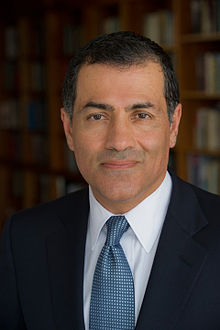
Vali Nasr now serves as Dean of the School of Advanced  International Studies at Johns Hopkins.

Vali Nasr now serves as Dean of the School of Advanced International Studies at Johns Hopkins.

Foreign Policy has published an excerpt from Vali Nasr’s book The Dispensable Nation: American Foreign Policy in Retreat, in which Nasr relates his experiences as a key deputy to Richard Holbrooke, who served as Barack Obama’s special envoy to Afghanistan and Pakistan. The title for the piece tells virtually the entire story: “The Inside Story of How the White House Let Diplomacy Fail in Afghanistan”. The piece should be read in full (as should the book, I presume), but I want to highlight a couple of passages that fit well with points I have tried to make over the years regarding US policy in Afghanistan and Pakistan.

First, we see an Obama tactic that has not been limited to his foreign policy actions, but is characteristic of him on the whole, where he makes a public move such as appointing Holbrooke, where the move has the appearance of a very positive step, but Obama then undercuts the move entirely by providing no further support (such as when he nominated Dawn Johnsen to head OLC and then abandoned her entirely, even when he could have forced a confirmation vote that would have been affirmative under bmaz’s whip count). Here is how Nasr described Holbrooke’s fate once he established his office:

Still, Holbrooke knew that Afghanistan was not going to be easy. There were too many players and too many unknowns, and Obama had not given him enough authority (and would give him almost no support) to get the job done. After he took office, the president never met with Holbrooke outside large meetings and never gave him time and heard him out. The president’s White House advisors were dead set against Holbrooke. Some, like Lt. Gen. Douglas Lute, were holdovers from George W. Bush’s administration and thought they knew Afghanistan better and did not want to relinquish control to Holbrooke. Others (those closest to the president) wanted to settle scores for Holbrooke’s tenacious campaign support of Clinton (who was herself eyed with suspicion by the Obama insiders); still others begrudged Holbrooke’s storied past and wanted to end his run of success then and there. At times it appeared the White House was more interested in bringing Holbrooke down than getting the policy right.

What drives Obama’s craven manipulation of people in this way? Nasr nails that particularly well:

Not only did that not happen, but the president had a truly disturbing habit of funneling major foreign-policy decisions through a small cabal of relatively inexperienced White House advisors whose turf was strictly politics. Their primary concern was how any action in Afghanistan or the Middle East would play on the nightly news, or which talking point it would give the Republicans. The Obama administration’s reputation for competence on foreign policy has less to do with its accomplishments in Afghanistan or the Middle East than with how U.S. actions in that region have been reshaped to accommodate partisan political concerns.

And this reliance on managing to the day’s news cycle ended just as badly as one would expect. Obama should pay heed to Nasr’s dire warning in his epitaph of the Afghan “adventure”, but we can rest assured that the band of political trolls surrounding him will put their fingers in their ears and shout “I can’t hear you” as Nasr warns of failure for the “exit plan” (emphasis added): Read more

Share this entry

Insider Attack Kills Seventeen at Afghan Local Police Post Staffed Under New Screening Program

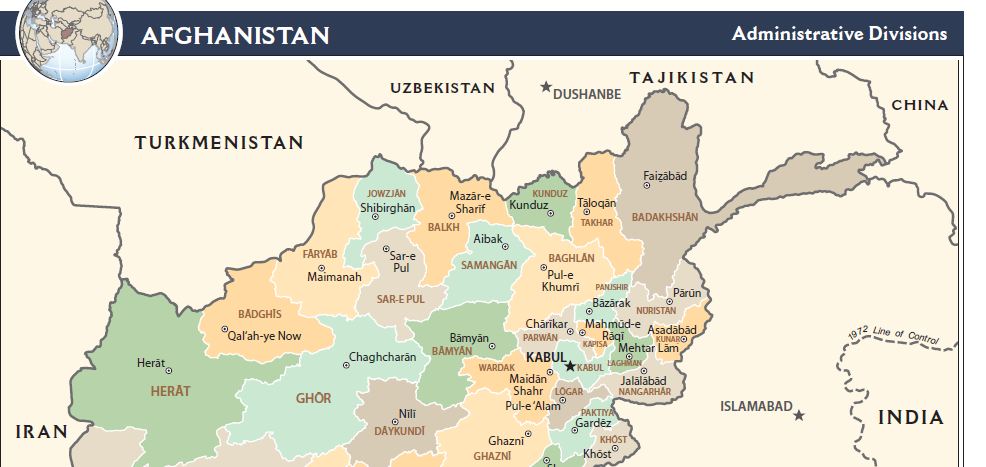
Detail from CIA map of Afghanistan.

Detail from CIA map of Afghanistan. Click on map for a larger view.

The Afghan Local Police program was a centerpiece of David Petraeus’ counterinsurgency (COIN) program in Afghanistan when he took over command after Stanley McChyrstal was fired. The program came under extreme scrutiny this week when Afghan President Hamid Karzai called for the expulsion of US Special Operations forces from the province of Maidan Wardak after repeated reports of atrocities carried out by forces claiming to be allied with ALP forces trained by SOF. Today, there is further bad news for the ALP program, as seventeen people have been killed at an ALP post in what appears to be an insider attack. Since the attack occurred early this morning, it should be kept in mind that information is still coming in regarding the details of what took place. Today’s attack was in Ghazni province, which is adjacent to Wardak, as seen in the map here.

Back in September, training of ALP was the first program suspended due to insider attacks. The (delayed by the elections from October) December 2012 “Report on Progress Toward Security and Stability in Afghanistan” (pdf) informed us that the re-screening of ALP was already moving quickly by then:

To mitigate the risk of insider threats, SOJTF-A has taken active measures to re-validate all 16,474 ALP personnel. This revalidation process is currently 52 percent complete, with less than one percent removed due to nefarious activities or counter-intelligence concerns. This process, which is currently ongoing, is very similar in design to our initial screening/validation methodology. It begins at the local level by conducting shuras and intimately involving local elders, who must vouch for each ALP member, ensuring he remains in good standing. Each member’s application paperwork is re-reviewed by various personnel from the Coalition, MoI, NDS, and the DCOPs. If any ALP member “flags” as suspicious, additional counter-intelligence (both Afghan and Coalition) measures are taken. If it is determined that an ALP member is unfit, he is removed from the program. These processes are non-negotiable. In addition, NDS plans to embed three agents per 100 ALP to identify possible infiltration by the enemy. The prevention/elimination of Insider Threats will remain COMISAF’s top force protection priorities.

So Special Operations Joint Task Force-Afghanistan claimed in December that they had already revalidated just over half the ALP force and that less than one percent of the force had been removed due to potential nefarious connections. And yet, almost two months later, we now have a major attack on ALP that has the hallmarks of an insider attack. From the New York Times:

A group of 17 Afghan policemen were drugged by their comrades while on duty and then shot to death in their sleep in what appears to be the single worst incident in a string of similar attacks, according to Afghan officials.

The attack took place at a remote Afghan Local Police post in Ghazni Province, south of the capital, early Wednesday morning, according to General Zrawar Zahid, the Ghazni police chief.

Other Afghan officials said authorities had already arrested two policemen who they said were Taliban infiltrators who had carried out the attack.

The AP report carried by the Washington Post suggests that not all the dead were ALP:

The dead included 10 members of the government-backed Afghan local police, and seven of their civilian friends, said Provincial Gov. Musa Khan Akbarzada. He says there was a conspiracy of some sort but declined to confirm if poison was involved.

The previously mentioned December report from DoD has a remarkable level of detail on the status of the ALP, with a snapshot as of September 26, 2012: Read more

Share this entry

JSOC or CIA? Secrecy Inherent in US GWOT Impedes Wardak Investigation

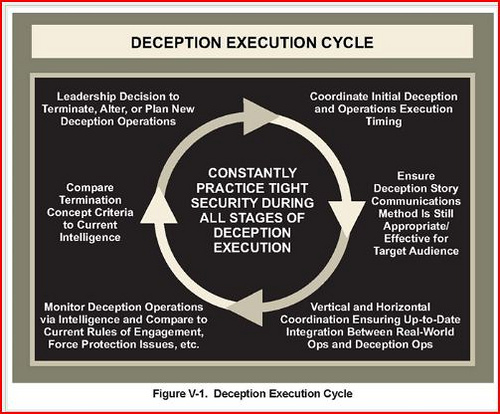
Description of the military's deception-execution cycle from a 2006 Joint Chiefs publication.

Description of the military’s deception-execution cycle from a 2006 Joint Chiefs publication.

In his article that the New York Times today cowardly labelled as “news analysis” rather than straight reporting, Matthew Rosenberg makes a number of astute observations regarding Afghan accusations that groups affiliated with US Special Operations forces have been responsible for a number of atrocities in Maidan Wardak province, prompting Hamid Karzai’s call to expel them. Perhaps the most important observation comes almost as an aside, when he links to this story on Special Operations troops covering up their murder of innocent women during a night raid, going so far as to dig bullets out of their corpses in order to impede the subsequent investigation. Here is the reference in its wider context of overall Afghan concerns about Special Operations forces and their reliance on loosely affiliated groups:

The ban also reflected the Karzai administration’s limited patience for the use of Special Operations forces, whose aggressive tactics previously resulted in abuses, and attempted cover-ups. But Afghan officials cited as even more troubling American Special Operations units’ use of Afghan proxy forces that are not under the government’s control. Afghan civilians and local officials have complained that some irregular forces have looked little different from Taliban fighters or bandits and behaved little differently.

I’ll return to Rosenberg’s reporting in a bit, but we also have to keep in mind a point that virtually all of the reporting on this incident has covered, and that is the secrecy surrounding Special Operations forces. See, for example, this passage in today’s Washington Post article:

Because Special Operations troops carry out classified missions, it is difficult to independently confirm their activities or links to local groups.

“The U.S. has had a long history in Afghanistan of working with some of these irregular militias that are not accountable to anyone,” said Sahr Muhammedally, legal adviser for the Center for Civilians in Conflict, who has studied such groups.

“A lot of villagers talk about these campaign forces,” she said. “It is not the first time I have heard the name…. But the U.S. Special Operations forces don’t confirm or deny anything.”

Gosh, just as Marcy pointed out yesterday that the media is shocked that Robert Gibbs was told he couldn’t confirm or deny the existence of the drone program, now we have Special Operations not being able to confirm or deny their association with shadowy groups that are responsible for crimes. And yet, even though the media notes the secrecy surrounding the operations, they are unable to point to that secrecy directly within the context of NATO claiming it can find no evidence supporting the Afghan accusations. For example, here is the same Washington Post article again:

But NATO said its past inquiries found no evidence to support allegations of misconduct by U.S. Special Operations forces in Wardak province, southwest of Kabul.

That was the second paragraph in the article and yet, when they get to the passage on secrecy six paragraphs later, they merely point out that the classified nature of the work makes independent confirmation difficult and completely overlook the role that a Glomar-type response would play in making it impossible for NATO to find evidence because that evidence is classified and cannot be provided to NATO from JSOC.

Note added in clarification: Marcy points out to me via email that it would be more accurate to state here that CIA and/or JSOC would deny the existence of these operations because they are covert, not because they are classified.

Another vitally important point where Rosenberg stands apart from all the other reporting on this issue is his mention that we might be dealing here with a militia supported by the CIA rather than JSOC: Read more

Share this entry

Karzai Expels Special Operations Forces From Afghan Province Over Program at Heart of Petraeus’ “Success”

Today’s story in the Washington Post covering Afghan President Hamid Karzai’s decree expelling US Special Operations forces from a province just outside Kabul illustrates how completely the upper levels of the US military have been ignoring reality in Afghanistan. The Post reported that the “announcement appeared to come as a surprise to American military officials”. For those who have been paying attention, it has been clear that Afghanistan has been upset for years over a program tied to US Special Operations forces that develops what amounts to private militias which are sometimes under the Afghan Local Police name and sometimes not. These groups are particularly lawless and have been reported to participate in revenge killings, disappearances and torture (which are also the specialties of JSOC). And this program was at the heart of David Petraeus’ operations when he took over in Afghanistan:

Jack Keane, a former Army general and a mentor to David H. Petraeus, the American commander in Afghanistan when the program began, said that “the brilliance of the program is also the vulnerability” because recruits are selected by elders, not by Americans. Although there has always been some form of NATO vetting, “we’re totally dependent on their judgment as to who they’ve selected.”

And some groups continue to warn of the dangers of reintroducing militia-like forces to a country long bedeviled by warlords. Last year, Human Rights Watch reported instances of killing, rape, theft and other abuses among the local police that raised “serious concerns about the A.L.P. vetting, recruitment and oversight.” The group added: “Creation of the A.L.P. is a high-risk strategy to achieve short-term goals in which local groups are again being armed without adequate oversight or accountability.” (At the time, NATO said that some aspects of the report were dated or incorrect.)

Although a short pause in Special Operations forces training of Afghan Local Police took place back in September when the article quoted above came out, it is clear now that the “re-screening” of ALP personnel was a sham and that the abuses under this program continue. Here is Khaama Press describing Karzai’s decision:

After a thorough discussion, it became clear that armed individuals named as US special force stationed in Wardak province engage in harassing, annoying, torturing and even murdering innocent people. A recent example in the province is an incident in which nine people were disappeared in an operation by this suspicious force and in a separate incident a student was taken away at night from his home, whose tortured body with throat cut was found two days later under a bridge. However, Americans reject having conducted any such operation and any involvement of their special force.”

“The Ministry of Defense was assigned to make sure all US special forces are out of the province within two weeks,” the statement said adding that “All the Afghan national security forces are duty bound to protect the life and property of people in Maidan Wardak province by effectively stopping and bringing to justice any groups that enter peoples’ homes in the name of special force and who engage in annoying, harassing and murdering innocent people.”

This comes as US special forces and their interpreters were accused of misbehavior and humiliation of innocent local residents in Nekh district of Maidan Wardak province earlier in January.

Most of the news reports covering this move by Karzai do note that Special Operations forces are expected to play a key role after the “withdrawal” of coalition forces planned for the end of 2014. As noted in the Guardian: Read more

Share this entry

NATO Wants US to Buy $22 Billion SOFA in Afghanistan

Both Reuters and the New York Times carry stories this morning reporting that NATO has floated the idea of extending the 352,000 Afghan National Security Force size for a number of years beyond the current plan that calls for it to fall significantly after the US completes its withdrawal. There are a number of problems with this idea. The first is that the 352,000 number bears little relation to reality at this point, since the ongoing high attrition rate for Afghan forces continued during the prolonged disruption in training due to green on blue attacks. Although ISAF continues to claim that recruiting and initial training goals to support the 352,000 level were met, the likelihood that this level of troops still exists and is integrated into ANSF is very low. (See this post for just one example of the deployment deficit at an Afghan National Border Police facility.) Second, the US bears the bulk of the budgetary load for maintaining ANSF, so extending the commitment to the increased troop level is asking for a large financial commitment from the US at a time when budget deficits are the panic du jour in Washington. Finally, because only one Afghan National Army unit now is reported to be able to function without any advisor input, a large number of US advisors is required to achieve the required ANSF force size and there is not yet a negotiated Status of Forces Agreement (SOFA) that grants immunity to US troops remaining in Afghanistan after the planned withdrawal at the end of 2014. The lack of such an agreement in Iraq resulted in our rapid withdrawal of advisors there.

Here is how the Times described the proposal:

NATO defense ministers are seriously considering a new proposal to sustain Afghanistan’s security forces at 352,000 troops through 2018, senior alliance officials said Thursday. The expensive effort is viewed as a way to help guarantee the country’s stability — and, just as much, to illustrate continued foreign support after the NATO allies end their combat mission in Afghanistan next year.

The fiscal package that NATO leaders endorsed last spring would have reduced the Afghan National Security Forces to fewer than 240,000 troops after December 2014, when the NATO mission expires. That reduction was based on planning work indicating that the larger current force level was too expensive for Afghanistan and the allies to keep up, and might not be required. Some specialists even argued that the foreign money pouring into Afghanistan to support so large a force was helping fuel rampant official corruption.

Recall that the Obama administration managed to quash the semi-annual report on “progress” in Afghanistan that was due in October until after the November elections, but once it finally came out, the New York Times reported:

As President Obama considers how quickly to withdraw the remaining 68,000 American troops in Afghanistan and turn over the war to Afghan security forces, a bleak new Pentagon report has found that only one of the Afghan National Army’s 23 brigades is able to operate independently without air or other military support from the United States and NATO partners.

So we see that there is a huge dependence on “advisors” (=US troops) who are required for there to be any semblance of function for the ANSF. And yet, as I discussed back in November, there is not yet a SOFA in place that provides full criminal immunity to US forces who are in Afghanistan posing as advisors after 2014. Is NATO floating the idea of extending the large force size myth as an enticement to Afghan officials to keep their corruption dollars coming in by approving US troop immunity in the new SOFA? Read more

Share this entry

DOJ Gives Blackwater a Whitewash On Felony Charges

CryingJusticeSomething funny happened in the Eastern District of North Carolina today. Out of the blue in an extremely significant case, and without particular notice to interested observers, much less the public, the criminal case against former Blackwater executives for weapons trafficking, and a myriad of other weapons violations, ended. Poof! Gone with an undeserved and inexplicable sweetheart misdemeanor plea.

From local Raleigh outlet WRAL:

A federal weapons case against the defense contractor formerly known as Blackwater Worldwide ended Thursday with misdemeanor pleas by two former executives, who were fined and placed on probation.

The case stems in part from a raid conducted by federal agents at the company’s Moyock headquarters in 2008 that seized 22 weapons, including 17 AK-47s. An indictment alleged that the company used the Camden County Sheriff’s Office to pose as the purchaser of dozens of automatic weapons.

The indictment also alleged that Blackwater purchased 227 short barrels and installed them on long rifles without registering them and that company officials presented the king of Jordan with five guns as gifts in hopes of landing a lucrative overseas contract and then falsified federal documents once they realized they were unable to account for the weapons.

Gary Jackson and William Matthews, the former president and executive vice president of the company and both Navy Seals, pleaded guilty Thursday to one count each of failure to keep records on firearms. They were sentenced to four months of house arrest, three years on probation and fined $5,000.

The original indictment was fifteen counts, count em 15 counts, most all serious felonies with significant punishment in the offing. Now granted, a few counts were pared off after a motion to dismiss by a court order dated February 4, 2013, but significant and substantive counts remained viable against Blackwater executives Jackson and Matthews.

But, instead of taking them to trial, or even extracting a reasonable plea that did justice for the public, the DOJ collaborated with the defense and walked into court without notice today, filed a new information containing a single misdemeanor charge and proceeded to sentence them on the spot to a hand slap.

Here is how the official DOJ Press Release described it:

United States Attorney Thomas G. Walker announced that in federal court today GARY JACKSON and WILLIAM WHEELER MATTHEWS, JR. pled guilty before United States District Judge Louise W. Flanagan, to one count each of failing to make and maintain records related to firearms in violation of Title 18, United States Code, Sections 922(m) and 923(g)(1)(A).

Additionally, Judge Flanagan sentenced JACKSON and MATTHEWS to 3 years probation, 4 months house arrest with stipulations, and fined them $5,000.00.

According to the Criminal Information filed on February 14, 2013, JACKSON and MATTHEWS, between 2005 and 2007, were employees of a corporate entity formerly known as Blackwater which was a licensed federal firearms manufacturer and dealer, and whose responsibilities for a certain period of time included direct or indirect supervisory authority over employees whose duties included the making and maintenance of records required by federal law. (Emphasis added)

Oh yeah, there was one other mention of note in the release:

The corporate entity formerly known as Blackwater has entered into a Deferred Prosecution Agreement with the government in which it has agreed to extensive ongoing compliance programs and the payment of approximately 7 million dollars in fines.

How nice. The Deferred Prosecution Agreement was actually entered into and noticed back in August of last year. It was easy to see the DPA coming, and as much as the US Government relies on Blackwater/Xe/Academi for their security adventures, it was predictable they would be given a DPA (and, hey, DPAs provide lucrative paydays to former DOJ friends who get set up in cushy monitor jobs).

The DPA was easy to see coming, today’s sweetheart plea was not. No, it happened basically as a covert op on the public and interested legal community. Did you notice the bolded date in the DOJ press release? DOJ states the plea was entered on February 14, 2013. What is interesting is that it was not placed on the official court docket until today – at the same time Judge Louise Flanagan, a conservative Bush appointee, was accepting the plea and sentencing Jackson and Matthews, thus ending the case. All designed so the public would not know and could not have any input. Diametrically contrary to the fundamental precepts of the American justice system.

How little of a wrist slap is the sentence? I’ve had common DWI clients sentenced to more. Compare and contrast to the punishment the DOJ sought to impose on Aaron Swartz.

The sentence is now done and entered, but what about the process? It was a stunning affront to justice and the public right to know. I have complained relentlessly about the collusion between the DOJ and another Bush era criminal, former Office of Special counsel Chief Scott Bloch. But at least in Bloch there was minimal notice given to the public and we knew what was coming, in spite of inexplicable collusion between the DOJ and the criminal defendant. Not so in the case of these Blackwater executives, Jackson, Matthews, et al.

Even in Bloch, in spite of complete collusion on the part of the DOJ, the court set sentencing for nearly three months after the entry of the plea. Not so with Judge Flanagan and the Blackwater boys. How unusual is it that a Federal court sentences criminal defendants immediately in high profile important cases with important implications like this? VERY UNUSUAL.

In fact it is simply stunning, all the more so considering that the parties and the court hid the fact the plea was entered from the public and the court docket system in the period between the entrance of plea on February 14 and the plea acceptance and immediate sentencing today.

To give you an idea of how out of the ordinary such a sentencing on the spot is, there are directly applicable provisions in the Federal Rules of Criminal Procedure that must be specifically obviated on the record to even attempt it. Rule 32(c) provides:

(c) Presentence Investigation.

(1) Required Investigation.

(A) In General. The probation officer must conduct a presentence investigation and submit a report to the court before it imposes sentence unless:

(i) 18 U.S.C. §3593 (c) or another statute requires otherwise; or

(ii) the court finds that the information in the record enables it to meaningfully exercise its sentencing authority under 18 U.S.C. §3553, and the court explains its finding on the record.

(B) Restitution. If the law permits restitution, the probation officer must conduct an investigation and submit a report that contains sufficient information for the court to order restitution.

18 USC 3593 concerns death penalty cases, so the ONLY way Jackson and Matthews could have been sentenced today is for the court to have made a specific finding, based upon information on and in the record, and then stated the specific reasons for the decision, and evidence supporting it, all on the record.

Did Judge Flanagan do that? Well, we do not know because there is no sentencing minute entry on the docket as there normally is. It just isn’t there. What’s more, we cannot know if there was a stipulation to hide the plea entry and immediate sentencing plans in the plea agreement (docket number 364), because the plea agreement is SEALED.

All ability of the public to know this was coming, and to discern what really happened, has been secreted from the public. Secret justice (or, more properly, injustice).

How and why did all this occur? Undoubtedly because of the highly classified and incestuous relationship between Blackwater and the US Government, and the resulting ability of Blackwater to literally blackmail and extort concessions through graymail threats (See here for a short history of graymail).

So, through secrecy, classification, graymail and direct collusion with the DOJ, Blackwater, and its executive henchmen, win and the American public lose yet again. I have been practicing criminal law for 25 years and I am absolutely offended by what occurred in Judge Louise Flanagan’s courtroom today. Both she and the Obama Department of Justice should be made to answer for it.

[UPDATE: It appears the plea agreement itself is not completely sealed, it is just kept “unavailable” from the public docket. Upon information and belief, it can be viewed if you personally go to the clerk’s office for the Eastern District of North Carolina and ask to see it. The other items described in the post as missing from the docket entirely remain so missing.]

Share this entry

Afghanistan Kills Yet Another Military Career: Allen to Retire

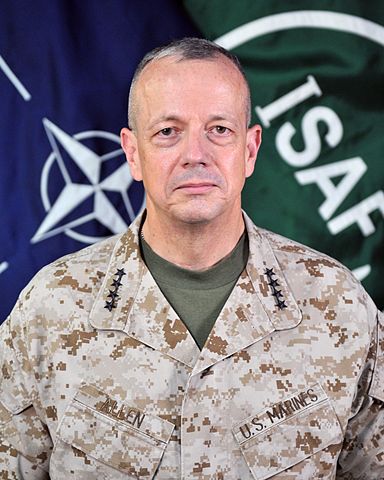
After multiple mis-steps, General John Allen has "chosen" to "retire" rather than face a Senate confirmation to be head of NATO.

After multiple missteps, General John Allen has “chosen” to “retire” rather than face a Senate confirmation to be head of NATO.

Many times throughout recorded history, would-be empires have attempted to conquer Afghanistan, only to fail. These failures often have been so spectacular that they end up taking the would-be empires down for their efforts, as most recently seen when the Soviet Union’s ill-fated war in Afghanistan was one of several factors leading to its demise.

Ignoring that history, the US invaded Afghanistan shortly after 9/11. The Bush administration subsequently diverted attention and resources from Afghanistan into its war of choice in Iraq. Barack Obama made Afghanistan his “necessary war” as he campaigned for office in 2008, and yet the joint management of the war in Afghanistan by his administration and the military has been no more professional than the fiasco under Bush.

Remarkably, there has been little criticism of the mismanagement of this war, although when General John Allen was snared into the panty-sniffing investigation of David Petraeus’ extra-marital affair, AP noted that Afghanistan has been killing the careers of top commanders:

At the international military headquarters in Kabul, it’s jokingly being called the curse of the commander’s job.

The last four U.S. generals to run the Afghan war were either forced to resign or saw their careers tainted by allegations of wrongdoing.

That second paragraph can now be revised, as the official announcement has now come out that Allen will retire rather than face a confirmation hearing on his previous nomination to head NATO. The official explanation is that Allen is resigning so that he can help his wife deal with a number of health issues, but Ed (“Did You Beat Tiger?!?”) Henry informed us last week that Allen was “pushed” in an article that strangely seemed to link the sacrifice of Allen with an expected eventual confirmation of Chuck Hagel as Defense Secretary.

A voice in the wilderness daring to criticize the failures of military command in Afghanistan and Iraq has bee Tom Ricks. He wrote in the New York Times in November:

OVER the last 11 years, as we fought an unnecessary war in Iraq and an unnecessarily long one in Afghanistan, the civilian American leadership has been thoroughly — and justly — criticized for showing poor judgment and lacking strategies for victory. But even as those conflicts dragged on, our uniformed leaders have escaped almost any scrutiny from the public.

Our generals actually bear much of the blame for the mistakes in the wars. They especially failed to understand the conflicts they were fighting — and then failed to adjust their strategies to the situations they faced so that they might fight more effectively.

Ricks even understands why the military has escaped criticism: Read more

Share this entry

Obama Still Clinging to 352,000 Afghan National Security Force Size Myth

Before the outbreak of green on blue killings that eventually led to a significant interruption in the training of Afghan security forces last September, it was impossible to read a statement from the US military or NATO regarding future plans without encountering a reference to a required 352,000 force size for combined Afghan National Security Forces. It was our training of the ANSF that was touted as our primary reason for remaining in Afghanistan because we need those trained troops available to take over security responsibility as we withdraw. I have been insisting since the interruption that it will be impossible to continue to claim that a functional ANSF force size of 352,000 can be achieved, as the known high rate of attrition continued during the training interruption. No new troop size prediction has emerged, but it was significant to me that references to the 352,000 force size claim had seemed to disappear.

Last night, President Barack Obama announced in his State of the Union address that he intends to withdraw about half the troops now in Afghanistan within the next twelve months, but he made no direct reference ANSF force size. Here are the three short paragraphs on Afghanistan in the speech as found in the transcript of his address:

Tonight, we stand united in saluting the troops and civilians who sacrifice every day to protect us.  Because of them, we can say with confidence that America will complete its mission in Afghanistan and achieve our objective of defeating the core of al Qaeda.  (Applause.)

Already, we have brought home 33,000 of our brave servicemen and women.  This spring, our forces will move into a support role, while Afghan security forces take the lead.  Tonight, I can announce that over the next year, another 34,000 American troops will come home from Afghanistan.  This drawdown will continue and by the end of next year, our war in Afghanistan will be over.  (Applause.)

Beyond 2014, America’s commitment to a unified and sovereign Afghanistan will endure, but the nature of our commitment will change. We’re negotiating an agreement with the Afghan government that focuses on two missions — training and equipping Afghan forces so that the country does not again slip into chaos, and counterterrorism efforts that allow us to pursue the remnants of al Qaeda and their affiliates.

Despite the specific force numbers cited with respect to US forces, Obama merely mentions “Afghan security forces” without telling us how many of them there will be. Resorting to the more detailed Afghanistan Fact Sheet released last night by the White House, however, shows that Obama still clings to the myth that there are 352,000 members of the ANSF. The Fact Sheet even goes to so far as to claim that this force level will be maintained for the next three years. I don’t believe I have seen this three year claim before: Read more

Share this entry

Hagel Hearing: Twilight of the Neocons Makes Senate Armed Services Committee Dysfunctional

[youtube]http://www.youtube.com/watch?v=XiXTyDnA2TI#![/youtube]

The disgusting bullying of former Senator Chuck Hagel (R-NE) during his hearing yesterday on his nomination to be Secretary of Defense is demonstrated clearly in the short clip above where Senator Lindsey Graham (R-Closet) asks Hagel to “Name one person, in your opinion, who’s been intimidated by the Israeli lobby.” Hagel said he couldn’t name one. A quick look at this word cloud from the hearing, though, or at this tweet from the Washington Post’s Rajiv Chandrasekaran: “At Hagel hearing, 136 mentions of Israel and 135 of Iran. Only 27 refs to Afghanistan. 2 for Al Qaida. 1 for Mali.” shows that Hagel should be at the top of the list of those intimidated by the Israeli lobby, which yesterday was embodied by the SASC.

Hagel did himself no favors when he stumbled badly on one of the few substantive and relevant topics brought up. On Iran’s nuclear program, even after being handed a note, he bungled the Obama administration’s position of prevention, stating first that the US favors containment. [His bungled statement of the Obama administration’s position should be considered separately from the logic of that position, where containment of an Iran with nuclear weapon capability is seen by some as a stabilizing factor against Israel’s nuclear capabilities, while prevention could well require a highly destabilizing war.]

Overall, however, the combative nature of Republican questioning of Hagel was just as hostile as the questioning last week of former Secretary of State Hillary Clinton over the Benghazi incident. Why would Republicans turn on one of their own with a vengeance equal to that shown to their long-term nemesis? Writing at Huffington Post, Jon Soltz provides an explanation with which I agree when he frames yesterday’s hearing as a referendum on neocon policy (emphasis in original):

“Tell me I was right on Iraq!”

Essentially, that’s what Sen. McCain said during most of his time in today’s confirmation hearing for Chuck Hagel. And that sums up why the die had been cast on the Hagel nomination, before we even got to these hearings today, which I am currently at. This vote, I believed (and now believe more than ever) is a referendum on neocon policy, not on Chuck Hagel.

Much of McCain’s bullying of Hagel was centered on McCain trying to get Hagel to admit that he had been wrong to oppose the Iraq surge. This clinging to the absurd notion that the Iraq surge was a success sums up the bitter attitude of the neocons as the world slowly tries to emerge from the global damage they have caused. And that this view that the surge was a success still gets an open and unopposed position at the Senate Armed Services Committee highlights the dangerous dysfunction of one of the most influential groups in Washington.

A functional SASC would have spent much time in discussion with Lt. Col. Daniel Davis, who provided a meticulous debunking of the myth that the Iraq surge was a success. His report, however, has been quietly ignored and allowed to fade from public view. Instead, this committee has essentially abandoned its oversight responsibilities in favor of pro-war jingoism. That Hagel refuses to engage in their jingoism is at the heart of neocon hatred of him.

Hagel would have done himself and the world a favor by turning the tables on the Committee during the hearing. A report (pdf) released Wednesday by the Special Inspector General for Afghanistan Reconstruction highlights a massive oversight failure by the Senate Armed Services Committee that lies at the juxtaposition of US defense policy in both Iran and Afghanistan. Despite long-standing sanctions against US purchases of Iranian goods, the Committee has allowed the Department of Defense to purchase fuel for use in Afghanistan that could well have come from Iran. Here is the conclusion of the report (emphasis added):

DOD’s lack of visibility—until recently—over the source of fuel purchased for the ANSF raises some concerns. DOD lacked certification procedures prior to November 2012 and had limited visibility over the import and delivery sub-contracts used by fuel vendors. As a result, DOD is unable to determine if any of the $1.1 billion in fuel purchased for the ANA between fiscal year 2007 and 2012 came from Iran, in violation of U.S. economic sanctions. Controls—recently added by CJTSCC to the BPAs for ANSF fuel—requiring vendor certification of fuel sources should improve visibility over fuel sources. To enhance that visibility, it is important that adequate measures are in place to test the validity of the certifications and ensure that subcontractors are abiding by the prohibitions regarding Iranian fuel. Recently reported steps to correct weaknesses in the fuel acquisition process may not help U.S. officials’ in verifying the sources of fuel purchased with U.S. funds for the ANSF. Given the Afghan government’s continued challenges in overseeing and expending direct assistance funds, it will become more difficult for DOD to account for the use of U.S. funds as it begins to transfer funds—in March 2013—directly to the Afghan government for the procurement and delivery of ANSF fuel. In light of capacity and import limitations of the Afghan government, the U.S. government may need to take steps to place safeguards on its direct assistance funding—over $1 billion alone for ANSF fuel from 2013-2018—to ensure that the Afghan government does not use the funds in violation of U.S. economic sanctions.

Imagine the sputtering that would have ensued if Hagel had managed to ask Graham or McCain why the committee had failed to enforce the sanctions against purchasing Iranian fuel by the Defense Department. While he was busy singing “Bomb, bomb, bomb, bomb, bomb Iran” on the campaign trail in 2008, McCain was failing in his responsibility to see that Iranian fuel wasn’t purchased by the Defense Department.

Share this entry

Acknowledgement of Failure in Afghanistan Spreads Throughout US Government

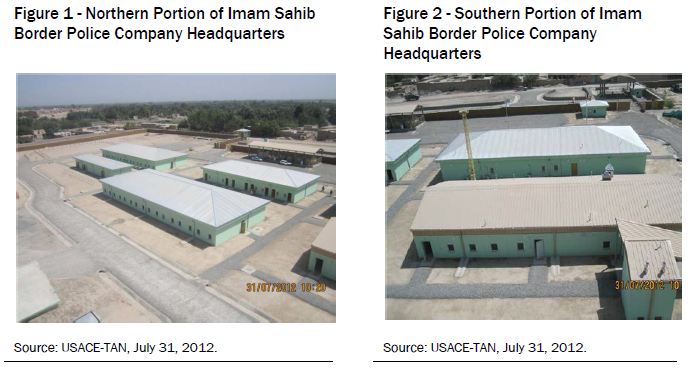
Mostly abandoned $7.3 million Border Police facility in Kunduz Province, Click on photo for a larger view.

After staying out of the headlines while the military carried out its panty-sniffing investigation of his emails, General John Allen is back in today’s Washington Post in the first of what will be many valedictories of his time as commander of US forces in Afghanistan. He is the 11th commander there since 2001, so a year seems to be about all anyone can stomach. But Allen’s reappearance comes at an inauspicious time, as two different documents released yesterday show that despite the continued “we won” attitude from Allen and his minions, many of the rest of the branches of the US government (h/t to Marcy for pointing me toward both these documents) now openly admit that we have failed there.

McClatchy’s Jonathan Landay tweeted Monday afternoon: “State Dept #Afghanistan travel warning: Afghan govt has “limited ability to maintain order and ensure security.” Did White House read this?” Following up on his tweet, the travel warning paints a bleak picture of the security situation in Afghanistan:

The Department of State warns U.S. citizens against travel to Afghanistan. The security threat to all U.S. citizens in Afghanistan remains critical.

/snip/

No region in Afghanistan should be considered immune from violence, and the potential exists throughout the country for hostile acts, either targeted or random, against U.S. and other Western nationals at any time. Remnants of the former Taliban regime and the al-Qaida terrorist network, as well as other groups hostile to International Security Assistance Force (ISAF) military operations, remain active.

The next sentence, though, is the most devastating and is what Landay referenced:

Afghan authorities have a limited ability to maintain order and ensure the security of Afghan citizens and foreign visitors.

As Landay asks, has the White House read this? After a long string of no longer operational explanations for why we are still in Afghanistan, the current line is that we must stay long enough to train and support the 352,000-strong Afghan National Security Force so that it can take responsibility for security as we withdraw. Although the Post article does note that the future for Afghanistan does not look good, when Allen is quoted, victory language returns, and it is in stark contrast to the State Department view of conditions:

With 11 days left in his tour, Allen says he’s proud of the growth of the Afghan security forces and the success of NATO’s troop surge in places such as southern Helmand, where four years ago the Taliban operated freely.

The State Department would appear to dispute that claim that the Taliban no longer operates freely in Helmand.

As if the State Department’s travel warning isn’t devastating enough to the Afghan war situation, a report released yesterday by the Special Inspector General for Afghanistan Reconstruction (SIGAR) (pdf) demonstrates that the claim that ANSF force size has achieved the 352,000 goal is a sham. The photos above depict a $7.3 million facility built by the US for Afghan Border Police in Kunduz Province. The findings of the report are devastating: Read more

Share this entry