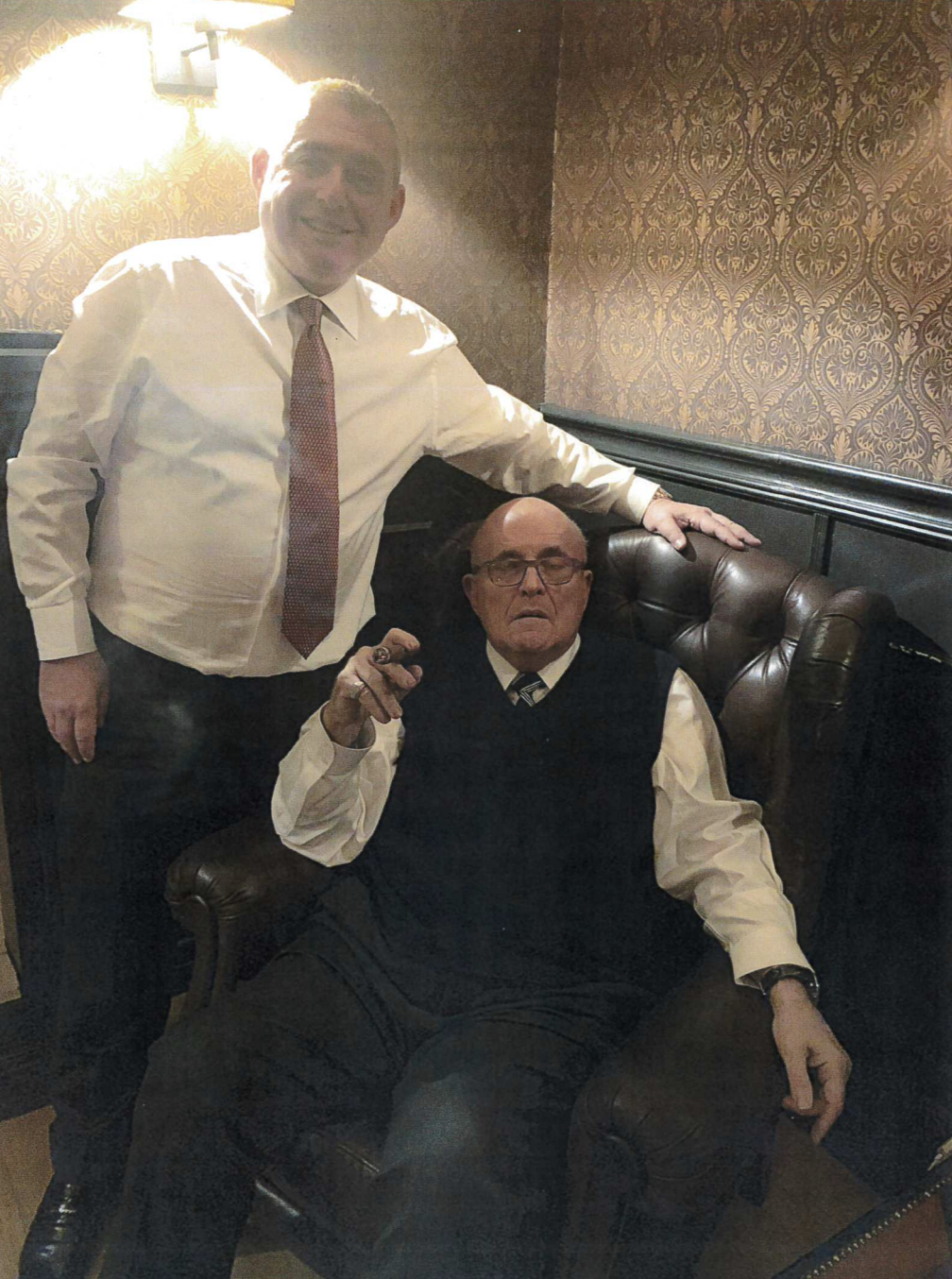
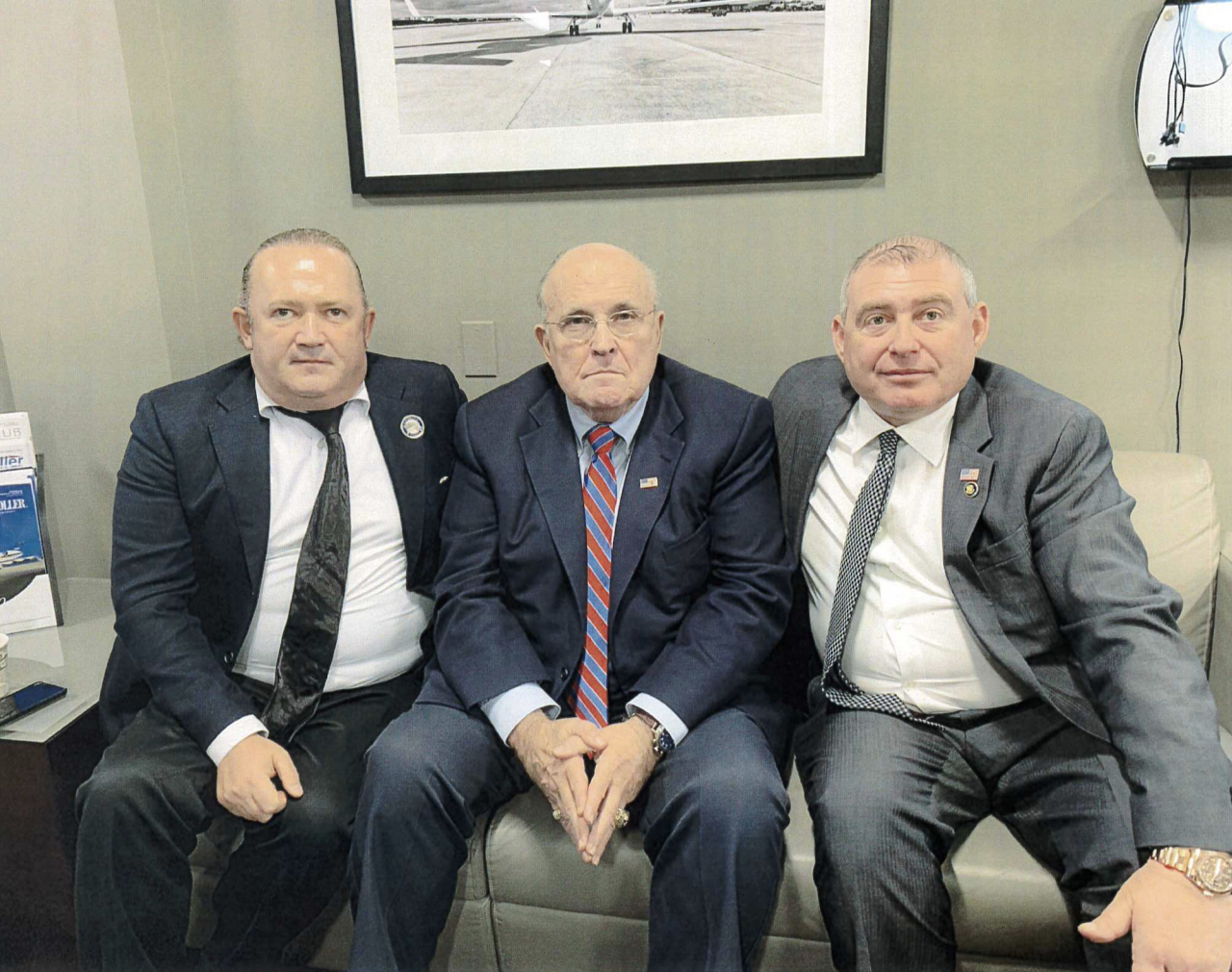
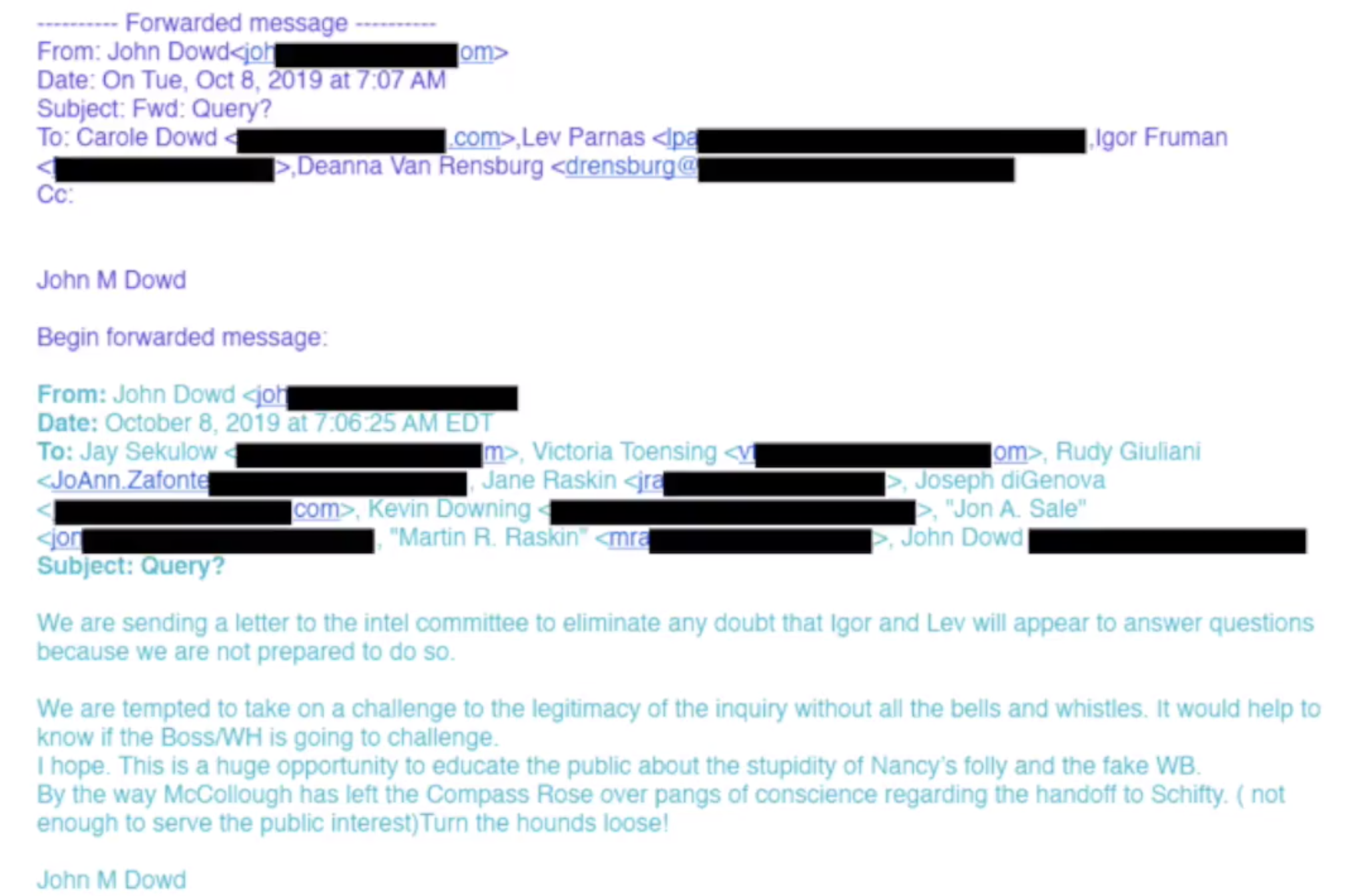
How Many Other Grifters and Spies Have Incredibly Damning Recordings of Donald Trump?

In Lev Parnas’ interview with Rachel Maddow, he confirmed a previously reported story that in April 2018, he incited President Trump to try to fire Marie Yovanovitch by (falsely) telling Trump that the Ambassador was badmouthing him.

For days, Republicans have been dismissing such claims, in part by emphasizing that Parnas (like Trump) is under indictment.

It turns out that Parnas has receipts, in the form of a recording of the incident someone shared with ABC.

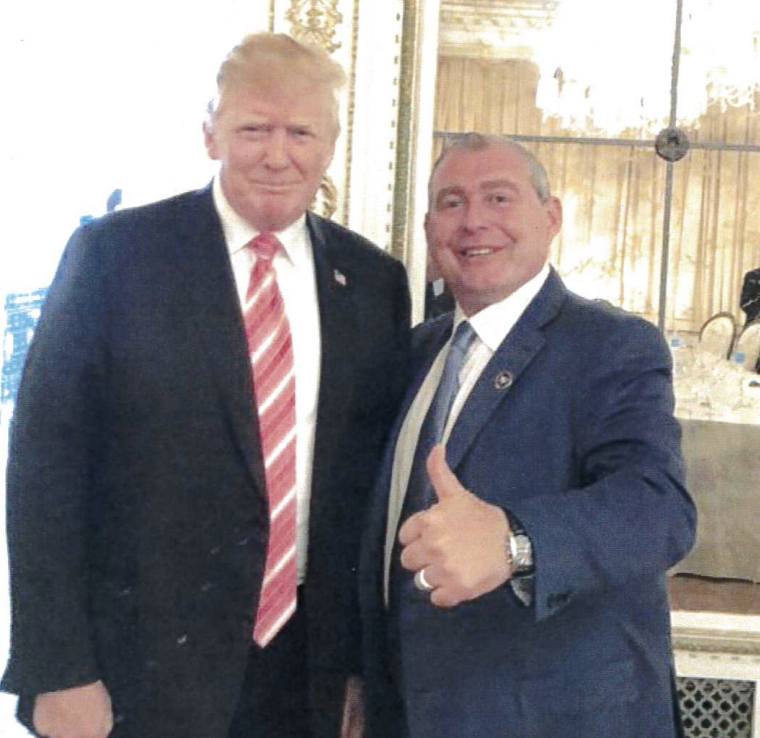
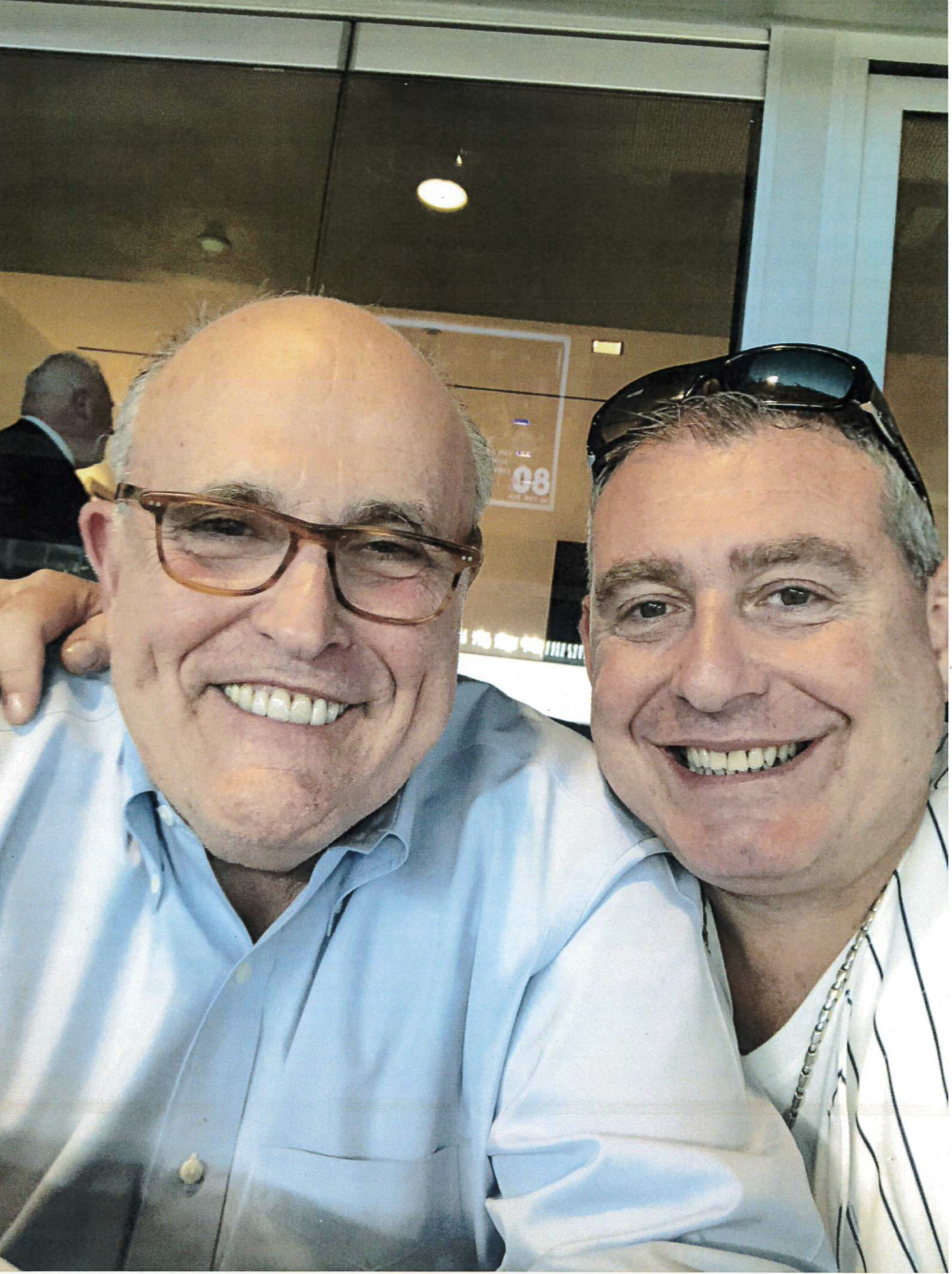
A recording reviewed by ABC News appears to capture President Donald Trump telling associates he wanted the then U.S. Ambassador to Ukraine Marie Yovanovitch fired – and speaking at a small gathering that included Lev Parnas and Igor Fruman — two former business associates of Trump’s personal lawyer Rudy Giuliani who have since been indicted in New York.

The recording appears to contradict statements by President Trump and support the narrative that has been offered by Parnas during broadcast interviews in recent days. Sources familiar with the recording said the recording was made during an intimate April 30, 2018 dinner at the Trump International Hotel in Washington, D.C.

Trump has said repeatedly he does not know Parnas, a Soviet-born American who has emerged as a wild card in Trump’s impeachment trial, especially in the days since Trump was impeached.

“Get rid of her!” is what the voice that appears to be President Trump’s is heard saying. “Get her out tomorrow. I don’t care. Get her out tomorrow. Take her out. Okay? Do it.”

On the recording, it appears the two Giuliani associates are telling President Trump that the U.S. ambassador has been bad-mouthing him, which leads directly to the apparent remarks by the President. The recording was made by Fruman according to sources familiar with the tape.

[snip]

Parnas appears to say: “The biggest problem there, I think where we need to start is we gotta get rid of the ambassador. She’s still left over from the Clinton administration,” Parnas can be heard telling Trump. “She’s basically walking around telling everybody ‘Wait, he’s gonna get impeached, just wait,” he said.

According to the Daily Beast, Igor Fruman made the recording.

A recently-indicted associate of Rudy Giuliani taped President Donald Trump calling for the firing of Ukraine Ambassador Marie Yovanovitch, according to the lawyer for a second Giuliani associate.

Joseph Bondy, a lawyer for Florida businessman Lev Parnas, told The Daily Beast that the recording was made by former partner Igor Fruman. Both men were arrested in October and charged with campaign finance violations.

TDB also quotes Fruman’s lawyer refusing to comment about the recording. That may be because he is in a joint defense agreement with Rudy Giuliani (and by association the President). Which means this recording came from someone else, either Congress or Parnas himself (though he has only modified the protection order for stuff on his own phones).

This is utterly damning for the President’s claims — which were transparently false — that he didn’t know Parnas.

But they’re also an indication of how easily Trump can be put into compromising situations. April 2018, when this exchange occurred, was just a month after Parnas and Fruman started buying their way into elite crowds with Donald Trump. It was weeks before they gave $325,000 to Trump’s SuperPAC (which, given that they are accused of buying this access in order to get Yovanovitch fired, sure looks like payoff). And they were reportedly doing this at the behest of a still as yet unnamed Ukrainian.

Yet they had to do little more than lie about Yovanovitch to get Trump to order that she be fired. While Republicans in the Senate may not give a damn, the video will, at a minimum, make it harder for Bill Barr to protect the president.

So on top of everything this does for Trump’s legal woes, this video raises real questions about who else has such damning recordings of Trump. Mar-a-Lago has already been demonstrated to be a nest of spying. And Trump has chosen not to bring handlers with him into key meetings with foreign leaders — including, but not just, Putin.

I promise you, this is not the only utterly damning recording of the President out there.

The question is what those who have such damning recordings are doing with the leverage they give over the President.

Share this entry

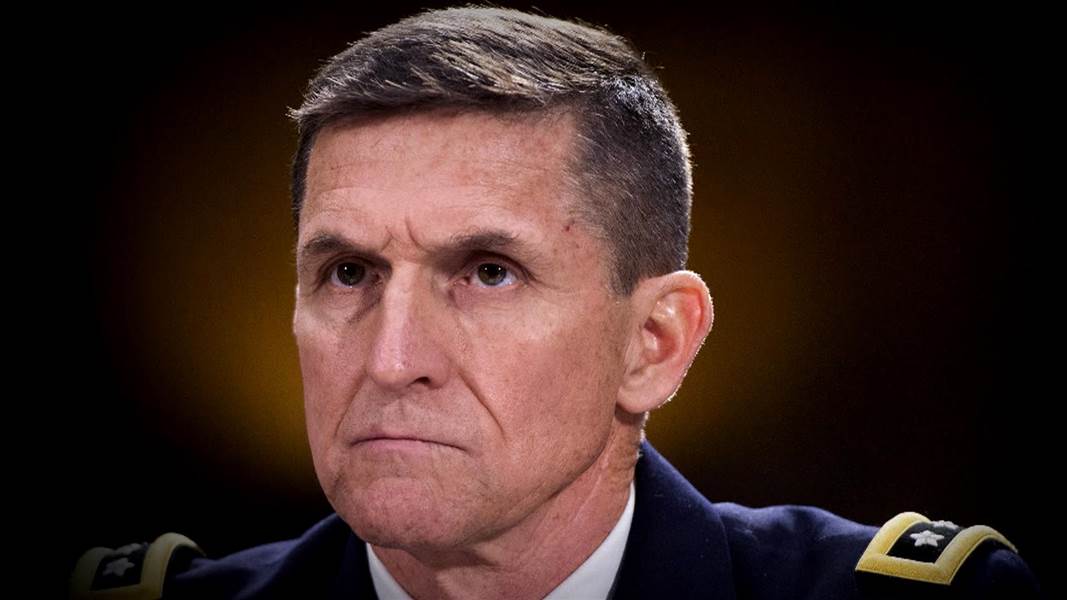
Emmet Sullivan Invites Mike Flynn to Lie Under Oath One More Time

Yesterday, Mike Flynn asked for a delay in the deadline for his real motion to withdraw his guilty plea(s), pointing to recently obtained 302s of his so-called cooperation with the government to explain why the seven months since they first made it clear they were going to do this wasn’t enough time to make a coherent argument.

Judge Emmet Sullivan granted Flynn precisely the deadlines he wanted.

But along with the delay, Sullivan ordered Flynn to brief the standards for withdrawing a plea in the DC Circuit and the need to have witnesses testify under oath to support that standard.

MINUTE ORDER as to MICHAEL T. FLYNN granting [157] Defendant’s Second Motion to Continue Briefing Deadlines. The parties shall adhere to the following modified briefing schedule: (1) Mr. Flynn shall file his “Supplemental Motion to Withdraw for alternative additional reasons” by no later than 12:00 PM on January 29, 2020; (2) the government shall file its response to Mr. Flynn’s motion and supplemental motion by no later than 12:00 PM on February 12, 2020; and (3) Mr. Flynn shall file his reply brief by no later than 12:00 PM on February 18, 2020. Mr. Flynn’s supplemental motion and the government’s response shall address the following: (1) the standard in this Circuit for a defendant seeking to withdraw a guilty plea before sentencing; and (2) the need for an evidentiary hearing where the parties would present all testimony and evidence concerning the issue of whether Mr. Flynn can show that there is good cause to set aside his guilty pleas, see United States v. Cray, 47 F.3d 1203, 1206 (D.C. Cir. 1995), including testimony from Mr. Flynn and other witnesses under oath, subject to cross-examination, to show any “fair and just reason” for this Court to grant his motion to withdraw, Fed. R. Crim. P. 11(d). Signed by Judge Emmet G. Sullivan on 1/24/2020.

Flynn is fucked.

That’s true, because the precedent Sullivan pointed to is a case very similar to Flynn’s. A defendant pointed to a comment he had made to his probation officer, claiming he was not guilty of all the things he was pleading to, but the District Court found that the claim not only didn’t address what he had pled guilty to, but also did not offer enough to rebut his original guilty plea.

Cray points to a conversation with his probation officer, which was reflected in his presentence investigation report as follows:  “[Cray] advised that while he is guilty of some of the offense behavior, he is not guilty of all he is charged with.”   In response to questions from the court, Cray acknowledged that he had made this statement with reference to the original 11-count indictment, not to the two-count superseding information to which he ultimately pled guilty.   Even if we take the statement as an assertion of his innocence of the charges to which he ultimately pled guilty, however, it comes up short.   A defendant appealing the denial of his motion to withdraw a guilty plea, unlike a defendant who has not first pled guilty, must do more than make a general denial in order to put the Government to its proof;  he must affirmatively advance an objectively reasonable argument that he is innocent, see Barker, 514 F.2d at 226 n. 17, for he has waived his right simply to try his luck before a jury.   Cray’s claim falls far short of what we require before finding that a district court that committed no error under Rule 11 nevertheless abused its discretion in denying the defendant’s motion to withdraw his guilty plea.

As it is, the claims Flynn is making about not being guilty of making false statements under FARA conflict with his sworn grand jury testimony, the testimony of Rob Kelner, and the notes of what he told Covington. So if he — and Kelner — were put under oath, the evidence would show that the reason he is offering is bullshit.

More importantly, Flynn has made no claim that he didn’t lie to the FBI in his January 24, 2017 interview. In his filing the other day, he simply renewed claims he made in December 2018 that he already disavowed, under oath, before Judge Sullivan. So, like Lyman Cray, he’s trying to withdraw his guilty plea by claiming he’s innocent of just some of the things he pled guilty to.

Finally, Flynn will need to prove three things to withdraw his plea. One of those things is that he must show a substantial reason why the judge who originally accepted his plea committed an error.

Read together, Barker and Rule 32 set out three factors to consider in order to establish whether the district court abused its discretion when it refused to allow the defendant to withdraw his plea of guilty.   First, a defendant generally must make out a legally cognizable defense to the charge against him.   Second, and most important, the defendant must show either an error in the taking of his plea or some “more substantial” reason he failed to press his case rather than plead guilty.   Finally, if those two factors warrant, the court may then inquire whether the Government would have been substantially prejudiced by the delay in going to trial.

In this case, of course, Sullivan put Flynn under oath for his second guilty plea, and made him state that he didn’t think his complaints about his original FBI interview in any way negated his guilt.

In short, Sullivan is setting up this plea withdraw such that Flynn may be arguing he lied under oath twice: once in his grand jury appearance and once in his guilty plea in 2018.

It’s probably not a good way to get out of a charge of false statements, by claiming under oath that you lied under oath twice.

Share this entry

NSA Is Probably Withholding Details of the Alleged Burisma Hack from Congress

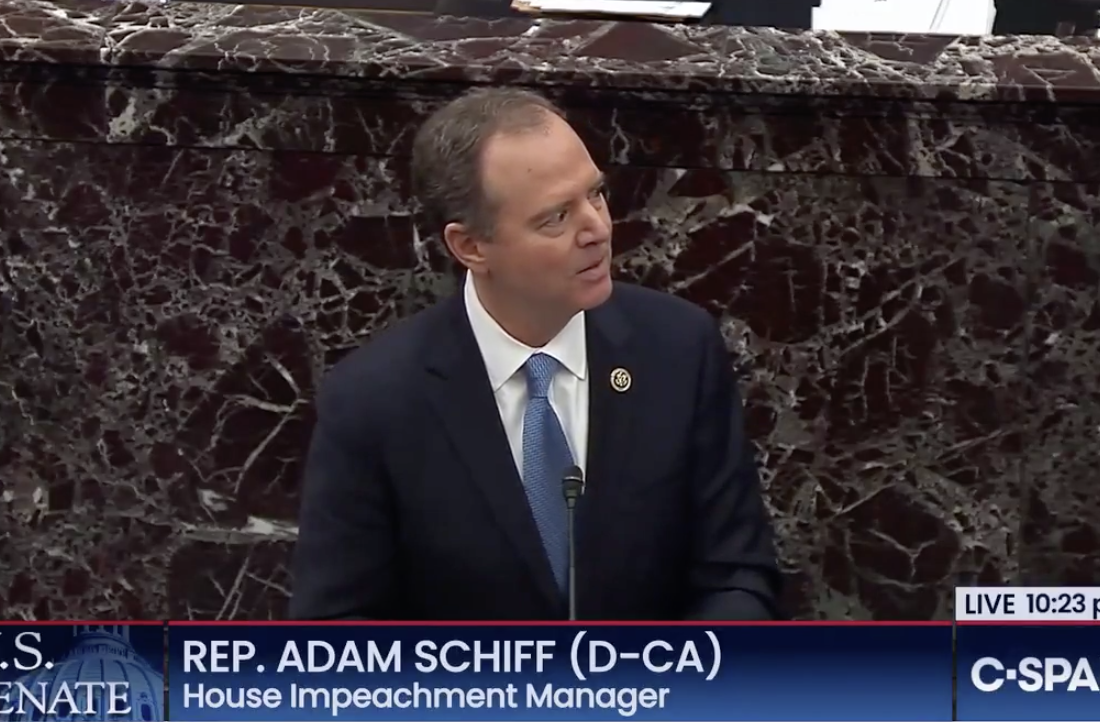
Over the weekend, Adam Schiff and other impeachment managers started alleging that the NSA is withholding information about Ukraine from the Intelligence Committees and impeachment team.

“And I’ll say something even more concerning to me, and that is the intelligence community is beginning to withhold documents from Congress on the issue of Ukraine,” Schiff said. “The NSA, in particular, is withholding what are potentially relevant documents to our oversight responsibilities on Ukraine, but also withholding documents potentially relevant that the senators might want to see during the trial.”

Schiff added: “There are signs that the CIA may be on the same tragic course. We are counting on the intelligence community not only to speak truth to power, but to resist pressure from the administration to withhold information from Congress because the administration fears that they incriminate them.”

An Intelligence Committee official later said, “Both the NSA and CIA initially pledged cooperation, and it appears now that the White House has interceded before production of documents could begin.”

Schiff had dropped the claim, at times, in his presentation to the Senate and to the press.

But in his stem-winding close last night, he mentioned the alleged Burisma hack in a way that strongly suggests that’s what NSA is withholding.

Now we just saw last week a report that Russia tried to hack, or maybe did hack, Burisma. Okay. I don’t know if they got in. I’m trying to find out. My colleagues on the Intel Committee, House and Senate, we’re trying to find out, did the Russians get in? What are the Russian plans and intentions? Well, let’s say they got in. And let’s say they start dumping documents to interfere in the next election. Let’s say they start dumping some real things they hacked from Burisma, let’s say they start dumping some fake things they didn’t hack from Burisma, but they want you to believe they did. Let’s say they start blatantly interfering in our election again, to help Donald Trump. Can you have the least bit of confidence that Donald Trump will stand up to them and protect the national interest over his own personal interest? You know you can’t.

Schiff’s speech was a planned show-stopper, climax, thus far, of the impeachment trial. It is highly unlikely Schiff included this mention, with the detail that he and both the Intelligence Committees are trying to figure out whether Burisma really got hacked, without very good reason.

But it also goes to the power of information war.

When NYT first reported that GRU had hacked Burisma, I had two thoughts.

The hackers fooled some of them into handing over their login credentials, and managed to get inside one of Burisma’s servers, Area 1 said.

“The attacks were successful,” said Oren Falkowitz, a co-founder of Area 1, who previously served at the National Security Agency. Mr. Falkowitz’s firm maintains a network of sensors on web servers around the globe — many known to be used by state-sponsored hackers — which gives the firm a front-row seat to phishing attacks, and allows them to block attacks on their customers.

“The timing of the Russian campaign mirrors the G.R.U. hacks we saw in 2016 against the D.N.C. and John Podesta,” the Clinton campaign chairman, Mr. Falkowitz said. “Once again, they are stealing email credentials, in what we can only assume is a repeat of Russian interference in the last election.”

[snip]

To steal employees’ credentials, the G.R.U. hackers directed Burisma to their fake login pages. Area 1 was able to trace the look-alike sites through a combination of internet service providers frequently used by G.R.U.’s hackers, rare web traffic patterns, and techniques that have been used in previous attacks against a slew of other victims, including the 2016 hack of the D.N.C. and a more recent Russian hack of the World Anti-Doping Agency.

“The Burisma hack is a cookie-cutter G.R.U. campaign,” Mr. Falkowitz said. “Russian hackers, as sophisticated as they are, also tend to be lazy. They use what works. And in this, they were successful.”

First, this attribution is not (yet) as strong as even the first attribution that GRU had hacked the DNC, to say nothing of the 30 non-government sources for that attribution since laid out in the GRU indictment and the Mueller Report. There’s good reason to remain cautious about this attribution until we get more than one not very well established contractor attributing the hack.

But to some degree, it doesn’t matter whether GRU hacked Burisma and whether they took documents with plans to leak them during the election. Indeed, disinformation may explain why this was an easily identifiable hack, whether done by GRU or someone else. Because the news that someone appearing to be GRU targeted Burisma in early November — when it was clear Trump would be impeached for extorting Volodymyr Zelensky to get dirt on Burisma — serves a clear purpose. It adds evidence that Trump is owned by Russia and, after the Senate doesn’t vote to remove him, will demonstration that Republicans don’t much give a damn that he is owned by Russia.

To be clear: There’s abundant evidence that Russia does have leverage over Trump, and more is likely to be forthcoming.

But that’s far more valuable, for Russia, if that’s public and if the Republicans in the Senate sanction it.

And that may explain why NSA is withholding the information, if indeed that’s what they’re withholding. In the same way that the FBI went to great lengths to withhold a letter they believed to be disinformation suggesting that Loretta Lynch would fix the Hillary investigation, information that appears to add to the already abundant case that Russia is in the tank for Trump. Given the stakes, that doesn’t justify it. But at this point, GRU wouldn’t need to hack Burisma for any point — the hack itself, in the middle of the impeachment investigation, is enough to lay a marker on Donald J. Trump.

He belongs to the GRU, the hack says, whether or not he does anything affirmatively to confirm that claim. But if the NSA is withholding that detail, it would seem to confirm the point.

Share this entry

FISC Reveals DOJ Has Withdrawn Probable Cause Assertion for Two of Carter Page Applications

The FISA Court just declassified an order — issued on January 7 — revealing that along with the previously released December 9 order listing problems with the Carter Page applications, DOJ also reassessed its previous probable cause assessment.

DOJ assesses that with respect to the applications in Docket Number 17-375 and 17-679, “if not earlier, there was insufficient predication to establish probable cause to believe that [Carter] Page was acting as an agent of a foreign power.”

[snip]

The Court understands the government to have concluded, in view of the material misstatements and omissions, that the Court’s authorizations in Docket Numbers 17-375 and 17-679 were not valid. The government apparently does not take a position on the validity of the authorizations in Docket Numbers 16-1182 and 17-52, but intends to sequester information acquired pursuant to those dockets in the same manner as information acquired pursuant to the subsequent dockets.

The function of this January 7 order is to demand that FBI follow up on a previous agreement to “sequester all collection the FBI acquired pursuant to the Court’s authorizations in the above-listed four docket numbers targeting [Carter] Page pending further review of the OIG Report and the outcome of related investigations and any litigation,” to explain how it is doing so, how it has chased down all information collected pursuant to the Page orders, and why it needs to keep the data at all.

The reason it needs to keep the data, incidentally, is in case it is sued or John Durham decides to prosecute someone (including Kevin Clinesmith, who altered an email that was used as back-up to the final renewal application) or Page decides to sue. Indeed, one of the most unprecedented aspects of this order is that the docket numbers have been declassified, which will make FOIAing the records far easier.

Which is probably what the only substantive redaction remaining in the order pertains to: the possibility that someone will be held liable under FISA for illegal surveillance.

A lot of people are assuming that DOJ took this stance only because Bill Barr wanted to prove that Trump was illegally wiretapped (which would only be true if he was in direct contact with Page, which everyone has denied). That’s certainly possible!

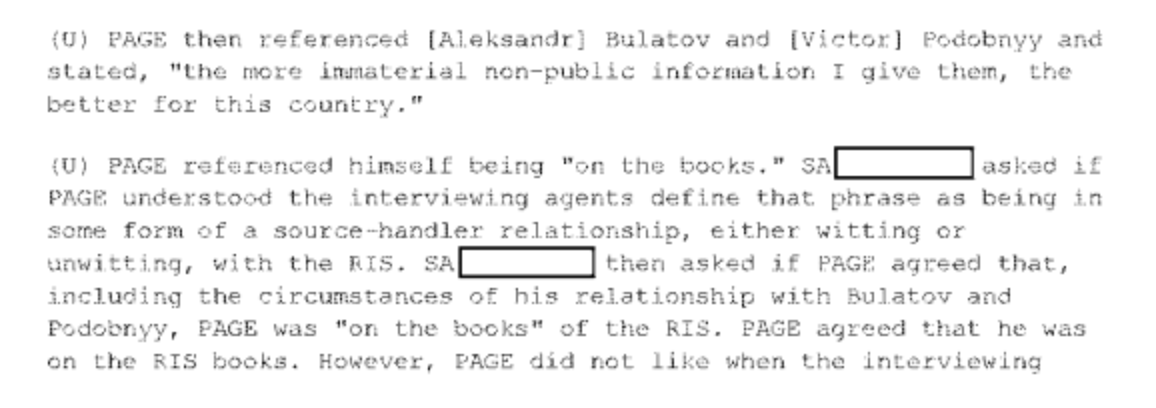
But it’s quite possible that DOJ and FBI feel the need to be proactive on this point and FISC — particularly given the letters it has received from Congress — feels the need to look stern. Moreover, it is in everyone’s interest for DOJ to withdraw at least the last application (the one influenced by Clinesmith’s actions). It’s an important precedent, and there’s no reason Carter Page’s personal data should be floating around the FBI after discovering he was improperly surveilled. This doesn’t mean the FBI didn’t have reason to investigate Page. In a March 23, 2017 interview, after all, Carter Page was quite clear he knew he was being recruited by Russian intelligence officers and he believed the more immaterial non-public information he gives them, the better off we are.

But, first of all, he wasn’t hiding his happiness to share information with Russian spies, meaning he wasn’t acting in the clandestine matter that would merit a FISA order. And by April 2017, it was pretty clear that the Russians had lost all interest in recruiting Page.

In any case, FISC’s demand for what the government is doing with the data is not unusual. Similar things have happened virtually every other time the government did something improper.

There’s one more important lesson, though: Even from the start, people raised questions about whether the applications targeting Page were prudential. By the third application — the first one being withdrawn — there were not only real questions about whether it would yield anything more, but whether Page was central enough to their investigation to want to surveil him. Had the FBI simply not pursued surveillance it questioned whether it really needed, the worst revelations of the IG Report would have been avoided.

So one of the lessons of this whole fiasco is that the FBI would benefit from giving greater consideration about whether its most intrusive methods are necessary.

Share this entry

Sidney Powell Wants to Have Mike Flynn’s Acceptance of Responsibility and Claims of Innocence Too

Eight days ago, in a filing moving to withdraw Mike Flynn’s plea deal, Sidney Powell said this:

Michael T. Flynn is innocent.

Today, in her sentencing memo, Sidney Powell makes no such claim. Instead, she claims that since November 2017 — 8 months after the second of two lies he pled guilty to, under oath, twice — he has mostly told the truth (a claim that is probably not true).

Since November 2017 (and before), Mr. Flynn told the government the truth about every question it asked him, including what he knows concerning the Flynn Intel Group’s (“FIG”) involvement with Inovo BV, Ekim Altepkin, and the Government of Turkey.

Her only mentions of the primary crime to which Mike Flynn pled guilty are — first — to nod to a brief that backfired when it was filed the first time and which Flynn disavowed under oath before Judge Emmet Sullivan.

Mr. Flynn previously briefed the unique circumstances of the January 24, 2017 FBI “interview” at issue. ECF No. 50 at 7-9.

And, then, to call his out and out lies to the FBI about what he said to the Russian Ambassador an “alleged false statement.”

Admittedly, Mr. Flynn was a high-ranking government official, as was Mr. Wolfe who was charged with a § 1001 violation. That is the only similarity. Mr. Flynn did not participate in any “repeated” conduct. He did not use his position to participate in illegal conduct. Additionally, Mr. Flynn’s alleged false statement did not result in the “significant disruption of an important governmental function” nor did it “significantly impact national security.”

The rest of her sentencing memo, aside from competent arguments about base level sentences and reminding over and over that Flynn served in the military for a long time (which backfired when Rob Kelner raised it in December 2018), consists of the same arguments she made in her motion to withdraw his plea, arguments that conflict in key ways with his sworn grand jury testimony and blame everyone else for false claims that not only reflect what he told his lawyersbut which he signed his name to, repeatedly.

The government also continues its campaign to hold Mr. Flynn responsible for false statements in a FARA filing. It ignores the facts in its possession as well as the decision of another court. Any misstatements in the March 2017 FARA filing at issue were not the fault of Mr. Flynn. He gave his lawyers complete and accurate documents and information. Moreover, he did his part to make sure any FARA filing was accurate. The FARA statements listed in the Statement of Offense (ECF No. 4) are either not false or not attributable to Mr. Flynn.

To counter these claims, government can and will lay out:

  • How the Covington notes and lawyers’ 302s show Flynn lied to his lawyers, which led directly to false statements in his FARA filing
  • Show how Flynn’s sworn grand jury testimony (which she doesn’t mention) undermines her claims that the EDVA prosecutors tried to get Flynn to lie last year
  • Lay out how Powell is making utterly misleading claims about what the government said about Flynn’s exposure to false statements and conspiracy charges
  • Explain that the reason Judge Anthony Trenga ruled there wasn’t sufficient evidence to support a guilty verdict against Bijan Kian was precisely because Flynn reneged on the testimony laid out in his sworn grand jury transcript

That will leave Flynn with his motion to withdraw his guilty plea in tatters, and any claim he is taking responsibility for his crimes shot to hell.

Share this entry

The Glenn Greenwald versus the Julian Assange Charges, Compared

Yesterday, Brazil charged Glenn Greenwald as part of the criminal sim swapping group that also leaked The Intercept details of corruption in Sérgio Moro’s efforts to put Lula in prison.

In a criminal complaint made public on Tuesday, prosecutors in the capital, Brasília, accused Mr. Greenwald of being part of a “criminal organization” that hacked into the cellphones of several prosecutors and other public officials last year.

Here’s the indictment.

The indictment comes after a ruling, in December, that Glenn (whom Bolsonaro was already targeting in a financial investigation) could not be investigated.

Those reports led a Supreme Court justice, Gilmar Mendes, to issue an extraordinary order barring the federal police from investigating Mr. Greenwald’s role in the dissemination of the hacked messages.

Prosecutors on Tuesday said they abided by that order until they found audio messages which, they argued, implicated Mr. Greenwald in criminal activity.

Prosecutors have claimed that they were abiding by that order, which relied on a Brazilian law (which sounds like it’s akin to the Bartnicki decision in the US) that says journalists cannot be prosecuted for publishing stolen information. But they found recordings that — they claim — show Glenn was interacting with the hackers while they were engaged in their other crimes, and advised them to delete logs, which (the indictment argues) helped them evade prosecution.

Citing intercepted messages between Mr. Greenwald and the hackers, prosecutors say the journalist played a “clear role in facilitating the commission of a crime.”

For instance, prosecutors contend that Mr. Greenwald encouraged the hackers to delete archives that had already been shared with The Intercept Brasil, in order to cover their tracks.

Prosecutors also say that Mr. Greenwald was communicating with the hackers while they were actively monitoring private chats on Telegram, a messaging app. The complaint charged six other individuals, including four who were detained last year in connection with the cellphone hacking.

The indictment includes long excerpts of the discussion, which (if my combination of shitty Portuguese assisted by Google Translate is correct) they claim shows that, amid news that Moro had been hacked, the source of the Intercept’s files came to Glenn and admitted there were currently monitoring Telegraph channels in the period before the Intercept was going to publish and had a discussion about whether they had to keep the stuff leaked to the Intercept pertaining to corruption. Glenn was quite careful to note he wasn’t offering advice about what the hackers should do, but said they would keep their one copy in a safe place and so the hackers could do whatever they wanted with the stuff they had. Even in spite of Glenn’s clear statement that The Intercept had obtained the files long before the ongoing hacking, the Brazilian prosecutors claim this shows Glenn knew of ongoing hacking and then discussed deleting logs of the prior hacking, making him a co-conspirator.

Apparently, however, this same evidence had already been reviewed before the December ruling, meaning the government is reversing itself to be able to include Glenn in the charges. The government must first get the approval of the judge that issued the initial ruling to prosecute Glenn.

Let me start by saying that this is both an attack on the press and a fairly clear attempt at retaliation against a Jair Bolsonaro critic, part of a sustained attack on Glenn and his spouse, David Miranda. The press in the US has pretty loudly come out in support of Glenn, and no matter what you think of Glenn or his Russia denialism, Glenn deserves support on this issue.

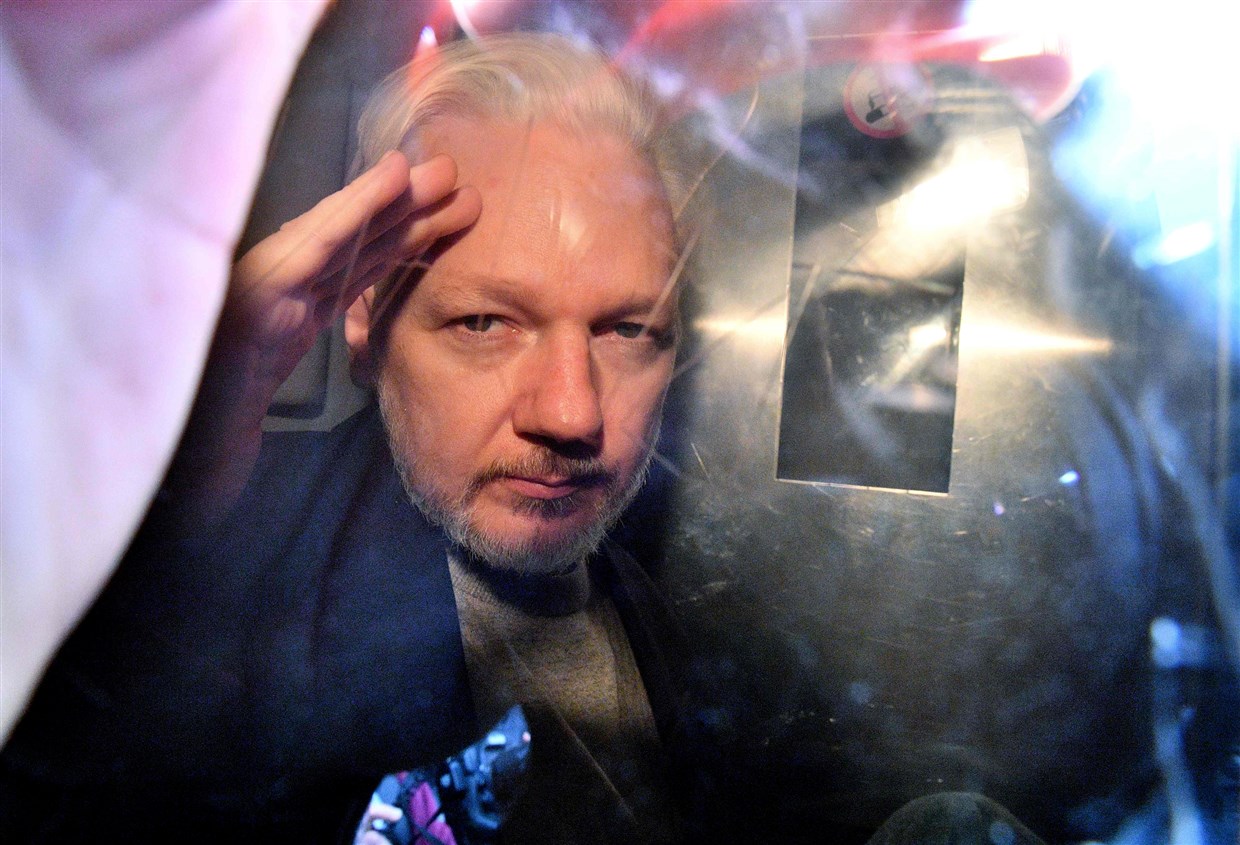
The charges have led a lot of people to say that the charges are just like what is happening with Julian Assange. They are similar. But I think they are distinct, and it’s worth understanding the similarities and distinctions.

Before I do that, since I’ve been accused — because I report on what the prosecution of Joshua Schulte says — of being insufficiently critical of the existing charges against Assange, here’s a post where I talked about the danger of the first charge against Assange (conspiracy to hack information) and here’s one where I lay out how a number of the Assange charges are for publishing information. I don’t support the current charges against Assange, though I think some of Assange’s more recent actions pose closer calls.

Renewing old charges

In both cases, the government took evidence that had already been assessed — in Assange’s case, chat logs from 2010 that the Obama Administration had deemed were not distinguishable from stuff the NYT does, and in Glenn’s case, the recordings that police had already reviewed before the ruling that Glenn should not be investigated — and found reason to charge that hadn’t existed before. In Glenn’s case, that decision was made just weeks later, under the same Administration. In Assange’s case, that decision came by another Administration (one installed in part with WikiLeaks’ assistance), but also came after WikiLeaks engaged in several more leaks that had pissed off the US.

The US government has (Trump flunky efforts to pardon Assange notwithstanding) always hated Assange, but it’s unlikely he would have been charged without 1) the Vault 7 leak burned the CIA’s hacking ability to the ground and 2) an authoritarian Trump administration with a gripe against journalism generally. That said, it’s still not clear why, if DOJ wanted to go after Assange, they didn’t do it exclusively on actions (like extortion using CIA files) that were more distinguishable from journalism, unless the government plans to add such charges to show a pattern over time, one that culminated in the Vault 7 leaks.

Whereas with Glenn, this feels immediately personalized, an effort to keep looking at a leak that exposed Bolsonaro’s hypocrisy until charges could be invented.

The similar conspiracy charge

Where the two cases are most similar is the common charge: a conspiracy involving computer hacking. But even there, there are important differences.

Brazil is arguing (again, relying on my shitty Portuguese) that Glenn is part of the conspiracy his sources are being prosecuted for because in a conversation where he acknowledged that they were still engaged in criminal hacking, he talked about deleting logs. That is, they’re not arguing that he tried to take part in the hacking. They’re arguing that he helped the ongoing hacking by helping the hackers evade discovery.

This is something that the government has shown WikiLeaks to do, for example showing Assange discussing with Chelsea Manning about operational security. The government cites OpSec assistance in the directly comparable “Conspiracy to Commit Computer Intrusion” charged against Assange (count 18):

  1. It was part of the conspiracy that ASSANGE and Manning used the “Jabber” online chat service to collaborate on the acquisition and dissemination of the classified records, and to enter into the agreement to crack the password hash stored on United States Department of Defense computers connected to the Secret Internet Protocol Network.
  2. It was part of the conspiracy that ASSANGE and Manning took measures to conceal Manning as the source of the disclosure of classified records to WikiLeaks, including by removing usernames from the disclosed information and deleting chat logs between ASSANGE and Manning.

But those are described in the “manner and means” section of the conspiracy charge. The overt acts part, however, describes things more commonly described as hacking: Manning’s use of a Linux operating system to obtain Admin privileges, her sharing of a password hash, and Assange’s unsuccessful effort to crack it. That is, Assange is charged with taking an overt act that amounts to hacking, whereas Glenn is charged with advising a source to delete logs (notwithstanding the way Glenn, in very lawyerly fashion, made it clear that he wasn’t offering advice). The inclusion of OpSec in the manners and means is absolutely dangerous in the Assange indictment. But the government alleged something more to include him in a CFAA conspiracy, something not present in the charge against Glenn.

Assange is also charged with another conspiracy charge that reflects ongoing discussions to obtain more information. That’s distinguishable from Glenn’s charge in that Assange was talking about getting more information, whereas all Glenn is alleged to have done is have a discussion at a time he knew his source was committing other ongoing hacking unrelated to and long after obtaining the files he published. But the two conspiracies are similar insofar as the government in question holds a publisher/journalist accountable for continued communication with a source who is engaged in ongoing lawbreaking, but in Assange’s case that crime pertains to obtaining information for Assange, whereas with Glenn it involves an entirely different crime.

More — and in some way, more dangerous — charges against Assange

There’s no parallel between the charge against Glenn and the other charges against Assange, which are some of the most dangerous. As I’ve laid out, there are three theories of prosecution used against Assange:

  • The attempt to hack to obtain additional classified information (described above, along with a charge tied to the things they were trying to obtain by cracking that password)
  • A solicitation of specific files, some of which Manning sought out and provided
  • The publication of three sets of informants names

The last of these is absolutely a charge for publishing information; that’s specifically what (with its contorted thinking) the charge against Glenn tries not to do.

The solicitation request is something both Brazil and the US attempt to insinuate about the Intercept for its advocacy of SecureDrop (which is now used by a slew of outlets). It’s also something that could easily be used to criminalize normal journalism.

The Brazilian charge against Glenn at least attempts to avoid criminalizing any of these things.

Espionage

Of course, that’s a big difference right away. Glenn is not accused of publishing anything classified. Assange is.

And Assange is charged in such a way that gives him liability for releasing classified information under the Espionage Act.

And that’s an added danger of the Assange charges. Thus far, Assange has been charged for leaks that Chelsea Manning has never backed off having a whistleblower interest in leaking (the broad use of State cables she leaked would support that, but that’s less true of the Afghan and Iraqi war logs). As such, Assange is being charged for something that could implicate any journalist publishing classified information.

That said, that could change. That’s why some of the arguments the government is making in the Schulte case are so noteworthy. They are preparing to rely on precedents used for organized crime to argue that, in part because he leaked to WikiLeaks, Schulte intended to harm the US. To the extent that they substantiate that motive, it would put Schulte solidly in the position that the Espionage was designed for. But the government seems to be preparing to apply that argument to WikiLeaks more broadly.

Extradition and international legal process

Finally, though some folks appear to be forgetting this in demanding that the US get involved in Glenn’s case, Glenn was charged as a resident of Brazil for actions taken in Brazil. Assange was charged as an Australian citizen for actions taken in the UK affecting the US government, which has asked the Brits to extradite him for charges (Espionage) that fit under the kind of political crime that often will not merit extradition. Of course, Assange is fighting against Five Eyes governments that, post Vault 7 leak, are likely far less interested in such legal distinctions. Indeed, I suspect that’s one of the reasons the US charged Assange for leaking informant identities; some of those informants were British sources as much as American ones.

Still, the extradition gives Assange a preliminary opportunity to fight these charges, not just because it is a political crime and his health is at risk, but also based on claims (the validity of which I’ve been meaning to unpack) that he was spied on in the Embassy in ways that violate EU if not UK law.

Glenn, however, is facing charges in the increasingly authoritarian country he lives in with his spouse and children. So even though, as I understand it, the high court will have to approve his charges before he is actually prosecuted, Glenn still faces political retaliation within his resident country.

Update: Here’s a Mathew Ingram piece doing similar, though less granular, analysis.

Share this entry

Lev Parnas’ Own Delays Ensured His Evidence Couldn’t Be Considered in the House Investigation

In an update on discovery for Judge Paul Oetken, the government fairly predictably debunked Lev Parnas’ claim to have cooperated fully with prosecutors. They describe how Parnas delayed receiving that discovery, both by refusing to turn over the passwords for the devices seized by the government, and by waiting 16 days before providing the government a hard drive on which to obtain the evidence.

In a letter filed on January 20, 2020, counsel for defendant Parnas suggested that the Government has purposefully delayed the production of discovery to Parnas in order to frustrate his ability to comply with a subpoena or document request from the House Permanent Select Committee on Intelligence (“HPSCI”). Such a suggestion is baseless and completely belied by the facts. The two largest sources of delay with respect to the Government’s ability to produce the contents of Parnas’s devices to him—including an iPhone 11 that he produced (without objection from the Government) to HPSCI on January 12, 2020—are directly attributable to Parnas himself. First, Parnas declined to provide the password to his devices, which is of course his right, but which required the FBI to spend nearly two months unlocking the iPhone 11. The Government has yet to access many of the other password-protected devices seized from Parnas, although the FBI’s efforts to unlock them are ongoing. Second, when the Government did unlock several of Parnas’s devices in early December 2019, the Government asked Parnas’s counsel on December 3, 2019 to provide a hard drive on which to produce discovery, as the Government does in every case and with every defendant. However, Parnas’s counsel did not produce such a hard drive until December 19, 2019, shortly before the Christmas holiday, and more than two weeks after the Government had requested the drive. The Government produced the iPhone 11 to Parnas on December 31, 2019. However, Parnas’s counsel was unable to figure out how to open the device extraction on his own computer, so the Government made available a paralegal and technical expert—during the holidays—to sit with Parnas’s counsel to troubleshoot his technical issues. The Government has and will continue to work with defense counsel to facilitate each defendant’s access to discovery and to make discovery available as expeditiously as possible.

The type, source, and timing of the delay significantly debunks Parnas’ claims to want to be totally forthcoming in impeachment.

Consider the timing. Parnas was arrested on October 9 of last year. It took him some days to get a lawyer who wasn’t ordering him to take the fall for the President, but he did so by October 18. That was five days before Matt Gaetz — still in Trump’s good graces — stormed the HPSCI SCIF to try to delay ongoing depositions. On October 31, the House authorized an impeachment proceeding. On November 21, HPSCI voted to adopt the Democratic report on its investigation.

In a letter submitted to the court today, Parnas claims he first started asking for his discovery so he could respond to the House subpoena on November 6.

Between November 21 and 23, days after HPSCI wrapped up impeachment, Lev Parnas first started talking about cooperating. But even then, Parnas was offering deliberately erroneous stories about Devin Nunes’ interactions with him, reversing the relationship between himself, John Solomon, and Nunes, thereby hiding (as his most recently press blitz has downplayed) the extent to which he is orchestrating this echo chamber, not responding to it.

Even as Parnas was claiming, publicly and privately, he wanted to cooperate with HPSCI, he was delaying any such cooperation by withholding the passwords to his devices.

And all the while, FBI was working on breaking into his iPhone 11 — a phone that Parnas must have gotten just weeks before he was arrested, as it was only released on September 20 — for which he had refused to provide the password. (Note, nothing we have seen nothing that necessarily came off a phone purchased on September 20 or later, though we have seen a calendar entry for September 26. Though he presumably copied everything over.) Though, significantly, we now know the FBI is taking more time cracking Parnas’ other devices (thus far he has turned over the iPhone, an iPad, and a Samsung phone) than with the latest model iPhone, which the government has confirmed it cracked on December 3, meaning it took about 55 days to open.

That day, December 3, SDNY told Parnas’ lawyer that the content of some of the devices they had seized was available and he should come get it. Parnas provided the government with a thumb drive to get the contents of the phone, but not a hard drive.

The House voted out articles of impeachment on December 18.

It was the very next day when Parnas’ lawyers provided DOJ with a hard drive to obtain the first batch of discovery.

Parnas claims that because of technical problems, they ultimately used a thumb drive to get the phone contents, on December 31. Given other reports, that came after SDNY refused to have Parnas cooperate if he wasn’t willing to plead guilty to the main existing charge against him. Thereafter, his attorney moved quickly to ask to amend the protective order to share with HPSCI. That was on January 3, and they’ve made several deliveries since then.

Given competing complaints about the technical details for obtaining the phone, it seems both sides were to blame. The government may have also refused to provide the phone on a thumb drive to try to push him to cooperate.

Parnas’ delay may have stemmed from defense strategy. For example, a desire to try to plead out the case before going public like this. Parnas’ priority absolutely should be on minimizing his prison time.

There was a real delay that Parnas appears to have chosen, for whatever reason. Notably, Parnas happened to ensure, by taking 16 days to give the government a hard drive on which to obtain evidence, that he could not have received discovery to respond to his House subpoena until literally the day after the House voted out articles of impeachment. Parnas’ evidence may well be very useful — though in November and in his recent press blitz, he downplayed the degree to which he started this whole campaign in 2018, well before Rudy got involved, so it’s clear we’re not getting the full truth, and the delay may well have given him a way to cherry-pick what he provides to Congress.

Whatever he’s up to, Parnas has been stalling for time.

Update: In a new letter, Parnas makes clear that they tried to obtain just the iPhone on a thumb drive, right on December 3. Accordingly, I have updated this post to reflect that both sides blame each other.

  • At 5:39pm, Defense Counsel contacted the Government to confirm that our proposed request for the Court to order the Government to disclose when it had first cracked Mr. Parnas’s iPhone did not breach the protective order between the parties.
  • The Defense had made this request regarding the date of extraction in writing on January 1, 2, 4, 6, 10, 13, 2020, and by phone on a number of other occasions. Notwithstanding these multiple requests, the Government consistently refused to answer.
  • At 5:45, after speaking with AUSAs Donaleski and Roos by phone, per their request, we e-mailed them the parts of our letter that were potentially at issue. • At 6:15pm, AUSAs Zolkind and Roos returned our call, indicating they had no objection to the letter, and would be filing a discovery update letter addressing this issue in part. The call ended at 6:23pm.
  • At 6:19pm, while on the phone with AUSAs Zolkind and Roos, AUSA Donaleski filed the Government’s discovery update letter by ECF, including a self-serving footnote regarding the production of Mr. Parnas’ iPhone 11. In its letter, the Government still failed to identify with specificity when the phone had first been extracted.
  • At 6:41 pm, we filed the letter we had been discussing with the Government.
  • At 8:23pm, AUSA Donaleski filed another letter with the Court, complaining about our filing, and for the first time informing that the iPhone had been extracted on December 3, 2019.


Share this entry

Lev Parnas Says Bill Barr Should Recuse … But Doesn’t Say Why

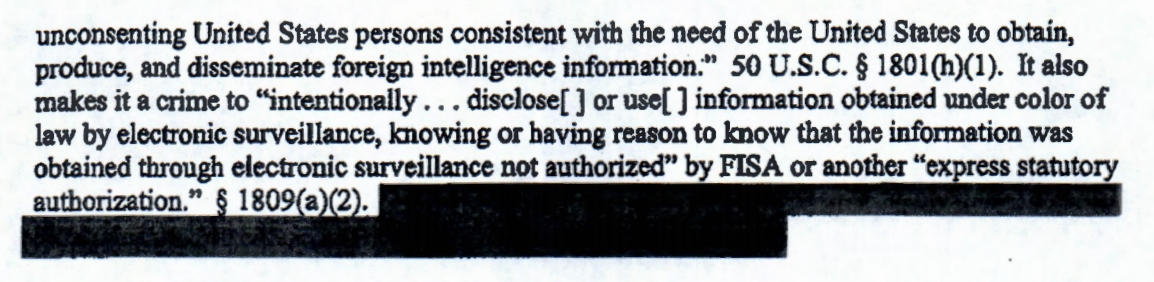
In this post, I laid out why Lev Parnas’ current publicity tour may not be as insane, from a defense standpoint, as it seems. I laid out how Barr would have significant ability to protect potential co-conspirators of Parnas — starting with Rudy and extending to Rudy’s client. I explained how Barr’s veto authority over some of this might limit Parnas’ ability to cooperate his way out of his legal problems, and at the very least increases the chance he’s stuck holding the bag for various plots that include far more powerful people. Most interesting, however, were the ways Parnas hinted at but stopped short of implicating Barr in the plot by suggesting,

  • He had been told, by Rudy and others, they had spoken to Barr about all this
  • He had witnessed Rudy and others speaking to Barr about all this
  • He might have texts proving Barr’s involvement, but couldn’t remember whether that was the case or not

To be clear: Parnas is obscuring the degree to which he insinuated himself in Trump’s circles to make all this possible. He is pretending everything he did was ordered by powerful Americans, when the evidence suggests otherwise. So it might not serve justice for him to try to cooperate with prosecutors (because he could well be the most responsible). But I’m beginning to understand how pursuing this angle might be a reasonable defensive approach.

Today, Parnas’ lawyer Joseph Bondy just sent a request to Barr requesting his recusal, copying it to his docket.

It actually flubs the argument it tries to make about how impeachment relates to this criminal case, describing how both the July 25 Trump-Zelensky call transcript and the whistleblower complaint mention Barr over and over, without mentioning that Parnas and Igor Fruman were also incorporated in the whistleblower complaint by repeated reference to this article, which includes the influence peddling for which the grifters were already indicted. That is, the case is far stronger than this letter lays out, because both Parnas and Barr were named in the whistleblower complaint.

Worse still, this letter doesn’t talk about any of the things Bill Barr’s DOJ has done that obstructed full investigation of the complaint:

  • Scoping the assessment of the complaint to specifically avoid connecting the complaint to the investigation of Parnas and Fruman
  • Not sharing the complaint, as required by MOU, with the FEC, which would have led the FEC to tie the complaint to the pre-existing investigation it had of Parnas and Fruman
  • Getting OLC to invent reason to withhold the complaint from Congress, which if it had been successful would have prevented all investigation of these activites

In short, the actions of DOJ overseen by Barr, not just his mention in the complaint and ties to Victoria Toensing and Joe DiGenova, mandate his recusal. But for some reason (perhaps because that would be more aggressive than even Bondy is willing to go), Bondy doesn’t include those actions.

Most interestingly, Bondy doesn’t include any of the allegations Parnas had made publicly about Barr’s potential more direct role. Nor does he answer the question of whether or not Parnas has texts more directly implicating Barr.

What Bondy does do, in the wake of the press blitz he has choreographed, is note that “evidence has been brought to light linking you further to your long-time colleagues Victoria Toensing and Joseph DiGenova, as well as to Mr. Giuliani, which undoubtedly creates at least the public appearance of a conflict of interest.” I mean, there is, absolutely, the appearance of a conflict of interest, but Bondy was the one who brought all that evidence to light!

Finally, though, Bondy suggests, with uncertain veracity, that SDNY has done things that suggest a purported conflict has already harmed Parnas.

In addition to harmful perceptions, this conflict of interest appears to have caused actual harm to Mr. Parnas who, given delays in the production of discovery in his federal case, was rendered unable to comply with a duly-issued congressional subpoena in time for congressional investigators to make complete use of his materials or properly assess Mr. Parnas as a potential witness. Furthermore, prosecutors have, thus far, refused to meet with Mr. Parnas and to receive his information regarding the President, Mssrs. Giuliani, Toensing, DiGenova and others–all of which would potentially benefit Mr. Parnas if he were ever to be convicted and sentenced in his criminal case.

For better and worse, getting FBI to image a bunch of phones and return them to a defendant within three months including two major holidays is not that long a wait. It took two months before Special Master Barbara Jones first started making privilege designations in the Michael Cohen case (involving one of the same prosecutors), and that was an even more politically sensitive case than this one. So while mentioning the delay is useful for Democrats (especially when the Senate tries to refuse to hear Parnas’ testimony because it didn’t get turned over in time), and valuable from a defense standpoint as it lays groundwork for appeal, it’s not a real injury on the part of prosecutors.

With regards to prosecutors’ refusal to meet with Parnas about cooperating against his possible co-conspirators, as the WSJ reported yesterday, late last year Bondy failed to convince SDNY that Parnas was not — as accused in his indictment — directed by a still-unnamed Ukrainian official to try to oust Marie Yovanovitch.

At a meeting with prosecutors from the Manhattan U.S. attorney’s office late last year, people familiar with the matter say, Mr. Parnas’s attorney disputed that he pushed for the removal of the U.S. ambassador to Ukraine at the behest of a Ukrainian official—one of the charges in the campaign finance indictment.

This is another way of saying that Parnas is unwilling to plead to the allegations in the existing indictment, and may also suggest that while Parnas is happy to incriminate Rudy and his American buddies, he’s not willing implicate his original boss, whoever that might be. So prosecutors likely have good reason not to meet with Parnas to hear him implicate Rudy and friends (not least, because they already have this documentary evidence that implicates them anyway, and now Parnas is providing whatever testimony they might need on the Rachel Maddow Show).

Bondy is absolutely right: Bill Barr should have recused from this — and all review of the whistleblower complaint — back in August when it was clear he was named. Even assuming Barr took no action on any of this influence peddling, this goes well beyond just the appearance of conflict to known participation in known events — such as the meeting with Rudy that DOJ admitted to only last week after covering it up for months — that merit recusal.

But Bondy is also being less than candid with his letter, playing the public docket as much as he is making a real legal request.

Share this entry

Trump Flunkies Trading Legal Relief for Campaign Dirt: Julian Assange and Dmitro Firtash

When we discuss Trump’s abuse of pardon authority, we generally talk about how he has used it to persuade close associates to refuse to cooperate or affirmatively obstruct investigations into him. If you believe Michael Cohen, Jay Sekulow floated group pardons early in the Mueller investigation before he realized it would backfire, but he did suggest Trump would take care of Cohen in summer 2017; Rudy Giuliani reportedly repeated those assurances after Cohen got raided in April 2018. Trump has repeatedly assailed the prosecutions of Paul Manafort and Roger Stone and suggested they might be rewarded with pardons for their loyalty. Trump has even suggested Mike Flynn might receive a pardon, which is good because his current attorney seems intent on blowing up his plea deal.

Even within the Mueller Report, however, there was a hint of a different kind of abuse of pardons. Trump was asked if he had discussed a pardon for Assange prior to inauguration day.

Did you have any discussions prior to January 20, 2017, regarding a potential pardon or other action to benefit Julian Assange? If yes, describe who you had the discussion(s) with, when, and the content of the discussion(s).

I do not recall having had any discussion during the campaign regarding a pardon or action to benefit Julian Assange.

Trump gave a typically non-responsive answer, claiming to not recall any such discussions rather than denying them outright, and limiting his answer to the campaign period, and not the transition period.

By the time Mueller asked the question, there was already abundant public evidence of a year-long effort on behalf of Trump’s flunkies to get Assange a pardon in exchange for mainstreaming his alternative version of how he obtained the emails he published in 2016. In the Stone trial, Randy Credico described how Stone reached out to Margaret Kunstler to initiate such discussions; that happened in late 2016.

At the very least, that suggests Trump’s flunkies were trying to reward Julian Assange for providing them dirt during the election. Sure, we don’t know whether those flunkies ran such proposals by Trump; we certainly don’t have the details about how Trump responded. But someone in Trump’s immediate orbit, Stone, moved to reward Assange’s actions by trying to get him immunized from any legal problems he had with the United States.


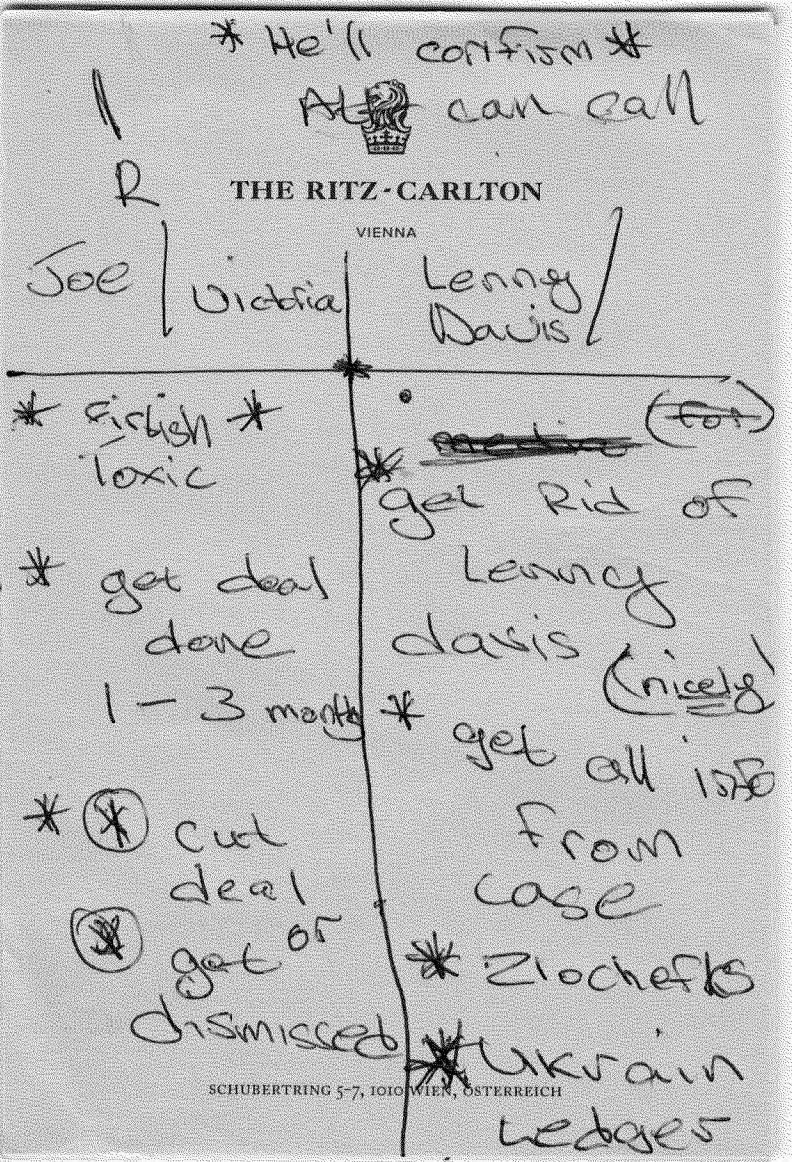
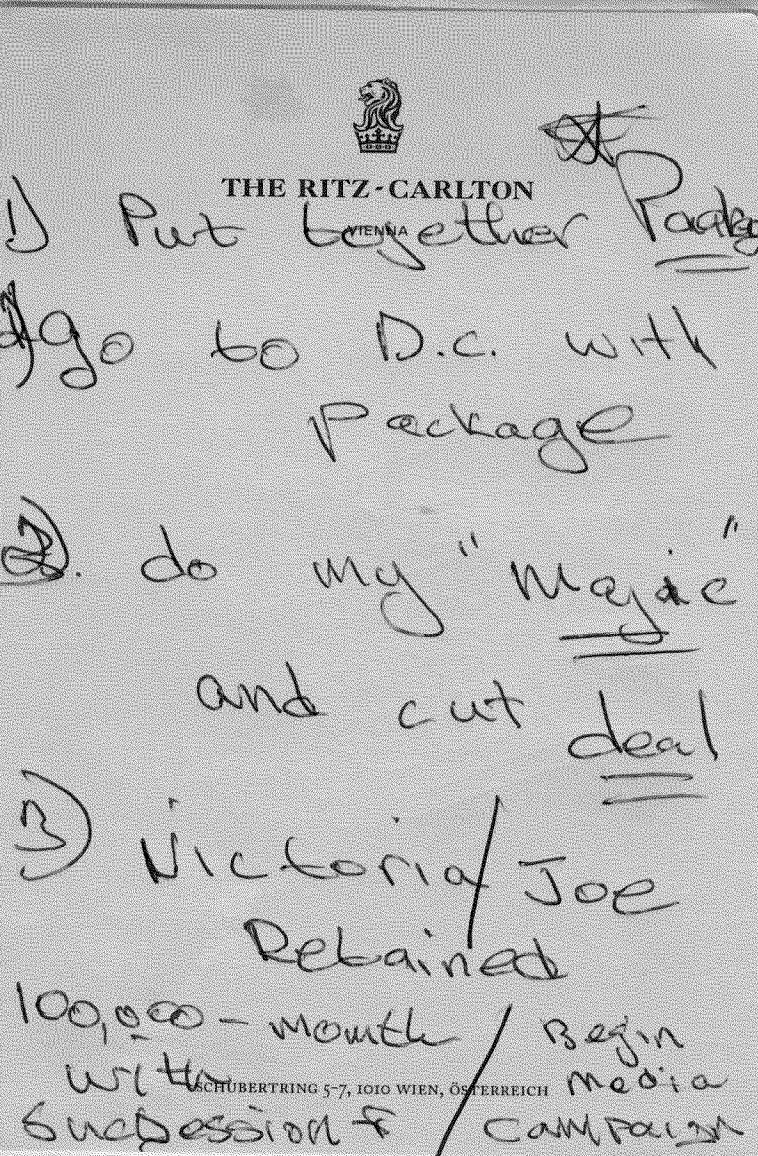
With that in mind, consider these documents that Lev Parnas provided to HPSCI. Part of a set of notes that Parnas took last June while on a call from Rudy, it lays out what plan Parnas was supposed to present to Dmitro Firtash.

The idea was that Parnas would find a way to get rid of Lanny Davis as Firtash’s US lawyer on extradition, to be replaced by Joe DiGenova and Victoria Toensing. Meanwhile, Rudy would be in “DC” with a “package” that would allow him to work his “magic” to cut a “deal.” The package, it seems would involve relief from Firtash’s legal woes — an indictment for bribery in Chicago — plus some PR to make it possible for Firtash (whom just three months earlier Rudy was loudly accusing of having ties to the Russian mob) to do business in the US again. In exchange for totally perverting the US justice system so that a corrupt businessman could access the US market again, Rudy would get … bogus dirt about Joe Biden and a claim that somehow Ukraine’s publication of details on Paul Manafort’s corruption that Manafort knew about two months in advance improperly affected the 2016 election. Possibly, given other things Parnas said, it would also include a claim that Andrew Weissmann was asking Firtash for information on Manafort.

Remember: another of the oligarchs whom Manafort had crossed in the past, Oleg Deripaska, spent most of 2016 trying to feed up information to the FBI to get him indicted, even while tightening the screws on Manafort to get information about the Trump campaign. But Rudy Giuliani wants to suggest that asking Manafort’s former business partners for details of their work would be proof that Democrats cheated in 2016.

Regardless, these notes, if authentic, show that Rudy Giuliani believed he could make Firtash’s legal problems go away.

And all he would ask in exchange — besides a million dollars for his friends and another $200,000  for Parnas, chump change for Firtash — would be transparently shoddy propaganda to use to discredit the prosecution of Paul Manafort and hurt the reputation of Joe Biden.

Dirt for legal relief. A quid pro quo of a different sort.

Once again, there’s not yet any evidence that Trump’s flunkie — his ostensible defense attorney this time, not his rat-fucker — had looped Trump into this plot. Here, the legal relief would come via connections with Bill Barr (possibly with a nudge from the President), not Trump’s executive authority alone.

But in both cases, Trump’s closest associates appear to believe that the proper currency with which to obtain shoddy campaign dirt is legal relief.

As I disclosed in 2018, I provided information to the FBI on issues related to the Mueller investigation.

Share this entry

Lev Parnas Wouldn’t Reveal Whether He Has Receipts on Bill Barr

I suggested in this post that Lev Parnas appears to believe that how and when he was arrested was an attempt to silence him and force him to take the fall for Trump.

With that in mind, I want to reexamine why he might believe that coming forward now might help his defense.

Obviously, one thing he is trying to do — thus far unsuccessfully — is make it clear that in his actions regarding Ukraine, he is a co-conspirator with the President, Victoria Toensing, Joe DiGenova, and, of course, Rudy Giuliani. That doesn’t mean he didn’t insert himself into that role — by all appearances he did; that’s what his existing indictment is about, how he spent big money to insinuate himself into Trump’s immediate circle.

But since that time, Rudy, Toensing, and DiGenova took actions that might be deemed an overt act of a conspiracy. So did Trump, not least on July 25, 2019, on a call with President Zelensky. Implicating powerful Americans in his influence-peddling is particularly important because, if he can’t do that, he may be exposed to further charges. WSJ reports that, late last year, Parnas’ lawyer Joseph Bondy tried to convince prosecutors that Parnas did not “push[] for the removal of the U.S. ambassador to Ukraine at the behest of a Ukrainian official—one of the charges in the campaign finance indictment.” If Parnas can claim that anything he did after some point in 2018 — which otherwise might be deemed to be FARA violations, suborning perjury, Foreign Corrupt Practices Act violations, bribery, and more — he did with the approval of the President of the United States, he might be able to claim that those actions were the official foreign policy of the United States, which would basically be the same claim Trump is using to defend against impeachment.

None of that may matter, however, depending on what SDNY plans or is allowed to do.

After all, Barr had been briefed on this investigation since shortly after he was confirmed, probably indicating that SDNY deemed it a significant matter reflecting the sensitivities of an investigation into political figures including Pete Sessions, some Las Vegas politicians, Ron DeSantis, and the President’s SuperPAC. As such, Barr would receive advance notice before SDNY took steps against any of these political figures (and it would have to happen before pre-election blackouts kick in in August). The Criminal Division would need to approve any search or prosecution of an attorney, covering Rudy, Toensing, and DiGenova. Barr would have to approve any legal process targeting media figures like John Solomon or Sean Hannity, as he would have to approve their treatment as subjects of the investigation. And, just on Monday, Barr stated he will require Attorney General approval before DOJ or FBI can open a counterintelligence investigation into a presidential campaign (and Trump started his reelection campaign almost immediately upon inauguration).

In short, for SDNY to go after any of Parnas’ other known potential co-conspirators, aside from Fruman, Bill Barr or Criminal Division head Brian Benczkowski would have to approve.

That gives Barr veto power over including most of Parnas’ potential co-conspirators in an indictment with him. And he has made no secret that he was brought in to protect Trump from facing any legal consequences for his crimes.

For a time, it looked like Barr believed he couldn’t protect Rudy. But then Rudy loudly announced he had insurance.

“I’ve seen things written like he’s going to throw me under the bus,” Giuliani said in an interview with Fox News’ Ed Henry about the characterizations and comments made in the media about him and his relationship with the president. “When they say that, I say he isn’t, but I have insurance.”

And if Rudy’s actions are beyond legal sanction, then Parnas is left holding the bag, just like Michael Cohen appears to have been for hush payments he made on the orders of Trump. Indeed, while Parnas expressed some interest in cooperating with prosecutors, if prosecutors are barred from pursuing anyone more senior than Parnas, then there’s little for Parnas to offer.

Which brings us to Parnas’ expressed fear of Barr.

In the second installment of his Maddow interview, Parnas claimed he was doing all of this because he fears Barr — or deems Trump too powerful when he is protected by Barr.

PARNAS: The only reason – if you’ll take a look, and you know very well because you have been following, the difference between why Trump is so powerful now, and he wasn’t as powerful in ’16 and ’17 –

MADDOW: Uh-huh.

PARNAS: – he became that powerful when he got William Barr.

MADDOW: Yes.

PARNAS: People are scared. Am I scared? Yes, and because I think I`m more scared of our own Justice Department than of these criminals right now, because, you know, the scariest part is getting locked in some room and being treated as an animal when you did nothing wrong and – or when you’re not, you know, and that’s the tool they’re using.

I mean, just – because they’re trying (ph) to scare me into not talking and with God’s help, and with my lawyer next to me that I know will go bat for me no matter what, with the truth –

MADDOW: Yes.

PARNAS: – and I’m taking a chance.

That comment makes sense whether he believes Barr had him arrested to silence him or even just worries that Barr will protect everyone else. It would even make sense if — as is quite possible — Parnas is working for powerful Russians or Ukrainians who’ve been trying to control Trump by making him vulnerable.

There’s no doubt that abundant evidence can be shown that Barr is not just covering up, but actively obstructing any investigation into Trump’s actions. As I’ve noted repeatedly, Barr or one of his subordinates:

  • Scoped the assessment of the whistleblower complaint to ensure it wasn’t tied to the ongoing investigation of Parnas and Fruman in SDNY
  • Failed to share the whistleblower complaint with the FEC, which (if it were functional) could have imposed civil penalties for the illegal solicitation of campaign help
  • Had OLC invent a bullshit reason to withhold the complaint from Congress
  • Had Kerri Kupec exonerate Trump publicly, reportedly in response to a demand from Trump

Mind you, I’m the only one harping on this obstruction, but they’re still details that deserve more attention.

But that’s not how Parnas is focusing on Barr.

In his interview with Maddow, Parnas twice alleged that he had seen Barr receiving calls from Rudy and others on this stuff. First, he said that Rudy and Toensing and DiGenova had told him they were engaging Barr on this project.

MADDOW:  Did Rudy Giuliani tell you he had spoken to the attorney general specifically about Ukraine?

PARNAS:  Not only Rudy Giuliani. I mean, Victoria and Joe, they were all best friends. I mean, Barr was – Attorney General Barr was basically on the team.

He then expanded on that to say, first, that he witnessed conversations between the lawyers and Barr, and then, less convincingly, claimed that “Barr had to have known everything. I mean, it’s impossible.”

PARNAS:  I personally did not speak to him, but I was involved in lots of conversations that Joe diGenova had with him in front of me, Rudy had with him in front of me, and setting up meetings with Dmytro Firtash’s team. I was involved in that.

MADDOW:  Do you know if Rudy Giuliani was ever in contact with Mr. Barr, specifically about the fact that he was trying to get Ukraine to announce these investigations into Joe Biden?

PARNAS:  Oh, absolutely.

MADDOW:  Mr. Barr knew about it?

PARNAS:  Mr. Barr had to have known everything. I mean, it’s impossible.

MADDOW:  Did Rudy Giuliani tell you he had spoken to the attorney general specifically about Ukraine?

PARNAS:  Not only Rudy Giuliani. I mean, Victoria and Joe, they were all best friends. I mean, Barr – Barr was – Attorney General Barr was basically on the team.

Claiming “Barr had to have known everything,” while seemingly consistent with the public actions of Barr’s DOJ, is not going to be strong enough to get Barr, personally, in trouble.

Though it is worth noting that (in the same way that Devin Nunes unforgot speaking to Parnas as Parnas started rolling out receipts), CNN reported that Barr had attended a meeting where Rudy pitched the case of the Venezuelan paying for the grift long after he had to have known Rudy was under criminal investigation.

The Giuliani meeting at the Justice Department in September became public months ago in the wake of the arrest of two Giuliani associates, Lev Parnas and Igor Fruman, who were working on Giuliani’s Ukraine mission for the President.

Brian Benczkowski, assistant attorney general for the criminal division, issued a public statement at the time expressing regret for holding the meeting and saying he wouldn’t have met with Trump’s personal lawyer had he known about Giuliani’s role in the ongoing investigation.

But department officials didn’t mention then that Barr was also in the meeting. Barr was at the meeting for about 10 minutes and had dropped in to greet other lawyers who worked alongside Giuliani to represent the Venezuelan businessman, according to a Justice Department official. His presence is also notable because Justice officials have said he was briefed after taking office in February on the investigation by Manhattan federal prosecutors into Parnas and Fruman, and the connections with Giuliani.

There’s almost certain to be more, though. When Maddow asked Parnas whether he knew whether Barr ever spoke with any of the Ukrainians that Parnas was grifting (the question I’ve been asking for some time), he claimed not to recall, even though the entire point of his interview was to talk about how he had come forward out of fear of Bill Barr.

MADDOW:  Do you know if Attorney General William Barr every [sic] spoke with any Ukrainian officials?

PARNAS:  I don’t recall at this moment. I’d have to look at my text messages and see.

There is absolutely no way that Parnas did not know, when he gave this answer, whether he has proof that Barr was personally involved with the three Ukrainians who have spoken to John Durham. None.

Which likely means Parnas does have proof that, contrary to every denial DOJ has issued since they started issuing very carefully crafted denials since September 25, Barr did interact with the corrupt Ukrainians Rudy was teeing up.

Parnas kept receipts, for just the moment when his grifting on behalf of Trump and his associates can do damage. Those receipts might, conservatively, make additional charges from SDNY more difficult. They might even make a cooperation deal possible.

But it sure sounds like something even crazier. Parnas apparently believes Barr makes Trump something he hadn’t been before, protecting Trump in a way he hadn’t been. But that’s only true if Parnas can’t produce proof that Barr is part of this conspiracy.

In other words, whatever the reality, Parnas appears to be dribbling out the receipts implicating the people that SDNY prosecutors work for in an attempt to either increase the chances of cooperating out of his indictment or at least raising the costs of any further charges.

Perhaps a more interesting question is why SDNY prosecutors permitted Parnas to launch this media campaign. They didn’t have to: Parnas got permission to modify the protective order on this stuff so he could release it, and they may have had to question Robert Hyde earlier than they otherwise intended to because of the publicity surrounding Parnas’ texts with Hyde. SDNY might be doing it to encourage a criminal target to run his mouth and say something incriminating. They might have done it for counterintelligence reasons, to see who responded to this media campaign. But it’s also possible that SDNY is happy for Parnas to expand the possible scope of their own investigation by making it harder for Barr to protect Rudy and others.

The suspense, though, has to do with that non-committal answer Parnas gave about whether he has any texts directly implicating the Attorney General of the United States. A defendant being prosecuted by the Department of Justice was asked whether he had proof that the top law enforcement officer in the country was personally implicated in his corrupt influence peddling.

And Parnas is not telling. Yet.

Share this entry