Beryl Howell’s Biggest Secret: Whether Bill Barr Killed the Egyptian Bank Investigation

As I noted, Judge Beryl Howell ended her tenure as DC’s Chief Judge yesterday decisively, ruling that Evan Corcoran must testify about topics she has found to be crime-fraud excepted.

By dint of age and tenure, Howell was appointed Chief Judge just in time to preside over the most remarkable set of investigations against a sitting and former President: the Mueller investigation and certain follow-on investigations, the January 6 investigation, and the stolen documents investigation.

And now Jeb Boasberg gets to pick up her work. Like Howell, he’s an Obama appointee; he already did a stint presiding over the FISA Court.

Howell’s decision requiring Corcoran to testify elicited all sorts of superlative language about the import of the decision. I’ll return to the number of other Trump lawyers against whom Howell has already approved legal process. The Corcoran decision really is not that unusual in the twin Jack Smith investigations. Or even in the other grand juries over which Howell has presided.

Indeed, the fruits of a warrant Howell approved on August 1, 2017 as part of an investigation into suspicious payments (especially those from Viktor Vekelselberg) to Michael Cohen’s Essential Consultants’ bank account, will likely yield Donald Trump’s first criminal indictment next week. Referrals of part of the resulting investigation to SDNY led to Cohen’s 2018 prosecution, including on the hush payments scheme. NYC has started making security preparations for Trump’s arrest on the same campaign finance scheme next week.

To repeat: a fairly uncontroversial decision Howell made six years ago — to approve the first of a series of warrants targeting Trump’s personal lawyer, Michael Cohen — will have played a part if and when Alvin Bragg indicts Trump next week.

Howell’s colleagues razzed her yesterday about all the secrets she may keep from the past seven years.

Howell seemed to freeze in her seat as the most senior jurist on the court, Judge Paul Friedman, publicly described her still-secret rulings in grand jury-related matters, pointing to press accounts of Howell ruling in favor of Trump in a contempt dispute over his office’s response to a grand jury subpoena for classified records and against Trump on an effort to assert attorney-client privilege in the same probe.

“What fascinating issues!” Friedman declared wryly as Howell remained stone-faced on the dais. “We’d all love to read her opinions, but we can’t,” he said to laughter.

Friedman did note, however, that Howell had issued 100 secret grand jury opinions during her seven-year term.

Another colleague, Judge Tanya Chutkan, also alluded to Howell’s work resolving disputes related to the court’s grand juries over the past seven years.

“There’s so much work Chief Judge Howell has done that we may never know about,” Chutkan said.

In an interview with Zoe Tillman, though, Howell suggested she expects some of it will be unsealed.

Howell said she was still processing the past seven years.

“A lot of my work in the grand jury arena remains under seal, so it is going to be very hard to say what my legacy will be until after some of that work gets unsealed and people are able to evaluate it,” she said.

I expect a good deal of her recent work will be unsealed, in fairly short order.

It bears reminding, though, that Judge Howell attempted to share information about what she had been overseeing in a grand jury with the House Judiciary Committee in 2019. In a 75-page opinion invoking the Federalist papers and defending separation of powers, Howell issued a ruling that should have been uncontroversial: that the House could have grand jury materials in contemplation of impeachment.

In her opinion, Howell cited a number of the things the House might get with grand jury testimony. They included Paul Manafort’s description of how Trump ordered him to chase the documents stolen from Hillary.

Again, the Mueller Report recounts an incident when then-candidate Trump spoke to associates indicating that he may have had advance knowledge of damaging leaks of documents illegally obtained through hacks by the Russians, stating “shortly after WikiLeaks’s July 22, 2016 release of hacked documents, [Manafort] spoke to Trump [redacted]; Manafort recalled that Trump responded that Manafort should [redacted] keep Trump updated. Deputy campaign manager Rick Gates said that . . . Manafort instructed Gates [redacted] status updates on upcoming releases. Around the same time, Gates was with Trump on a trip to an airport [redacted], and shortly after the call ended, Trump told Gates that more releases of damaging information would be coming.” Id. at II-18 (footnotes omitted) (redactions in original, with citation in footnote 27 redacted due to grand jury secrecy).

They included Don Jr’s refusal to testify to the grand jury about the June 9 meeting.

[A] discussion related to the Trump Tower Meeting contains two grand jury redactions: “On July 12, 2017, the Special Counsel’s Office [redacted] Trump Jr. [redacted] related to the June 9 meeting and those who attended the June 9 meeting.” Id. at II-105 (redactions in original).

They included Manafort’s details of his discussions with Konstantin Kilimnik.

The Mueller Report further recounts evidence suggesting that then-candidate Trump may have received advance information about Russia’s interference activities, stating:

Manafort, for his part, told the Office that, shortly after WikiLeaks’s July 22 release, Manafort also spoke with candidate Trump [redacted]. Manafort also [redacted] wanted to be kept apprised of any developments with WikiLeaks and separately told Gates to keep in touch [redacted] about future WikiLeaks releases. According to Gates, by the late summer of 2016, the Trump campaign was planning a press strategy, a communications campaign, and messaging based on the possible release of Clinton emails by WikiLeaks. [Redacted] while Trump and Gates were driving to LaGuardia Airport. [Redacted], shortly after the call candidate Trump told Gates that more releases of damaging information would be coming.

Id. at I-53–54 (footnotes omitted) (redactions in original, with citation in referenced footnote 206 redacted due to grand jury secrecy).

But Bill Barr’s DOJ, after having challenged the uncontroversial notion that the House should be permitted to receive what was obviously an impeachment referral, appealed to the DC Circuit, lost, and then stalled long enough to outlast Congress. Bill Barr effectively refused to let Congress receive and act on an impeachment referral. But Howell did her constitutionally mandated part.

It’s an action DOJ took during precisely the period when Barr was stalling long enough to outlast Congress that, in my mind, is the biggest secret Howell takes from her tenure: What happened with an investigation into a suspected $10 million donation in September 2016 from an Egyptian-owned bank that allowed Trump to stay in the race when he was running out of funds. Though aspects of the investigation were dribbled out in grand jury unsealings from Howell along the way, CNN first confirmed the Egyptian bank angle in 2020.

For more than three years, federal prosecutors investigated whether money flowing through an Egyptian state-owned bank could have backed millions of dollars Donald Trump donated to his own campaign days before he won the 2016 election, multiple sources familiar with the investigation told CNN.

The investigation, which both predated and outlasted special counsel Robert Mueller’s probe, examined whether there was an illegal foreign campaign contribution. It represents one of the most prolonged efforts by federal investigators to understand the President’s foreign financial ties, and became a significant but hidden part of the special counsel’s pursuits.

The investigation was kept so secret that at one point investigators locked down an entire floor of a federal courthouse in Washington, DC, so Mueller’s team could fight for the Egyptian bank’s records in closed-door court proceedings following a grand jury subpoena. The probe, which closed this summer with no charges filed, has never before been described publicly.

Prosecutors suspected there could be a link between the Egyptian bank and Trump’s campaign contribution, according to several of the sources, but they could never prove a connection.

Shortly after the investigation was killed, Barr went up to Hillsdale College and ranted about prosecuting corruption.

This criminalization of politics is not healthy. The criminal law is supposed to be reserved for the most egregious misconduct — conduct so bad that our society has decided it requires serious punishment, up to and including being locked away in a cage. These tools are not built to resolve political disputes and it would be a decidedly bad development for us to go the way of third world nations where new administrations routinely prosecute their predecessors for various ill-defined crimes against the state. The political winners ritually prosecuting the political losers is not the stuff of a mature democracy.

The Justice Department abets this culture of criminalization when we are not disciplined about what charges we will bring and what legal theories we will bless. Rather than root out true crimes — while leaving ethically dubious conduct to the voters — our prosecutors have all too often inserted themselves into the political process based on the flimsiest of legal theories. We have seen this time and again, with prosecutors bringing ill-conceived charges against prominent political figures, or launching debilitating investigations that thrust the Justice Department into the middle of the political process and preempt the ability of the people to decide.

This criminalization of politics will only worsen until we change the culture of concocting new legal theories to criminalize all manner of questionable conduct. Smart, ambitious lawyers have sought to amass glory by prosecuting prominent public figures since the Roman Republic. It is utterly unsurprising that prosecutors continue to do so today to the extent the Justice Department’s leaders will permit it.

Even at the time — with the Mike Flynn, Roger Stone, and Paul Manafort cases — it was clear that Barr was engaged in fairly unprecedented corruption of DOJ to protect Trump. Since then, we’ve learned of more. Most notably, as we await a potential Bragg indictment, Geoffrey Berman described how, after Cohen pled guilty in the hush payment case, Barr not only shut down any investigation of Trump on the charge, but attempted to reverse Cohen’s own prosecution.

While Cohen had pleaded guilty, our office continued to pursue investigations related to other possible campaign finance violations. When Barr took over in February 2019, he not only tried to kill the ongoing investigations but—incredibly—suggested that Cohen’s conviction on campaign finance charges be reversed.

Barr summoned Rob Khuzami in late February to challenge the basis of Cohen’s plea as well as the reasoning behind pursuing similar campaign finance charges against other individuals. Khuzami was told to cease all investigative work on the campaign finance allegations until the Office of Legal Counsel, an important part of Main Justice, determined there was a legal basis for the campaign finance charges to which Cohen pleaded guilty—and until Barr determined there was a sufficient federal interest in pursuing charges against others.

Barr even attempted to put supervision of the case in the hands of Richard Donoghue, as he did do with the Rudy Giuliani case.

Given that Barr didn’t think Trump should be prosecuted for the Cohen illegal contribution case, there’s no telling what he thought of the suspected Egyptian bank donation. Certainly, he was in complete control of DC USAO at the time, if he wanted to shut down an otherwise viable investigation.

We are, as Howell herself said, likely to know much of what she has been doing for the last two years. But her biggest secret is whether Bill Barr prevented DOJ from fully attempting to learn whether Donald Trump was beholden to Egypt or some other foreign country for the entirety of the time he served as President.
Share this entry

Evan Corcoran: You’re the Next Contestant on Trump’s Crime-Fraud Reality Show

Multiple outlets are reporting that Judge Beryl Howell, in what may be her last ruling as Chief Judge, has ruled that Evan Corcoran must testify about his conversations with Trump.

This follows the news, from ABC, that Jack Smith’s team is particularly interested in a conversation Trump and Corcoran had on June 24, 2022, after prosecutors sent a subpoena to Trump Organization for surveillance footage that would show Walt Nauta moving boxes out of the storage room where the FBI would later find 70 classified documents. As I noted last year, in the early weeks of Trump’s efforts to stall the investigation, there was a discrepancy about what date this subpoena was served, which I suspected might suggest DOJ had to file subpoenas to two different entities before Trump agreed to comply.

So now we’ve ended up where it was clear we were going to end up in September, with another of Trump’s lawyers whose communications with him are found to be crime fraud excepted.

Corcoran is in good company. He is probably at least the fourth Trump lawyer whose comms were deemed crime-fraud excepted in the last five years. The others are:

Indeed, the first such instance, the conversation Cohen recorded of Trump agreeing to a hush payment, will likely lead to the first (or possibly second, depending on what Fani Willis is doing) indictment of Trump, perhaps early next week.

With both Cohen and Rudy, the lawyers withdrew objections after Special Master Barbara Jones deemed the comms not to be privileged.

Corcoran should feel pretty good, though. He may be the first Trump crime-fraud contestant who manages to avoid legal exposure himself.

That’s got to count for something in the Trump Crime-Fraud Reality Show, right?


Share this entry

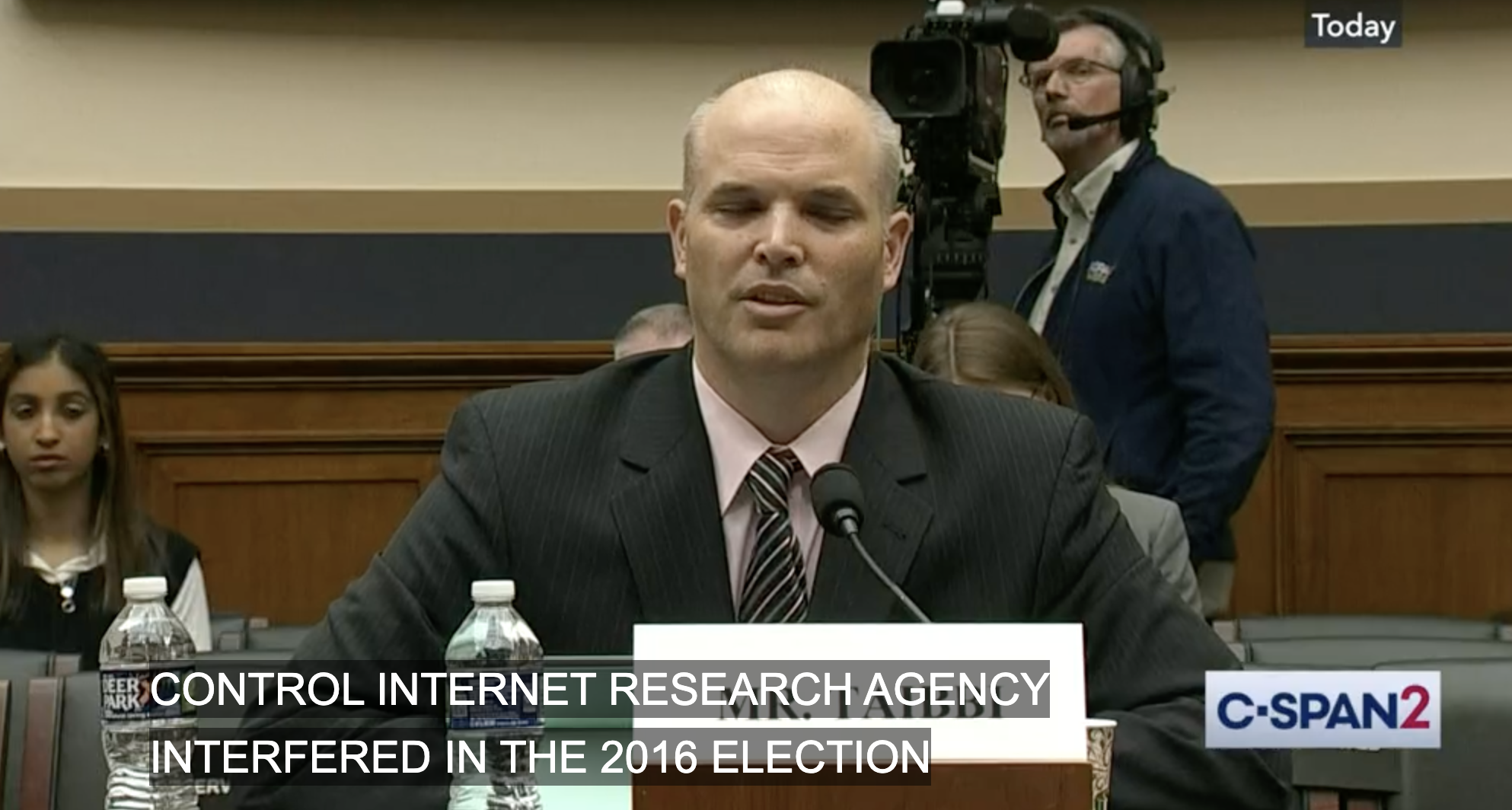
Matt Taibbi Declares John Podesta’s Risotto Recipe Was “True”

The Democrats on Jim Jordan’s insurrection protection committee were really unprepared for Matt Taibbi and Michael Shellenberger yesterday, failing to call out their repeated false claims.

One of the most interesting details came when Taibbi described that someone besides Elon Musk invited him to have unfettered access to a company under a consent decree. Given the likelihood that this person was not even a Twitter employee, it gives the FTC far more reason to want to know why a company under a consent decree made information on individual users available to journalists.

But the hearing was nevertheless useful for the way it revealed that Taibbi doesn’t know the difference between “authentic” and “true.” In an exchange with Stephen Lynch about whether Russia interfered in the 2016 election (in which Lynch falsely claimed that the intelligence report attributing the Russian campaign to Russia involved 18 intelligence agencies, instead of three, and mispronounced both Shellenberger’s and Yevgeniy Prigozhin’s name), Taibbi professed to be uncertain whether Russia conducted a hack-and-dump campaign.

Lynch: Do you believe that Russia engaged in a hack-and-release campaign damaging to the Clinton campaign, back in 2016?

Taibbi: I don’t know and I would say it’s irrelevant.

[snip]

Lynch: Mr. Shellenbech [sic] do you believe that the Russians engaged in a hack-and-release campaign with respect to the damaging information they released regarding the Clinton campaign?

Shellenberger: To the best of my awareness, that is what happened, yes.

Lynch: Okay, fair enough.

Shellenberger: That’s not the same thing as influence campaign.

Lynch: I understand.

Taibbi: Also that material was true. That is not a legitimate predicate for censorship.

Taibbi obviously thought he was being very clever, justifying publishing material stolen from an American because it was “true.” (And Shellenberger was being equally clever, not understanding that a hack-and-leak campaign is, indeed, part of an information operation.)

But instead, he betrayed something that is obvious from his propaganda efforts: Taibbi doesn’t understand the difference between “authentic” and “true.” When someone makes false claims about authentic material, it is a lie.

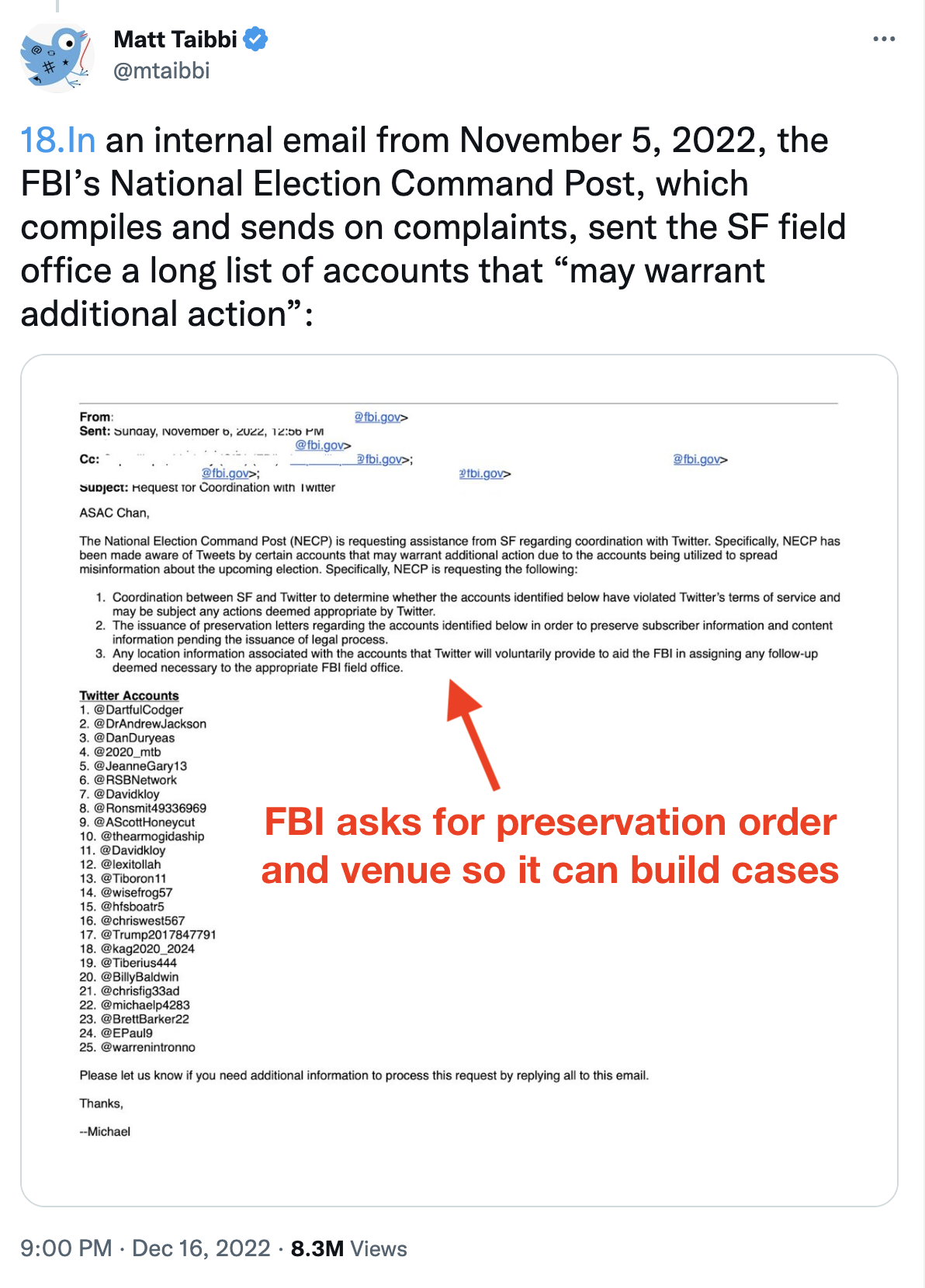
For example, Taibbi has repeatedly claimed that the FBI was not building cases on the suspected voter suppression accounts they turned over to Twitter, even though he included a screen cap showing the FBI taking steps — asking in what venue they needed to serve legal process and seeking a preservation order — that allows them to conduct an investigation.

The email is authentic. His claims about FBI’s efforts to investigate voter suppression are — he himself proved — a lie.

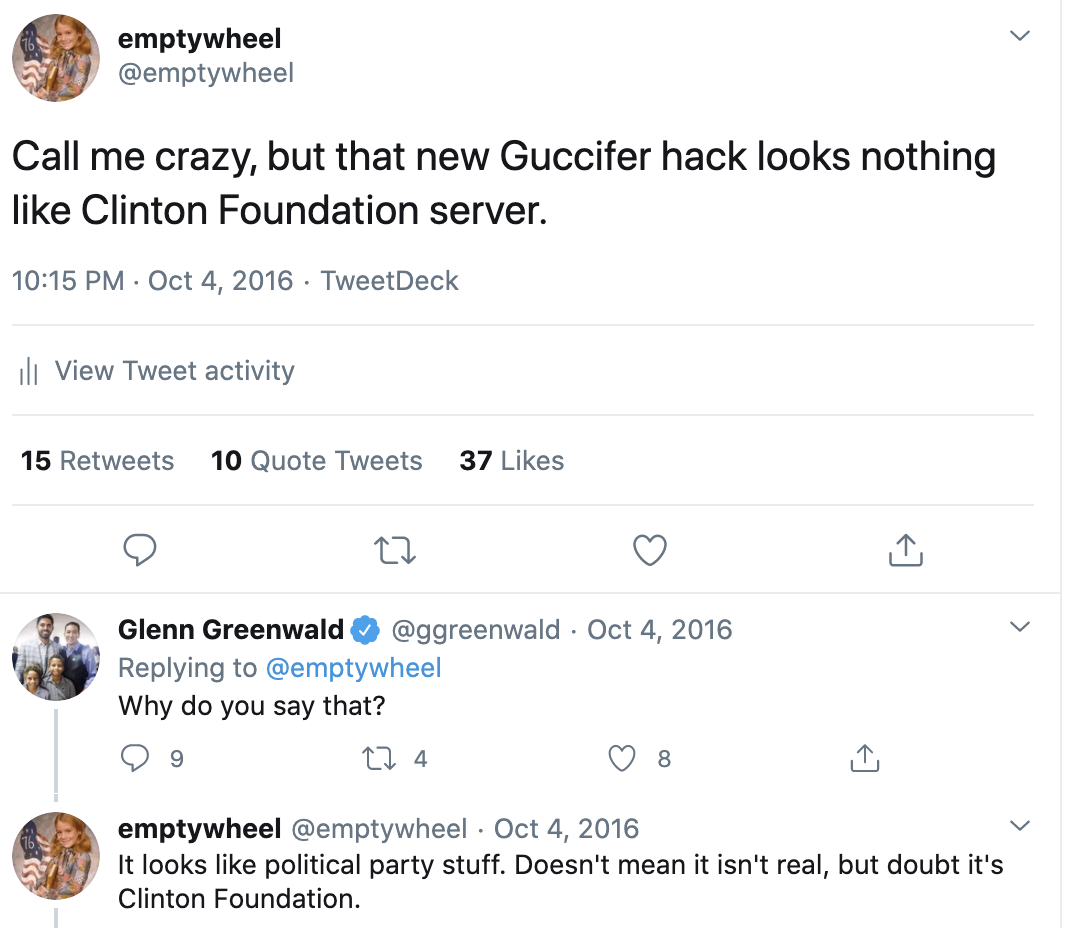
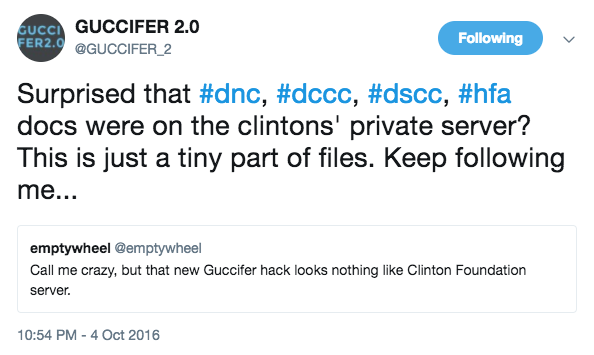
He also betrays that he doesn’t understand some of the material released in 2016 was neither “true” nor “authentic.” Not only were the Guccifer 2.0 documents altered, but the persona repeatedly falsely claimed they were something they were not, most obviously when the persona claimed he was releasing Clinton Foundation documents and I had to explain that that’s not what they were to Glenn Greenwald.

That persona did just what Taibbi has done with the Twitter files, wow credulous people (like Greenwald) with “authentic” files, while making false claims about them.

#MattyDickPic’s confusion about the difference between “true” and “authentic” became more obvious later in the hearing.

Goldman: Are you aware that there was an analysis of the hard drive that was done by the Washington Post at a later date?

Shellenberger: My awareness is that multiple media organizations have done an analyses, including CBS, and found that it was indeed, the laptop was authentic, and that nothing had been changed on it.

Goldman: Let’s just get something clear. The laptop that the FBI had is different than the hard drive that Rudy Giuliani gave to the New York Post. A hard drive, you will agree with this, is a copy of a laptop, right?

Shellenberger: Yes.

Goldman: And you are aware that hard drives can be altered, are you not?

Shellenberger: Of course.

Goldman: So are you aware that the Washington Post analysis of the hard drive showed that it had been altered?

Shellenberger: I have heard that, but I’m also saying that CBS verified —

Taibbi: Politico …

Shellenberger: and other media organizations have verified…

Never mind that Shellenberger seems to have no fucking clue that the laptop CBS analyzed is not the same hard drive that Rudy gave to the Post, and therefore is not the “laptop” on which the story that Twitter throttled was based. Never mind that CBS’ analysis is inconsistent with John Paul Mac Isaac’s claims that the process by which he made his own copy of the laptop was repeatedly interrupted, a problem that would make it difficult to distinguish from an iCloud hack and a real laptop (who puts voice mail messages on a laptop hard drive, for example?), a detail consistent with what I know of the Washington Post analysis (which was conducted by two different people).

But the cutest was little #MattyDickPics chiming in to claim that Politico had authenticated “the laptop.”

They claim no such thing! They authenticated some files (and not forensically, but instead by a witness who couldn’t even confirm the emails hadn’t been altered).

Shreckinger’s source remembered viewing both emails but was not able to compare the text leaked to the Post with the original emails. Other emails from the leaked files matched a cache of emails released by a Swedish government agency, two people who communicated with Hunter Biden said.

This kind of “authentication,” when the claims of someone with a bias like Tony Bobulinski can supplant forensic authentication, is precisely the problem with hack-and-leak reporting, regardless of whether Russian hackers or Matt Taibbi’s buddies do the hacking.

And neither Michael Shellenberger nor Matt Taibbi understand that.

Matt Taibbi does not know the difference between “true” and “authentic,” and it shows in his propaganda.

Share this entry

The Michael Flynn Complaint For Damages Against The US

As commenter David F. Snyder noted yesterday, yes Michael Flynn has filed a complaint for $50,000,000 damages against the US Government for all the perceived wrongs and grievances that he, his unhinged lawyers like Sidney Powell, and rabid MAGA Republicans have been carping about forever. A thread on this started out in Marcy’s “JUDGE UNSEALS DETAILS ON COOPERATING WITNESS IN DOUGLASS MACKEY CASE”, but I am going to bring it here so as to not pollute that post and give people a place to discuss Flynn.

I took a look at the docket for the fledgling case. It is filed in the Middle District of Florida, where Flynn resides. That is the only discernible nexus to MDFL as pretty much all facts, actors and witnesses would be in or about the DC District. Here is the docket entry for the complaint, which was actually filed on March 3, 2023:

NEW CASE ASSIGNED to Judge Mary S. Scriven and Magistrate Judge Christopher P. Tuite. New case number: 8:23-cv-0485-MSS-CPT. (SJB)

The complaint itself is attached to this Rolling Stone article by a detestable SCRIBD (seriously, nobody should ever convey documents by SCRIBD). It is 50 pages long, and I am not wasting my PACER account on it.

Marcy, in the earlier thread, said:

Not only does it not have legs, but if it survives the summary judgment stage (which is unlikely) it may catastrophically backfire on him.

I think that is right, but the case may not ever get that far. It may not even make it to a summary judgment motion, as it may well not make it past a 12b6 motion, which would be the initial attack by the government.

Couple of notes, the complaint alleges compliance with the FTCA (Federal Tort Claims Act), but claims the government never responded. Scriven is a Bush Jr. appointee and Tuite a Trump appointee to the magistrate bench. Sid Powell is noticeably absent from noticed attorneys, but Shawn Flynn, son of Michael’s brother, Gen. Charles Flynn, is listed. That could be interesting if Charles is to be a fact/damages witness, which would kind of be expected.

Very hard to see this matter gaining any real traction given all the facts and rulings against Flynn in the underlying criminal case in front of (now senior status) Judge Emmet Sullivan of DC District.

Share this entry

Judge Unseals Details on Cooperating Witness in Douglass Mackey Case

The government was just forced to reveal that it has a cooperating witness against Douglass Mackey, the far right troll who tried to help Trump win in 2016 by tricking Hillary voters into texting their vote instead of casting it legally. The cooperating witness will testify against Mackey, whose trial starts on March 16.

The documents were all made available today:

The charge against Mackey accuses him of conspiring with four other people. As Luke O’Brien laid out when Mackey was arrested in 2021, three of Mackey’s co-conspirators were readily identifiable.

HuffPost can report that one co-conspirator is a prominent alt-right botmaster who goes by “Microchip” and was instrumental in making pro-Trump and anti-Hillary Clinton hashtags and content go viral on Twitter during the 2016 election. A fascist accelerationist who has expressed admiration for Adolf Hitler and Nazism, Microchip claims to have been involved in the early spread of the QAnon conspiracy cult and repeatedly told this reporter that his goal was to destroy the United States.

Another of Mackey’s co-conspirators is Anthime “Baked Alaska” Gionet, a pro-Trump white nationalist who was arrested on Jan. 16 for his involvement in storming the Capitol on Jan. 6. Gionet also participated in the deadly white nationalist “Unite the Right” rally in Charlottesville, Virginia, in 2017. (A New York Times story reported Wednesday afternoon that Gionet was a co-conspirator, citing a source close to the investigation, and HuffPost can confirm that reporting based on the Twitter ID cited in the complaint.)

HuffPost was able to link the Twitter IDs in the complaint to Gionet and Microchip through previously collected Twitter data, interviews and evidence left by both extremists on other websites. In direct messages with this reporter last year, Microchip also confirmed that he was using the Twitter account associated with the user ID listed in the complaint.

The user ID for a third co-conspirator belongs to a pro-Trump far-right activist who goes by “Nia” and has a long history of spreading disinformation on Twitter. HuffPost has not yet been able to identify the fourth co-conspirator.

The fourth was not.

As the government laid out in its motion, at some point, the cooperating witness pled guilty to the same crime charged against Mackey, a violation of the Ku Klux Klan Act. Since then, he has been cooperating with the government on other investigations, presumably targeting the far right.

The CW has pleaded guilty to a violation of 18 U.S.C. § 241 and entered into a cooperation agreement with the government. The government expects that the evidence at trial will show that the CW had communications with the defendant and other relevant persons over the internet through the use of Twitter, including communications discussing the creation and dissemination of deceptive images concerning the time, place, and manner by which voters could cast a vote in the 2016 presidential election. In particular, the CW participated in direct-message groups that included the defendant and others. In all instances, the CW used an online moniker for these communications and did not reveal his or her true identity, face, or likeness to the defendant or the other participants in the groups.

The government intends at trial to introduce the CW’s communications as exhibits and to question the CW concerning them and the CW’s understanding of the purpose of the deceptive images discussing the time, place, and manner of voting, among other related online activities. The CW has advised that apart from the CW’s family, a former girlfriend. and possibly one or two former business associates, no one is aware that the CW is in fact the user of the relevant internet monikers. As far as the government is aware, the CW’s true identity has never been publicly associated with any of the online monikers used by the CW on Twitter or other social media, notwithstanding the efforts of investigative journalists who have attempted to learn the CW’s identity.

In addition, since entering into the cooperation agreement, the CW has provided assistance to the FBI in other criminal investigations beyond the scope of this case. The CW is presently involved in multiple, ongoing investigations and other activities in which he or she is using assumed internet names and “handles” that do not reveal his or her true identity. The CW has not interacted with any witness, subject, or target in these investigations and activities on a face-to-face basis, and the government has no reason to think that the CW’s true identity has been compromised as a result of this work.

The government provides no other details about the CW (though Mackey’s reply refers to him as male), but it does go out of the way to note that the person had not flipped by 2016, I guess to avoid any possibility Republicans will claim this was part of Crossfire Hurricane.

For the avoidance of doubt, the CW was not cooperating with the government at any point before or during 2016.

The government noted in its reply, the technical proficiency of those who might suspect they were being investigated is such that revealing his identity might make him the target of harassment and cyber attacks.

The fact of the CW’s cooperation is sure to be seen by many in that community as a profound betrayal, with the result that, at a minimum, online harassment is bound to follow the CW should his or her identity become a matter of public record. That harassment can have negative consequences in and of itself. In addition, to claim that intense online attacks do not endanger a person’s physical safety is to ignore the reality of our current world, as evinced in common newspaper headlines. See, e.g., Sheera Frenkel, The Storming of Capitol Hill Was Organized on Social Media, N.Y. TIMES, Jan. 6, 2021, available at https://www.nytimes.com/2021/01/06/us/politics/protesters-storm-capitol-hillbuilding.html; Eric Lipton, Man Motivated by “Pizzagate” Conspiracy Theory Arrested in Washington Gunfire, N.Y. TIMES, Dec. 5, 2016, available at https://www.nytimes.com/2016/12/05/us/pizzagate-comet-ping-pong-edgar-maddisonwelch.html. It is simply (and regrettably) a fact of the times that many acts of politically motivated violence in current society arise from campaigns of online harassment.

Beyond the risk to the CW, the potential consequences include the disruption of the CW’s ongoing work with the FBI. It is certainly true that the nature of this work is online and anonymous, but, if the CW’s name and location were to become known, the CW would become a target for all who believe that they might be under investigation (whether they are or not). Given the technical proficiency of those with whom the CW associates, it is not difficult to envision multiple scenarios in which the CW’s online work could be jeopardized by way of a cyberattack (at a minimum).

While it doesn’t say so, those two past incidences in which online trolling led to violence — January 6 and PizzaGate — are both other instances in which Mackey’s other co-conspirators and those in the same network were involved. Indeed, co-conspirator Baked Alaska is currently serving time for his role in the January 6 attack.

Unsurprisingly, the government provides no details about how long this cooperation has been going on — but it presumably started before Mackey was arrested in 2021. Which is likely to make a lot of right wingers awfully nervous.

Share this entry

Trophy Documents: The Entire Point Was to Make FBI Obedient

Those who didn’t follow John Durham’s trials closely undoubtedly missed the parade of scarred FBI personnel whose post-Crossfire Hurricane vulnerability Durham attempted to exploit to support his invented claims of a Clinton conspiracy.

Sure, lots of people wrote about Jim Baker’s inability to provide credible answers about the meeting he had with Michael Sussmann in September 2016. Fewer wrote about the credible case that Sussmann’s attorneys made that a prior Durham-led investigation into Baker — for sharing arguably classified information with a reporter in an attempt to forestall publication of a story — made Baker especially quick to cooperate with Durham in 2020. Fewer wrote about Baker’s description of the stress of Jim Jordan’s congressional witch hunts.

It sucked because the experience itself, sitting in the room being questioned the way that I was questioned, was, as a citizen of the United States, upsetting and appalling, to see members of Congress behaving the way that they were behaving. It was very upsetting to me.

[snip]

It sucked because my friends had been pilloried in public, my friends and colleagues had been pilloried in public, improperly in my view; that we were accused of being traitors and coup plotters. All of this was totally false and wrong.

Such a circus was the kind of thing that might lead someone like Baker to prefer the “order” of a prosecutor chasing conspiracy theories, someone whose memory was seared by the firing of Jim Comey.

[Sean Berkowitz]. And this is a pretty terrible experience as well. Right?

A. It’s more orderly.

Q. (Gestured with hand to ear.)

A. This is more orderly. It’s terrible but orderly.

Q. And you’re doing the best you can. Right, sir?

A. Yes, sir.

Q. But it’s hard to remember events from a long time ago, 1snre sez

A. It depends on what the event is. I remember Jim Comey being fired, for example. That’s a long time ago and I have a clear recollection of that. So it depends on what you’re talking about.

But Baker wasn’t the only one who discussed the years of scrutiny. Counterintelligence Special Agent Ryan Gaynor, who worked in DC on the Russian investigations during 2016, described how in October 2020, after he revealed to Durham’s team that he knew a DNC lawyer had brought in the Alfa Bank tip, Durham’s team told him they were no longer treating him as a witness, but as a subject of the investigation.

A. Yeah. There were two thoughts. The first one was that I felt like I had woefully ill prepared for the meeting, because I didn’t know what the meeting was honestly going to be about with this investigation.

The second thought was that I was in significant peril, and it was very concerning as a DOJ employee to be told that now the Department of Justice is interested in looking at you as a subject instead of a witness.

Sussmann lawyer Michael Bosworth got Gaynor to explain that after he told a story more to Durham’s liking, he was moved back to the status of witness.

During his testimony, Curtis Heide (who played a key role in the George Papadopoulos investigation) explained how the FBI Inspection Division investigation into Crossfire Hurricane Agents, including him, remained pending, 6 years after the events in question. He noted that, three years after the DOJ IG Report, he was still being investigated even though he, “didn’t author any of the affidavits or any of the materials related to the applications in question.”

The same was true in the Danchenko case. Brian Auten, a key intelligence analyst on Crossfire Hurricane, described how, after having met with agents from DOJ IG four times, having done a long report for FBI’s Internal Affairs Division, and having met with the Senate Judiciary Committee — all with no concerns raised about his own conduct — the first time he met with Durham’s team, he was told he was a subject of the investigation. After Auten gave testimony that confirmed Danchenko’s reliability — seriously damaging his case — Durham himself raised investigations that undermined his own witness’ testimony.

Q. Do you recall that there was a reporter that the OIG had written concerning the Carter Page FISAs?

A. Yes.

Q. And how would you characterize that report?

A. The report was quite extensive and it discussed characterizing a number of errors and omissions.

Q. And with respect to the errors and omissions, were they tick-tacky kinds of omissions or were they significant omissions and errors that had been committed?

A. I believe the OIG described them as significant.

Q. And then with respect to the investigation done by the OIG, separate and apart from that, would it be a fair statement that you and your colleagues were under investigation by the inspection division by the FBI?

A. Yes.

Q. And would it be a fair statement that your conduct in connection with that is, you, yourself, based on the investigation done by the inspection division of the FBI, have some issues, correct?

A. I — be a little bit more specific. I’m sorry. I don’t — I have issues?

Q. Isn’t it, in fact, true that you’ve been recommended for suspension as the result of the conduct?

A. It is currently under appeal.

That line of testimony immediately preceded a hilarious failed attempt from Durham to get Auten to agree that George Papadopoulos was simply a young man with no contact to Trump who was only investigated for his suspect Israeli ties, not for his Russian ties. But it was a palpable example of the way that Trump’s minions used criminalizing FBI investigations into Trump as a way to create a makebelieve world that negates real evidence of Trump’s corruption.

About the only two FBI agents who weren’t portrayed as somehow tainted by the events of 2016 in Durham’s two failed prosecutions were two agents who fucked up investigations: Scott Hellman, who correctly told a junior agent that she would face zero repercussions of she botched the Alfa Bank investigation, and Ryan James, an FBI agent who started his career in Connecticut, who nevertheless failed to pull the evidence necessary to test Sergei Millian’s claims.

Durham rewarded the incompetence that served his purpose and attempted to criminalize what he considered the wrong answers or at least to use the threat of adverse consequences to invent a false record exonerating Trump.

And Durham came in after Jim Comey, Peter Strzok, Andrew McCabe, and Bruce Ohr had already been fired, and Lisa Page, with Strzok, deliberately humiliated on a global stage serially. He came in and exploited the uncertain status — the Inspection Division review left pending while Durham worked — of everyone involved. Such efforts didn’t end with the conclusive acquittals debunking Durham’s theories of conspiracy. Since then, Jim Baker has been dragged back through the mud — publicly and in Congress — as part of Twitter Files, Chuck Grassley passed on “whistleblower” complaints about Auten identifying Russian disinformation as such, and Timothy Thibault was publicly berated because some of the same so-called whistleblowers feeding Jim Jordan shit had complained to Chuck Grassley he was discouraging GOP conspiracy theories about Hunter Biden.

It was never just Strzok and McCabe. The entire Republican Party has relentlessly focused on punishing anyone involved in the Trump investigation, using both unofficial and official channels. When Trump promised “retribution” the other day at CPAC, this kind of relentless effort to criminalize any check on Trump’s behavior is what he was talking about.

That kind of background really helps to understand the WaPo story that described Washington Field Office FBI agents quaking at the prospect of searching Donald Trump’s beach resort.

[P]rosecutors learned FBI agents were still loath to conduct a surprise search. They also heard from top FBIofficials that some agents were simply afraid: They worried takingaggressive steps investigatingTrump could blemish or even end their careers, according to somepeople with knowledge of the discussions. One official dubbed it “the hangover of Crossfire Hurricane,” a reference to the FBI investigation of Russia’s interference in the 2016 presidential election and possible connections to the Trump campaign, the people said. As president, Trump repeatedly targeted some FBI officials involved in the Russiacase.

[snip]

FBI agents on the case worried the prosecutors were being overly aggressive. They found it worrisome, too, that Bratt did not seem to think it mattered whether Trump was the official subject of the probe. They feared any of these features might not stand up to scrutiny if an inspector general or congressional committee chose to retrace the investigators’ steps, according to the people.

Since I wrote my piece wondering whether the FBI hesitation gave Trump the chance to steal 47 documents, Strzok himself, Joyce Vance, and Jennifer Rubin have weighed in.

Rubin, I think, adopts the position of someone who hasn’t followed the plight of all the people not named Strzok who were targeted for investigating Donald Trump. She attributes the reluctance to investigate Trump (and the intelligence failures leading up to January 6, which I’ll return to) to Wray.

After a debacle of this magnitude, that sort of passivity should alarm all Americans. Imagine if, after the terrorist attacks of Sept. 11, 2001, the national security community did not evaluate how it missed the telltale signs of an imminent attack. The failure of leadership in the Jan. 6 case is inexcusable. Yet Wray has never been held to account for this delinquency.

[snip]

[O]ne is left wondering why the FBI seems disinclined to stand up to right-wing authoritarian movements and figures. Whatever the reason, the pattern reveals an unmistakable lack of effective leadership. And that in turn raises the question:Why is Wray still there?

It is absolutely the case that Wray did far too little to protect FBI agents in the face of Trump’s attacks. Wray created the opportunity for pro-Trump FBI agents and Durham to criminalize investigating Trump. I think Wray attempted to avoid rocking the boat at all times, which led the FBI to fail in other areas (including the investigation of Brett Kavanaugh). Though I’m also cognizant that if Wray had been fired during the Trump administration, he might have been replaced by someone like Kash Patel, and having a Trump appointee in charge right now may provide cover for the ongoing investigations into Trump.

But you could fire Wray tomorrow and not eliminate the effects of this bureaucratic discipline, the five year process to teach everyone in the FBI that investigating Trump can only lead to career disaster, if not criminal charges.

Also under Wray, though, the Bureau had already increased its focus on domestic terrorism, with key successes both before and after January 6. Steven D’Antuono, the chief voice of reluctance to search Mar-a-Lago, presided over the really troubled but ultimately successful effort to prevent a kidnapping attempt targeting Gretchen Whitmer, a plot that arose out of anti-lockdown protests stoked by Trump (though unusually, D’Antuono let a subordinate take credit for the arrests).

I think the specific failures in advance of January 6 lay elsewhere. Wray has not done enough in the aftermath to understand the FBI’s failures, but FBI has also been overwhelmed with the case load created by the attack. But, as I hope to return to, I think the specific failure in advance of January 6 lies elsewhere.

Whatever the merit in blaming Wray for FBI’s failure to prepare for January 6, there’s a bigger problem with Rubin’s attempt to blame him on the MAL search. Strzok sketched out in great detail something I had seen, too. The dispute about searching Trump’s house wasn’t between the FBI and DOJ. It wasn’t just what Vance and Strzok both describe as a fairly normal dispute between the FBI and DOJ with the former pushing the latter to be more aggressive.

It was between the WFO on one side and DOJ and FBI HQ on the other.

[A] careful reading of the Post’s reporting (insofar as the reporting is complete) reveals this was not so much a conflict between DOJ and the FBI as much as a conflict between DOJ and FBI headquarters, on the one hand, and the management of the FBI’s Washington Field Office, on the other.

Indeed, a key part of the drama surrounding the pre-August search meeting described by the WaPo involved the conflict between FBI General Counsel Jason Jones — whom WaPo makes a point of IDing as a Wray confidant, thereby marking him as Wray’s surrogate in this fight — and WFO Assistant Director Steven D’Antuono.

Jason Jones, the FBI’s general counsel who isconsidered a confidant of FBI Director Christopher A.Wray, agreed the team had sufficient probable cause to justify a searchwarrant.

[snip]

Jones, the FBI’s general counsel, said he planned to recommend to Deputy FBI Director Paul Abbate that the FBI seek a warrant for the search, the people said. D’Antuono replied that he would recommend that they not.

This, then, was partly a fight within FBI, one in which Wray’s surrogate sided with prosecutors.

Strzok makes a compelling argument that this story may have come from pushback necessitated by people at WFO floating bullshit claims, not dissimilar from — Strzok doesn’t say this, but I will — the leak by right wing agents to Devlin Barrett about the Clinton Foundation investigation in advance of the 2016 election, which led Andrew McCabe to respond in a way that ultimately gave Trump the excuse he wanted to fire him.

Indeed, Strzok’s post includes a well-deserved dig on the WaPo’s claim about, “the fact that mistakes in prior probes of Hillary Clinton … had proved damaging to the FBI,” an unsubstantiated claim I also called out.

[E]ven journalists can be imprecise or inaccurate. The Post’s article isn’t, for example, the type of comprehensive accounting you’d get in a report produced by an Inspector General, who can compile the statements of everyone involved and review and compare those statements to the written record in all its various forms.

Strzok right suggests that DOJ IG’s Report disproved WaPo’s claim about the Hillary investigation, but he seems to have forgotten that the DOJ IG Report into McCabe’s response on the Clinton Foundation didn’t fully air the FBI spox’s exculpatory testimony.

All of which is to say that, in the same way that WFO agents have an understandable visceral concern about getting involved in an investigation targeting Trump, people at HQ might have an equally visceral concern about stories seeded to Devlin Barrett alleging internal conflict that might create some flimsy excuse for firing.

But there’s something still unexplained about the WaPo story. Vance notes, as I did, that D’Antuono may have given Trump the opportunity to steal 47 documents.

[T]he delay couldn’t be undone. We still don’t know whether that resulted in the permanent loss of classified material. It did result in a delay in the timeline for making prosecutive decisions, ultimately extending the investigation into the period where Trump announced his 2024 candidacy, leading to the appointment of a special counsel to continue the investigation and determine whether to prosecute.

But Vance still accepts WaPo’s specious claim about timing, the claim that the delay (from June to August) in searching Trump’s resort led the investigation to bump up against a Trump campaign announcement that would surely have happened earlier had Trump not gotten an injunction. There’s nothing to support that temporal argument, and the public record on the injunction (which, again, lasted until almost a month after Jack Smith’s appointment) disproves it.

The timing issue is one of many reasons why I keep thinking about this earlier Devlin Barrett story, one that did bump up against the appointment of a Special Counsel. On November 14, the day before Trump formalized his 2024 run and so four days before the appointment of Jack Smith, Barrett and WaPo’s Mar-a-Lago Trump whisperer, Josh Dawsey, published a story suggesting that maybe Trump shouldn’t be charged because he just stole a bunch of highly classified documents to keep as trophies.

Federal agents and prosecutors have come to believe former president Donald Trump’s motive for allegedly taking and keeping classified documents was largely his ego and a desire to hold on to the materials as trophies or mementos, according to people familiar with the matter.

As part of the investigation, federal authorities reviewed the classified documents that were recovered from Trump’s Mar-a-Lago home and private club, looking to see if the types of information contained in them pointed to any kind of pattern or similarities, according to these people, who spoke on the condition of anonymity to discuss an ongoing investigation.

That review has not found any apparent business advantage to the types of classified information in Trump’s possession, these people said. FBI interviews with witnesses so far, they said, also do not point to any nefarious effort by Trump to leverage, sell or use the government secrets. Instead, the former president seemed motivated by a more basic desire not to give up what he believed was his property, these people said.

[snip]

The analysis of Trump’s likely motive in allegedly keeping the documents is not, strictly speaking, an element of determining whether he or anyone around him committed a crime or should be charged with one. Justice Department policy dictates that prosecutors file criminal charges in cases in which they believe a crime was committed and the evidence is strong enough to lead to a conviction that will hold up on appeal. But as a practical matter, motive is an important part of how prosecutors assess cases and decide whether to file criminal charges.

As I showed, that story, like this one, simply ignored stuff in the public record, including:

  • Trump’s efforts, orchestrated in part by investigation witness Kash Patel, to release documents about the Russian investigation specifically to serve a political objective
  • The report, from multiple outlets, that Jay Bratt told Trump’s lawyers that DOJ believes Trump still has classified documents
  • Details about classified documents interspersed with a Roger Stone grant of clemency and messages — dated after Trump left the White House — from a pollster, a book author, and a religious leader; both sets of interspersed classified documents were found in Trump’s office
  • The way Trump’s legal exposure would expand if people like Boris Epshteyn conspired to help him hoard the documents or others like Molly Michael accessed the classified records

Since then, other details have become clear. Not only was that story written after DOJ told Trump they believed he still had some classified documents, but it was written in the period between the time Trump considered letting the FBI do a consensual search and the time he hired people to do the search for him, a debate inside the Trump camp that parallels the earlier investigative fight between WFO and DOJ. Indeed, when DOJ alerted Trump’s lawyers in October that they believed Trump still had classified documents, that may have reflected WFO winning the debate they had lost before the August search: to let Trump voluntarily comply.

That’s important background to where we are now. Trump’s team has misrepresented to the press how cooperative they have been since. First, Trump’s people misleadingly claimed that Beryl Howell had decided not to hold Trump in contempt (rather than just deferred the decision) and Trump lied to the press for several months, hiding the box with documents marked classified and the additional empty classified folder. Those public lies should only make investigators wonder what Trump continues to hide.

We know Trump blew off the subpoena that WFO agents were sure would work in June, and there’s good reason to believe DOJ finds Trump’s more recent claims of cooperation to be suspect as well.

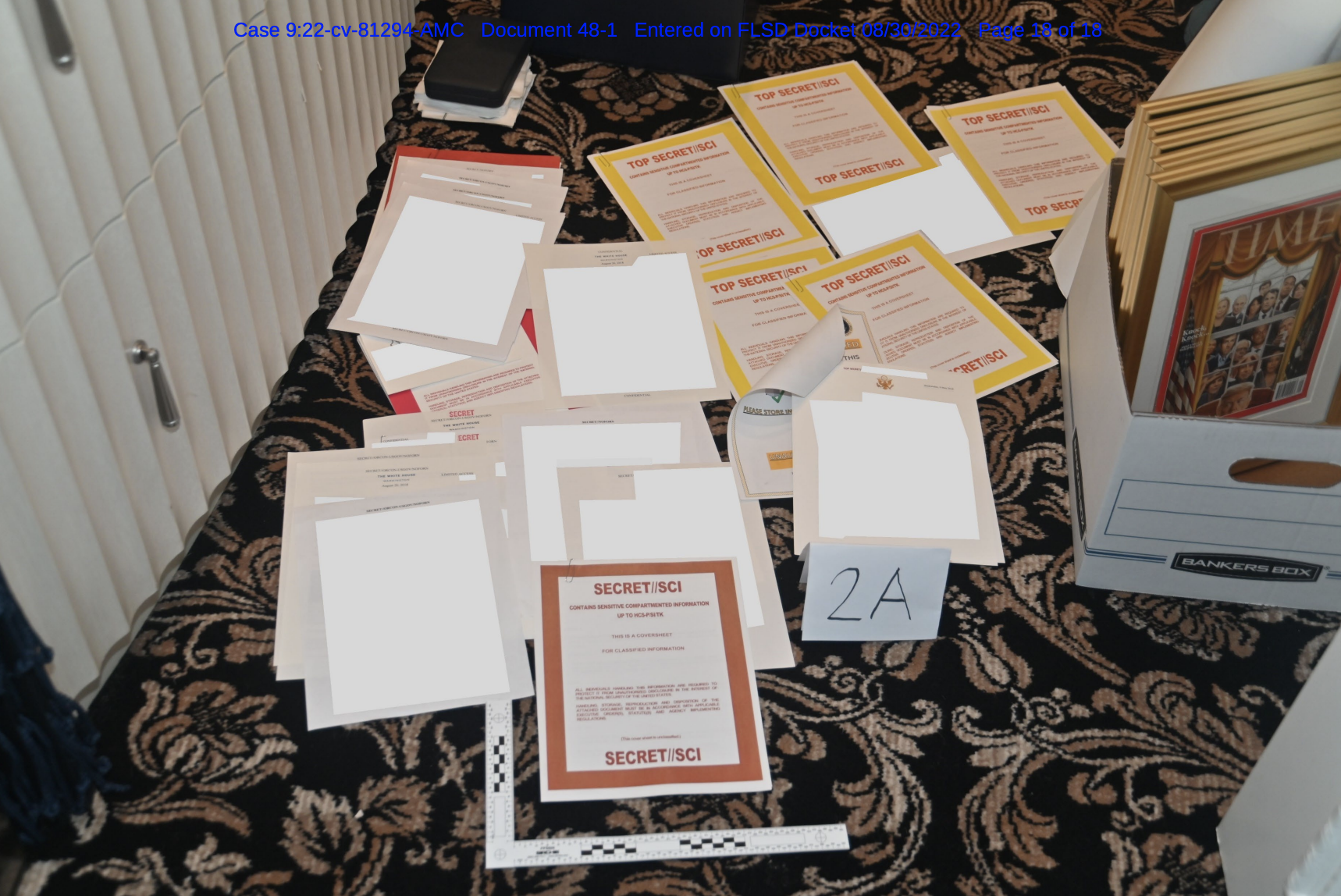
So let’s go back to that earlier Devlin story. As I noted at the time, I don’t dispute that the most classified documents have the appearance of trophies, but that’s because of the Time Magazine covers they were stored with, not because of any halfway serious scrutiny of Trump’s potential financial goals. Particularly given the presence of 43 empty classified folders in the leatherbound box along with the most sensitive documents, no thorough investigator could rule out Trump already monetizing certain documents, particularly given Trump and Jared Kushner’s financial windfalls from the Saudi government, particularly given the way that Trump’s Bedminster departure coincided with Evan Corcoran’s turnover of classified documents, particularly given that the woman who carted a box including some marked classified around various offices had been in Bedminster with Trump during the summer. I don’t dispute that’s still a likely explanation for some — but in no way all — of the documents, but no competent investigator could have made that conclusion by November 14, when Devlin published the story.

Unless Devlin’s sources — perhaps the same or similar to the sources who know that WFO agents were cowed by the treatment of Crossfire Hurricane agents — were working hard to avoid investigating those potential financial ties.

Unless the timing of the story reflected an attempt to win that dispute, only to be preempted by the appointment of Jack Smith. The earlier dispute could not have been impacted by the appointment of Jack Smith. If there was a later dispute about how to make sure Trump wasn’t still hoarding classified documents, though, it almost certainly was.

Someone decided to leak a story to Devlin Barrett suggesting that investigators had already reached a conclusion about Trump’s motive, even though as the story acknowledged, “even the nonclassified documents” — better described as documents without classification marks that not only hadn’t been reviewed yet, which could have included unmarked classified information — “taken in the search may include relevant evidence.” (Note, these are the same unclassified documents that, the recent story  describes D’Antuono, insanely from an investigative standpoint, scoffing at collecting because, “We are not the presidential records police.”) Devlin’s sources decided to leak that story at a time when DOJ was trying to figure out how to get the remaining documents from Trump, and yet his sources presented a working conclusion that it didn’t matter if DOJ got the remaining documents: it had already been decided, Devlin’s sources told him, that Trump was just a narcissist fighting to keep his trophies from time as President and probably that shouldn’t be prosecuted anyway.

The story of the earlier dispute is alarming because it confirms that WFO agents remain cowed in the face of the prospect of investigating Trump, as some did even six years ago. The later story, though, is alarming because leaks to Devlin have a habit of creating political firestorms that are convenient for Trump. But it is alarming because it suggests even after the August search proved the WFO agents’ efforts to draw premature conclusions wrong, someone still decided to make — and force, by leaking to Devlin Barrett — some premature conclusions in November, an effort that genuinely was thwarted by the appointment of Jack Smith.

Share this entry

Douglass Mackey Allegedly Aimed to Depress Black Turnout in Pennsylvania

The government and the defense team for Douglass Mackey, the Twitter troll accused of conspiring to convince Hillary Clinton voters to throw away their vote in 2016, are fighting over what evidence will come in at trial, which is currently scheduled to start on March 16.

As I have laid out, campaigns like the one Mackey is alleged to have conducted with people including Anthime “Baked Alaska” Gionet, are the reason why the FBI sends Twitter lists of accounts lying about the place or means of voting: The FBI is trying to stop systematic attempts to dupe people out of exercising their right to vote.

Indeed, several times in 2016, Twitter suspended Mackey for lying about the election. “[I]t was because I posted a meme that told Hillary supporters they could text to vote. Lol,” he said in one of the messages the government is seeking to introduce.

In his own filing, Mackey cited the Twitter Files claiming it proves Twitter sometimes gets it wrong when suspending people.

The Mackey case presents some challenging legal questions, and if he is convicted, he’ll presumably appeal on First Amendment grounds.

At issue in the evidentiary dispute are comments Mackey or his alleged co-conspirators made in 2015 and 2016 about how he understood his trolling.

Even in 2015, Mackey understood the power he wielded with his trolling, because of the loyalty of his troll army.

“I have the personality and the ability to convince people now” (DM, Nov. 23, 2015)

“This identity is very powerful. I have something great going on.” (DM, Jan 7, 2016)

“I am going to start preparing myself mentally, spiritually, and physically, to be a leader. . . . I never asked or wanted to be a leader, but so many people are asking it of me, so I feel a responsibility” (DM Jan 11, 2016)

“I have like the most loyal army on twitter. I can get anything I want photoshopped in one hour. I have people offering to do web design for me. My Twitter account is just exploding” (DM Jan 28, 2016)

“It’s like at any one time there is an army of 100 of my followers ready to swarm.” (DM, Aug. 1, 2016)

The government also wants to introduce descriptions of how to deploy that troll army: repetition is key. (Note, it’s not clear whether all of these are Mackey, or whether they come from his alleged co-conspirators, not all of whom have been identified.)

“We can hijack hashtags with memes” (DM, Jan 26, 2016)

“It should be done as a coordinated effort. With the goal of trending.” (DM, May 9, 2016)

“Please help me trend #InTrumpsAmerica. New hashtag starting now” (DM, May 12, 2016)

“Repetition is key…. Repeat it again and again. I just tweeted it. Memes would also be good.” (DM, June 22, 2016)

“Please contribute a tweet to #KaineAndUnable2016, maybe we can trend it.” (DM, July 23, 2016)

“I would say use fewer hashtags, maybe only use one hashtag, and a simple, short message. Other than that, you’re doing everything right. I will keep retweeting you.” (DM, Oct 5, 2016)

“We’re going to need serious memetics to derail the coming mainstream narrative…get on it, folks” (Tweet, June 6, 2016)

“I am looking for roughly half a dozen photoshop experts who wish to join a team, please respond to this tweet with why you are qualified.” (Tweet, July 1, 2016)

The most interesting detail — particularly given Mackey’s ties to people like Jack Posobiec and, through him, to people like Roger Stone — is how closely Mackey’s understanding of the 2016 presidential race matched the Trump campaign’s.

“Hillary’s team is in a panic because black voter turnout in Ohio and Florida primaries was down 40 percent.” (Tweet, Mar 19, 2016)

“All of these polls assume the electorate will be 52 or 53 percent female, while all data indicates female turnout will be lackluster.” (Tweet, July 25, 2016) 7

“One way to depress turnout is to use meme magic to make not voting for Hillary a cool way for young POCs and progressives to ‘protest.’” (Tweet, July 29, 2016)

“A 25 year old latino progressive will probably never vote for Trump, but we can depress her enough to stay home, or vote for Jill or Gary.” (Tweet, July 29, 2016)

“Very few persuadable voters remain. A lot of what we are doing is just keeping our own team fired up, and trying to demoralize other team.” (Tweet, July 31, 2016)

“Obviously, we can win Pennsylvania. The key is to drive up turnout with non-college whites, and limit black turnout.” (Tweet, Nov 2, 2016)

To be clear: Mackey wouldn’t have needed inside information to understand that one way to suppress turnout for Hillary would be to get them to vote for Jill Stein instead of Hillary. That was all openly discussed. Even the claim that “obviously we can win Pennsylvania,” while not the consensus before the election, was embraced by MAGA trolls in advance of the election.

But in August, the prospect of winning Pennsylvania was, according to Rick Gates, “fools gold” because “Trump was unlikely to win there.” And Mackey was part of a network that could have learned of the campaign’s decision to go for fools gold.

Even as self-described reverse Russian chauvinist Matt Taibbi continues to aggressively disinform people about the point of FBI’s interest in combatting election disinformation, the Mackey trial may make clear how easy it was to match such disinformation efforts to the strategy of the campaign.

Sure, it was just trolling, albeit fairly sophisticated trolling. But its means and manner were perfectly tailored to enhance Trump’s campaign strategy.

Share this entry

“Wink:” Where Jeff Gerth’s “No There, There” in the Russian Investigation Went

On July 28, 2017, Robert Mueller’s investigators served two warrants on the company (probably Rackspace) that hosted Paul Manafort’s DMP emails to obtain Manafort, Rick Gates, and Konstantin Kilimnik’s company emails.

Mueller obtained several things with that warrant that remain unresolved. Those are just some of the many things about the Russian investigation — the one Jeff Gerth claims had no there, there — that remain unanswered, four years after Mueller closed up shop.

Manafort’s lies about the plan to carve up Ukraine

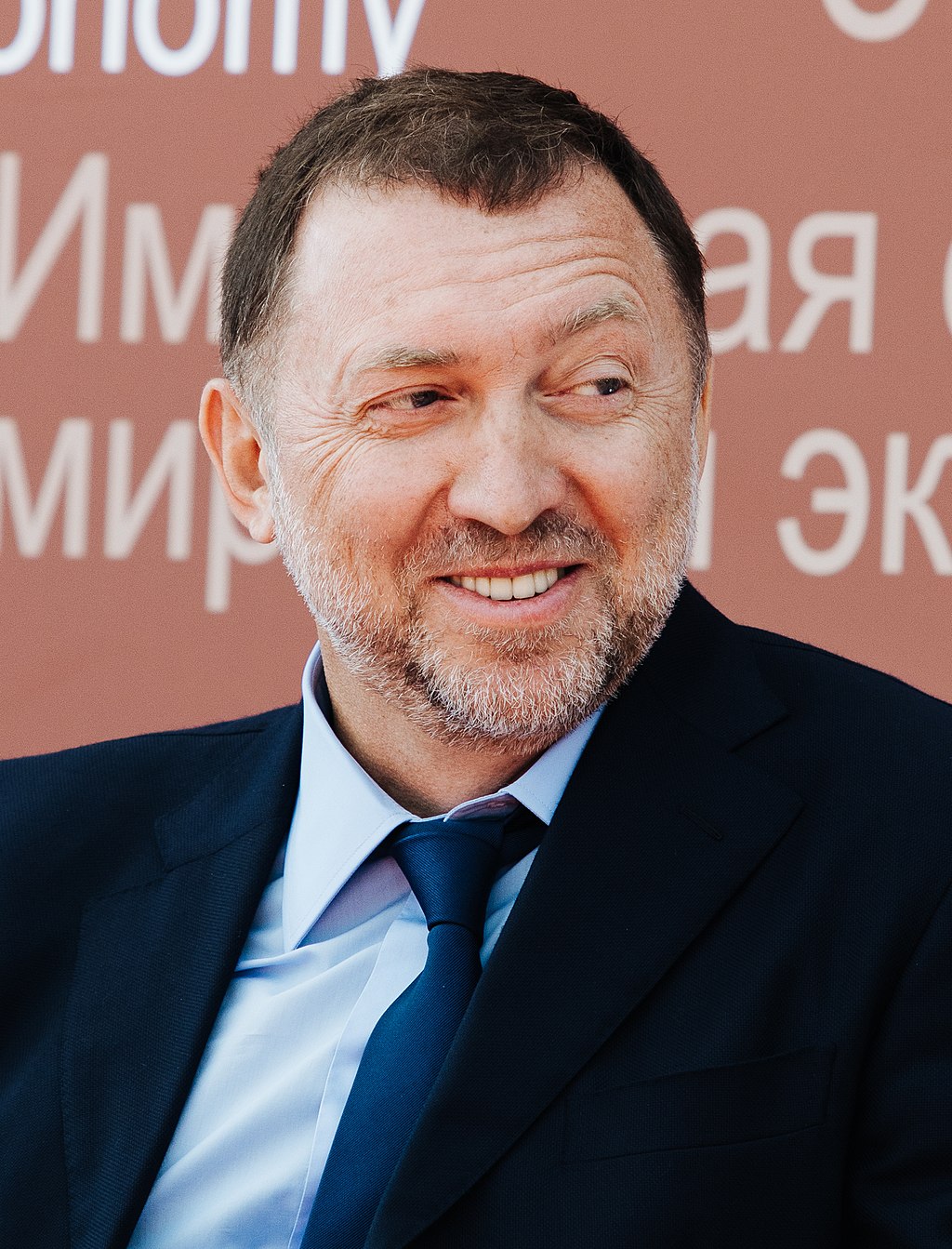
One thing Mueller obtained with that warrant would have been an email Manafort sent Konstantin Kilimnik on April 11, 2016, “How do we get whole” with Oleg Deripaska, Manafort asked. The email showed that Manafort was using his position as the “free” campaign manager for Donald Trump to fix his legal and financial woes.

Another was an email Kilimnik wrote, but did not send, on December 8, 2016, but which Manafort knew to and did read, a “foldering” technique to prevent interception also used by terrorists. The email referenced a plan to carve up Ukraine that Kilimnik had first pitched to Manafort on August 2, 2016.

Russians at the very top level are in principle not against this plan and will work with the BG to start the process of uniting DNR and LNR into one entity, with security issues resolved (i.e. Russian troops withdrawn, radical criminal elements eliminated). The rest will be done by the BG and his people.

[snip]

All that is required to start the process is a very minor ‘wink’ (or slight push) from DT saying ‘he wants peace in Ukraine and Donbass [sic] back in Ukraine’ and a decision to be a ‘special representative’ and manage this process.

The email — and a text Kilimnik sent around the same time — talked about “recreating old friendship” with Deripaska at an in-person meeting. Less than a month later, Manafort flew to Madrid and met with a different Deripaska associate.

Six years later, we don’t know the fate of Manafort’s efforts to “get whole” with Deripaska, to recreate that old friendship.

It’s something that Manafort promised to tell Mueller’s prosecutors on September 13, 2018, when he entered into a plea agreement that averted a damaging trial during the election season. But it’s something that, Judge Amy Berman Jackson found, Manafort lied to hide from prosecutors in the ensuing weeks. We know that the last thing on Manafort’s schedule before he met with Kilimnik on August 2, 2016 was a meeting with Trump and Rudy Giuliani. We know that during the period when Manafort was lying to hide what happened with this plan to carve up Ukraine, his lawyer was speaking regularly with Trump’s lawyer, Rudy Giuliani. We know that during the period when Rudy Giuliani was seeking campaign assistance from Ukraine, he was consulting with Manafort. We know that Trump tried to coerce Volodymyr Zelenskyy to enter into a quid pro quo on July 25, 2019, but was caught by a whistleblower. We know that Bill Barr went to extraordinary lengths to protect Rudy Giuliani from any consequences for his dalliance with Russian agents in Ukraine.

We know that on December 24, 2020, Donald Trump pardoned Manafort, rewarding him for his lies. Yesterday, a judge in Florida approved a $3 million fine to settle Manafort’s failure to reveal the money he earned from working in Ukraine, money Manafort got to keep as a result of Trump’s pardon.

SDNY alleges that even as Manafort was lying about his plans with Kilimnik in September 2018, a different Deripaska associate was cultivating recently retired FBI Special Agent in Charge Charles McGonigal, someone who could tell him about what DOJ was learning (or not learning) from Manafort. We know that Seth DuCharme, who played a key role in Barr’s efforts to protect Rudy, now represents McGonigal.

We know that after Trump’s efforts to exploit dirt from Ukraine failed and Joe Biden became President, Russia expanded its invasion of Ukraine, trying to achieve by force what it attempted to achieve by coercing Trump’s “free” campaign manager and his personal attorney.

When I wrote the last installment of my series demonstrating the false claims about “Russiagate” made by Jeff Gerth, I wrote a long passage (included below) that showed what Mueller was discovering in August 2017, a period when Gerth falsely claimed prosecutors had determined there was “no there, there” to Trump’s ties to Russia.

There was not only a lot there, where Gerth never bothered to look. In fact, the “there, there” remains unresolved and raw, six years later.

The investment in Michael Cohen

Take the investigation into Michael Cohen. One thing Mueller would discover in August 2017 is that Trump Organization was not fully complying with subpoenas, at least not subpoenas from Congress. As I noted in my piece, Mueller almost certainly obtained an email with an August 1, 2017 warrant that showed Michael Cohen had direct contact with the Kremlin during the campaign. The email also showed, Mueller would learn once Felix Sater and Cohen began to explain this to investigators, that Cohen and Trump were willing to do business with a former GRU officer and sanctioned banks in pursuit of an impossibly lucrative real estate deal in Moscow. The email obtained in August 2017 was proof that Trump was publicly lying about his ongoing pursuit of business in Russia. And for two more years, Trump kept that secret from the American public. That entire time, Russia knew he was lying to the American people. Russia knew, the American public did not.

Mueller got that email by asking Microsoft, not Trump Organization, for the email. But shortly after Mueller did so, Microsoft made it far harder to obtained enterprise emails without notifying Microsoft’s client. There are other questions about missing records — such as a letter Trump sent to then Deputy Prime Minister Sergei Prikhodko — that might have been answered with more records from Trump Organization.

There’s also the matter of the big infusion of money — more than $400,000 over the course of a few months — that Cohen got from a Columbus Nova, in investment fund controlled by Russian oligarch Viktor Vekselberg. Mueller investigated whether the money had some tie to the different Ukrainian peace deal that Felix Sater got Cohen to bring to the White House.

It didn’t. As Cohen explained to Mueller in 2018, he got the money to explain how Trump worked to Andrew Intrater, who claimed to be looking to spend money on an infrastructure project in the US.

The pitch was to assist in Columbus Nova’s infrastructure fund. [redacted] invests in several different areas. At the time, there were discussions of significant foreign investment interest dedicated to U.S. infrastructure.

[snip]

In Cohen’s discussions with [Intrater] Cohen did not provide any non-public information. Cohen was not selling non-public information. Cohen could assist [Intrater] because Cohen understood Trump and what Trump was looking for.

But the payment, while legal, remains dodgy as hell.

Republicans, certainly, don’t want to talk about it. When Mark Meadows accused Cohen of omitting his contracts with foreign companies at his 2019 testimony before the Oversight Committee, Trump’s future Chief of Staff made no mention of Columbus Nova.

Mr. MEADOWS. Mr. Cohen, I’m going to come back to the question I asked before, with regards to your false statement that you submitted to Congress. On here, it was very clear, that it asked for contracts with foreign entities over the last two years. Have you had any foreign contract with foreign entities, whether it’s Novartis or the Korean airline or Kazakhstan BTA Bank? Your testimony earlier said that you had contracts with them. In fact, you went into detail——

Mr. COHEN. I believe it talks about lobbying. I did no lobbying. On top of that they are not government——

Mr. MEADOWS. In your testimony — I’m not asking about lobbying, Mr. Cohen.

Mr. COHEN. They are not government agencies. They are privately and——

Mr. MEADOWS. Do you have—do you have foreign contracts——

Mr. COHEN [continuing]. publicly traded companies.

Nor did Republicans include Nova in the FARA referral they sent to DOJ.

But Viktor Vekselberg was among the oligarchs Treasury would sanction in in 2018, along with Deripaska and Alexandr Torshin, and he was among the first people hit with expanded sanctions last year, after the invasion.

A December 2018 article about those payments to Cohen and the sanctions against Vekselberg was likely the article that Vekselberg associate Vladimir Voronchenko was sharing in 2018, which was cited as proof he knew of the sanctions, in his indictment for maintaining Vekselberg’s US properties in his own name after Vekselberg was sanctioned. Today, the government started the process of seizing Vekselberg’s US properties.

And questions about whether Vekselberg is influencing politics through his cousin, Intrater, have been renewed amid disclosures about Intrater’s big funding for the imposter Congressman George Santos.

“Sort of a spy deal going on”

Then there’s the matter of Julian Assange, whose extradition remains hung up at the final approval stage.

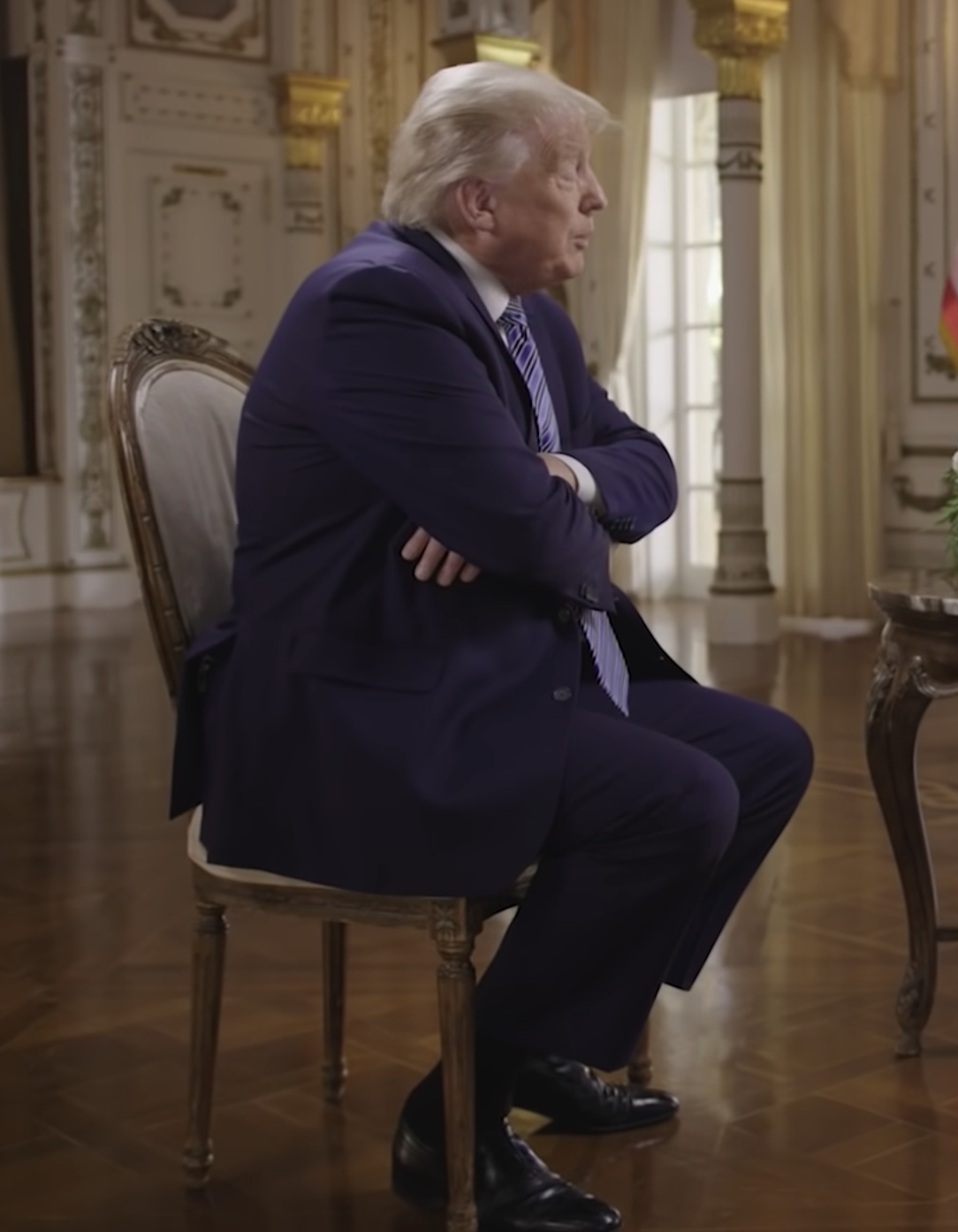
When Candace Owens confronted Trump about why he didn’t pardon Assange last year, he got really defensive, folding his arms. He explained, seemingly referring to Assange and probably referencing the Vault 7 and Vault 8 releases of stolen CIA hacking tools, “in one case, you have sort of a spy deal going on … there were some spying things, and there were some bad things released that really set us back and really hurt us with what they did.”

But Twitter DMs Mueller obtained with the first August 2017 warrant targeting Roger Stone showed that, in the wake of Mike Pompeo’s designation of WikiLeaks as a non-state intelligence service in the wake of that release, Stone and Assange discussed a pardon. On June 4, 2017, Stone said, “I don’t know of any crime you need to be pardoned for.” On June 10, Stone told Assange, “I am doing everything possible to address the issues at the highest level of government.”

Nine days later, on June 19, 2017, Trump ordered Corey Lewandowski to order Jeff Sessions to limit the investigation to prospective meddling from Russian, an order that — had Lewandowski obeyed — would have had the effect of shutting down the entire investigation, including that into Assange’s role in the hack-and-leak.

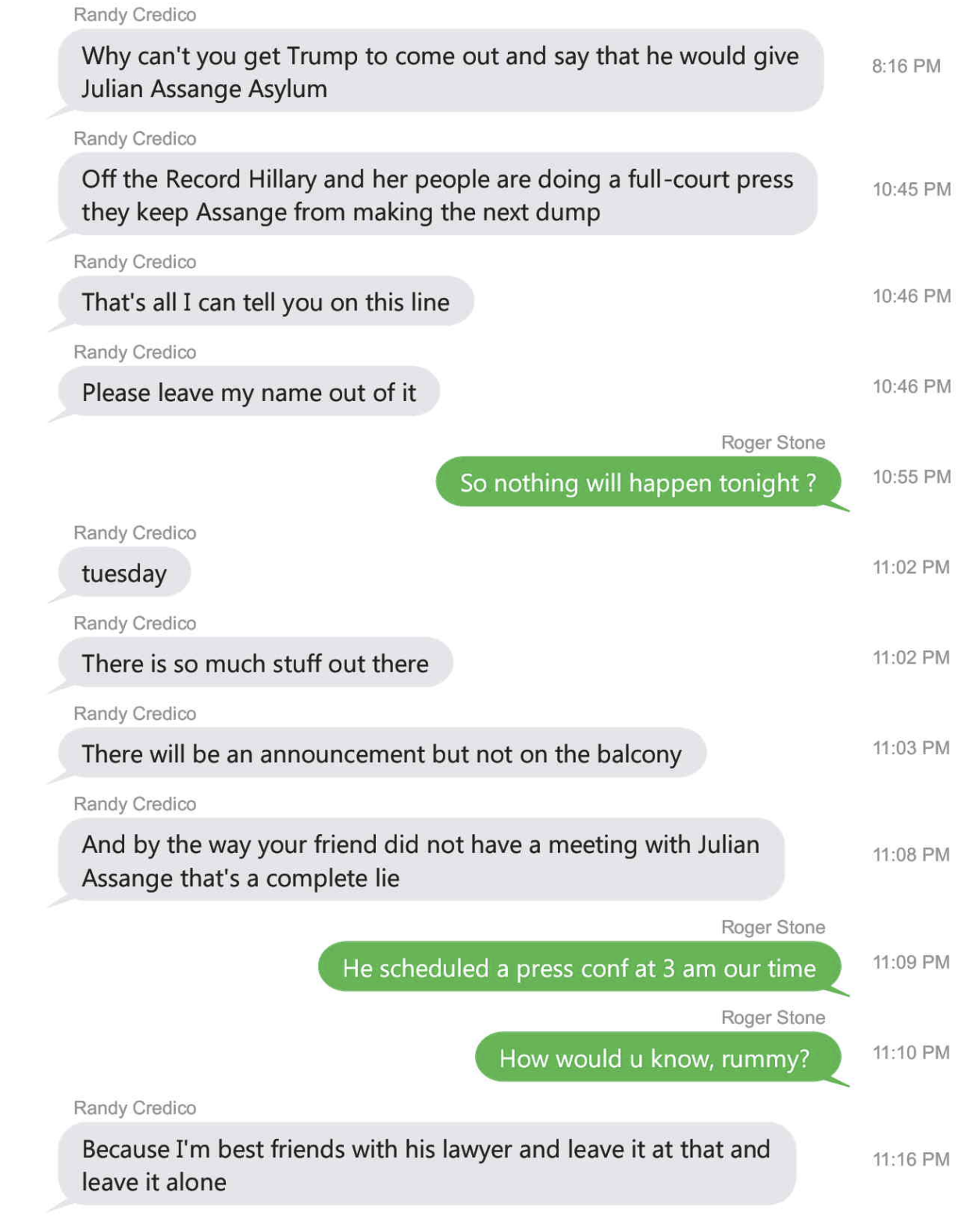
Texts obtained from Stone much later would show that he and Randy Credico discussed asylum for Assange on October 3, 2016 — before WikiLeaks started releasing the John Podesta emails.

And Credico had set Stone up to discuss the pardon with Margaret Kunstler by November 15, 2016.

Stone claimed to be pursuing a pardon for Assange at least through early 2018. It was only after Mueller asked Trump about such pardon discussions in September 2018 that Don Jr’s close friend Arthur Schwartz told Cassandra Fairbanks the pardon wouldn’t happen.

Those pardon discussions are just one of the things that Stone held over Trump’s head to ensure he’d never do prison time.

Stone kept a notebook of all the conversations he had with Trump during the 2016 election. He may have brought it with him to a meeting he had with Trump in December 2016.

After the win, STONE tried a full court press in order to get a meeting with TRUMP. [redacted] eventually set up a meeting with TRUMP and STONE in early December 2016 on the 26th floor of Trump Tower. TRUMP didn’t want to take the meeting with STONE. TRUMP told BANNON to be in the meeting and that after 5 minutes, if the meeting hadn’t concluded, to throw STONE out. STONE came in with a book he wrote and possibly had a folder and notes. [full sentence redacted] TRUMP didn’t say much to STONE beyond “Thanks, thanks a lot.”. To BANNON, this reinforced STONE [redacted] After five to six minutes, the meeting was over and STONE was out. STONE was [redacted] due to the fact that during the meeting TRUMP just stared.

After Stone was convicted of lying to cover up the real nature of his contacts with Russia during the election, he lobbied for a pardon by claiming, repeatedly and publicly, that prosecutors offered him a deal if he would reveal the content of the phone conversations he had with Trump during the election.

On December 23, 2020, Stone got that pardon. Four days later, Stone and Trump spoke about January 6 at Mar-a-Lago. That same day, also at Mar-a-Lago, Kimberly Guilfoyle, started the planning for Trump to speak (at that point, the plan included a march to the Capitol).

Earlier this month, DOJ included Stone’s contacts with Proud Boy Dan Scott at a January 3 Florida rally in Scott’s statement of offense for attempting to obstruct the January 6 vote certification. It included Stone’s ties to various Oath Keepers as part of the proof DOJ used to prosecute Stewart Rhodes of sedition.

“The boss is aware”

It took an extra week for prosecutors in the Mike Flynn case to get approval for his sentencing memo in early 2020. So senior officials at DOJ had to have approved of the explanation of why Flynn’s lies about calling the Russian Ambassador to undermine Obama’s sanctions on Russia were serious. “Any effort to undermine the recently imposed sanctions, which were enacted to punish the Russian government for interfering in the 2016 election,” the memo explained, “could have been evidence of links or coordination between the Trump Campaign and Russia.”

From the time that Mueller’s team obtained KT McFarland’s transition device and email on August 25, 2017, they had reason to believe Flynn’s calls with the Russian Ambassador were a group affair, not (as Trump had claimed) simply Flynn’s doing. McFarland’s emails showed that before Flynn called Kislyak, he had received an email from Tom Bossert reporting on what Lisa Monaco told him about Russia’s response to the sanctions, immediately after which he spoke to McFarland from his hotel phone for 11 minutes.

Mueller came pretty close to concluding that was why Flynn intervened with the Russian Ambassador, too. “Some evidence suggests that the President knew about the existence and content of Flynn’s calls when they occurred,” the Mueller Report explained in laying out reasons why Trump might have wanted to fire Jim Comey. “[B]ut the evidence is inconclusive and could not be relied upon to establish the President’s knowledge.” That’s because, after first denying that such calls happened at all, KT McFarland ultimately claimed not to remember telling Trump about the calls and Steve Bannon claimed not to remember discussing it with Flynn.

That was the conclusion Mueller reached in early 2019, a conclusion that already didn’t account for the fact that Flynn called the Russian Ambassador from a hotel phone, not his cell, or that he admitted that he and McFarland had deliberately written a text to cover up the contact. But the following year, in his effort to protect Trump, Bill Barr and other Republicans made available multiple pieces of evidence that make Trump’s knowledge of Flynn’s contacts more clear.

For example, after the House Intelligence Committee transcripts came out in 2020, it became clear that the White House had used Steve Bannon’s two appearances, with the assistance of Devin Nunes, to script certain answers. One of those answers denied continuing to discuss how to end sanctions against Russia after the inauguration. That scripting process happened between the time Flynn pled guilty and the time Bannon first denied remembering knowing of the sanctions discussion. Effectively, the White House scripted Bannon to deny knowledge of those sanction discussions in December 2016.

Then, in September 2020, as part of his efforts to justify overturning the prosecution of Flynn, Barr released the interview report from FBI agent Bill Barnett, who reportedly sent pro Trump texts on his FBI issued phone. It described how, after refusing to take part in that part of the Flynn investigation four different times, he nevertheless, “decided to work at the SCO hoping his perspective would keep them from ‘group think.'” He described being told that “was the only person who believed MCFARLAND was not holding back the information about TRUMP’s knowledge of [the sanction discussions].” He then asked a series of questions that would provide space for a denial: “BARNETT asked questions such as ‘Do you know that as a fact or are you speculating?’ and ‘Did you pass information from TRUMP to FLYNN?'”

Importantly, Barnett claimed it was “astro projection” that Trump directed Flynn’s contacts with the Ambassador.

He said that even after John Ratcliffe declassified the evidence that Mueller could never have used in the investigation, but which proved it wasn’t projection at all: the transcripts of Flynn’s calls with then-Ambassador Kislyak. They reveal that in the call on December 31, 2016, which Kislyak made to tell Flynn that “our conversation was also taken into account in Moscow” when Putin decided not to retaliate against the US for its sanctions, Flynn told Kislyak that “the boss is aware” of a plan to speak the day after Trump would be inaugurated. That would only be possible had Flynn either told Trump directly or had McFarland passed it along.

Once Barr came in, Flynn attempted to unwind all the things he had said to Mueller, directly contradicting multiple sworn statements. Just weeks after DOJ noted the centrality of Flynn’s lies to the question of whether Trump attempted to reverse sanctions just after Russia helped get him elected, Barr, too, joined the process of attempting to reverse the impact of the things Flynn had admitted to under oath. That effort extended to introducing notes with added, incorrect dates that Trump used in an effort to blame Biden for the investigation into Flynn. “We caught you,” Trump claimed to Biden in a prepared debate attack about the investigation that showed how his team first contacted Obama’s team to learn what they knew of the Russian response to sanctions, minutes before they called Russia to undermine those sanctions.

On November 25, Trump pardoned Flynn not just for his lies about the calls to the Russian Ambassador and working for Türkiye, but for any lies he told during the period he was reneging on his plea agreement. That same week, Flynn and Sidney Powell were in South Carolina together plotting ways to undermine Joe Biden’s election. Three weeks later, they would pitch Trump on a plan to seize the voting machines so he could stay in office.

When Bill Barr wrote his corrupt memo claiming there was no evidence that Trump obstructed the Mueller investigation, he was silent about the topic he had admitted, three times, would amount to obstruction: those pardon dangles. Those pardons aren’t just proof that Trump obstructed the investigation, stripping prosecutors of the leverage they might use to get Paul Manafort, Roger Stone, and Mike Flynn to tell the truth. But they’re also some of the most compelling proof that the secrets Stone and Manafort kept would have confirmed the suspicions that Trump coordinated with Russia in an attack on US democracy.

Update, 3/14: Corrected that Mueller closed up shop four years ago, not three. Time flies!

Links

CJR’s Error at Word 18

The Blind Spots of CJR’s “Russiagate” [sic] Narrative

Jeff Gerth’s Undisclosed Dissemination of Russian Intelligence Product

Jeff Gerth Declares No There, Where He Never Checked

“Wink:” Where Jeff Gerth’s “No There, There” in the Russian Investigation Went

My own disclosure statement

An attempted reconstruction of the articles Gerth includes in his inquiry

A list of the questions I sent to CJR


Just days earlier, on July 28, 2017, DOJ had already established probable cause to arrest George Papadopoulos for false statements and obstructing the investigation. His FBI interviews in the days after August 2 would go to the core questions of the campaign’s knowledge and encouragement of Russia’s interference. On August 11, Papadopoulos described, but then backed off certainty about, a memory of Sam Clovis getting upset when Papadopoulos told Clovis “they,” the Russians, have Hillary’s emails. On August 19, Papadopoulos professed to be unable to explain what his own notes planning a September 2016 meeting in London with the “Office of Putin” meant.

The investigation into Paul Manafort, too, was only beginning to take steps that would reveal suspect ties to Russia. Also on July 28, for example, DOJ obtained the first known warrant including conspiracy among the charges under investigation, and the first known warrant listing the June 9 meeting within the scope of the investigation. On August 17, DOJ would show probable cause to obtain emails from Manafort’s business involving ManafortGates, and Konstantin Kilimnik that would (among other things) show damning messages sent between Manafort and Kilimnik using the foldering technique, likely including Manafort’s sustained involvement in a plan to carve up Ukraine that started on August 2, 2016 (which Gerth omits from his description of that meeting).

Similarly, Mueller was still collecting evidence explaining why Flynn might have lied about his calls with Sergey Kislyak. On August 25, Mueller obtained a probable cause warrant to access devices owned by the GSA showing that Flynn had coordinated his calls with other transition officials, including those with Trump at Mar-a-Lago, when he called Kislyak to undermine Obama’s sanctions against Russia.

Plus, Mueller was just beginning to investigate at least two Trump associates that Rosenstein would include in an expanded scope in October 2017. On July 18, Mueller would obtain a probable cause warrant that built off Suspicious Activity Reports submitted to Treasury. That first known warrant targeting Michael Cohen never mentioned the long-debunked allegations about Cohen in the Steele dossier. Instead, the warrant affidavit would cite five deposits in the first five months of 2017 from Viktor Vekselberg’s Renova Group, totaling over $400K, $300K in payments from Korean Aerospace Industries, and almost $200K from Novartis, all of which conflicted with Cohen’s claim that the bank account in question would focus on domestic clients. On August 1, Mueller would obtain a probable cause warrant for Cohen’s Trump Organization emails from Microsoft. Mueller did so using a loophole that Microsoft would sue to close shortly afterwards, a move which likely stymied the investigation into a suspected $10 million donation to Trump, via an Egyptian bank, that kept him in the race in September 2016. That warrant for Trump Organization emails likely obtained Cohen’s January 2016 contact with the Kremlin – the one not turned over, to Congress at least, in response to a subpoena – a contact that Cohen would lie to Congress about four week later.

On August 7, Mueller used a probable cause warrant to obtain Roger Stone’s Twitter content, which revealed a mid-October 2016 exchange with WikiLeaks that disproved the rat-fucker’s public claims that he had never communicated with WikiLeaks during the campaign (a fact that Gerth gets wrong in the less than 1% of his series he dedicates to Stone). It also revealed that the day after the election, WikiLeaks assured Stone via DM that “we are now more free to communicate.” Those communications would, in one week (the subsequent investigation showed), turn into pardon discussions, which provides important background to the June 2017 Twitter DMs Stone had with Julian Assange, obtained with that August warrant, about “doing everything possible to address [Assange’s] issues at the highest level of Government.”

Share this entry

James Comer’s Twitter Hearing Confirmed Donald Trump’s Censorship Attempt and Matt Taibbi’s “Censorship” about It

“When did these guys drink the Kool-Aid, and who served it to them?” the NYT quoted Bob Luskin as saying of John Durham and Bill Barr in last month’s blockbuster, revealing scandalous new details about the Durham investigation.

The answer is clear: both men had pickled in conspiracy theories floated on Fox News, and several specific investigative prongs were laundered through a Mark Meadows House “investigation” and a Lindsey Graham Senate one, to be picked up by Durham as if formally referred.

One of the most alarming disclosures in the NYT blockbuster on the Durham investigation, for example, was that after the Italians provided a tip about Trump’s criminal exposure on a junket that Barr and Durham took together in 2019, someone leaked to the press that a criminal investigation into others, not Trump, had been opened.

The trip to Italy about came after George Papadopoulous aired conspiracy theories — suspicions he explicitly attributed to right wing outlets, not his own personal knowledge — in a House Oversight hearing.

[T]he belief that got Bill Barr to fly to Italy — that Mifsud actually works for Western, not Russian, intelligence — Papadopoulos cited to a Daily Caller article which itself relayed claims Mifsud’s Russian-backed lawyer made he had read the day before.

Q Okay. So, and Mifsud, he presented himself as what? Who did he tell you he was?

A So looking back in my memory of this person, this is a mid-50’s person, describes himself as a former diplomat who is connected to the world, essentially. I remember he was even telling me that, you know, the Vietnamese prime minister is a good friend of mine. I mean, you have to understand this is the type of personality he was portraying himself as.

And, you know, I guess I took the bait because, you know, usually somebody who — at least in Washington, when somebody portrays themselves in a specific way and has credentials to back it, you believe them. But that’s how he portrayed himself. And then I can’t remember exactly the next thing that happened until he decided to introduce me to Putin’s fake niece in London, which we later found out is some sort of student. But I could get into those details of how that all started.

Q And what’s your — just to kind of jump way ahead, what’s your current understanding of who Mifsud is?

A My current understanding?

Q Yeah. A You know, I don’t want to espouse conspiracy theories because, you know, it’s horrifying to really think that they might be true, but just yesterday, there was a report in the Daily Caller from his own lawyer that he was working with the FBI when he approached me. And when he was working me, I guess — I don’t know if that’s a fact, and I’m not saying it’s a fact — I’m just relaying what the Daily Caller reported yesterday, with Chuck Ross, and it stated in a categorical fashion that Stephan Roh, who is Joseph Mifsud’s, I believe his President’s counsel, or PR person, said that Mifsud was never a Russian agent.

In fact, he’s a tremendous friend of western intelligence, which makes sense considering I met him at a western spying school in Rome. And all his interactions — this is just me trying to repeat the report, these are not my words — and when he met with me, he was working as some sort of asset of the FBI. I don’t know if that’s true or not. I’m just reporting what my current understanding is of this individual based on reports from journalists.

[snip]

Q And then at what point did you learn that, you know, he’s not who he said he was?

A Like I said, I don’t have the concrete proof of who this person is. I’m just going with reports. And all I can say is that I believe the day I was, my name was publicly released and Papadopoulos became this person that everyone now knows, Mifsud gave an interview to an Italian newspaper. And in this newspaper, he basically said, I’m not a Russian agent. I’m a Clinton supporter. I’m a Clinton Foundation donor, and that — something along those lines. I mean, don’t quote me exactly, you could look up the article yourself. It is in La Republica. And then all of a sudden, after that, he disappears off the face of the planet, which I always found as odd.

[snip]

I guess the overwhelming evidence, from what I’ve read, just in reports, nothing classified, of course, because I’m not privy to anything like that, and considering his own lawyer is saying it, Stephan Roh, that Mifsud is a western intelligence source. And, I guess, according to reports yesterday, he was working with the FBI

Less than a year after this testimony, Barr and Durham were flying off to Italy together to chase down Papadopoulos’ feverish imaginings.

It’s not that Barr and Durham believed Papadopoulos to be credible; Durham never interviewed the Coffee Boy, not even to assess Sergei Millian’s credibility before indicting Igor Danchenko based on Millian’s hearsay claims. But they nevertheless chased that clear conspiracy theory all the way to Italy together.

The Congressional hearing — a hearing that didn’t even incorporate Papadopolous’ own emails, which would have made it harder for the convicted liar to sustain a number of the claims he made — served as a way to legitimize what were obviously rewarmed frothy rants. The hearing was a messaging vehicle that served to legitimize garbage claims. Had the press called this out as a circus in real time, it might have forestalled some of Barr and Durham’s own stunts.

The same is happening again, with the multiple “investigations” pitched by the new GOP-led House. And much of the press is playing along again, treating the hearings as both-sides disputes about the truth, rather than clear efforts to mainstream conspiracy theories that supplant any hold on the truth.

Consider James Comer’s hearing with former Twitter executives (video, transcript), a hearing called in response to Matt Taibbi’s sloppy rants about files selectively released by Elon Musk, the same kind of conspiracy theories floated during the Russian investigation by right wing outlets and then legitimized by Congressional hearings.

The finding of Comer’s hearing is clear: the witnesses all rebutted any claim that government influence drove the decision to throttle the NYPost report on a laptop that Rudy Giuliani claimed belonged to Hunter Biden. The hearing exposed that the claimed basis for legislative interest in Twitter’s actions was baseless. That should been the headline: James Comer’s conspiracy theory flopped. James Comer exposed, wasting taxpayer dollars.

Worse still for the Congressman from Kentucky, witness testimony revealed just one instance of the federal government affirmatively asking that content be taken down, just one instance of censorship. That demand came from Donald Trump.

As Twitter whistleblower Anika Navaroli explained in response to a Gerry Conolly question, when Chrissy Teigen responded to a Trump  attack on her by calling him a, “pussy ass bitch,” the White House asked Twitter to take the tweet down.

Rep. Gerry Connolly (D-VA):

Okay. On September 8th, 2019 at 11:11 PM Donald Trump heckled two celebrities on Twitter. John Legend and his wife, Chrissy Teigen, and referred to them as the musician, John Legend and his filthy mouthed wife, Ms. Teigen responded to that email at 12:17 AM and according to notes from a conversation with you, Ms. Navaroli’s counsel, your counsel, the White House almost immediately thereafter contacted Twitter to demand the tweet be taken down. Is that accurate?

Anika Collier Navaroli:

Thank you for the question. In my role, I was not responsible for receiving any sort of request from the government. However, what I was privy to was my supervisors letting us know that we had received something along those lines or something of a request. In that particular instance, I do remember hearing that we had a request from the White House to make sure that we evaluated this tweet and that they wanted it to come down because it was a derogatory statement directly towards the President.

Rep. Gerry Connolly (D-VA):

They wanted it to come down. They made that request.

Anika Collier Navaroli:

To my recollection, yes.

Daily Beast was one of the few outlets that reported, accurately, that the hearing showed the opposite of what Republicans claimed: in fact, Trump had been the one to use government power to attempt to silence speech on Twitter. Rolling Stone reported on another pathetic detail from Comer’s hearing, when Byron Donalds got Yoel Roth to explain what was implicit in all of Chairman Comer’s discussions of the scope of the hearing: Republicans were complaining that Twitter took down nonconsensual dick pics of Hunter Biden, some posted as part of a campaign by Steve Bannon associate Guo Wengui.

Comer’s premise was shattered by a “pussy ass bitch” retort and dick pics. That’s the weight of James Comer’s chairmanship. And with it should go the credibility of Taibbi’s consistently shoddy rants.

Five times since then, Taibbi has complained that his own silence about Twitter’s coddling of Trump was exposed in the hearing. In none of those complaints did he issue a correction.

Indeed, in his responses, Taibbi repeated several of his lies, obscuring that those FBI spreadsheets he complained about were part of an FBI effort to protect voting rights or that a request that a CIA colleague get an invite to a publicly listed meeting is some sign of the deep state. Taibbi just keeps repeating claims that have long been exposed as garbage.

Taibbi was exposed as a partisan fraud in the hearing, and that should be one of the takeaways.

Yet much of the rest of the coverage of the hearing was like AP’s, which treated the entire premise as if it were serious, dedicating the first four paragraphs to a (false) claim that this was the first that any of them had admitted throttling the NYP story was a mistake (as the hearing reviewed repeatedly, Roth had already given a deposition on the subject, and while the story quotes Jack Dorsey, it doesn’t mention that he has testified to Congress as well). Nowhere in the AP story does it reveal that Comer’s entire premise was debunked by the hearing. It’s not until paragraphs 18 and 19 that AP mentions that the Twitter files presented no evidence for Comer’s claim.

The issue was also reignited recently after Musk took over Twitter as CEO and began to release a slew of company information to independent journalists, what he has called the “Twitter Files.”

The documents and data largely show internal debates among employees over the decision to temporarily censor links to the Hunter Biden story. The tweet threads lacked substantial evidence of a targeted influence campaign from Democrats or the FBI, which has denied any involvement in Twitter’s decision-making.

Nowhere did AP reveal that Donald Trump was the only one guilty of the crime that Comer wants to pursue. Nowhere did AP reveal other instances where Twitter coddled Trump, as when they rewrote their content moderation standards on attacks on immigrants, which previously had banned the use of the term, “Go back to where you came from,” to retroactively excuse their approval of a Trump attack on AOC and others.

Worse still, AP was silent about the degree to which members like Clay Higgins started baselessly calling for the arrest of witnesses not accused, much less credibly, of a crime.

In other words, AP let James Comer dictate the terms of their story even after the premise of it had been debunked.

That’s not journalism.

And there’s one more reason why the press needs to treat these hearings not as a both-sides affair but as an effort to flip truth upside-down.

While neither have said this outright, both Comer’s hearing and the first hearing of Jim Jordan’s insurrection protection committee attacked the nation’s ability to push back against disinformation, including, but not limited to, Russian disinformation.

And as Roth explained in the Twitter hearing, for example, Republican attacks on Twitter were an attack on efforts that came out of a bipartisan response to Russia’s interference in the 2016 election.

Shontel Brown:

Mr. Roth, in a recent interview you stated, and I quote, beginning in 2017, every platform Twitter included, started to invest really heavily in building out an election integrity function. So I ask, were those investments driven in part by bipartisan concerns raised by Congress and the US government after the Russian influence operation in the 2016 presidential election?

Yoel Roth:

Thank you for the question. Yes. Those concerns were fundamentally bipartisan. The Senate’s investigation of Russian active measures was a bipartisan effort. The report was bipartisan, and I think we all share concerns with what Russia is doing to meddle in our elections.

This is what both hearings explicitly sought to roll back, those bipartisan efforts to protect American democracy.

Comer engaged in his own disinformation as part of the process. He falsely claimed that a letter from 50 former spooks said “Hunter Biden’s laptop was Russian disinformation,” rather than that it bore the hallmarks of disinformation. Jim Jordan and HPSCI Chair Mike Turner are now ratcheting up threats against those spooks for speech they engaged in as private citizens, precisely the thing that Jordan purports to be fighting.

In Jordan’s insurrection protection hearing, he presented three witnesses purporting to talk about the weaponization of government. One, Tulsi Gabbard, presented as evidence of weaponizing government that private citizen Hillary Clinton claimed she was being “groomed” by Russia, something that had nothing to do with weaponizing government and everything to do with the free speech Tulsi purported to be defending. The two others, Chuck Grassley and Ron Johnson, complained that the FBI warned them their own investigation into private citizen Hunter Biden parroted an organized Russian campaign.

Taken together, these efforts are fairly unashamedly complaining that private entities — whether Twitter, Hillary, or former spooks — are exercizing their own right to speak up against Russian disinformation. That is, all three efforts use government resources against those speaking up against Russia.

And against the background of the Durham investigation — which investigated Hillary’s campaign because of the way she responded to being victimized by a Russian attack — this effort continues a GOP-led effort to criminalize opposition to Russian disinformation.

There’s no reason, journalistically, to treat this as a serious pursuit. Particularly not given the abundant evidence that these efforts are premised on false claims and easily debunked propaganda, and are an attempt to legitimize that propaganda to serve as the basis for criminal investigations.

If James Comer and Jim Jordan want to squander their majority by building hearings and investigations around lies, the press should call them on that, not reward it. If they don’t, we’re headed down an increasingly ugly cycle.

Share this entry

Charles McGonigal and the Unclassified Oligarch Info

There’s a mildly interesting discovery dispute in the SDNY case of Charles McGonigal, the former FBI Special Agent in Charge indicted last month for sanctions violations connected to Oleg Deripaska.

His co-defendant, former Russian diplomat and approved translator Sergey Shestakov, wants to amend the protective order governing discovery in this case. As I said, this is only mildly of interest. Such challenges are not unusual, and his attorney, former Andrew Cuomo attorney, Rita Glavin, has agreed to be bound by the existing protective order while the dispute is settled, so the dispute is not holding things up (anymore).

The dispute pertains to two issues about which Glavin wants reciprocity with the government. One is whether witnesses must be bound by the discovery order.

The paragraph states: “The defense shall provide a copy of this Order to prospective witnesses and persons retained by counsel to whom the defense has disclosed Disclosure Material. All such persons shall be subject to the terms of this Order. Defense counsel shall maintain a record of what information has been disclosed to which such persons.”

[snip]

Shestakov’s counsel has claimed that the integrity of the proceedings requires that the Government, like the defense, maintain records about the persons to whom discovery materials are provided, and provide copies of the protective order to all such persons. But the Government is aware of no legal authority—nor any good cause under Rule 16(d)—supporting that request. And because the Government has long possessed much of this information, and appropriately used it for a variety of lawful purposes, such a log would be impractical at this stage.

The government’s point — that it has already interviewed so many people a log of those interviews would be meaningless (as well as its earlier point that the government is subject to grand jury secrecy rules but the witnesses before it are not) — is a perfectly reasonable point. Just as one example, McGonigal’s former mistress, Allison Guerriero, has already discussed issues that would be covered by the protective order with the press; SDNY has no way to oblige her to keep those details secret.

SDNY doesn’t say it, but it also likely wants to avoid keeping a list of all the witnesses it spoke with that might otherwise be discoverable by Shestakov; usually the government only has to provide details about witnesses who will testify.

The other dispute pertains to how discovery material must be treated — language that is, on its face, meant to prevent defendants from tweeting about confidential discovery information.

That sentence provides: “The defense shall not post any Disclosure Material on any Internet site or network site, including any social media site such as Facebook or Twitter, to which persons other than the parties hereto have access, and shall not disclose any Disclosure Material to the media or the public other than when such material becomes part of the public record in connection with court filings and court proceedings or as otherwise set forth herein.”

The government’s response is not as direct to this point. To Shestakov’s complaint that the government might leak (a complaint Glavin made repeatedly during the Cuomo case), the government responded only that he doesn’t have authority to complain in public.

More to the point, to the extent Shestakov has explained his objections to the challenged terms in the proposed order, those objections are not valid. In objecting to paragraph 3, for instance, counsel has told us that she will not agree to unilateral restrictions because she believes there is a risk that the Government will leak discovery material publicly. Courts have squarely rejected that argument. A defendant has no right to use discovery materials to influence public opinion about, or media coverage of, his case; as a result, the desire to publicly respond to perceived wrongs by the Government is no basis to oppose or modify a protective order. See, e.g., Smith, 985 F. Supp. 2d at 540; United States v. Lindh, 198 F. Supp. 2d 739, 743 (E.D. Va. 2002). If Shestakov takes issue with public statements made by the Government, the remedy is supplied by Local Criminal Rule 23.1—which binds the Government and the defense alike—and there is no need to modify the proposed protective order.

Still, SDNY’s response that the Local Rules on extrajudicial statements would cover this does address why reciprocity here is sort of meaningless: SDNY is not going to comment outside of court proceedings unless they make a press statement at one of the milestones of a case, like the indictment, trial verdict, or sentencing. It violates not just local rules, but also DOJ rules.

That said, SDNY (or DOJ generally) might have cause to issue press releases on topics covered by the discovery in the case in other matters, such as the milestone of someone else charged in matters pertaining to Oleg Deripaska, or even new charges pertaining to him. That may be one unspoken reason why SDNY is balking at Shestakov’s complaint, though the main one is the likely the way in which the language might prohibit information sharing within the US government.

The government provides three reasons for the protective order in this case: two are to protect the identities of witnesses and the privacy interests of those whose materials are included in the discovery, which are, again, quite routine.

SDNY also cites the need to protect unclassified information about sanctions on oligarchs, Russia’s influence efforts, and documents relating to efforts to surveil them.

First, the materials include, among other things, information pertaining to the imposition of sanctions on Russian oligarchs, information from various sources about potential Russian influence in the United States, and documents relating to law enforcement’s surveillance efforts. None of the materials that will be subject to this protective order are classified—the Government has determined that they can appropriately be produced to the defendants in order to comply with the Government’s discovery obligations—but there would still be law enforcement consequences to their public disclosure.

This is the kind of stuff that SDNY — or other parts of the government — might have cause to include in other press releases, unrelated to this case.

It’s all unclassified, SDNY says.

It’s not surprising that SDNY would build a FARA and sanctions case around unclassified information. On its face, the indictment relies on emails between Shestakov and McGonigal, Evgeny Fokin, the NYPD, and the law firm involved in trying to reverse sanctions, Kobre & Kim, records pertaining to the payments alleged to have been laundered from a bank in Cyprus through a New Jersey company, as well as records pertaining to subcontractors McGonigal employed (in a repeat of Christopher Steele) to investigate a Deripaska rival.

But the indictment is tailored to avoid other, more interesting and potentially classified discovery. The indictment doesn’t charge Fokin, for example, which would implicate any communications he had directly with Deripaska and others.

FARA and sanctions violations provide crimes that are readily chargeable when other crimes — which may or may not be implicated here — would impose onerous discovery requirements on the government. The fact that SDNY maintains all the discovery in this case is unclassified is important background to questions about what more the government knows about McGonigal’s actions: by design, they’re not going to tell as part of this prosecution.

All that’s important background for the other reason I’m intrigued by an entirely unexceptional protective order dispute. As SDNY’s letter describes, between January 24 and February 6, SDNY and McGonigal’s legal team, which includes former Bill Barr aide Seth DuCharme, resolved their own “modifications” to the protective order.

The defendants were each arrested on January 21, 2023, and were presented before Magistrate Judge Sarah L. Cave on January 23, 2023. The next day, the Government proposed a standard protective order, based on those routinely used in this District, to counsel for both defendants. Over the ensuing days, the Government repeatedly discussed the proposed protective order with McGonigal’s counsel, and agreed to make certain modifications based on those discussions. The Government and McGonigal’s counsel reached agreement on a protective order with the terms contained in Exhibit A, and on February 6, 2023, McGonigal’s counsel returned a signed copy of the order.

Two days after the government and McGonigal’s team resolved their own protective order issues (which also happens to be two days after Shestakov’s legal team filed their notice of appearance, so before substantive discussions would have begun between SDNY and Glavin), SDNY triggered the CIPA process. Among other things, the CIPA process will give SDNY a chance to argue that other classified discovery can be withheld from the defendants if it is not relevant and helpful to their defense.

Some such classified material McGonigal would know about personally. As the indictment itself notes, while still at the FBI, McGonigal had access to information on investigations of Russian oligarchs.

As SAC, McGONIGAL served as the Special Agent in Charge (“SAC”) of the Counterintelligence Division of the FBI’s New York Field Office. As SAC, McGONIGAL supervised and participated in investigations of Russian oligarchs, including Deripaska. Among other things, in 2018, McGONIGAL, while acting as SAC, received and reviewed a then-classified list of Russian oligarchs with close ties to the Kremlin who would be considered for sanctions to be imposed as a result of Russia’s 2014 conflict with Ukraine.

This list is no longer classified. But other materials McGonigal had access to while still at FBI undoubtedly are, including materials pertaining to the investigation of Deripaska’s role in the 2016 election interference operation.

And it’s not just these issues that McGonigal might know exist and might want to demand. According to Mattathias Schwartz, the investigation into McGonigal didn’t stem from the tip that his disgruntled mistress, Guerriero, gave to the head of NY’s FBI in 2019. Starting in 2018, the Brits were aware that McGonigal had suspect meetings with an unidentified Russian in London.

In 2018, Charles McGonigal, the FBI’s former New York spy chief, traveled to London where he met with a Russian contact who was under surveillance by British authorities, two US intelligence sources told Insider.

The British were alarmed enough by the meeting to alert the FBI’s legal attaché, who was stationed at the US Embassy. The FBI then used the surreptitious meeting as part of their basis to open an investigation into McGonigal, one of the two sources said.

Whenever the Brits picked this up (and subsequent meetings that Schwartz notes were referenced in the indictment), they would have happened before or during the time that DuCharme played a key role at DOJ, first as Barr’s counsel and then as PADAG. As I keep noting, DuCharme was centrally involved in Barr’s extensive efforts to prevent Rudy Giuliani — a close friend of McGonigal’s ex-mistress — from being prosecuted for his own dalliances with Russian agents. It is inconceivable that a senior FBI agent was under suspicion for suspect meetings with Deripaska or his associates and the matter wouldn’t arise to Barr and Jeffrey Rosen’s level. And DuCharme was personally involved in exceptional interference in investigations of Russia agents.

Even just based on his own knowledge of sensitive information pertaining to Russian investigations, McGonigal had the means to make this prosecution difficult, by demanding classified information he accessed while still at FBI, perhaps to argue that he had reason to believe that Deripaska was really just a nice guy who didn’t deserved to be sanctioned.

But DuCharme’s knowledge of such information would surely be even fresher than McGonigal’s. Indeed, given the reported tip from the Brits in 2018, DuCharme is likely to have firsthand knowledge pertaining to issues relating to McGonigal that might not otherwise be included among discovery (for example, of discussions among Russians about McGonigal that McGonigal himself would not be privy to). DuCharme likely knows what DOJ knew about McGonigal’s ties to Deripaska at least through the time he moved back to EDNY in July 2020, and at EDNY DuCharme would have presided over other sensitive Russian investigations, including the one into Andrii Derkach.

DOJ has not, at least not yet, triggered CIPA in the DC case. But it likely doesn’t have as much sensitive information about — and as much sensitivity surrounding — information on the Albanians involved in that case.

Given their shared knowledge of matters relating to Deripaska, McGonigal and DuCharme may make the prosecution plenty difficult as it is in SDNY.

Earlier posts

[From Rayne] The Other Albanian Stuff

A Close Rudy Giuliani Associate Alerted FBI’s Assistant Director to Charles McGonigal’s Alleged Albanian Graft

No, Charles McGonigal Likely Isn’t Responsible for that Part of the Russian Investigation You Hate

Former FBI SAC Charles McGonigal Indicted for Crimes Spanning from 2017 to 2021

Share this entry